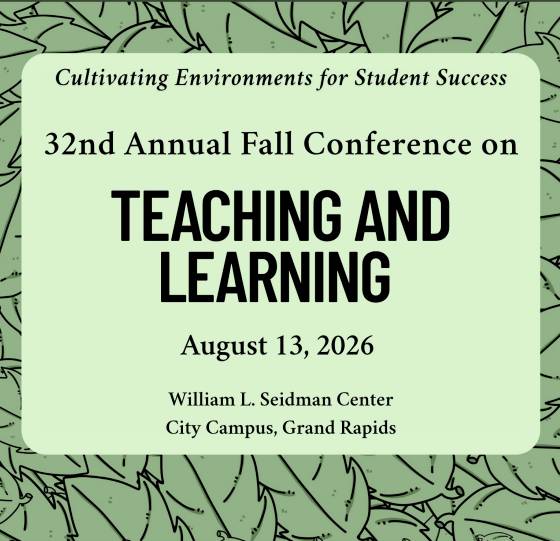
Annual Fall Conference on Teaching and Learning
Hosting an Accessible Conference

The Pew Faculty Teaching and Learning Center is excited to have you join us for the 32nd Annual Fall Conference on Teaching and Learning. We recognize many attendees are accustomed to attending the Fall Conference on Teaching and Learning in the L.V. Eberhard Center, so we want to be sure to you are familiar with the new space. As such, we invite you to download our 2026 Accessibility Guide which provides information about this year's venue including things like:

  • Neuroinclusivity
  • Parking
  • Restooms
  • Dietary Information 

Download the 2026 Accessibility Guide 

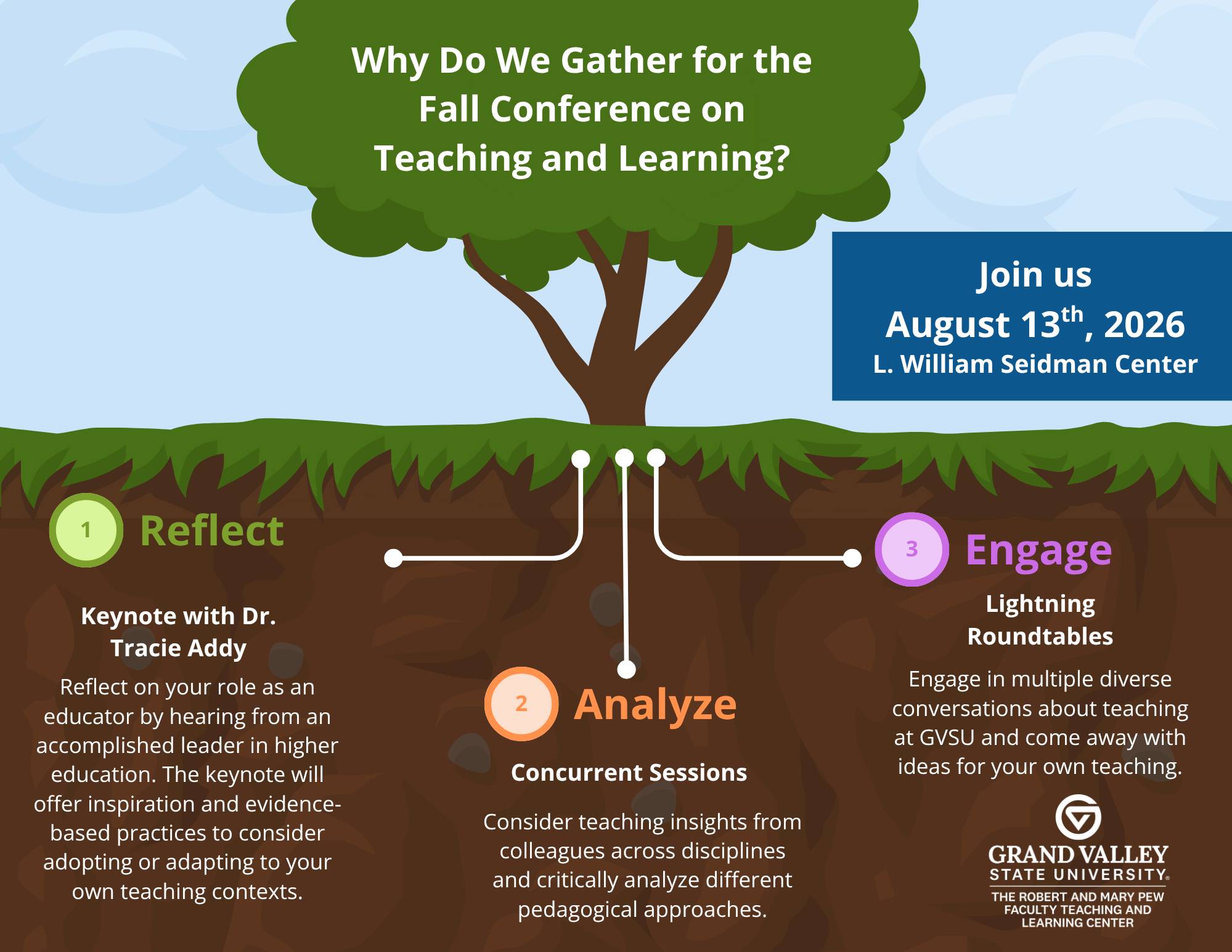
Poster for a Fall Conference on Teaching and Learning, featuring a tree with the question, "Why do we gather for the Fall Conference on Teaching and Learning?" and three sections on reflecting, analyzing, and engaging.

Join the Waitlist to Attend!

We have reached the seating capacity for this year’s Fall Conference on Teaching and Learning. We are actively communicating with those who successfully registered to confirm whether they plan to attend. If a registrant can no longer attend, we will notify you as soon as possible to confirm that you are off the waitlist. Until you receive confirmation from our office that you are off the waitlist, you are not considered a registrant. 

We are relying on our community to take registration seriously and hope to be able to accommodate all those who wish to attend.  

Questions? Contact Maggie Goss ([email protected]) or the Pew FTLC ([email protected]). 


Join the Waitlist to Attend the Fall Conference on Teaching and Learning

Are you presenting at Fall Conference? Download our Slide Design Guide.

We're excited to have you share teaching insights and analyze different pedagogical approaches. ​

You may want to share PowerPoint Slides during your session to supplement the discussion. If you choose to use PowerPoint Slides (or another slide deck type ), please make note of the following evidence-based strategies for designing slides. These strategies help your audience retain information and stay engaged! 


MORNING KEYNOTE - DR. TRACIE MARCELLA ADDY
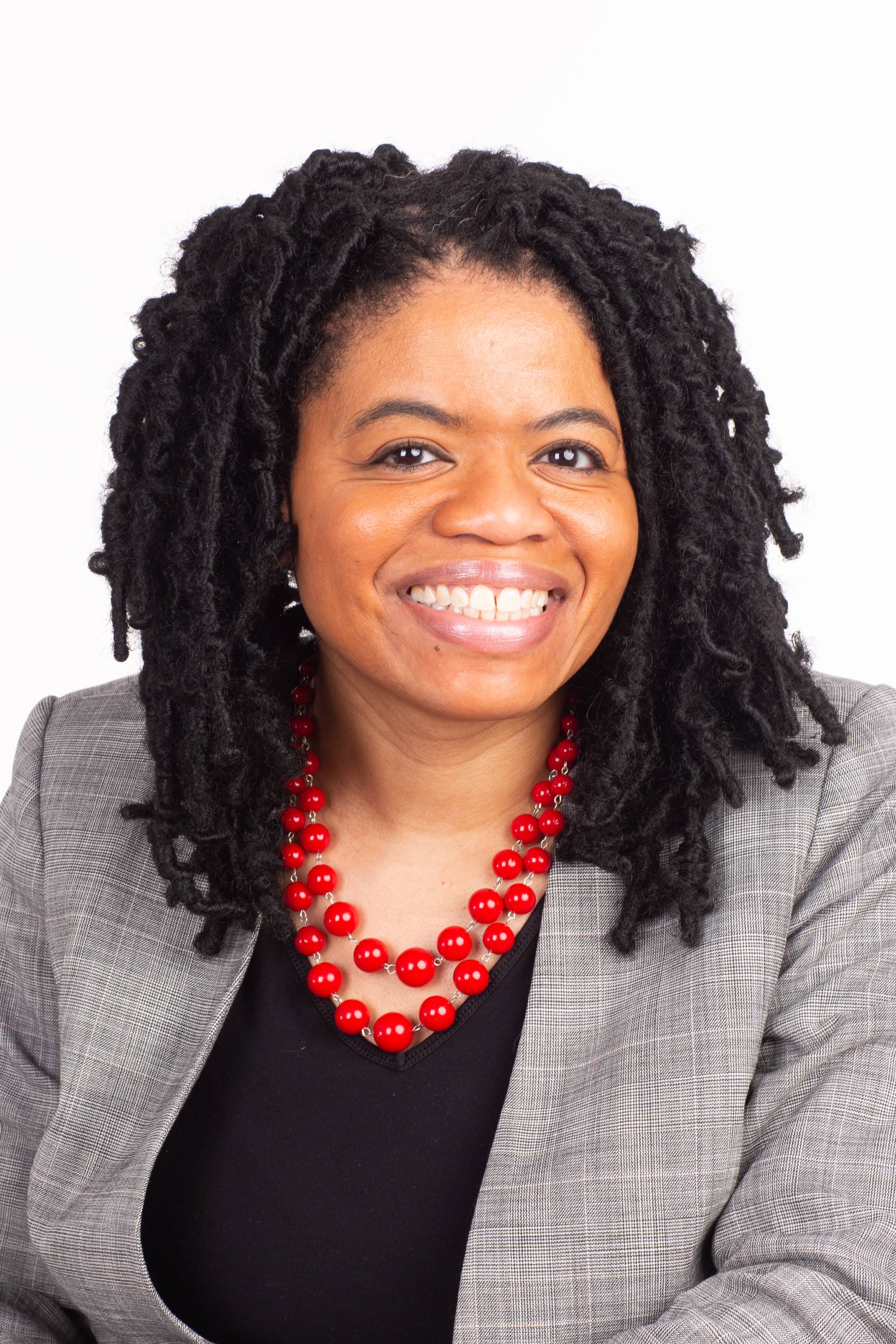
Woman in a suit smiling

Dr. Tracie Marcella Addy 


Teaching for Student Success: Designing Learning Environments That Help Students Thrive  

Keynote Presentation: Dr. Tracie Marcella Addy 

Within the shifting sands of higher education there is a necessity for both agility and the preservation of core teaching values. During this interactive keynote session, we will explore the core value of teaching for student success. Through the application of a large body of research, we will examine principles and practices that advance effective learning environments by discussing: 

  • How instructors promote student success in their courses.  
  • Which instructional approaches students indicate are critical for them to thrive.  
  • Sample teaching development opportunities that support the adoption of evidence-based teaching practice. 

Participants will leave with a number of takeaways as they reflect on their roles in advancing student success through teaching.  

Tracie Marcella Addy, PhD, MPhil is an accomplished academic leader in higher education. She received her BS from Duke University, MPhil from Yale University, and PhD from North Carolina State University. She is a published scholar of teaching and learning and educational development. Her two main scholarly areas of focus include learner-centered teaching practices and the work of centers for teaching and learning.  

Dr. Addy’s work has been featured in a variety of academic journals and venues, such as Inside Higher Ed and University Business. She has been an invited guest on a number of podcasts, including Teaching in Higher EdTea for TeachingTeaching for Student Success, and Dead Ideas in Teaching & Learning. She is the lead author of the books What Inclusive Instructors Do: Principles and Practices for Excellence in College Teaching (2021) and Enhancing Inclusive Instruction: Student Perspectives and Practical Approaches for Advancing Equity in Higher Education (2024). Her next book for which she is a co-author is tentatively titled Educational Development in the Age of Change and is anticipated to be released in 2026 by Johns Hopkins University Press.

Dr. Addy is also a frequently invited keynote speaker and workshop facilitator. Follow her work on tracieaddy.com as well as Bluesky and LinkedIn


SCHEDULE

Time

Agenda

8 a.m.

Coffee and Tea Available 

8:30 – 9 a.m.

Welcome Remarks

9 – 10:30 a.m.

Morning Keynote Presentation by Dr. Tracie Marcella Addy, "Teaching for Student Success: Designing Learning Environments That Help Students Thrive"

10:45  – 11:45 a.m.

Faculty and Staff-led Concurrent Sessions: Teaching Excellence & Experiential Sessions 

12 – 1 p.m.

Lunch and Book Raffle Winner Announcement 

1 – 2:30 p.m.

Faculty and Staff-led Lightning Roundtable Discussions 

MORNING CONCURRENT SESSIONS

2026 FCTL Concurrent Sessions

Feryal Alayont (Mathematics) and Jamie Hallas (Mathematics)

Helping students use generative AI responsibly requires more than a syllabus policy; it requires ongoing conversations about expectations and values. In this interactive session, we will share approaches for developing AI norms through syllabus policies, demonstrations of conscientious AI use, and structured student discussions. Participants will explore strategies for moving students from a compliance-based understanding toward a values-based approach to responsible use. Time will be provided for faculty to share experiences and discuss current challenges related to student AI use.


THEME: Teaching Refresh

Jeff Kelly Lowenstein (School of Communications)

This session will describe three related strategies I use to build community throughout the semester and use that foundation to engage in difficult conversations. Specifically, I will explain how I engage students to articulate the kind of community we want to create and what they must do to make that happen, the pledge the students and I make about what we will do before, during and after each class, and the method I have developed to tackle controversial topics.


THEME: Teaching Refresh

Zohra Asad (Social Work)

This session explores innovative strategies to boost student engagement by integrating gamification elements with equity-minded teaching approaches. Participants will experience hands-on demonstrations of active learning techniques designed to foster inclusive, welcoming classroom environments that honor diverse ways of knowing. The session will include practical examples of gamified assignments and group activities, followed by a discussion on balancing structure and flexibility to support all learners. Attendees will leave equipped with actionable tools to enhance participation and learning outcomes.


THEME: Equity-Minded Approaches

Eric Covey (School of Interdisciplinary Studies)

In this session I briefly describe the critical AI literacy workshops I have run at the beginning of the semester in every course I have taught at GV since January 2023. This session explores how to revise and expand this workshop in the Fall to include more focus on recent research on cognitive debt, offloading, persistence, and surrender that provide a dire warning against the use of GenAI by students in their coursework.


THEME: Teaching Refresh

Jennifer Vanderground (LEFT - Literacy, Educational Foundations, & Technology)

Striving readers face compounding challenges around anxiety, diminished self-efficacy, and cycles of disengagement that targeted scaffolds and accommodations can interrupt. This session explores research-based strategies for optimizing literacy supports in higher education, including explicit instruction, instructional enhancements, and accessible accommodations. Participants will identify key components of effective scaffolding, apply practical strategies to support striving readers and writers, and evaluate approaches for strengthening student success. Takeaways are applicable across disciplines and able to be implemented immediately.


THEME: Equity-Minded Approaches

George Lundskow (Sociology)

In Winter 2026, a group of students and I developed a mentored peer to peer seminar. Our goal was to overcome authoritative hierarchy, gender inequity, racial/ethnic bias, and class disadvantage in the classroom. For both academic and personal growth, we created an interactive content design and learning process to connect as people, rather than as professor and students. The presentation includes video testimony that the students produced as a course assessment to highlight what we achieved.


THEME: Equity-Minded Approaches

Jacob Sawyer (Psychology) and Emily Sullivan (Psychology Student)

Around 60% of college students have experienced the death of a friend or family member by the time they graduate. Bereaved college students are at a higher risk of academic challenges, such as lower institutional attachment and a greater likelihood of dropping out, compared to nonbereaved peers. This session will summarize research on bereaved students' needs and provide an opportunity for participants to brainstorm and share strategies for supporting students who have experienced a recent loss.


THEME: Equity-Minded Approaches & Scholarship of Teaching and Learning

Janelle Malagon (School of Interdisciplinary Studies) and Krista Benson (School of Interdisciplinary Studies)

In this session, Dr. Janelle Malagon and Dr. Krista Benson will present strategies they engage in both online and face-to-face classes to teach writing skills and critical AI literacy in an age of proliferating Large Language Models. Participants are invited to bring their assignments or syllabi to workshop how these approaches might be used across disciplines.


THEME: Equity-Minded Approaches & Teaching Refresh

Mary Ruge (University Libraries) and Julia VanderMolen (Public Health)

If you’re curious about using zines in your classroom but aren’t sure where to start, then this session is for you! With a grant from the Pew FTLC, Dr. Julia VanderMolen (Public Health) and Mary Ruge (University Libraries) created zine modules designed for use by GVSU students and faculty to learn what zines are (module one), why they belong in academia (module two), and how to make them (by hand in module three and digitally in module four).


THEME: Teaching Refresh

Donald Zinman (Political Science)

The classic television sitcom "The Simpsons" affords a valuable opportunity to connect the use of satire toward the study of politics, public policy and other social phenomena. This session will explore how "The Simpsons"--and other sitcoms--can be a positive teaching instrument for not only political science, but many other academic disciplines.

THEME: Scholarship of Teaching and Learning

Karen Gipson (Physics), Liz Davis (Nursing), Amy Masko (English), Martina Reinhold (Physician Assistant Studies), Beth Vendal (Office of Civil Rights), and Maureen Wolverton (School of Interdisciplinary Studies)

Students can’t learn or even function well when dysregulated. Trauma-sensitive mindfulness (TSM) offers tools to reduce stress, improve concentration, and increase self-agency, thereby supporting academic success. This interactive session, presented by TSM learning community members, introduces brief practices that faculty can integrate into their teaching to build focus, resilience, and belonging. Participants will experience several TSM techniques, consider implementation strategies for their own classrooms that enhance student wellbeing and success.


THEME: Equity-Minded Approaches

AFTERNOON LIGHTNING ROUNDTABLE SESSIONS

2026 FCTL Roundtable Sessions

Chris Haven (General Education) & David Vessey (Philosophy)

Let’s talk about the student experience in the General Education curriculum through the lens of student success. How can the shared curriculum help students access what they need to be successful as they navigate through Grand Valley and beyond? Chris Haven, Department of Writing and the new Director of General Education, and David Vessey, Department of Philosophy and Chair of the General Education Committee, will facilitate.

THEME: Student Success

Navid Darvishzadeh (Visual & Media Arts)

Artificial intelligence is reshaping teaching and learning, creating both opportunities and concerns for educators and students. This roundtable will explore the use and misuse of AI in education, with attention to academic integrity, student support, and assignment design. Participants will discuss how AI can help students brainstorm, revise, and receive feedback, while also considering risks such as overreliance, inaccurate information, and unethical use. Drawing in part from takeaways from the 2026 Teaching Professor Conference, this session will offer practical strategies for using AI responsibly across different fields.


THEME: AI in Education

Tim Mohnkern (Student Accessibility Rescourses), Barb Stevens (eLearning), and Folu Olajide (Information Sciences and Technology)

On April 26, 2027, almost all online GVSU content must meet Web Content Accessibility Guidelines (WCAG 2.1 A & AA) success standards. This lightning roundtable will provide faculty with practical guidance, easy-to-use-tools, connections with university supports, and sample workflows to ensure that online academic content is accessible and compliant with the upcoming regulation. Participants are encouraged to bring a laptop and digital course materials that can guide questions and discussions.


THEME: Engaging Ideas

Liz Davis (Nursing), Filiz Dogru (Mathematics), Julia Snider (Teaching and Learning)

Creating an accessible learning environment begins with understanding disability is human and an essential aspect of learner diversity. This lightning roundtable will introduce practical, evidence-based strategies for building inclusive learning environments that reduce barriers and promote student success. Participants will discuss approaches to fostering disability awareness, implementing proactive accessibility practices, and cultivating a culture of belonging in academia. Attendees will leave with actionable ideas they can immediately apply to create more equitable and welcoming learning experiences for all students.


THEME: Student Success

Bradford Dykes (Statistics) and Marie Magnold (Spanish)

With the start of a new semester around the corner, the number of tasks to prepare for classes can feel overwhelming, while simultaneously thinking of ways to make progress on scholarly and personal goals. It is a balancing act! In this session, participants will learn about and practice evidence-based strategies for planning their semester, establish healthy boundaries and role clarity, and exercise conscious control over their various activities.


THEME: Faculty Well-Being

Dawn Brackmann (Management)

This session explores practical strategies for keeping students actively engaged and focused when their peers are providing individual or group project presentations. Strategies include low-prep options as well as more structured approaches that promote attention, reflection, and meaningful interaction. Participants will share and discuss a variety of ideas and practices which transition students from passive listening to active participation. Attendees will leave with implementable ideas to increase focus, listening, and engagement during student presentations.


THEME: Engaging Students

Jeffery Paschall (Physical Training & Athletic Training) & Meghan Fox (Physical  Therapy & Athletic Training)

With the support of a Pew FTLC Teaching Innovation Grant, we were able to secure unique trainers to provide health care students with a way to learn common orthopedic tests in ways not previously available were able to practice. We will discuss how utilizing simulation experiences led to improved student confidence in performing hands-on skills. Participants will leave with a better understanding of how they might use unique tools/ experiences to enhance learning and skill development.

THEME: Student Success & Engaging Ideas

Arya Jadhav (Computer Science)

This lighting roundtable explores how AI-supported learning environments may alter the relationship between effort, engagement, and meaningful learning. Drawing on research conducted with Lawrence R. Burns (PSY), I briefly introduce the idea of engagement collapse, which may occur when students no longer experience effort as meaningful, interpretable, or rewarding. Participants will consider how one of their own learning activities supports meaningful engagement and discuss practical ways to make student thinking visible and create pathways for re-entry after disengagement.


THEME: AI in Education

Karen Gipson (Physics), Tricia Thomas (KCON), Meegan Zickus (Biology), and Becky Williams (School of Interdisciplinary Studies)

How can we best support all learners? Universal access necessarily includes trauma-informed techniques, as students are not exempt from the stressors and traumas of modern life. During the 2025-26 academic year, the presenters of this roundtable participated in FTLC learning communities on Trauma-Informed Pedagogies (TIP), discussing a variety of essays on TIP in higher education and sharing personal insights. We are excited to share foundational TIP background as well as concrete suggestions for attendees to incorporate into their own teaching.


THEME: Student Success

Sarah Chase (LEFT - CECI Literacy, Educational Foundations, & Technology)

Whether you teach first year students or those who are about to graduate, students benefit from your expertise and encouragement. This session will focus on connecting broad literacy skills (e.g., mental health, GVSU resources, reading and notetaking strategies, study skills and time management) to your specific course or discipline. Examples will be provided but interactive discussion with questions and problem-solving is highly encouraged!


THEME: Student Success

Ashley Rosener (University Libraries and Art Museum) and Ronke Olawale (Social Work)

With the support of a Pew FTLC Sponsored Teaching and Learning Event Grant (STLE) we will share insights gained from attending the 2026 Landmark Summer Institute for Educators. Together we will discuss concrete ways to be neuroinclusive educators and support neurodivergent students in and outside the classroom, as well as invite roundtable attendees to discuss their own approaches.


THEME: Student Success

Suhila Sawesi (IST)

This session shares findings from a randomized study showing that an immersive VR simulation, where students act as an 'Informatics Auditor' investigating algorithmic bias in a clinical monitoring device, significantly outperformed traditional lecture in teaching students to detect, verify, and mitigate AI-driven errors in healthcare.


THEME: Engaging Ideas

Christine Rener (Pew FTLC)

Particularly in the age of AI, critical analysis of the use of technology in teaching is warranted. This session will (a) offer perspectives and sample strategies for reexamining the role of technology in the classroom, (b) provide specific assignments and framings for adoption of low- or no-tech approaches while maintaining accessibility for students with disabilities, and (c) offer options for continued the conversation around this topic with other faculty.


THEME: Engaging ideas

Patty Bolea (Pew FTLC & Social Work) & Pace Associates

GVSU's Pace Initiative for Connecting Mind and Health strive to ensure faculty classrooms and university supports are simultaneously educational and designed to foster holistic well-being for our students. This roundtable session will share how the faculty - and staff-led community of practice explore practical strategies and ways to get involved. Session participants will leave with a thorough understanding of the needs, rationale, and outcomes of the Pace Initiative.


THEME: Student Success

Quinton Quagliano (Psychology)

Part of cultivating environments for student success is how faculty evaluate students, and the questions we ask on our exams. This roundtable will share how faculty can borrow ideas from test theory, survey construction, and exam wrapper activities to plan more seamless exams and remedy individual problematic questions after the test concludes. We will discuss strategies for debriefing with students, modifying the test scoring, and improving future revisions of tests, all in service of maintaining rigor and rapport.


THEME: Student Success

BOOK RAFFLE

The following books are not only wonderful resources, but will also be raffled off during the Annual Fall Conference on Teaching and Learning and added to the Pew FTLC Library (068 JHZ). To the extent possible, these books will also be made available in eBook form through University Libraries.

Book Title

Author(s)

GVSU Library Link

Teaching Toward Slow Hope: Place-Based Learning In College and Beyond (2026)

Douglas Haynes

Access the eBook via the GVSU Libraries

An Educator's Guide to ADHD: Designing and Teaching for Student Success (2026)

Karen Costa 

Coming soon!

Peak Higher Ed: How to Survive the Looming Academic Crisis (2026)

Brian Alexander

Access the eBook via the GVSU Libraries

Connecting Emotional Intelligence to the Online Classroom (2025)

Monita Leavitt and Kirsten Stein

Coming soon!

Empowered: A Women Faculty of Color's Guide to Teaching and Thriving (2025)

Chavella T. Pittman

Coming soon!

Write Like You Teach: Taking Your Classroom Skills to a Bigger Audience (2025) 

James Lang 

Access the eBook via the GVSU Libraries

More Than Words: How to Think About Writing in the Age of AI (2025) 

John Warner

Access the eBook via the GVSU Libraries

What Inclusive Instructors Do: Principles and Practices for Excellence in College Teaching (2021)

Tracie Marcella Addy, Derek Dube, Khadijah A. Mitchell, Mallory SoRelle

Access the eBook via the GVSU Libraries

How Learning Works: Eight Research-Based Principles for Smart Teaching (2023)

Marsha C. Lovett, Michael W. Bridges, Michele DiPietro, Susan A. Ambrose, Marie K. Norman 

Access the eBook via the GVSU Libraries

Past Conferences on Teaching & Learning


Page last modified August 4, 2026