
Course Design Frameworks and Taxonomies
"...learning how to design courses is the missing link that can integrate new ideas about teaching, solve major teaching problems, and allow institutions to offer better support for faculty and better educational programs for students (and society)" (Fink 29).
Understanding by Design (Backwards Design)
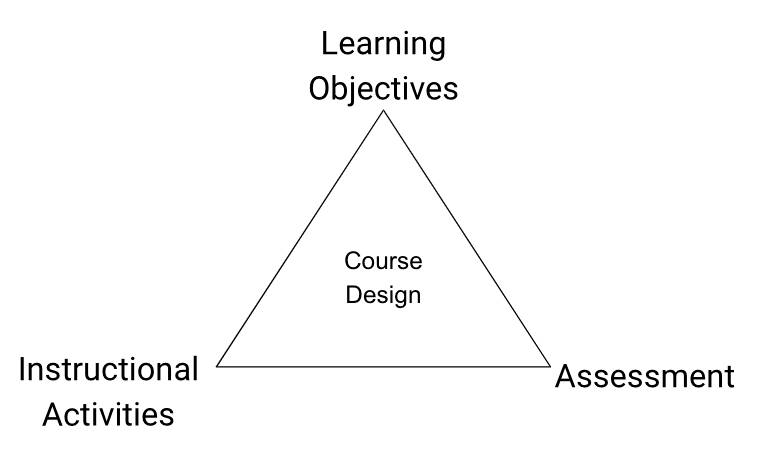
Understanding by design, or backwards design, is a course planning approach that begins by identifying the key learning objectives.
When designing a new course it is recommended you begin with identifying the:
- Learning Objectives - what do you want students to learn?
- Instructional Activities - what will you do to promote student learning?
- Assessment - what will you do to measure what students have learned?
Aligning these three components is a necessary process because change in one impacts the other two.
One way to design a course is to begin by articulating the student learning objectives. To learn more about articulating learning objectives, check out our teaching on Student Learning Objectives.
Backwards Design Triangle
Taxonomy of Significant Learning from Fink (2005)
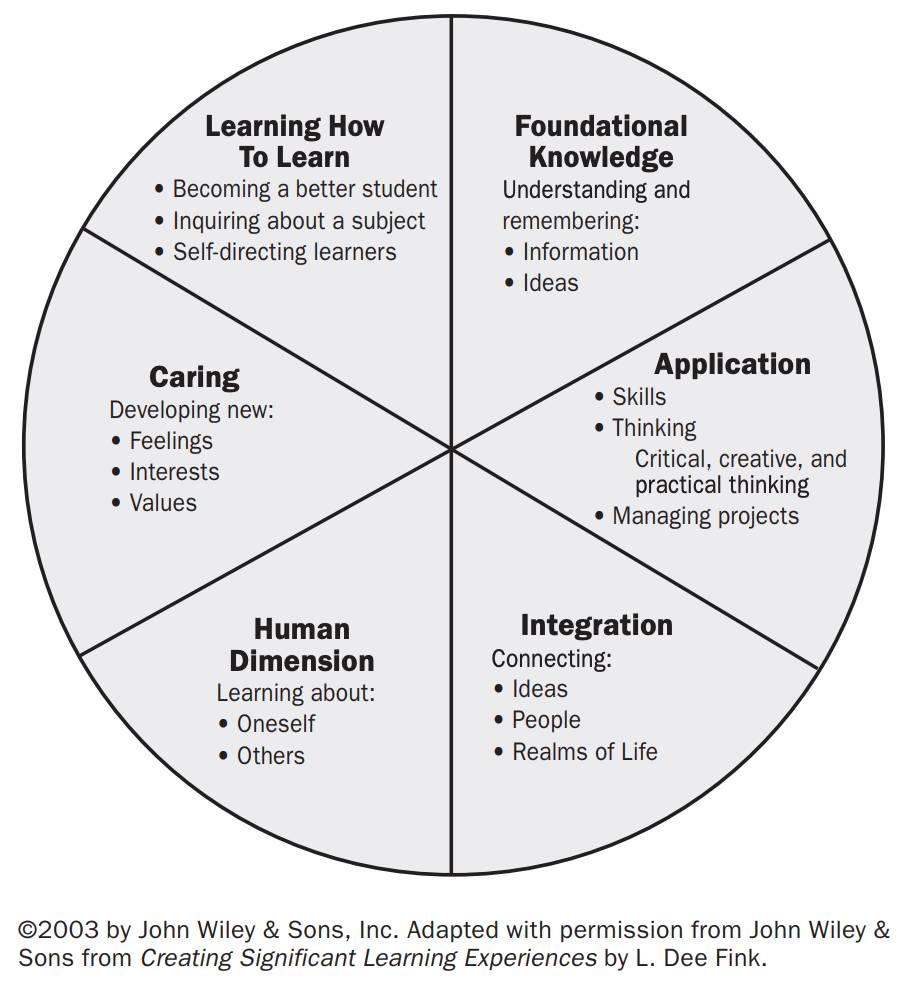
Moreover, according to L. Fink's Taxonomy of Significant Learning (2013), faculty are encouraged to consider other situational factors, such as:
- Student characteristics (What are their life situations? What goals and expectations do they hold for the class? What prior knowledge/experience do they have?)
- How frequently the course meets (and whether the course meets synchronously, asynchronously, or in a hybrid)
- How many students are enrolled in the course?
- Nature of the course content (Is the content theoretical, practical, a combination of both?)
- Teacher characteristics (what beliefs and values do they have about teaching and learning? What knowledge level do they have about the subject? What are their strengths or weaknesses?)
For students to experience significant learning, teachers need to consider situational factors when designing learning experiences (i.e. when designing a course).
Universal Design for Learning (UDL) Framework
In the 1990s, Anne Meyer, David Rose, and their colleagues at CAST introduced universal design for learning (UDL), a framework to improve teaching and learning by prioritizing the agency of the learner. Based on the scientific insights into how people learn, the framework is broken down into three categories: Means of Engagement, Means of Representation, and Means of Action and Expression.
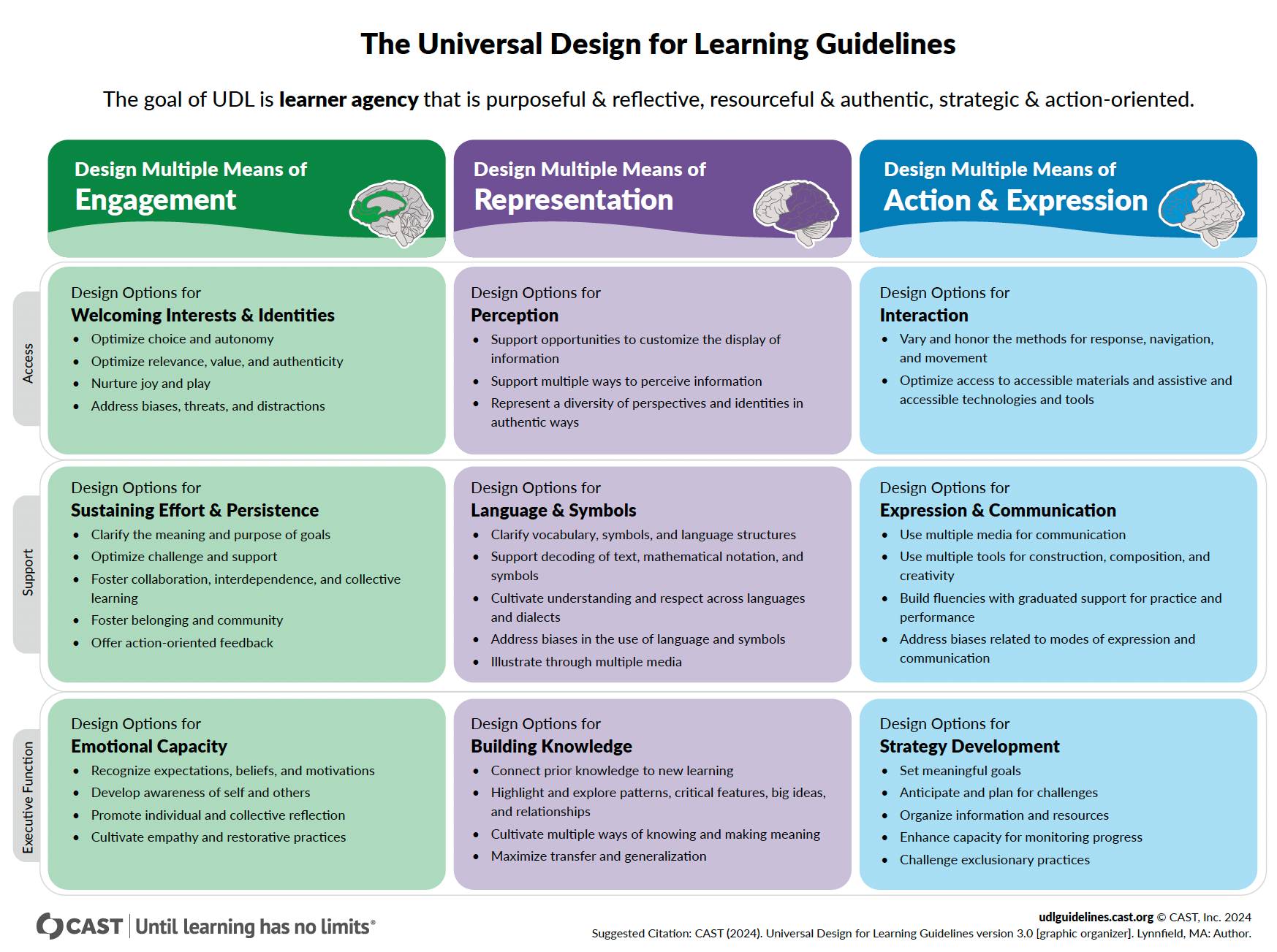
You can learn more about the UDL framework by visiting our webpage on Getting Started with Inclusive Teaching, or by visiting the UDL Guidelines website.
Additional Resources
Articles
Billson, J. M. (1986). The college classroom as a small group: some implications for teaching and learning.
Fink, D. L. (2005). Integrated Course Design | IDEA Paper #42. 1–7.
Books
Fink, D. L. (2013). Creating significant learning experiences: An integrated approach to designing college courses. Jossey-Bass.
Lovett, M. C., Bridges, M. W., DiPietro, M., Ambrose, S. A., & Norman, M. K. (2023). How Learning Works: Eight Research-Based Principles for Smart Teaching (2nd ed.). Jossey-Bass.
Wiggins, G. P., & McTighe, J. (1998). Understanding by design. Association for Supervision and Curriculum Development.
Zehnder, C., Kleine, K., Metzker, J., & Alby, C. (2021). Learning That Matters: A Field Guide to Course Design for Transformative Education. Myers Education Press.
Webpages
The UDL Guidelines from CAST
Frameworks and Taxonomies of Learning, from DePaul University's Teaching Commons
Getting Started with Inclusive Teaching, from our Grand Valley State University Pew FTLC Teaching Guide
Bloom's Taxonomy of Learning and Fink's Domains of Learning from Syracuse University