
First Year Interdisciplinary Sequences, 2026-2027
Sequence offerings rotate somewhat from year to year. See below for current descriptions of 16 sequences we are offering in the 2026-2027 academic year.
Please note: Students choose one sequence for the entire year. In Fall, you register for HNR 151 and HNR 152. In Winter, you register for HNR 153 and HNR 154. All sequences count for 6 credits per semester, which means they meet for 6 hours per week during both Fall and Winter semesters. A full-time student schedule is 15 credits per semester, so you'll also take roughly 9 credits (2 or 3 courses) per semester beyond the sequence for the first year.
If you have any questions please contact the Meijer Honors College office at 616-331-3219 or [email protected].
[1773669874].jpg)
THE STORIED JOURNEY
Coeli Fitzpatrick, Professor of Philosophy in Honors and Majd Al-Mallah, Professor of Arabic
Fall: HNR 151 01 Monday & Wednesday 12:00-1:15 p.m. and HNR 152 01 Monday & Wednesday 1:30-2:45 p.m. HON 219
Winter: HNR 153 01 Monday & Wednesday 12:00-1:15 p.m. and HNR 154 01 Monday & Wednesday 1:30-2:45 p.m. HON 219
Telling stories is among the most persistent of human acts — and among the most consequential. Narratives expressed through poetry, philosophy, novels, film, and visual culture do more than entertain or preserve memory: they construct meaning, shape identity, and determine whose experiences count as part of a shared human inheritance. As the philosopher J. L. Austin observed, words do things in communities. They act. They include and exclude, affirm and distort, authorize and silence.
This sequence examines how individuals and communities represent themselves and others, and what is at stake in those representations. It takes seriously both the impulse to find common ground across human experience and the recognition that every act of storytelling is situated — shaped by gender, race, cultural tradition, historical moments, power and oppression, and particular conditions of a life. These two commitments are not contradictions. They are the productive tension at the heart of the sequence. To ask what it means to be human is always also to ask: which human, speaking from where, heard by whom?
In this sequence, we will establish the foundational questions — belonging and exile, power and oppression, meaning and mortality — through poetry, philosophy, prose, fiction, non fiction, and film that span cultures and centuries. In addition, we look at how newer media shape and sometimes distort the stories people tell about themselves. Throughout the class, our animating questions remain constant: Who is speaking? Who is represented? Which voices carry authority — and which are marginalized or suppressed? Our approach will be global, drawing on materials from across different countries and eras.
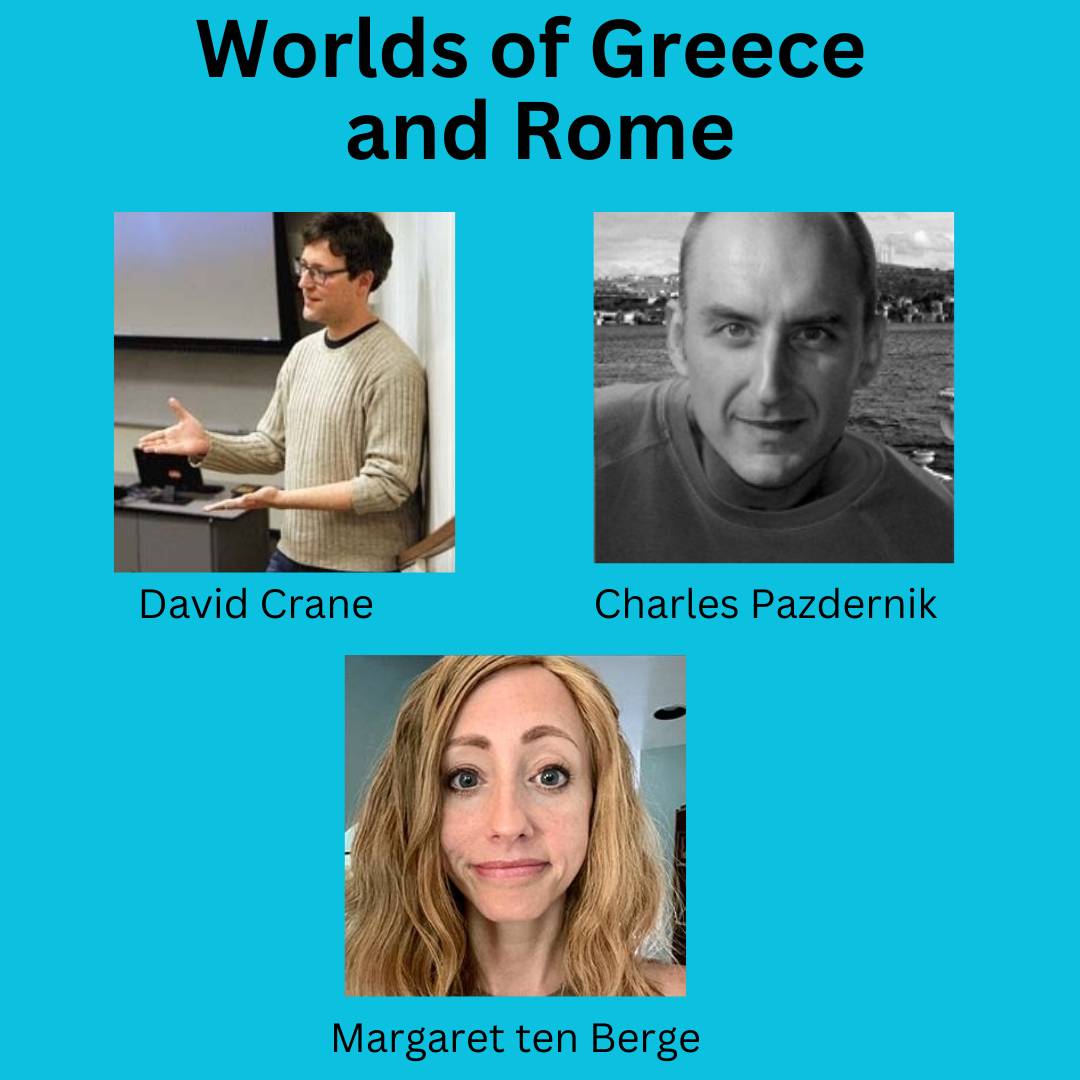
WORLDS OF GREECE AND ROME
Charles Pazdernik, Professor of Classics, David Crane, Associate Professor of Classics, and Margaret ten Berge, Assistant Professor of Classics
Fall: HNR 151 02 Monday, Wednesday, & Friday 1:00-1:50 p.m. and HNR 152 02 Monday, Wednesday, & Friday 2:00-2:50 p.m. HON 148
Winter: HNR 153 02 Monday, Wednesday, & Friday 1:00-1:50 p.m. and HNR 154 02 Monday, Wednesday, & Friday 2:00-2:50 p.m. HON 148
Ancient Greece and Rome are among the world's most exciting, important, and influential civilizations. Taught by researchers into various aspects of classical antiquity from Homer to the fall of the Roman Empire and beyond, the course asks participants to cooperate actively and enthusiastically in exploring mythology, history, art and archaeology, literature, and philosophy. Interactive learning experiences, including immersive role-playing games, complement spirited class discussions and careful attention to close reading, effective writing, and critical thinking. No prior knowledge is necessary (all texts are in translation).
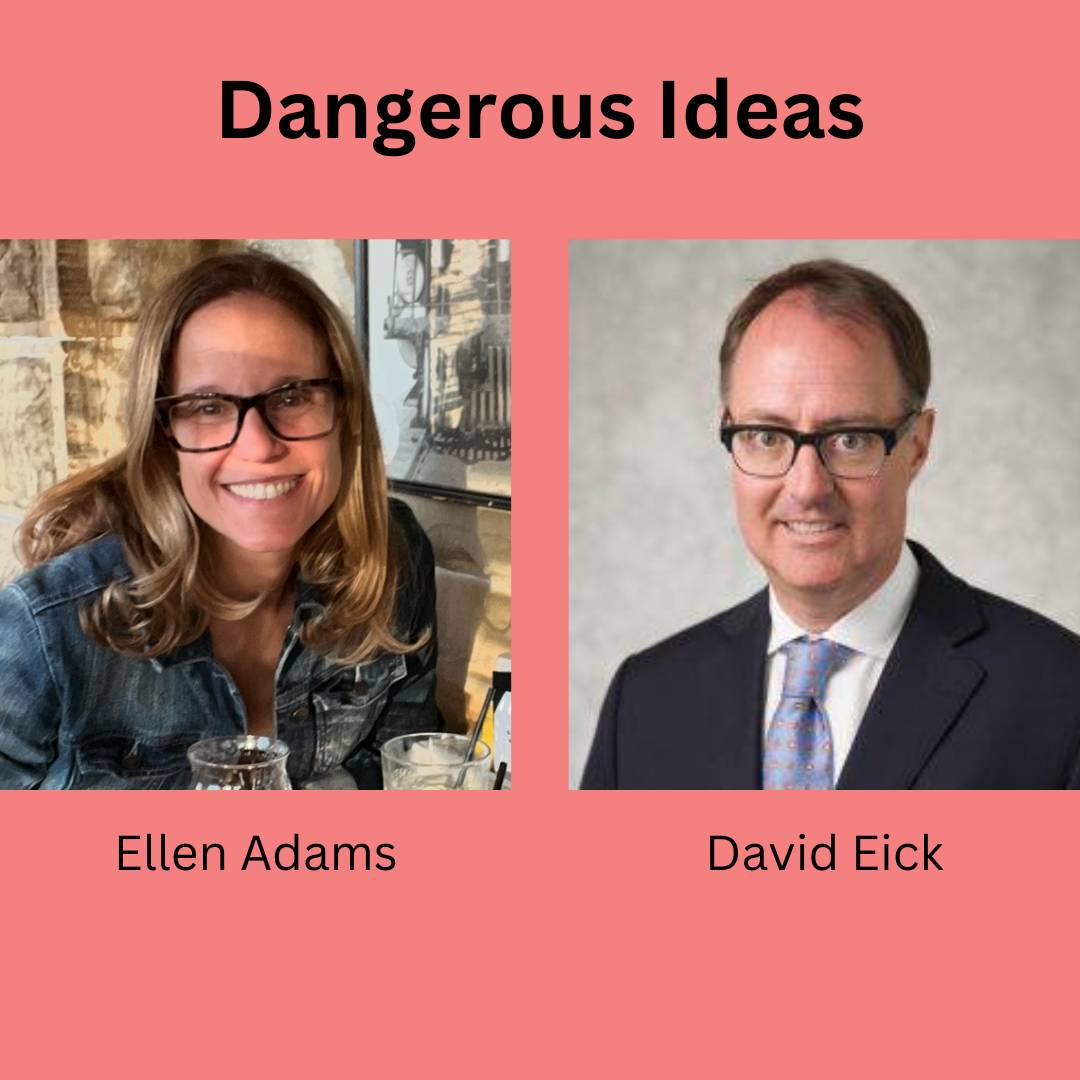
DANGEROUS IDEAS
Ellen Adams, Associate Professor of Art History in Honors and David Eick, Professor of French
Fall: HNR 151 03 Tuesday & Thursday 10:00-11:15 a.m. and HNR 152 03 Tuesday & Thursday 11:30-12:45 p.m. HON 218
Winter: HNR 153 03 Tuesday & Thursday 10:00-11:15 a.m. and HNR 154 03 Tuesday & Thursday 11:30-12:45 p.m. HON 218
By exploring moments of change, this course will provide you with knowledge of history, culture, and the big ideas that shape—and divide—our world. Novels, works of art, music, and film serve as vehicles for examining challenges to conventional ways of thinking, both past and present.
We will also engage in interactive role-playing games designed to foster deep learning and skill development. As a student, you will portray a character within a specific historical flashpoint, collaborating closely with your classmates. Through this experience, you will enhance your creative problem-solving, collaboration, information literacy, empathy, and persuasion skills—essential for success in both college and life. By immersing ourselves in different historical contexts, we will explore how history could have unfolded differently and gain a deeper understanding of the processes behind difficult decision-making.
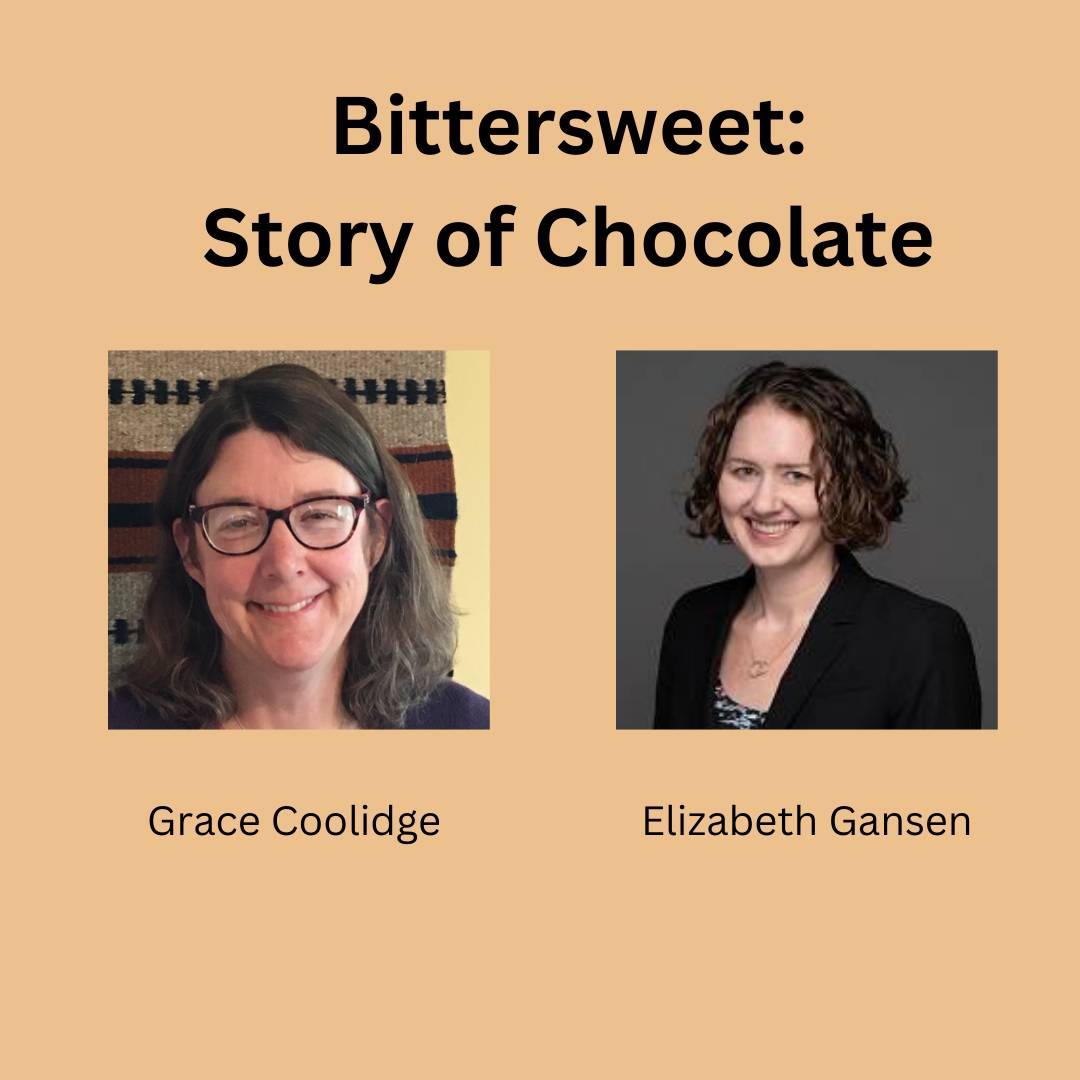
Bittersweet: Story of Chocolate
Grace Coolidge, Professor of History, Elizabeth Gansen, Associate Professor of Modern Languages & Literature and Faculty-in-Residence in Honors
Fall: HNR 151 04 Tuesday & Thursday 1:00-2:15 p.m. and HNR 152 04 Tuesday & Thursday 2:30-3:45 p.m. HON 220
Winter: HNR 153 04 Tuesday & Thursday 1:00-2:15 p.m. and HNR 154 Tuesday & Thursday 2:30-3:45 p.m. HON 220
While not a staple of our diet, arguably chocolate is a food that few of us could live without. From mocha lattes to Reese’s Peanut Butter cups, this ingenious mixture of cacao, sugar, and oftentimes milk is a foolproof formula to keep addicts around the world hooked. Even its most ardent fans, however, might be surprised to learn the central role that chocolate has played in history, from its origins in Mesoamerica among the Maya and Aztecs to its export to Spain and its subsequent economic boom. Chocolate is not only an economic good but a cultural and historic artifact, one which took on new nuances and meanings as chocolate transformed from an elite beverage into the bars that line the shelves of grocery stores today. Yet its delicious sweetness hides a dark legacy of slavery, exploitation, and environmental destruction. This sequence will lead us through the twists and turns of chocolate’s complex journey to the 21st century. It will explore chocolate’s impact, both globally and locally, as well as the ethical and moral implications that we face as consumers of this delicious treat.
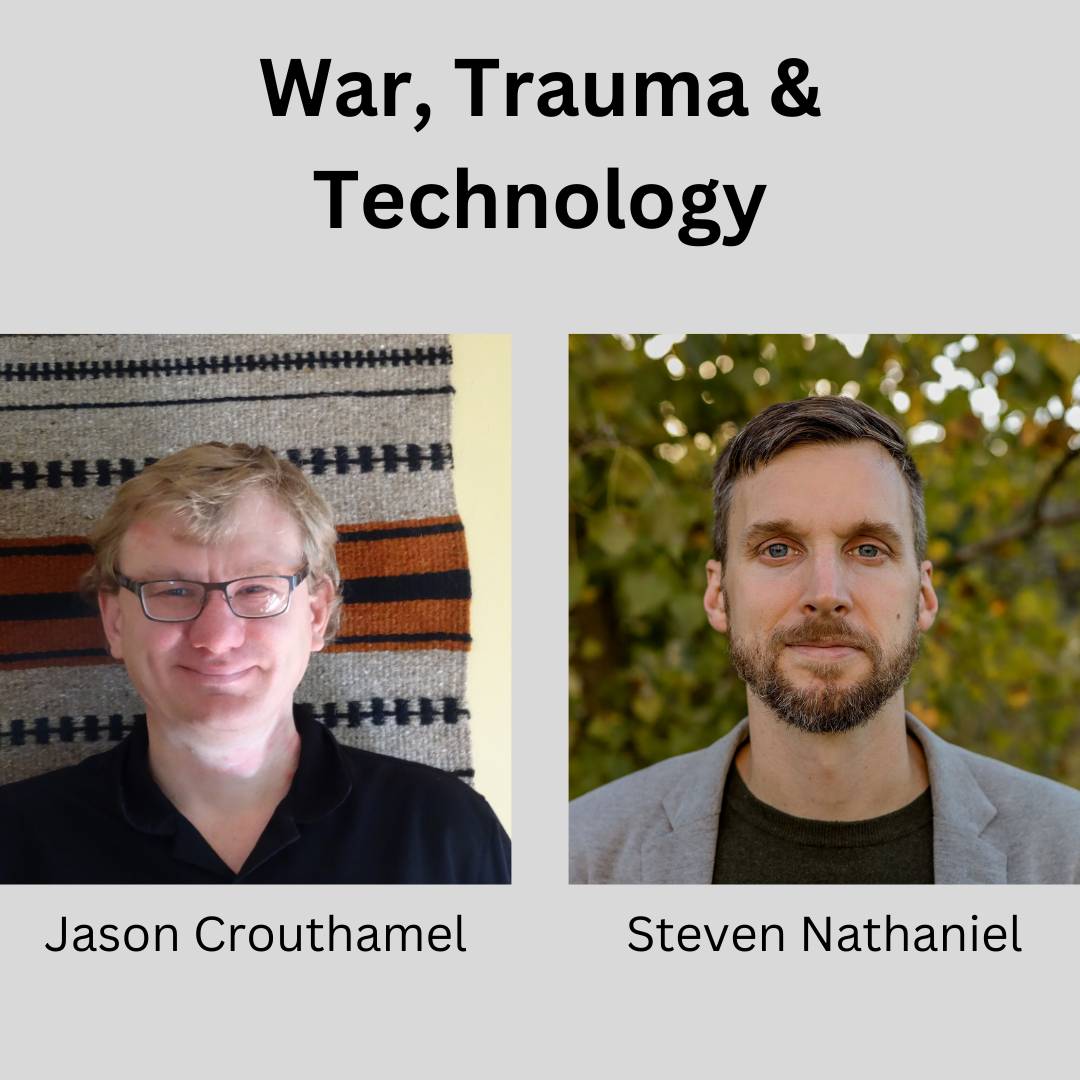
WAR, TRAUMA & TECHNOLOGY
Jason Crouthamel, Professor of History and Steven Nathaniel, Assistant Professor, School of Interdisciplinary Studies
Fall: HNR 151 06 Monday & Wednesday 3:00-4:15 p.m. and HNR 152 06 Monday & Wednesday 4:30-5:45 p.m. HON 219
Winter: HNR 153 06 Monday & Wednesday 3:00-4:15 p.m. and HNR 154 06 Monday & Wednesday 4:30-5:45 p.m. HON 219
In this course, we examine ways of preserving memory from the late-nineteenth to the mid-twentieth century, with special attention to the traumatic effects of the two world wars and the Holocaust. We approach this topic through a broad understanding of memory that stretches beyond the psyche to various forms of recording particular to literature, film, music, written narratives and their attendant technologies. Students will engage these media as a way of contemplating the lives of individuals contending with traumas such as “shell shock,” but also to interrogate the social institutions that structured their experiences. These investigations lead us to focus on war and genocide, while situating these events in longer histories of the Enlightenment, Industrialization, Science, Medicine, and Psychology. We will study official attempts to build “collective” memories, but also the more “hidden” ways in which individuals struggle to describe the psychological, emotional, and spiritual impact of mass trauma. This means that our students contemplate the records that endure to our digital present, but they also learn to dignify the gaps in these records whose history cannot be restored.
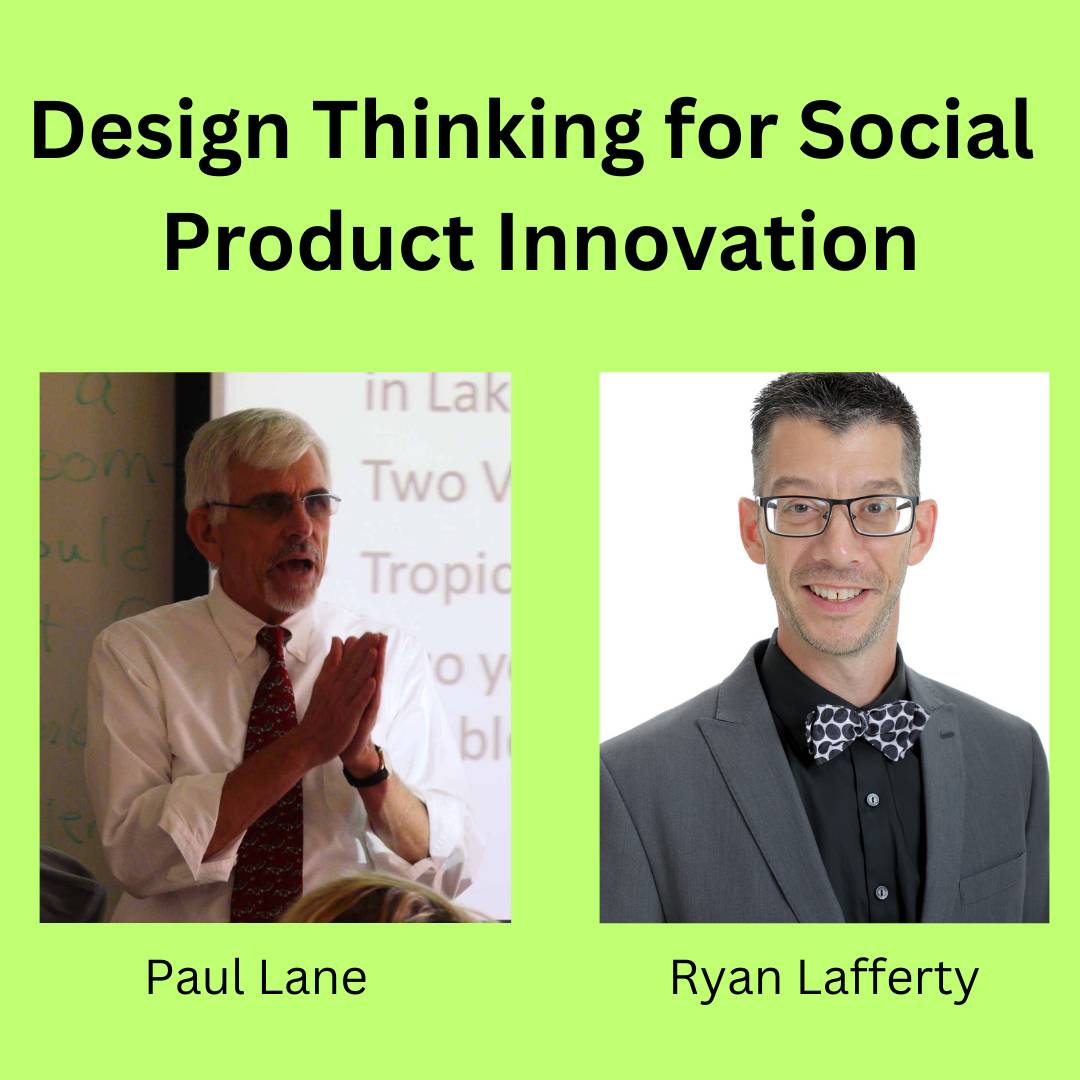
DESIGN THINKING FOR SOCIAL PRODUCT INNOVATION
Ryan Lafferty, Adjunct Faculty and Paul Lane, Professor of Marketing
Fall: HNR 151 07 Wednesday 3:00-5:50 p.m. and HNR 152 07 Wednesday 6:00-8:50 p.m. HON 148
Winter: HNR 153 07 Wednesday 3:00-5:50 p.m. and HNR 154 07 Wednesday 6:00-8:50 p.m. HON 148
If you enjoy food, teamwork, and hands on, project based learning and would gladly trade traditional lectures, tests, and essays for something more engaging, you will feel right at home in this class. Join two crazy guys in ties as they take you on an international journey of innovation and problem solving. Using Design Thinking as the framework, you will focus on a country at the base of the economic pyramid and a United Nations Sustainable Development Goal of your choice, diving into real research and real conversations. Along the way, you will connect with experts both within your chosen country and beyond, gaining insight and feedback as you shape your ideas.
This class is built for all majors. Whether you are interested in business, design, science, engineering or the humanities, you will have the freedom to mold your project around what excites you most. By the end, you will create a product or solution designed to make a real impact. Not just a grade, but something meaningful. And while a once a week six-hour class might sound intense, it is anything but typical. Expect international dinners, 3D printing, field trips, and real growth in how you communicate and present your ideas. Yes, the pace is real. There are four assignments every two weeks, so time management matters. But you will not be doing it alone. The class is built around collaboration, giving you the support and skills to succeed both as a team and on your own. If you are looking for a class that is different, challenging, and actually fun, this is it.
Step in, think bigger, create something that matters, and build lifelong friends.
-written and approved by DTSPI class of 2026
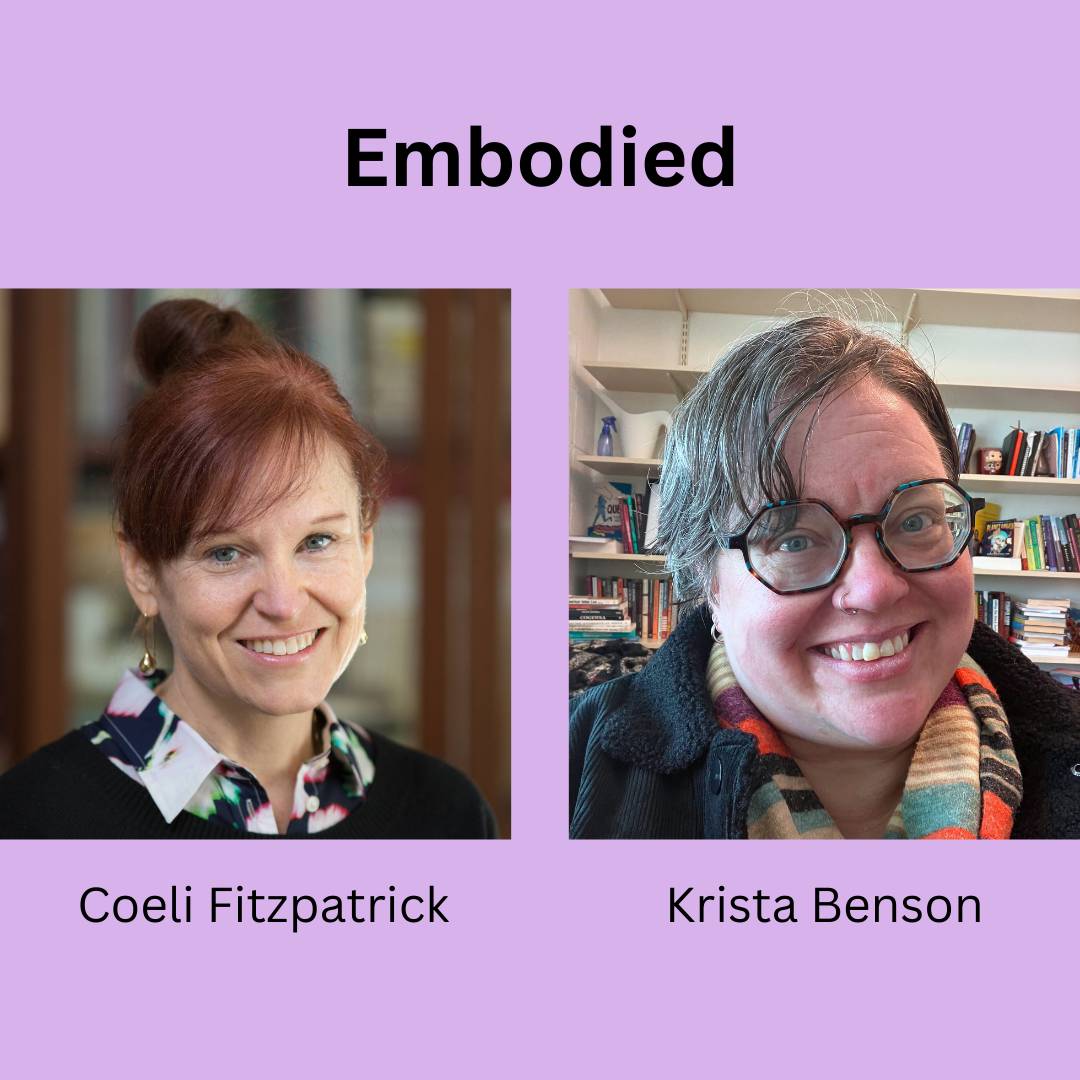
EMBODIED
Coeli Fitzpatrick, Professor of Philosophy in Honors and Krista Benson, Associate Professor, School of Interdisciplinary Studies
Fall: HNR 151 08 Tuesday & Thursday 11:30-12:45 p.m. and HNR 152 08 Tuesday & Thursday 1:00-2:15 p.m. HON 219
Winter: HNR 153 08 Tuesday & Thursday 11:30-12:45 p.m. and HNR 154 08 Tuesday & Thursday 1:00-2:15 p.m. HON 219
This sequence offers an interdisciplinary, reading/discussion-based exploration of the complex interplay between health, bodies, and society. The course draws from fields such as philosophy, public health, sociology, gender studies, critical theory, and medical ethics. Students delve into ways in which health/illness, sanity/insanity are invoked as bodies are surveilled, regulated, registered, and incarcerated within various social, cultural, and political contexts. Through readings, multimedia materials, and lots of discussion, students analyze historical and contemporary practices that shape perceptions and experiences of health, illness, and embodiment.
In the first semester, we look mainly at two topics: the institution and disability. Our questions regarding the institution focus on how institutions function as places of control over bodies, whether those institutions are carceral, colonial, or care-oriented. For example, how have bodies in prisons, mental institutions, and nursing homes been counted, classified, and controlled by state and medical authorities? How did the state allow prisoners to be used in medical experiments? How does sanity and insanity come to be regulated by the state? What happened in mental institutions in the past, and why, given a history of abuse, are some people calling for the return of the mental asylum? How has political dissent been pathologized? Using a public health perspective, we also look at ability/disability and its definition and certification. We’ll think about stigma, the disability rights movement(s), the promise of technology, and the ethical questions of using genetic medicine.
In the second semester, we continue to ask questions about how the state’s understanding of ideology results in the exploitation of bodies. We focus specifically on neoliberalism and race to examine how neoliberal conceptions of health led to a certain conception of health in the United States and abroad. We learn about medical discrimination and activism in the United States and in a global health context. We look at the concept of medicalization (defining and treating social problems or human condition as medical problems) and the pathologizing of dissent and politically marginal positions. We will also explore abolitionist politics and theories of change in politics, social systems, and social support networks. Students also have an opportunity to explore their own interest in topics of embodiment that aren’t covered formally.
[1773685598].jpg)
Reimagining Cities: Igniting Sustainable Change through Radical Urban Transformation
Melba Vélez Ortiz, Professor of Communications in Honors and Chad Frederick, Associate Professor, Geography and Sustainable Planning
Fall: HNR 151 09 Tuesday & Thursday 10:00-11:15 a.m. and HNR 152 09 Tuesday & Thursday 11:30-12:45 p.m. HON 148
Winter: HNR 153 09 Tuesday & Thursday 10:00-11:15 a.m. and HNR 154 09 Tuesday & Thursday 11:30-12:45 p.m. HON 148
What makes a city sustainable, livable, and just—and who decides what that looks like? This project-based course explores the intersections of urban planning, environmental communication, and civic imagination. Students will investigate how cities are shaped by the logic and rhetoric of planning debates, the political and racial histories of zoning and highway placement, and the persuasive strategies that influence public perceptions of urban space.
Using Grand Rapids as a living laboratory, students will conduct field research to identify and reimagine specific sites that could become more sustainable, walkable, and equitable. Through argumentation, mapping, and design, teams will develop proposals that address ecological, economic, and political factors, culminating in a public presentation to planning and community leaders.
By combining theory with practice, students will learn to communicate complex urban challenges clearly and persuasively—using facts, maps, logic, and visual design to envision radical transformations of the built environment. This course invites students to think critically and creatively about urban life and to design compelling arguments for more just and sustainable cities.
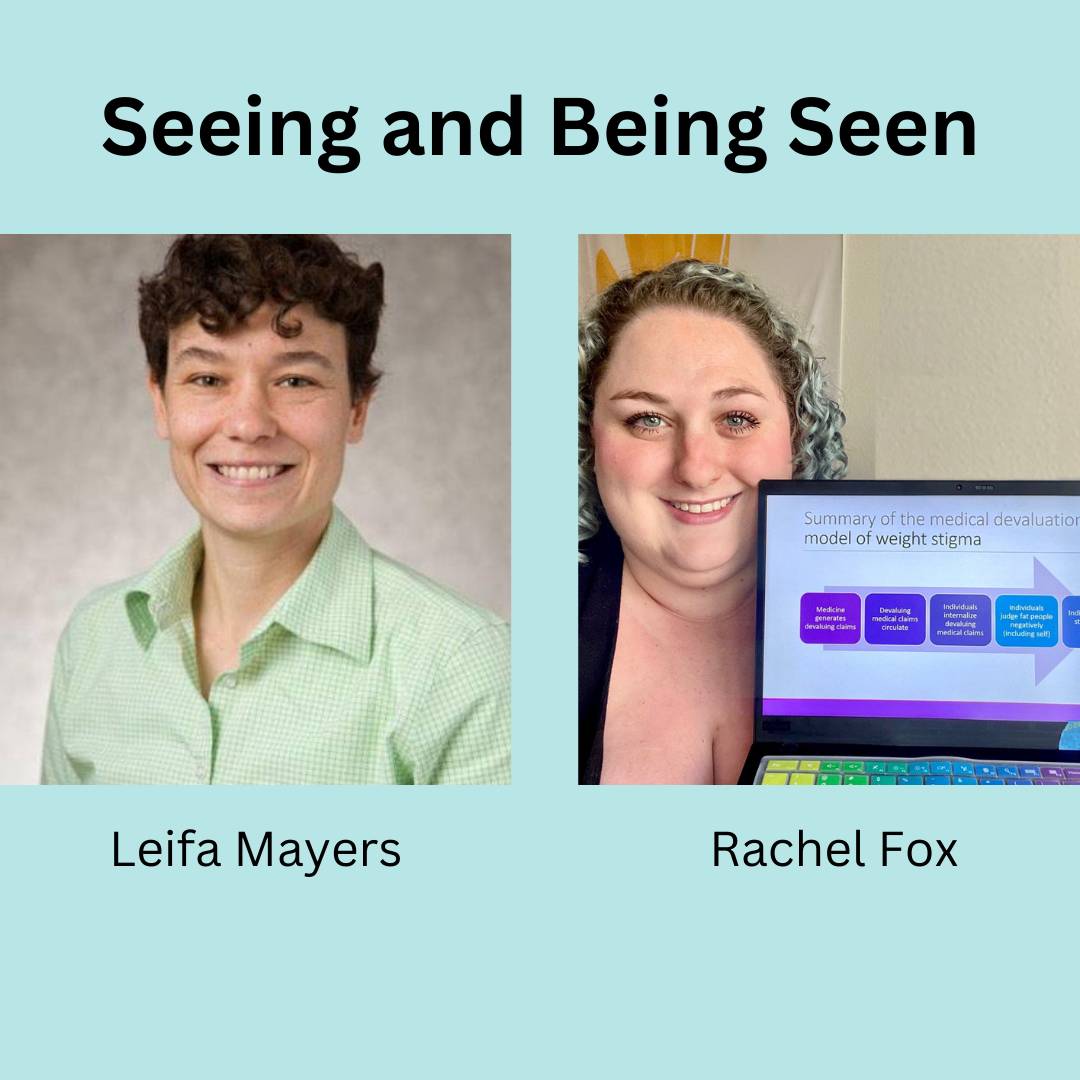
SEEING AND BEING SEEN: SURVEILLANCE, TECHNOLOGY, AND SELF
Leifa Mayers, Associate Professor of Women, Gender, and Sexuality Studies in Honors and Rachel Fox, Assistant Professor, School of Interdisciplinary Studies
Fall: HNR 151 10 Tuesday & Thursday 10:00-11:15 a.m. and HNR 152 10 Tuesday & Thursday 11:30-12:45 p.m. HON 214
Winter: HNR 153 10 Tuesday & Thursday 10:00-11:15 a.m. and HNR 154 10 Tuesday & Thursday 11:30-12:45 p.m. HON 214
How are you, and all of us, viewed by various technologies and in various contexts? How do science and technology shape our interactions with the media and within educational, economic, and health care settings? In this sequence, we will develop skills for thinking critically about how U.S. institutions use technological tools to generate information about who we are, how we behave, and what we need based on race, gender, ability, and other categories of difference. During fall semester, we will focus on the media and finance, including topics such as artificial intelligence (AI), internet search engines, and Big Tech. In the winter semester, we will focus on health care and social services, including topics such as genetic testing, public health surveillance, and security systems. Throughout the year, we will use hands-on activities, personal experiences, and scholarly texts to inform our understanding of how technology mediates both our everyday lives and the opportunities of different groups of people living in the U.S.

SHOW ME THE MONEY
Dori Danko, Instructor of Accounting and Faculty-in-Residence in Honors and Gabriele Gottlieb, Associate Professor of History
Fall: HNR 151 11 Monday & Wednesday 9:00-10:15 a.m. and Monday & Wednesday 10:30-11:45 a.m. HON 220
Winter: HNR 153 11 Monday & Wednesday 9:00-10:15 a.m. and Monday & Wednesday 10:30-11:45 a.m. HON 220
Students will learn and explore the diverse aspects of capitalism from its origins through modern times. The varied aspects of capitalism will be discussed including but not limited to mercantilism, merchant capitalism, laissez-faire capitalism, the rise of big business, and globalization. In addition, students will dive into and discover topics such as labor mobilization, the rise of capitalist institutions, boom and bust cycles, and competition vs. regulation approaches from a variety of perspectives both financial and historical.
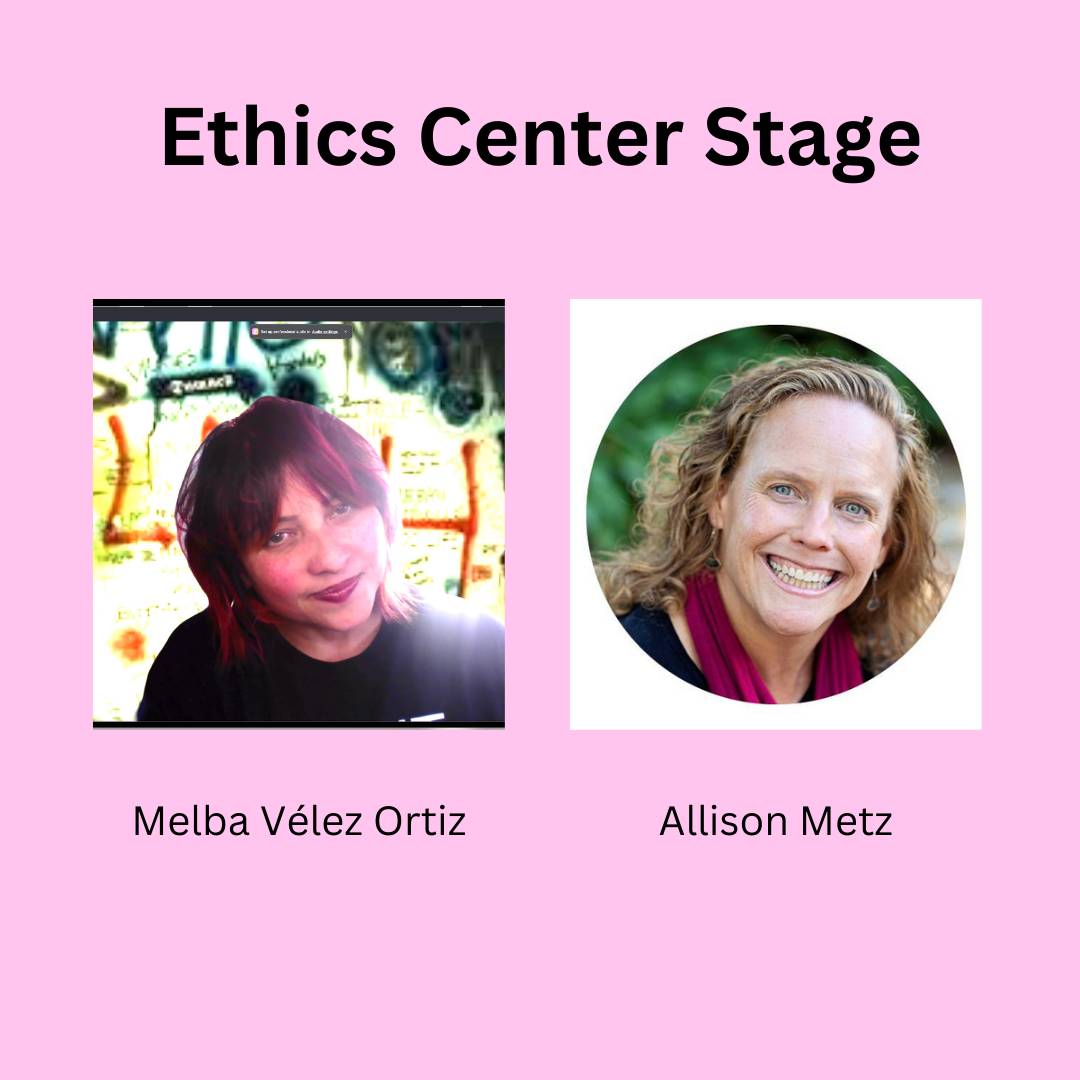
Ethics Center Stage: Critical Inquiry and Social Transformation through Theatre Performance
Melba Vélez Ortiz, Professor of Communications in Honors and Allison Metz, Professor of Theatre Education
Fall: HNR 151 12 Tuesday & Thursday 2:30-3:45 p.m. and HNR 152 12 Tuesday & Thursday 4:00-5:15 p.m. HON 219
Winter: HNR 153 12 Tuesday & Thursday 2:30-3:45 p.m. and HNR 154 12 Tuesday & Thursday 4:00-5:15 p.m. HON 219
How can performance become a catalyst for ethical reflection and social change? This course explores how storytelling and theatre from across the globe shape dialogue around urgent issues such as climate change, gender justice, racial discrimination, and economic inequity. Students will engage with ethical theories of communication alongside dramatic traditions from African, Latin American, and Western rhetorical practices to understand how cultures have staged moral dilemmas throughout history.
Through case studies and applied exercises, students will practice performance techniques that illuminate ethical tensions, and critically examine how communities use theatre to imagine and inspire more just futures. The course culminates in the creation of original performances that stage ethical questions and propose pathways toward greater equity and civic engagement.
This course is ideal for students interested in ethics, performance, social justice, and the power of art to move public dialogue.
[1743085233].jpg)
GAME CHANGERS: SPORT, SOCIETY, AND POWER
Tara Hefferan, Senior Affiliate Professor of Anthropology and David Coffey, Professor of Mathematics
Fall: HNR 151 13 Tuesday & Thursday 8:30-9:45 a.m. and HNR 152 13 Tuesday & Thursday 10:00-11:15 a.m. HHLC 109A
Winter: HNR 153 Tuesday & Thursday 8:30-9:45 a.m. and HNR 154 13 Tuesday & Thursday 10:00-11:15 a.m. HHLC 109A
This sequence focuses on the global and local significance of sport. Using a variety of lenses—historical, contemporary, statistical, and social justice-oriented—and adopting a comparative cross-cultural perspective, the sequence aims to both demystify and critically examine the role of sport in our lives. Drawing from a mix of scholarly and popular source materials, the sequence will explore the major themes and concerns connected with the sporting universe, including the diverse ways that sport both shapes and is shaped by other aspects of culture. Broadly, three main frames will structure our investigation: 1. An examination of the ancient and contemporary conditions giving rise to and influencing engagement with sport; 2. Investigation of sporting participation; 3. Exploration of sporting spectatorship and fandom.
Using West Michigan as an extension of the classroom, the sequence will engage directly with the local sports scene by partnering with schools, clubs, or organizations. These partnerships will give students immersive and hands-on experiences in focused research.
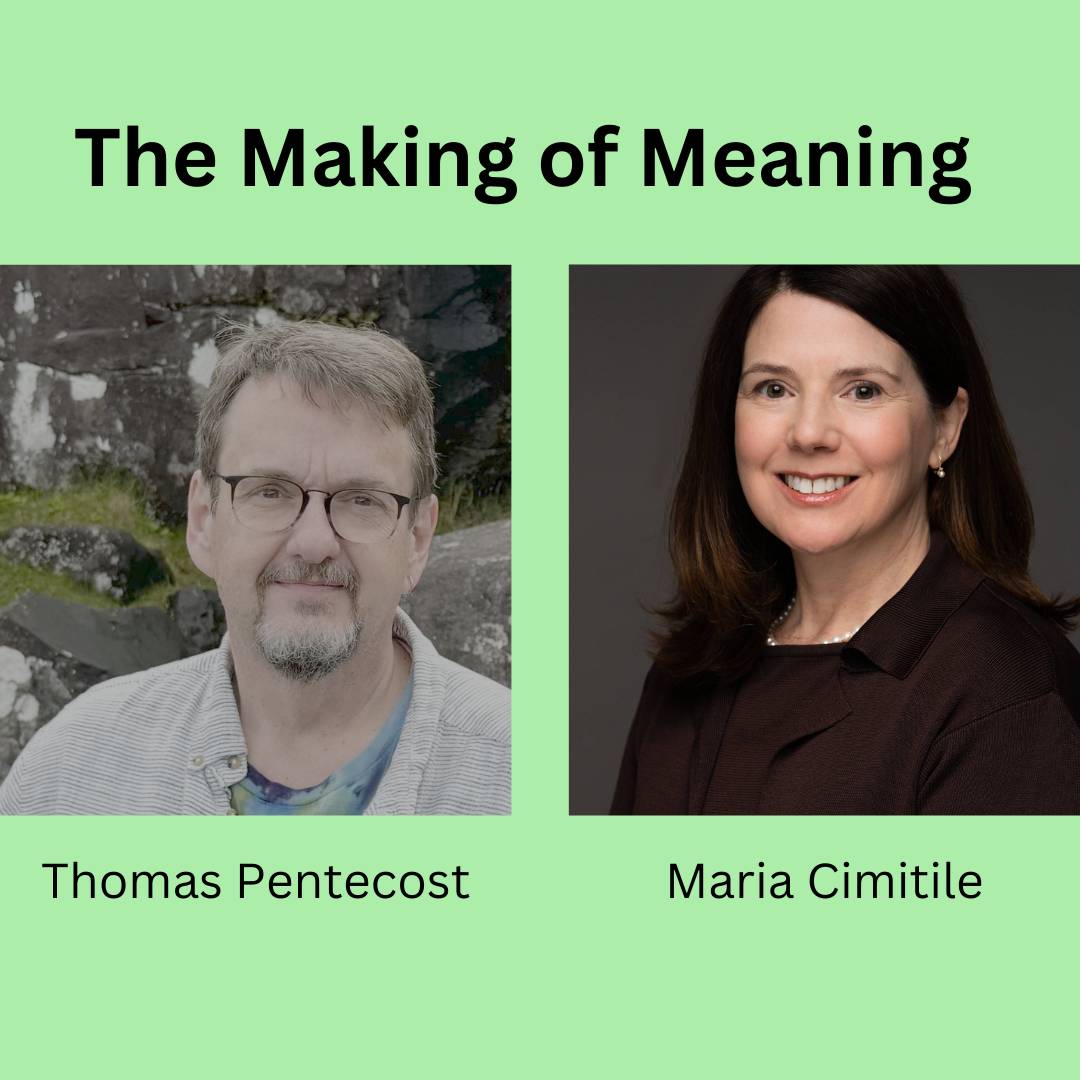
THE MAKING OF MEANING
Maria Cimitile, Professor of Philosophy in Honors and Thomas Pentecost, Professor of Chemical Education
Fall: HNR 151 14 Tuesday & Thursday 10:00-11:15 a.m. and HNR 152 14 Tuesday & Thursday 11:30-12:45 p.m. HON 220
Winter: HNR 153 14 Tuesday & Thursday 10:00-11:15 a.m. and HNR 154 14 Tuesday & Thursday 11:30-12:45 p.m. HON 220
This sequence explores how humans come to claim knowledge about the world and about how they make meaning from that knowledge. We will look at how scientific and philosophical knowledge is produced, how scientific consensus is obtained, and knowledge becomes communicated through standard works of science, philosophy, and the humanities. This communication is often contested, and results in questions about policies and identity. We will read some hard science, some deep philosophy, some beautiful literature and poetry, and some political fights, as we investigate and appreciate how humans have articulated their ongoing efforts to understand, describe, and change the world.
[1773689554].jpg)
FOOD FOR THOUGHT
Elizabeth Gansen, Associate Professor of Modern Languages & Literatures and Faculty-in-Residence in Honors, Yan Liang, Professor of Chinese, and Sigrid Danielson, Associate Professor of Art History
Fall: HNR 151 16 Tuesday & Thursday 8:30-9:45 a.m. and HNR 152 16 Tuesday & Thursday 10:00-11:15 a.m. HON 219
Winter: HNR 153 16 Tuesday & Thursday 8:30-9:45 a.m. and HNR 154 16 Tuesday & Thursday 10:00-11:15 a.m. HON 219
In October 2020, shortly before the United States’ presidential election, the New York Times posted a quiz: “Can you tell a ‘Trump’ Fridge from a ‘Biden’ Fridge?” Players were challenged to accurately identify a person’s political views based on a very particular criterion: the food they ate. While the validity of such a quiz is questionable, nevertheless it is undeniable that food reveals something intrinsic about our identity. It tells others who we are, where we are from, and what we do with our lives. In this freshman honors sequence, students will explore the topic of food from diverse disciplinary perspectives and through various mediums, including film, literature, and art. Focusing initially on Latin American and French food culture as points of departure, we will examine the impact of histories of colonization and migration on food production and habits, the politics of food and waste, and cultural expectations surrounding the making and eating of food. We will also examine global trends in nutrition and food and their consequences for country-specific or regional gastronomy, such as what constitutes a ‘healthy’ diet as well as the growing popularity of plant-based diets. We will try our hand at making some recipes from French and Hispanic culinary traditions and take several food-related excursions. Class will be discussion-based and use several Reacting to the Past (RTTP) games that put on display the central debates and tensions that define our current relationship to food.