

Dr. Shakil Ahmed on Quantum Computing
Published July 31, 2026 by Allison Bazaire
The Future Isn't Faster. It's Different.
For decades, quantum computing lived mostly in the realm of theory. It was a fascinating idea explored by physicists and computer scientists but largely confined to research laboratories.
Today, that story is changing, and according to Assistant Professor Shakil Ahmed, that transformation is what makes quantum computing so exciting.
Ahmed believes quantum computing is no longer just a promising idea for the future. He says that rapid advances in hardware, significant investment from governments and technology companies, and cloud-based access to quantum computers are moving the field from theory to real-world research and innovation.
"As I learned more, I became fascinated not only by the underlying theory but also by how rapidly the field has evolved from a theoretical concept into an emerging technology," explains Ahmed.
Computing’s rapid evolution is creating opportunities that extend far beyond the research community. Ahmed notes,"This creates tremendous opportunities for research, innovation, and workforce development. And universities have an important role in preparing the next generation of scientists and engineers."
More Than a Faster Computer
One of the biggest misconceptions about quantum computing is that it's simply a much faster version of today's computers.
It isn't.
Instead, quantum computers approach certain problems in an entirely different way.
Ahmed describes how classical computers process information using bits, which exist as either a 0 or a 1. However, Quantum computers use quantum bits, or qubits, which can exist in combinations of states through quantum mechanical principles such as superposition and entanglement.
For many people, those concepts can feel abstract. Ahmed often explains the difference with a simple analogy.
"A useful analogy is that a classical computer explores one path at a time, while a quantum computer can explore many possibilities simultaneously for certain types of problems."
That doesn't mean quantum computers will replace laptops, smartphones, or even today's most powerful supercomputers. Instead, Ahmed explains they will complement classical computers by solving specialized problems that are beyond the practical capabilities of today's systems.
Why Quantum Computing Matters Now
Although the principles behind quantum computing have been studied for decades, several key developments have pushed the field from theoretical research toward practical application. "Quantum hardware has improved dramatically over the last decade, with processors becoming more reliable and scalable," says Ahmed.
At the same time, cloud-based quantum platforms have made the technology far more accessible. Researchers and students no longer need exclusive access to specialized laboratories to begin experimenting with quantum computers. "Cloud-based quantum platforms now allow students and researchers worldwide to experiment with real quantum computers, making the technology far more accessible than ever before," Ahmed explains.
Momentum has also been fueled by significant investment. According to Ahmed, Governments and technology companies around the world are investing heavily in quantum research, accelerating advances in hardware, software, algorithms, and workforce development. "Substantial investments from governments and industry have transformed quantum computing into a global research priority," says Ahmed. "These investments are fueling advances in hardware, algorithms, software, and workforce development."
Together, these developments have transformed quantum computing from a promising concept into a rapidly advancing field with growing opportunities for research, education, and real-world innovation.
Those opportunities extend far beyond the laboratory. Quantum computing isn't being developed simply to make computers faster. Its promise lies in solving problems that become overwhelmingly complex for even today's most powerful classical computers.
Imagine simulating billions of molecular interactions to accelerate drug discovery, designing new materials before they're ever manufactured, or evaluating countless possibilities to optimize transportation networks and global supply chains. These are the kinds of challenges researchers hope quantum computing can one day help solve.
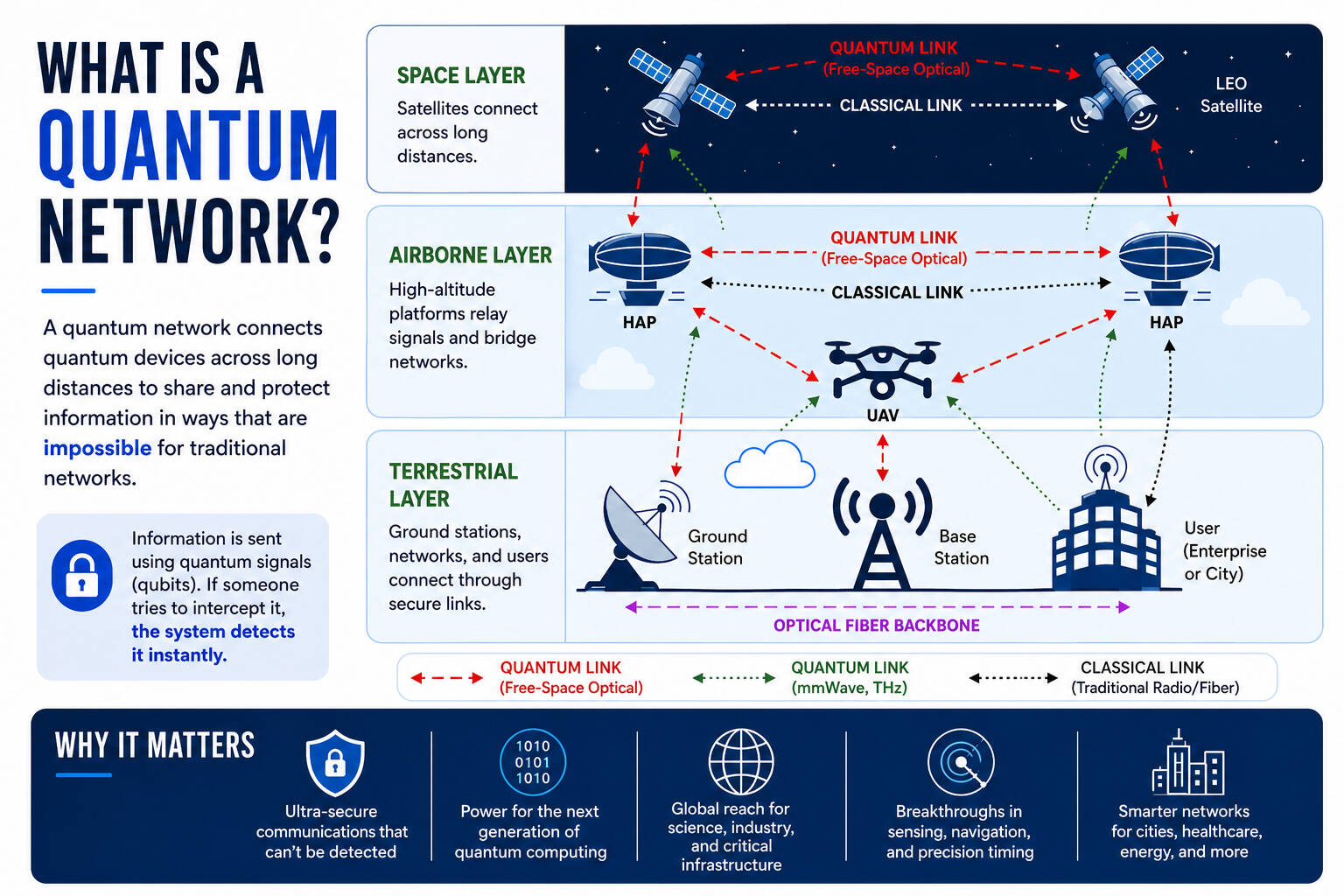
For Ahmed, the potential for quantum applications span healthcare, cybersecurity, financial modeling, artificial intelligence, advanced manufacturing, wireless communications, and energy research. His own work focuses on quantum networking in developing the communication protocols and architectures that could one day enable secure, efficient quantum communication networks. "Although many of these applications remain under active research," Ahmed says, "they illustrate the tremendous potential of quantum computing to address challenges that are difficult or impractical for classical computers."
Preparing Students for What's Next
As quantum computing continues to mature, universities have an opportunity to prepare students before the technology becomes commonplace.
Students entering the field today won't just learn a new programming language or software platform. They'll develop the interdisciplinary thinking required to solve problems that span computer science, engineering, mathematics, and physics.
"Students who develop quantum computing expertise now will be well positioned for careers in academia, national laboratories, government agencies, startups, and leading technology companies," says Ahmed.
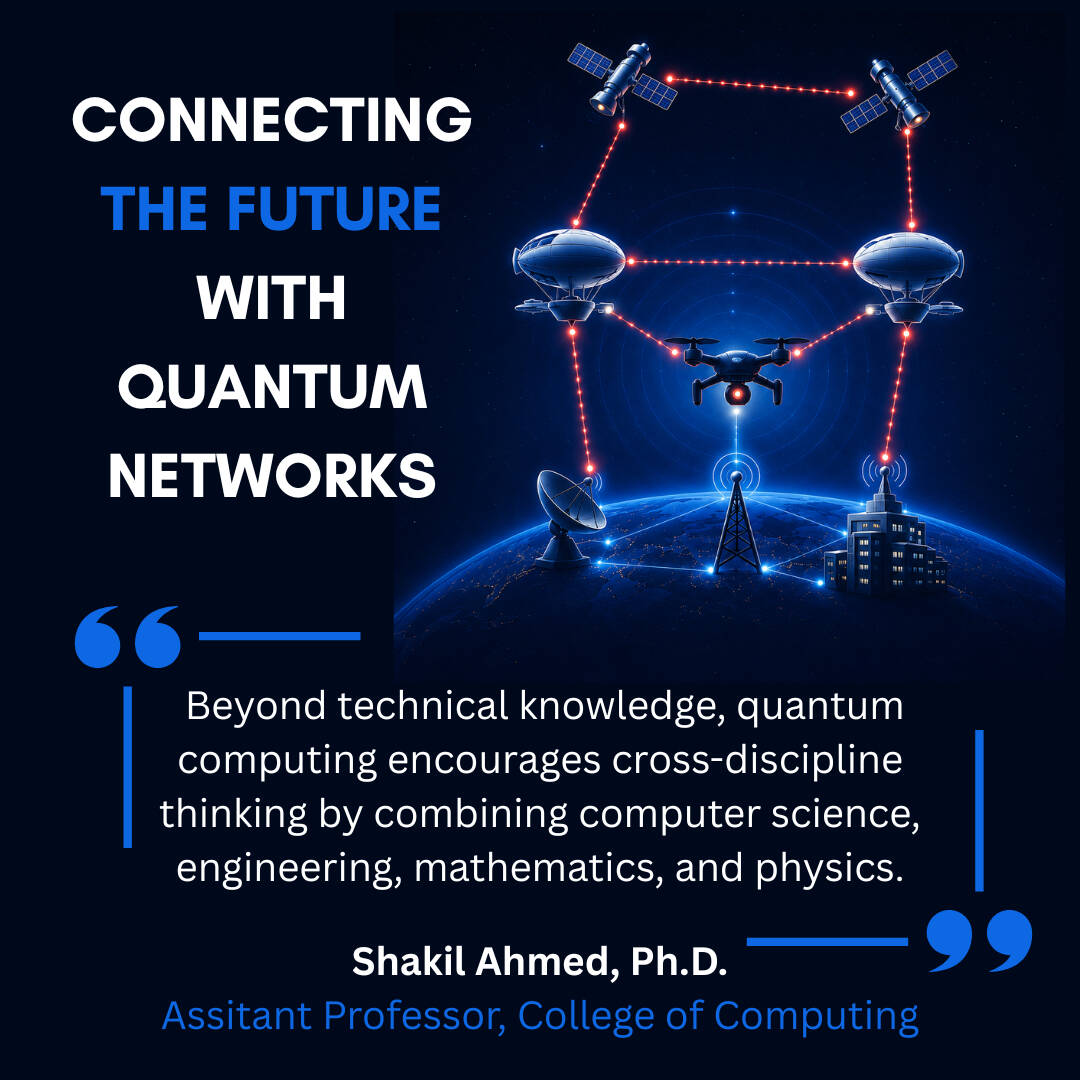
Equally important, he asserts, the skills students gain will remain valuable regardless of how the technology evolves. Ahmed says that, "Beyond technical knowledge, quantum computing encourages cross-discipline thinking by combining computer science, engineering, mathematics, and physics. These skills will remain valuable regardless of how the technology evolves."
At GVSU, Ahmed’s goal is to help build a strong foundation by developing innovative courses, creating new research opportunities, and expanding collaborations with industry, national laboratories, and universities. He says, "I hope to cultivate an active research program, develop innovative courses that introduce students to quantum computing, and create collaborations with industry, national laboratories, and other universities."