

A JOINT INITIATIVE OF THE GVSU COLLEGE OF COMPUTING AND VAN ANDEL INSTITUTE
AI Research and Innovation Institute
Where foundational artificial intelligence converges with biomedical discovery.


AIRII unites Grand Valley State University's rapidly growing expertise in artificial intelligence with Van Andel Institute's world-class leadership in biomedical research — creating a coordinated, interdisciplinary environment that integrates methods, data, infrastructure, and talent in one system, and positioning West Michigan as a national hub for AI-driven scientific innovation.
Founded on a Letter of Intent executed in March 2026 by Dr. Philomena V. Mantella, President of Grand Valley State University, and David Van Andel, Chairman & CEO of the Van Andel Institute.
Fully funded Ph.D. students over the first five years
External funding target in the first 3–5 years
Faculty engaged across GVSU and VAI

A next-generation AI institute, built from the ground up
Artificial intelligence is transforming the life sciences and healthcare through advances in biomedical discovery, diagnostics, drug discovery, and precision medicine — and the global market is expanding at an unprecedented pace. Yet the research ecosystem has a structural gap: few environments deeply integrate AI and biomedical research, combining methods, data, infrastructure, and talent in one coordinated system.
AIRII is designed to close that gap. Unlike traditional AI institutes, it is organized around the convergence of foundational AI, biomedical discovery, and real-world translation — coordinating multi-investigator, multi-million-dollar research programs, enabling joint GVSU Computing–VAI research teams, and accelerating the path from AI to biomedical discovery to clinical impact.
The timing is critical: GVSU is launching its first Ph.D. in Computing, creating a unique opportunity to align doctoral education with a large-scale research enterprise from day one.

AIRII aspires to become a world-class destination where artificial intelligence converges to address humanity's most pressing challenges.
What makes AIRII different
A rapidly growing research-active College of Computing · a world-renowned biomedical research institute · a funded Ph.D. in Computing · world-class laboratories, datasets, and computing infrastructure · strong regional partnerships across healthcare, industry, and entrepreneurship · significant institutional commitment and investment.
Six coordinated research Areas
A comprehensive agenda spanning theory, systems, and application — reflecting both foundational AI challenges and high-impact biomedical domains.
Deep learning, reinforcement learning, and multimodal AI — with emphasis on scalable algorithms, distributed systems, and foundation models integrating text, images, and biological signaling pathways.
Leveraging VAI's expertise in genomics, epigenetics, metabolism, and systems biology: modeling gene regulation, integrating multi-omics datasets, and building predictive models of complex biological systems.
Machine learning for protein structure prediction, molecular simulation, and drug target identification.
A long-term portfolio in medical imaging, clinical decision support, and predictive analytics on electronic health records.
Explainability, bias, fairness, and regulatory compliance in high-stakes biomedical applications.
High-performance computing, privacy-preserving machine learning, and edge AI systems for medical devices.

The research backbone of GVSU's first Ph.D.
AIRII serves as the primary research environment for GVSU's new Ph.D. in Computing — anchored by a co-designed focus in Integrative AI for Life Sciences formalized in the GVSU–VAI Letter of Intent — ensuring doctoral training is directly connected to active, externally funded projects. The program is structured around three complementary pathways:
Biomedical → AI
Providing advanced AI expertise to biomedical students.
Computing → Biomedical
Training computing students in biomedical applications of artificial intelligence.
Core AI & ML
Centered on core artificial intelligence and machine learning research and applications.
Co-advised. Embedded. Fully funded. Doctoral students are co-advised by GVSU faculty and VAI scientists, embedded in research teams spanning both institutions, and given access to computational resources, biomedical laboratories, and real-world datasets — with a minimum of fifteen fully funded students over the first five years, growing to twenty-five as faculty positions are added.
Two institutions, complementary strengths
AIRII is hosted within the GVSU College of Computing, with Van Andel Institute as strategic research partner — a rare integration of advanced AI and computational methods with cutting-edge biomedical research.

"This catalytic investment by Van Andel Institute allows us to move with urgency to conduct research and utilize the latest technology to tackle some of the world's most vexing health challenges."
Dr. Philomena V. Mantella
President, Grand Valley State University.
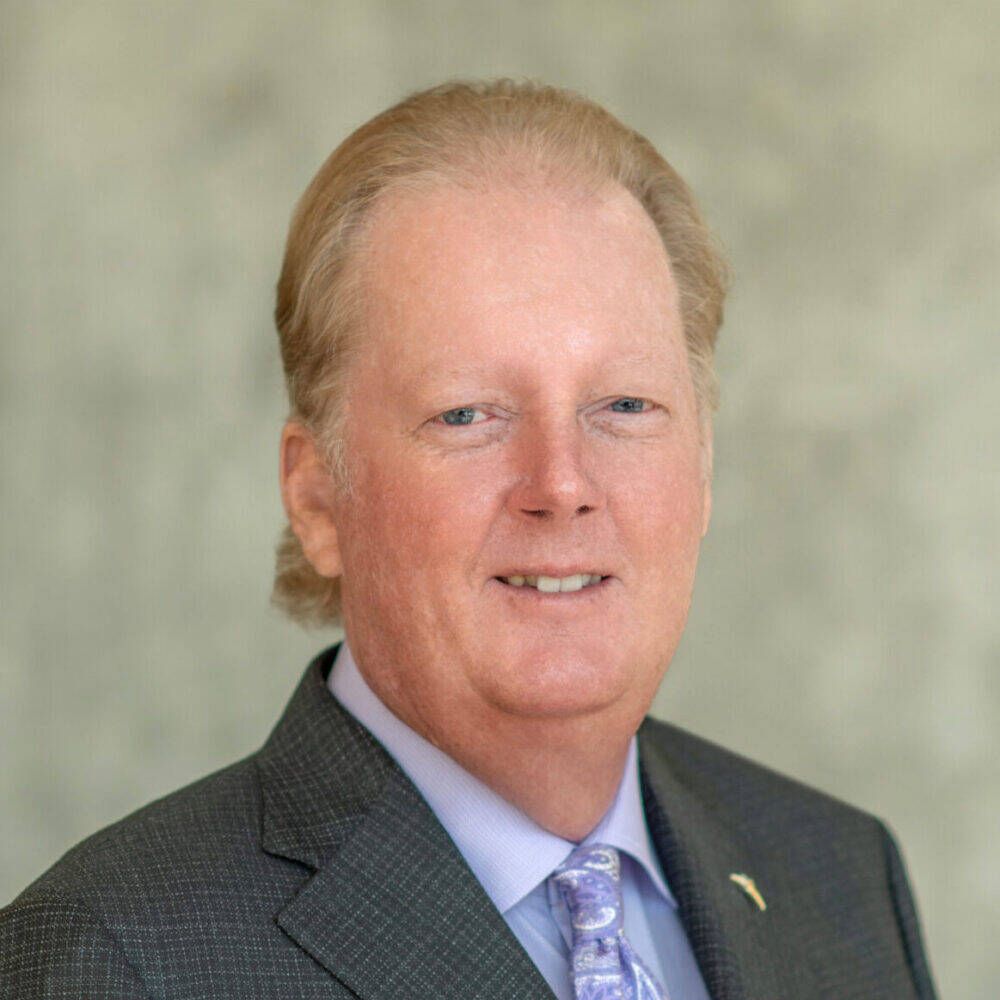
"West Michigan has a long tradition of bringing people and institutions together to tackle big challenges and create new opportunities."
David Van Andel
Chairman & CEO, Van Andel Institute.
GVSU College of Computing
Host Institution · Advanced AI & Computational Methods
- Fast-growing, research-active college built on computing as shared infrastructure across disciplines
- Strategic hiring of AI-focused faculty across multiple domains
- Expanding externally funded research in AI, cybersecurity, and applied computing
- Launching the Ph.D. in Computing — the first doctoral program in GVSU's history
- Home to the Blue Dot facility, representing more than $140 million in GVSU-sponsored investment
Van Andel Institute
Strategic Research Partner · World-Class Biomedical Science
- Independent biomedical research and science education organization in Grand Rapids
- Strengths in cancer biology and epigenetics, neurodegenerative disease, metabolism and nutritional programming
- Structural biology and advanced imaging, including cryo-EM, with world-class core technologies
- Ranked No. 3 among North American nonprofit research organizations for biological sciences — 2026 Nature Index Research Leaders
- Graduate education ecosystem in biomedical sciences
Why we are building AIRII
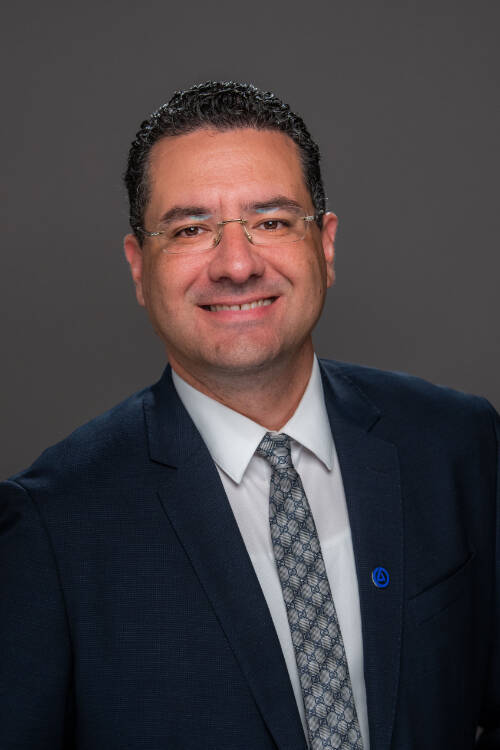
Artificial intelligence and biomedical research belong together. The deepest questions in the life sciences — how genes are regulated, how diseases begin, how therapies can be discovered faster and matched to the people who need them — are now, at their core, questions of computation. And the hardest questions in artificial intelligence demand exactly the kind of complex, high-stakes, data-rich problems that biomedicine provides. Neither field can reach its full potential alone. AIRII exists to make their convergence a permanent, coordinated capability rather than an occasional collaboration.
We are equally deliberate about where students sit in this design. Doctoral education is not an appendage to AIRII — it is its backbone. Our Ph.D. students will learn inside funded research programs, co-advised by computing faculty and biomedical scientists, working on problems whose answers matter to patients and communities. That is how the next generation of AI leaders should be formed: not adjacent to discovery but embedded in it.
I also believe this moment belongs to comprehensive universities. Innovation at the frontier of AI is no longer the exclusive province of a handful of institutions. When a research-active college of computing, a world-class biomedical institute, committed philanthropic partners, and a region determined to grow align around one shared vision, they can build something genuinely new — and build it faster, closer to real problems, and more openly than legacy models allow. West Michigan is proving that.
Our vision for the decade ahead is an institute that is a globally recognized engine of AI-driven discovery: sustaining large-scale research programs, graduating cohorts of exceptional doctoral scientists, translating breakthroughs into clinical and economic impact, and demonstrating a model of university–institute partnership that others can adopt. AIRII is more than a research center. It is a commitment to what universities can be in the age of AI.
Marouane Kessentini, Ph.D.
Dean, College of Computing, Grand Valley State University
Founding Executive Director & Full Professor
GVSU and Van Andel Institute invite applications for a visionary leader to serve as the founding scientific and strategic leader of AIRII — a once-in-a-generation opportunity to build a world-class AI institute from the ground up. The Full Professor position is housed in GVSU's College of Computing, with an adjunct appointment at Van Andel Institute; tenure may be offered at hire based on qualifications. The Executive Director reports to the Dean of the GVSU College of Computing.
You will
- Define and execute a bold long-term vision for the institute
- Build internationally visible, externally funded research programs in core AI and AI-driven discovery
- Recruit and mentor world-class faculty, researchers, and doctoral students
- Cultivate partnerships spanning healthcare systems, biotech and pharma, and AI and technology organizations
- Position GVSU and VAI as global leaders in AI research and innovation
You bring
- Ph.D. and 10+ years of experience leading research teams in AI or related areas
- A record of excellence consistent with appointment at the rank of Full Professor
- Demonstrated success securing external funding and leading research initiatives
- Interest in advancing AI for biomedical, life sciences, or societal challenges
- Preferred: experience building or scaling research centers, institutes, or large collaborative initiatives
To apply: submit a curriculum vitae, statement of research, statement of leadership vision (AI Research and Innovation Institute + Ph.D. program), and complete contact information for three references. Review of applications begins immediately and continues until the position is filled.