

Medium: Printmaking
Printmaking is a form of art that involves transferring images from a matrix, like wood, glass, or metal, onto another surface, like paper or fabric. The printmaker first creates the image on the matrix using tools or chemicals on the surface, then applies ink before pressing the paper onto the matrix, often using a printing press. In most cases, this printed image can be duplicated many times from the same matrix, creating editions of the same image.
Historically, the process of duplicating images can be traced back to the Sumerians, who engraved designs and cuneiform inscriptions on cylinder seals in 3000 B.C.E.. These cylinders were then pressed into soft clay tablets, which left relief impressions. This process ultimately contributed to the development of the printing press in the 15th century. Early examples of printmaking can also be found in Han Dynasty China. The earliest known example is a woodcut print on silk, dated between 206 B.C. E. and 220 A.C.E..
Soon after its invention, printmaking became a popular form of art as it allowed images and text to be reproduced quickly and inexpensively. Printmaking allowed for the quick dissemination of information through mass-produced items like posters, books, maps, and religious illustrations. While printmaking served many practical purposes, artists utilized printmaking techniques to create a series of prints, offering more affordable options to their patrons.
Presently, there are two main categories of printmaking, relief and intaglio. They differ in the way the matrix is treated and how the ink is applied to create the image.
Relief prints require a process of carving into the surface of the matrix, leaving grooves in the matrix absent of ink after application. In printing with the relief process, the transferred image comes from the raised areas of the matrix.
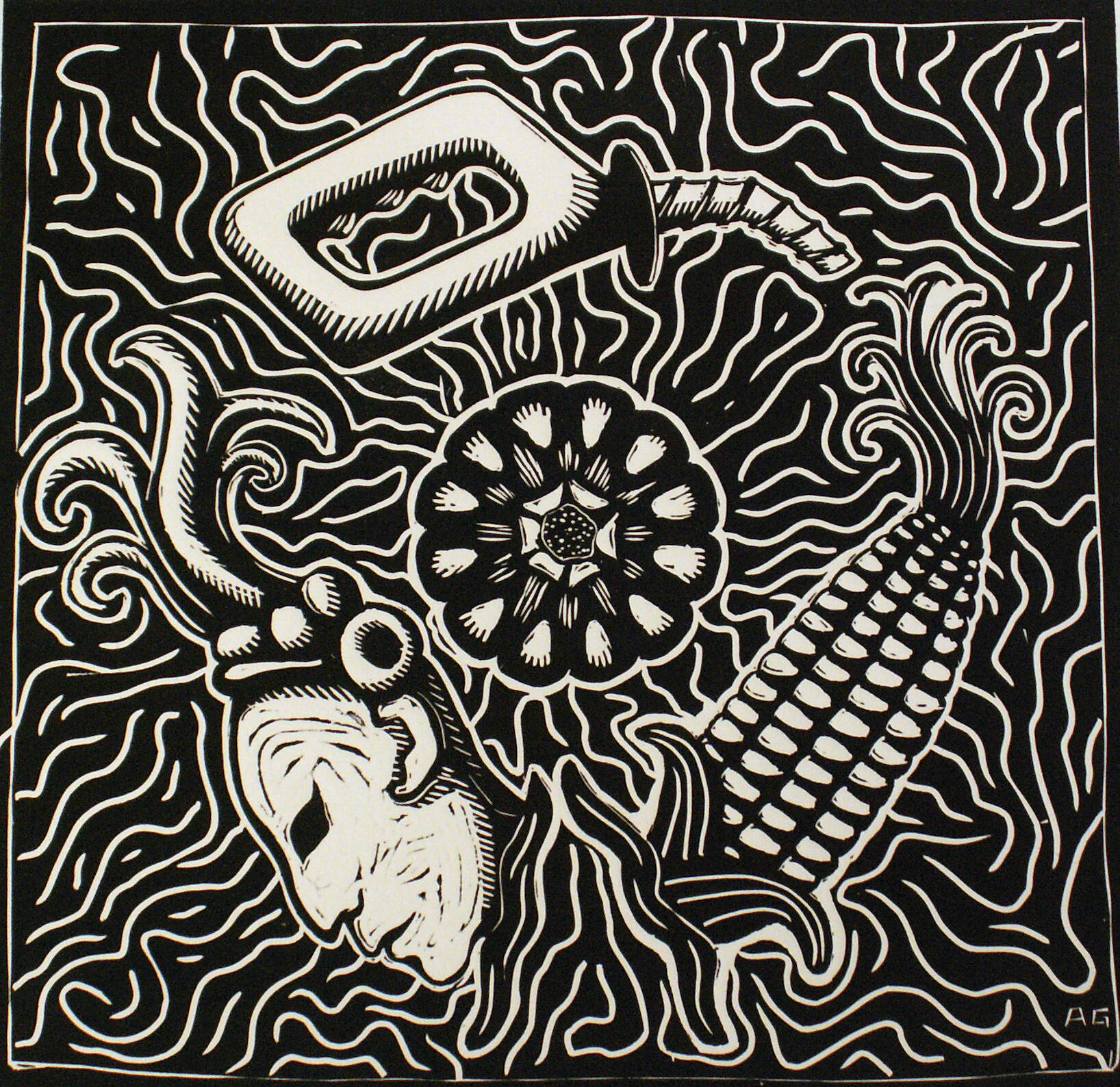
Linocut/Linoleum
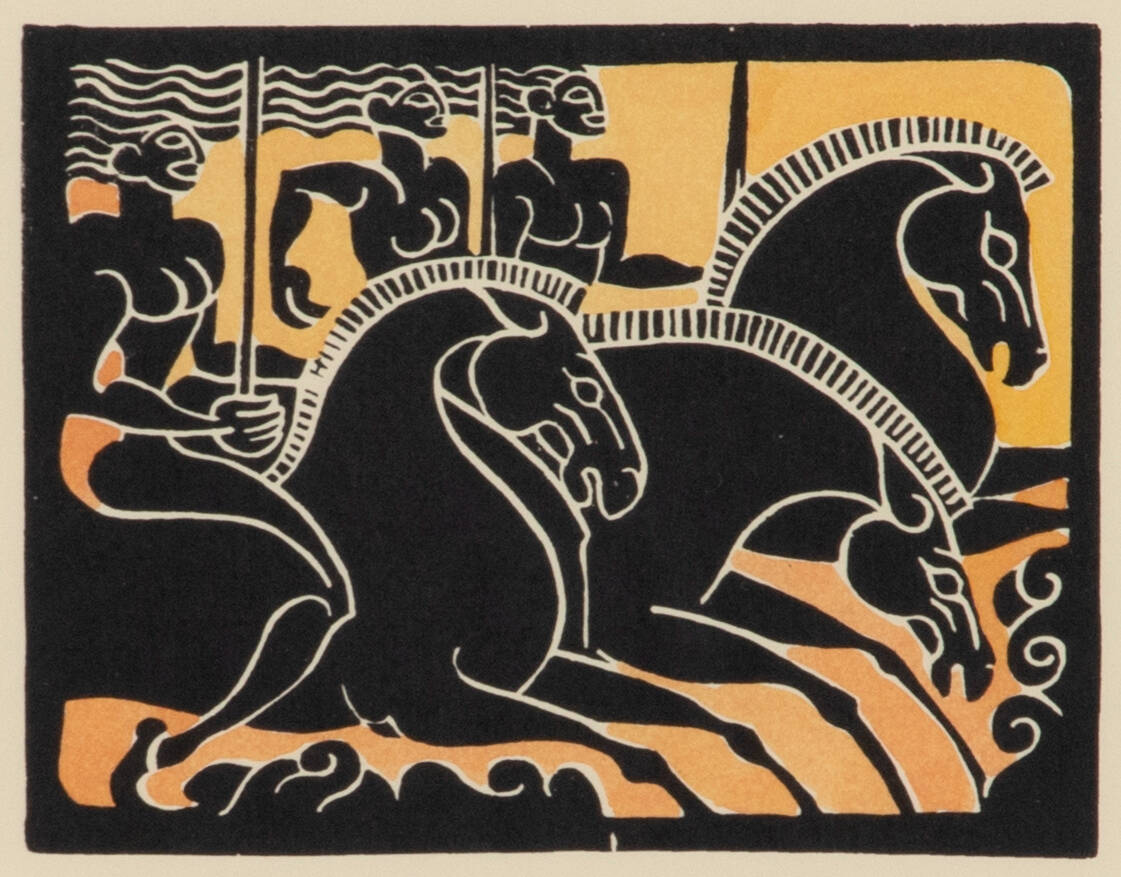
Woodcut
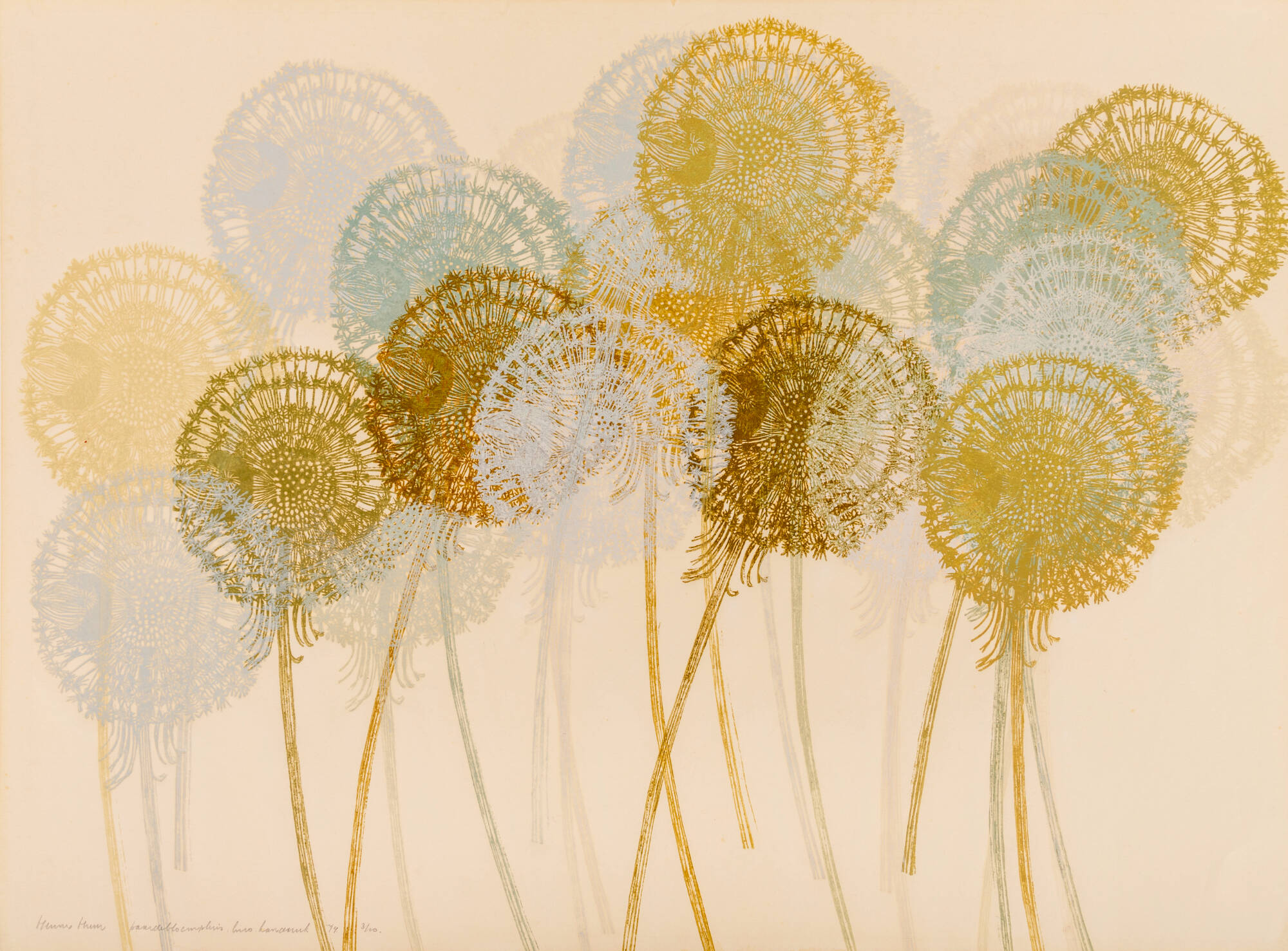
All Relief Prints
The second category of printmaking is intaglio. Originating in Italy, intaglio refers to prints made from plates in which the areas that hold the ink are recessed below the surface of the plate. The method of creating the recessed areas differs with each technique, but once the image is completed on the plate, ink is applied to the surface and the artist forces the ink into the recessed image, wiping away excess ink. The plate is placed on the bed of a printing press and dampened paper is placed over the plate. The dampness allows the paper fibers to expand and become more porous to accept the ink in greater detail. Blotters and felt cushioning are placed over the damp paper, and everything is rolled through the press. The pressure of the printmaking press forces the paper down into the grooves of the plate where it collects the ink. Engraving, etching, mezzotint and collagraphy are all different types of intaglio style prints. As different intaglio methods developed, the medium became used more for its reproduction value. Historically, it was used to produce religious imagery, maps, playing cards, portraits as well as the printing of books and newspapers.
Aquatint
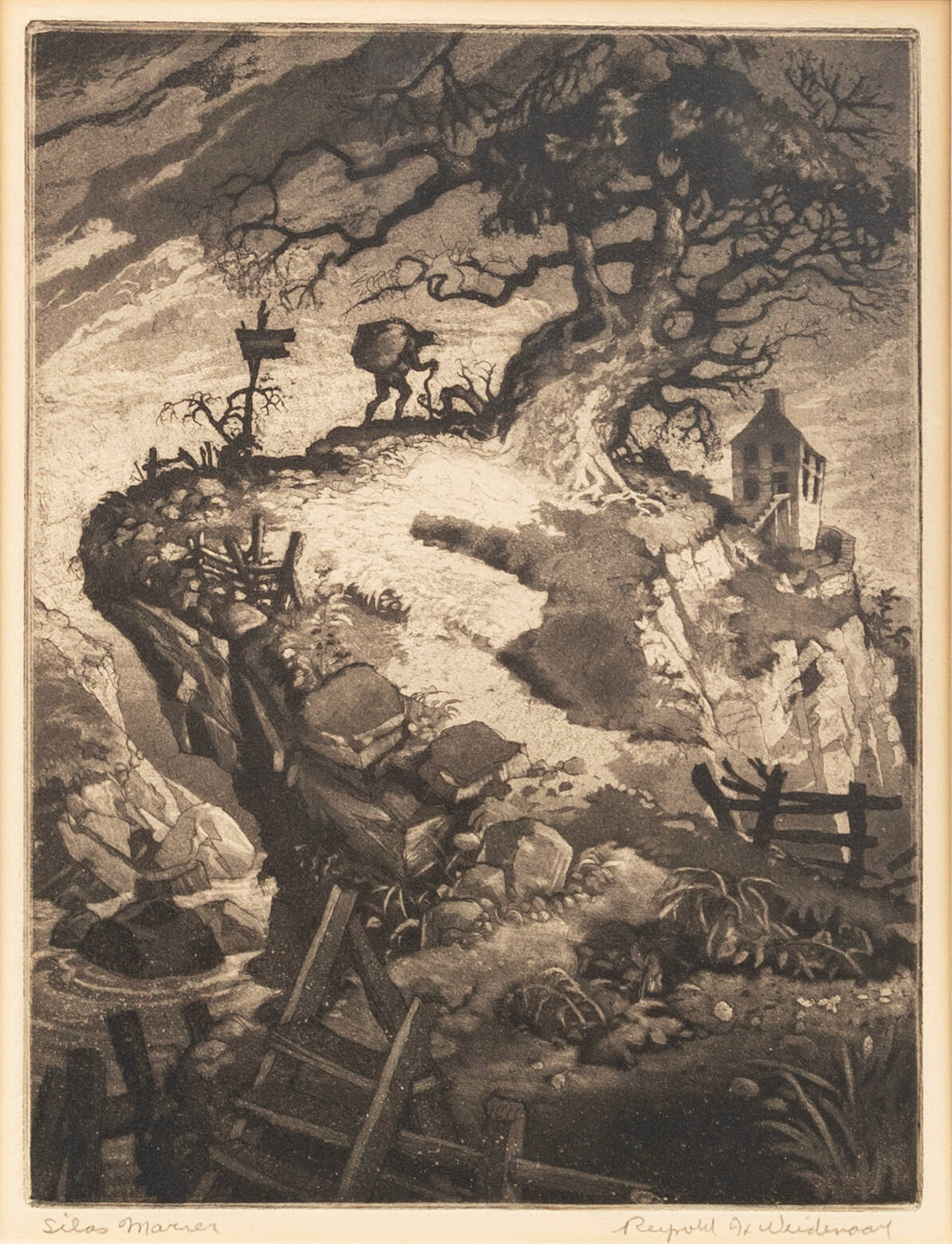
Collagraph
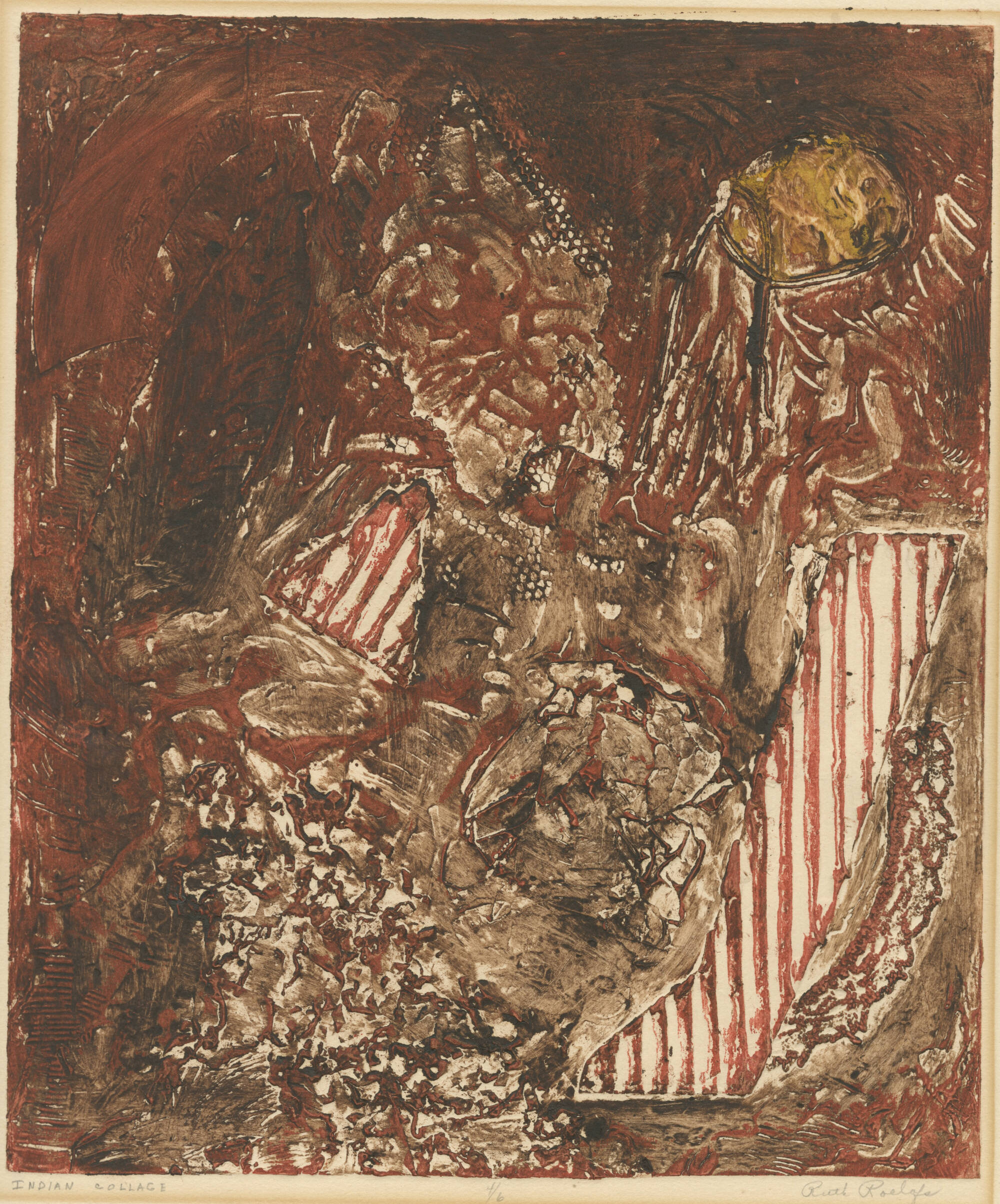
Drypoint
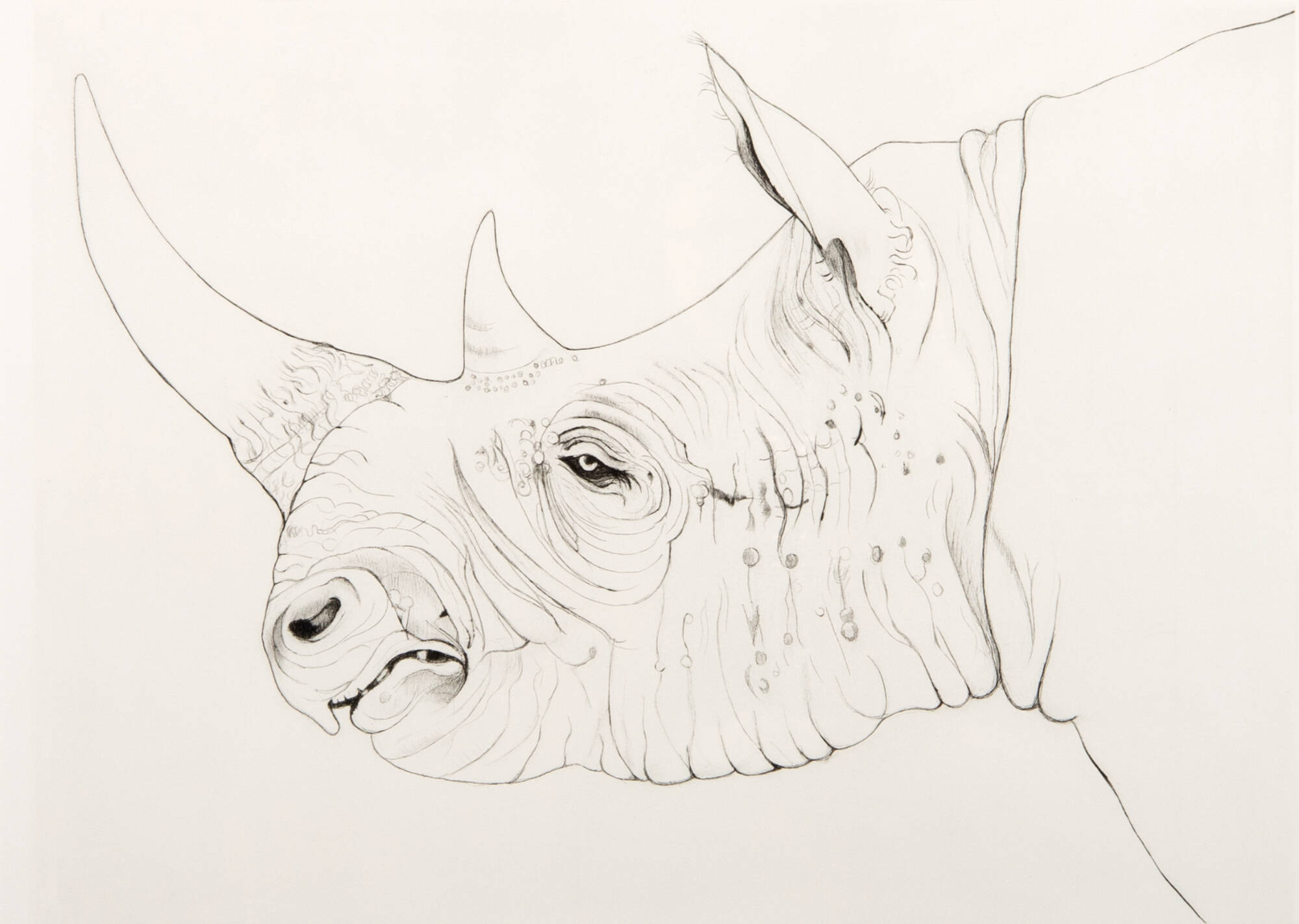
Engraving
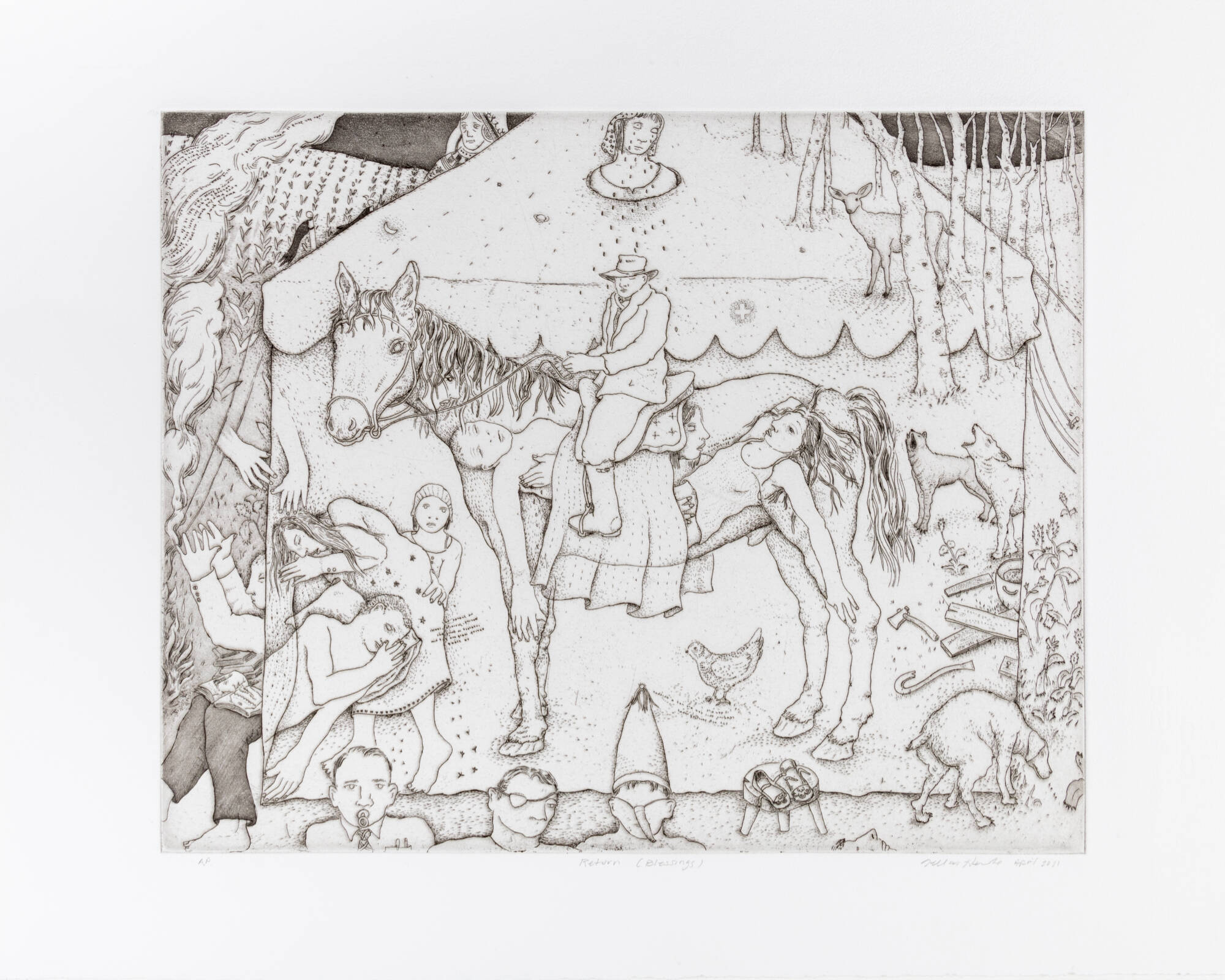
Etching
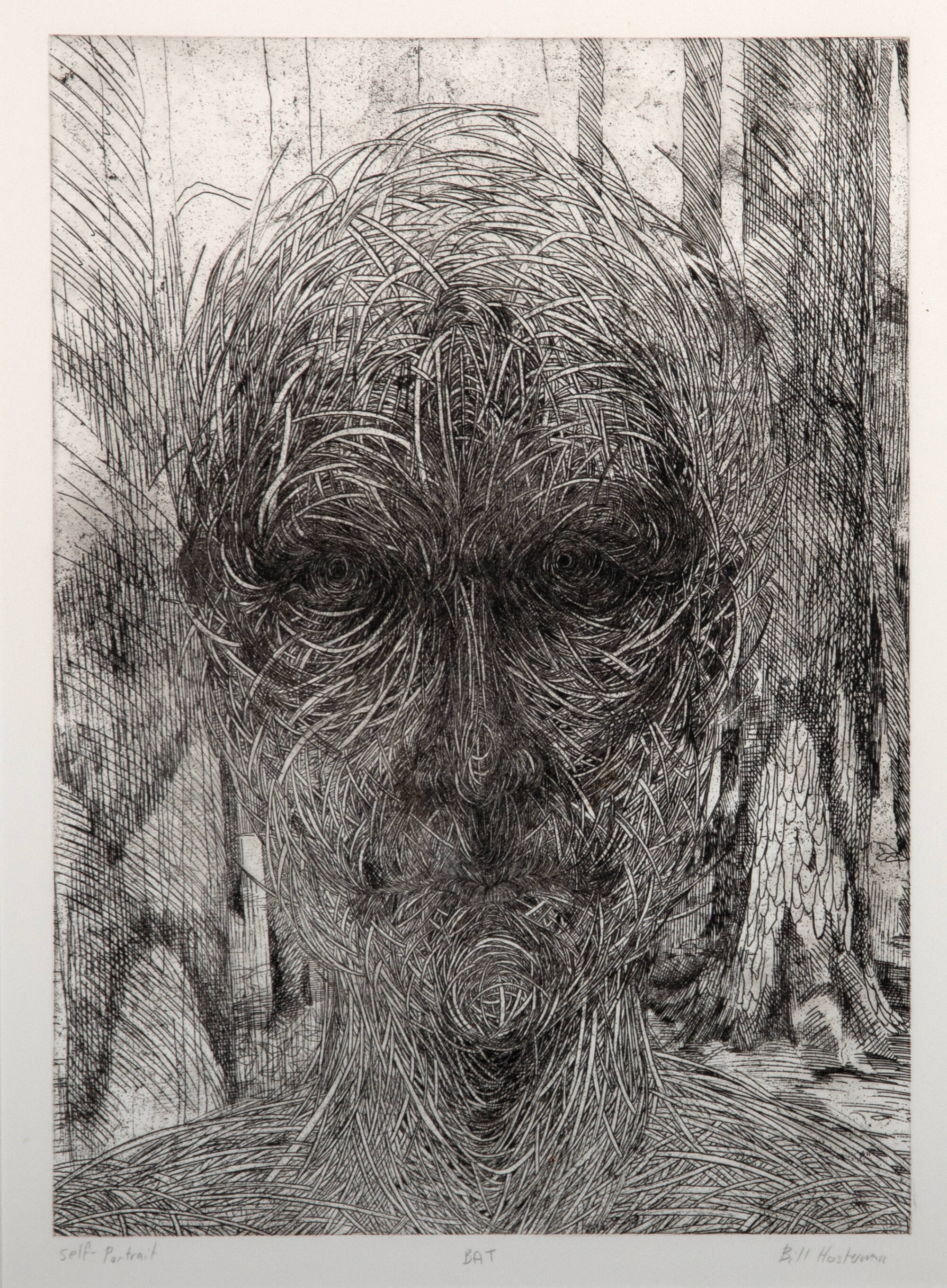
Photogravure
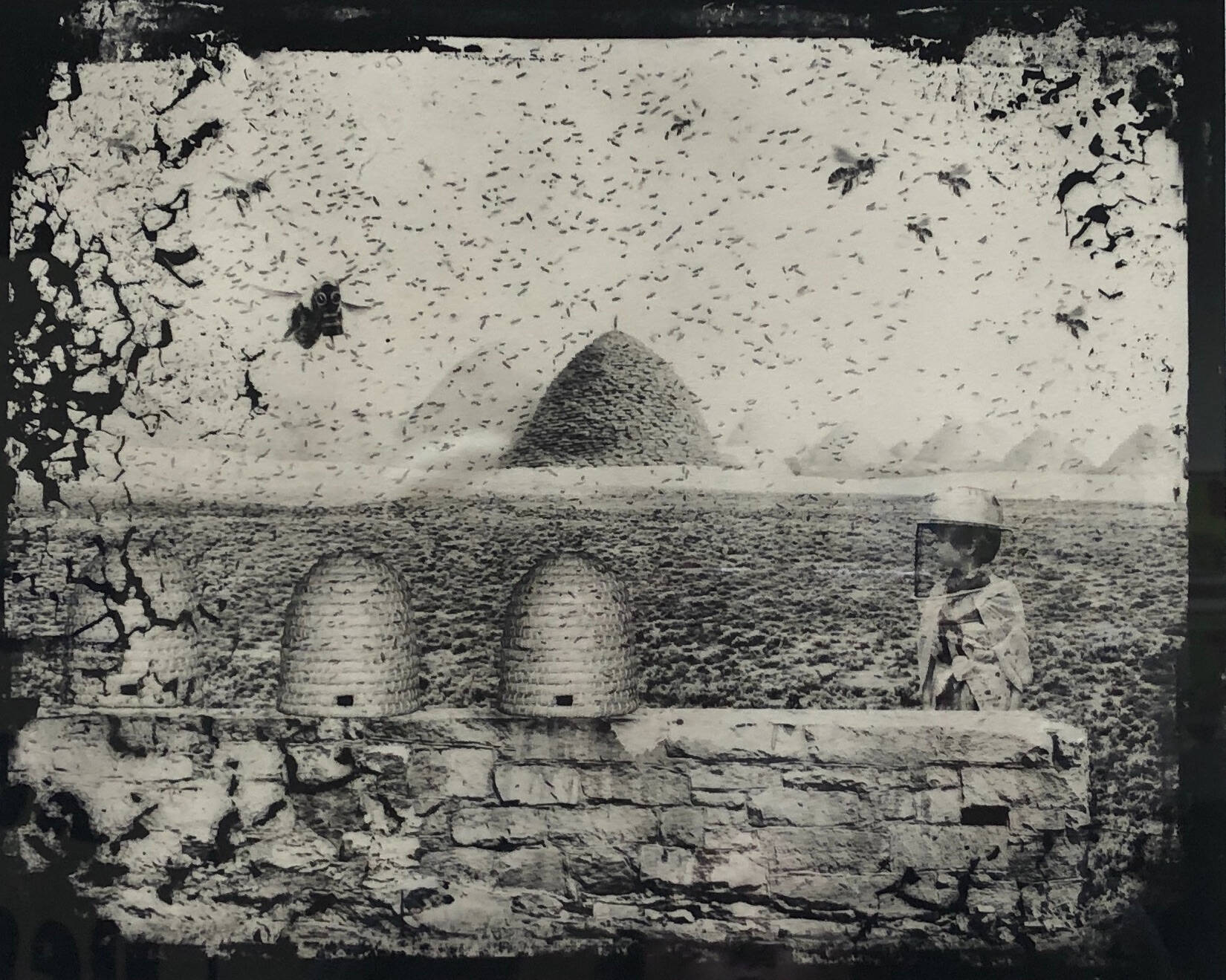
All Intaglio Prints
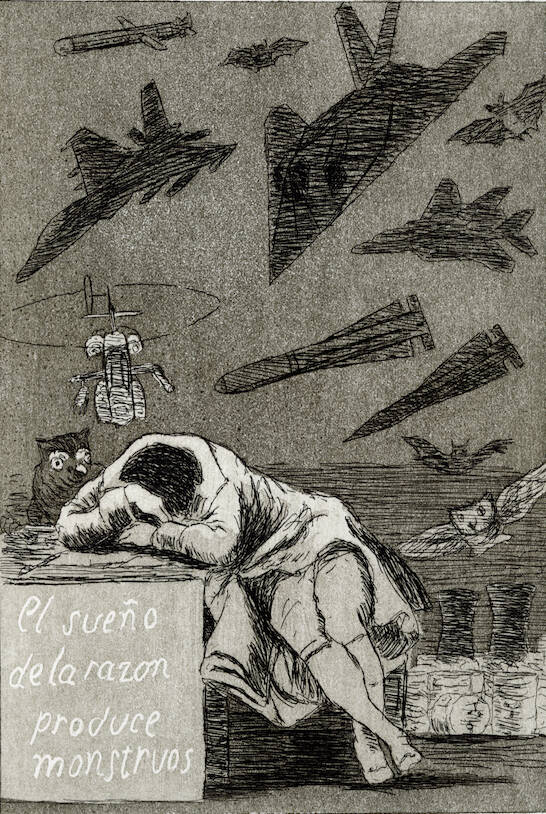
Other Types of Printmaking
Chine-collé
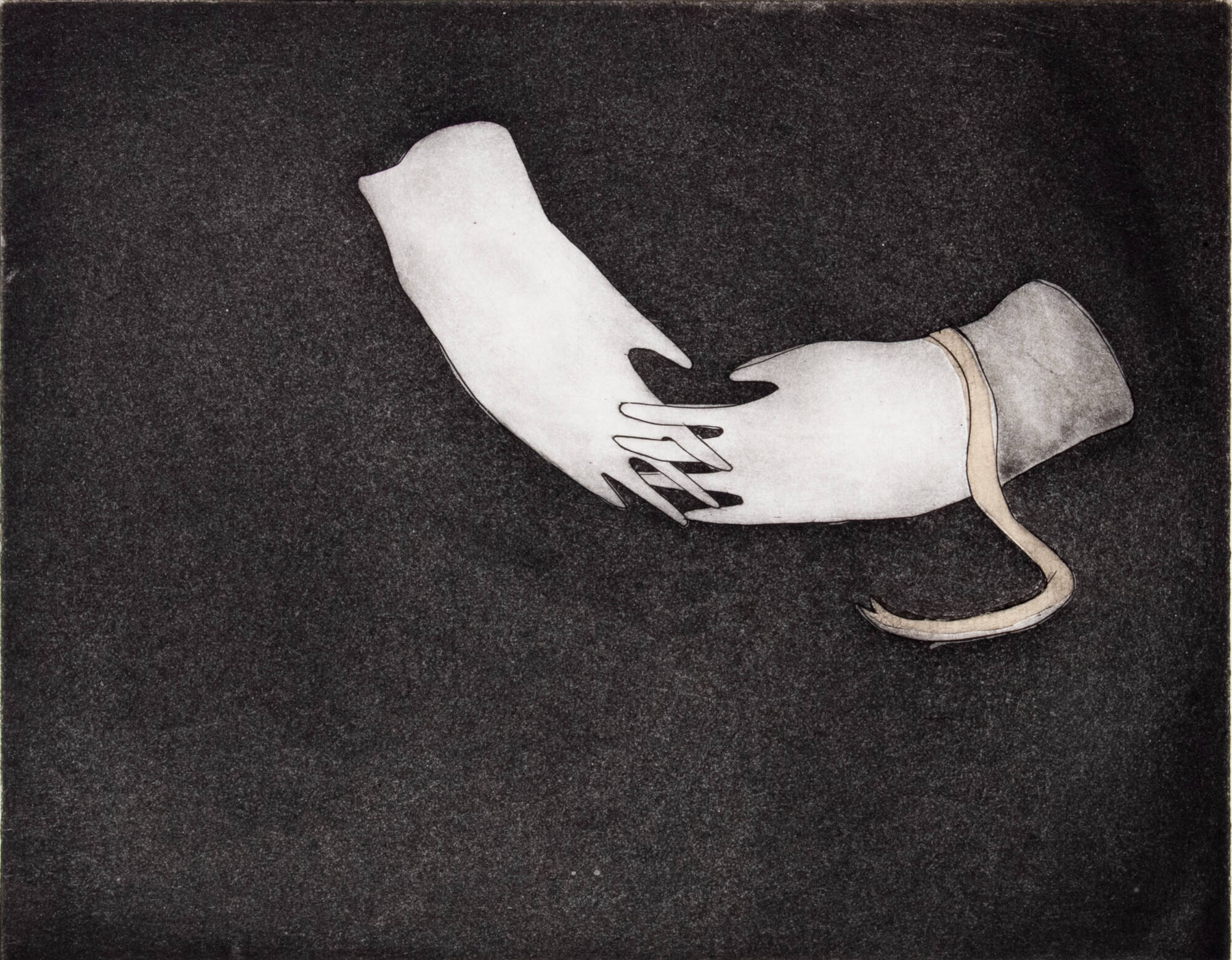
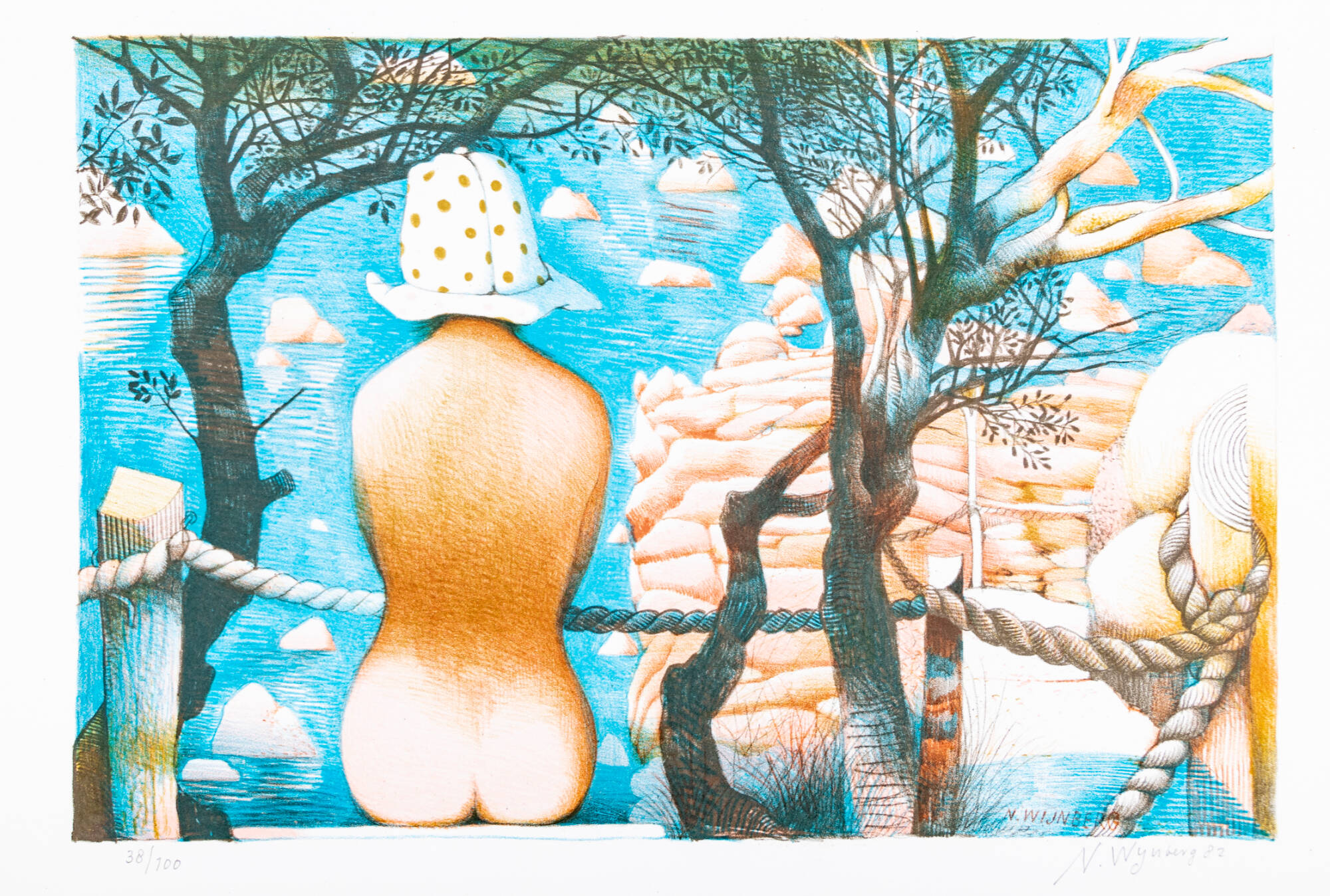
Lithographs and Chromolithographs
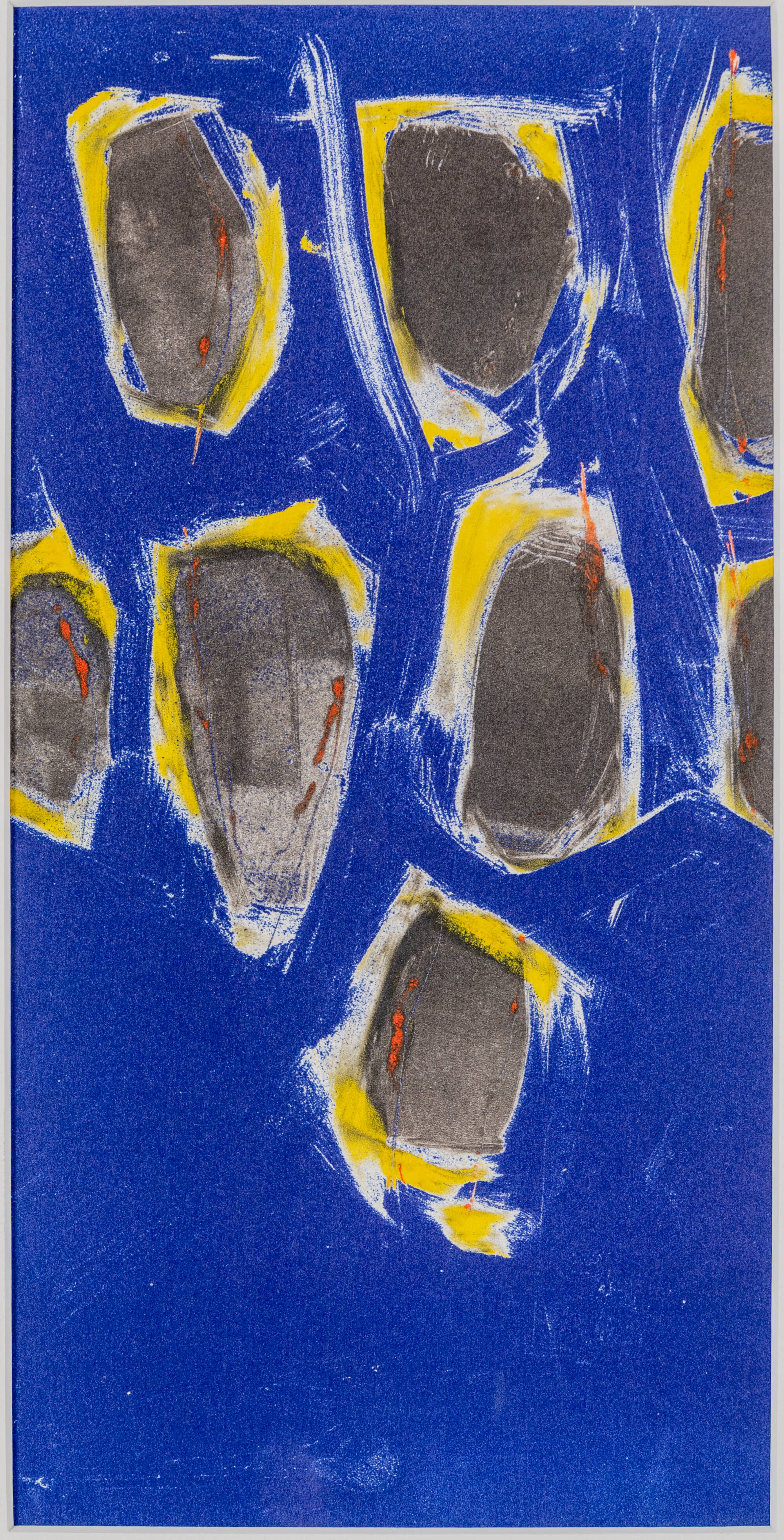
Monotypes
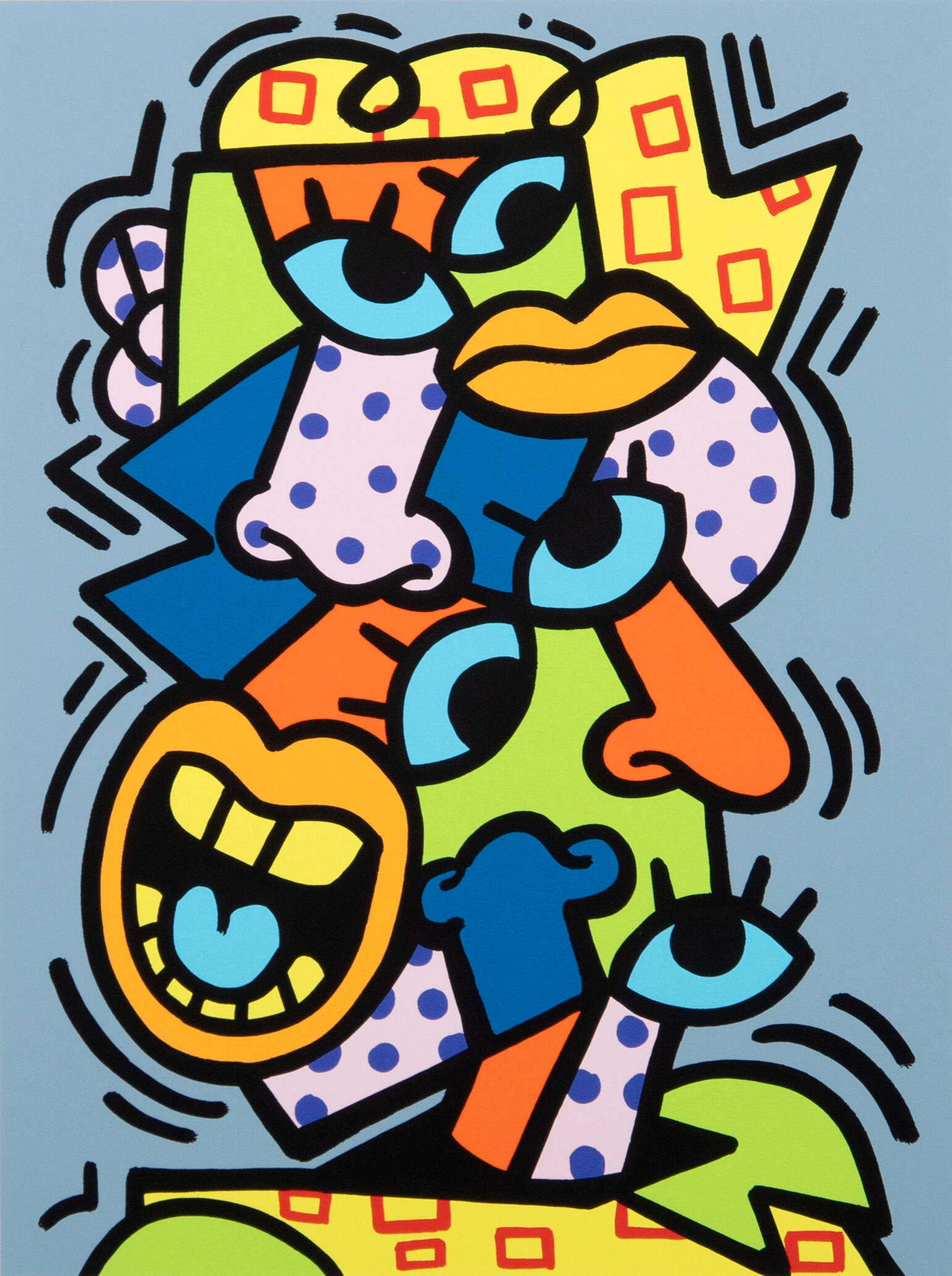
Serigraph/Silkscreen/Screenprint
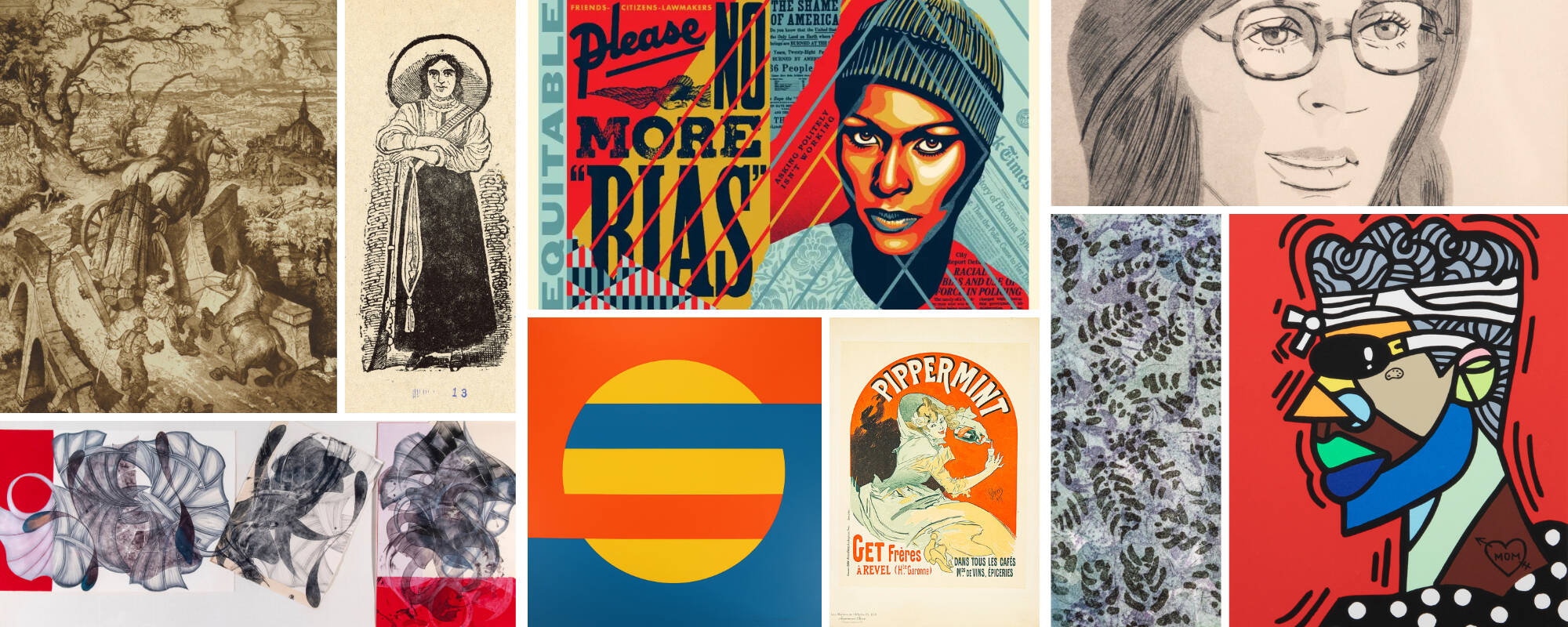
Header Images
Left
Reynold Weidenaar, Home from the Forest, intaglio print, 1942, 2013.68.36.
José Guadalupe Posada, Revolucionaria, print, 2004, 2005.0013.1.
Steven Sorman, With You, lithograph and woodcut with collage, 1990, 2015.55.1.
Center
Shepard Fairey, No More Bias, screenprint, 2023, 2023.18.1.
Cyril Lixenberg, Zonder Titlel (Untitled), silkscreen, 1971-1972, 2001.0347.1.
Jules Chéret, Pippermint, Five-color lithograph, 1899, 2008.487.157.
Right
Alex Katz and Hitoshi Nakazato, June Ekman's Class- Naomi, etching and aquatint, 1972, 2017.91.3.
Melissa Skibbe, "The", sugarlift aquatint, 2013, 2013.103.2.
Sheefy McFly, Polka Dot Portrait, 14-color screenprint, 2021, 2023.19.9.