

Medium: Woodcut
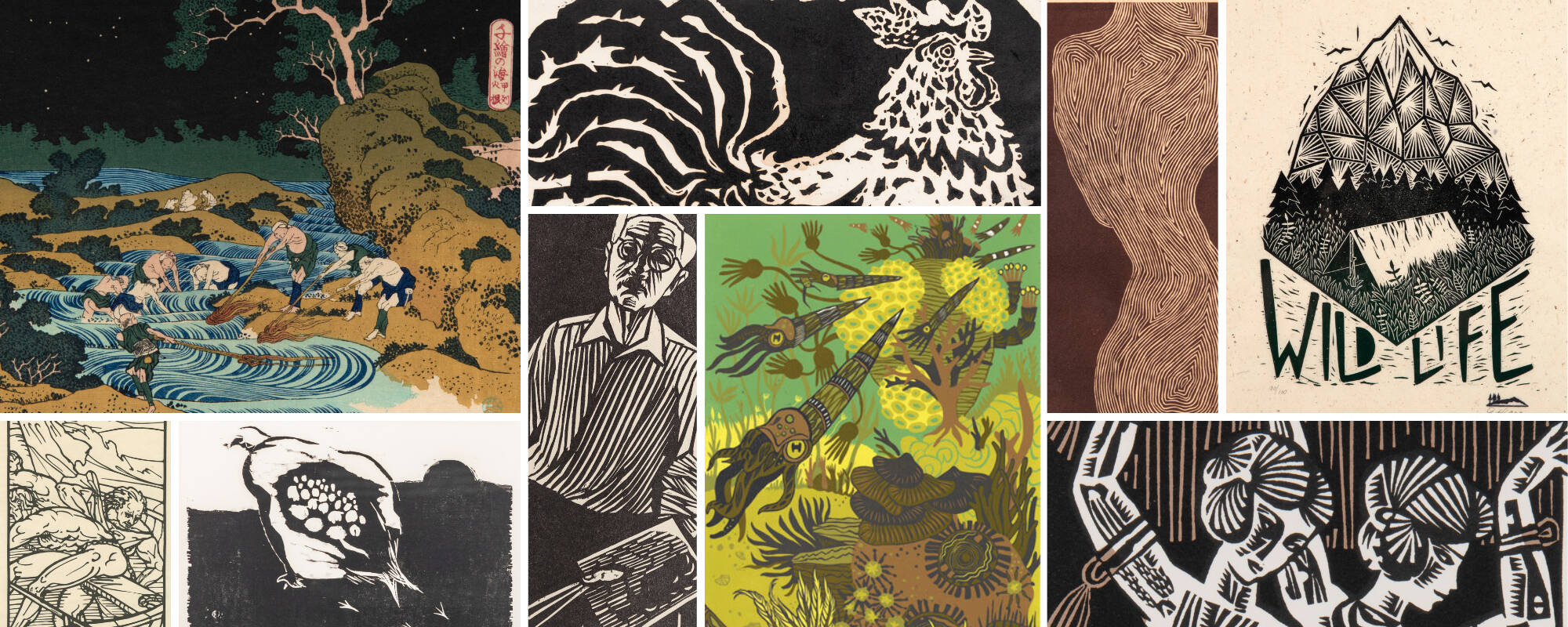
Woodcut prints are a type of relief print in which the printmaker uses tools to carve into wood, removing the parts that will not receive ink. The raised areas then retain the ink and transfer the image to the paper. In Western traditions, ink is applied with a brayer, a handheld roller.
Woodcuts are considered the earliest printmaking technique, with examples found on patterned cloth as early as the 5th century in China. Woodcut prints soon developed in Japan as well. The technique has a particular significance in Japan, where a distinct aesthetic called ukiyo-e developed. These prints tell stories of the culture, Japanese landscapes, sumo wrestlers, and other scenes from folk history. The same carving techniques are used, but ink is primarily water-based and applied with a brush. Japanese prints of this style are often referred to as woodblock prints rather than woodcut prints to designate these differences.
Explore Woodblock prints in the collection
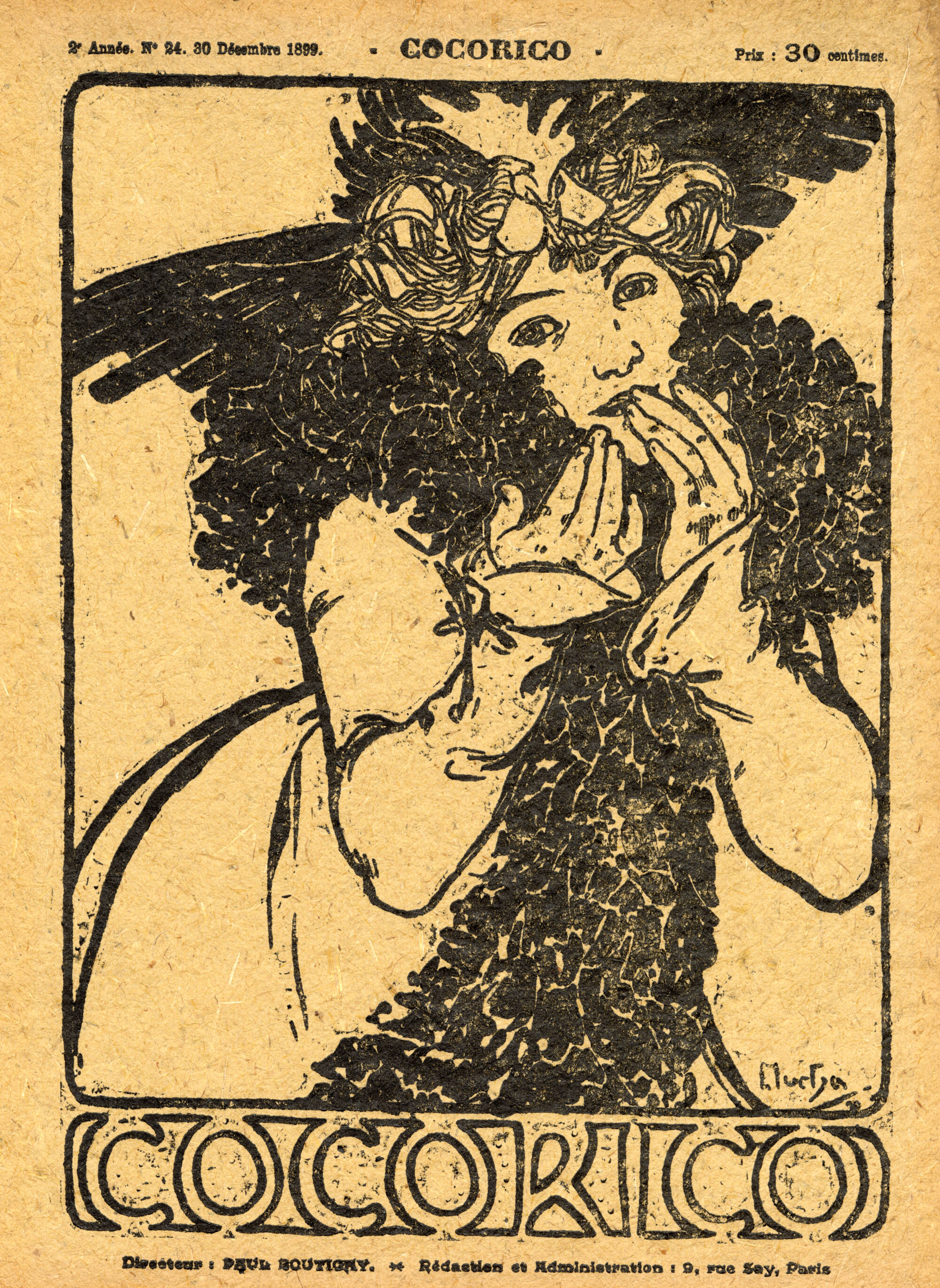
Alphonse Mucha, Cocorico, woodcut, 1899, 2008.487.67.
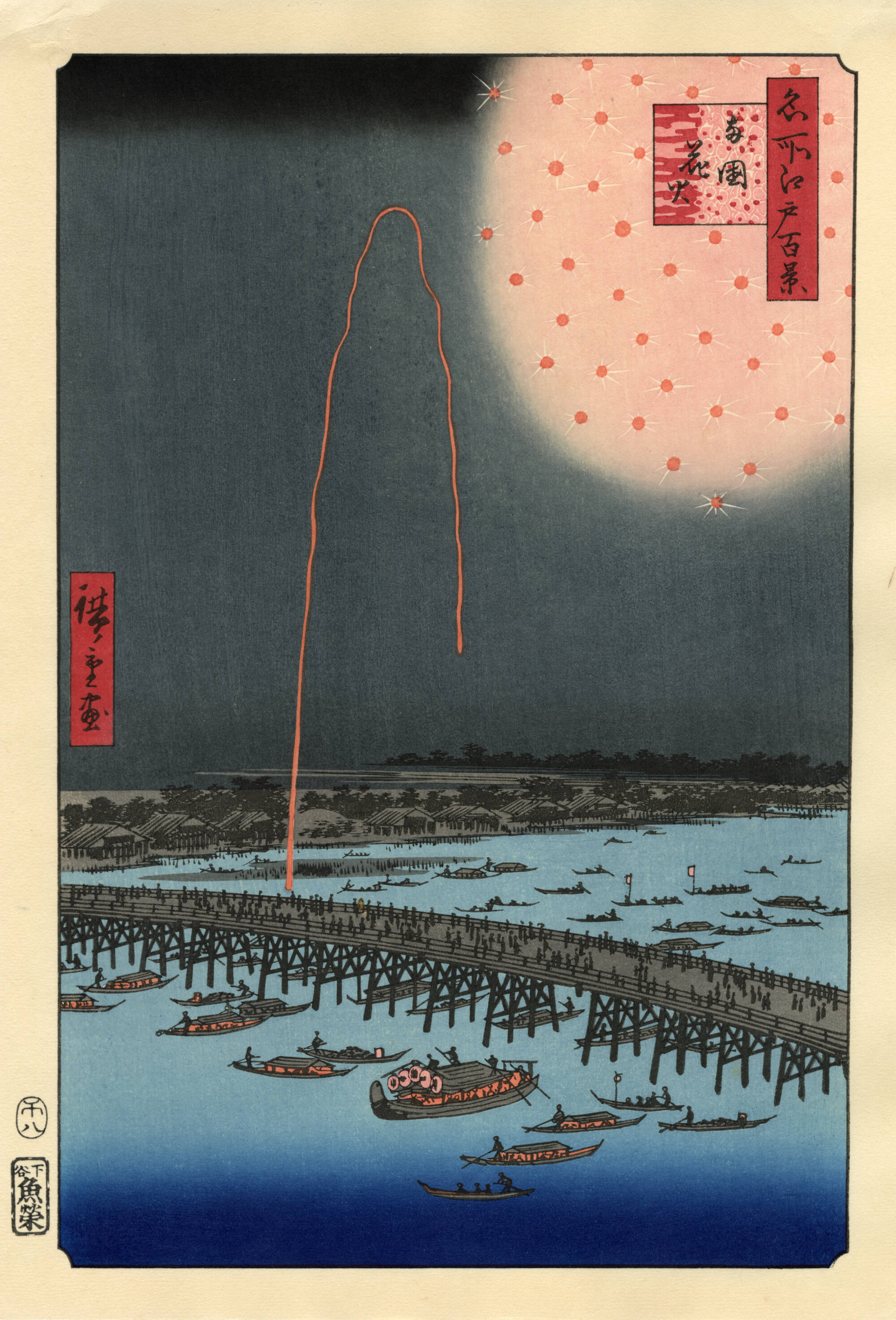
Utagawa Hiroshige, One Hundred Famous Views of Edo: Fireworks at Ryōgoku Bridge, woodblock print, ca. 1858, L11.2022.1020.
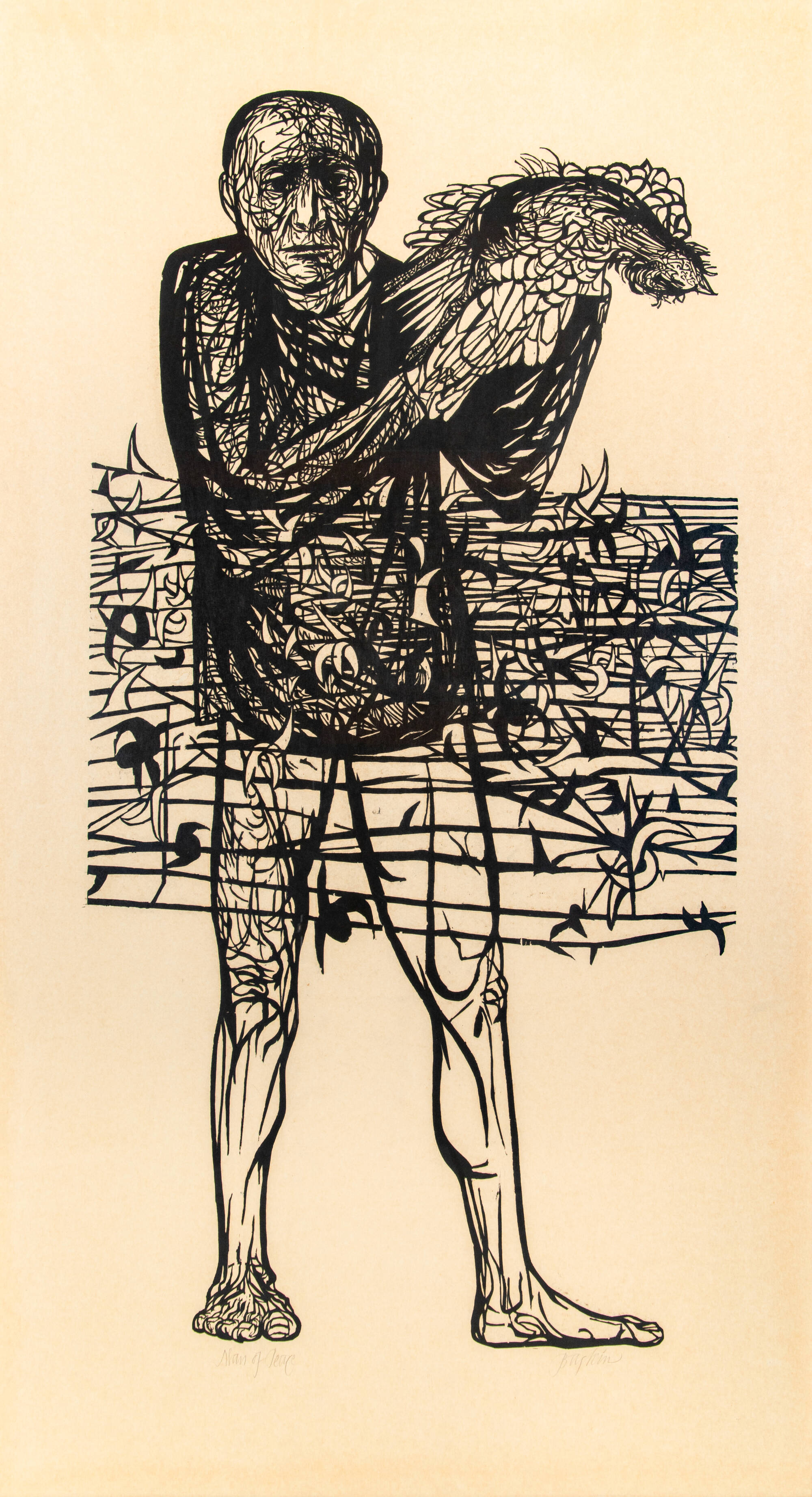
Leonard Baskin, Man of Peace, woodcut, 1952, 2017.48.1.
Resources in the Collection

Alynn Guerra
Header Images
Left
Katsushika Hokusai, A Thousand Views of the Sea and Waterside: Char Fishing at Night in Koshu, woodblock print, 2024.19.3.
Emile Bernard, Odyssee, woodcut print, ca. 1930, 2020.1.440.
G. Saukas, Tarmigon, woodcut, 1974, 1999.586.1.
Center
Herman Berserik, Haan (Hen), woodcut, 1950, 2002.022.1.
Conrad Felixmuller, Untitled, woodcut, 1967, 2001.277.1.
Jenny Pope, Devonian Reef- Age of Fishes, color reduction woodcut, 2012, 2012.137.1.
Right
Lindsey Porter, Growth, woodcut, 2003, 2007.409.1a.
Rae Lang, Wildlife, woodblock print, 2015, 2016.16.4.
H. Fereemeae, Untitled, woodcut, 1998.223.1.