

Medium: Etching
An intaglio method of printmaking, etching differs from engraving because of the use of acid to etch the design into the matrix. A metal plate, usually copper, zinc, or steel, is covered with a wax or acrylic ground that will resist the acid later applied to the plate. The printmaker draws through the ground with an etching needle, exposing the metal plate. The plate is then dipped into an acid bath or etchant. The acid reacts with the exposed metal, leaving behind the image etched into the plate. The ground is then cleaned from the plate, and the printing continues with the same process as other engravings.
Etchings became more popular than engravings as they required less laborious metalworking, and the process was easier to learn. Depending on the drawing, lines are not as precise as an engraving, but more black, white, and grey tones are possible with the etching process.
Explore etchings in the collection
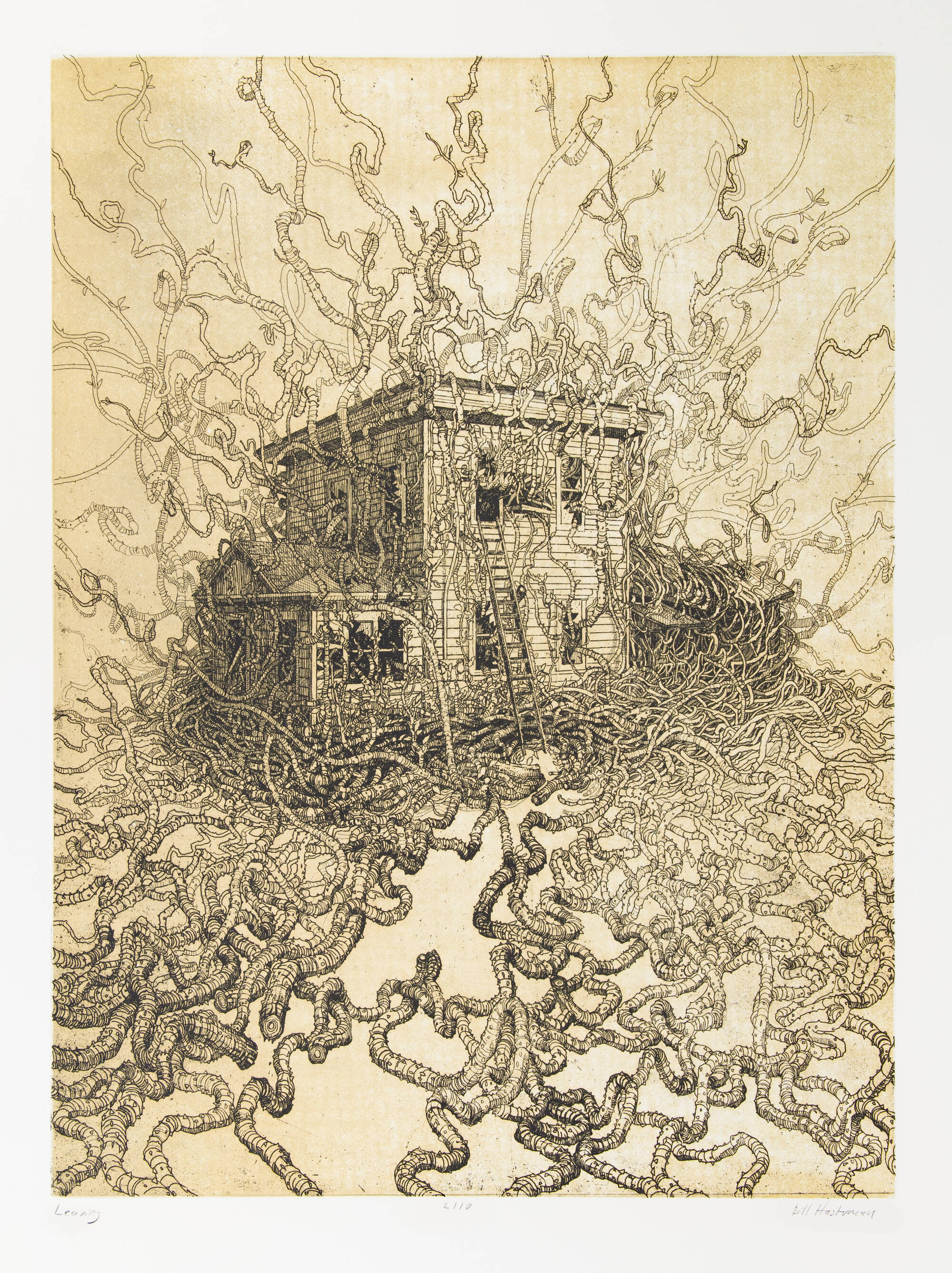
Bill Hosterman, Leaving, etching, 2007, 2009.8.3.
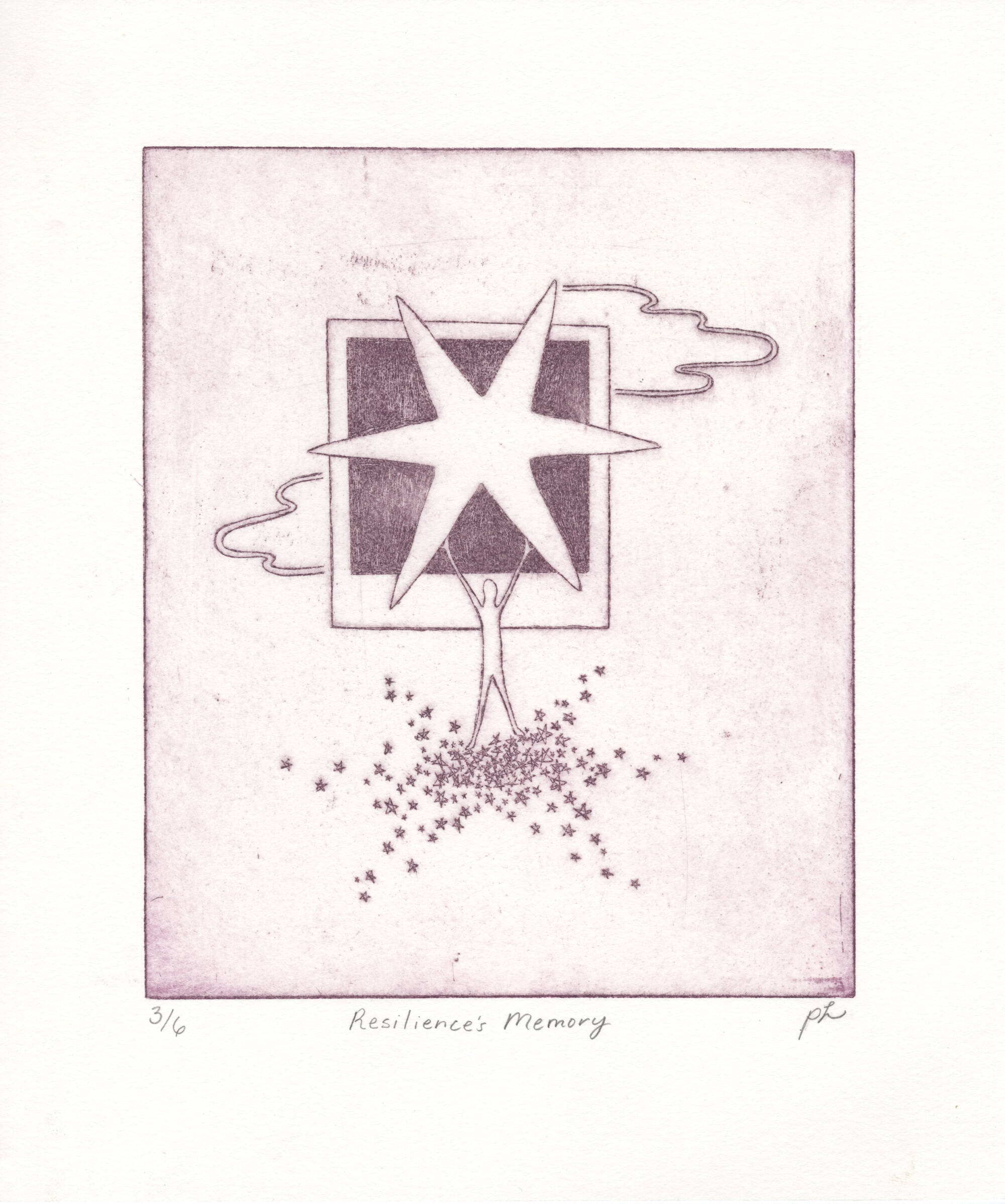
Paloma Havlik, Resilience's Memory, etching, 2025, 2025.24.6.
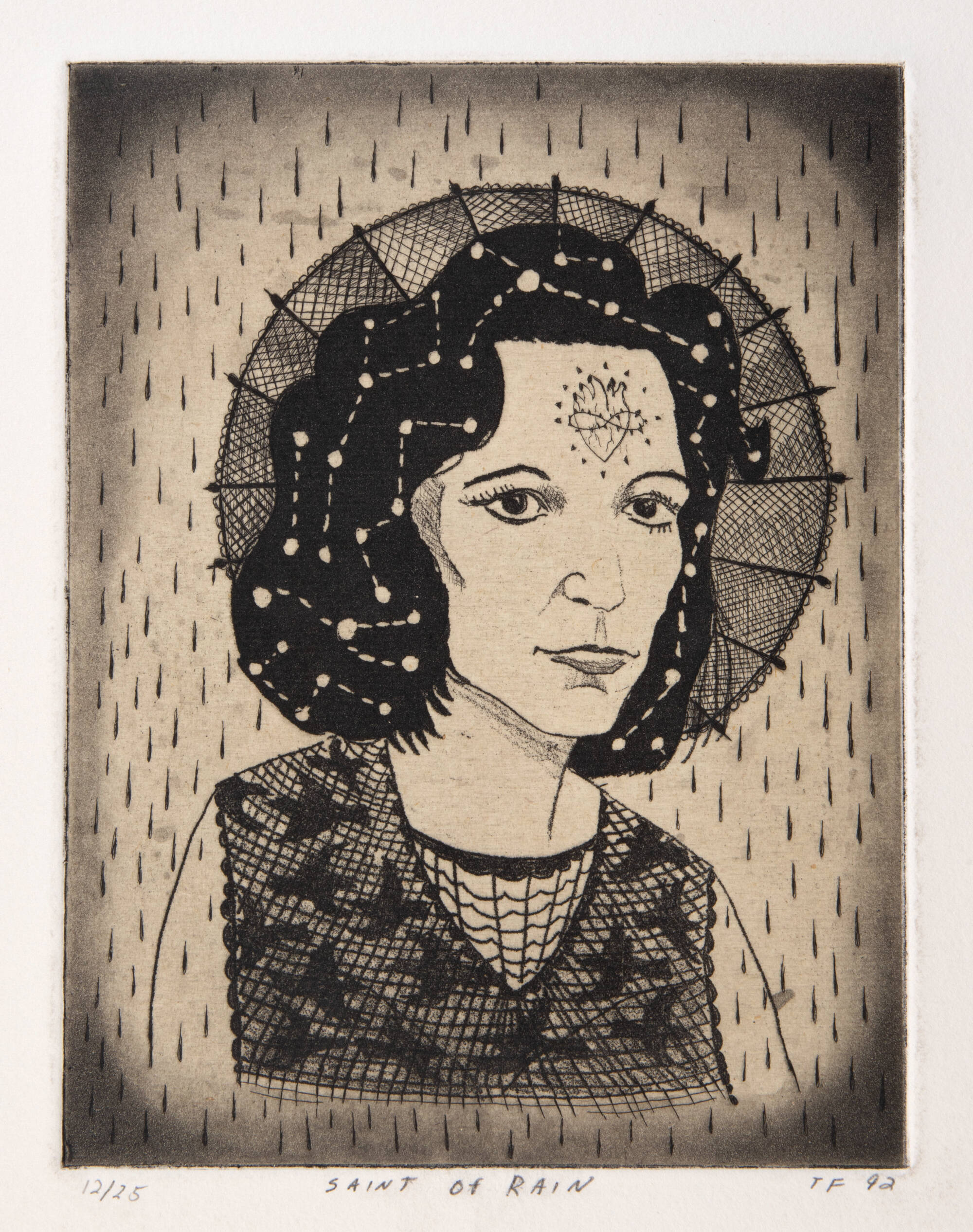
Tony Fitzpatrick, Saint of Rain, etching with chine colle, 1992, 2017.12.106.
Resources in the Collection
Header Images
Left
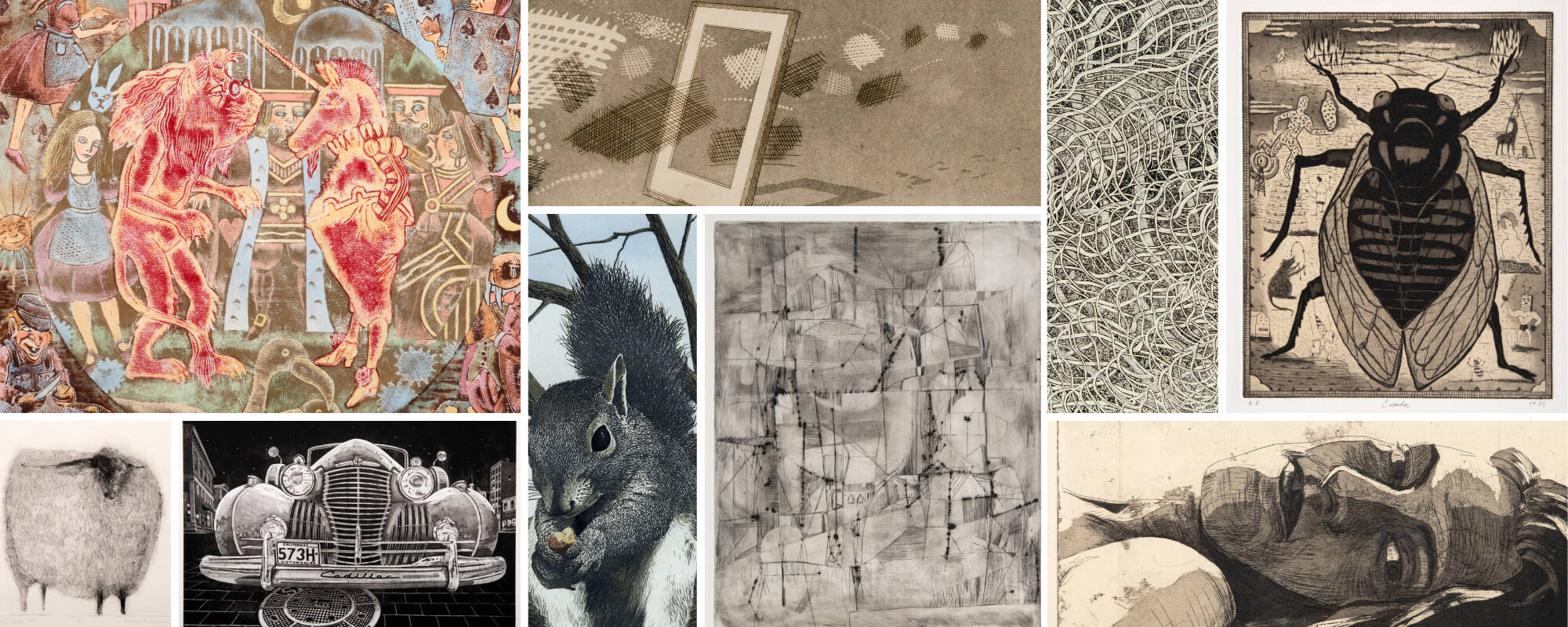
C.M. Ware, The Lion and the Unicorns, hand-tinted etching, 1982, 2025.1.10.
Artist Unknown, Sheep Suite #8, etching, 1987, 1998.002.1.
Bruce McCombs, Cadillac, etching, 1989, 2021.50.2.
Center
Jeroem Hanneman, Schilderylijst In Ruimte (Painting Frame In Space), etching, 1982, 2002.041.1.
Larry Harris, Nut'en Honey, color etching, 1998.168.1.
Donna Diamond, Echo, etching, 1956, 2020.49.1.
Right
Karla Hackenmiller, Synaptic Evolution, intaglio, 2014, 2014.114.11.
Tony Fitzpatrick, Cicada, etching, 1993, 2017.12.60.
Andrew Patterson, Morning, etching, 1999, 1999.690.1.