

Medium: Monotype
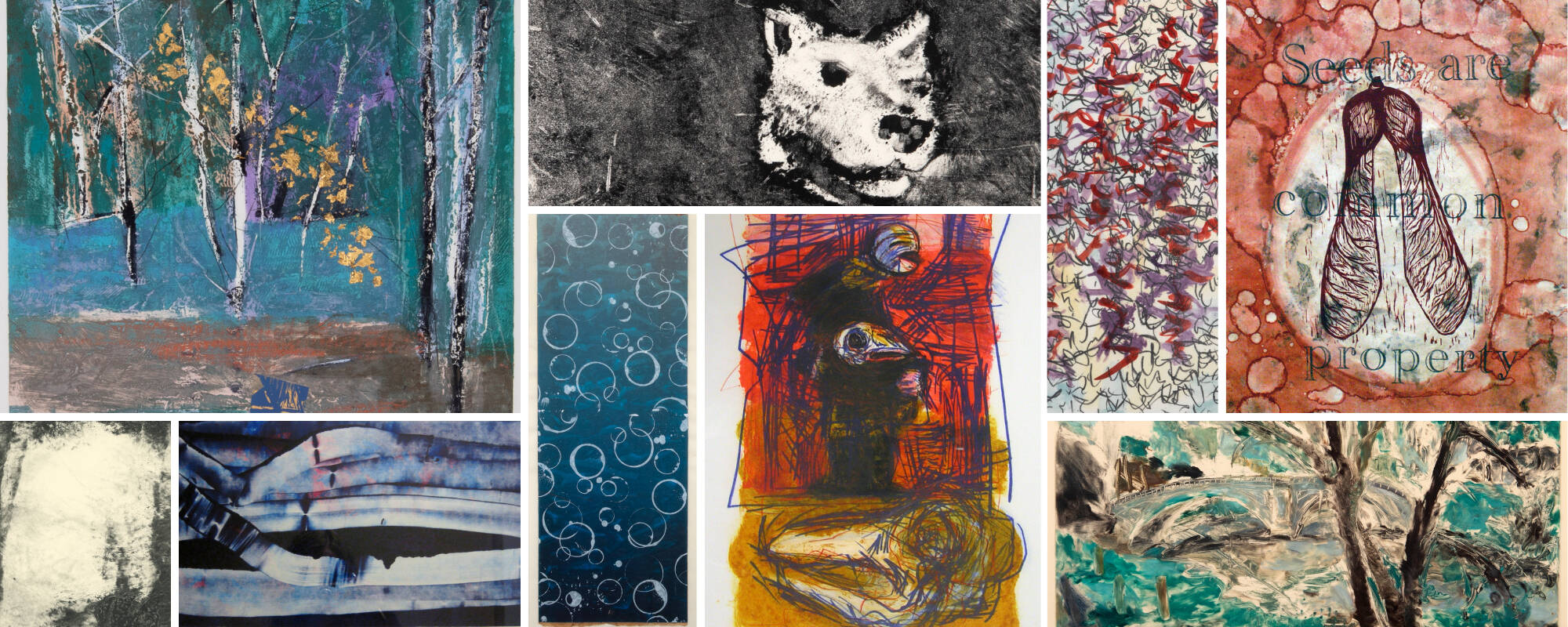
A monotype is a print; however, due to the unique way in which it is made, the result cannot be reproduced exactly. To make a monotype, the printmaker applies paint or ink directly onto a smooth, non-absorbent surface, usually metal, glass, or plexiglass, or gelatin. The paint-covered plate is pressed against the paper to transfer the ink. The monotype process allows for lots of experimentation and variation. Pigments can be layered, pressure can be varied, or items can be placed between the plate and paper to create masks or shadows. Other techniques include covering the entire plate with paint or ink, then removing it with brushes or rags to create a subtractive image.
Explore monotypes in the collection
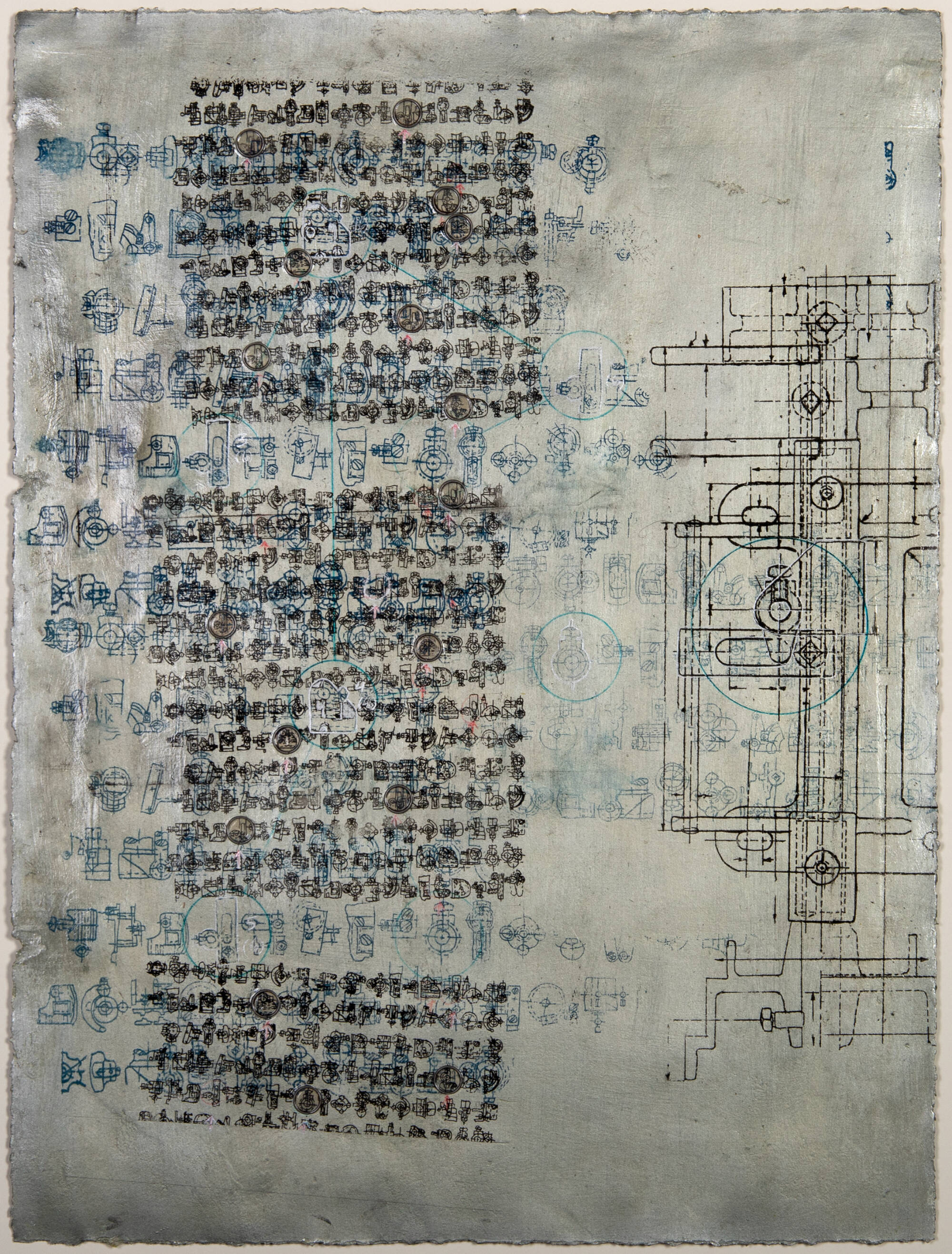
Michael Richison, Scale, monotype, ca 2002, 2002.460.1.
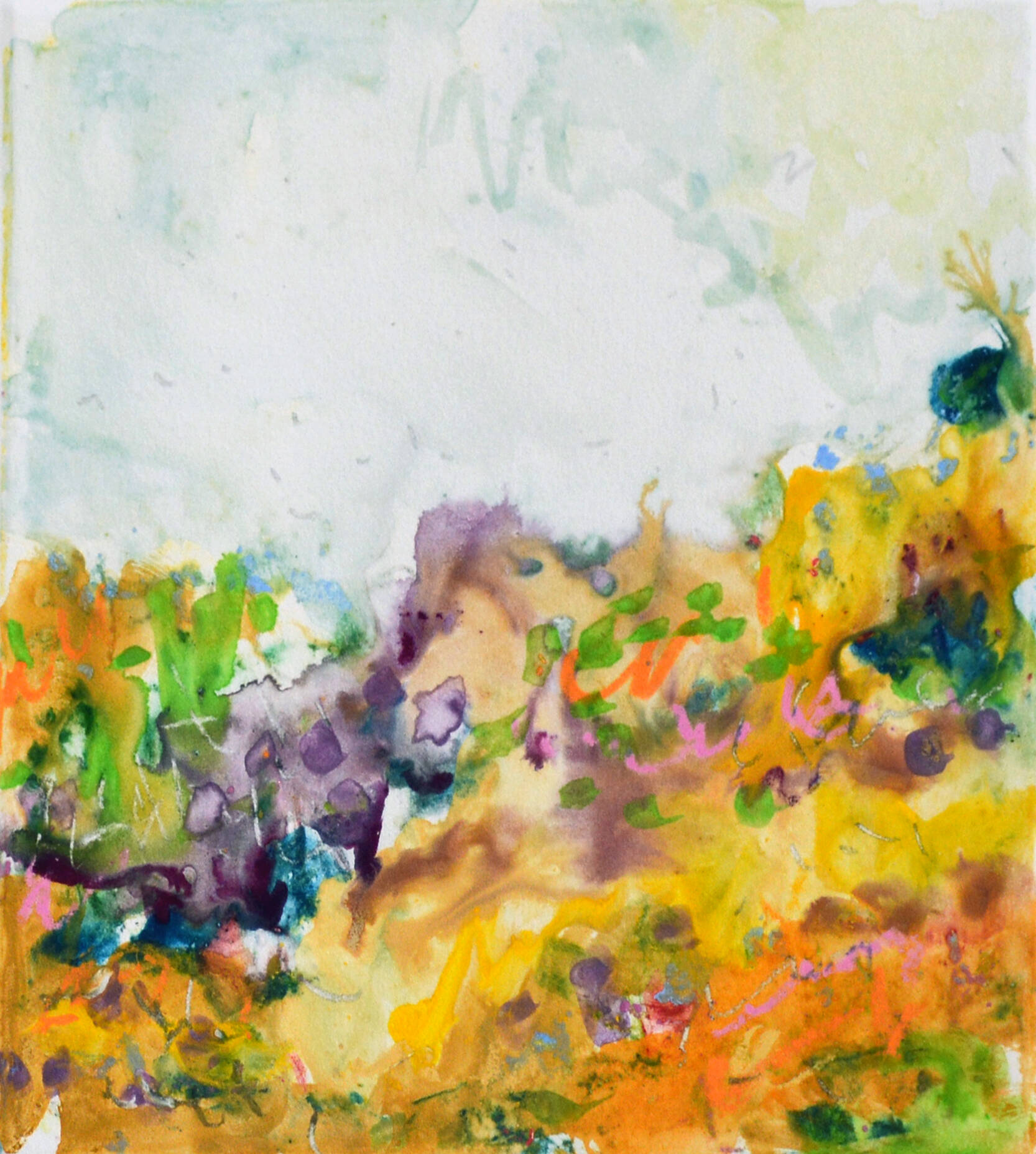
Elaine Dalcher, Garden III, monotype, 2013, 2016.29.4.
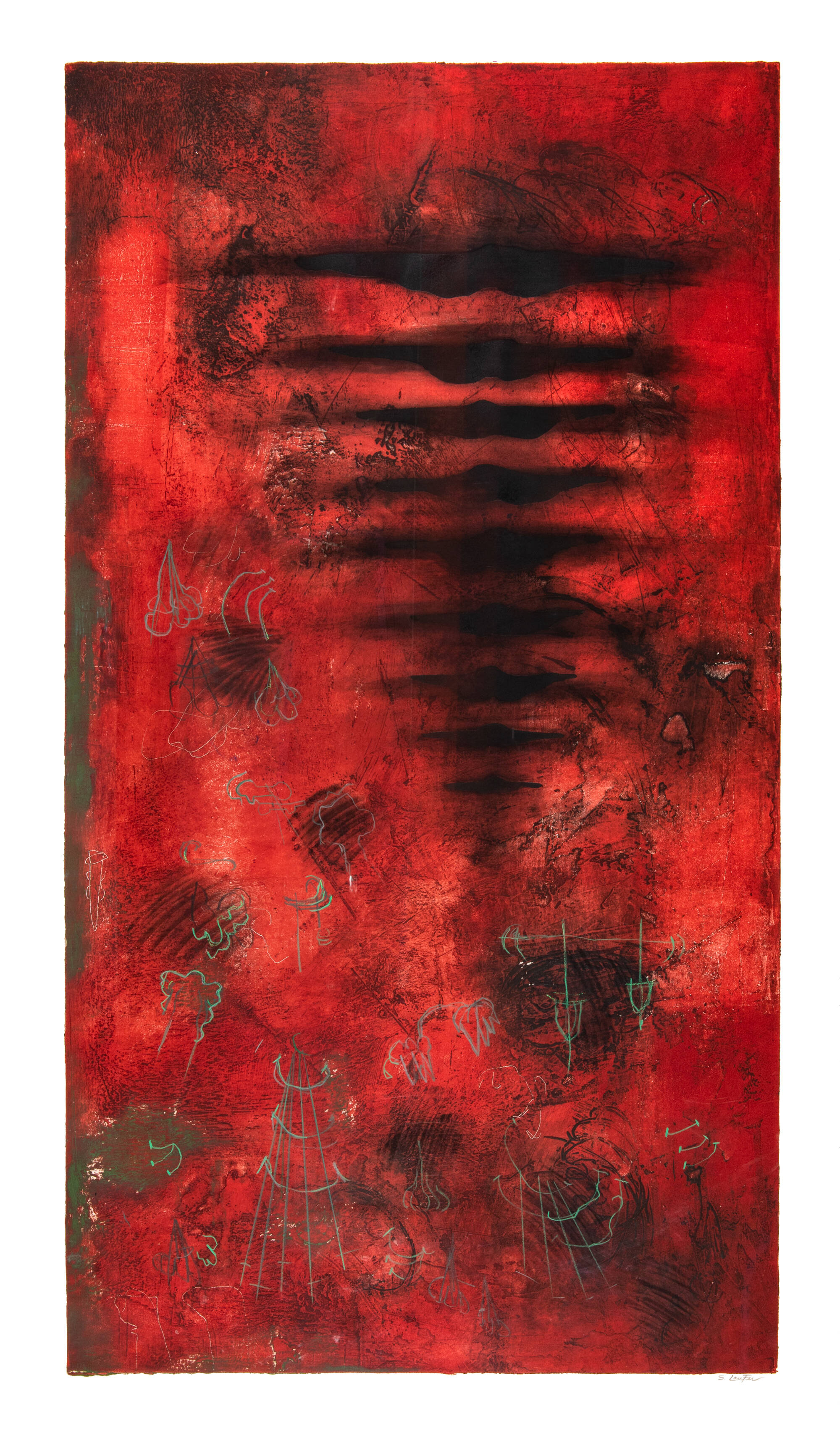
Susan Laufer, Before Dark Series (6a), monotype, 1992, 2020.31.1.
Resources in the Collection
Header Images
Left
Emanuel Elias, Edgewood Park, monotype, ca 2000, 2001.114.1.
S.D. Nelson, Wally (Abstract #1), monotype, 2014, 2015.16.4.
Phillip Hanson, Lux, monotype, 1996, 1999.774.1.
Center
Cat Cieslinski, The Dog, monotype, 2011, 2012.2.1.
Lauré Turmell, Bubbles, monotype, oxidation, and silkscreen, 2008, 2008.097.1.
John Walker, A Terre, color etching, aquatint, drypoint, monotype from two copper plates and two Lexan plastic plates, ca 1999, 2008.520.62.
Right
Elaine Dalcher, Thicket Dreams IV, water-based monotype, 2016.29.8.
Alynn Guerra, Seeds Are Common Property, monotype, 2009, 2009.40.17.
Jeanette Olender-Papurt, Untitled, monotype, ca 1985, 1999.779.1.