

Medium: Aquatint
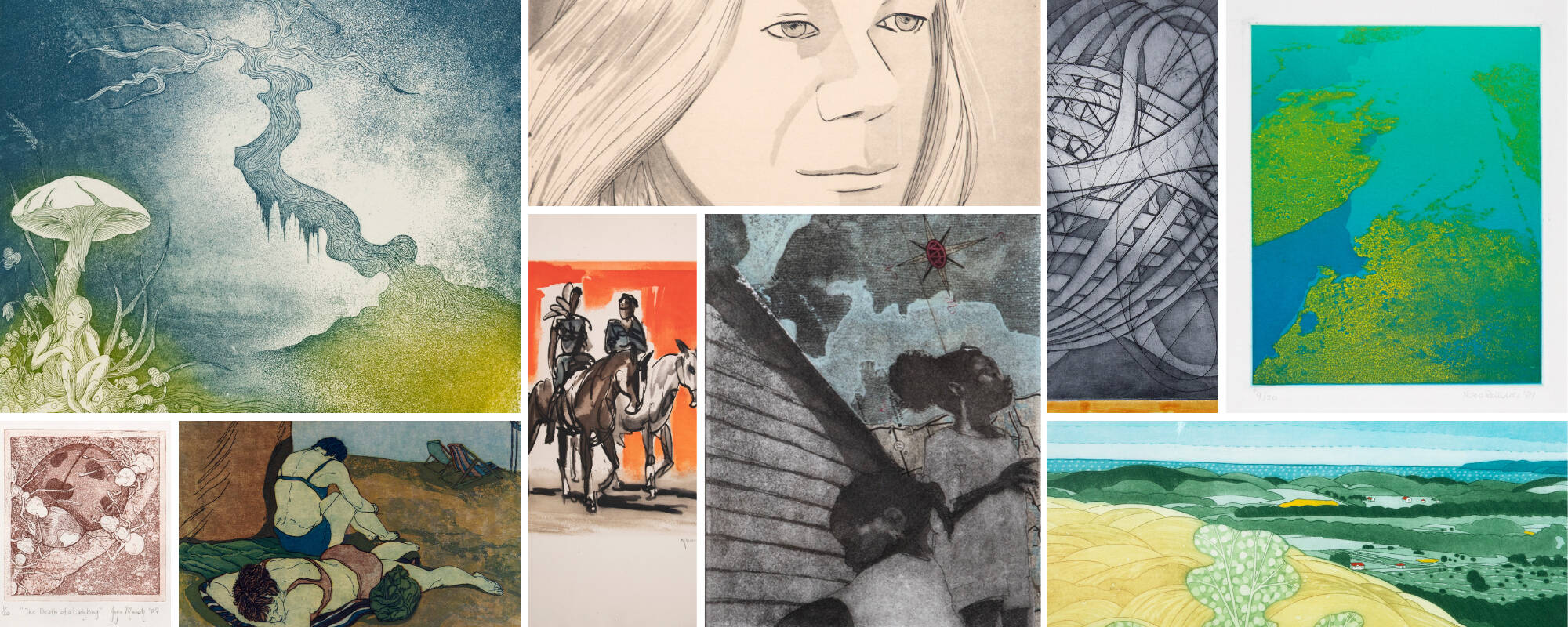
The process of creating an aquatint is like an etching in that it involves the application of an acid to make marks in a metal plate. First, a fine rosin powder is applied to a warm metal plate. Then, areas of the plate are painted with a ground or varnish that will stop the acid from affecting the metal, giving the printmaker more control. When placed in the acid bath, the surface of the metal becomes more textured. The more texture, the more ink the plate will hold; the less texture, the lighter the resulting color will be.
Explore aquatint in the collection
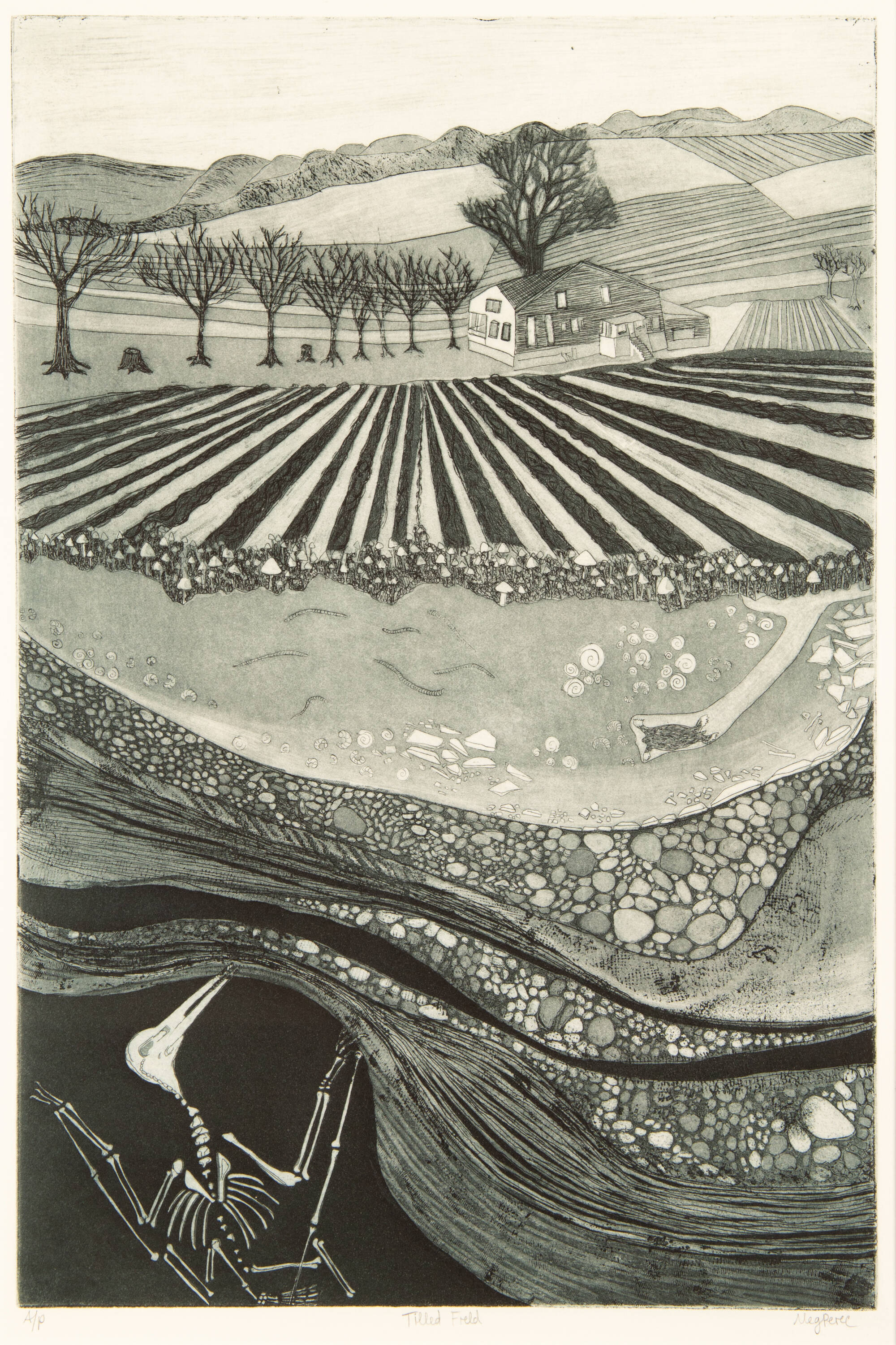
Meg Perec, Tilled Field, etching and aquatint, 2004, 2005.061.1.
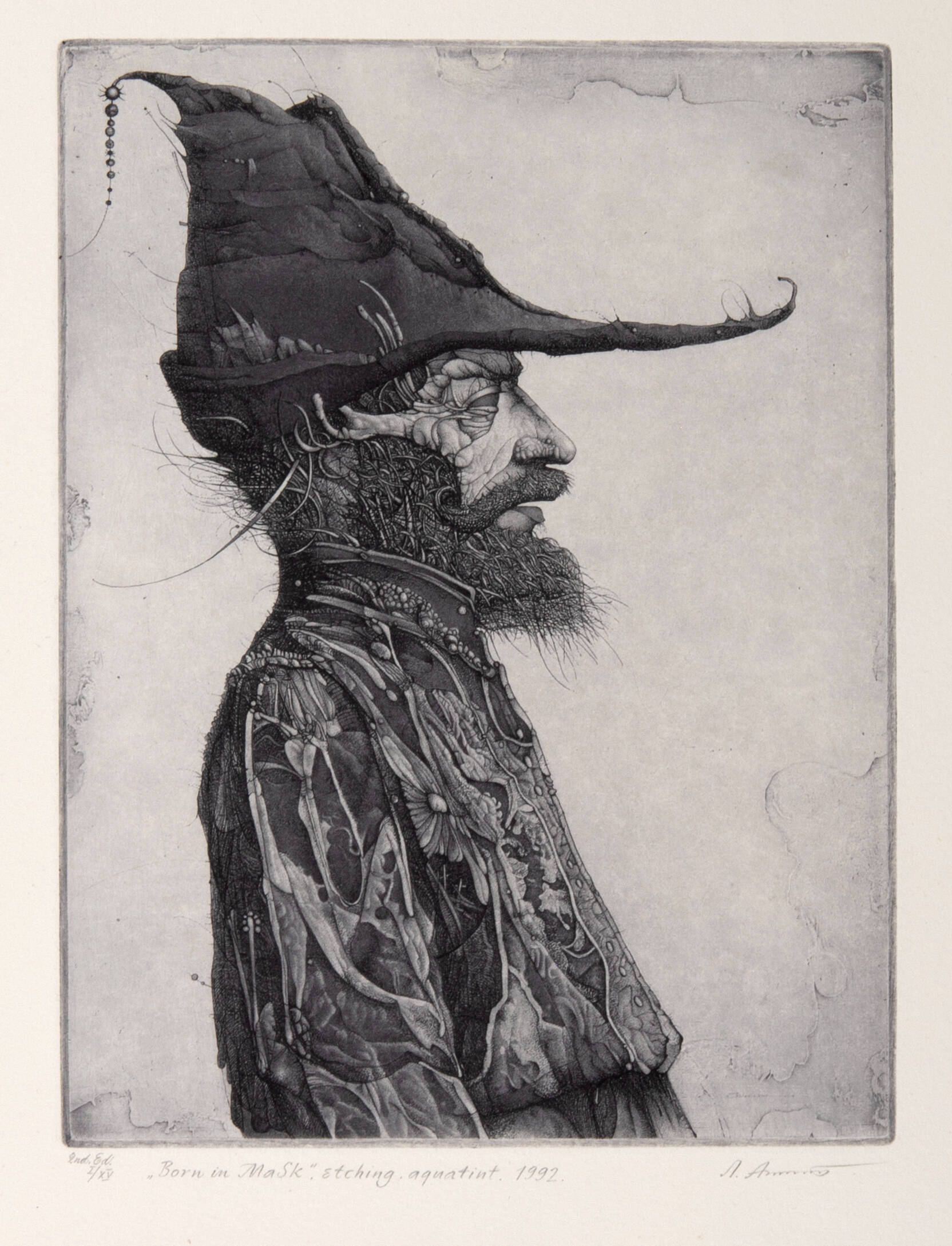
Lev Alimov, Born in Mask, aquatint, 1992, 2024.16.2.
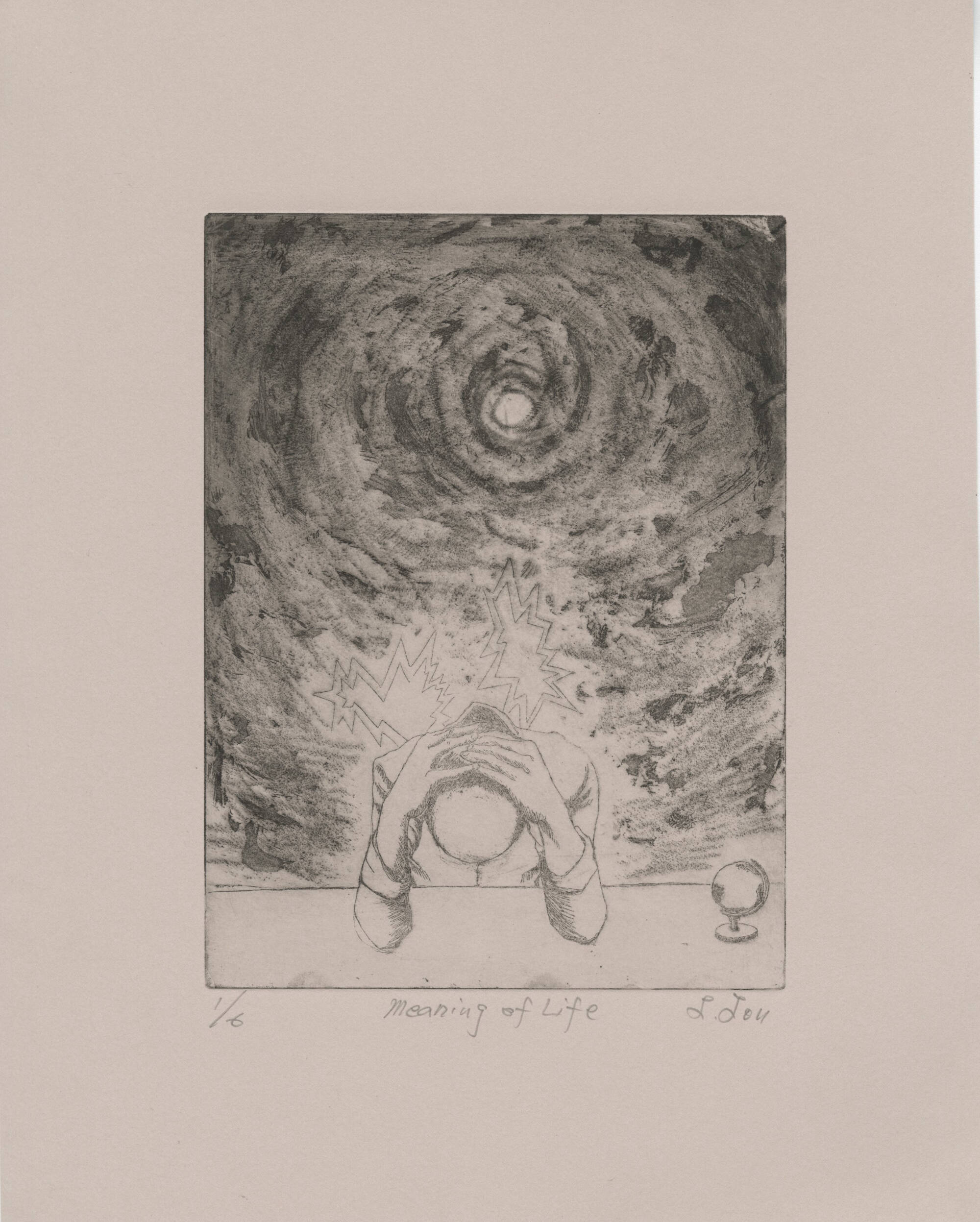
Leon Lou, Meaning of Life, etching and aquatint, 2025, 2025.24.8.
Resources in the Collection
Header Images
Left
Pete Yansen, Untitled, colored etching and aquatint, 2002.0231.1.
Joya Marsh, The Death of a Lady Bug, etching with aquatint, 2007, 2007.135.1.
Hetty Brink, Strand Vertier (At the Beachside), etching and aquatint, 1978, 2002.0103.1.
Center
Alex Katz and Hitoshi Nakazato, June Ekman's Class- June, etching and aquatint, 1972, 2017.91.6.
Roger Hebbelinck, Untitled, aquatint, ca 1940, 2010.70.28.
Caroline Hardy, Sisters, aquatint with chine collé, 2003, 2004.022.1.
Right
Steven Sorman, T(Here) State 5, etching, aquatint, open bite, and chine collé, 2009, 2009.28.5.
Nono Reinhoud, Leutilles D'Ecen, aquatint, 1981, 2002.0271.1.
John Brunsdon, View of Lake Michigan from Sleeping Bear, aquatint, 2024.51.2.