

GVSU College of Computing Expands Strategic Partnerships in Tunisia
Published March 3, 2026 by Esther Djan
Blue Dot is Grand Valley’s vision for positioning computing as the connective infrastructure of innovation in linking disciplines, industry, government, and global partners to shape what’s next. It is about building talent pipelines, strengthening ecosystems, and creating opportunities that transcend borders. The College of Computing’s recent strategic visit to Tunisia reflects this vision in action: global engagement paired with workforce impact; academic excellence aligned with regional growth.
The GVSU College of Computing recently completed a highly successful strategic visit to Tunisia, strengthening global partnerships, expanding academic pathways, and admitting more than 60 new Lakers on the spot. The trip reflected more than recruitment efforts - it demonstrated Grand Valley’s growing global presence and long-term commitment to building meaningful international academic bridges.
This visit to Tunisia embodies Blue Dot thinking in action, global reach paired with local impact. As these newly admitted students prepare to join the Laker community, they bring exceptional talent, ambition, and a global mindset that will strengthen West Michigan’s innovation ecosystem. At the same time, the partnerships established during this visit position the College of Computing to play an expanding role in shaping the future of global computing education.
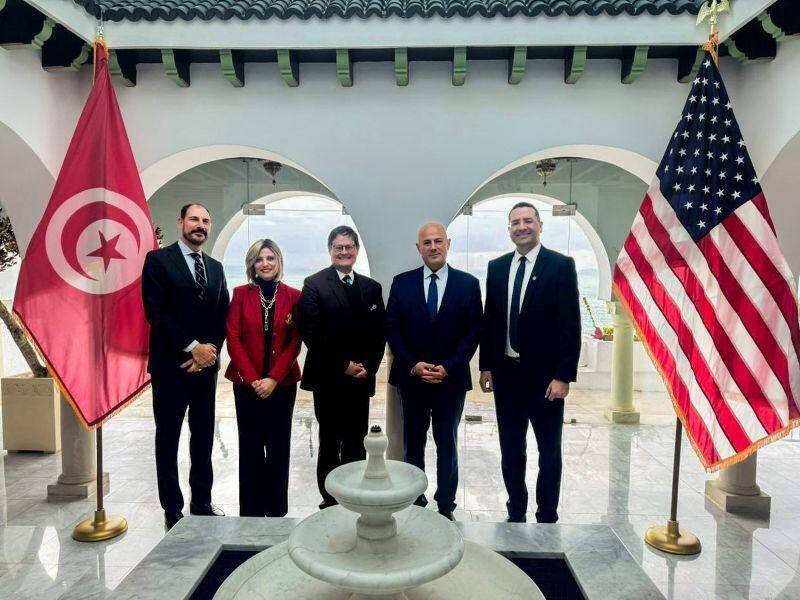
The primary goals of the visit were to strengthen new and existing partnerships with major Tunisian universities, create formal frameworks for student mobility and collaboration, engage directly with government leadership, and recruit prospective students through in person outreach. Those objectives were met with remarkable success. Three Computing Open Houses drew hundreds of students, culminating in more than 60 admission offers made on the spot. High level government engagement further reinforced the GVSU’s strategic visibility in the region and positioned the university as a serious academic partner in a key global education market.
A defining moment of the trip was a meeting with Bill Bazzi, U.S. Ambassador to Tunisia, to discuss opportunities to further strengthen academic and innovation partnerships. The conversation underscored the broader diplomatic and educational significance of the visit and highlighted the role higher education can play in global collaboration.
Tunisia is recognized as one of the top procedures of engineering and computing graduates worldwide, offering a strong pipeline of technically trained, globally minded students who align closely with the priorities of the College of Computing. Expanding partnerships in Tunisia supports GVSU’s broader global engagement strategy while diversifying its academic network beyond traditional U.S. recruitment markets. The combination of talent, institutional alignment, and long-term growth potential made Tunisia a meaningful and forward-looking expansion.
The 60+ admitted students represent more than immediate interest, they signal structured academic alignment. Many are entering through formalized 1+1 and 3+2 agreements, reflecting deeper institutional collaboration and combined degree pathways rather than general applications. Students expressed interest across all College of Computing programs, with particularly strong enthusiasm for graduate pathways in Computer Science, Software Engineering, Cybersecurity, and especially the College’s new Artificial Intelligence programs.
Beyond admissions, the trip laid important groundwork for sustained collaboration. Discussions included expanding dual-degree programs, launching joint faculty research initiatives in computing and AI, and strengthening relationships with institutions such as ESPRIT University, Leaders University, Mediterranean School of Business, Université de Carthage, and University of Tunis El Manar. Opportunities for structured student exchange programs were also explored, opening possibilities for GVSU students to study abroad in Tunisia while deepening cross-cultural and technical engagement.
The success of the visit was the result of coordinated collaboration across campus. The College of Computing led academic strategy and partnership development, the Padnos International Center provided expertise in international engagement and logistics, and Enrollment Development and Admissions ensured that on the ground interest translated into immediate admissions outcomes. Together, this unified effort ensured the trip was not only operationally effective, but strategically transformative.