

From Dentistry to Data: Two GVSU Students Take on Hemophilia Research with AI
Published April 27, 2026 by Esther Djan
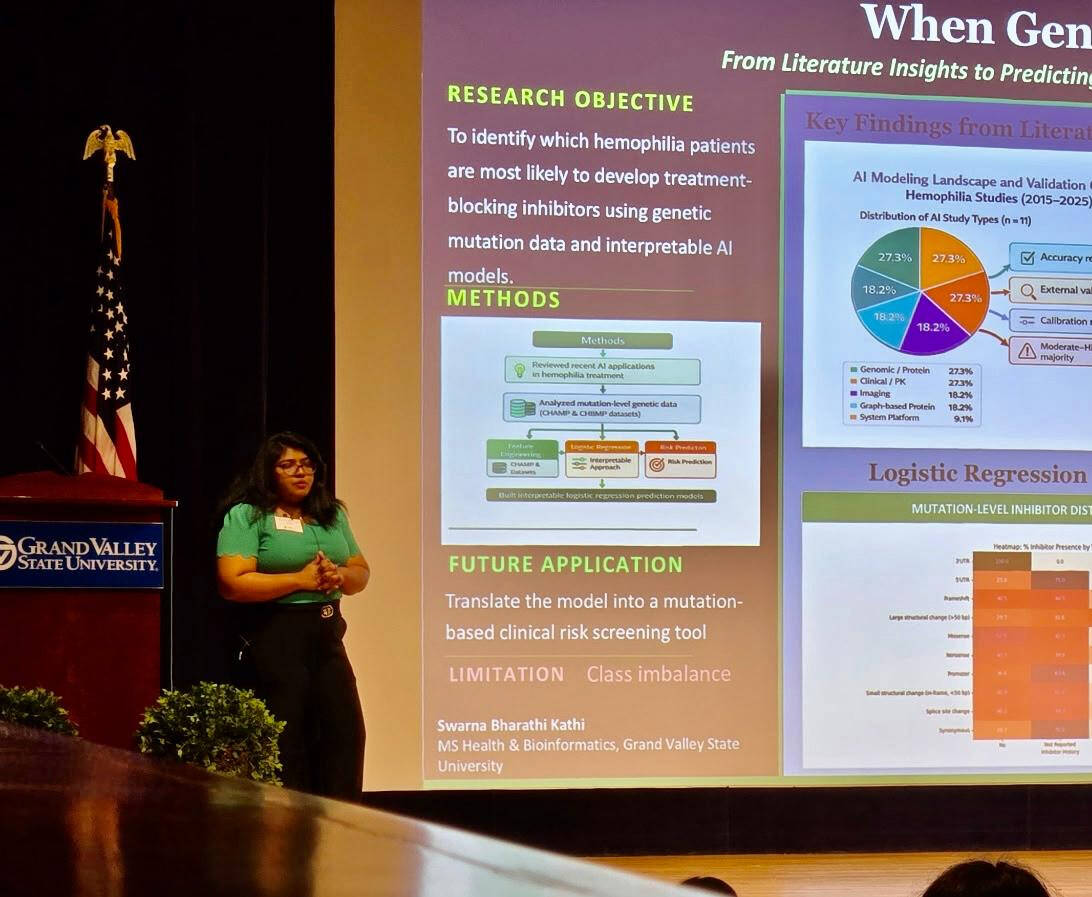
Grand Valley State University’s College of Computing is celebrating an exciting milestone for two students in the Health Informatics and Bioinformatics (HIB) program, whose research has been accepted for presentation at the: American Medical Informatics Association 2026 Amplify Informatics Conference, one of the most recognized conferences in health informatics.
For Pravallika Manchu and Swarna Bharathi Kathi, this moment is the result of a journey that started in a very different place: dentistry. Both came into the HIB program with clinical backgrounds and a shared curiosity about how data could be used to improve patient care beyond the exam room. At Grand Valley State University, they’ve been able to build that bridge, learning how to apply tools like machine learning and data analysis to real healthcare challenges.
Their research focuses on hemophilia, a rare genetic condition that affects the body’s ability to clot blood. It’s a complex condition, and their work looks at how artificial intelligence can help make care more personalized, whether that’s predicting risks, improving treatment decisions, or supporting clinicians with better tools. Along the way, they also took a step back to evaluate how reliable current AI models really are, using a structured research approach to understand what’s working and what still needs improvement.
For Swarna, this research isn’t just academic. During her dental training, she worked with a patient who couldn’t receive treatment right away because of complications related to hemophilia. That experience stuck with her and continues to shape the kind of work she wants to do.
Getting accepted to present at AMIA is a significant achievement, not just because of how competitive it is, but because of the people and ideas it brings together. It’s a space where researchers, clinicians, and data scientists from around the world come to share work and push the field forward. For Pravallika and Swarna, it’s both recognition of the work they’ve done and an opportunity to keep learning, ask questions, and connect with others doing similar work.
Pravallika and Swarna will also be participating in the AMIA Student Volunteer Program, which gives them a chance to be more involved in the conference itself and meet people from across the field. Experiences like this go beyond presenting, they help students see how research communities actually work and where they might fit into them.
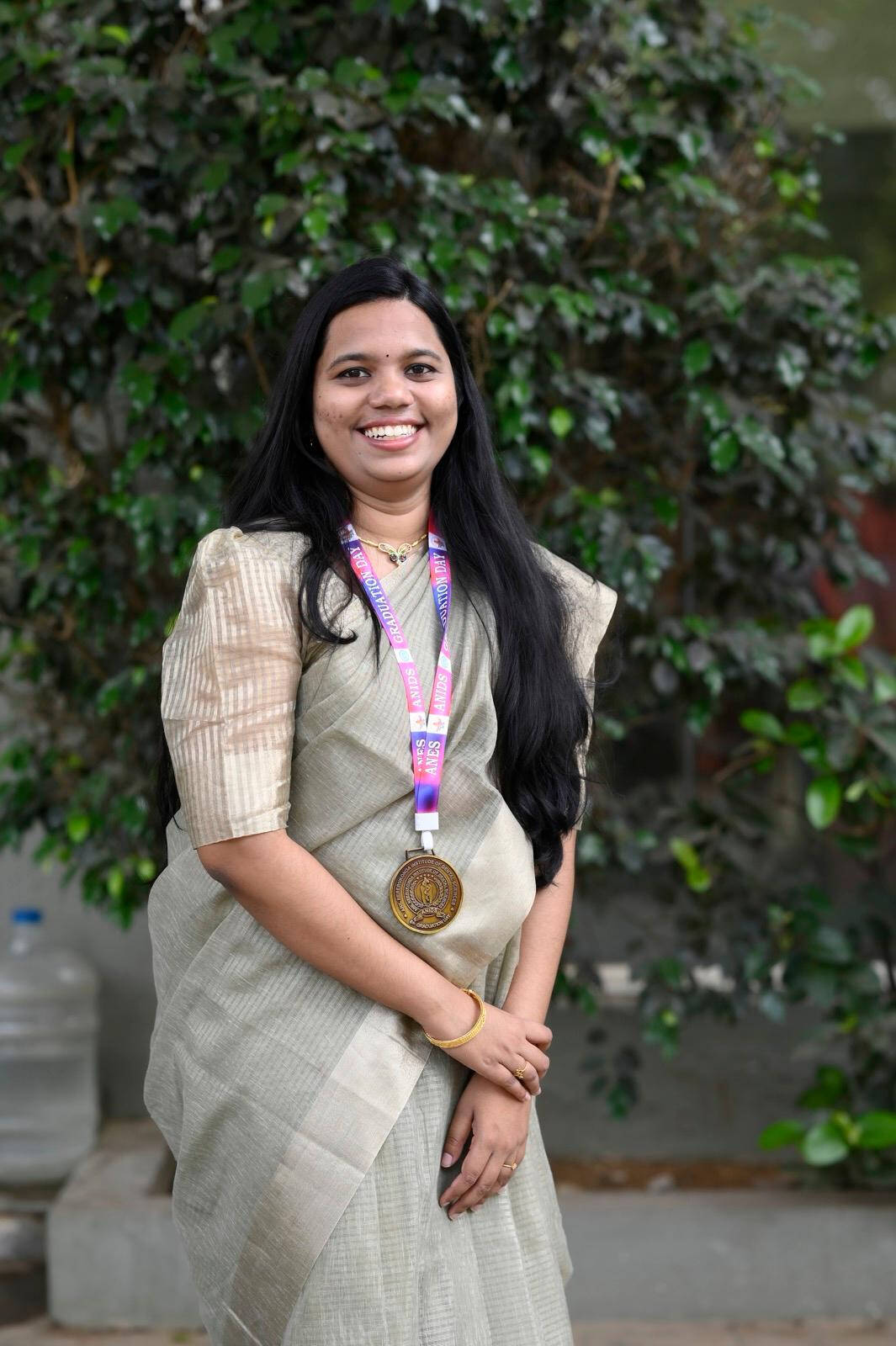
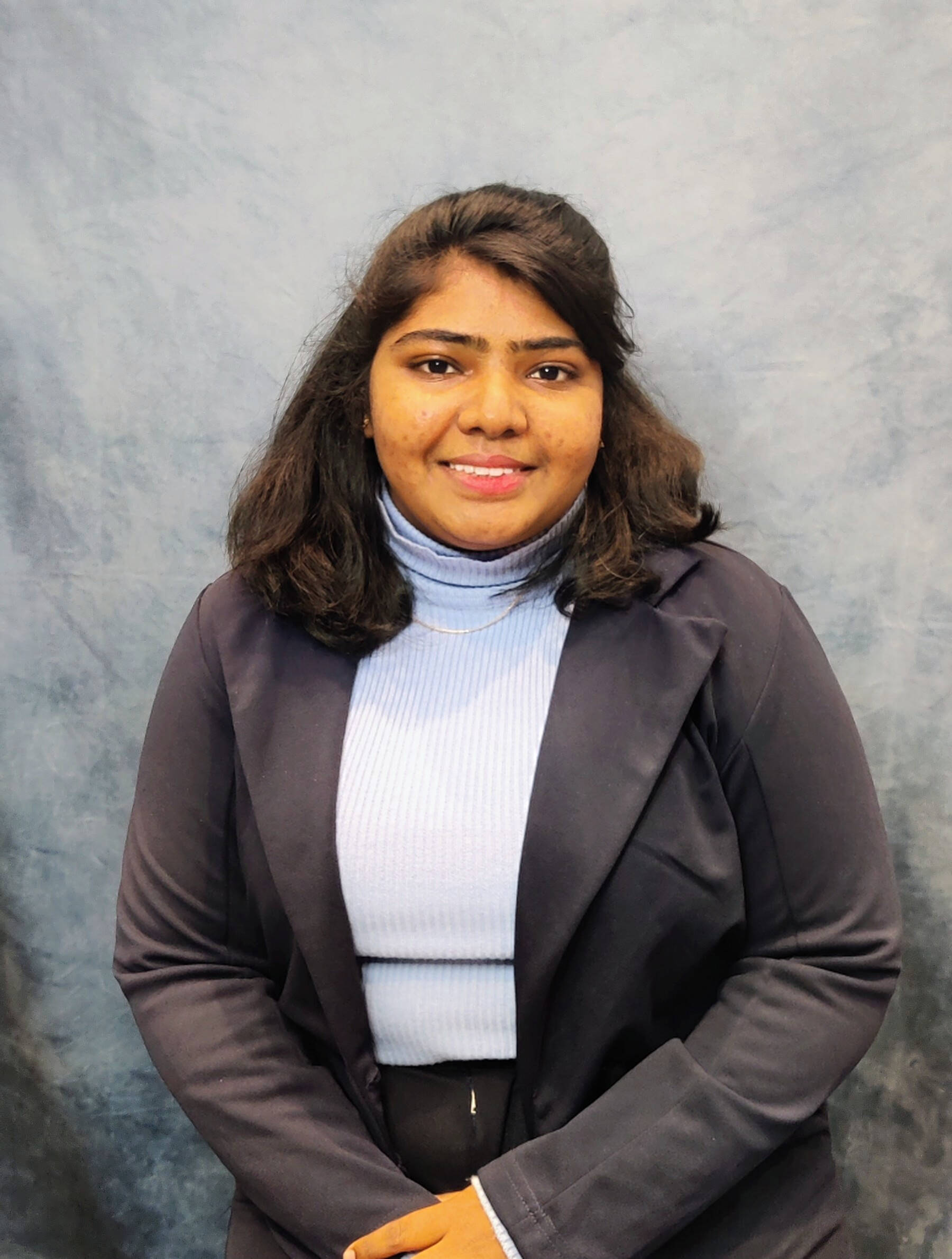
Both students are quick to point out that they didn’t get here alone. Support from faculty, especially mentors like Dr. Suhila Sawesi and Professor Kamrul Hassan, played a huge role in helping them shape their ideas and turn them into a conference-ready project. The program’s focus on collaboration and real-world application gave them the space to explore, make mistakes, and improve along the way.
What stands out most in their story is how much they’ve grown, not just technically, but in confidence. From learning how to work with clinical datasets to writing and presenting research, they’ve built skills that go far beyond the classroom.
Their advice to other students is simple: start early, ask questions, and don’t underestimate what you’re capable of. Opportunities like AMIA might seem out of reach at first, but getting involved in research and staying curious can open more doors than you expect.
As they look ahead, both Pravallika and Swarna are interested in continuing work at the intersection of healthcare and data, especially in areas that can make care more personalized and accessible. And with experiences like this already behind them, they’re well on their way.