

GVSU College of Computing Joins Congressional Dialogue on Trustworthy and Responsible AI
Published October 7, 2026 by Allison Bazaire
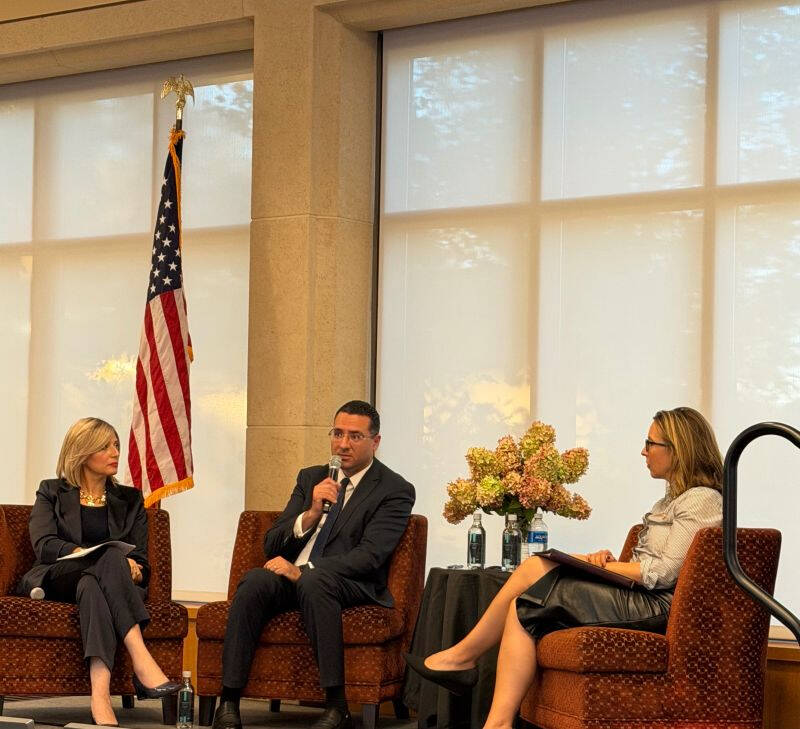
On October 5, 2026, Grand Valley State University leaders joined U.S. Rep. Hillary Scholten for a Trustworthy and Responsible AI Congressional Dialogue, bringing together policymakers, educators and community members to discuss how artificial intelligence can be developed and used responsibly.
Representing the GVSU College of Computing were Dean Marouane Kessentini and Dr. Samah Mansour, executive director of the newly launched West Michigan Trustworthy AI Consortium. The conversation explored the opportunities and challenges surrounding AI, including education and AI literacy, workforce development, responsible governance, access, and the environmental impact of the infrastructure supporting emerging technologies.
Kessentini highlighted GVSU's efforts to prepare students and the broader community to navigate a rapidly changing technological landscape. Those efforts include bachelor's and master's programs and a certificate in artificial intelligence, Computing+X pathways that connect computing with other disciplines, and expanded AI literacy opportunities for students and community members.
The discussion also addressed questions facing educators as AI becomes increasingly common in classrooms and workplaces. Kessentini emphasized the importance of clear guidance, equitable access to AI tools, human accountability, and helping students develop the judgment to determine when and when not to use AI. Sustainability was another focus, including the energy and water demands associated with AI infrastructure and opportunities to develop smaller, more efficient AI systems.
The dialogue comes as the College of Computing launches the West Michigan Trustworthy AI Consortium, supported by federal funding secured by Scholten. The consortium brings together research, K–12 education, workforce development and industry partnerships with the goal of helping West Michigan not only adopt AI, but play a role in shaping how it is developed and deployed responsibly.
“The communities that build trust in AI will be the ones that benefit from it,” Kessentini wrote following the event. “That trust isn't created only in Washington or Silicon Valley. It's built locally, in classrooms, workplaces, labs, and conversations exactly like this one.”
The conversation reflected a central idea behind the consortium in that building trust in AI will require collaboration across sectors. By bringing universities, policymakers, schools, industry and community members into the same conversation, GVSU is working to ensure that people across West Michigan have a voice in how AI shapes their classrooms, workplaces and communities.