
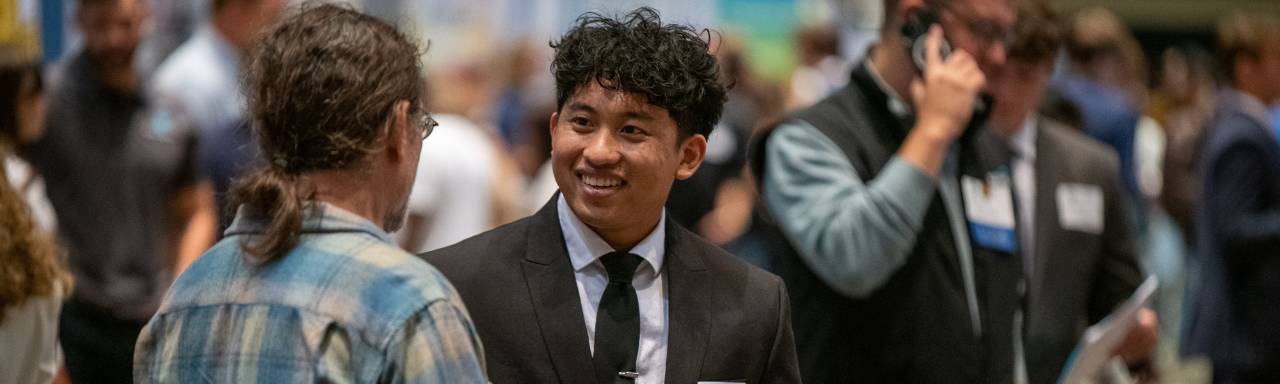
Intern Takeover: Professionalism in the Workplace
Brody Zondervan:
Hello everyone and welcome back to the work like a Laker podcast. This is a pretty special podcast we got because as you can kind of notice, I'm not Megan and I'm not Grace. This is the intern takeover episode and today we are gonna be discussing professionalism. My name's Brody Zondervan and I am the Social Media Marketing Intern for the Career Center.
Callie Zwart:
My name is Callie Zwart and I'm the Adult and Alumni Social Media and Marketing.
Sofia Pratt:
Hi everybody, my name is Sophia Pratt and I'm the Writing and Communications Intern.
Shea Hannigan:
My name is Shea Hannigan, I'm the Outreach and Promotions Intern.
Denys Zamaraiev:
My name is Denys and I'm a Statistics and Data Analytics Intern.
Brody Zondervan:
Alrighty, so like I said, this episode is gonna be on professionalism. Professionalism is one of the most important fundamental features of workplace culture. It establishes respect, enhances reputation, creates positive relationships, and it can even promote career advancement in some cases. If you guys believe that the work itself is important in an organization, none of it can be done without providing a professional environment. Professionalism is a really broad space, but today the career center interns are gonna be discussing what each of us believe are the key or the most important kind of subcategories of professionalism, including dress and attire, building good colleague relationships, communication and time management. So Cali, why don't you start us off with the dress and attire.
Callie Zwart:
Yeah, so different careers and different companies all have different expectations and ideas of what professionalism is. For example, what you would wear as a financial investor is widely different to that of a mechanical engineer. So I've broken down three major dress codes that see in an organizational setting. The first one is business relaxed, which is the most casual. It's gonna be jeans, tennis shoes, paired with blazers, blouses or button up shirts, very similar to how we dress at the career center here. The next one is business casual, a little bit dressier. Probably the most common dress code includes slacks, knee like skirts, blouses, button up shirts and professional footwear. Typically like a close toed shoe. And then the last one is business professional. The most formal of all the dress codes and often includes wearing a suit or suit pieces over blouse and button up shirts.
Callie Zwart:
Obviously these aren't the end all be all to work attire such as like a nurse and a doctor are gonna wear scrubs and lab coats and construction workers will wear hard hats and gloves. With this being said, I want to talk about how do you know what to wear to an interview, a new job or an internship. So the first thing that you should do when looking at what you should wear is ask when you get the invitation to interview, you are totally welcome and free to ask your hiring manager or your contact of what to wear. Another great place to check is social media. Go onto their website and see what they have posted. Any pictures, do some stalking. If you've already interviewed, make sure you're observing the office, seeing what everyone else is wearing, trying to copy that and also look at the culture section on the website typically has some good info on the culture of the workplace that you are working at or looking to apply for. Especially in an interview you want to be dressing up or to the same level. So if it is a big professional organization, probably stick to that business professional instead of that more business relaxed, you always want to be dressing up.
Brody Zondervan:
Yeah, I know I worked with in kind of like a warehouse position for a couple summers and I got me and my buddies all there to intern and I remember my boss coming back and he was lowkey like making fun of some of my buddies because they wore like a suit to the interview and it's like, come on, it's a warehouse spot. But honestly like in your opinion, do you think it's better to dress up in an interview if you're not totally sure of what to wear?
Callie Zwart:
Definitely I would say always be dressing up. Again, try and feel out the position, feel out the way the language is worded in the emails you're receiving. So yeah, I would always recommend dressing up rather than down. You always want to be more professional than less professional. When going into an interview or something like that, you don't want to be wearing jeans when you're interviewer is wearing a suit and tie. You know, you want to kind of fit that mold, fit that idea of like what the company stands for, what they're about, the professionalism in the dress that they code that they hold is probably important to them.
Denys Zamaraiev:
And I would like to add to that, I've looked into some service stand out to employers and majority of employers prefer business casual to their interviews. However, there's a significant amount of employers that do want to see a business professional. So in order to make sure that you can satisfy everyone, I would always recommend dressing up because people who prefer business casual, they wouldn't mind if you were a business professional. However, people want to see a business professional would not like business casual.
Brody Zondervan:
Yeah, I think, I think one of the coolest parts about just working here at the career center is I know we're not a video podcast, this is audio only, but kind of even looking around the table, each of us are wearing something like kind of completely different. But all stuff I would say is very appropriate for the workplace. So I think having that creative freedom of like after of course getting the feel of like what's appropriate for the workplace, having that creative feeling of what to wear as long as it fits the workplace culture, I feel like you can kind of go from there
Callie Zwart:
Leading into what we wear at the career center. What did you guys wear to your interview to get this position?
Sofia Pratt:
Yeah I wore, it was a pair of slacks and then a plain colored shirt and you know, because I get cold easily, I had a little cardigan on because I didn't own a blazer at that point but had the cardigan, had the trousers, had the shirt.
Callie Zwart:
Yeah, no that's a great point. I would also add a bag. You are totally welcome to bring some sort of bag into the interview. A lot of times they'll already have water and everything there for you, but you should be taking in a bag that's gonna hold your notebook, your resumes. It's totally acceptable to bring in a professional looking bag, even if it's like a tote bag that doesn't have too much color and too flashy. You don't want it to be too flashy but something very just like modest that you can put all of your stuff in and bring to your interview.
Denys Zamaraiev:
I personally wore, I believe it was dark pants and then I wore a white polish shirt to my interview. So it was business casual and looking at the environment I feel like that was a proper fit and it turned out good.
Brody Zondervan:
Yeah, even like a spot, because this is a Grand Valley organization, we kind of had the opportunity to stop in and get these services before we even like wanted to work here, or wanted to interview. So even like looking at the people behind the desk or looking at some of our career advisors really shows like what professional dress may look like in the career center atmosphere. But like Callie said, that really ranges across a whole bunch of different organizations where some places might require the suit. So just getting that gauge of that feel of like what is appropriate I feel is really important. How about you Shae, what did you wear?
Shea Hannigan:
To my interview, I wore a pair of slacks- I wore a plane, long sleeve t-shirt- I had some flats on and I also did have a bag I brought just a beige bag to carry a folder. My laptop, my resumes, a cover letter just in case they wanted to see it.
Callie Zwart:
Yeah, I did something very similar to all of you guys. I was wearing just a black pair of dress pants and a nice plain long sleeve top. Moving into video calls for dress and attire. What are you supposed to wear to those, again, you'll see a lot of people wearing nice tops and sometimes sweatpants on the bottom. I would say a rule of thumb with that is always just making sure that whatever is seen in the video is how you want to present yourself in that workplace. So if the bottom half of your body is not showing on the call, sweatpants are acceptable, but you have to be mindful that you're not showing that unprofessional dress while videoing with your workplace.
Brody Zondervan:
I was talking to an employer and he said especially during like COVID when zoom calls are really a thing he ended up wearing just like his boxers at the bottom because he was like, "I don't really need to wear pants". But then they had to do this whole thing where they had to stand up in front of the video and he said "I stood up and I was in my underwear". So I think that would be something that's like really conscious to think about where even if it's not showing there might be a freak moment where yeah I got to stand up just in case. Just in case.
Callie Zwart:
A new debate arising from the pandemic is crop tops in the workplace. As a rule of thumb, I would say however there is a place where it is allowed but be careful because it can definitely come across as rude or unprofessional to wear such clothing. So maybe just again observing, asking, looking at what other people are wearing. Again at the career center we're asked not to wear crop tops so they want you to ask, ask and find out. Yeah, I feel
Shea Hannigan:
Yeah, I feel like it never really hurts to ask. I feel like it's smarter to ask than come unprepared or look bad. So definitely ask those questions.
Denys Zamaraiev:
Speaking of the same survey from employers, I've got a chance to look into some of their responses about this exact question and over 90% of them said that they strongly disagree that people should be allowed to wear that to a workplace. So there's still the 10% or even less that would be okay but you really need to be careful and communicate with their group of people whether it's okay to wear it or no.
Callie Zwart:
Next we're gonna move into building colleague relationships in the workplace.
Sofia Pratt:
Yeah, so colleague relationships, they're really important. I think they make the whole workplace a little bit more enjoyable for everybody, for you, for your supervisors, for your coworkers. It's a better space for you to learn more, to ask questions, to collaborate. You have more chances to learn from people who know more than you and then once you get to know a little bit more, you can start teaching that to other people. And so you really do want to have a good environment and that comes from having good relationships. But the type of relationship that you might be building or might be aiming for depends on the workplace culture. Sometimes they're gonna be a lot friendlier, a lot more socializing will be involved and sometimes they won't. So here at the career center, I think all of us, we're in the same environment so it makes sense. We have similar types of relationships with colleagues because they're very friendly. Does anybody want to say anything on how our friendly relationships are here?
Brody Zondervan:
Yeah, I think it's really cool that they strategically placed at least all of the intern desks right next to each other and also kind of just like in the heart of the center. So that allows us to have that good communication with kind of everyone in the office. And I really, I think it's really cool that they kind of emphasize the importance of yeah go over and have that conversation with the person on the other side of the office even if you don't work with them directly, ask them how their weekend was. I think that just really helps build that kind of friendly culture and it honestly makes me even more excited to come into work because if I'm gonna come in and just not talk to anyone and sit down, that's miserable. I really like to know that I can come in and have that friendly conversation with people.
Denys Zamaraiev:
As someone who works at eight o'clock in the morning every day, I feel like that's really nice to have an opportunity to chat with some of your peers even though you don't normally talk to some of them about your job. But yeah, during those minutes when you're drinking coffee you can learn a lot of things about their family about their weekend and I think that's a really good starting point to build those connections and I'm sure those are gonna be helpful in your future life.
Callie Zwart:
To build on top of that, I would also say how much I value the community such as of asking questions. They're very big here at the career center for asking questions. It doesn't matter who you ask, everyone's willing to answer a question you have give you feedback or direct you to the correct person to talk to if they don't have the answer for you. And I think that's another really big part about the culture at the career center. But again, like you were saying, knowing the career, the culture of the organization that you're going to is huge to know when it's acceptable to ask those questions and to who.
Brody Zondervan:
Yeah. because I know in some places you might have that coworker that wants to come in and just sit at their desk and work and leave and I think like it wouldn't be very professional knowing that to go up and pester them about their weekend if that's not a conversation they want to have.
Sofia Pratt:
Yeah, I think reading the room and reading your colleagues and what their goals are in that moment are really important because there are gonna be some workplaces that you might find yourself in where they're not going to encourage being as friendly as they are in places like the career center and that's okay too. It's really about understanding what the culture is and how to work with it. So in general, ways to build good relationships while still maintaining that professionalism. For one, I think a really good strategy that works no matter what type of culture you have, is to greet everyone just a little good morning, good afternoon, hello, how are you doing? Hi there. That kind of stuff. If you are in a more friendly environment, you can keep going after that. You can ask them about you know, their family, their dog, their weekend up north or something and if not you can just leave it at that.
Sofia Pratt:
Also being an active listener, that's always very helpful. Any type of culture when people are talking to you, you want them to know that you're listening and that you care. So not being on your phone during it, not zoning out during it, making eye contact, something like that, that would really go a long way. And always being respectful. This is almost even more important to be aware of when you are in a more social environment because just because these people are your friends, they're also your supervisors and respecting them, respecting your coworkers, even if they are the same age as you, even if they're younger than you, maintaining that respect to everybody in your workplace is really important. So don't slack off to socialize even if you want to. You again read the room, how many tasks you have to do, how many tasks do they have to do. If a colleague is busy, don't try to socialize with them. And again, when your colleagues or your bosses or your supervisors they tell you to do something, listen to them and do it. Do it to the best of your ability even if you are friends, time and place.
Brody Zondervan:
I think that's a really good thing to highlight because I think especially in places like this where it's really easy to build that good kind of relationship, it's really important to highlight the difference between a professional professional relationship building in a workplace and then a relationship building outside of the workplace. because I know a lot of people who have gotten really close with their bosses and their employees and they start having those conversations that might not be appropriate for the workplace. So just kind of being aware of it's good to have those conversations. It's good to ask about weekends, it's good to ask about their day, be friendly, make friendships, but also be aware, like you said, time and place, you're at work. Make it an appropriate work conversation.
Shea Hannigan:
Alright, so moving off of that, communicating is something that we all do but it's gonna look a lot different in the workplace. So communicating in the workplace is gonna look different than communicating with your friends. Communicating well in the workplace helps coworkers build strong relationships, trust and respect. When people trust and cooperate with each other, they can solve problems better and come up with more creative ideas in the workplace. Open and honest communication makes a positive workplace environment overall. There are many ways to communicate in the workplace. You can communicate face to face, virtually email messaging and in person and all of these can look different in a bunch of different ways. So I'm gonna go over some tips and advice for professional communication. One of the main things is choosing the right timing and method match the medium you are communicating through. For example, email may require more formality than a face-to-face conversation or a text message. Every organization and employee has a preferred method of communication. Find this preferred method and utilize it. When it comes to verbal communication, use clear and direct language and make your purpose easy to identify, be polite and respectful in all your communications and use active listening like Sofia touched on earlier, focus on what the other person is saying and reaffirm that you're listening through paraphrasing, asking clarifying questions, maintaining eye contact, nodding and not interrupting.
Brody Zondervan:
Can you go over like when you said the difference between communicating through email or through text message, like what that looks like in a professional aspect?
Shea Hannigan:
Yeah, so when it comes to text messaging, text messages could be more formal. Like I know at the career center, if you're reaffirming that you can't make something or you're gonna be out of office one day you might send, we might send a quick message to our supervisor like hey, just a reminder, can't make it today. But if we're sending emails, you want to use professional greetings and closings, you want to double check your recipients and attachments before sending, you want to have specific subject lines, you want to respond in timely manners and you want to avoid negative phrasing in emails instead of saying you didn't respond, say I wanted to follow up. So overall email is just a more formal way of communication where text messaging is usually more conversational, like how you text your friends.
Brody Zondervan:
I like how you also said where it's like for our supervisors, especially a text message is an appropriate way to say like, hey, I can't make this event, or hey, I'm gonna be running a little late today where if we're in office and have the ability and the time to send an email, just the difference between like when and where to send what type of communication as well.
Shea Hannigan:
Yeah, and they made that clear, at least here at the career center. They told us times to text them and times to email them, which I know really helped me a lot. So you're not always going to have to decide whether or not your message should be sent to them in email, in text, in person. You can always ask, I'm sure supervisors would appreciate you asking so they know what to expect when they get a text versus an email from you.
Callie Zwart:
I would also say when I am emailing my supervisor, it is going to be slightly less formal than if I am emailing the department as a whole. There's been a few times where I've had to send out emails that were to multiple people and just making sure that I'm adding in that extra professionalism for email that is going to more people and not just my supervisor who I interact with every day.
Brody Zondervan:
Yeah, I think that goes back to the like building that good colleague relationship where of course each of us individually we're gonna have that good relationship with our supervisor because it's someone who we interact with every day kind of day-to-day tasks and stuff like that. Where as you said the department as a whole, there might be people we've never spoken to at all ever, or never will. So yeah, I think it's really important knowing like what kind of relationship do I have with the person I am communicating with and how is, how can that be reflected in how I communicate with them through email or through text or something like that.
Callie Zwart:
Yeah. How do you put your best foot forward?
Sofia Pratt:
Yeah, I'm bouncing off of that. Like Brody said, some people you won't talk to at all and some people you talk to on a daily basis, knowing your audience and adjusting how you speak to them can really make the difference. Make sure that when you are speaking to people you show empathy and you're aware that people come from all different backgrounds. So it's important to be respectful of all people, backgrounds, cultures, religions and beliefs. Especially if you don't know much about the person, you don't really know where they come from. So it's important to be respectful of everyone.
Sofia Pratt:
And then moving on to communication that people may not think about as much. Nonverbal communication is also very important in a workplace When you're talking to someone, make sure you maintain eye contact but don't stare them down. It can make someone very uncomfortable. Make sure you also pay attention to your body language. Having an open posture represents confidence and approachability. You want to be approachable in the workplace. If you're slouched down, arms crossed, sleeping at your desk, it's not given the best impression. Also, you want to match your expressions to your tone. It's as simple as smiling makes you more approachable and it can help the workplace environment as a whole. And also remember you're in a workplace, use appropriate hand gestures whenever you're in the workplace. So all of the tips and advice I just gave is a very broad outline of professional communication in the workplace. Again, like we've kind of been touching on, it's very different in every organization or environment that you come across. So when you go into a workplace, search out their vibe, read the room, how they communicate, which methods they communicate through and adapt to these to become an effective communicator within that organization. Again, it takes time and practice to be an effective communicator, but it's a very important skill to work at.
Brody Zondervan:
I know each of us might like, not even through our colleagues' communication, but also a lot of us sometimes communicate with clients or people outside of our organization. I know us at the career center a lot of what a lot of our work is put out to the student body. So just kind of each of you through your own work here at the career center, how would you say you reflect your communication to the student body? I know for me as like the social media marketing intern on Instagram we post a lot of reels or like TikToks and stuff like that and just kind of the overall culture of reels and TikToks. It can be a little more funny, it could be kind of more entertaining. But if I'm posting something on LinkedIn that's a very serious platform. So kind of knowing where, what site am I posting on? Who, who is my target audience here? And is it appropriate to communicate through entertainment or is it appropriate to communicate through just formalities and statistics and stuff like that?
Denys Zamaraiev:
Yeah, so I work with some large data sets and some of them are really, really confusing and every single time when I'm working I have to assume that my audience is somebody who understands nothing about data and statistics. So it makes it a, not always, an easy task, but I need to make sure that when I present some insights to people they need to be easy to understand and I shouldn't be using some difficult statistical terms and my presentations have to be very simple to the point where any person in the world could look at it, think for one minute and understand everything that I'm trying to say to them.
Sofia Pratt:
Yeah, when it comes to my position, I'm going out to student organizations and classrooms and communicating with them on different parts of the career development process and the career center as a whole. So for me it's important to maintain the career center's brand is and what they want to get across. And again, like Denys said, like you have to assume that they don't know what I'm talking about. So to use clear and direct language so they get exactly what I'm trying to say.
Brody Zondervan:
Yeah, with my position I am marketing and social media for adult and alumni can look very different to that of just like an average college student in their twenties. Some alumni are 10, 20 years out of school now and maybe those TikTok and Instagram reels don't catch their eye as much as a LinkedIn post or Facebook post. So when I'm posting that, making sure that I'm still grabbing their attention and not just trend following with current students today.
Shea Hannigan:
Yeah, I've also found that content and communicating to different audiences has been something I've had to consider. I write newsletters that get sent out, some of the newsletters will get sent out to students, some of them get sent out to employers from, they have a variety of different ages. I'm not really sure what ages of employers are, but it is a different audience from students. And so not only will I change the tone a bit, but I will also change what I want to highlight because I know that they, my audience has different priorities and they care about different things that I'm writing and so I'll focus a little bit more on the employer side of things versus the student side of things, depending on my audience. Alright,
Sofia Pratt:
So moving on from communication. Denys is gonna talk about time management.
Denys Zamaraiev:
Alright, so speaking of time management, most students already know what it feels like to be busy between classes, assignments, a part-time job, maybe trying to keep a social life it can get really overwhelming and it can get overwhelming really fast. And honestly I'm right there too. So I've got school during the day, I've got my internship and I'm also an athlete so I have tennis practices matches that take up big chunks of my time. On top of that I'm trying to make some space to hang out with my friends and just enjoy my life. So it didn't take long before I realized that if I didn't focus on time management, I was gonna start failing everywhere. And I'm sure you guys too and everyone else who's listening do you guys have any experiences where you've been struggling with some time management?
Brody Zondervan:
I know for me personally, time management is something that is like just getting to a point where it's like, holy crap, I have to focus, I have to hop on the Google calendar and get my priorities straight because you're right between different student organizations, internships, schoolwork in general, it could be a lot on your plate. I really liked how you highlighted that. If you stop kind of putting all your affairs together, you're gonna end up just failing all around. Because if you're not organized, if you're not clear, if you're not concise, how can you keep all of this intact? How can you focus on all of these different things you're a part of, especially as a student. But I know time management doesn't stop after graduation either. Some people have kids, have families have lives, like time management is something that you have to focus on way, way past school. It's something you gotta focus on throughout your whole life.
Callie Zwart:
Yeah. I personally really like having a physical planner. I plan out almost all of my day in my planner, especially when things are due such as projects, exams, scheduling out time to study to work. I like having it physically written down and I feel like the muscle memory between writing it and remembering it flowed better together when I'm physically writing it down. That's the biggest thing for me when it comes to time management is utilizing that planner.
Shea Hannigan:
Yeah, I have sort of a digital planner but I use Notion, I was able to set up a sort of tracker for all of my assignments and it helps to see all of my assignments in front of me to see the due dates and also I can write down when I'm in progress, when I've started something and when I haven't started it and when I'm finished with it. So it's really satisfying to mark something off, but also seeing that I'm in progress, it, it helps me keep track of what I need to start and what I need to finish.
Sofia Pratt:
Yeah. I feel like time management is one of those things where everyone may think they have it down and they know what they're doing until suddenly it's a Sunday night and you have 10 assignments due. So I'm definitely in the same boat with Callie where I need it written down. I need to check it off a to-do list. I or else I will freak out on a Sunday night.
Denys Zamaraiev:
Yeah. So since you've started talking about it, let's talk about why time management actually matters. Because it's not just about getting things done. What it's really about is making sure that you can actually handle everything that you've committed to without burning out. So when you don't have a plan, deadlines sneak up on you, practices feel rushed, your stress level goes up. But when you do manage your time, it makes everything feel more under control. You show up prepared, you're less stressed, you actually have freedom to enjoy the things that you want to do outside of school work or other things that you have to do daily. For me, a good time management meant I could still compete at sports, do well in my classes, put an effort at my internship and still have time left over to relax or be with my friends and family. That balance is the whole point. It keeps you consistent, reliable, and able to handle the pressure that comes with being a student.
Brody Zondervan:
Yeah. Recently I just joined a student organization and they honestly did something that I kind of wish a lot more organizations did where they looked at me and they said, look, this is a very important organization, it's gonna look really good on a resume, but you gotta be honest if you can't handle it and not the workload, not all that but the time, please don't be a part of it because we want people who are dedicated. We want people who know that they can handle it, who know that they can put in the time because there's been so many things where it's like, yeah, I'm gonna do this, I'm gonna do that, it's gonna look really good on the resume, this is gonna really improve my future and stuff like that. But in the end it's like, whoa, now I have a lot to do in a little amount of time and if anything that hurts me more than it helps me.
Shea Hannigan:
Yeah. Having a good idea of that time commitment before you commit, honestly, I think that's, that's a game changer.
Denys Zamaraiev:
Yeah. So now I'd like to talk about what can we actually do to make sure that our time management is on point. So I know Sofia, you've already mentioned how you try to plan things ahead and another big one for me is actually not waiting until last minute. because A lot of the times there's things you can do quickly and you just postpone them then you keep doing that, you keep doing that and they stack up a lot and they do it fast. So if I can finish something early, I try to do so, that way I can actually have more free time later instead of being stressed. And that ties in with another little trick I've learned that if I got an email or an easy tasks I just reply or do it immediately. If it takes for me less than 30 seconds or a minute or two don't postpone it, just do the same moment. And plus no one likes being left and read. Right?
Denys Zamaraiev:
So something else that's been really important to me is being honest with people about my time. Especially if you're a student. I'm talking about your professors or your supervisors. If I know that I'm running out of time, if I know that I might be late and there's a deadline or something really strict, I'm going to talk to them. I'll ask about an extension. I'll ask if there's anything else I could do to improve on my situation. Most of the time if people know that you're a hard worker, you try to manage your time and you're really putting in the effort to excel, they'll understand and give you a little grace. It's way better than staying solid and just missing the deadline completely. Do you guys agree?
Callie Zwart:
Yeah, for sure.
Sofia Pratt:
Yeah, definitely. I feel like a lot of professors and work cultures and your friends will all understand if you're just being open and honest instead of maybe not replying to that email or that text and just leaving them on read to just reach out right away and be like, Hey, it's actually not gonna end up working for me to make it to whatever. Just keeping communication clear and open.
Brody Zondervan:
Yeah. I like how you also highlighted where if you already have that kind of sense where you proved that you are a hard worker and you do put in that time, I've had many professors say, yeah, I've seen you turn in your work on time. I've seen you participate in class, I've seen you get the work done, you can have this extension. But then the kid that's falling asleep in the back on his phone the whole time, they're not gonna give him the same extension because they didn't prove that they are actually a hard worker. They didn't prove that they deserve that extension. So yeah, I really like how you, how Callie highlighted that if you're just open and honest with your professors, with your bosses, with your other colleagues, after proving to them that you do deserve this, that you do put in the time that open communication is something that can go a long way.
Denys Zamaraiev:
And finally I just try to balance my schedule by alternating different activities. So for example, I might go from class to a workout and then I might go to work and then I'll hang out with my friends or if I've been at work, I'm gonna follow that with a class and then my practice. And when you switch things up and change your environment, it actually makes managing everything easier and keeps you from burning out. because If you try to do everything at the same time, a lot of classes, a lot of work and in the very evening you're just gonna work out. You might not even put full effort in working out, you know, but if you're gonna work out in the middle, in the middle of the day you might reset your mind and it's just gonna feel way easier. So for me, the biggest takeaway from learning how to manage my time is realizing that it's not about being perfect or having every hour planned out.
Denys Zamaraiev:
It's about building the habits that make your life easier and more balanced. Once you get a system that works for you, whatever it is, reminders, whiteboards, fighting little chunks of your time you're gonna start feeling more control and you'll feel a lot of confidence and that's gonna carry over into everything else that you do. Time management is also a huge part of professionalism. Being on time, meeting deadlines, staying reliable, are all things that employers notice right away. But it also matters right now while you're in school because it helps you actually enjoy the things that you want to do outside of academics and work without feeling guilty or overwhelmed. So overall, it's about consistency, balance, and giving yourself the best chance to succeed.
Sofia Pratt:
Yeah, and I noticed you mentioned burnout and I feel like that's something that a lot of college students are scared of and don't want to face. And I feel like time management can definitely help with that. Whether it's just setting a 20 minute timer every morning to sit down and do homework or answer emails or anything that can definitely just help with that burnout.
Brody Zondervan:
Yeah, absolutely. Well, I think that wraps up the intern takeover episode on professionalism I really hope that taking the time to listen to this podcast helped you either kind of reinforce the ideas that you had behind professionalism or give you some more advice and things to, to implement into your day-to-day. Whether that's through being a student, through being a employee at an organization, wherever you're at, professionalism is a very important aspect to have in your everyday life no matter what. So thank you for listening to the latest episode of the Work Like a Laker podcast, and we'll see you next time.