
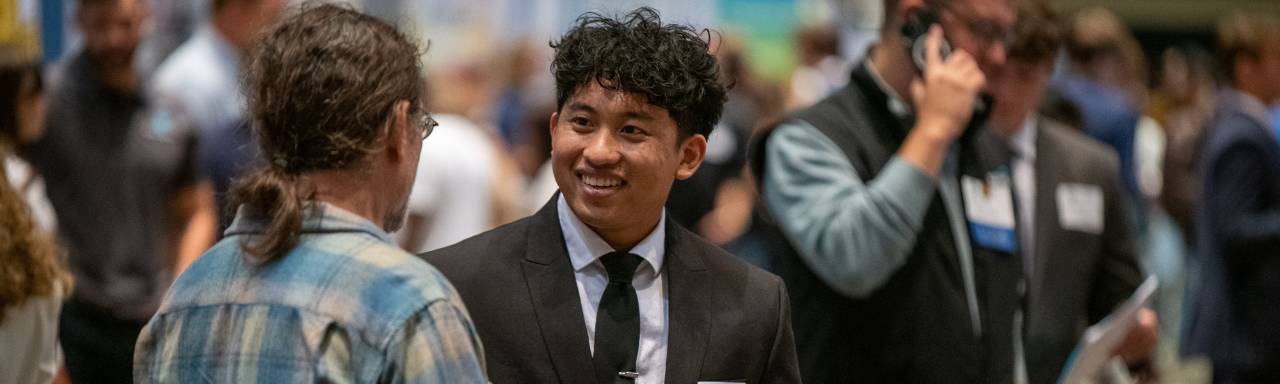
Exploring Career Options - Amy Pierce-Danders
(Intro Music)
Carlos Martinez (04:08):
All right, welcome back. Uh, our guest today as you just heard is Amy Pierce- Danders who was formally with, uh, Kent Intermediate School District and is now with Associate Builders and Contractors inc, uh, the West Michigan chapter specifically. Uh, I'm going to let her introduce herself to a little more formally and then we'll kind of jump into the topic. Hey!
Amy Pierce-Danders (04:34):
Hey, how are you? Awesome. Um, my current role is director of workforce development with, um, ABC West Michigan. What that means is helping students figure out who they want to be and if it happens to be in the construction sector, figuring out is engineering or trades or administrative type roles, what is best for them in my current role. And previous to that, working with students and educators in K-12. Also, helping them figure out what is available out in the world of work. Um, statistically, right now in America we have over 12,000 different jobs and on average, and on average we know of about seven careers, seven careers. As a High school student and as an adult even! Yeah, because we know our own circle. Wow. What did our aunt or uncle or parents or our best friend's big brother do? And so my role there was exposing, creating awareness about what careers are available.
Carlos Martinez (05:48):
Well, and, and prior to your current role, what, what did your, your role consist of when you were with KISD?
Amy Pierce-Danders (05:56):
So it consisted of creating opportunities, um, to raise awareness. And what I mean by that are what types of occupations, what do you do in those occupations, and then exploring those occupations. What does it mean to do this type of role in healthcare, or construction, or banking? What does that mean? And immersing students and educators within that realm so they could decide, do I like this? Do I not like this? Because I do not like this is just as much of a win as oh my goodness. This is what I want to do! This is a good first step for me!
Carlos Martinez (05:43):
Yeah. And so that, that's an excellent background because, you know, today's topic is about exploring career options, and at a super foundational level of whether you think students should start exploring those, those different career options and what that could mean for them?
Amy Pierce- Danders (07:02):
Today, today, today, whether you're a current student, a future student, um, career exploration is really a life long learning activity. You should never stop exploring, even though I'm, I'm 20 years into my career, I actually have a leadership crush right now and maybe for a future type position I'm going to be reaching out to somebody to say I want to learn more about what it is you do. So today is the answer on that.
Megan Riksen (07:35):
So with your background working a lot with K-12, do you find that students have already had an opportunity to do a lot of career exploration before they're in college? Beause I feel like we are meeting with students and so often they don't really have a sense of what they want to do. Um, so just kind of wondering your, your thoughts on that. Is there something that we can have our current college students be thinking about that they can build upon that they may be already learned in high school?
Amy Pierce- Danders (07:56):
Yup. Uh, so no, I would say your students today haven't necessarily had the opportunity to explore. It's a relatively new initiative in K-12 to start offering these exploration opportunities. So, if you are a freshman, a junior at Grand Valley right now, don't beat yourself up because you didn't have these opportunities. Um, and nobody taught you how to do it. So, please don't feel badly about that but know that you can start today and build on that. You can also look back to your High School experience and say, huh, I did connect with this person and I can go back and make a connection with that.
Megan Riksen (08:51):
Yeah. And we sometimes, um, when trying to draw some parallels about how, how do you start to make these career decisions, think about maybe how you made the decision to come to Grand Valley. Absolutely. That thought process and just, yeah, you were talking probably to family and friends and you did a tour and you maybe got to chat with a current Grand Valley student before you actually jumped in and made the decision to apply or enroll here. Um, so you've already done talking to the students. You've already done this before, not this exact, this exact way.
Amy- Pierce- Danders (09:21):
Yeah. Parallel together. Absolutely.
Carlos Martinez (09:18):
Right. And you know, my former role in admissions and even now in career services, we know that it's, it's such a common topic at Grand Valley specifically, the, the most popular incoming major, close to 30% of students is actually undecided. Uh, we know that roughly two thirds of students will change their major at least one time, uh, before they graduate. So, a lot of you listening right now, if, if your current students, it's 100% normal to feel that way! We're asking you at somewhere between 17 and 19 years old to, to pick a career. And in your mind it might mean this is the thing I'm doing for the rest of my life. And so, you know, exploration can continue on. You know, long after you've started your career, uh, you know, what are, what are some ways that students can begin exploring those options?
Amy Pierce-Danders (10:05):
Great career exploration activities that you can do today that are within your sphere of influence immediately. Job shadowing, informational interviews, volunteering, internships. Grand Valley has some things that are already, uh, pre-baked in for you. There's the World of Work, W.O.W., program, which is a one day job shadow program. You offer an incredible um, career exploration course. U.S. 102, I wish that was a requirement of every college student because it teaches us what we don't know and takes those myths that we create in our mind away. Uh, the Career Fair is an excellent way and not just the two large Career Fairs, but your departments are hosting, um, the employer guests all the time. And not a lot of students take advantage of those. They think it's an interview or “I need to be seeking employment”; Recruiters, company representatives, they love doing exploration with students, and so those are incredible times to do exploration.
Megan Riksen (11:23):
So, can we dig into that a little bit? I know you have some experience with bringing your high school students right to our Grand Valley Career Fairs. Yes. We do a little exploration time with those students before and they actually get to go around at the fair and talk to employers. So, what's some of the advice that you are giving them as they kind of are looking at this huge room with hundreds of employers and thinking, I'm not looking for an internship or job right now. I just want to find out more about what this place, what these people are doing, What advice are you kind of starting them out with?
Amy Pierce-Danders (11:54):
So, one of the things that we first set the stage you are here to explore and these individuals are here to share. So, it's a two way street they are looking to connect and so let's brainstorm. So we spend, you know, just quick five minutes, think of any question that you might want to ask an adult in the world of work. Is that, what does a day in the life look like at your company? Tell me about your culture? Um, tell me about the unwritten rules of your culture because that gives you deeper insight! What types of positions do you have? Just because let's take a large healthcare system that we have in the area. You think physicians and nurses, right? While, you forget about all of the engineering that they are the largest, um, source of IT professionals in the Grand Rapids community. So, tell me all about the roles. It doesn't have to just align. So, anything you want to know with the exception of, “how much do you pay?”
Megan Riksen (13:12):
Right, right. I like that! And what are you hearing feedback wise from your students after they've gone through that? Did they find it valuable, both to kind of run around and talk to a bunch of people and ask questions?
Amy Pierce-Danders (13:21):
Yes, so an incredibly popular event. Um, so much so, that it concentrates on freshmen students because we're trying to be really good partners with Grand Valley as well as your employer partners to get them prepped for when they become students one day that junior students are now saying, wait a minute, I want to go back! I have more questions. That was valuable. My confidence, um, increased, and I learned about this and they overcame a fear of talking to strangers. So, the feedback is incredible in the confidence from the time we started in the morning to when we depart that afternoon. It's just chatter and generally for the rest of the week.
Megan Riksen (14:18):
Okay. That's great. And I find you would probably agree Carlos, that it's the same for our college students, for Grand Valley students. Absolutely. If you can go to a career fair as a freshman, your very first semester, it's October, you know, you're less than two months in. Yeah, that first time might be a little challenging, but the next February you can do it again, and you can maybe attend three other events where employers are coming to campus absolutely in that time. And it's going to make it just easier and easier every, every opportunity
Amy Pierce-Danders (14:52):
Two quick stories to share around that. Uh, we just had that at the October Career Fair. I happen to have a cousin that is a freshman, um, here at Grand Valley and met her for breakfast before, um, met with my students and I'm like, wait a minute, you're not going to the Career Fair? “Oh I'm too young” Oh no, no, no, no, no, no. First semester, freshman year. What time do you have class today? And once she walked away from that day, um, we're four really great contacts in the world of social work. Um, she doesn't quite have the depth of what they're looking for at the moment, but they're regularly having conversations and they're holding her hand through what their internship hiring process is going to maybe look like. And then also with high school students, um, many of those have invited those employers. They make connections to come into the classroom to speak to their groups as a whole and, um, which has turned into some projects for the classrooms as well. So it doesn't matter if you're a freshman or your senior, there is value.
Carlos Martinez (16:06):
You know, I've, I've seen students who go to Career Fair as freshmen and they get information every once in a while you'll even find some who do land internships or job shadowing opportunity that early. And that's what I think is the greatest value, uh, of showing up early, uh, Career Fairs coming up in, in roughly two to three weeks from the moment that this episode launches. And, and, and another big question that we get from students is all about, you know, what should they bring? How should they dress? Or do you have any thoughts on that?
Amy Pierce-Danders (16:35):
Yeah, don't bring a lot! Uh, we tend to think, I don't know what they're going to want. So I'll bring everything. And then you just feel awkward when you're walking around cause you're weighed down with things all you really need. The number one is a good attitude. It might be a little bit scary, but find a buddy to go with you to alleviate that. And so you can encourage one another, have a great attitude.
Number two, bring your smile with you cause it doesn't matter what we have. That's the thing that will get you in and start a great conversation and have a resume. And as a freshman, as a sophomore, you know, if it's more about exploration, it doesn't have to be a great resume. And when I say bring a resume, if you're not actively looking, you don't have to bring resumes for others. But how about for yourself? So if they raise questions when we're under a little bit of pressure, our mind tends to go blanket occasionally and so it's easy for us to just have in our hands. And a trick for me is by having that, if I do get nervous or jittery, I can jot down notes to keep my thoughts, and it also communicates to the person I'm speaking to that the time they're spending with me, I consider valuables. So smile, great attitude, and a resume. If you're looking, if you're not looking at a resume for your own personal reflection, right?
Megan Riksen (18:12):
Right, because that that attitude will go a long way. Just that open attitude, being willing to ask questions is one of the biggest things you can do to make a really good impression. Absolutely. Yeah. Especially as a first and second year student. Yeah. You're not going to have this resume with, you know, tons of experience on it.
Amy Pierce-Danders (18:28):
You might just mostly have things from high school, especially as a first year student. Right? Absolutely. You can still bring it and you can still come to the Career Center beforehand to have us take a look at it and even help you get started if you've never made one before. Um, but certainly just having that willingness to get out there. Yes, yes. Um, I, this morning was with a group of 50 employers and that was, uh, one of the main things that they said they're looking for in today's students is somebody who's willing to have a conversation, can look individuals in the eye, uh, be coachable and their ability to listen and interpret the information that they're given.
Carlos Martinez (19:11):
And I think that's crucial what you just said because, uh, another misconception that I'll get from some students is that they, they assume they have to be an expert walking in through the doors as an intern. Right? And that's not really the case as an intern. The goal is that you'll help contributor work in a real project, but you're also getting something out of it. You're going to get some of that coaching and you're supposed to grow through that. And, and employers know that if you are coachable or you can demonstrate that you'll be a good team player and you have some of those foundational skill sets they're looking for, then it can be, you know, a mutually beneficial interaction there.
Amy Pierce-Danders (19:48):
Absolutely. It was loud and clear, uh, this morning, Carlos, that if you're not coachable and you are the know at all, so you think you have to walk through the door. You're not actually the one that they're looking for. They're looking for the coachable student, and the person who's eager and wants to obtain information. So you're absolutely right. Yeah.
Carlos Martinez (20:12):
You know, even whether it's the Career Fair or another events where they know they're going to interact with employers, uh, sometimes students are a bit confused on, on how do we initiate that conversation? How does that look like, what am I going to ask them about? How, how do I not make this awkward for myself?
Amy Pierce-Danders (20:29):
Transparency is my, is my answer, um, with the students that we bring to Career Fair. And for many years, um, when I've been working with students, you can say, hi, my name is Amy. I'm exploring career options and wanting to learn about what your company has to offer in about you as a person. That immediately puts that individual at ease because they know what the expectations are.
Megan Riksen (21:09):
I love that. Yep. Yeah, that's really, really setting the stage for the conversation so they know what's gonna, what's gonna happen. Because we do find that students might be hesitant to go as an Explorer because they think that every single recruiter who's there is only gonna have time to talk to the people who are ready to do an internship tomorrow. Yup. Right. And would your experience be that most recruiters, most employers at events like this are open to talking to career explorers?
Amy Pierce-Danders (21:26):
Yes, I would say hands down. They enjoy, I'm speaking with career explorers. It's, it's a big day for them and they do want to look and identify candidates that will be amazing for their companies. But it's not just today, we have a long term look. Uh, I used to be attending, uh, the Career Fair, Grand Valley as an employer. Oh, nice. And the first employee for my business was a student who I met with three different times at the Grand Valley Career Fair. Um, she was in HR, said, I took this class. This is what I learned. I mean, I met her at the first career fair. We kind of, you know, created a little bit of a bond next to I'm taking this class. Is this true out in the real world? Third one, she stuck in my mind. We had stayed connected through the Career Fairs.
Amy Pierce-Danders (22:20):
So, when it was time to hire for my business, she immediately popped to mind and she was an Explorer. She never approached me about a job or career, an internship. It was inquisitiveness. So, I absolutely hands down, say they're open to explorers.
Megan Riksen (22:48):
And even though, even though these events are somewhat manufactured conversations that you're, that you're kind of going up and just talking to a stranger, you were able to find some authenticity. Absolutely. And actually build a relationship with someone that ended up really working out for both of you. So, yeah, that's a great success story. Yeah. Very good.
Carlos Martinez (23:00):
You know, and, and we've been using the Career Fair kind of as a template for this conversation, but all the things we're talking about can apply to networking events in the community. If you go to a conference, uh, when your professor brings in a guest speaker, these are all opportunities where you may be able to interact with someone. Uh, you know, my neighbor's the nurse, I might've said this before and I've, and I, uh, working with her, got some contact information to connect it, to connect it for a student who needed to volunteer in a healthcare setting. And so you never know the, the people around you who can be a part of that, that, that process for you.
Amy Pierce-Danders (23:34):
Absolutely! Your circle of influence, your network I would say is your number one leverage point. Um, I do, uh, exercise with students frequently, um, based on the six degrees of separation. Say I only know six people significantly well in my life, but they know six people and those individuals know six people and it's a name in our human nature to want to help others. So when you reached out to your neighbor, they said, sure, let me make a connection that's three degrees away. So if you did that and you only went three layers, you have 216 individuals who are working on your behalf. So building that network and it doesn't, there's often a misconception with students. Some of us are born with natural networks, our parents are active in our communities and they, yes, they're well connected. Um, I was not one of those individuals.
Um, my parents, we are a blue collar family and where I was going in my career was not into the manufacturing sector. So, I had to build my network and by making those connections and not being afraid to just say, I want to know more about you when it comes to a job shadow, pick up the phone. Students don't pick up the phone and cold call a company and say, Hey, I'm interested in coming to visit. I can almost with certainty tell you if you pick up the phone and call some companies, if you were to call four, three of them are going to say, absolutely. Let me get you connected with so-and-so. What date do you want to come in? Sure.
Carlos Martinez (25:26):
You know, and another, another tool we have students uses things like LinkedIn, right? So, so you can find the contact information for a company on their website. Another Avenue would be connect with somebody who works there already. Um, there are many, many examples of students, alumni who will reach out to somebody because they work in a company. Just kind of pick their brain a little bit about that role, what it takes. And if you're exploring, this is an amazing tool, as well. Uh, earlier this semester I had a student who was going to California for a conference and his goal was to move to that, the San Francisco area. And so we worked out a plan and we went through LinkedIn together and we found 10 companies, three of them where he was able to set up meetings with one of those, invited him back this summer to, to intern.
Carlos Martinez (26:13):
So they couldn't pay him, but they said, if you can make it out here, we've got a whole internship we can set up with you. And so that's the way it works. Yeah, it's, it's, it's scary, especially when you don't have contacts in an area. Uh, but oftentimes I, I don't want to say it's excuses, but oftentimes it's easy to acknowledge that there's a challenge but not work to overcome it. And I think there's a, there's a dual process here. I think you could both acknowledge that maybe, you know, you weren't dealt the best hand. I had no networks myself. But once you acknowledge, maybe you are at this advantage in one area, guess what, start finding out where you maybe are a little advanced that you have tools like the career center. If you have nothing else, just come to our office and we can help you get on track because there are a lot of things that you have, you know, a hundred percent control over.
Amy Pierce-Danders (26:58):
Absolutely. You're bringing up some points I wanted to make sure we chatted about today is you have the Grand Valley Career Center. You have, even if you don't have a built in network, you know, people, if you have an affiliation with a spiritual organization, individuals, their um, extended family members, um, adults within your friends' lives. Um, if you're on a bowling link, sure. And after school or I guess in this afterschool student, right? Yeah, it's college students. So yeah. But clubs there, you have the capability to overcome those cards.
Megan Riksen (28:05):
You're absolutely right. Something we, we love to talk about as advisors here in the Career Center is, um, the tool on LinkedIn where you can actually search alumni. Yes, man. Yes. Through just these, they're called these, they're these beautiful career insights that you can see of where all of Grand Valley alumns are, what they're doing. You can sort information by maybe what they studied, um, or their current role. And then you get to see the profiles of real people who match whatever criteria you were looking for. So, you know, if you're majoring in marketing and you don't know what you want to do with a marketing major and you need to do some more exploration, yeah. Get on that tool and you can find a bunch, hundreds, I would probably say of alumni working in marketing and then you can reach out. So, you know, LinkedIn is great, but it's online. So, you still need to use all these same strategies that we're talking about to actually have a real conversation with that person.
Amy Pierce- Danders (28:58):
Without a doubt. Absolutely. And because you're from the same school alumnus, have a heart and say, okay, I want Grand Valley students to continue to populate the United States. So all right. Yeah. Talk to me.
Megan Riksen (29:07):
So, it's not even as cold of a connection because you it off that alumni. Yep. Um, that grand Valley link already. So yeah, that is, that is a good thing to do.
Carlos Martinez (29:16):
And when you're exploring something else, I always like to point out to folks is that, uh, you need to be a little creative in the way you think about the skills that you have. Uh, so it may be that you're already working part time, full time, you know, even somewhere let's say as a, as a receptionist somewhere that can, that can be leveraged into other opportunities where you're also using computers, may be working with scheduling, may be working with a lot of customer service. And so it's real easy to, to limit the way we think about our strengths and skills. And you can explore based on where you're currently working right now. Right.
So when I, when I used to work in admissions, uh, I, I enjoyed the idea of, of speaking in groups and working one on one with students. Uh, but had I limited that idea to just happening in admissions, I wouldn't have been in my current role where I'm doing it with career services advising. I could also do that same advising, working with a, a nonprofit, working with youth in Grand Rapids somewhere. And so think about the way your current skills and the things you're doing right now serve as a tool to help you explore what that next move might be.
Amy Pierce-Danders (30:22):
Yeah, without a doubt, both in your current employment and also how can you parlay those into, um, volunteering. And when I say volunteering, sometimes it's to do the job you think you might want to do, but sometimes it's just being around the job that you might want to do because they both provide valuable insights to you. So, you can take your current situation and leverage.
Megan Riksen (30:54):
and as you both were talking, it made me think about students might be nervous to talk about themselves in these various contexts. I mean certainly a Career Fair can be kind of tricky. Like what am I going to say to this person? I probably only have a few minutes with them. Um, and you might have some more confidence if your, you know, a graduating senior walking out the door and you've had an internship and something that you feel like, yeah, this is super related to what I want to do. But do you have advice for, um, anyone listening who doesn't have a ton of experience? Maybe, you know, a summer job here and there or you know, involvement with a sports team or something. And in high school. And I guess just in general, what's your advice? If you feel like you don't have a ton of experience, what do you say about yourself when an employer asks?
Amy Pierce-Danders (31:45):
Ask your friends to pretend they are you and to introduce you to yourself. And what I mean by that is I could say, Megan, if you were introducing me, acting as me and introducing me to an employer, what would you say? The perspectives of others often opens our own eyes and gives us very authentic ideas of who we are at our core, things that we can't from the inside scene. So, that's a great strategy is to ask friends and family. What would you say if you were me to build those confidence in every role that we play in life, whether it is your experience is from being on a sports team, you got sportsmanship, teamwork, ability to, uh, analyze and quickly pivot on your feet. Yep. Every experience has attributes that are desired by employers. Sure. So don't cut yourself short. I mean you can come to me and your entire experience has been, uh, working in teams on a project within school. You've done three months in retail and three months in a restaurant. Sure. And I can make you look like a rock star by helping you see the skill sets in values you exhibited in those roles and how they connect to where you want to be in the future.
Megan Riksen (33:37):
Great.
Carlos Martinez (33:31):
Nice. So you know, those were the, the, the big things that we wanted to talk about. At least we've really enjoyed having you here today. Do you have any parting thoughts?
Amy Pierce-Danders (33:42):
Oh, parting thoughts, really be open. Uh, keep in mind that we go through many metamorphosis. In our life. And we do look at you as college students and say, what career do you want? And I'm a firm believer that's the wrong question. It's not what career do you want, but what are the things that you want to solve? Are they people problems? Are you more an analytical person? What drives you, what excites you? And then start your exploration around those things that you want to solve for the future, so that you can discover the vast array of careers that we have no knowledge of in our personal being. So, that your eyes can be opened because you'll be a happier person in the future with that.
Megan Riksen (34:48):
I love that. Great.
Carlos Martinez (34:45):
That's great. Uh, so once again, thank you everyone for tuning in, and I know we plugged it in the beginning, but I just want to say a one more time. The career and internship fair is taking place February 21st from 1:00- 5:00 p.m. If you all, you can make it as half an hour. We invite you to come on out and it's at the DeVos Convention Center, not the DeVos building on our campus downtown, but where the host of car shows and the big nice concerts. Uh, thanks again and we'll hope you tune in again next month.