
Blog
Permanent link for Social Wellness: You Don't Have to Do College Alone on September 21, 2026
When we hear the word wellness, we often think about eating well, exercising, getting enough sleep, or managing stress. But wellness is also about the people around us.
At Grand Valley State University, Social Wellness is about cultivating supportive relationships and community through genuine connection and belonging. It can mean having people you can talk to, spending time with friends, joining a community, or simply feeling like you have a place where you belong.
What Does Social Wellness Look Like?
Social wellness does not mean having a huge group of friends or being social all the time. It can be as simple as checking in on a friend, eating lunch with a classmate, joining a student organization, or reaching out when you need support.
For students who are away from home, building a new community can take time. Moving to a new environment means meeting new people, learning new routines, and figuring out where you fit in. That process can feel exciting, but it can also feel lonely sometimes.
That is why meaningful connection matters.
Food Has a Way of Bringing Us Together
Growing up in Ghana, food was never just food for me. It meant family, conversation, laughter, and spending time together.
I think many of us have experienced something similar. Some of our best memories happen around food whether it is cooking with family, grabbing lunch with a friend, or discovering a new meal with someone.
Food gives us a reason to slow down, sit together, and connect. It also gives us an opportunity to learn about different cultures, traditions, and experiences.
This is one reason social wellness connects so naturally with the EatWell Series. Eating well is not only about what is on your plate. It can also be about the relationships and experiences we build around food.
Small Ways to Strengthen Your Social Wellness
You don't have to make a huge change. Start small:
- Invite a classmate to grab a meal with you.
- Check in on a friend you haven't talked to recently.
- Sit with someone new at lunch.
- Join a campus organization or activity.
- Attend a campus event, even if you go alone.
- Reach out when you need support.
- Give yourself permission to set boundaries and recharge.
Remember, you don't need hundreds of friends to have meaningful connections. A few genuine and supportive relationships can make a big difference.
You Don’t Have to Do College Alone
This September, the Center for Health and Well-being is partnering with Laker Food Co. for an EatWell Social Event on Thursday, September 24.
Come enjoy some food, meet people, have conversations, and connect with the Grand Valley community. Bring a friend, a roommate, a classmate, or come on your own and meet someone new.
Sometimes, taking care of our wellness can start with something as simple as sitting at the same table with someone else.
This month, ask yourself:
Who makes me feel like I belong?
Who can I reach out to this week?
How can I create more meaningful connections in my life?
Social wellness isn't about being social every minute. It is about building relationships and communities where you can connect, belong, communicate, and feel supported.
You don’t have to do college alone. Eat well. Connect well. Live well.
Written by:
Nana Akua Aniagyei Amponsah
CHWB Graduate Assistant
Grand Valley State University
.jpg)
Categories:
General Wellness
WIT
Posted
on
Permanent link for Social Wellness: You Don't Have to Do College Alone on September 21, 2026.
Permanent link for How I Balance Financial Wellness as a GVSU Student on December 5, 2025
Hey Lakers!
Being a college student at GVSU comes with a lot — classes, studying, working, trying to have a social life, and figuring out how to be an adult. One thing I’ve learned is that getting control of my finances makes everything else feel less stressful. Financial wellness isn’t just about having money; it’s about knowing how to use it wisely so you’re not constantly worried.
What financial wellness really means to me
GVSU describes financial wellness as having a realistic budget, living within your means, managing debt, understanding student loans, building good credit, planning, and remembering that money doesn’t define your worth. When I read that, it helped me understand that financial wellness is more about control and planning than about how much money you have.
How I try to stay financially balanced at GVSU:
I track my spending.
I started writing down everything I spend in a week — groceries,
gas, school supplies, random snacks, literally everything. It helps me
see where my money goes and stops me from overspending without
realizing it.
I stick to a budget.
I make a simple monthly plan that includes my income, my bills,
and what I can realistically spend. I try not to go over it, even when
I want to.
I avoid impulse buys.
There are so many temptations on and around campus, but I ask
myself, “Do I actually need this?” Most of the time, the answer is no.
I keep track of my student loans.
I make sure I know how much I’m borrowing each semester. Even
though I’m not paying them yet, it keeps me from being surprised later.
I save a little when I can.
Even putting away a small amount each month helps. Over time it
grows and having that emergency cushion makes me feel a lot more secure.
I remind myself money isn’t everything.
Financial wellness is also emotional. I try not to compare myself
to other students. We all have different situations, and that’s okay.
GVSU support that helps:
One thing I really appreciate is that GVSU has programs like MoneySmart Lakers and financial aid advisors who can help with budgeting, student loans, grants, scholarships, and general financial education. Just knowing those resources exist helps me feel more in control.
GVSU also offers on-campus student employment and work-study options, which make it easier to earn money without having to drive far or juggle complicated schedules. Having a steady campus job has helped a lot of students keep their borrowing lower.
There are also emergency and hardship support services available for students who suddenly face unexpected expenses, like car trouble, medical bills, or housing issues. It’s reassuring to know that if something major happens, there’s a place on campus that helps connect you to temporary financial assistance, food support, or other resources.
Another resource I’ve found helpful is the guidance offered through MyLakerSuccess. It provides planning tools that help you map out tuition, housing, books, and living costs. It’s basically a roadmap to help avoid financial surprises during the semester.
GVSU also hosts financial workshops throughout the year — things like how to build credit, how to read a credit report, how to manage debt, and how to prepare for life after graduation. These events make it easier to learn financial skills without feeling overwhelmed or judged.
Why these matters for the future:
Balancing money in college teaches real-life skills. When I manage my money well, I feel more confident and less stressed. I don’t panic when unexpected expenses show up, and I can focus more on my classes and my health.
Final thoughts from a fellow Laker:
If you’re a GVSU student struggling with money, trust me — you’re not the only one. Most of us are figuring this out as we go. You don’t have to be perfect, just consistent. Create a small budget, save what you can, and use the resources provided on campus. It makes a huge difference.
We’re all learning, and we’re all growing. Financial wellness is just one more part of becoming the best version of ourselves.
Go Lakers!
Categories:
General Wellness
WIT
Posted
by
Heather Alberda
on
Permanent link for How I Balance Financial Wellness as a GVSU Student on December 5, 2025.
Permanent link for From Overwhelmed to Balanced: How I Built Emotional Wellness at GVSU. on November 18, 2025
From Overwhelmed to Balanced: How I Built Emotional Wellness at GVSU.
When I first arrived at GVSU, I didn’t fully grasp how important emotional wellness would be in my college experience. GVSU defines emotional wellness as understanding and accepting your emotions while developing healthy ways to cope with challenges. Learning this helped me realize that my time at GVSU isn’t just about academics — it’s about building resilience and balance.
Building Self-Awareness and Self-Acceptance at GVSU
Being at GVSU has pushed me to become more self-aware. Between classes, campus events, and the fast pace of student life, I’ve learned to pause and check in with my feelings. GVSU makes space for this through its wellness initiatives, and that has encouraged me to accept all of my emotions instead of hiding them.
Practicing Self-Care as a GVSU Student
Self-care at GVSU goes beyond relaxing — it’s about routines that support my emotional health while balancing student responsibilities. Whether I’m studying in the Mary Idema Pew Library, walking across the Allendale campus, or winding down after a long day of classes, I try to take care of myself through sleep, journaling, movement, and giving myself grace.
Developing Emotional Agility at GVSU
College life at GVSU can be unpredictable, and that’s where emotional agility comes in. When things don’t go as planned — like exam stress or busy weeks — I use coping skills I’ve learned and strengthened here. Walking the ravines, deep breathing between classes, or talking with friends on campus helps me bounce back and adapt.
Building Social Connections at GVSU
One of the best things about GVSU is the sense of community. I’ve built friendships through classes, student orgs, and campus events, and these connections play a huge role in my emotional wellness. And when I need extra support, GVSU’s University Counseling Center is an invaluable resource that makes me feel supported.
Managing Stress Proactively at GVSU
Stress is part of being a student at GVSU, but I’ve learned to manage it in healthy ways. Whether I’m studying in the library, attending a campus workshop, or using mindfulness resources GVSU provides, I try to stay ahead of stress rather than let it build up. I schedule downtime and use campus spaces — like quiet study rooms or outdoor seating — to recharge.
Expressing My Emotions in Healthy Ways at GVSU
GVSU has taught me the importance of healthy communication. Being surrounded by supportive classmates, professors, and staff makes it easier to express what I’m feeling. Talking things out on campus — whether with friends or a counselor — has strengthened my ability to handle difficult emotions.
Finding Purpose at GVSU
GVSU encourages students to find purpose, and that mindset has shaped my emotional wellness. Whether it’s working toward my degree, joining a student organization, or participating in service opportunities, having purpose here helps me stay grounded and motivated, especially on harder days.
Practicing Kindness and Integrity at GVSU
At GVSU, kindness and integrity are part of the culture. I see it in how students support each other and how faculty care about our well-being. Being in this environment motivates me to treat others — and myself — with compassion, which strengthens my emotional health.
Using Wellness Resources at GVSU
GVSU offers so many resources that support emotional wellness: the University Counseling Center, wellness workshops, student orgs focused on mindfulness, and online tools linked through the GVSU health pages. Using these resources has made a huge difference in my well-being and has taught me that seeking support is a sign of strength.
Reflecting and Growing at GVSU
My emotional wellness journey at GVSU is ongoing. Every semester brings new experiences that help me grow and reflect. GVSU has given me the support, space, and tools to develop healthier habits and to become more emotionally resilient — not just for college, but for life.
Categories:
General Wellness
WIT
Posted
by
Heather Alberda
on
Permanent link for From Overwhelmed to Balanced: How I Built Emotional Wellness at GVSU. on November 18, 2025.
Permanent link for Laker Lullabies: Sleep Hacks 101 on April 8, 2025
Hey, fellow Lakers! Let's talk about something we all desperately need: SLEEP. As a GVSU student, I know the struggle is REAL. Between late-night study sessions at Mary Idema, early morning classes in Mackinac, and trying to squeeze in a social life, getting enough shut-eye can feel like a distant dream. But trust me, your grades (and sanity) will thank you if you prioritize those Zzz's. So, here are some tips that have actually worked for me:
1. Ditch the All-Nighters (Seriously!)
I know, I know, sometimes it feels like the only option. But cramming all night before a midterm? Your brain is basically running on fumes the next day. Instead, try breaking down study sessions into smaller chunks over a few days. Your brain will retain more, and you'll actually remember stuff during the exam. Plus, think of all the coffee you’ll save!
2. Create a Chill Zone
Your dorm room (or apartment) should be your sanctuary. Make it a place you actually want to sleep in. Invest in some comfy pillows, maybe a weighted blanket if you’re feeling fancy, and definitely blackout curtains. Light pollution is a sneaky sleep thief! And keep the temperature cool – a slightly chilly room is ideal for snoozing.
3. Set a Sleep Schedule (Even on Weekends…Mostly)
I know, weekends are for sleeping in. But try to stick to a consistent sleep schedule, even on Saturdays and Sundays. Your body has an internal clock, and throwing it off every weekend makes it harder to fall asleep on Sunday night (and hello, Monday morning blues). I try to only sleep an extra hour or two on weekends.
4. Power Down Before Bed
Scrolling through TikTok or playing video games right before bed? Not a good idea. The blue light from your phone and laptop messes with your melatonin levels, making it harder to fall asleep. Try reading a book (a real one, made of paper!), listening to a calming podcast, or doing some gentle stretching instead.
5. Exercise (But Not Right Before Bed)
Getting some exercise during the day can help you sleep better at night. Even a brisk walk around campus can make a difference. But avoid intense workouts right before bed, as they can actually keep you awake.
6. Caffeine Curfew
We all love our coffee, but try to cut yourself off a few hours before bedtime. This might mean switching to decaf after lunch, or just cutting back on the late-night study fuel. Your sleep will thank you.
7. Don't Stress About Sleep (Ironically)
If you can't fall asleep right away, don't toss and turn in bed, getting more and more stressed. Get up, do something relaxing for a bit (read, listen to music), and then try again. Sometimes, the anxiety of not sleeping keeps you from actually sleeping.
8. Utilize GVSU Resources!
GVSU has a ton of resources for student well-being! Check out the Rec Center for free equipment or RecWell for fitness classes, the Counseling Center if you’re feeling overwhelmed, and even the Center for Health and Well-being for sleep-related advice. Don’t be afraid to reach out!
Look, I know college life is hectic. But prioritizing sleep is an investment in your physical and mental health. Trust me, those extra hours of sleep will make you a happier, healthier, and more successful Laker! Now, go get some rest!
Additional Resources:
-
GVSU Counseling
Center: Get support for stress, anxiety, and sleep issues.
Located in the Student Services Building (B-5) or online.
Link to Counseling Center Website -
RecWell: Check out fitness
classes, meditation sessions, or get advice on physical health to
help you sleep better. Located at the Rec Center.
Link to RecWell Website - Center for Health and Well-Being: Offers sleep-related tips, workshops, and personal consultations. You can also get resources on nutrition and mental well-being.
- Sleep Hygiene Tips: GVSU also provides resources for improving sleep hygiene through workshops and guides. Learn more at the Center for Health and Well-Being.
By: Jacob Greig, WIT Peer Educator

Categories:
General Wellness
Rest
Sleep
WIT
Posted
on
Permanent link for Laker Lullabies: Sleep Hacks 101 on April 8, 2025.
Permanent link for Boost Your Energy with "Uitwaaien" This Winter on December 4, 2024
Is it becoming harder to get motivated to sit down and do your homework as the days get shorter? Is your exercise routine getting derailed? You’re not alone! A study in the UK found that more than two thirds of employees said they were not as productive and didn’t feel they could concentrate as well during the winter months. With the snow coming down, less daylight, and colder weather, it is understandable that the goals we set during the warmer months feel more difficult to achieve during the colder months. Read on to find some strategies to boost your energy this winter!
Have you ever heard of the word “Uitwaaien”?
“Uitwaaien” (out-vahyn) is a Dutch word which directly translates to “out blowing”. This word is used to describe any kind of exercise such as running, walking or biking that is done outside, especially in windy weather. The Netherlands is known to be a windy country, but I think we can agree Allendale also offers plenty of windy weather! Although getting outside in the cold is often the last thing we want to do in the winter, it actually can increase our energy and leave us feeling refreshed. Especially when around nature, engaging in some uitwaaien can benefit many parts of our well-being including environmental, emotional, and physical.
Is it really worth it?
You might be wondering if going outside in the cold and wind is really worth it. Does it help our well-being that much to go through all that? I’d say so! It depends what you think of these perks:
- Studies show, spending even only 5 minutes in nature can leave us with a more positive outlook on our feeling of self-worth, overall mood, and a stronger perception of “self”.
- Time in nature can lead to physical benefits such as less headaches and a boost to the immune system.
- Being stimulated by activities in nature, such as squirrels gathering food or birds soaring through the sky, can switch off the front part of the brain which deals with complex thoughts. Putting these thoughts on pause can be challenging, but when regularly accomplished can help prevent chronic diseases, such as heart disease, in the long run.
- Research shows people who exercise outside throughout the whole year are more likely to maintain the motivation and continue this activity.
- Physical activity in general has many benefits including lowering fatigue, lowering risk of chronic diseases, boosting immune health, and increasing satisfaction with the tasks we take on each day.
- Getting out in the sun (when it makes its scarce appearance...) can help regulate our sleep cycles and help boost our mood. So definitely seize the opportunity when you see the sun peaking through the clouds!
A note on rest
Although physical activity and uitwaaien do have their benefits. Winter is naturally a time for rest. There is a reason many animal species slow down and hibernate during the colder months. Our ancestors also used the colder months to take a break. Therefore, if you are feeling like you need some more rest this winter, this is your permission to take time to rest as well! Whether it’s taking a break from social media, enjoying a cup of coffee/tea/hot cocoa, spending some time with friends/family, pausing for a nap or whatever else allows you to relax, don’t be afraid to embrace the slower nature of the winter months. One form of rest is sleep, which can have many positive influences on all aspects of well-being. Check out our sleep and naps webpage to learn more.
Wishing you a fun and refreshing winter!
Winter can definitely be a tough time for many of us. Those cold, dark days may make it harder to get out of bed. There are, however, many strategies to keep up a lively spirit during the winter months. Whether it’s participating in some uitwaaien or taking some time to rest, I hope these strategies help increase your joyful moments this winter! If you’d like to join some others getting energized with physical activity check out what Outdoor Adventures with RecWell has to offer.
By: Josie Kasmauskis, WIT Peer Educator

Categories:
General Wellness
Rest
Sleep
WIT
Posted
on
Permanent link for Boost Your Energy with "Uitwaaien" This Winter on December 4, 2024.
Permanent link for Sleep to Succeed on November 11, 2024
Did you know that most college students don't get enough sleep? On average, a college student gets around 6-6 ½ hours of sleep even though they need around 7-9 hours per night. Students who get enough sleep are more likely to perform better academically and receive better grades than their sleep deprived peers. Students who are well rested also tend to have better mental health, strengthened immune systems, better focus, and have a better overall college experience. As a busy college student, you may find it hard to get the sleep your mind and body needs, so here are a few easy tips to sleep like a pro:
- Try to wake up and go to bed at the same time every day and sync this schedule with your class schedule.
- Limit naps to 20 minutes or less before 3pm. Any naps longer than 20 mins or taken later in the day will make it harder for you to fall asleep at bedtime.
- Try to get at least 30 minutes of exercise. Exercise helps your overall sleep. Make sure your exercise ends at least 1 hour before bed or it might make it harder to sleep.
- Make a lights out policy agreement with your roommate to either turn off the lights or dim the lights at a certain time every night. This can also be done with noise level.
- Watch your caffeine and alcohol intake. Caffeine affects the quality of your sleep cycle after you fall asleep, so make sure to not drink any caffeine 8 hours before bedtime. All nighters are not beneficial ways to complete your assignments and start studying in a timely manner. Don't wait till the last minute. Alcohol may help you fall asleep initially, but it will make it harder to stay asleep, so it's recommended to stop drinking alcohol 3 hours before bedtime.
These are only 5 tips for a better night's sleep. If you don't find these helpful, there are others you can try on this website: https://www.sleep.com/sleep-health/sleep-for-college-students. Don’t give up on a good night's sleep! A better rested and more successful you is just around the corner. Keep trying different techniques until you find what works for you. Your grades and overall health will thank you later.
If you or your organization would like to learn more about other aspects of health and wellbeing such as: sexual health, stress and wellness, healthy relationships, and/or other health and well-being topics. Consider requesting the WIT team to come and do a presentation on a topic on health or well-being of your choice and let us help you and your members live your best life.
Resources:
https://liveatnora.com/importance-of-sleep-for-college-students/
https://health.cornell.edu/resources/health-topics/sleep
https://www.sleep.com/sleep-health/sleep-for-college-students
By: Katelyn Kawabe, WIT Peer Educator

Categories:
Sleep
WIT
Posted
on
Permanent link for Sleep to Succeed on November 11, 2024.
Permanent link for Tips for Healthy Eating Habits for GVSU Students on October 29, 2024
Navigating college life can be a whirlwind of classes, social events, and late-night study sessions, often leading to less healthy eating habits. However, maintaining a balanced diet is crucial for both physical health and academic performance. Here are some practical tips to help college students develop healthier eating habits.
1. Plan Your Meals
Meal planning can save both time and money. Take a little time each week to plan your meals. If you have a meal plan on campus you can plan your meals by viewing the menus for the week at: https://www.gvsu.edu/campusdine/hours-index.htm. This doesn’t have to be elaborate; simple ideas like batch-cooking grains or roasting vegetables can provide a base for multiple meals. Knowing what you will eat makes you less likely to choose not as nutrient-dense foods.
2. Stock Your Pantry Wisely
Keep your kitchen stocked with healthy staples. Whole grains, canned beans, frozen vegetables, and healthy snacks like nuts and fruits can make it easy to whip up a nutritious meal. If you don't have a kitchen in your dorm, you could use a friend's kitchen or order pre-made healthy meals. Avoid buying “highly processed snacks” that can tempt you during late-night study sessions.
3. Opt for Balanced Meals
Aim for balanced meals that include protein, whole grains, healthy fats, and plenty of fruits and vegetables. This combination will keep you full longer and provide the energy you need for your busy schedule. Think of meals like quinoa bowls with grilled chicken, roasted veggies, and a drizzle of olive oil. A helpful website for more information is https://www.myplate.gov/. My Plate is a tool designed to help you make healthier food choices by providing guidelines on how to balance food groups on a plate.
4. Stay Hydrated
It’s easy to forget to drink enough water, especially when coffee is a go-to for late-night studying. Aim to drink water throughout the day. Consider carrying a reusable water bottle to remind yourself to hydrate. Herbal teas and infused waters can also add variety and flavor, and keep you properly hydrated.
5. Mindful Eating
When you do eat, try to be present. Avoid distractions like scrolling through your phone or watching TV. Paying attention to your food can help you enjoy your meals more and recognize when you’re full, which can prevent overeating.
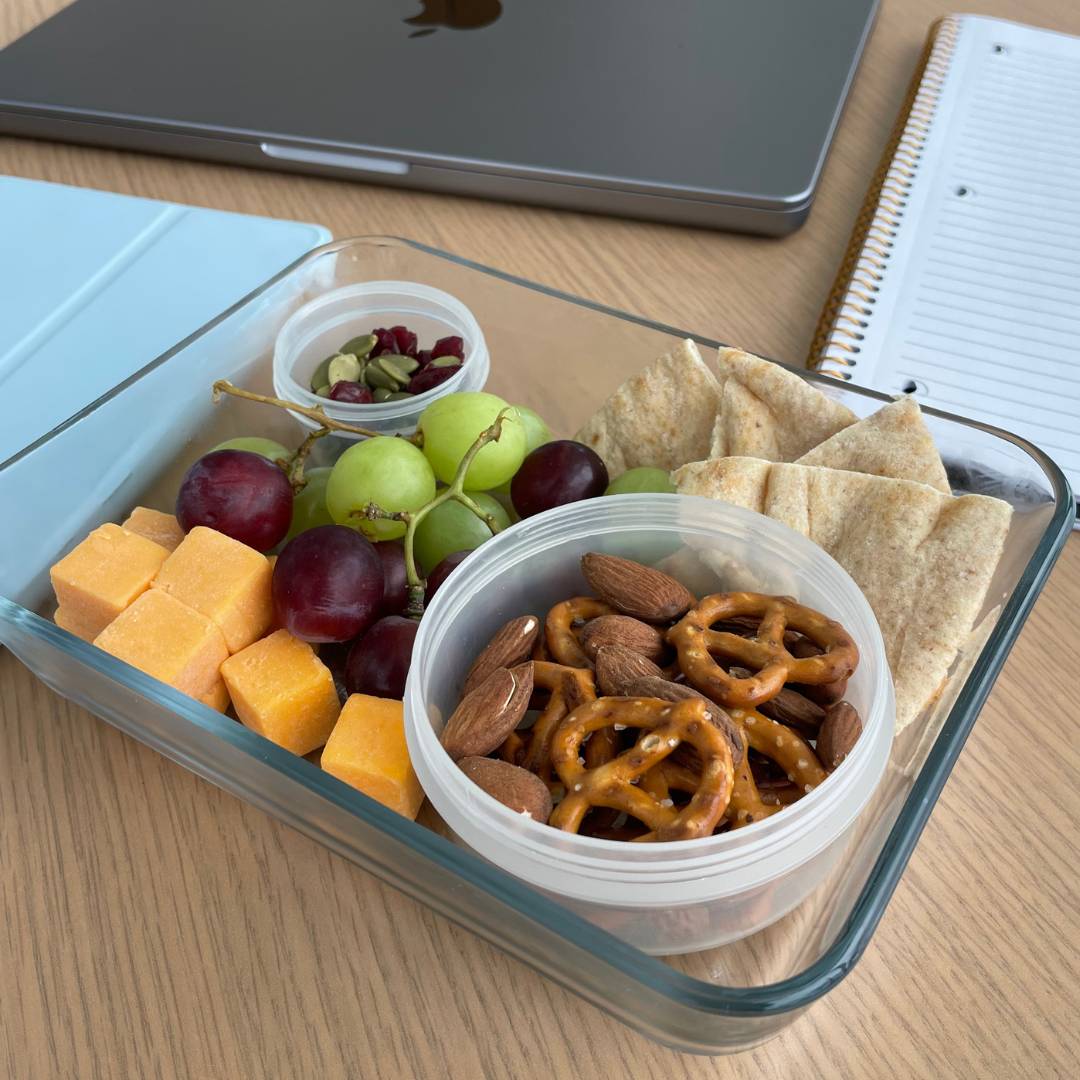
6. Healthy Snacking
Keep healthy snacks on hand for those long study sessions. Fresh fruits, yogurt, trail mix, or hummus with veggies are great options that can provide sustained energy without the crash that comes from sugary snacks.
7. Don’t Skip Meals
Skipping meals to fit everything in can be tempting, but this can lead to overeating later. Aim for three balanced meals a day, and include snacks if you need them. If you’re on the go, consider portable options like protein bars or smoothies. Many places on campus have smoothies, for example, in the lobby of Kirkhof, there is Java City which offers many options.
8. Explore Campus Dining Options
Grand Valley offers a variety of dining options. Familiarize yourself with what’s available and look for healthier choices. The Dish has many options such as a salad bar, grilled items, and whole grain options. Fresh is very similar to the Dish. For more information, you can visit https://www.gvsu.edu/campusdine/dining-locations-map-140.htm
9. Cook with Friends
Cooking with friends can be a fun way to bond while focusing on healthier eating. Share recipes, cook in bulk, and enjoy the process together. Not only will you learn new cooking skills, but it can also make healthy eating more enjoyable.
10. Be Flexible
While it's important to aim for healthy eating, it's equally important to allow yourself some flexibility. Enjoying less nutrient dense foods in moderation, for me that is pasta, is part of a balanced lifestyle. Don’t stress about occasional indulgences—just focus on making healthier choices most of the time.
Conclusion
Healthy eating in college doesn’t have to be complicated or time-consuming, by planning, making mindful choices, and enjoying the process, you can establish habits that will benefit your health and well-being for years to come. For some people, including myself, it might be really hard, but it is okay. It might be difficult to find the energy to start the process, but making small changes can be the first step to making positive changes.
By: Jacob Greig, WIT Peer Educator
Categories:
Nutrition
WIT
Posted
on
Permanent link for Tips for Healthy Eating Habits for GVSU Students on October 29, 2024.
Permanent link for WIT Reflection on October 15, 2024
Over the past three years, since Fall ‘21, I have been a peer educator for this amazing team! The Wellness Information Team, or WIT for short, is a team compiled of some super smart, creative and passionate Grand Valley students. I joined WIT to be able to connect my interest in nutrition and my enthusiasm to learn more about health and wellness in a more organized and purposeful way. I can say after three years, I have definitely learned a lot! I wanted to write this blog post to go over some of my experiences and reflect on my time as a WIT peer educator.
What Does WIT Do?
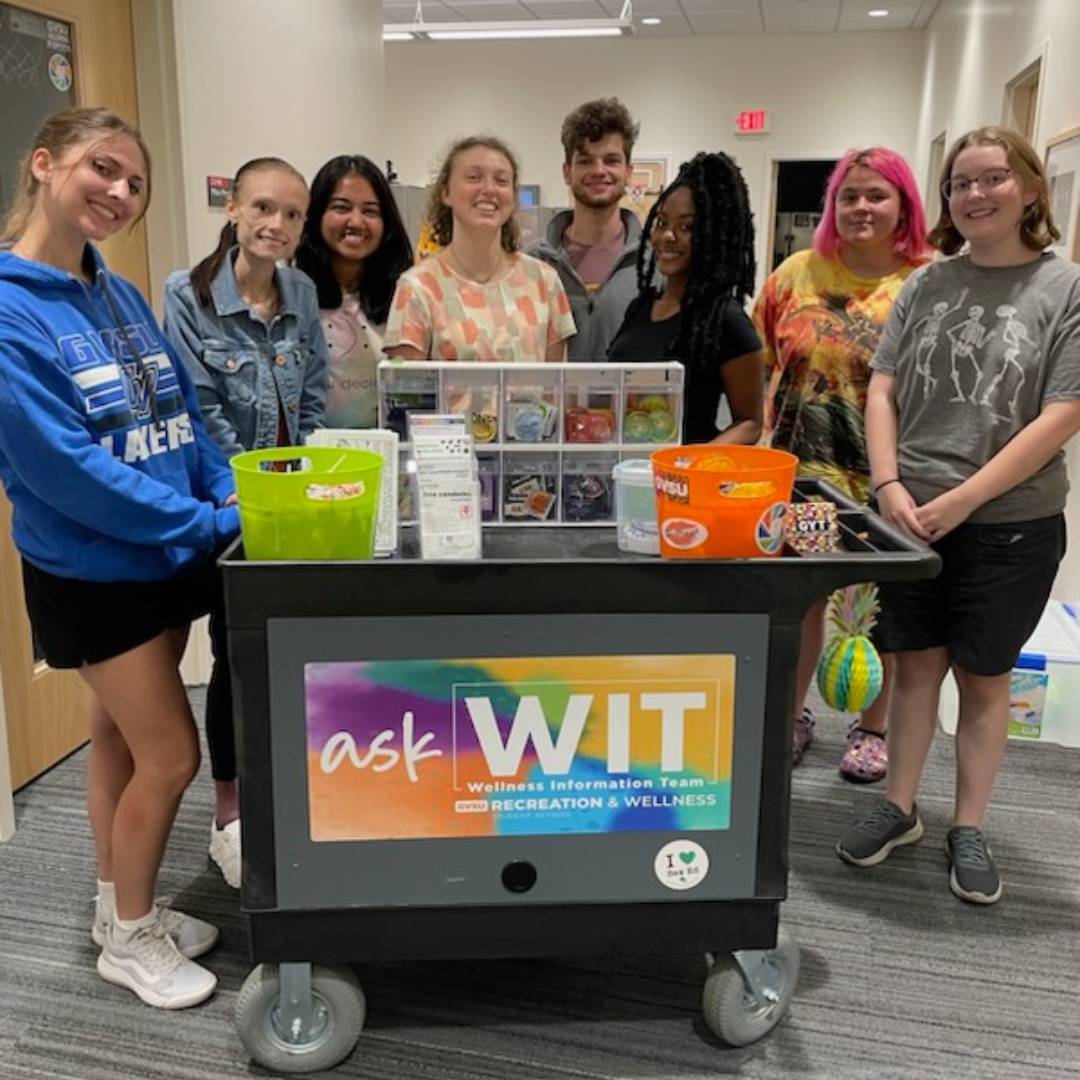
Many people ask: “What does WIT do?” so I’ll list a few examples. Many people know us for the Ask WIT cart. This is a mobile cart that we take around campus (rain or shine!) to reach students where they are. The cart includes a wide array of wellness items, such as snacks, candy, coloring pages, sensory/fidget items and of course, safer sex supplies (external condoms, internal condoms, dental dams, lube, etc). If we don’t have something you need at the cart, we’ll be able to direct you to where you can get it on campus. Connecting with fellow students during WIT cart shifts was one of my favorite aspects of WIT.
We also do presentations. You may have seen our presentations such as, Finding Rest in the Grind, Healthy Relationships, or Setting Boundaries to name a few. We strive to make our presentations fun and informative for your wellness goals and to make your time at college a little bit easier. Similarly, WIT also helps with programs or events. A couple of events we were a part of this semester were Sex Ed Week and Eat Well (our collaboration with Laker Food Co.). Whether it be assembling gummy pizzas to represent the menstrual cycle or guessing the brain food to benefit our intellectual health, our events and programs always made going to work super entertaining.
Other Team Testimonials
I could go on and on about my own countless positive experiences with WIT but I also want to share other graduating WIT members’ thoughts:
“I joined WIT in August of 2022, because I heard about the opportunity through the LGBT resource center and was interested in wellness and peer sex education because it's so heavily stigmatized but very important in a place like Allendale.
I have learned so much from being on WIT, but my biggest takeaway is the importance of peer education on wellness because of how much misinformation there is surrounding different wellness topics.
My favorite memories from being on WIT are
1) the August 2022 recfest because I got to talk to students and educate them on safer sex supplies
2) the public health conference I attended, where I learned so much about the behind-the-scenes of public health and the importance of public health officials fighting through the misinformation to protect public health.
I would recommend others join WIT because it is a great opportunity to get out of your comfort zone and talk to people, learn about the dimensions of wellness, and make lasting relationships with the people on WIT.”
-Rowan
“I joined WIT during the Winter Semester of my Sophomore year!
I joined WIT because I wanted to help debunk myths and share important information with my peers.
On WIT, I have learned about the multifaceted needs of the student body and how they are intertwined with the 8 dimensions of wellness.
My favorite memory on WIT is making people smile at the WIT Cart!
I would 100% recommend others to join WIT! WIT has been one of my favorite college experiences!”
-Ru
Could You Picture Yourself Here?
If any of this seemed interesting and you’d like to be a part of this amazing team, we’d love to see some new faces and perspectives on the team. There’s so much to learn, especially as new personalities and viewpoints join the team. If you want to apply for a position starting next school year, follow this link to the job description and application!
I’m so grateful for this experience and for being a WIT peer educator and I can’t wait to see what else WIT does in the future!
By: Claire Latourell, former WIT Peer Educator
Categories:
WIT
Posted
on
Permanent link for WIT Reflection on October 15, 2024.