

MWEE Toolkit Mobile Homepage
Meaningful Watershed Educational Experience (MWEE) Toolkit
Are you looking to meet academic standards using hands-on learning to advance 21st-century skills while promoting stewardship and civic responsibility in your classroom and community? Implementing a Meaningful Watershed Educational Experience (MWEE) in your learning space is valuable for students, teachers, and the community. The MWEE toolkit is designed to guide you through the process.
What's in the MWEE Toolkit?
The MWEE Toolkit provides web pages for the four essential elements, with supporting practices integrated throughout. Use the menu to navigate to an overview of each section or go directly to the individual web pages for each essential MWEE element: Issue Definition, Outdoor Field Experiences, Synthesis and Conclusions, and Environmental Action Projects.
Where are you in your MWEE journey?
- Getting started with MWEEs? Find foundational resources and guidance.
- Looking to build on your experience? Explore advanced practices, ideas, and professional growth opportunities.
What is a MWEE?

The Meaningful Watershed Education Experiences (MWEE) contains four essential elements that describe “what students do:” Issue Definition, Outdoor Field Experiences, Synthesis and Conclusions, and Environmental Action Projects. These elements, together with the supporting practices, create a learner-centered framework that emphasizes the role of the student in actively constructing meaning from the learning experiences.
Did you know: The essential elements are not meant to be linear. In fact, some elements, such as Synthesis and Conclusions, occur repeatedly throughout the MWEE.
Student voice (also sometimes referred to as youth voice) is supporting young people in taking a leading role in their education through inquiry and applied learning. Student voice may be considered a continuum where “student choice” is on one end and “student-led” is on the other. Encouraging student voice during a MWEE is vital for increasing student engagement and fostering a lasting environmental stewardship ethic in students. Giving students the opportunity to make decisions throughout the MWEE helps them to promote a belief in their abilities, realize that their voices matter in the community, and apply innovation and creativity to tackle real issues.
Learn more about incorporating student voice into each part of your MWEE.
Organize Your Thoughts into Plans!
With so many things to consider, planning a MWEE might seem both exciting and overwhelming at the same time. To organize your ideas, start with the MWEE Think Cloud planning tool. This tool can help you with initial brainstorming about program ideas, collaborators, and resources and can be used to facilitate planning conversations with partners and team members.
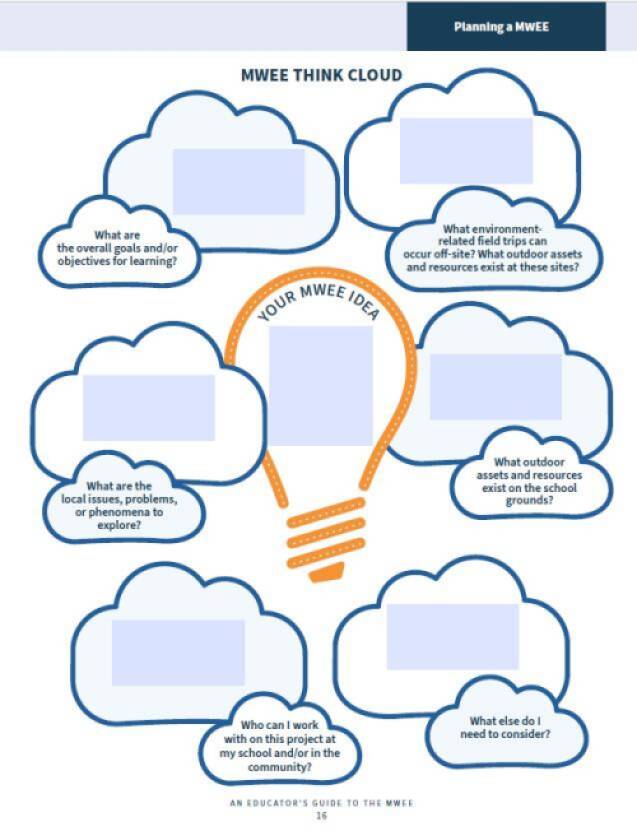
Explore the NOAA Think Cloud MWEE Planning Document
During Issue Definition, students learn about an environmental issue by planning and conducting background research and investigations. To structure this work, students focus on a driving question the teacher defines. This “big picture” question sparks curiosity and organizes student inquiry and investigations, which ultimately informs environmental actions. It should be open-ended, relevant to students’ lived experiences, and meet learning objectives.
On the Issue Definition webpage, you will find:
- An overview of the MWEE Element: Issue Definition and classroom connections
- Connection to your place with an overview of how to build local context
- Ideas for how to incorporate MWEE's into your classroom
- NOAA Environmental Literacy Model planning pages
- An overview of MWEE issue investigation components
- An exploration of local issues in your community
- An audit tool for the Issue Definition element of your MWEE
During Outdoor Field Experiences, students explore their driving question and strengthen their connection to the natural world. Field experiences allow students to interact with their local environment and contribute to learning in ways that traditional classroom or laboratory settings may not.
On the Outdoor Field Experiences webpage, you will find:
- An overview of the MWEE Element: Outdoor Field Experiences and classroom connections
- Connection to your place with an overview of how to build local context
- Ideas for how to incorporate MWEE's into your classroom
- NOAA Environmental Literacy Model planning pages
- 10 tips and tricks for going outdoors with students
- An audit tool for the Outdoor Field Experiences element of your MWEE
During Synthesis and Conclusions, students reflect on each experience and investigation in relation to the issue and share their claims and conclusions with each other. Educators should plan for this to occur regularly throughout the MWEE because this learning and frequent reflection provide the foundation for developing claims and environmental action that address the driving question and connect to the environmental issue.
On the Synthesis and Conclusions webpage, you will find:
- An overview of the MWEE Element: Synthesis and Conclusions, along with a classroom connection
- Ideas for how to incorporate MWEE's into your classroom
- An audit tool for the Synthesis and Conclusions element of your MWEE
During the Environmental Action Project process, students identify solutions and a project directly addressing the issue within their school, neighborhood, or community. Through participation in an environmental action project, students understand that they personally have the power to bring about change by taking action to address environmental issues at the personal, community, or societal level.
On the Environmental Action Projects webpage, you will find:
- An overview of the MWEE Element: Environmental Action Projects and classroom connections
- Connection to your place with an overview of how to build local context
- Ideas for how to incorporate MWEE's into your classroom
- NOAA Environmental Literacy Model planning pages
- An audit tool for the Environmental Action Project element of your MWEE
- An overview of conducting a Groundswell Environmental Action Project in your school or community
Supporting Practices
The MWEE also includes four supporting practices that describe “what teachers do,” along with their partners, to ensure successful implementation with students. The supporting practices are Teacher Facilitation, Learning Integration, Sustained Experiences
In the teacher facilitation supporting practice, teachers balance facilitation, direct instruction, and coaching roles to create a student-centered learning experience where the essential elements of the MWEE come together. This supporting practice can be enhanced through collaboration with local community partners.
The MWEE is an educational framework that helps teachers meet their learning objectives in an engaging way as a built-in part of the curriculum, not as "extra" added-on lessons. To support learning integration, use the curriculum anchor to find lessons that meet your curriculum needs.
A sustained MWEE experience takes time and is incorporated into a unit or multiple units throughout the school year. MWEEs also take effort to establish, so it is important to both celebrate your success and create a plan to ensure it continues into the future. A news blast can be sent out about your MWEE success, and students can deliver powerful testimonials about their MWEE during a student showcase or at school board meetings.
MWEEs use the local environment and community as a context for learning relevant to students’ lives. Situating the MWEE within local contexts promotes learning that is rooted in the unique culture, history, environment, economy, literature, and art of students’ schools, neighborhoods, or communities. To establish local context, identify environmental issues that are locally relevant to your students as the base for developing your MWEE.
What are the Great Lakes Literacy Principles?
Great Lakes literacy is an understanding of the Great Lakes' influences on you and your influence on the Great Lakes. There are eight Great Lakes Literacy Principles that describe fundamental concepts about the characteristics, functioning, and value of the Great Lakes.
What are the Great Lakes Literacy Principles?
It's important to think about how the MWEE fits into the scope and sequence of the curriculum. These clearly defined curricular connections enable teachers and school leaders to see how the MWEE supports existing goals for learning rather than being something “extra.”
In many cases, the project-based nature of MWEEs allows for cross-curricular explorations and learning. Consider the possibility of involving teachers from across disciplines and content areas in your MWEE.
There are many curriculum resources available to support your MWEE work, and they can be found on the Curriculum Anchor Page.
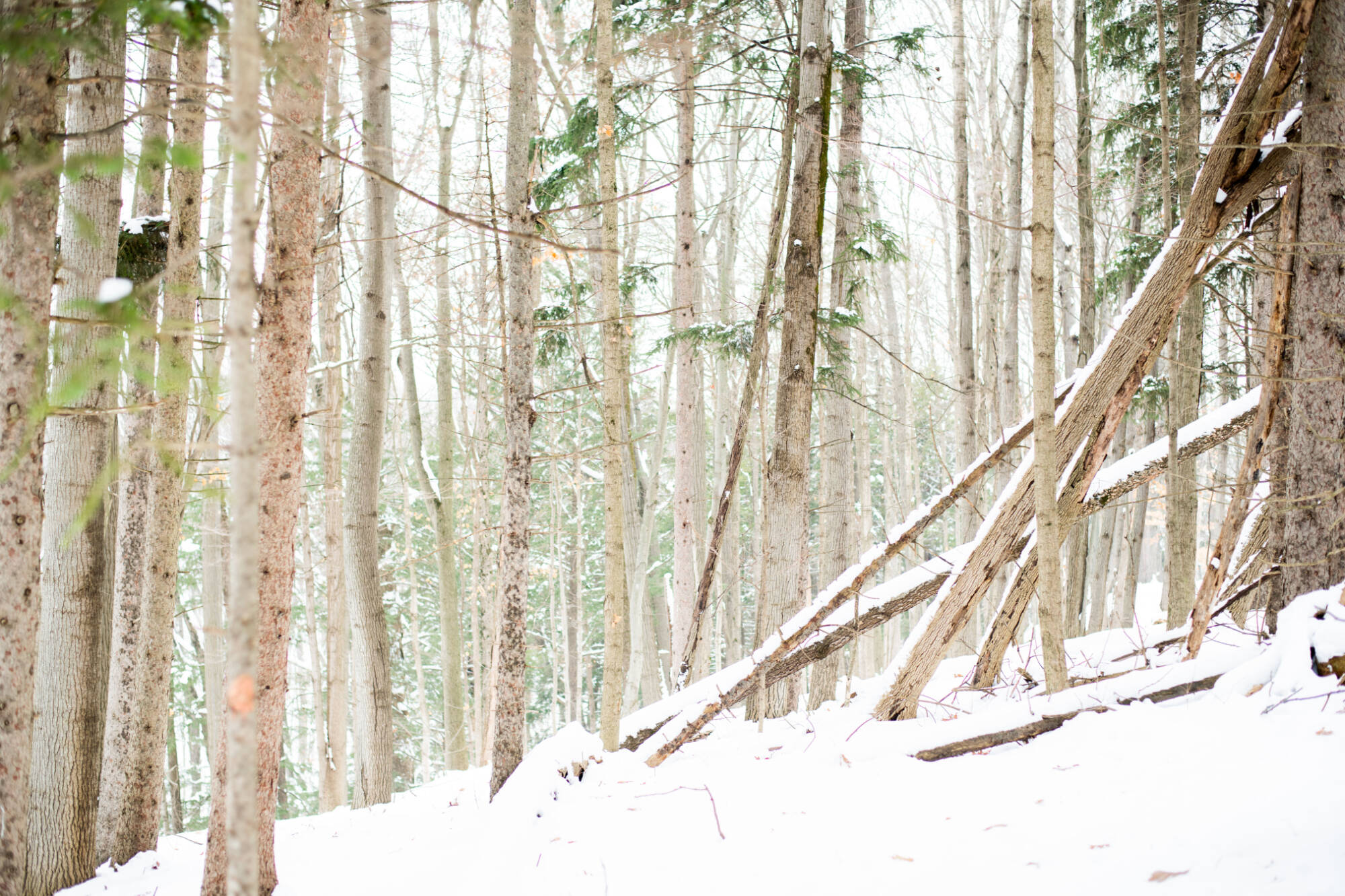
Designed to build a solid understanding of watersheds and nonpoint source pollution, the Communities for Clean Water lesson series covers the following topics: introduction to watersheds and water pollution, managing excess sediment, managing pathogens, and managing excess nutrients.
Groundswell partnered with WGVU and the GVSU Annis Water Resources Institute to create this series of educational videos and lesson plans about nonpoint source pollution. Nonpoint source pollution is one of the biggest threats to healthy lakes, streams, and rivers.
Designed to provide students with a Meaningful Watershed Educational Experience (MWEE) centered on the Great Lakes Watershed, the Creating Meaningful Outdoor Experiences Unit guides students through the process of implementing a stewardship project within their community with an emphasis on their role in the Great Lakes Ecosystem.
Lessons were designed for students in fifth grade through high school. This unit addresses Michigan K-12 Science Standards and Michigan K-12 Social Studies Standards. Place-based examples of these standards will be supplemented with Great Lakes Literacy Principles and an emphasis on the four major focus areas of the Great Lakes Restoration Initiative (GLRI) Action Plan.
This River Rewilding Collection contains a set of units that highlight the social and economic, historic, and biological impacts of rewilding the Grand River through the Grand River Revitalization Effort. Unit 1: Grand River Restoration and Revitalization Project, Unit 2: Advanced Water Quality, and Unit 3: Grand River Social and Economic Impacts immerse students in place-based activities of the Grand River region.
Beginning a Meaningful Watershed Educational Experience (MWEE) can initially feel overwhelming, but the MWEE toolkit has been designed to support you along the way! The MWEE is a powerful education framework, and there are many benefits to implementing a MWEE in your learning space!
Feel free to explore the entire MWEE toolkit to learn more about the multiple components of a MWEE that are designed to connect students with their local environment and equip them to make decisions and take actions that contribute to stronger, sustainable, and equitable communities. You can also get started with the resources highlighted in the Where to Begin page, which is designed for educators new to the MWEE process.
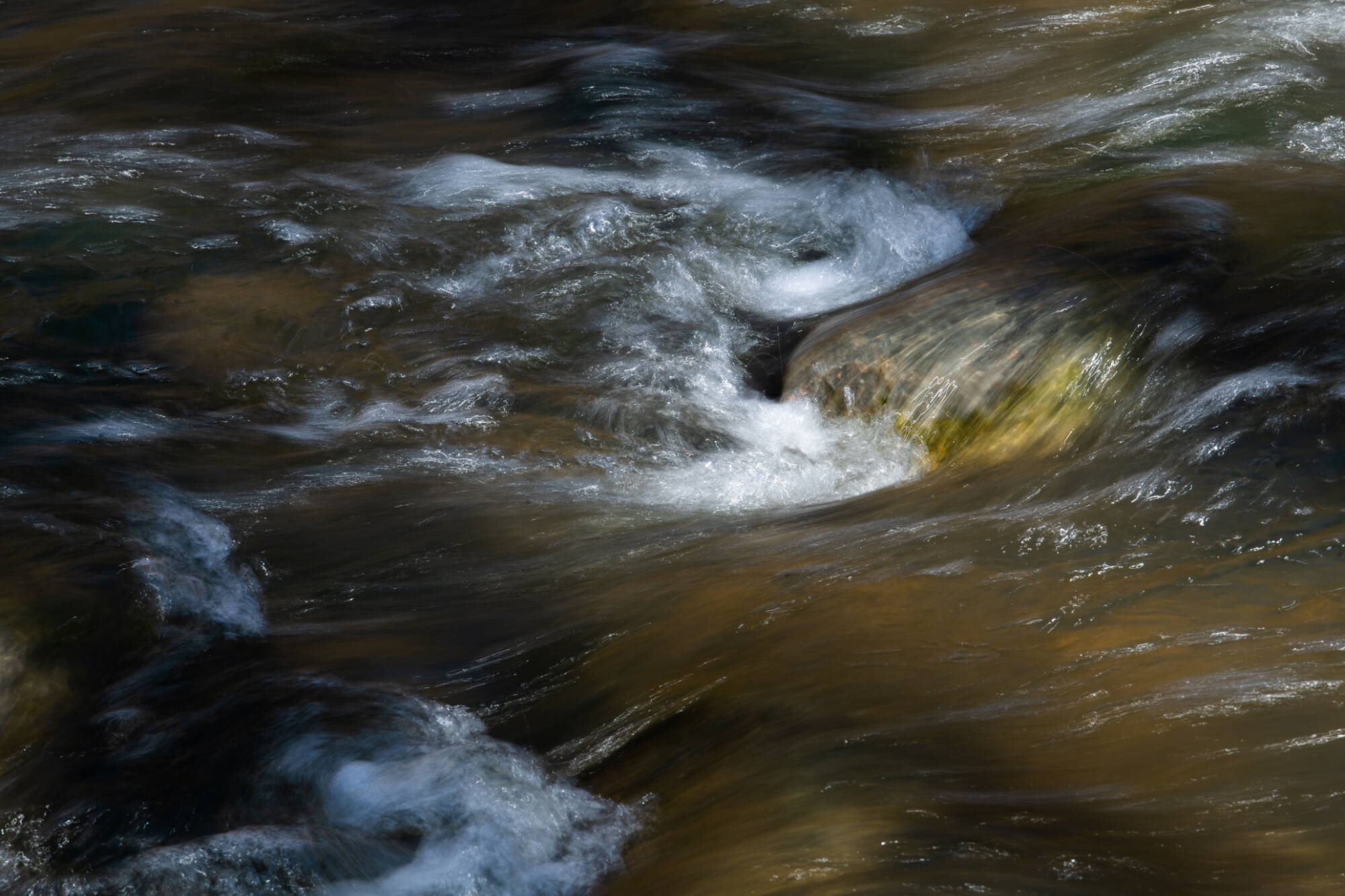
1. Explore New Issues
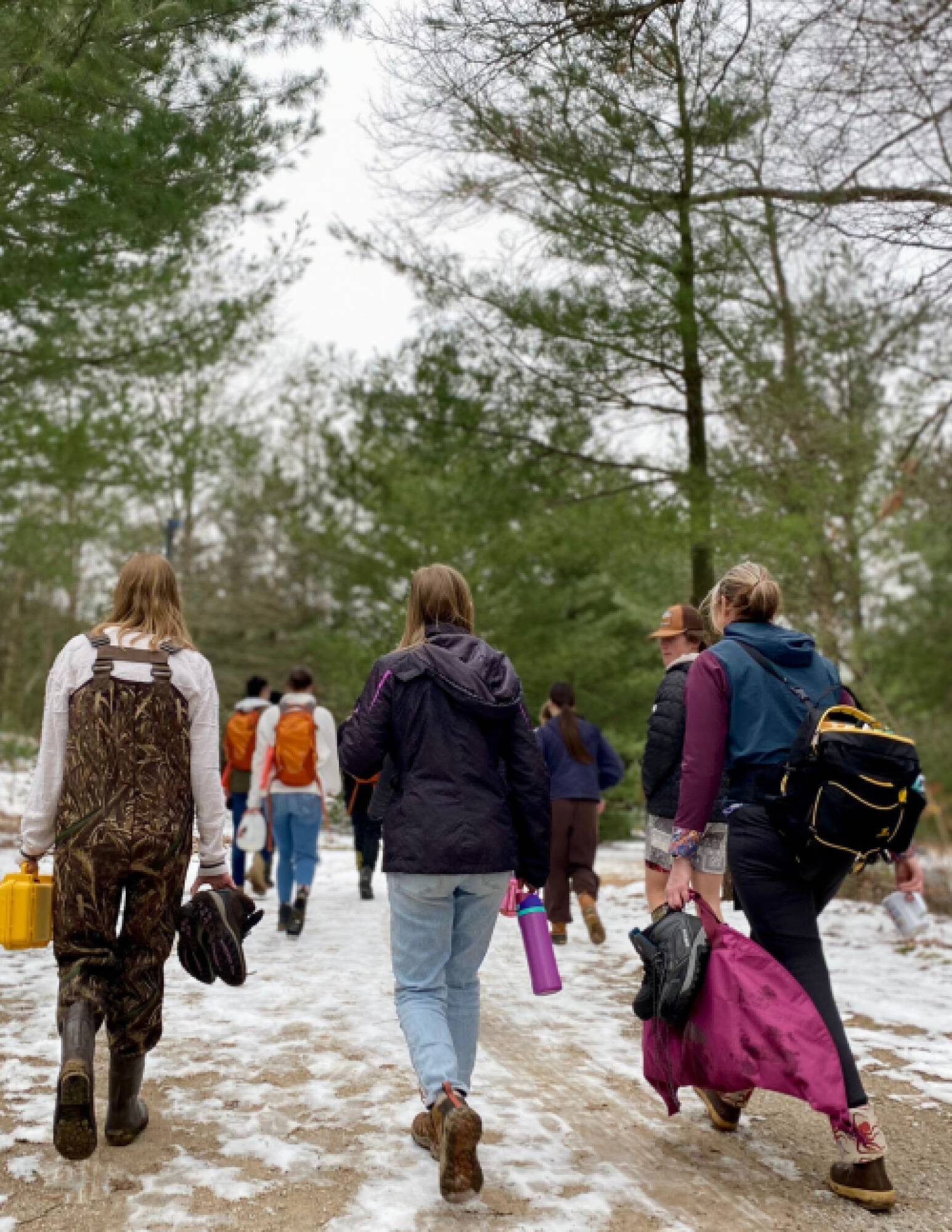
Explore new issues in your community
2. Discover New Curricula
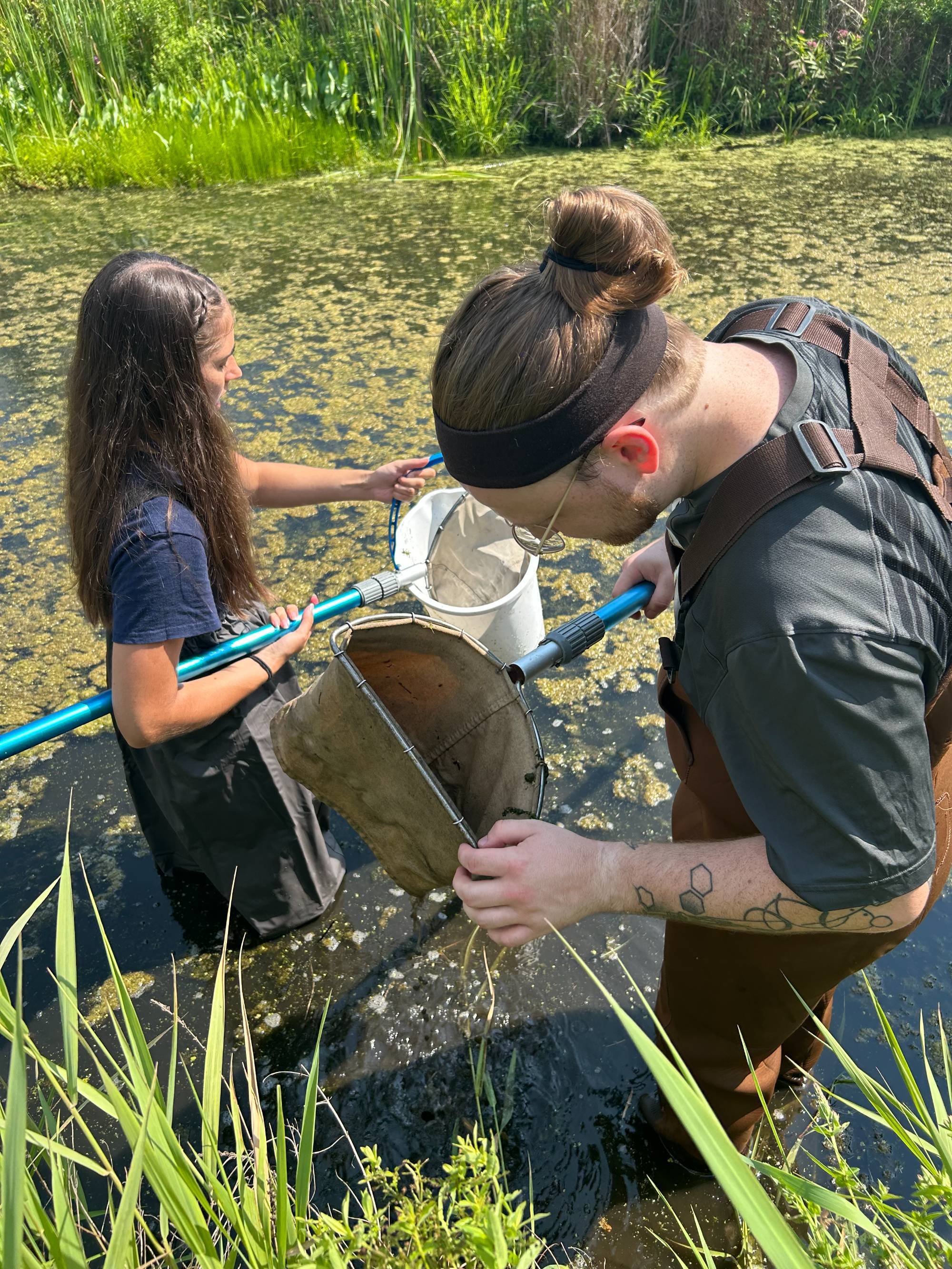
Discover a new lesson to complement your curriculum
3. Plan Your Next MWEE
Plan your next MWEE
4. Connect to Place
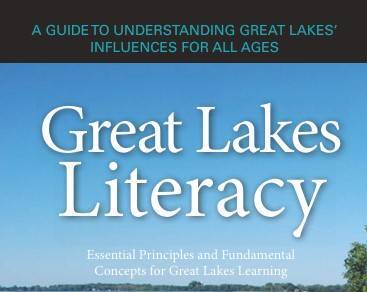
Connect your MWEE to the Great Lakes
5. Assess Your Growth
Audit your MWEE
6. Continue Growing
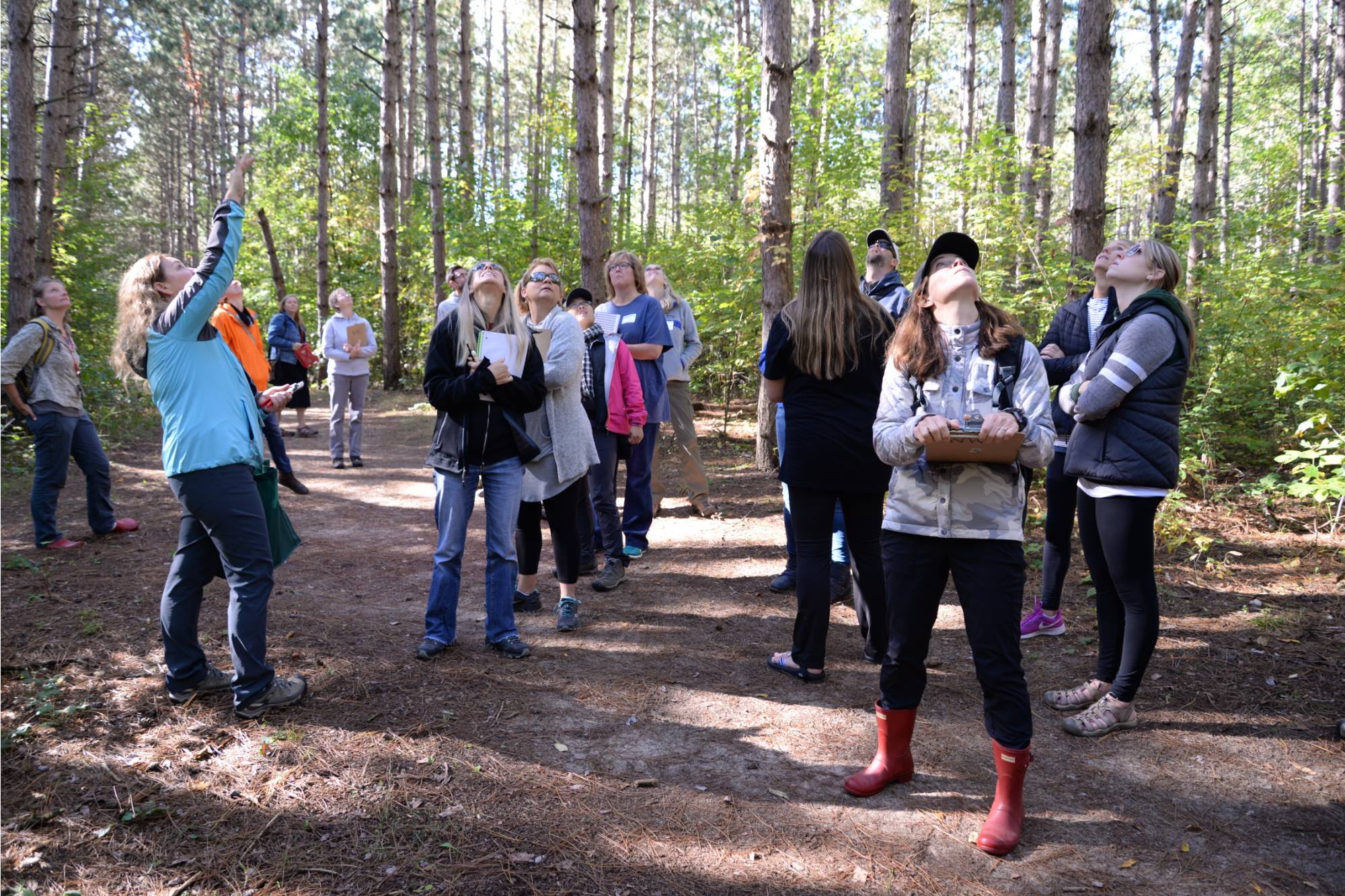
Attend a Professional Learning Opportunity
MWEEs are not meant to be added as extra lessons or units. A MWEE can become the foundation for the standard curriculum you offer your students. Discover ways to meet the state standards while facilitating a MWEE in your learning space.
Throughout the MWEE Toolkit, links to many planning documents and resources are shared to support you as you incorporate a MWEE into your learning space. For easy access to the materials, NOAA documents from the MWEE Essential Elements web pages are available on the Toolkit Planning Documents page.
Check out the Toolkit Video Library for a one stop webpage for all of the videos! Videos found throughout the toolkit are all available on the Toolkit Video Library page, organized by toolkit webpage for easy access.
Attributions
This toolkit would not have been possible without the generous support of our funders. Visit the Attributions page to learn more.

Have a Question?
Ask Groundswell staff your questions about the MWEE Toolkit or about the process of implementing a MWEE in your learning space using the Groundswell Contact Us Form.