

Summer Institute
This page has information regarding our annual Summer Institute professional learning opportunity (PLO). Click the button on the right or scroll down to different sections of this webpage.
Questions about this annual event?
Contact our staff at [email protected]
Are you a Kent or Ottawa County teacher new to place-based education (PBE)? Maybe you have implemented place-based stewardship education (PBSE) in your classroom and want to learn more?
The institute is an annual workshop that leads participants through the six elements of a PBSE project so you can implement an awesome experience back at your school. Groundswell offers this workshop to educators which includes expert facilitation, hands-on training, and provided meals each day for attendees (a value of $400 per attendee). Summer institute is offered at no cost to the educator, and is made possible through grant funding and donations from our program supporters.
Summer Institute is open to any preK-12 educator or community partner organization in Kent or Ottawa County. This professional learning opportunity is designed for folks who are interested in or already facilitating place-based stewardship education (PBSE) and are looking to become part of the Groundswell network. Whether this is your first year or 15th year being part of Groundswell as an educator or partner, we hope you join us to kick off the school year with enthusiasm for outdoor learning and making new connections in our community!
During this immersive workshop, participants will:
- Explore PBSE through hands-on learning experiences
- Learn the foundations of PBSE and how to implement an action project with Groundswell
- Meet fellow educators who are passionate about outdoor learning!
Why Attend?
Why should you join us for this workshop?
- A detailed walk-through of how to implement a PBE experience in your classroom.
- Receive 15-20 hours of SCECHs! (final amount confirmed in June).
- Free lunch daily as well as hands-on learning experiences!
- Connect with fellow educators and community partners who are passionate about place-based stewardship education, outdoor learning, and elevating your students to make a real difference in their communities!
- Begin planning an academic year stewardship project, with access to up to $1,500 in Groundswell Project funding.
- Explore innovative approaches to real-world, community-connected learning.
What to Expect
- Project work time: we will be guiding you in ideating a potential PBSE action project throughout the workshop. You could end Day 3 with a near-complete proposal that is ready to submit to Groundswell, or at least well-developed ideas of what your project could be! This will give you great momentum going into the school year.
- Grade-band cohorts: work closely with educators and partners who also teach your grade level to discuss PBSE implementation tips and tricks, outdoor content specific for your students' learning level, develop project ideas together, identify curriculum connections, and establish a mini-network of educators and partners!
- Give back: we will end the workshop on the final day with a hands-on, community experience that demonstrates how a Groundswell project can give back to our community.
Day 1: PBSE 101
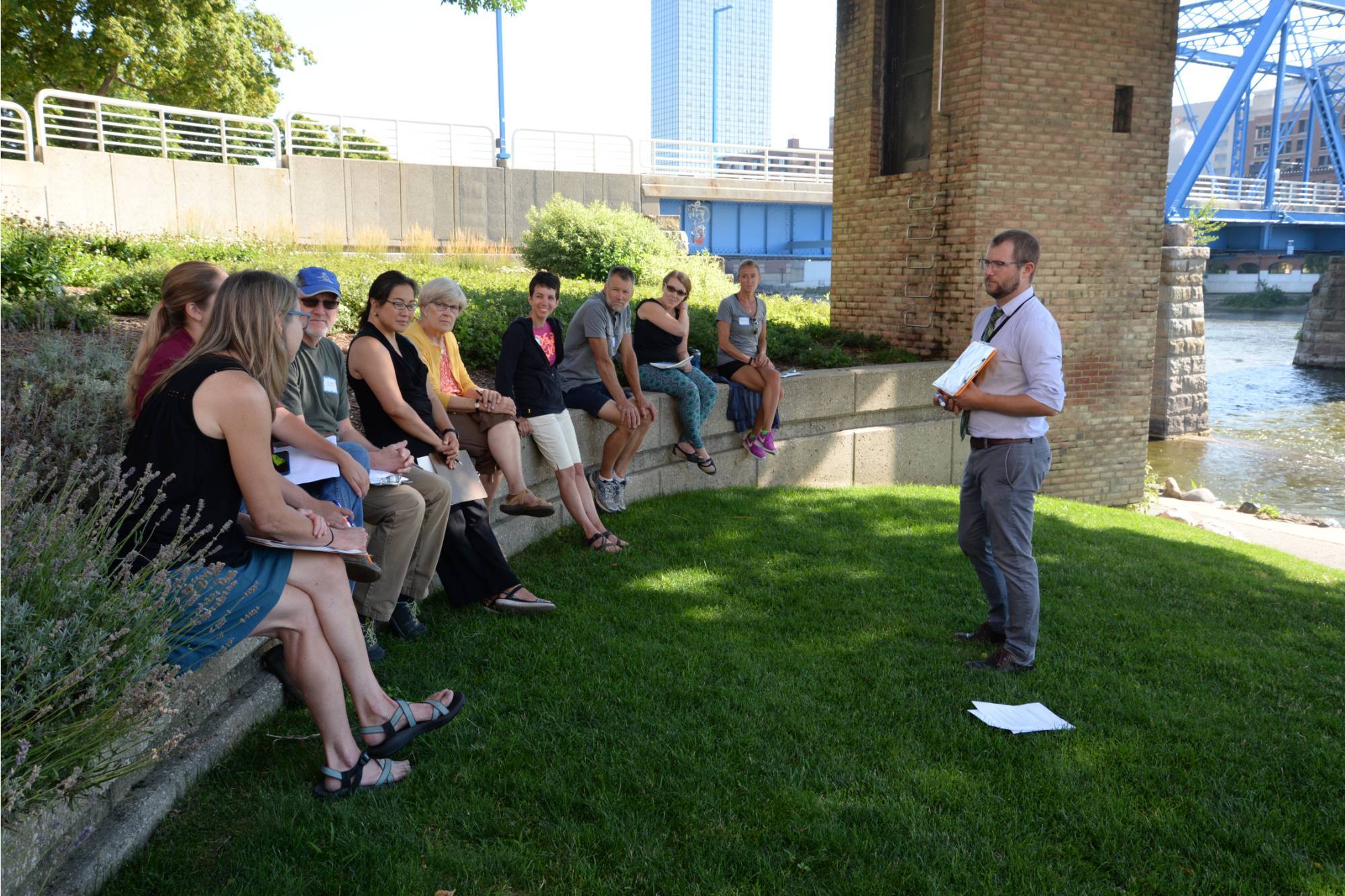
Occurs in downtown GVSU campus in Grand Rapids. We will explore the foundations of PBSE, how Groundswell functions, begin expanding upon stewardship action projects, and discuss how to weave outdoor PBSE into your classroom culture.
Day 2: Project Exploration
Participants will be given time to explore ideas for practicing place-based stewardship education in their own schools. Groundswell support in starting the formal project process will be offered. Depending on the theme of that year's Summer Institute, Day 2 will also involve diving deeper into exploration in that area.
Day 3: Off-Site & Hands-On
Participants will meet off-site at wherein we will participate in hands-on, interactive experiences that model PBSE an give back to the community in some way. Details on locations and other important logistics differ each year.
Three days of immersive learning in the Downtown Grand Rapids area for Kent and Ottawa County educators. 2026 Summer Institute will have a Civics Education Lens + Collaboration theme. A huge thank-you to the Michigan Center for Civic Education, who is sponsoring this workshop! Their team will be providing a civics education lens, and participants will learn pathways to incorporate an optional civics action step into a Groundswell project.
Click the button to learn more and RSVP!
Registration
Attendance Guidelines & Expectations
"EMERGING" Groundswell Teachers (folks that are newer to the Groundswell program):
- Have been involved in Groundswell for 0 to 5 years.
- You have either never attended Summer Institute, or have only attended a handful of Summer Institutes.
- You may or may not have already implemented Groundswell action projects.
- Please note that all EMERGING educators are to attend all 3 days of the workshop. Attending all 3 days equates to approximately 15-20 SCECH hours! Total hours will be finalized in June.
"SEASONED" Groundswell Teachers:
- Seasoned Groundswell educators who have been leading Groundswell projects AND attending Summer Institute for at least 5 years are eligible to opt out of Day 1: PBSE 101 and only attend Days 2 + 3.
- You are more than welcome to join us regardless for Day 1 at no charge, receive that day's SCECHs, and enjoy lunch. We are making this day optional for you as you have already received extensive Groundswell training and are demonstrating quality PBSE at your schools!
- If you are one of the first 40 educators to register, you will still receive the $200 stipend if you attend Days 2 + 3 only!
- Attending Days 2+3 only equates to approximately 15+ SCECH hours! Total hours will be finalized in June.
A reminder that beginning in 2027, educators must attend Groundswell Summer Institute OR an officially approved alternate workshop every other year in order to be eligible for Groundswell funding. More information about our project requirements can be found on our website page!
Questions about this new format? Not sure which group you fall into this year? Please email [email protected]
Summer Institute FAQs
Q: What should I bring to this workshop series each day?
A: Each day our institute will include both indoor and outdoor learning. Be sure to prepare for the weather. We will be outside a bit and walking around away from our place, so we recommended bringing:
- Hat / Sunscreen / bug spray
- Close-toed, comfortable walking shoes
- A device (laptop or tablet) and charger
- Refillable water bottle
Q: Do I have to attend all three days?
A: If you are new to the Groundswell network (Have been involved in Groundswell for 0 to 5 years), yes. Please see the Attendance & Guidelines section above for further details.
Q: How much does this workshop cost?
A: We offer Summer Institute for educators and community partners at no cost to you. The average value per participant for this professional learning is approximately $400.
Q: Will copies of the resources be available to participants?
A: Yes. Any physical or digital resources we provide during the workshop will be available after. We will share these resources with participants via email and/or Google Drive.
Q: Is each Summer Institute the same every year?
A: No! Groundswell works hard to offer a variety of content each year for this workshop, and while certain aspects of the professional learning are similar each year, there is a different annual theme, presenters vary, and new participants make the experience unique every summer.
Q: Will I get time to work on a stewardship project for the coming academic year at Summer Institute?
A: Yes! We build in time for participants to get started on their project work for the upcoming year throughout the workshop.
Q: I have accessibility issues and might not be able to do all of the physical activity (walking in summer heat or other). Can I still attend?
A: Yes! We make sure to offer differing levels of engagement depending on our participants' comfort levels and physical abilities. We still welcome you to join us even if you cannot participate in all aspects of the workshop, and are happy to work with you to find a productive alternative of any strenuous or outdoor activity.
Q: I'm a community partner, not an educator. Can I still attend?
A: We welcome our partners to join us for this experience to learn alongside our educators and supplement their learning with great connections and support. We will prioritize the attendance of our educators first, and therefore space for community partners is limited. Please reach out to us at [email protected] if you have questions regarding this.
Summer Institute 2025
Summer Institute in August of 2025 followed the theme of watershed stewardship and saw educators learning in place through immersive practices in place-based education.
DAY 1 - Local Context
-
Pleasant Peninsula - supporting conservation through public art and community events.
DAY 2 - Understanding Our Waterways
-
EGLE - Michigan Department of Environment, Great Lakes, and Energy
-
GR Outside - outdoor education materials and guided experiences
-
Annis Water Resources Institute (AWRI) - immersive research experiences on Lake Michigan
-
Subject to Climate - climate change curriculum hub and inspiration for all subjects
DAY 3 - Stewardship through Tree Plantings
-
Lower Grand River Organizations of Watersheds - LGROW - Understand, protect and improve the natural resources of the Lower Grand River Watershed for all to enjoy
-
Great Lakes Stewardship Initiative - parent organization of Groundswell - connecting students and educators to our Great Lakes state through place-based stewardship education.
2025 Workshop Summary
Summer Institute 2025 consisted of three days of immersive professional learning for local pK12 educators from Kent and Ottawa Counties. Throughout the first day of the workshop at GVSU's Seidman Building, participants learned about the fundamentals of place-based storeship education (PBSE), diving into what it looks like to teach outdoors in practical ways. Educators were split into breakout groups based on the grade level they teach, and discussed best practices for taking students into outdoor spaces and how to approach potential challenges as new outdoor educators. Cohort leaders in these groups were seasoned Groundswell teachers, each with over five years of experience with the program and practicing PBSE. The day culminated in a community scan of the surrounding area of the GVSU downtown campus, with a visit to the newly installed murals from local artist via a partnership with Pleasant Peninsula.
Day two began at Riverside Park in downtown Grand Rapids, where participants learned about the importance of waterway stewardship as it pertains to the larger watershed and Great Lakes basin. They were given the opportunity to kayak on the Grand River, seeking out freshwater mussels, observing algae and river grass, and taking in the experience of being on the water in an urban area. Attendees also got to learn from Grand Rapids Public Museum Anishinaabe Curator Katrina Furman, who discussed opportunities for teachers to engage in local indigenous education and Anishinaabek cultural learning. Participants discussed how they might engage their classes with current cultural happenings and explored one of the educational kits available through the museum. The afternoon consisted of a resource presentation from Subject to Climate, a national group that provides activities and lessons for teachers, and teachers got to work drafting outlines for potential place based projects for their students. Each day of the Summer Institute had intentional time for teachers to ideate with their peers and discuss how to dive into exploration in their subject area with the lens of PBSE.
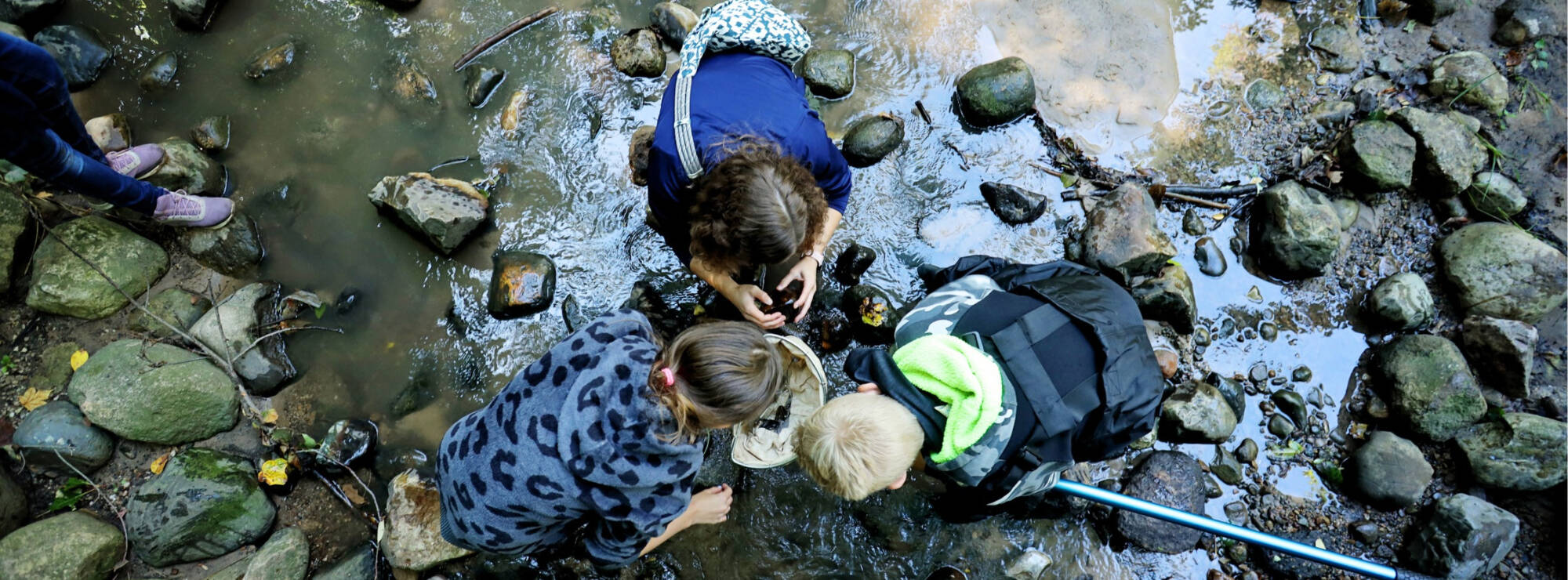
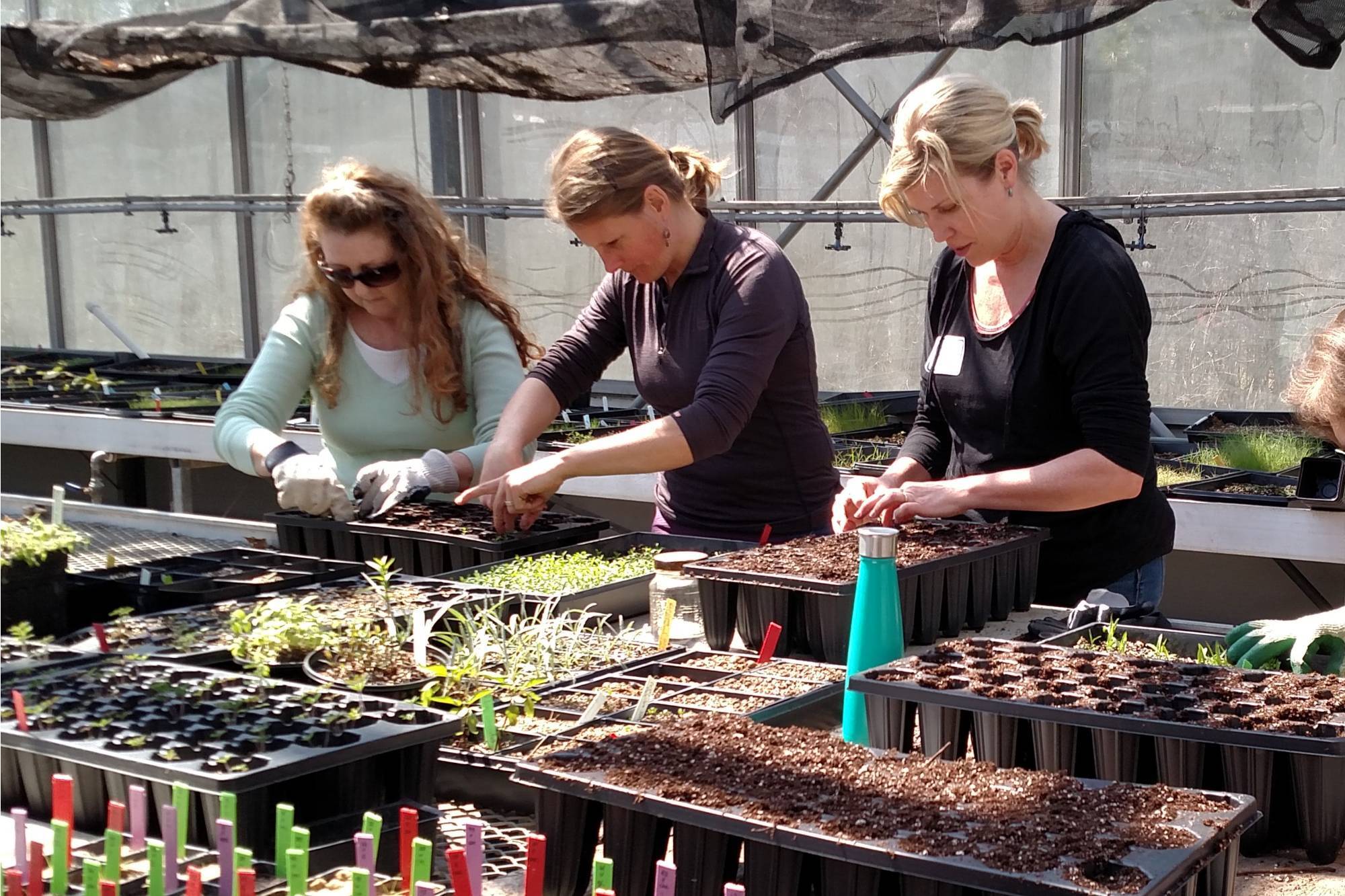
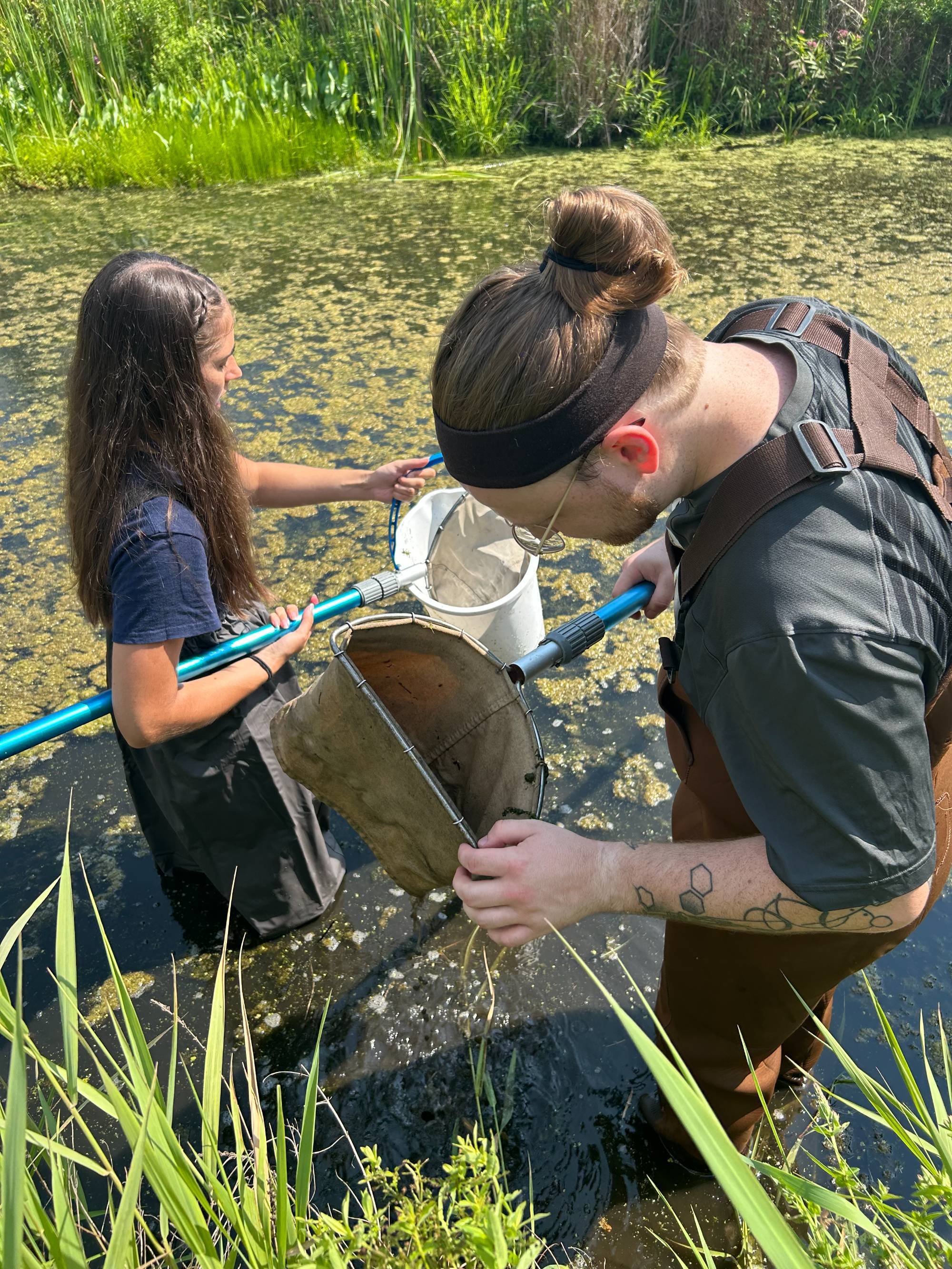
The third and final day of Summer Institute involved tree planting at a local park in Ada. Participants met at Roselle Park and worked together to plant seventeen trees on the property, learning from parks staff member Courtney Marek about the importance of native plants, their relationship to watershed stewardship, and practicing what it would look like to do a Groundswell student stewardship project hands-on. Watershed principles were further explored through donning waders and wading into a park creek, catching small bugs (macroinvertebrates), and learning at how to identify those bugs with ID keys. Teachers were led in this activity by Matt Bain, Aquatic Specialist and Education Coordinator staff from Groundswell's longtime partner Lower Grand River Organization of Watersheds. Partners are a key aspect of this workshop, as they allow teachers to experience what it might look like to collaborate with a Groundswell partner in an aspect of their stewardship project, and can ask questions and engage with both those who presented and others attending each day. The afternoon of day three included a presentation from a retired teacher on the practicality of training volunteers for PBSE excursions, and discussing how teachers can ally with volunteers and chaperones for their classroom.
Teachers left summer Institute with give-away items, raffled registrations and ticket prizes for local conferences, and the opportunity to submit for $200 worth of funding for classroom materials, thanks to a grant from MiSTEM. This annual professional learning opportunity is made possible through funding from various grants and donations: The Wege Foundation, Great Lakes Fishery Trust, MiSTEM, Michigan Sea Grant, and Subject to Climate. The workshop itself comes to life thanks to dedicated staff from CECI's Center for Educational Partnerships: Allison Palm-Belliel (Place-Based Education Specialist), Mara Spears (Project Specialist), Vicky Wright (Assistant Director), Cait Portko (Office Coordinator), and Play Pelon (Director).