

Environmental Action Projects
About
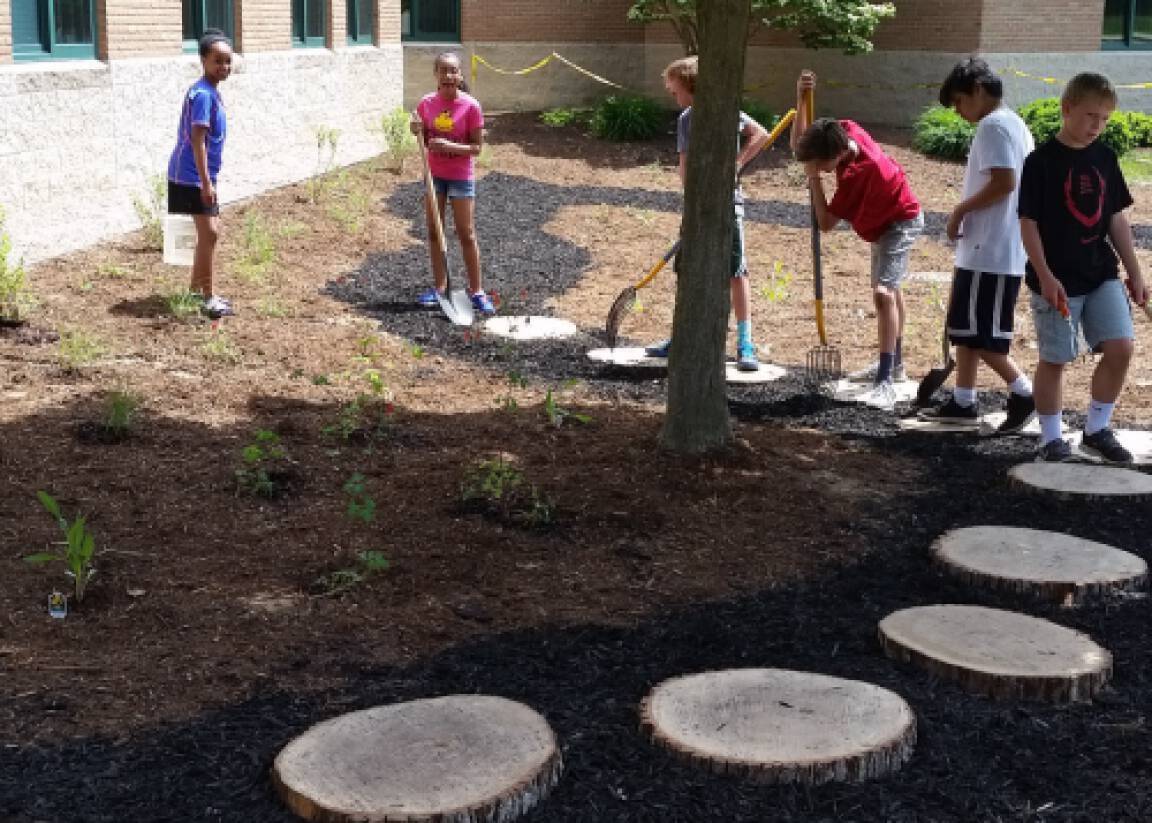
As a result of their investigations, students identify solutions and develop environmental action projects that directly address the issue within their school, neighborhood, or community. Through participation in an environmental action project, students understand that they personally have the power to bring about change by addressing environmental issues at the personal, community, or societal level. Taking action instills confidence in students and can contribute to students becoming environmental stewards in their communities.
More About Environmental Action Projects
During an environmental action project:
- Students are actively engaged in and, to the extent possible, drive the action project's decision-making, planning, and implementation.
- Teachers facilitate the process by forming groups, moderating, and answering questions.
- Students reflect on the value of the action and determine the extent to which it successfully addressed the issue.
Provide students with the framework to successfully plan and implement an environmental action project using NOAA Planning Pages.

Discover how an Environmental Action Project can support student learning
What is an Environmental Action Project?
As a result of their investigations, students identify solutions and develop Environmental Action Projects. An action project directly addresses the issue students identified within their school, neighborhood, or community.
Plan your Environmental Action Project to support your MWEE with using the NOAA Informed Action Planning Page.
Classroom Connections
Are you looking for a place to start? Use the below Groundswell resources to help your students plan their environmental action project to support the work you have been doing with issue investigation and outdoor field experiences to explore your driving question.
Brainstorming Solutions
Developing an Action Plan
Managing Excess Nutrients
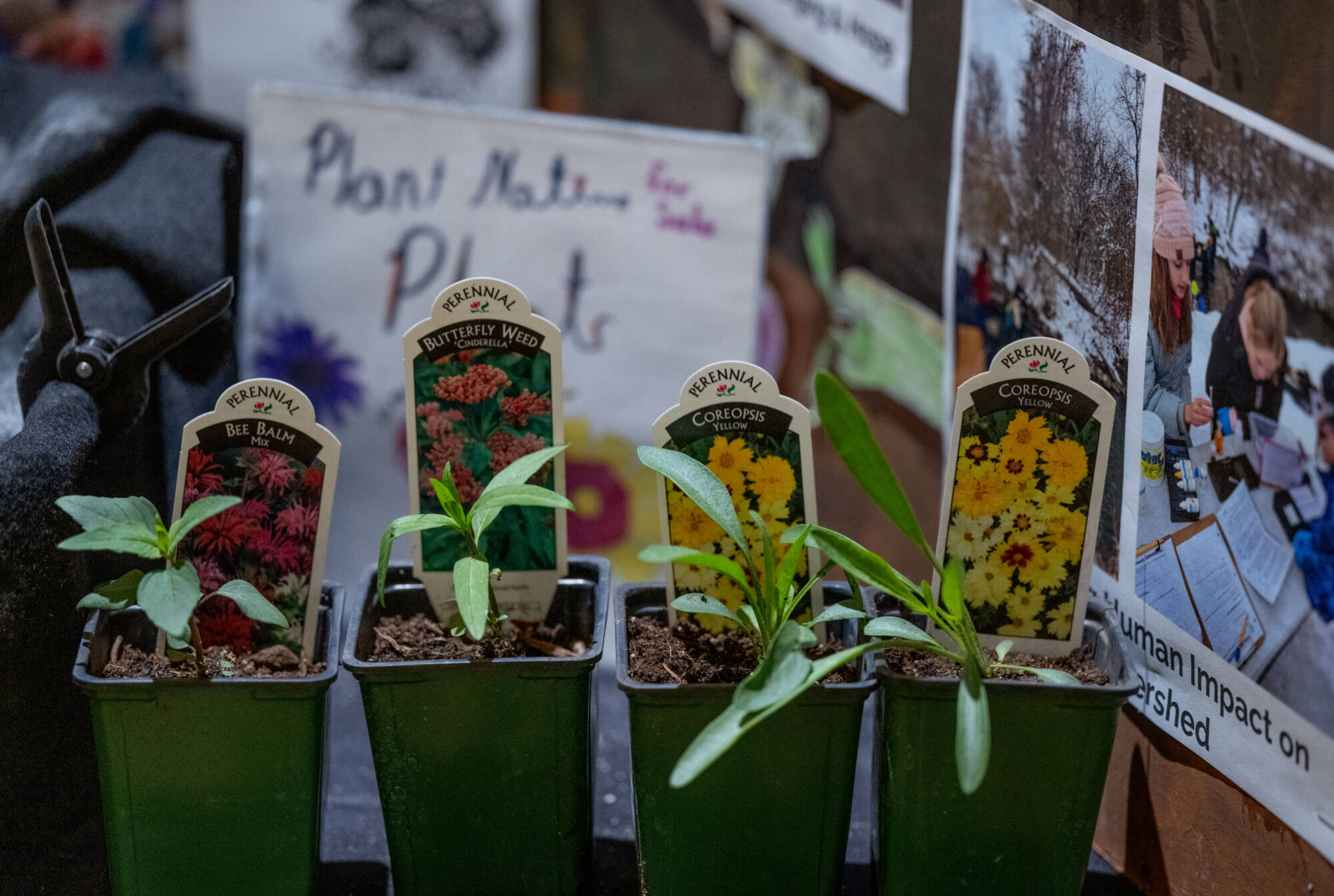
Guide students as they work collaboratively through the design process to develop an idea of how they might address their watershed issue. To build on this activity, explore the Creating Meaningful Outdoor Experiences Unit, which is designed to provide students with a MWEE centered on the Great Lakes Watershed.
Develop an action plan with students to assess their readiness to complete their stewardship project. To build on this activity, explore the Creating Meaningful Outdoor Experiences Unit, which is designed to provide students with a MWEE centered on the Great Lakes Watershed.
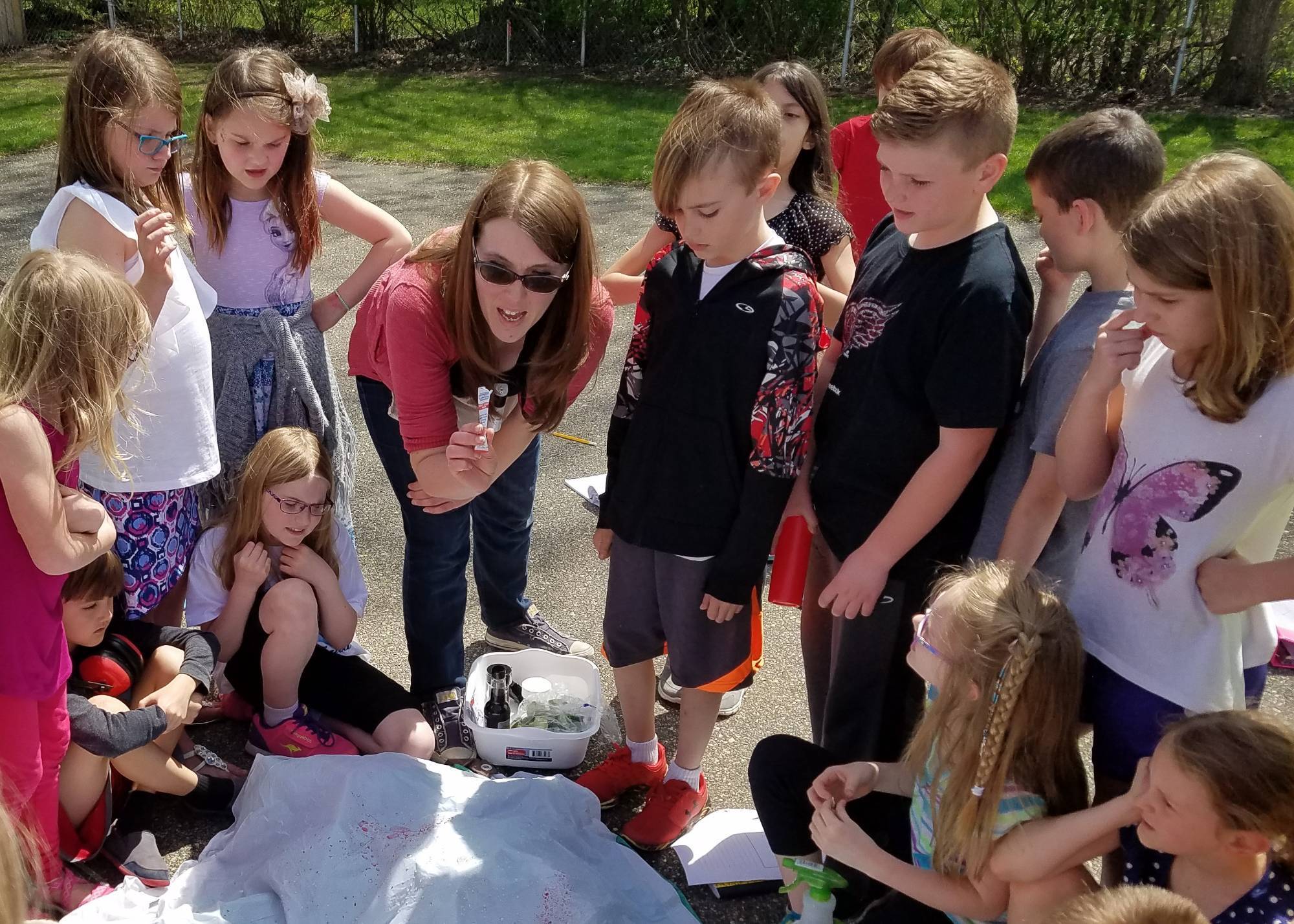
Students formulate a plan to reduce nutrient loads on their school grounds. To build on this activity, explore the full content of Lesson Plan 4: Managing Excess Nutrients, which contains activities focused on excess nutrients as a major type of nonpoint source pollution.
Explore the human and water connection with Great Lakes Literacy Principle 6
Connecting the Great Lakes Literacy Principles
The Great Lakes region is a special place, and anchoring your MWEE using Great Lakes Literacy Principle 6 can help connect students' lived experiences to what is happening in their watershed and the broader Great Lakes watershed.
Great Lakes Literacy Principle 6: The Great Lakes and humans in their watersheds are inextricably interconnected.
Classroom Connections
Gain inspiration from Groundswell schools and local partners as they describe the environmental action projects they implemented at their schools and in their communities. To see more student-led stewardship projects in action, check out videos from the Groundswell Student Showcase.
Restore and Protect
Everyday Choices
Community Engagement
Civic Engagement
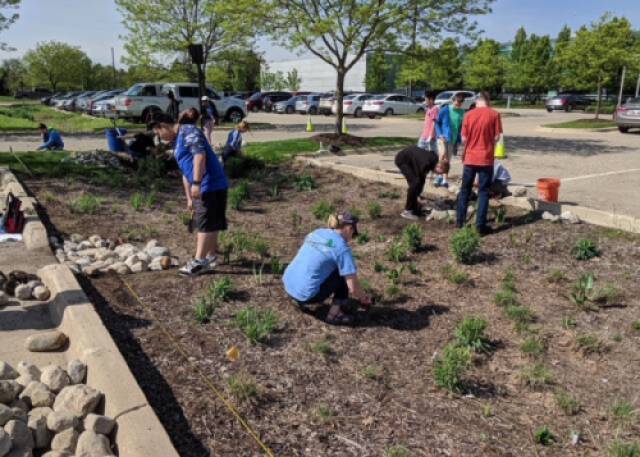
On a streambank near their school, students identified and removed invasive plants and replanted native plants to improve ecosystem health and reduce streambank erosion.
Students learned about recycling and designed a musical wall using reused and recycled materials.
Students researched the Grand River, designed and created shadow puppets and puppet show scripts, and educated younger students about the Grand River's impacts on the community.
Students presented their stewardship efforts at their local township meeting as a part of their environmental action project.
Moving From Claims to Environmental Action
Types of Environmental Action Projects
There are many types of environmental action projects. Students can make a difference in their community through projects that promote restoration or protection, community engagement, positive everyday choices, and civic engagement.
From Claims to Action
Support students as they brainstorm action ideas and then choose a single project to complete as a class.
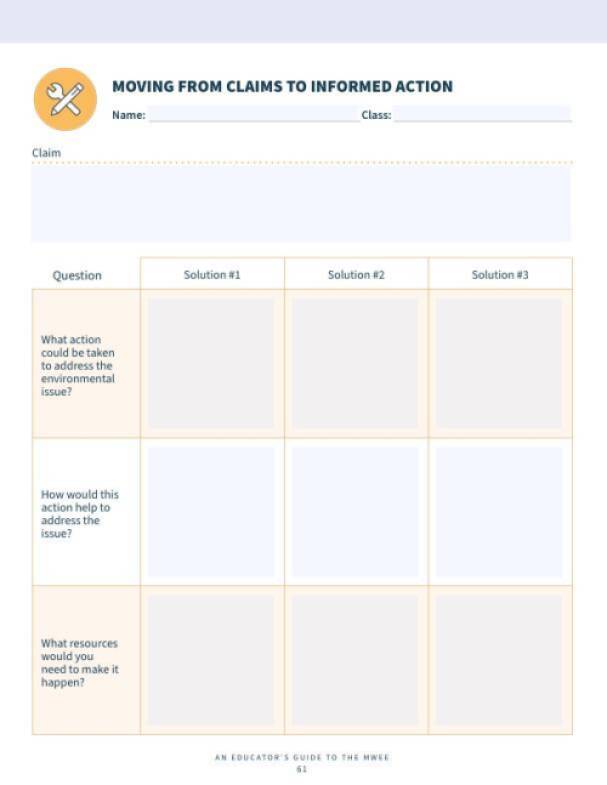
Download the NOAA Claims to Informed Action Student Page
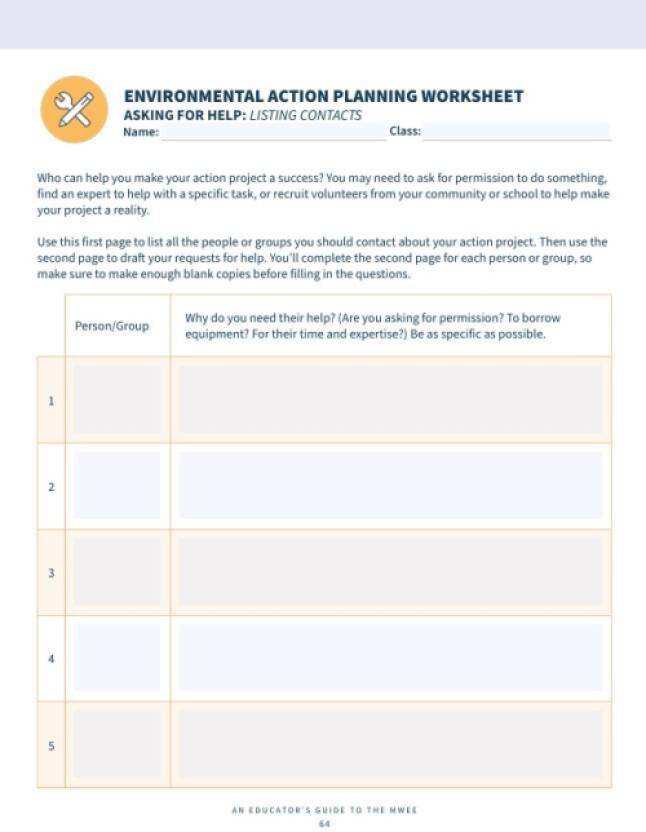
Download the Environmental Action Planning Document Student Pages
Discover the benefits of environmental action projects for your students
MWEEs in your classroom
Including a MWEE Environmental Action Project in your curriculum can:
- increase student interest and engagement in learning
- support student achievement
- advance 21st century skills
- advance environmental stewardship and civic responsibility
- promote equity and environmental justice
- allow students unsuccessful in traditional settings to thrive
- increase student attendance and participation
- improve classroom climate
Provide opportunities for students to present their findings to a meaningful audience, such as schools or local or state decision-makers.
Provide time and space for all students to be a part of designing and choosing an action project.
Support students in identifying how to use their skills and interests to plan and implement an action project.
Discover other ways to build student success using Supporting Practices found in a selection from the NOAA MWEE Guide.
Environmental Action Planning Pages
NOAA's Environmental Literacy Model (ELM) can support your planning and implementation throughout the entire process of a MWEE. As a part of the ELM, the informed action planning page provides support for moving from issue identification to an environmental action plan.
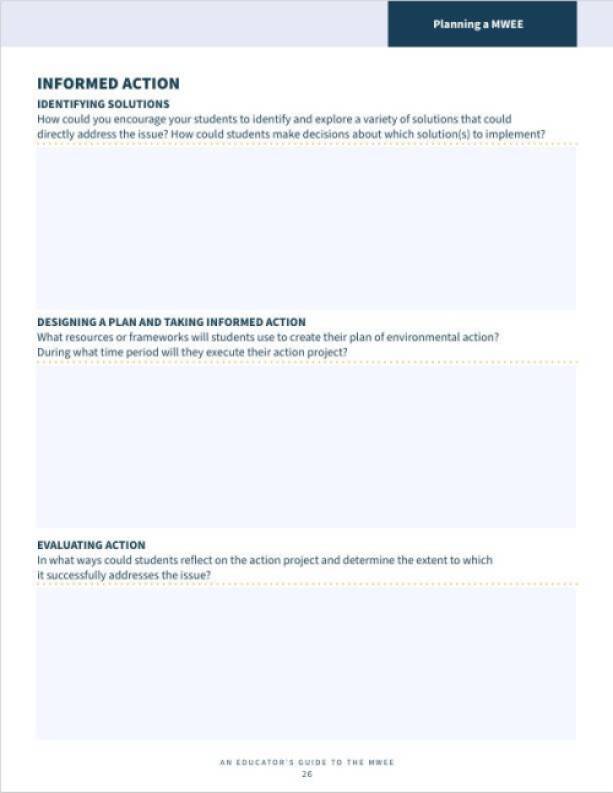
Download planning pages to take informed action
The MWEE Audit Tool for Environmental Action Projects can be used to strengthen an existing MWEE or help plan a new MWEE to ensure that the essential element of environmental action projects is meaningfully included.
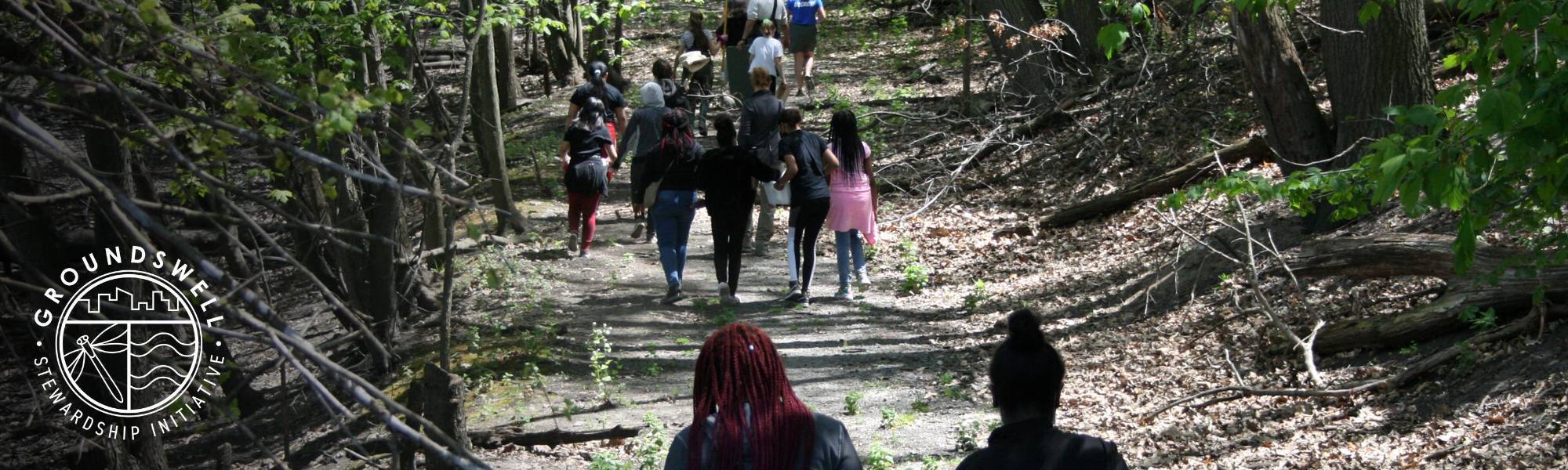
Groundswell connects students, communities, and nature as a coalition of community partners and educators, creating opportunities for hands-on environmental exploration and learning through professional learning, project support, and meaningful partnerships. Learn more about how you can become a Groundswell educator!
Professional Learning Opportunities
Environmental Action Projects
Meaningful Community Partnerships
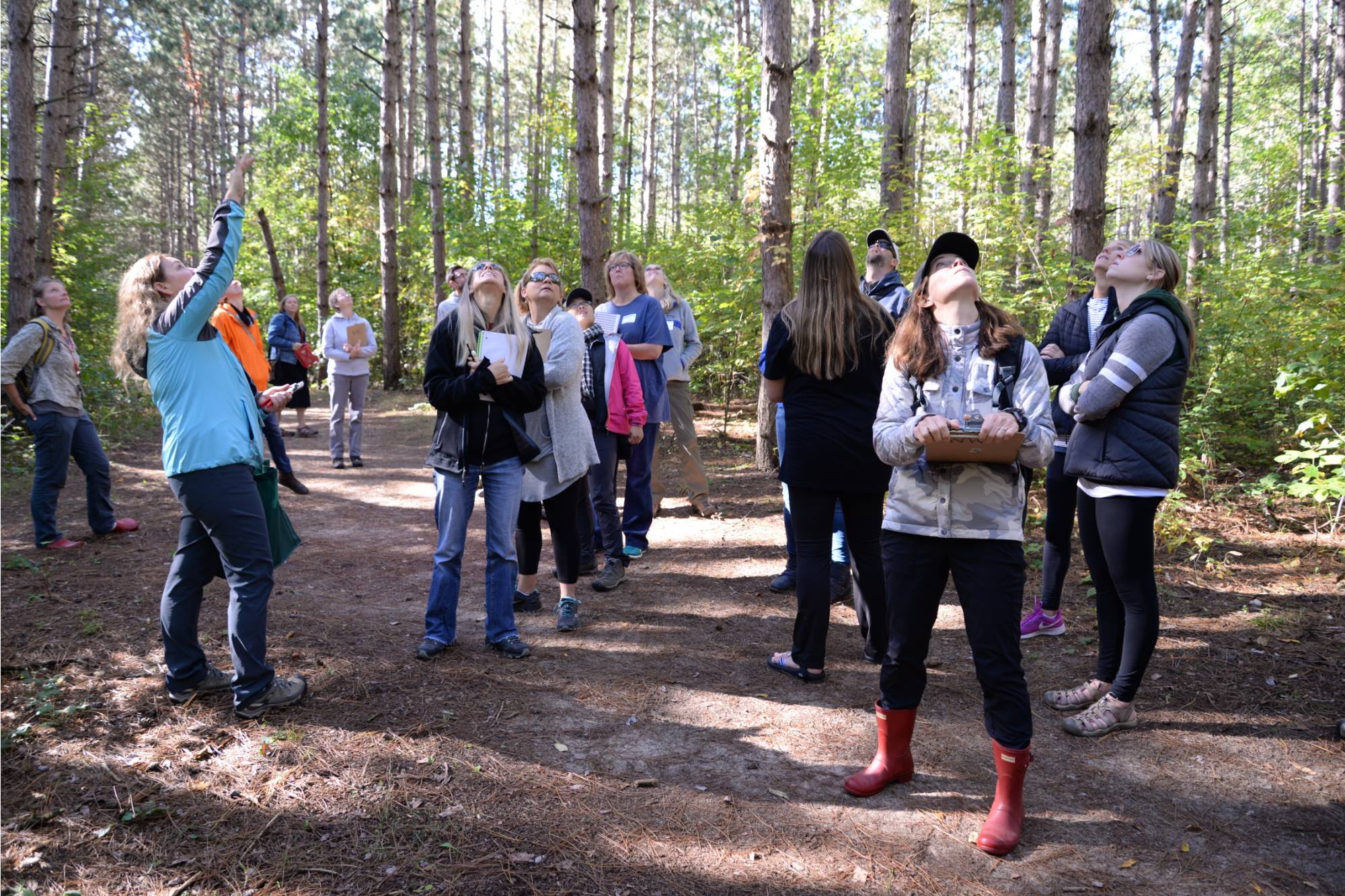
Learn about local place-based educational resources by attending Groundswell's year-round professional learning events for formal and informal educators. Teachers who attend Groundswell professional learning opportunities are eligible for reimbursement of substitute fees and can apply for project funding.
Local teachers and schools are eligible to apply for funding from Groundswell. Planning a project can help you lead students in quality, meaningful, place-based environmental stewardship education. Any grade or subject area can do a stewardship project, and Groundswell provides support along the way!
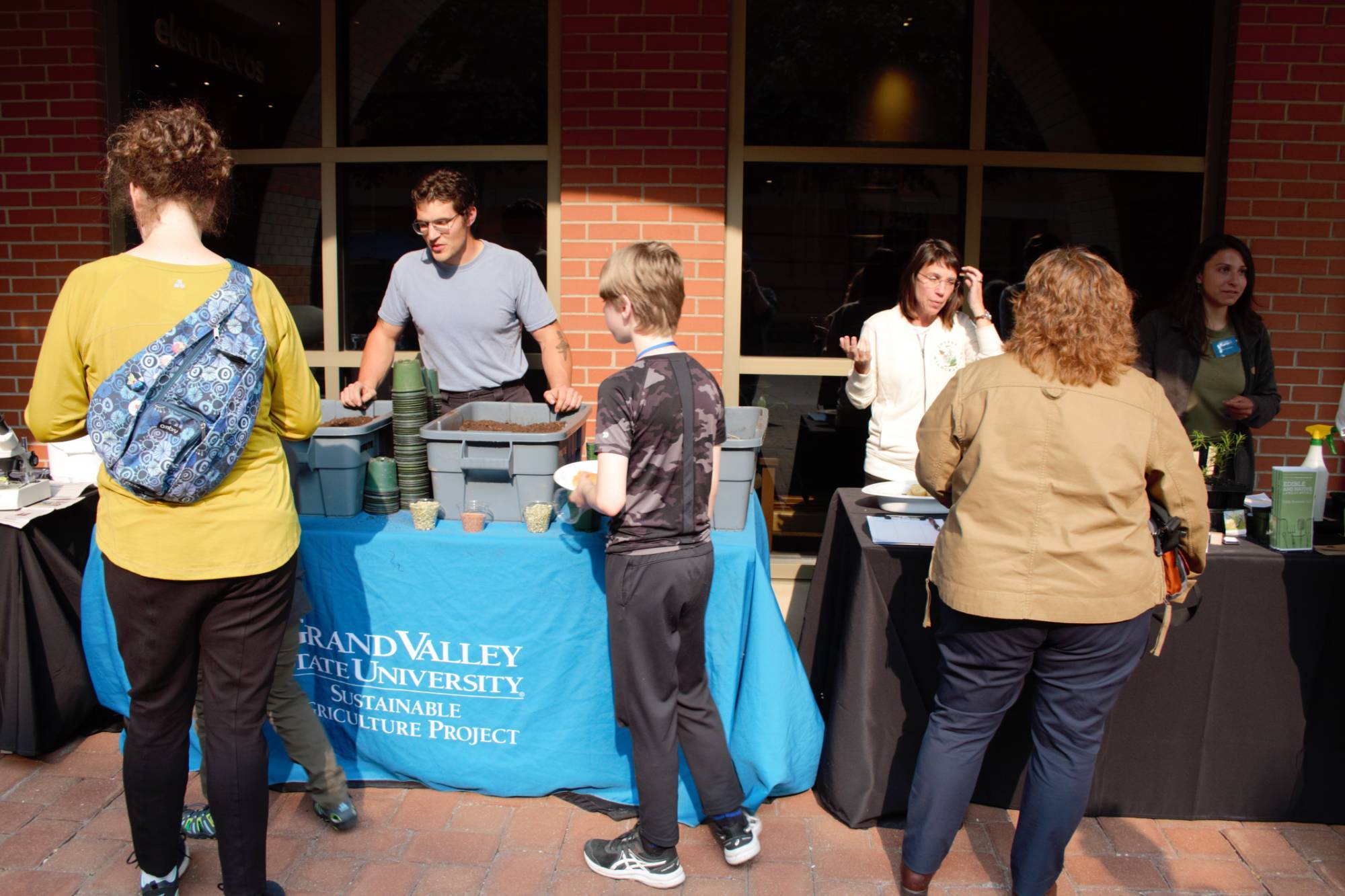
Connect with local community organizations that can provide technical support and guidance for your stewardship project.