

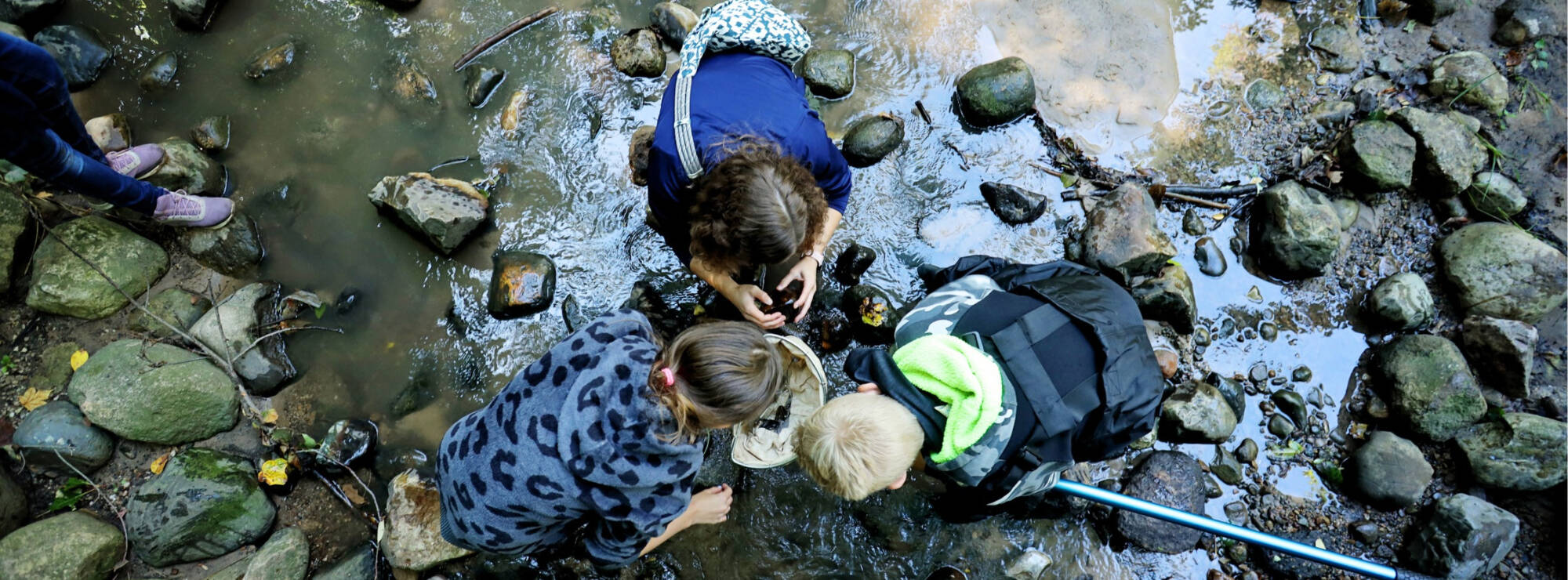
Place-Based Stewardship Education
Groundswell's mission is to support place-based education (PBE), and PBE is all about learning through your local community. As part of this, we want to help identify local resources to use as jumping-off points for engaging students in learning. These resources encompass multiple subject areas, including history, ecology, language arts, and more. We are constantly adding to this list, so please check back often. If you have a specific request, please don't hesitate to contact us.
Six Elements of Place-Based Stewardship Education
Developing a quality place-based education project requires a thoughtful approach. Place-based stewardship education (PBSE) uses the local community and environment as the basis for teaching and learning. There are six elements of a complete PBSE effort. In practice, learners may circle back or jump forward in this sequence, depending on their explorations.
Element 1: Scan the Community
Element 2: Choose an Issue
Element 3: Develop Partnerships
Element 4: Research Your Issue
Element 5: Complete an Action Project
Element 6: Share Results and Celebrate
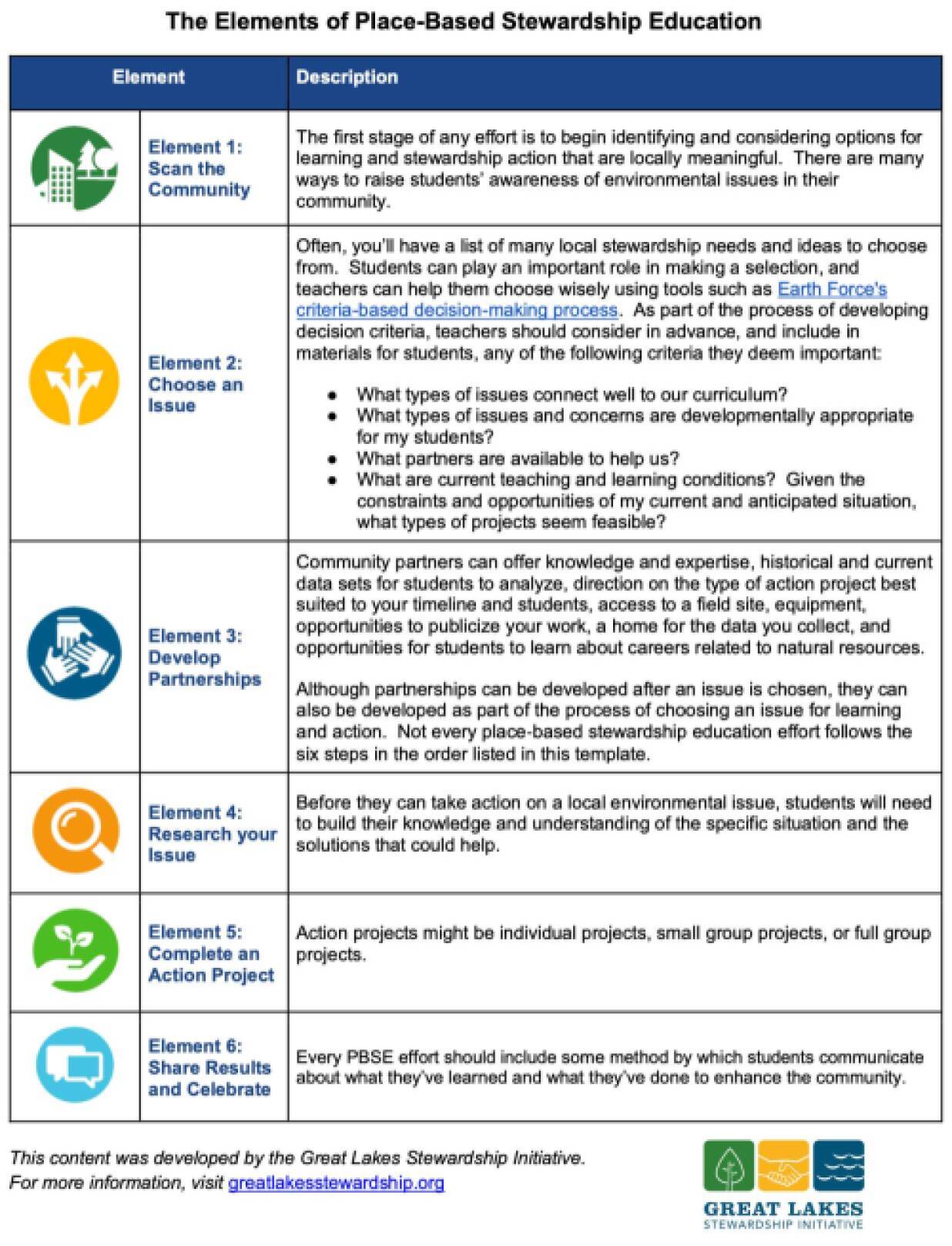
Download more information about the six elements
Guiding Principles of Place-Based Education
Principle 1: Situate environmental learning and stewardship in the places students live, grow, and play.
Principle 2: Equip students to understand how all humans, in various ways, affect and are affected by the natural environment, and that the community’s environmental resources, laws, beliefs, and perspectives influence and are influenced by broader physical and social systems.
Principle 3: Build your place-based stewardship education effort out of rigorous experiential learning, support it with appropriate teaching practices, and integrate it into your local educational system.
Principle 4: Cultivate collaborative, mutually beneficial school-community partnerships.
Principle 5: Explore local environmental issues over a period of weeks or months, with sufficient time for all parts of the inquiry cycle and relationship development, and offer opportunities to repeat the process over the years of schooling.
Principle 6: Deliver meaningful benefits to the local environment and the community through PBSE.
Principle 7: Cultivate student voice and involve students in democratic practices throughout the course of a PBSE effort.
Principle 8: Use deliberate processes to identify and consider multiple perspectives regarding a stewardship issue or project.
Principle 9: Incorporate opportunities for students to develop and clarify their personal values related to nature and community, and to develop the social competencies essential to stewardship.
Principle 10: Support and enable the visible, meaningful participation of students in the community’s public discourse.