Coping with Tragedy
Campus, regional, national and international tragedies can happen anywhere and anytime. We have experienced and coped with several in recent years, including sudden deaths, a global pandemic, mass violence, hate crimes, acts of terrorism, and natural disasters.
Because no two tragedies and their impacts are the same, the University Counseling Center (UCC) works to assess and provide support to the campus community that best fits each tragedy. Students can always take advantage of our urgent care appointments at the UCC, Monday-Friday to talk and seek support following a tragedy. Other services may be available and you can get more information by calling us at (616) 331-3266.
While there are individual differences in how people are impacted and cope with tragedies, we know there are some predictable normal reactions to these events and even some common strategies to help manage the impact and stress.
Common Reactions to Tragedy
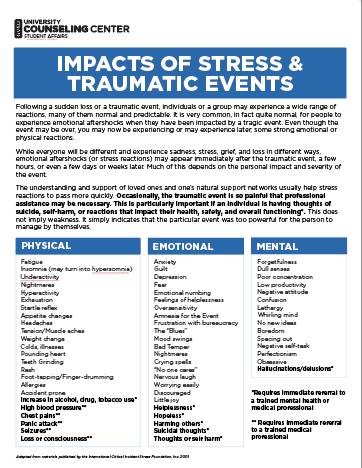
Everyone will react differently following a tragic event. Some may have very few or have several of the common reactions below. Normally these will diminish over time, but it is important to seek out professional help if they persist for more than a few weeks, worsen or start to get in the way of how daily functioning, or become more severe such as feeling suicidal, wanting to hurt yourself or others, or causing health issues.
|
Common Reactions |
||
|---|---|---|
|
Shock/denial Anxious/worry Poor memory Less motivation Sadness/depression Survivor's guilt Confusion |
Scared/fearful Headache/stomachache Disturbing images/memories Helpless/hopeless Withdrawal/isolating Poor concentration |
Changes in sleep/appetite Tired/fatigued Desire to take action/do something Avoiding things associated with event No impact/have any reaction at all |
Healthy Self-care Strategies
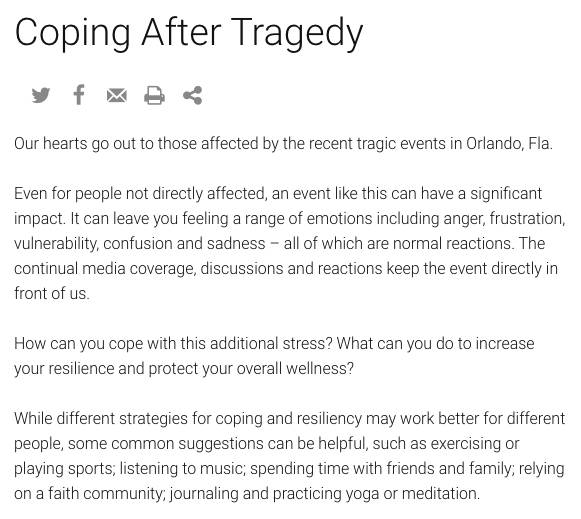
Many of us have experienced stressful and maybe even traumatic events in our lives and developed healthy coping strategies to get through difficult times. It is important to remember to use these coping skills and maybe try a few new ones. You will cope in your own way and at your own pace, so be patient with yourself and be understanding of someone else’s ways of healing.
|
Self-care Strategies |
|
|---|---|
|
Get rest and sleep Seek out support (UCC, friends, family) Avoid the use of caffeine, alcohol, or other substances Keep up with regular meals |
Keep your normal routine Stay active and participate in your normal exercise "Unplug" and keep yourself away from the news for a set amount of time |
For some, getting involved or finding some way to take action and make a difference can helpful. There are many stories out there of individuals who have done acts of services such as donated blood, volunteered with disaster relief groups, and got involved with awareness increasing efforts to help cope.
Resources