“Thrilling and terrifying”: Experts discuss AI’s rapid rise in health sciences
Published December 5, 2025 by Brian Vernellis
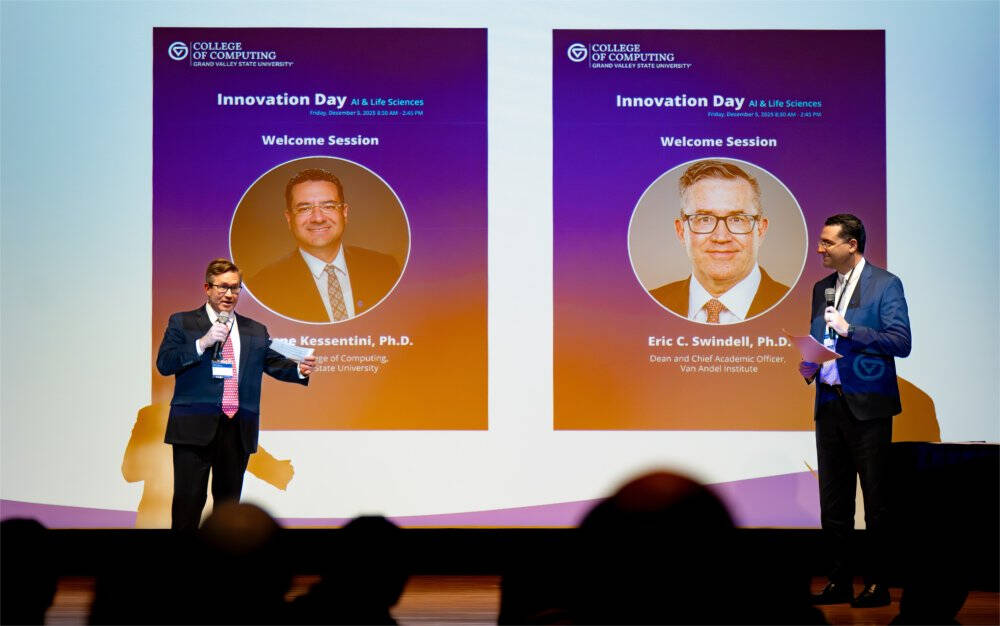
The College of Computing and the Van Andel Institute co-hosted the college’s recent Innovation Day, highlighting the convergence of artificial intelligence with life sciences and biomedical research, on December 5 at the DeVos Center on the Pew Grand Rapids Campus.
Marouane Kessentini, dean of the College of Computing, and Eric Swindell, dean and chief academic officer at the Van Andel Institute, welcomed guests to the event.
“Grand Valley is very intentional in expanding success in research and innovation at the intersection of AI and life sciences,” Kessentini said. “We are here to look to the future and bring together scientists and those working on innovation.
“We know that AI is changing everything, every discipline, and, of course, life sciences is one of the areas that basically continue to evolve.”
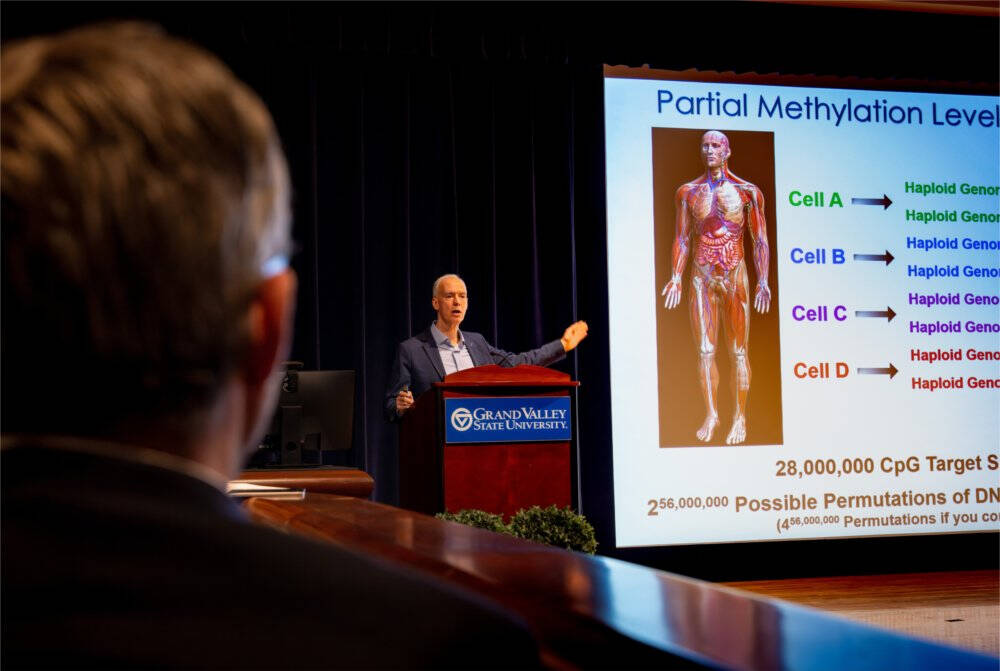
Peter Laird, professor and the Peter and Emajean Cook endowed chair in epigenetics at the Van Andel Institute, has also seen AI’s power firsthand. Laird and postdoctoral fellow Nathan Spix presented their research and how AI can manage the staggering amount of DNA data across the human body’s 40 trillion cells.
“You can understand now with 40 trillion cells that the amount of data that we'll be able to generate with AI going forward is just mind-boggling,” Laird said.
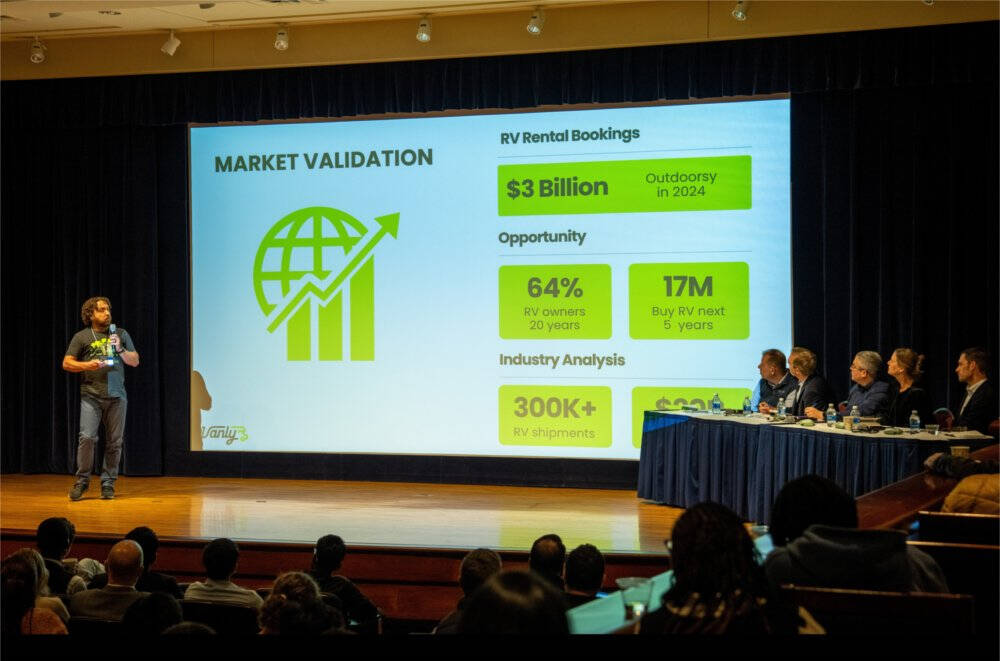
The event also featured the Grand Rapids Deep Tech Pitch Competition, giving entrepreneurs along with GVSU students and faculty to pitch their startup projects.
Matt Larson, affiliate faculty of instruction at the DeVos Center for Entrepreneurship & Innovation, won the top prize of $10,000 for his startup, Vanly, which helps recreational vehicle owners find and book safe overnight parking near amenities.
The rapid application of artificial intelligence in health and life sciences has been transformative and jarring, said Dr. Caleb Bupp, division chief of medical genetics and genomics at Corewell Health Helen DeVos Children's Hospital.
“In many ways it's been like riding a wild mustang after jolting it with a stun gun,” Bupp said. “It is thrilling at times, but also terrifying.”
Bupp, who participated in a five-person panel discussion on health AI, said the technology is accelerating change in his research and the field.
“We are at a fascinating inflection point in medicine, where from a genetics and genomic medicine standpoint, we used to be slow and reactive,” said Bupp.
“Now, we are fast and proactive, and it has been heavily driven by technology, allowing more diagnoses to be made through data.”