
Grand Valley State University has taken a transformative leap in tech education with the launch of its new College of Computing. Emerging from a restructuring of the Padnos College of Engineering and Computing, the College of Computing aims to meet the rapidly growing demands of the digital age. Under the leadership of Dean Marouane Kessentini, it offers dynamic programs in fields like cybersecurity, data science, and health informatics, supporting hands-on learning and industry partnerships. The new college is set to cultivate the next generation of tech innovators.
To achieve this, the College of Computing has devised a strategic plan with three focus areas;
- Enhancing Student Success from Enrollment to Employment and Beyond
- Inspire Relevant Research, Impactful Innovation, and Mutually Beneficial Partnerships with the Community
- Accelerate and Expand the Success of Faculty and Staff.
As part of PCEC, the College of Computing shared a strong foundation rooted in offering professional, practice-oriented programs. These programs emphasized integrated experiential learning through internships, graduate practicums, project-based learning, and ABET accreditation. The applied R&D centers within College of Computing were designed to leverage close partnerships with community stakeholders, providing essential support to local companies while offering students valuable experiential learning opportunities, financial support, and professional development for faculty.
Shortly after its founding, the new college of 47 permanent full time faculty in 2004-2005 began growing. After a decade, the college had 69 faculty in 2014-2015. Additional lines in response to enrollments led to 95 faculty for the 2022-2023 academic year. Currently the College of Computing has 54 faculty and is adding 8 open rank positions for the 2025-2026 academic year. The timeline for major developmental elements of PCEC and the College of Computing, our programs, and units include:
Our History Through the Years
Prior to 1988 Science and Mathematics Division included:
Mathematics and Computer Science Department
1983 : Computer Science Major introduced
Systems Analysis emphasis
Information Systems emphasis
1984 : Computer Science Major adds Secondary or K-12 Certification
1988 : MS in Computer Information Systems introduced
1992 : Computer Science & Information Systems Department is established and separated from the Mathematics Department
Bruce Klein is named Chair
Upsilon Pi Epsilon chapter established
1998 : Mandatory Internship added to computing majors
1999 : Introduction of BSE Computer Emphasis (accredited 2010)
2001 : Paul Leidig is named Chair of Computer Science and Information Systems
2003 : Academic and Student Affairs Division undergoes reorganization process
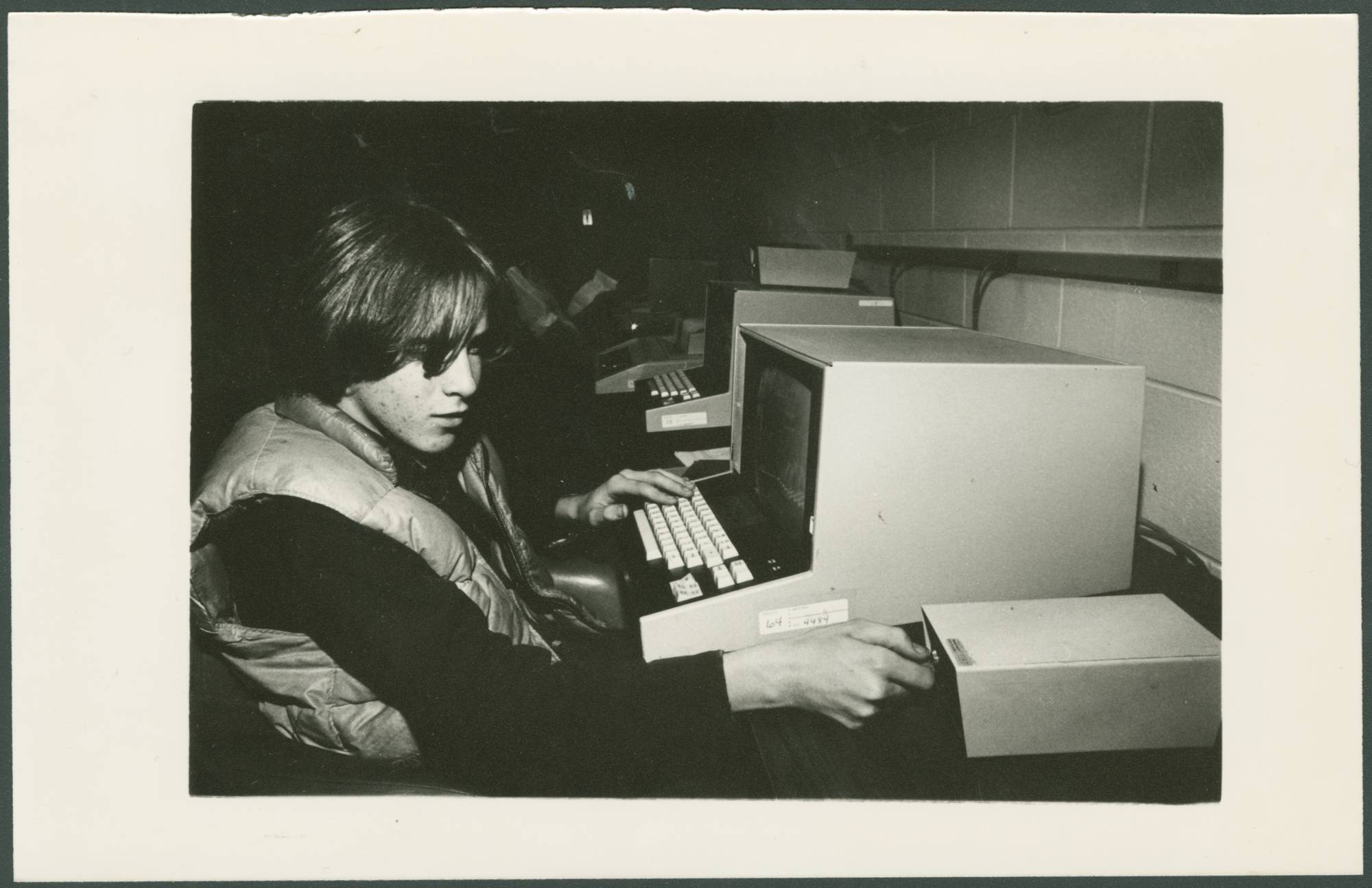

2004: Seymour and Esther Padnos College of Engineering and Computing is established and Paul Plotkowski is named Dean.
Academic units: School of Computing & School of Engineering
Programs
3 undergraduate majors (CS, EGR, IS) serving 1,107 declared majors, 120 degrees granted.
2 grad degrees (CIS, EGR) serving 137 declared students, 43 degrees granted.
- Articulated BSE/MSE program introduced (later renamed combined degree program)
2006 : MS in Health Informatics & Bioinformatics introduced (under original title: Medical & Bioinformatics)
2009 : ABET Accreditation of BS (and BA) in Computer Science (BA later discontinued)
ABET Accreditation of BS (and BA) in Information Systems (BA later discontinued)
2013 : PSM Program organization moved from CLAS to PCEC
2014 : Industry Sponsored Graduate Fellow Program established
School of CIS first named #1 Best College for the Money in the US by College Factual (also ranked #1 the following 2 years)
2017 : Data Science MS introduced
2018 :
Information Technology Major Introduced
Applied Computing Institute (ACI) established
2019:
BS in Cybersecurity Introduced
MS in Cybersecurity Introduced
GVSU became MI coordinator for Code.org


2021 : GVSU – HBCU / HSI Consortium launched
2022: 11 undergraduate majors in PCEC (CS, Cyb, IS, IT, Bio-EGR, CE, EE, IntEGR, ME, OSH, Prod Design & Mfg. EGR) serving 1,831 declared majors, 288 degrees granted.
5 graduate degrees (ACS, Cyb, DSA, HIB, EGR) serving 376 declared students, 106 degrees granted.
Several minor programs and a wide variety of digital badge programs.
2023: BAS Degrees launched - Technology Project Management & Web Design & Development
Institute for Cybersecurity Education and Research (ICER) launched.
2024: Padnos College of Engineering and College of Computing undergo an academic reorganization. The new College of Computing is created composed of the Professional Science Master’s program, 5 undergraduate degrees, 4 graduate degrees, and multiple certificates and digital badges.
- Marouane Kessentini was named Dean of the College of Computing. Dean Kessentini is one of the youngest Deans in the nation.
- 5 Undergraduate Programs - Computer Science, Cybersecurity, Data Science and Analytics, Information Systems, Information Technology
- 4 Graduate programs - Applied Computer Science, Cybersecurity, Data Science and Analytics, & Health Informatics and Bioinformatics.
- 8 Combined B.S./M.S. programs.
- College of Computing in Fall 2024 semester has 922 undergraduate students, 355 graduate students, and is 23% of the student population identifies as female.