Featured Building: DeVos Center for Interprofessional Health
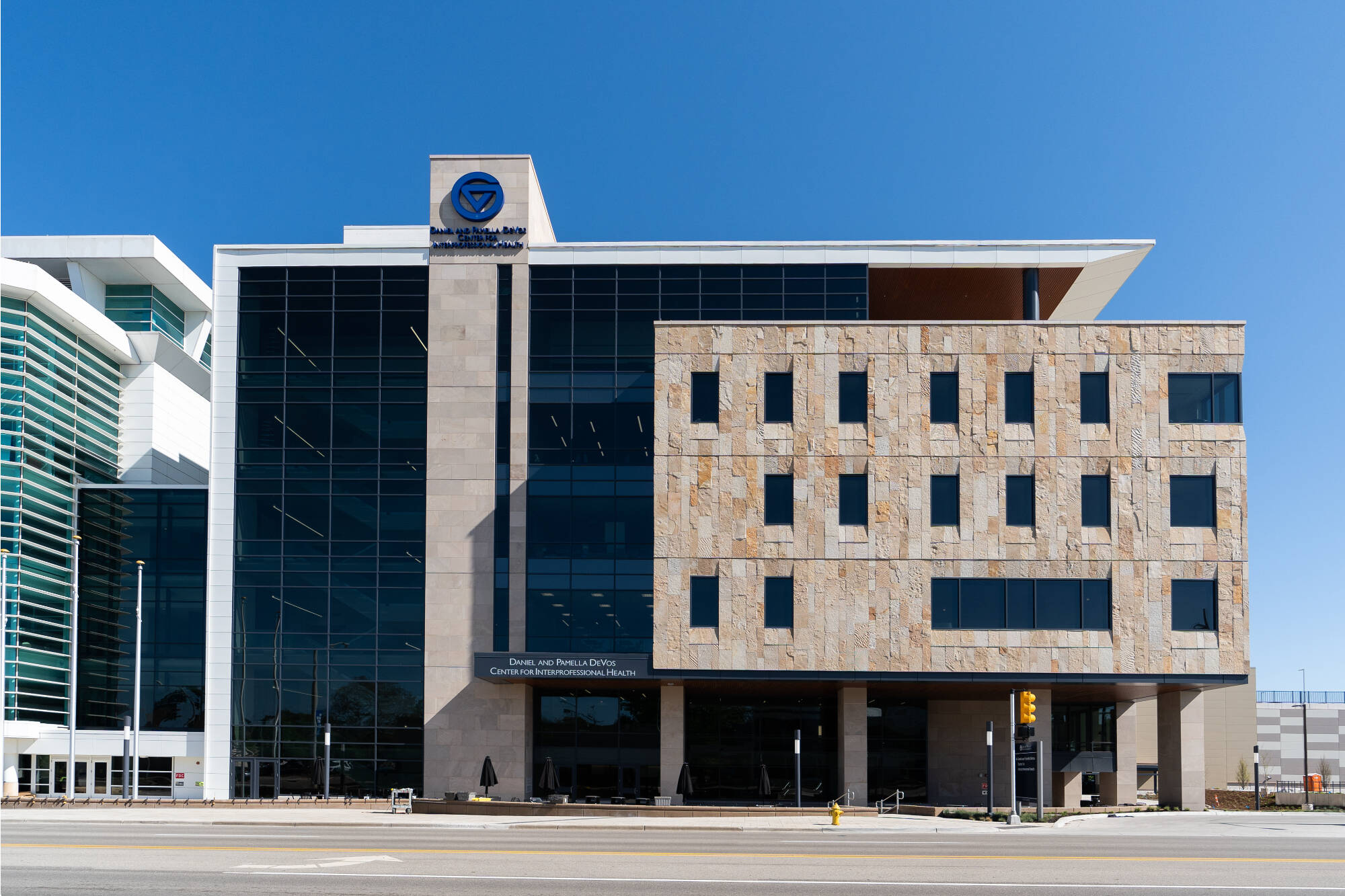
The Daniel and Pamella DeVos Center for Interprofessional Health (DCIH) is a five-story, 166,000 sq. ft. health center on GVSU's Health Campus in downtown Grand Rapids. Opened in May 2021, DCIH is the third GVSU building on Grand Rapids' Medical Mile, joining the Cook-DeVos Center for Health Sciences and Raleigh J. Finkelstein Hall. DCIH is home to Kirkhof College of Nursing, College of Health Professions, and School of Computing. It features more than 400 works of art, selected with the intention to enhance and support interprofessional team environments and encourage cross-disciplinary innovation and collaboration.
The artwork in this building supports the Health Sciences and School of Computing programs by representing and reinforcing their core values: those of equity, empathy, life-long learning, collaboration and innovation, and the interconnectedness of the health sciences fields.
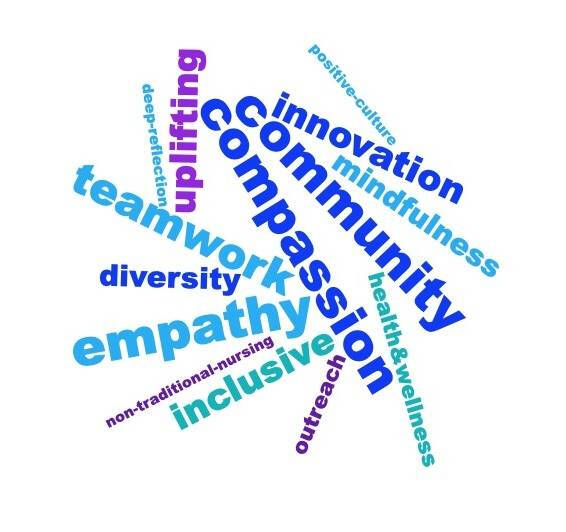
The GVSU Art Museum formed advisory committees to discuss the type of artwork that would relate to and support the academic programs in DCIH. The committees included representatives from Kirkhof College of Nursing, College of Health Professions, and School of Computing. Additionally, representatives from the Office of the President, Office of the Provost, Dean of University Libraries, and Facilities Planning participated. Through discovery meetings and discussions, committee members identified core themes and concepts desirable in the artwork in DCIH. Those themes and concepts are collected in the word cloud pictured here. This word cloud became a touchstone in the process of selecting art, ensuring that the works of art in DCIH uphold these core values.
Additional special support was provided by sub-committees; one comprised of the GVSU Art Museum staff and another of the Institutional Advancement staff. This work led two to significant works of art being acquired by the GVSU Art Museum team; Dale Chihuly's Laker Blue and Opaline Persian Chandelier, and Jo Hormuth's The Big Picture (Sestina), both on level one of DCIH inside the massive two-story study commons.
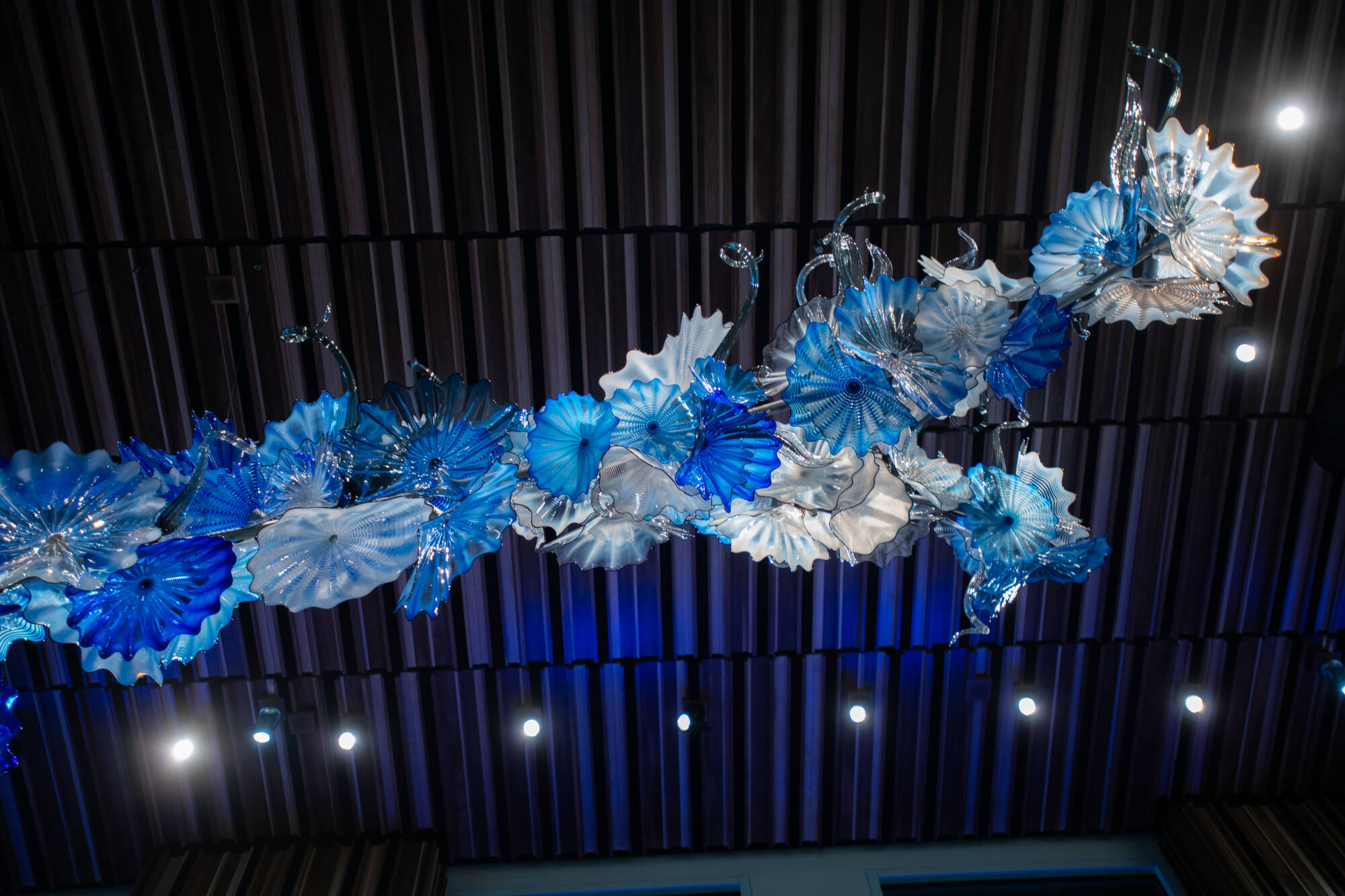
Dale Chihuly, Laker Blue and Opaline Persian Chandelier, blown glass, 2020, 2021.36.1.
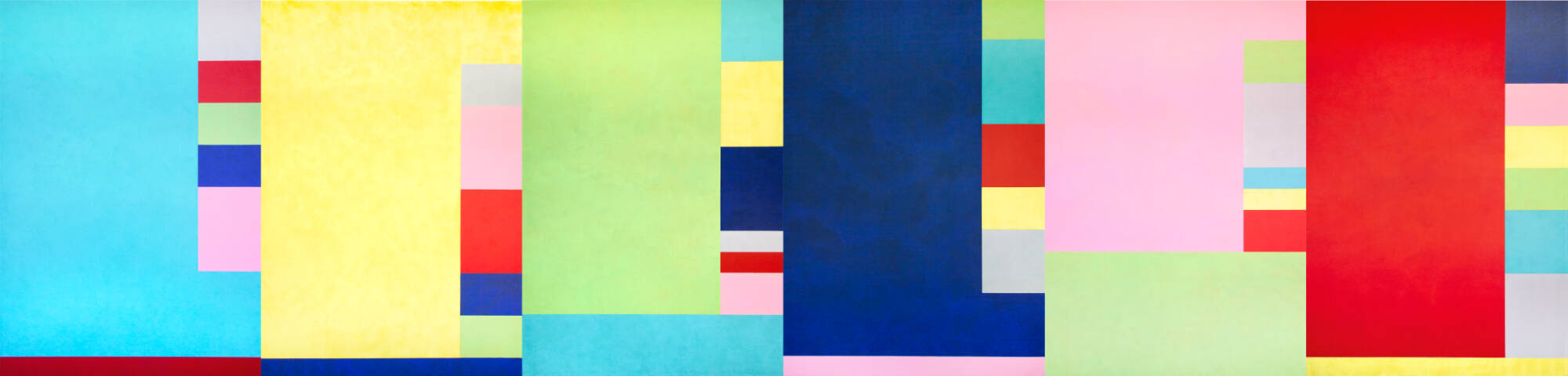
Jo Hormuth, The Big Picture (Sestina), pigments ground in acrylic on canvas, 2021, 2021.35.1a-f.
Explore the Artwork in DCIH
First Floor
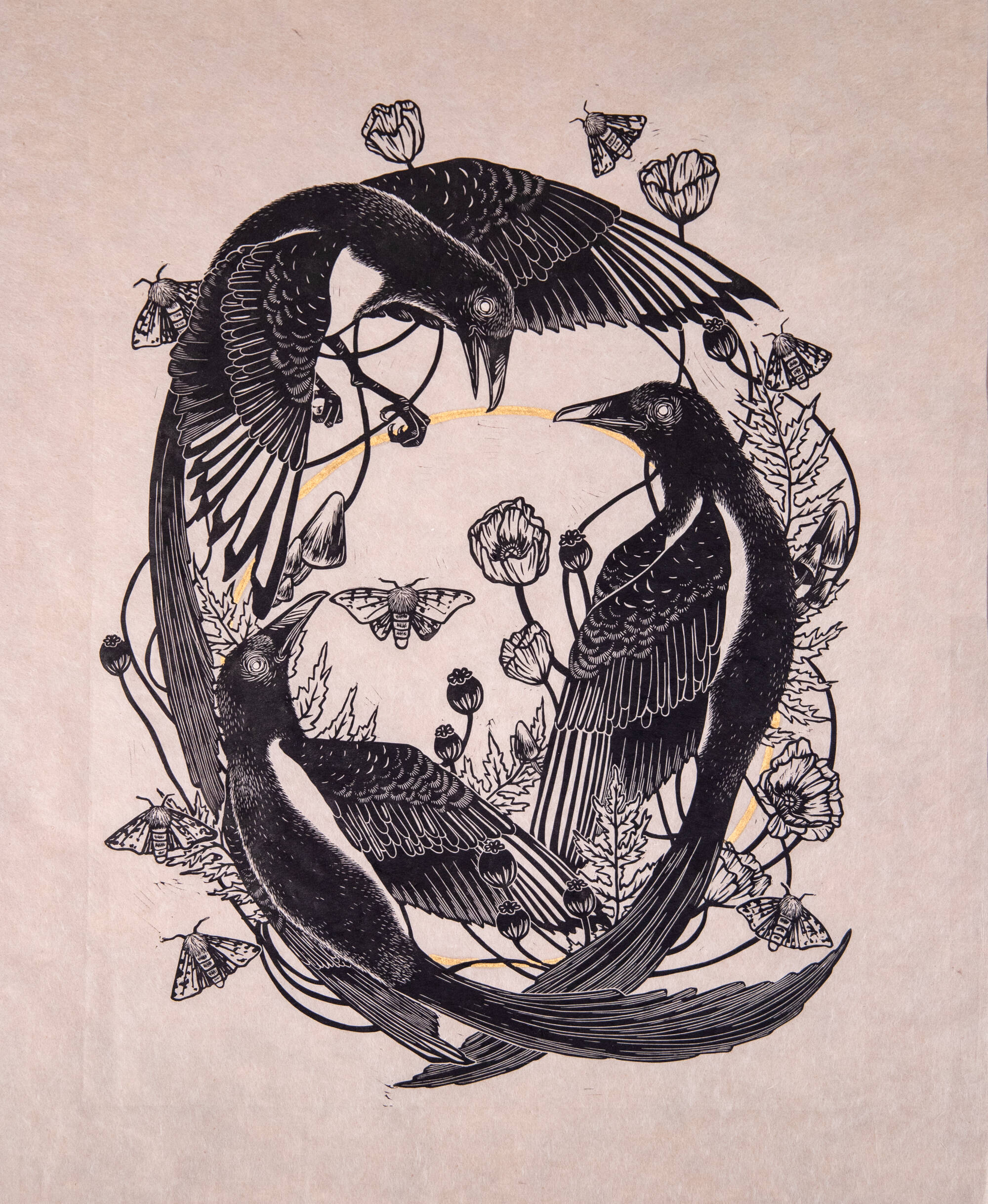
El Ronan, Birds, print, 2019, 2019.45.1.
On level one of DCIH you will find seven linocuts depicting circling magpies, created by alum, El Ronan. On her artistic process Ronan states, “...the process of making is exploratory and devotional, with the end product becoming a relic of that search. My aim is that this relic facilitates for the viewer a reflection of the mystery that results from the pieces of our world we are unable to know. As such, I find it unimportant that they see exactly what I see. What I find important is creating art in which the viewer sees something.”
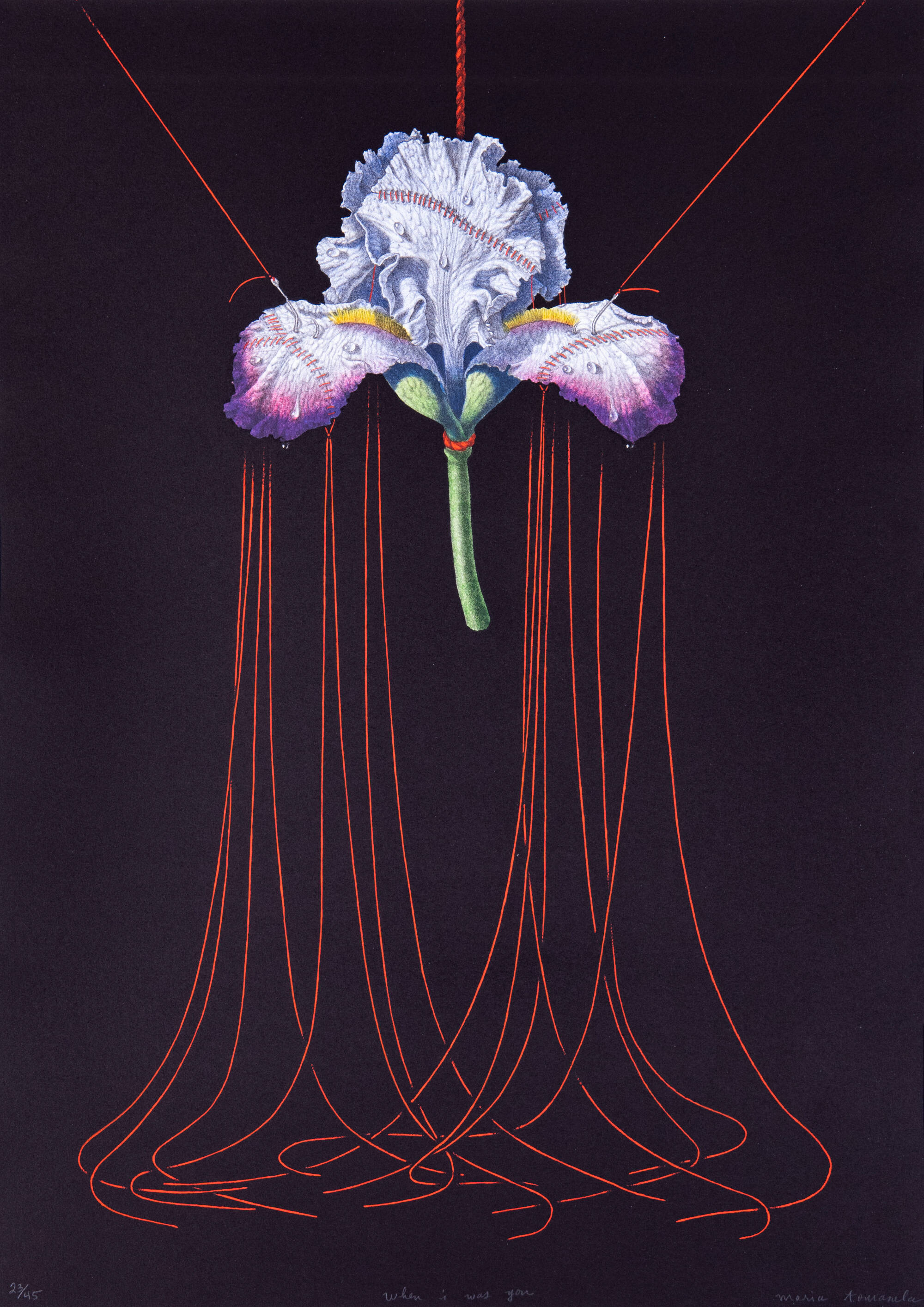
Maria Tomasula, When I Was You, 6-color lithograph, 2015, 2019.20.1.
On level one, just outside the large meeting and gathering space is a work of art titled, "When I Was You" by Maria Tomasula. This piece depicts an iris stitched together and suspended by red thread that reflects the beautiful, yet fragile nature of both our physical and mental health.
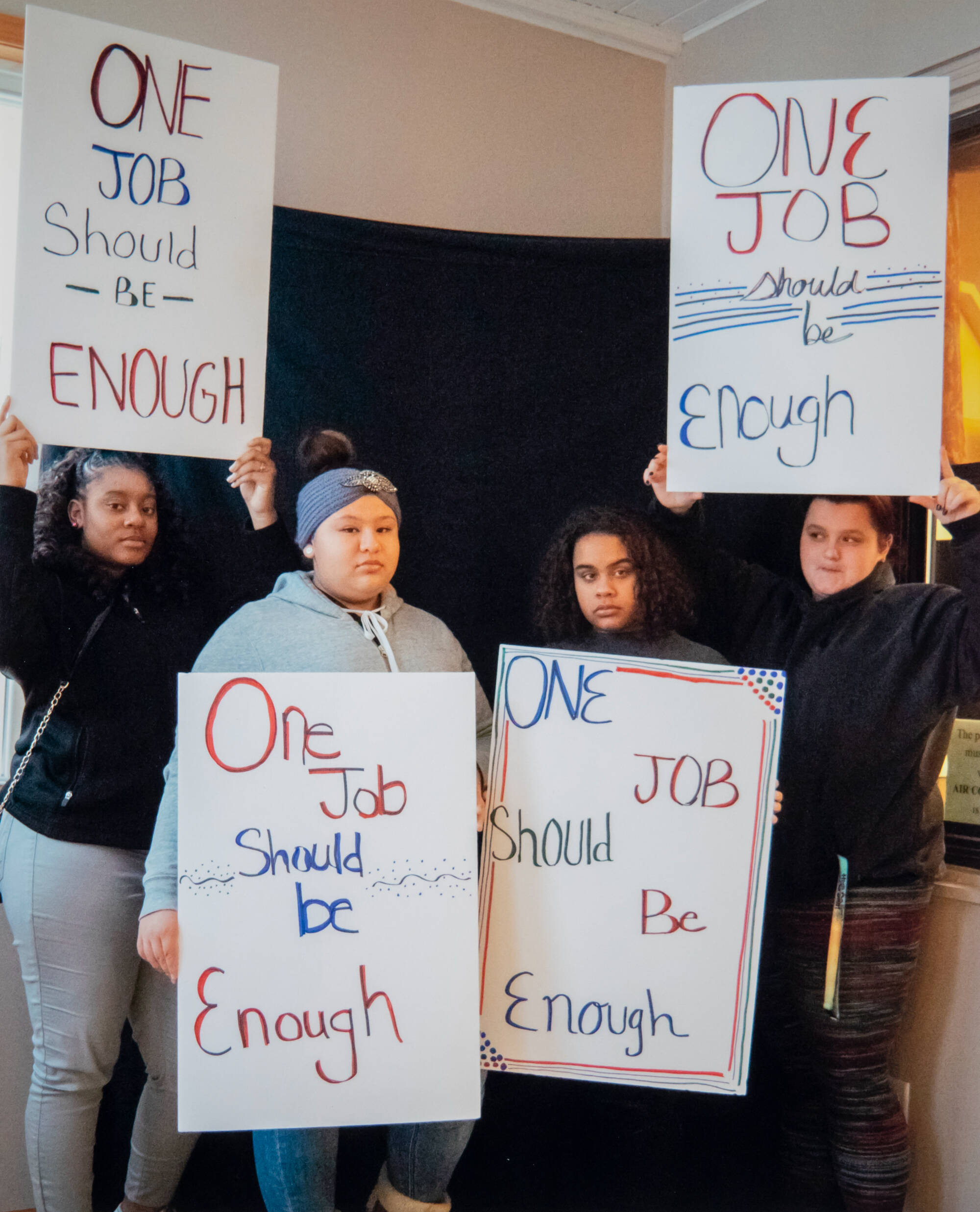
Kate Malburg, One Job Should Be Enough, digital photograph, 2018, 2019.44.4.
Also on display are GVSU alum Kate Malburg's collaborative photographic portraits of teenagers from Muskegon, MI. These images were first exhibited in a show organized by nonprofit Community enCompass' Youth Empowerment Project (YEP) after Malburg's internship there. The photographs are both complex and straight-forward. They spark questions of social criticism, teen homelessness, racism, and mental health. For Malburg, the main goal of her internship project was to give local teens a voice and a platform to express their concerns.
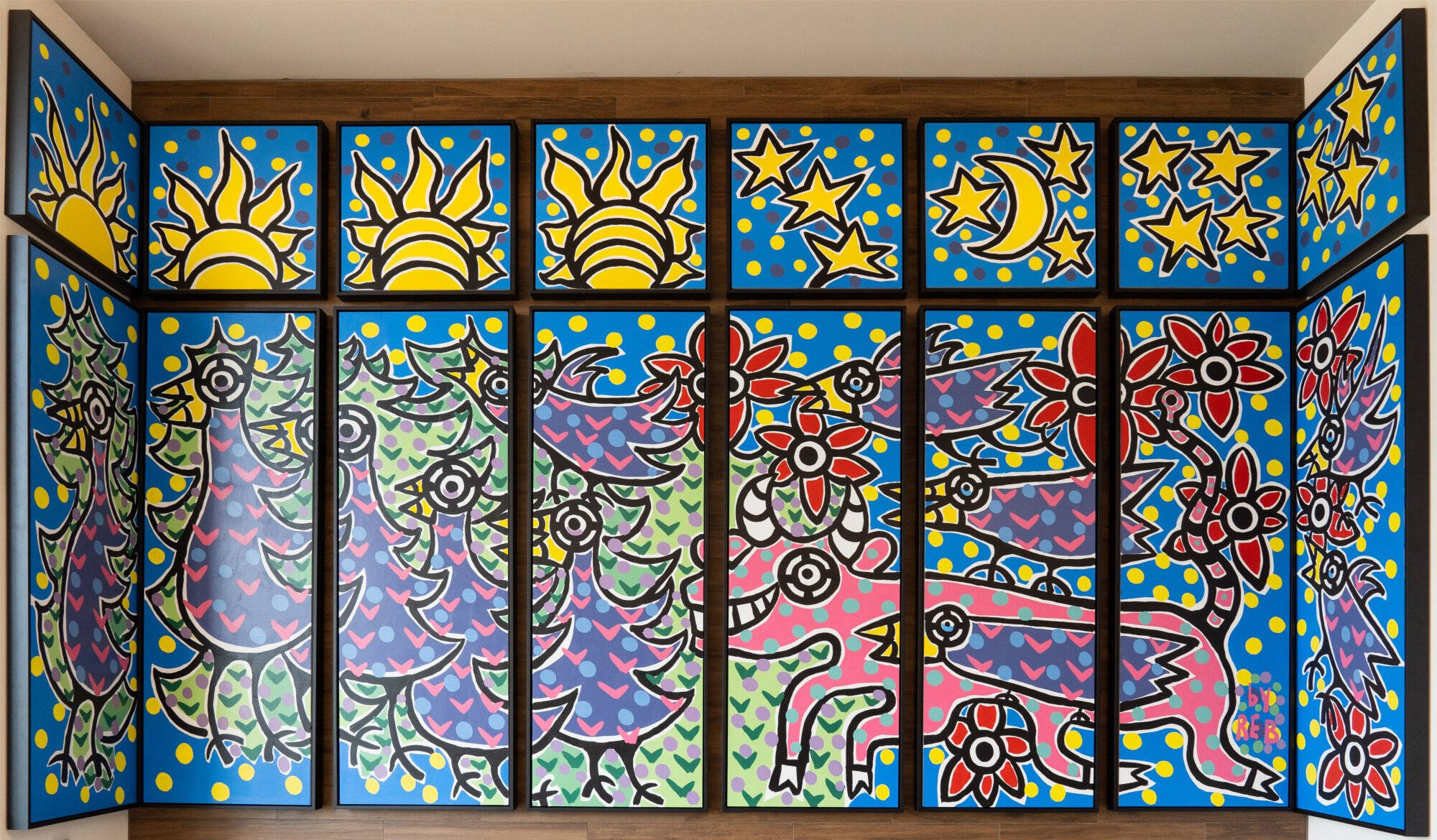
Reb Roberts, This Is Where It's At, acrylic on board, 2021, 2021.25.1a-p.
Installed on the landing of level one stairwell is the mural, "This is Where It's At." This painting was created specifically for GVSU by local Grand Rapids artist, Reb Roberts. Known for his humor and whimsical style Roberts states, "I created this piece so that people have a meeting place to reference when they are getting together in the building. When they arrive, they can say, ‘So this is where it’s at.'” From large murals on the sides of buildings, to painted electrical boxes, Roberts is known for spreading joy throughout the Grand Rapids community.
Second Floor
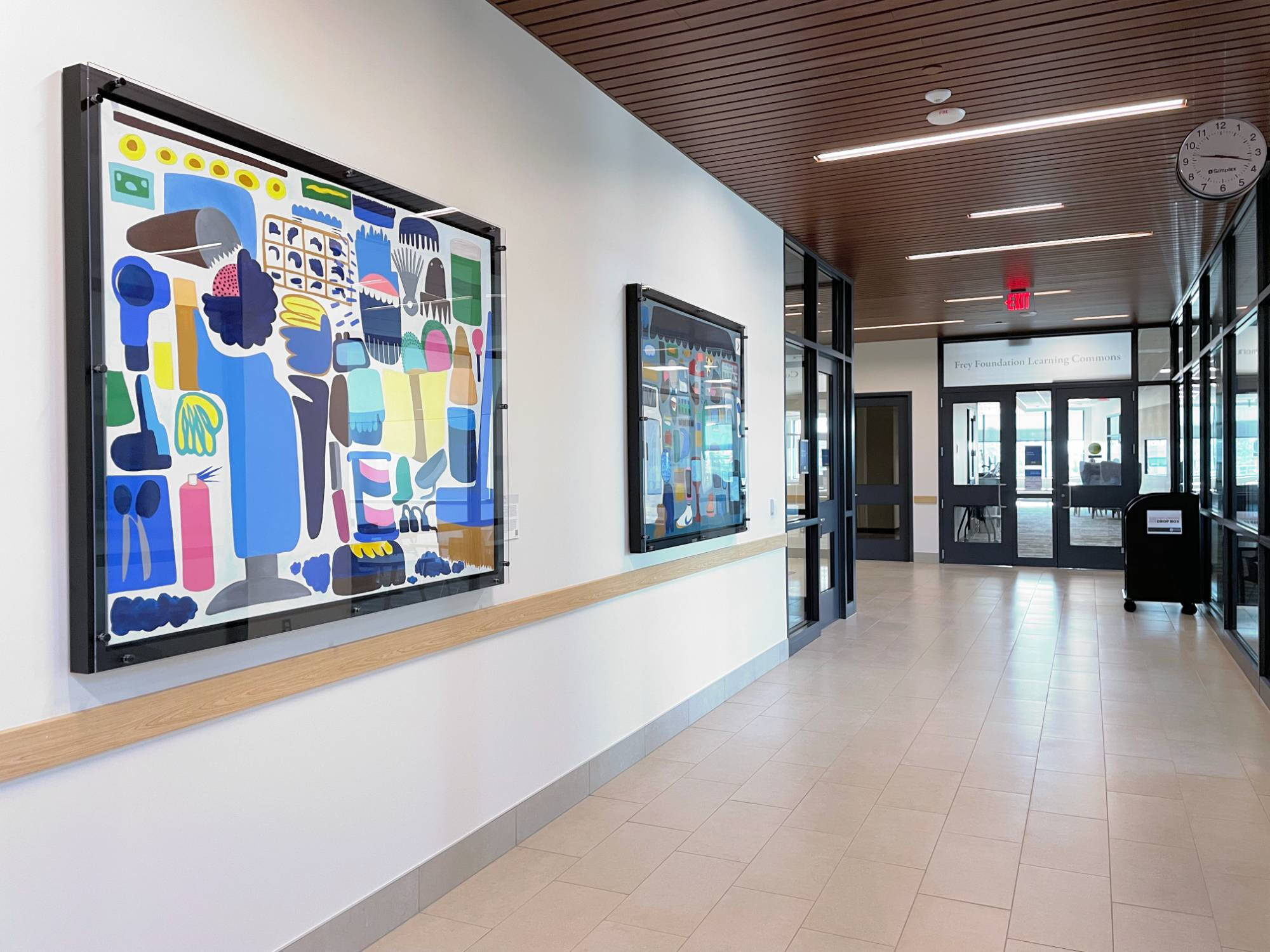
Rosie Lee, Barbershop Talk, acrylic on canvas, 2019, 2021.11.4.
Just outside the Frey Foundation Learning Commons on level two are paintings created by artist Marcello Pope - pseudonym Rosie Lee. These paintings, titled "Barbershop Talk" and "Corner Store" highlight the artists' personal and shared history of African American culture. Rosie Lee states, “My goal of this series is to focus on predominantly black neighborhoods during the Great Migration as well as those affected by redlining. I paint for the same reason that I write: to engage with current discourse concerning black aesthetics. The black aesthetic I wish to capture is filled with color and layered with complexities that connect to history as well as promote promise for future generations. Ultimately, I want the work to be a source of pride and a reminder of the journey black people had to endure to call America home.”
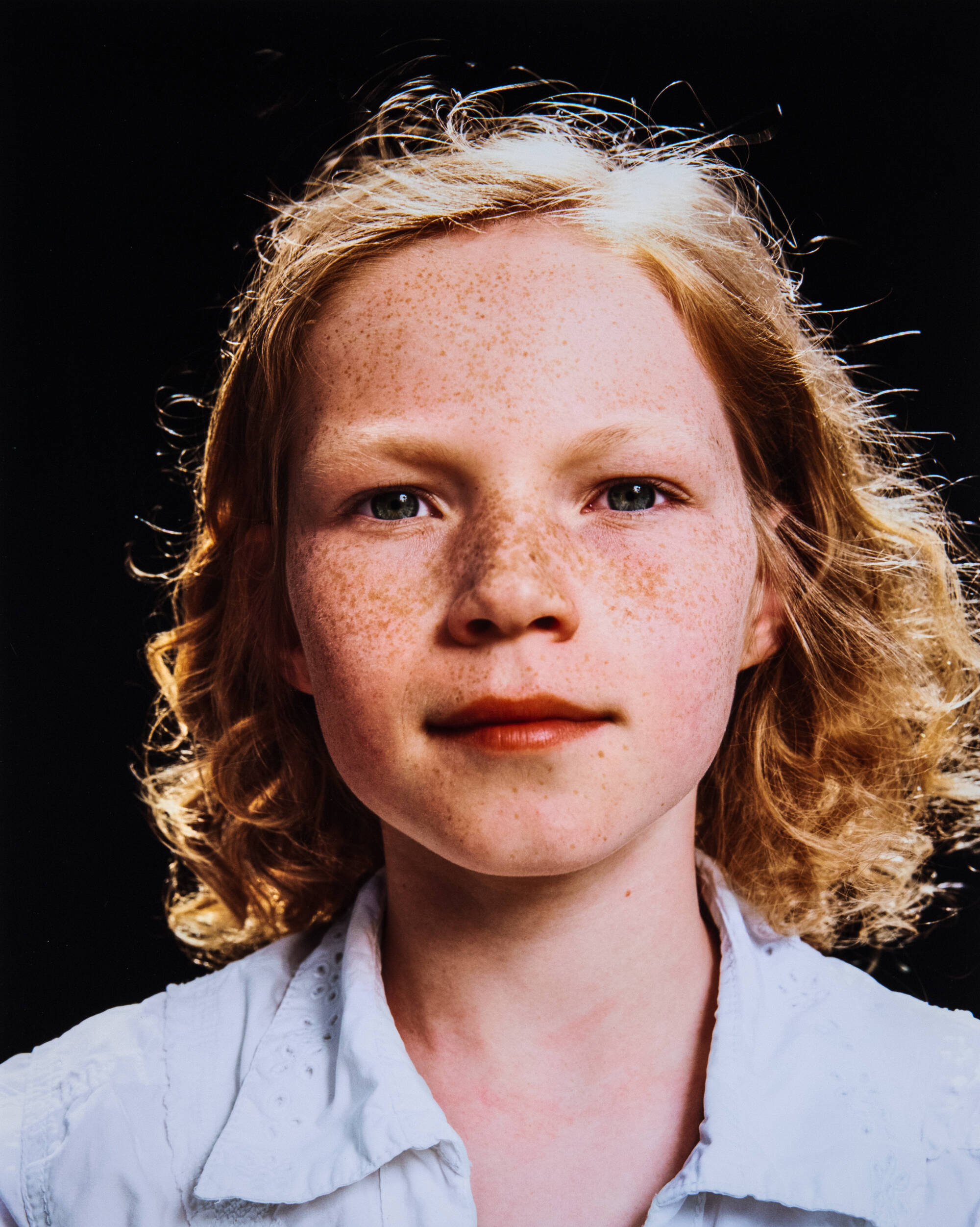
Sarah Wong, Authentic Self, photograph, 2010, 2019.22.1.
Internationally acclaimed photographer Sarah Wong, has been part of the GVSU Art Museum collection since 2004. From 2003 to 2018, Wong followed and photographed the lives of cross-gendered children living in the Netherlands. Originally published in the Dutch daily newspaper, “De Volkskrant (“The People’s Paper”),” Wong created the series of photographs, which later became a published book titled, “Inside Out: Portraits of Cross Gender Children,” to bring awareness and inform people about this vulnerable population.
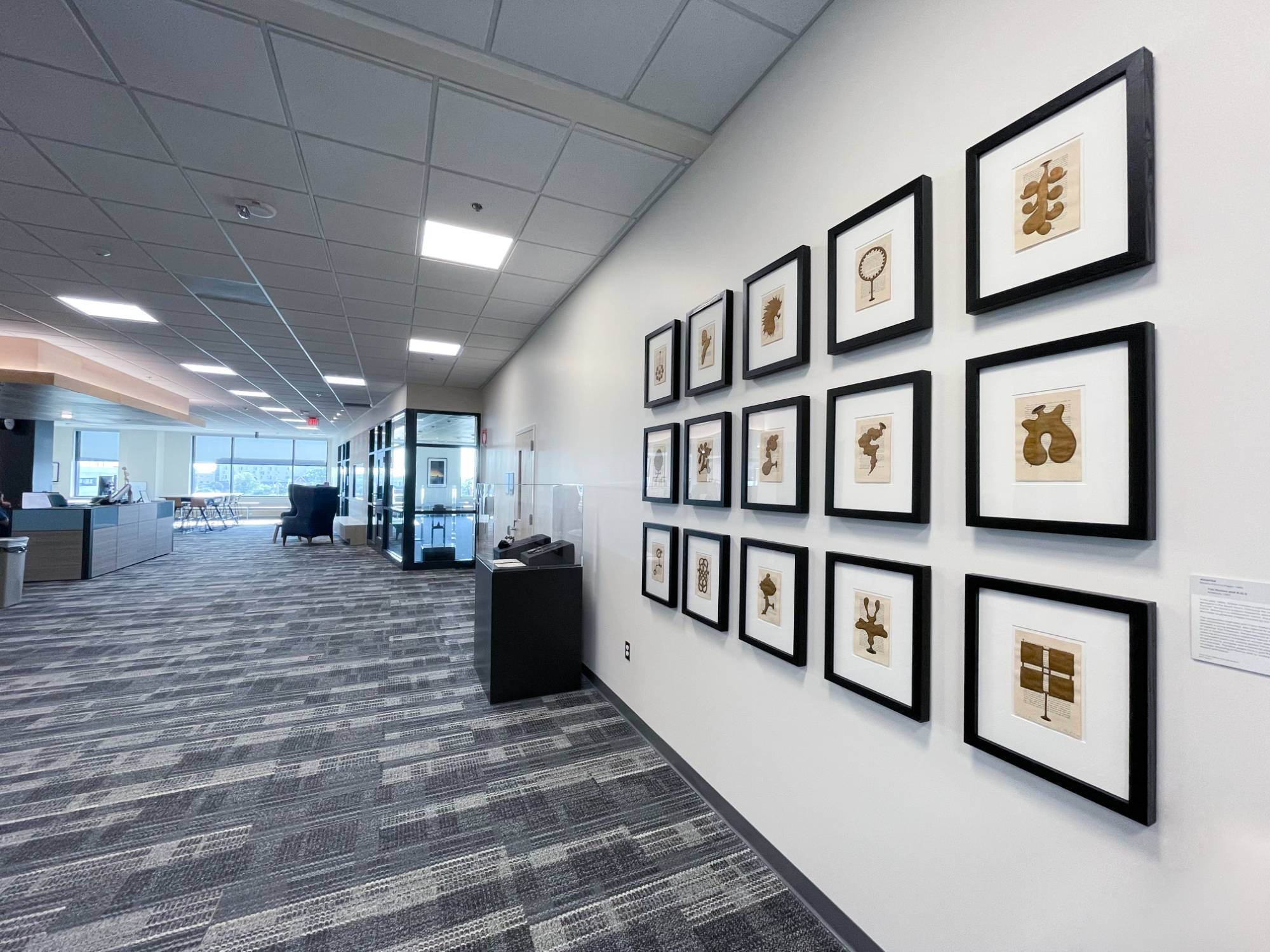
Tim Rollins and K.O.S., Amerika, metallic paint on paper, 1993, 2017.52.2a-o.
Within the Frey Foundation Learning Commons, a manifold of images created by Tim Rollins in collaboration with Kids of Survival (KOS) titled "Amerika" is on display. KOS refers to the New York City after school arts program lead by Rollins in the 1990s. KOS focused on literacy, accessibility, and social justice through creative practices.
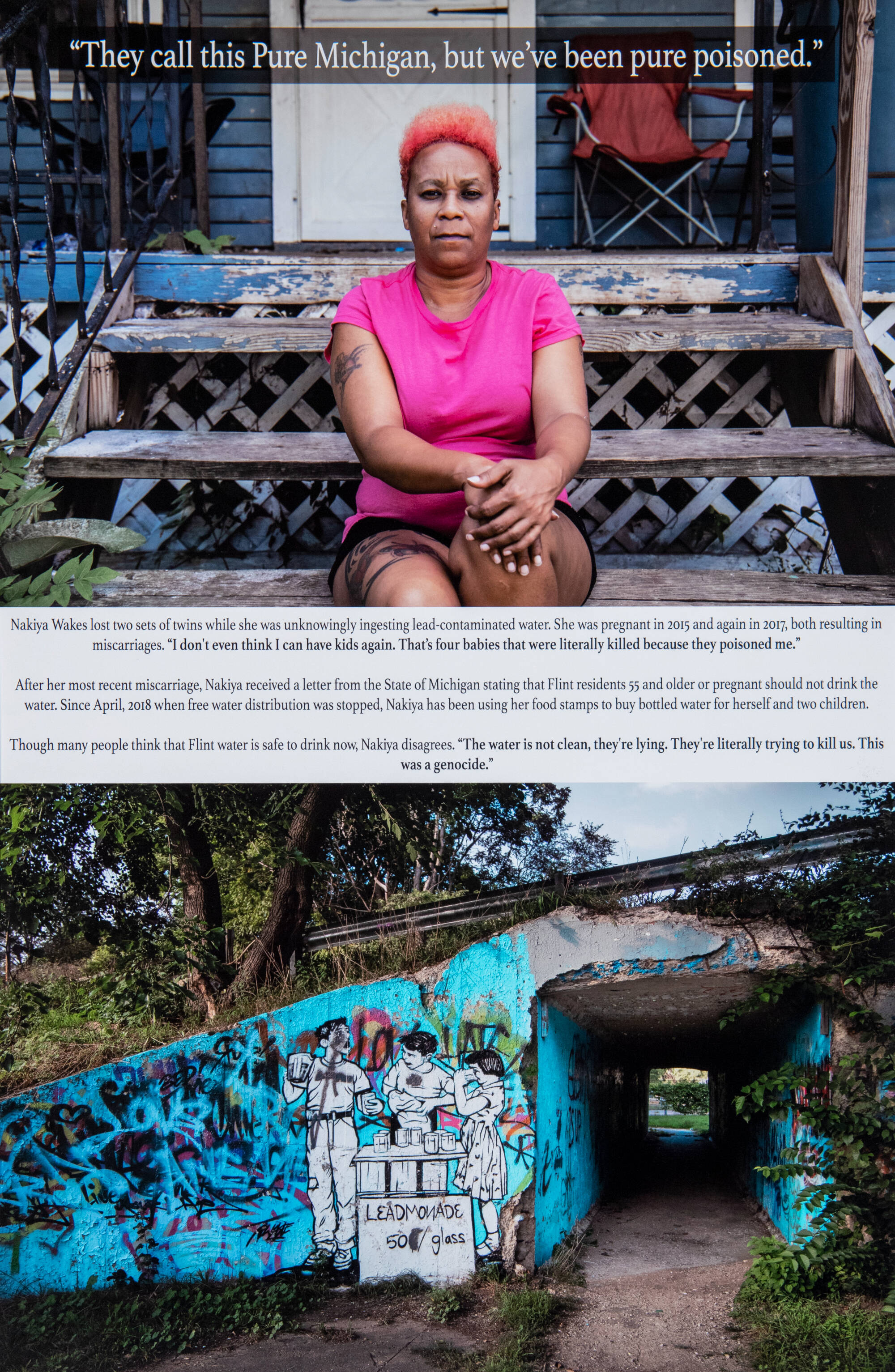
Valerie Wojo, 1,679 Days...and Counting: They Call This Pure Michigan, But We've Been Pure Poisoned, digital photograph, 2018, 2018.90.1.
In the Frey Foundation Reading Room you will see photographs from the series "1,679 Days... and Counting," by Valerie Wojo, a 2019 alum. Wojo produced this documentary series for her senior thesis in Photography, part of GVSU's Visual and Media Arts program. Her series shares the untold stories of six Flint, MI residents and their struggles as a result of the Flint Water Crisis.
Third Floor
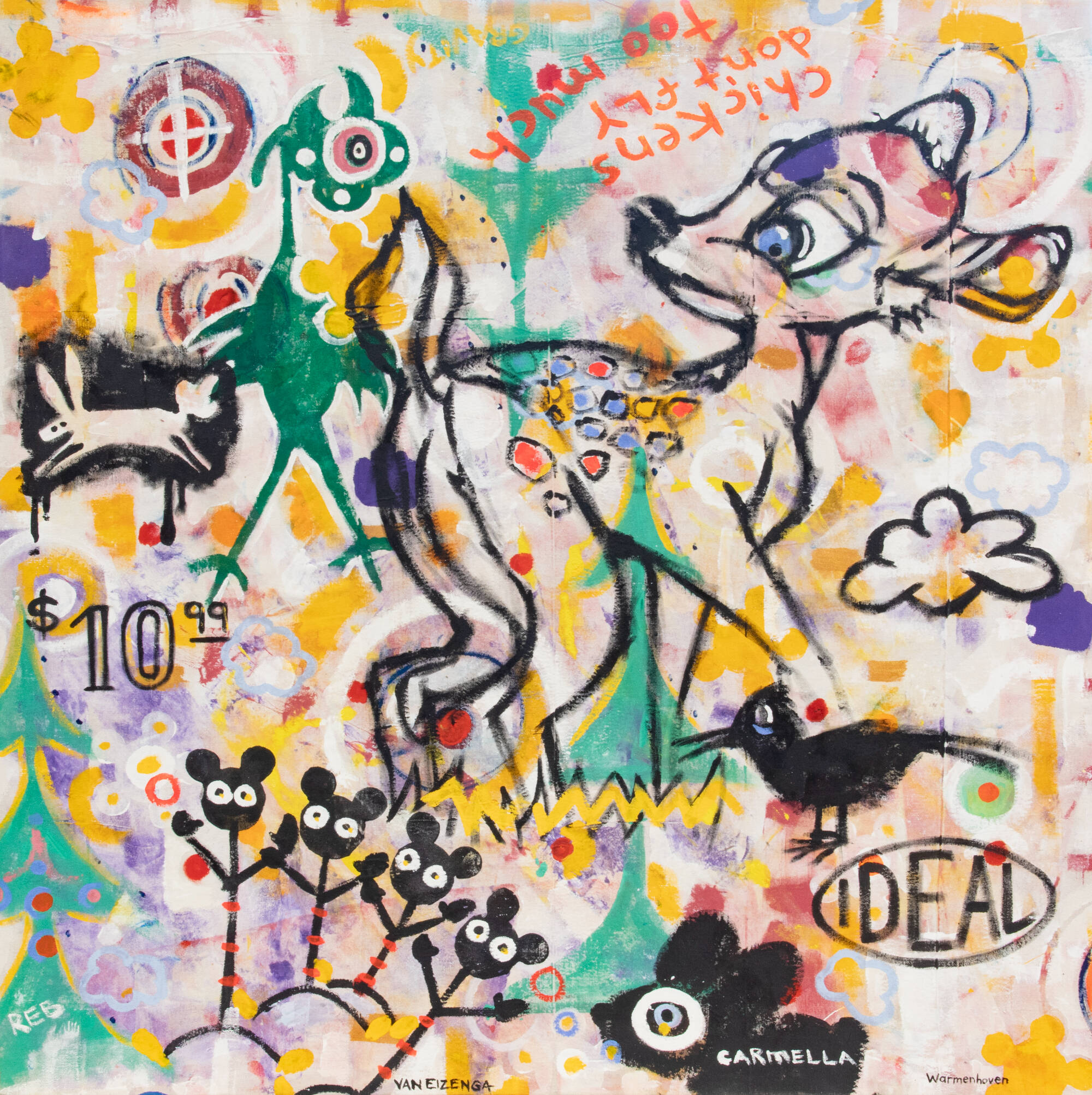
David Warmenhoven, Reb Roberts, Carmella Loftis, James VanEizenga, Ideal, acrylic on canvas, 2020.26.4.
This painting is a collaboration that was created by local artists and installed at the Marushka Handprints Studio in Grand Haven. Together, all four artists painted a single 30-foot-long canvas. The process was a “creative free for all” for the artists and lasted on and off over a few days. Each artist brought their own style, technique, and characters, blended together to create a story of structured chaos. When the 30' long canvas was deemed finished, the artists cut and stretched the work into five individual paintings. The GVSU Art Museum is now home to three of five canvases.
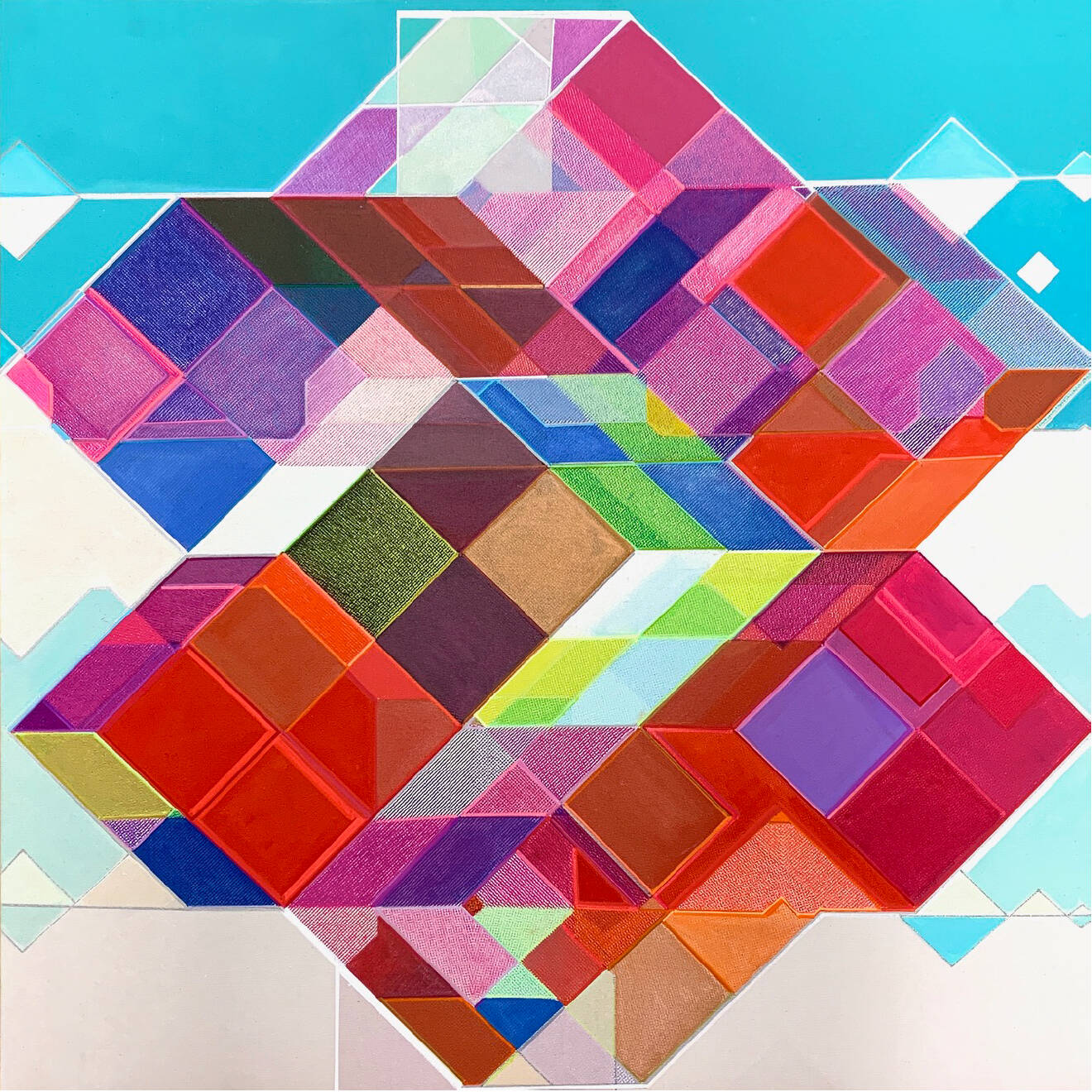
Seda Saar, Geocube II, mixed media, 2021, 2021.26.1
California based artist Seda Saar artwork draws inspiration from light, specifically how light defines how we perceive ourselves and objects in space that are part of our everyday lives. Regarding her artwork Saar states, “I consider my works constructions that parallel the physics of light energy through the tensions of our own movement through space. As an architect and geometer, I am influenced by divine ratios, math and technology, futurist and expressionist dynamics...The shapes are intuitively driven inspired by sacred geometry, and seek complexities that immerse and invite the viewer to move into a place of wonder.” Saar's works of art were selected specifically for level three of DCIH that is dedicated to the Interprofessional Simulation Center. https://www.gvsu.edu/simcenter These pieces visually represent the innovative and interdisciplinary intentions of this space while also stimulating creativity.
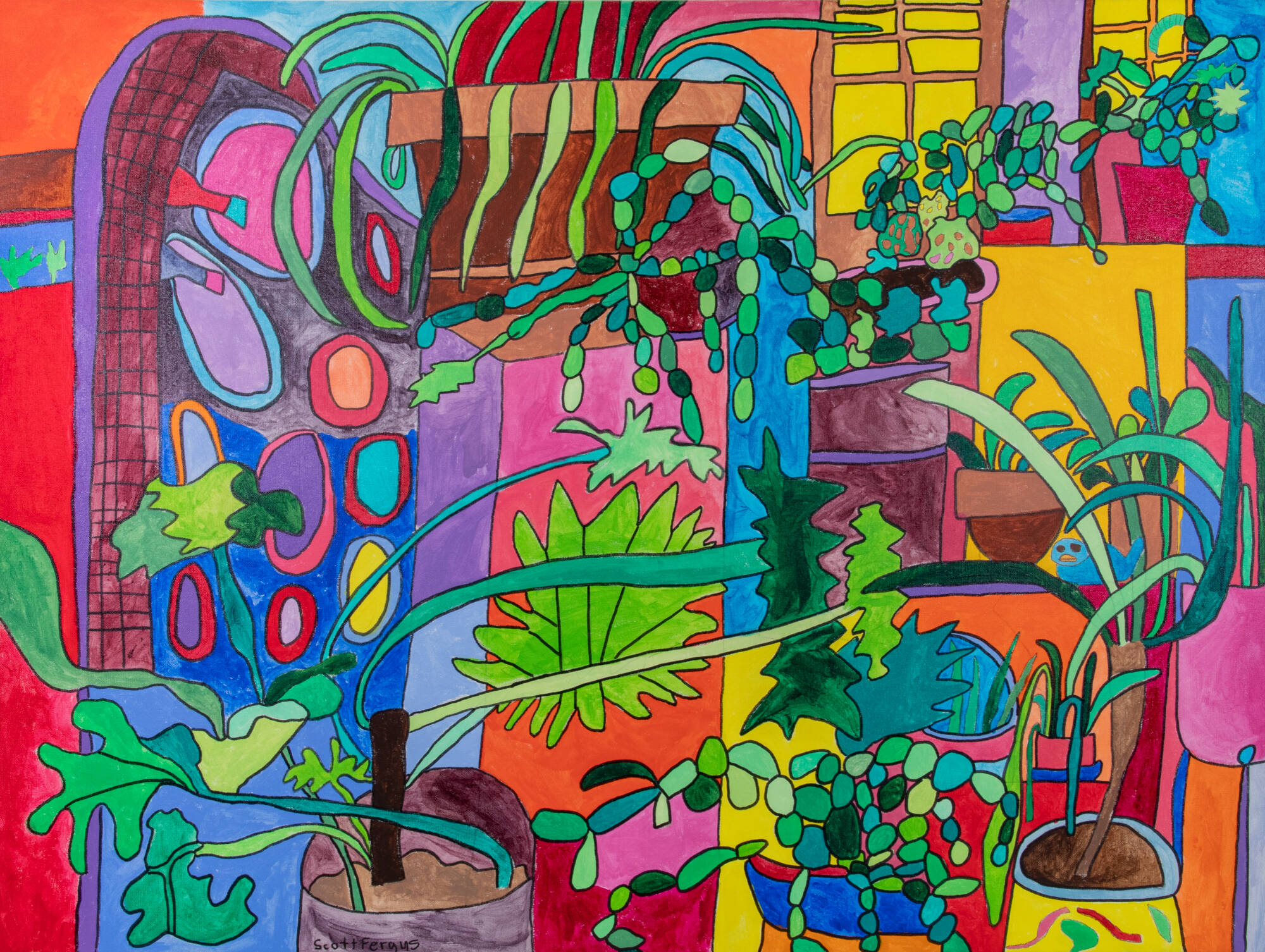
Scott Yukio Fergus, Zane's House Plants, mixed media, 2018.73.5.
In addition to high-tech simulation capabilities of level three, their is also the Standardized Patient Program. It was important to the Sim Center and the Art Museum to display works of art created by real patients of the health care system. This work of art was created by an MRC artWorks artist. MRC artWorks, a program of MRC Industries, Inc., is an art gallery, studio, and retail store located on the Kalamazoo Mall in the heart of downtown Kalamazoo. MRC artWorks offers individuals with disabilities an outlet to achieve creative self‐expression in a way that promotes personal growth, dignity, and self-confidence. All artists receive a commission for the sale of their work, which not only serves as their source of income, but also enhances and reinforces their self-esteem and self-worth. MRC artWorks provides a safe, positive, and creative environment that focuses on the individual’s abilities rather than their disabilities.
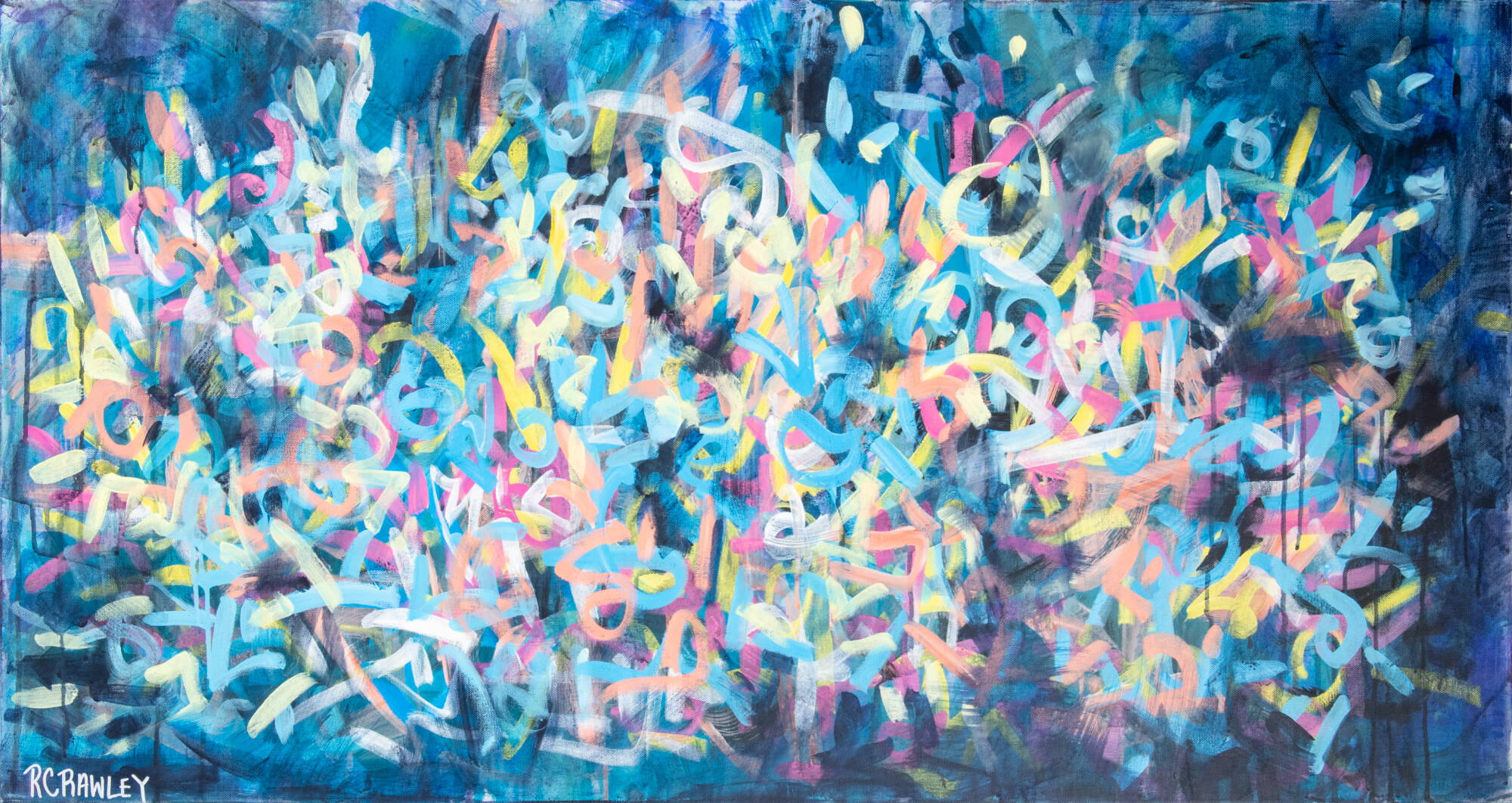
Ryan Crawley, Loud Lines I, acrylic on canvas, 2020, 2021.3.1.
Local Grand Rapids artist Ryan Crawley uses the process of painting as a form of therapy. In this painting titled, "Loud Lines I" Crawley states, "This painting is based on a series where I’m allowing my experience and mood out on the canvas. The layers are made until I no longer have the feeling that prompted the painting. It is an exercise of allowing myself to let go of what I can’t control."
Fourth Floor
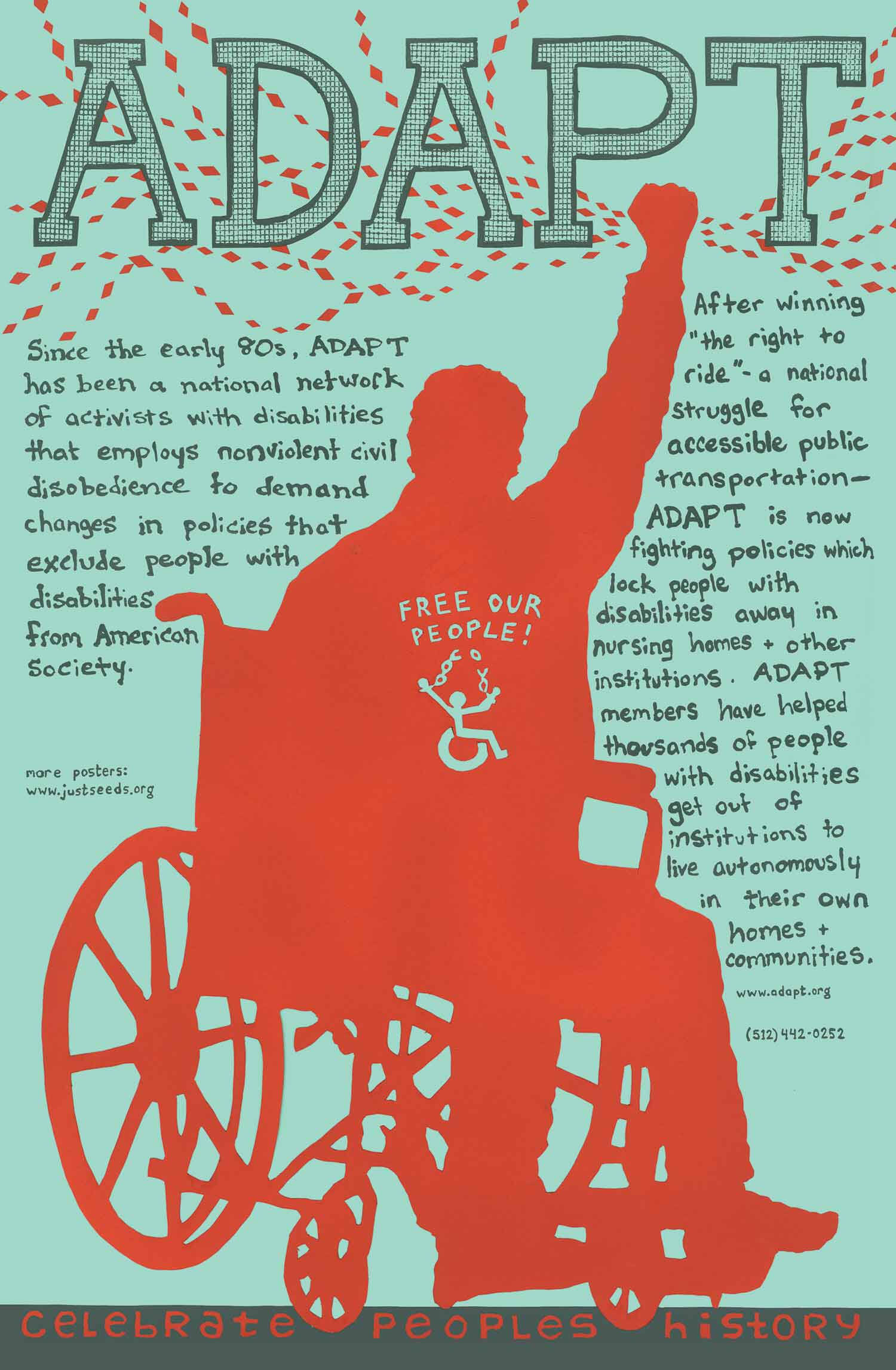
Jen Cartwright, Celebrate People's History: ADAPT, 2-color offset printed poster, 2006, 2020.23.18.
Throughout DCIH are posters from the "Celebrate People's History" project. These posters are rooted in the tradition of political propaganda posters. In contrast to traditional propaganda imagery, the Celebrate People's History posters embody themes of inclusion, community, and a do-it-together approach to producing content and imagery. These posters tell the stories of underdogs, those individuals and groups helping to move forward the collective struggle of humanity to create a more just world. This on-going project is organized and curated by Josh MacPhee. For twenty years, over 130 different posters have been displayed on the streets of more that a dozen cities representing over 150 artists and writers. In Fall 2020, the GVSU Art Museum hosted an exhibition of 117 Celebrate People's History posters and are now part of the GVSU permanent art collection, on view in multiple campus buildings.
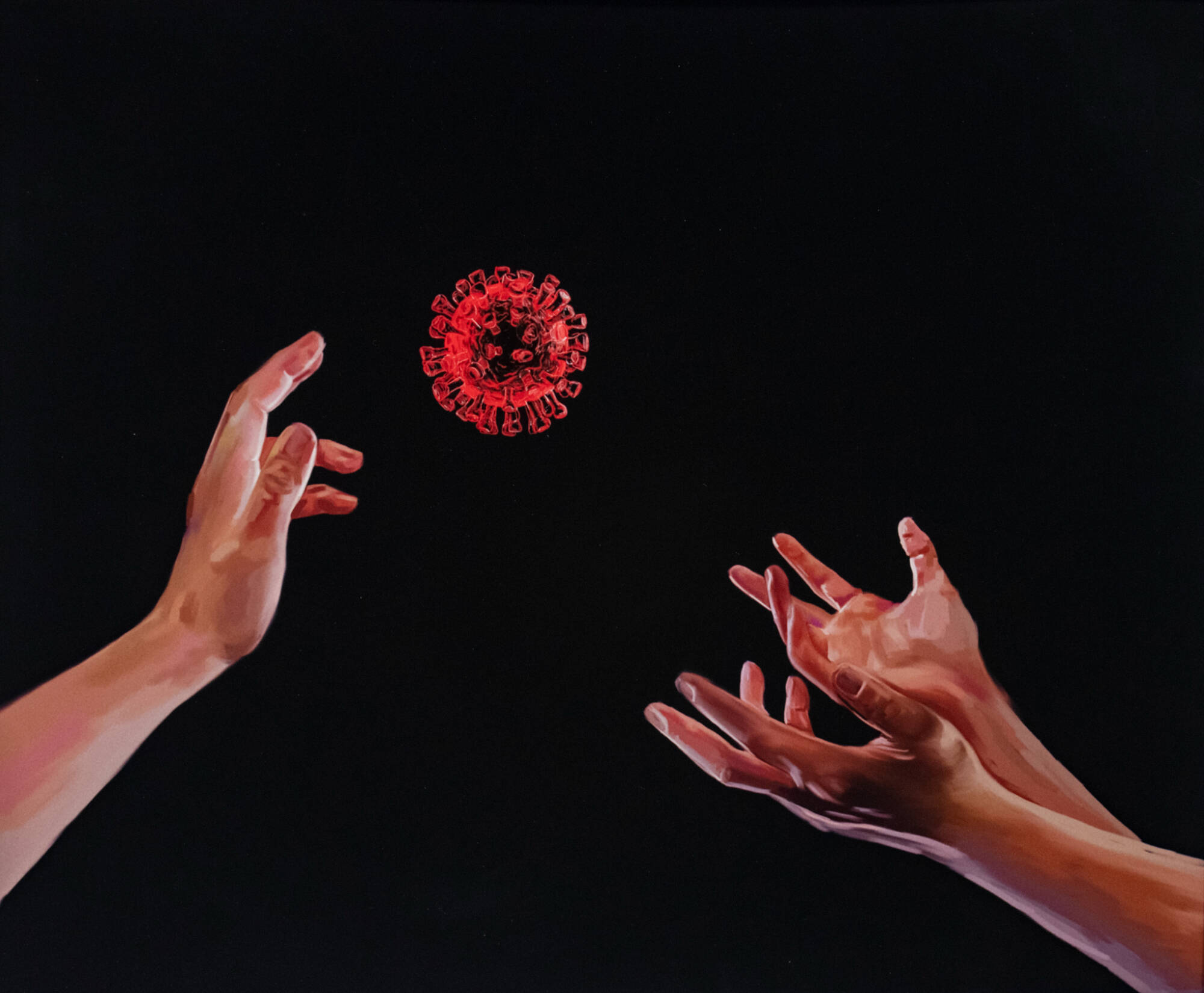
Katherine Williams, Catching Corona, digital painting, 2020, 2021.9.1.
Representations of hands play a special role in the narrative of GVSU alum Katherine Williams’ paintings. During the COVID-19 pandemic, hands had taken on an entirely new meaning with no handshakes, and the abundance of antibacterial wipes and sanitizers. Regarding this work Williams states, "'Catching Corona’ is a play on baseball, but is also exploring the way we exchange this virus while trying to reprogram the way we use our hands. By utilizing the narrative nature of hands, I hope to capture the essence of the pandemic, and how it has affected our daily lives.”
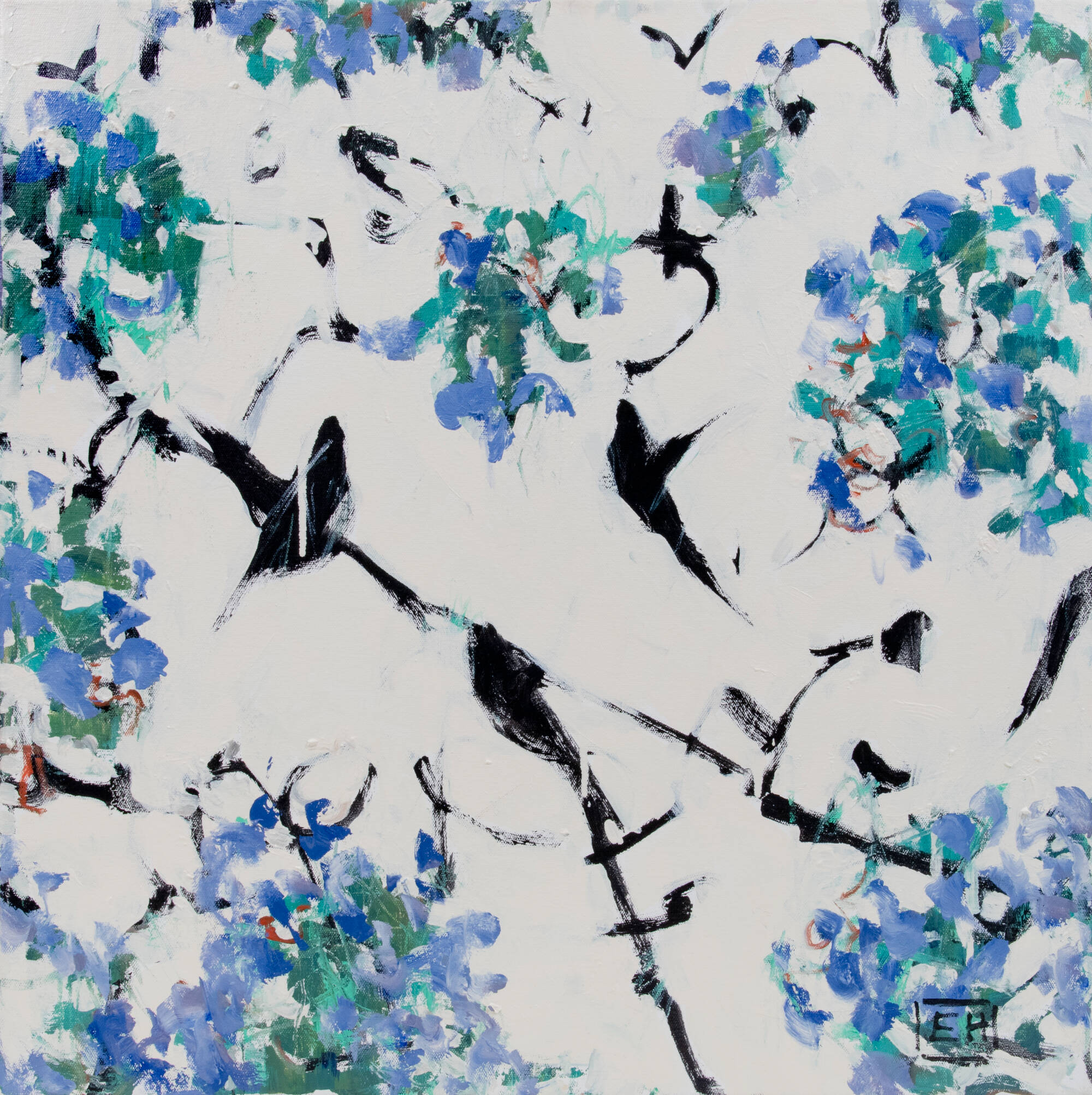
Ellie Harold, Free, oil on canvas, 2019, 2020.4.1.
Once a health care professional, artist Ellie Harold had a calling to change directions and become a full time painter. Harold often uses birds in her paintings as a way to symbolize hope and healing. She also uses the birds to focus on themes related to migration and intuitions. Harold states, "This exhibition [painting] is intended to heighten awareness of how anyone, once liberated from the cage of limited beliefs and attitudes, might open to good ideas that 'fly in' to inspire creative and helpful actions."
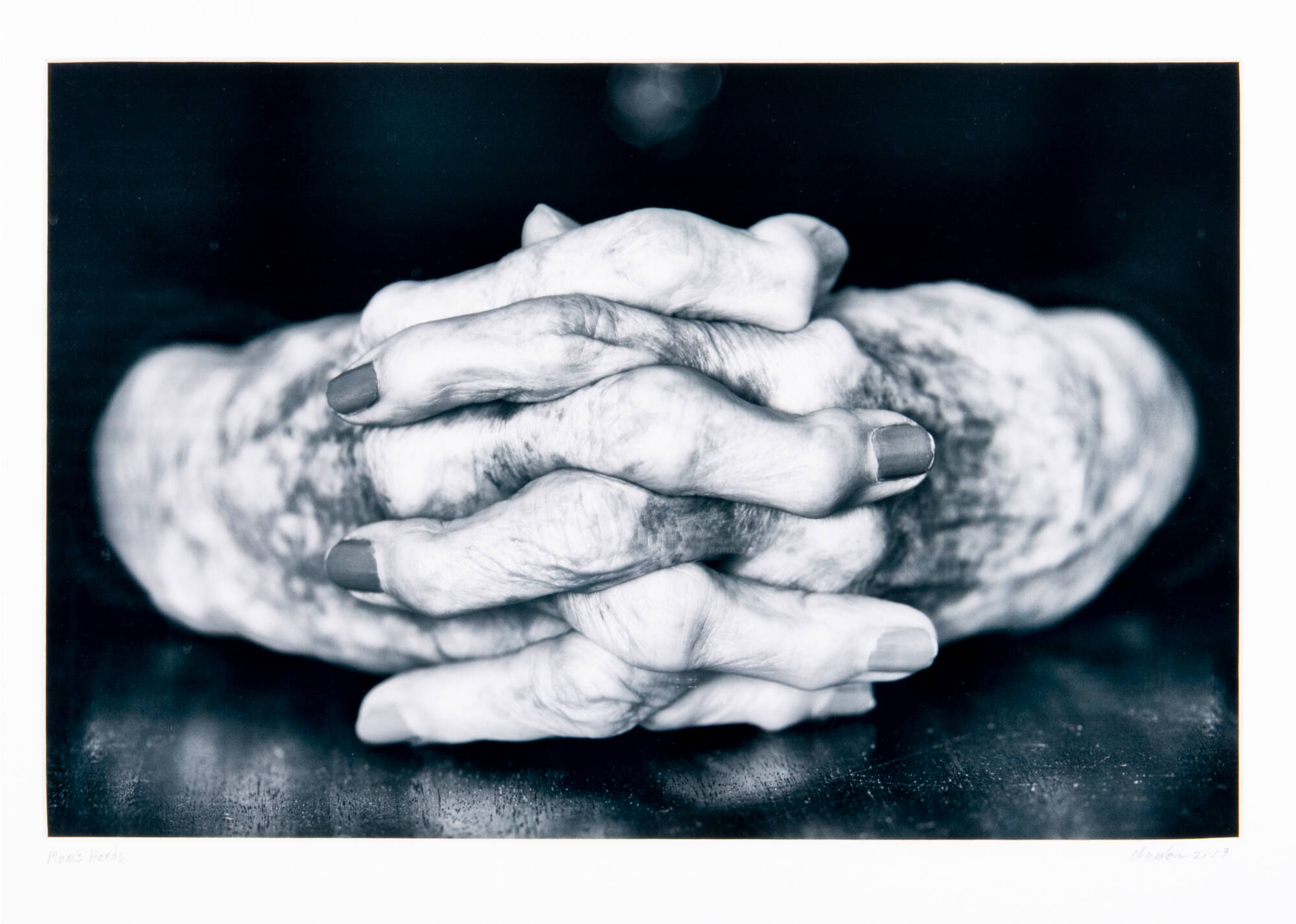
Bill Chardon, Mom's Hands, photograph, 2019, 2019.51.1.
While discussing the intentions of the art work for the College of Nursing, the ideas of inclusion, representing health across life-spans, and compassion were paramount. This image captured by local photographer Bill Chardon titled "Mom's Hands" represents these concepts in a concise yet powerful black and white image.
Fifth Floor
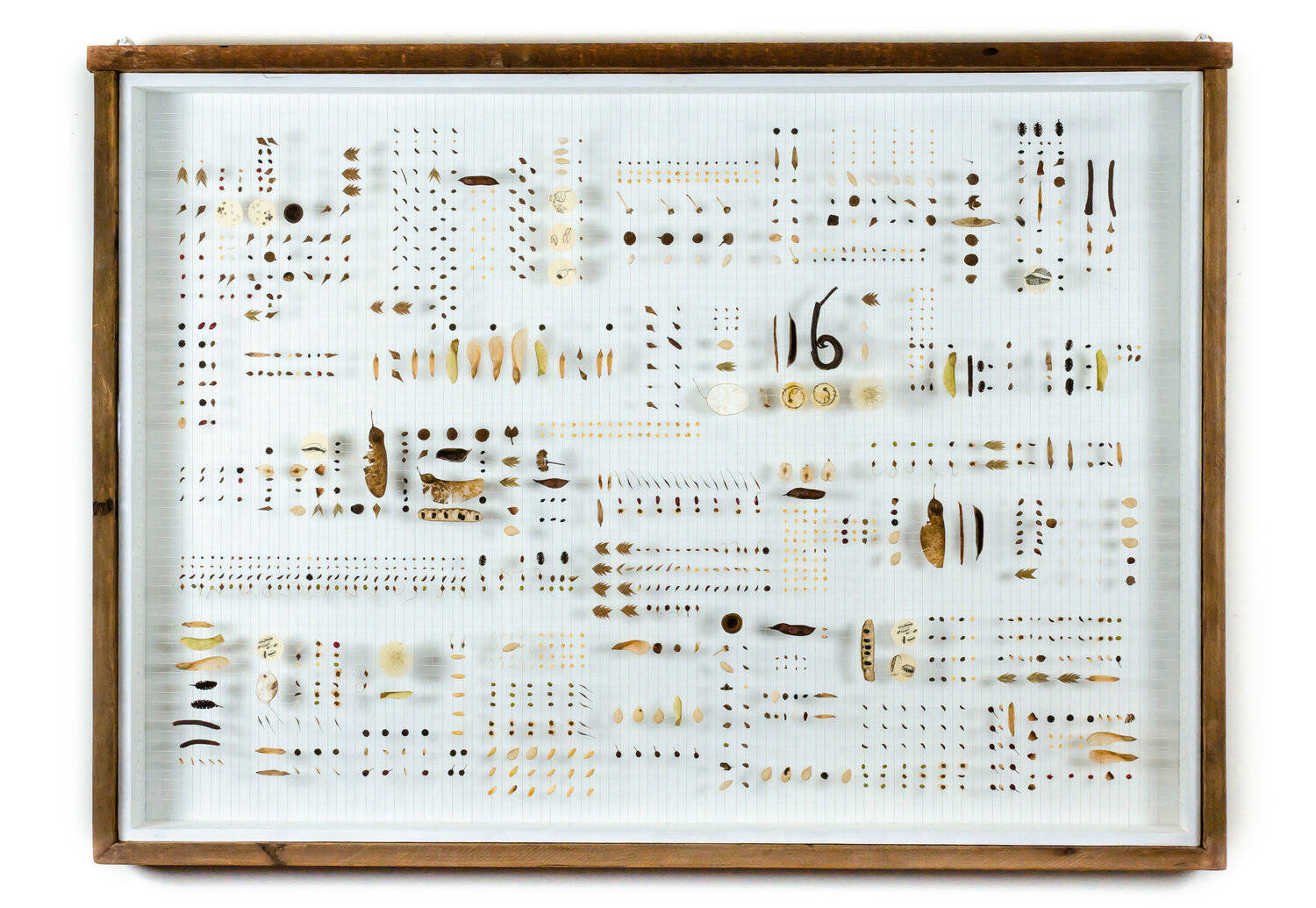
Shilin Hora, Dedicated To The Green Pepper & Staghorn Sumac Tree Seed #184007, mixed media (thread & seeds), 2018, 2019.16.1.
On level 5 of DCIH is home to the dietetics lab. Displaying this work of art by alum Shilin Hora near the lab can be used as resource for that program. Hora creates “Seed Museums,” sculptural works reminiscent of natural history museum displays and 19th century Wardian cases used by botanists to import foreign plant species to Europe. Hora collects, dries, and arranges the seeds behind plexi-glass, emphasizing their unique inherent qualities. Hora has strict commitments to sustainability, utilizing repurposed and sustainable materials to house these seed collections. The seeds dance across a threaded grid-like network with organized precision, inspiring curiosity and explicit reminder of where our food comes from.
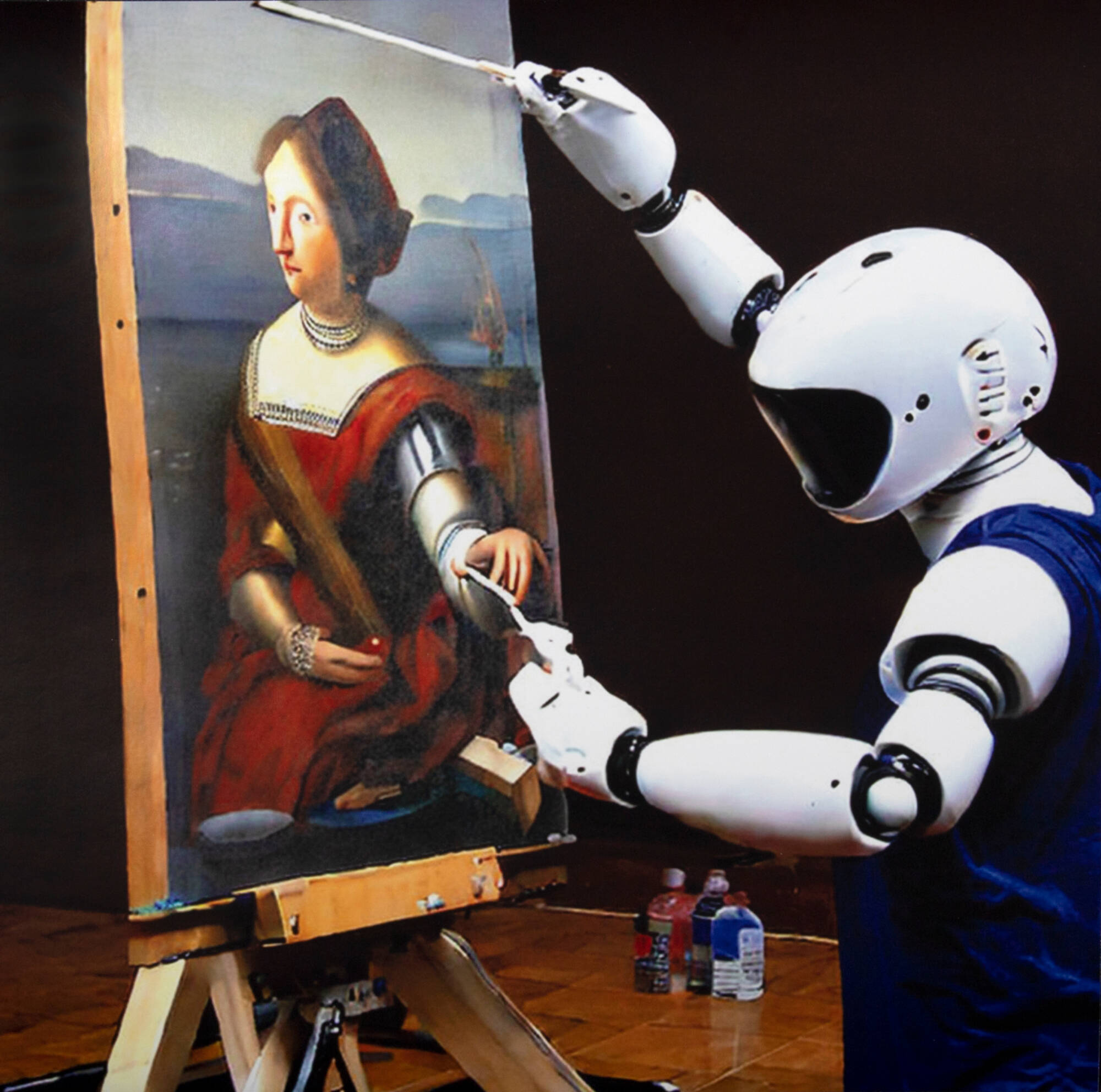
Corey Anton, Robot Artist #7, Stable Difusion 2.1 Digital Print on Baryta, 2023, 2024.5.1
Within the College of Computing department suite, are donated images from Professor Corey Anton, of Communication Studies in the School of Communications at GVSU. This digital image was generated by using two artificial intelligence programs: Stable Diffusion 2.1 and Clip Interrogator, both accessed through the AI developer platform called "Hugging Face." Images like this help to foster conversations regarding the use of AI in educational environments. Is it a tool used to enhance human capabilities or replace them?
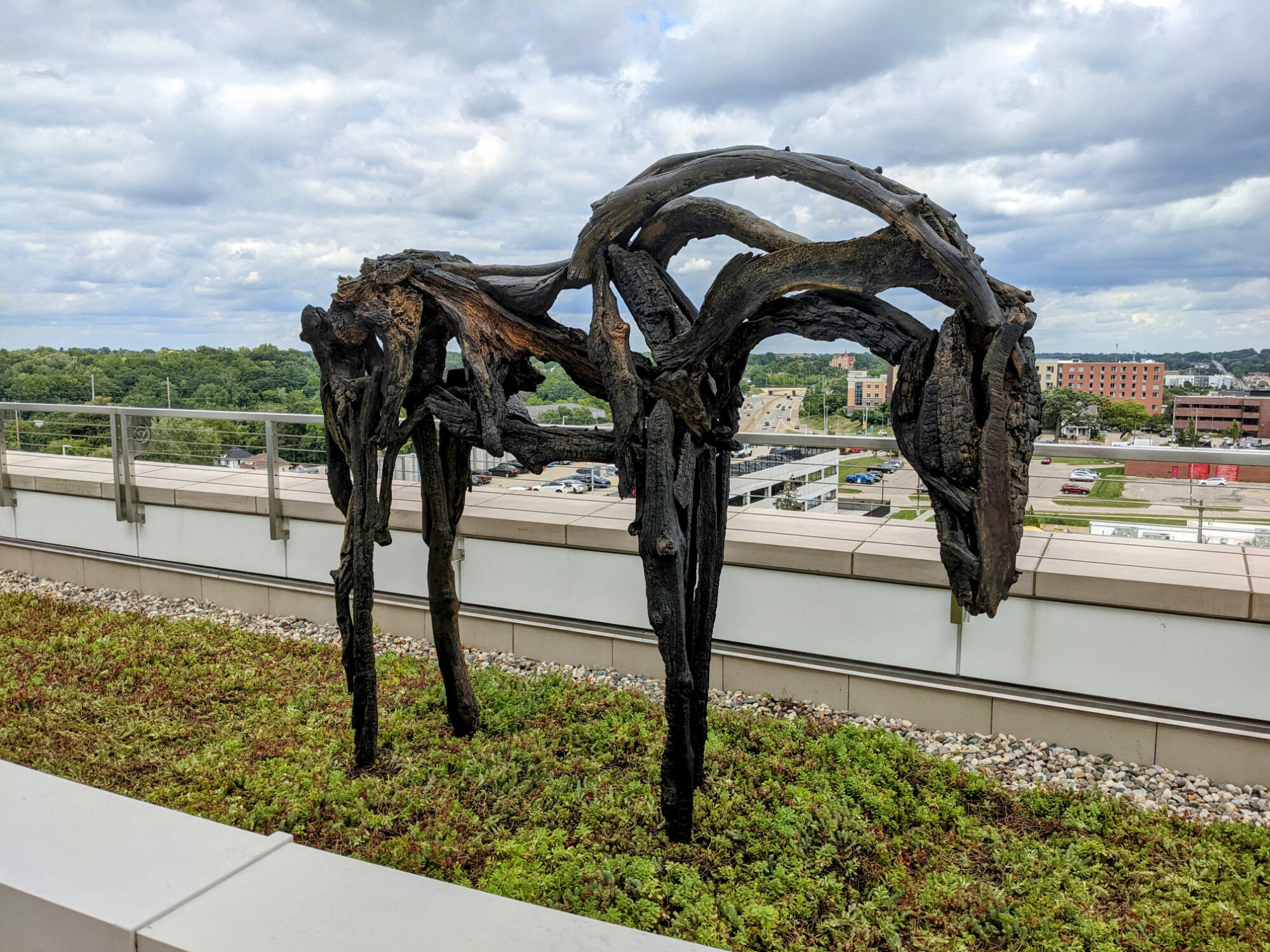
Deborah Butterfield, Char, cast bronze with patina, 2021, 2021.70.1.
American sculptor Deborah Butterfield is known for her depiction of horses utilizing found objects, like metal, and especially pieces of wood, and later using cast bronze. This piece titled, "Char" was first created using charred wood picked from the ashes of a wildfire near Butterfield's home in Bozeman, Montana then cast in bronze. This sculpture helps to remind Interprofessional Health students that the human body is both strong and fragile, just like the trees in a wild fire. It is installed on the open air terrace of level five.
Artwork Installation

Virtual Tours of DCIH
Virtual tour 2nd floor DCIH
Virtual tour 3rd Floor DCIH
Virtual Tour 4th Floor DCIH
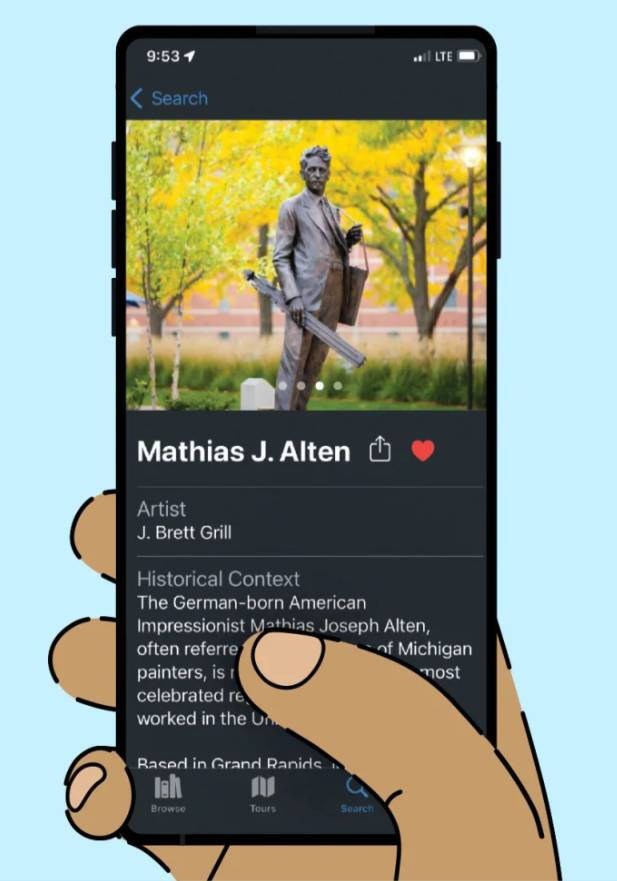
Take a Tour Through DCIH with the Art @ GVSU App
The Art at GVSU app is your gateway to the vast and diverse art collection at Grand Valley State University. Whether you're a student, faculty member, or visitor, this app will enrich your understanding and appreciation of the art that surrounds you.
Explore more artwork in DCIH by taking a curated art tour in the app!