Journalism, Broadcasting, and Digital Media
Bachelor of Arts or Bachelor of Science (B.A., B.S.)
Undergraduate Major
Allendale • Face to face • 120 Credits

Undergraduate Major
Allendale • Face to face • 120 Credits
The Journalism, Broadcasting, and Digital Media (JBM) major emphasizes creating, producing, and distributing news, information, and non-fiction storytelling.
Grand Valley's Journalism, Broadcasting, and Digital Media major is a broadcast journalism degree that teaches students to create, produce, and distribute news and non-fiction storytelling across print, television, radio, and online media. The program teaches traditional journalism and storytelling practices as they relate to the evolving landscape of digital media, including online journalism, social media, and multimedia storytelling. Students prepare to enter the job market in media careers, developing gateway skills of reporting, writing, hosting, and producing in print, television, radio, and online-based media.
You will study various core topics, including:
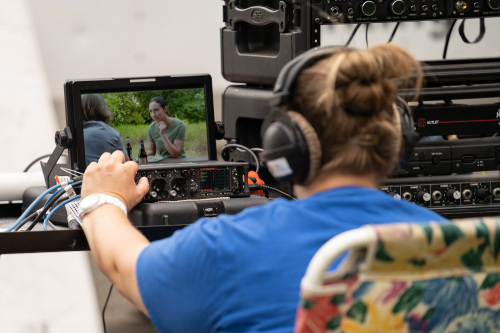
The program offers numerous opportunities for involvement with GVSU’s own student-run newspaper, radio stations, and TV station. Located in Michigan’s second-largest media market with four commercial television stations, public TV stations, over 50 radio stations, and various print and online media, you can access various media outlets and apply up to 15 internship credits toward graduation. The faculty of experienced media professionals ensure you are well-prepared to begin your career in whichever medium you choose.
A broadcast journalism degree is a program that teaches students how to gather, produce, and present news for television, radio, streaming platforms, podcasts, and digital media. It combines journalism skills with media production and storytelling techniques.
A journalism major prepares students to research, write, edit, and communicate information across print, digital, audio, video, and social media platforms. While many graduates work in news media, the skills gained are valued across communications, marketing, public relations, government, and corporate settings.
Yes. Students in Grand Valley State University's Journalism, Broadcasting, and Digital Media program can earn internship credit toward their degree. GVSU states that students may apply up to 15 internship credits toward the 120 credits required for graduation.
School of Communications
Direct and coordinate activities of personnel engaged in preparation of radio or television station program schedules and programs, such as sports or news.
Top skills| Annual Earnings | Percentile |
|---|---|
| $ 31,919.29 | 10% |
| $ 44,401.81 | 25% |
| $ 62,357.32 | 50% |
| $ 92,375.50 | 75% |
| $137,005.40 | 90% |
Plan, coordinate, revise, or edit written material. May review proposals and drafts for possible publication.
Top skills| Annual Earnings | Percentile |
|---|---|
| $ 28,132.98 | 10% |
| $ 42,804.66 | 25% |
| $ 57,438.89 | 50% |
| $ 74,686.39 | 75% |
| $104,066.96 | 90% |
Photograph people, landscapes, merchandise, or other subjects. May use lighting equipment to enhance a subject's appearance. May use editing software to produce finished images and prints. Includes commercial and industrial photographers, scientific photographers, and photojournalists.
Top skills| Annual Earnings | Percentile |
|---|---|
| $ 15,842.01 | 10% |
| $ 27,390.38 | 25% |
| $ 44,942.75 | 50% |
| $ 80,480.90 | 75% |
| $169,258.69 | 90% |
Originate and prepare written material, such as scripts, stories, advertisements, and other material.
Top skills| Annual Earnings | Percentile |
|---|---|
| $ 18,328.23 | 10% |
| $ 29,217.10 | 25% |
| $ 47,821.57 | 50% |
| $ 71,599.24 | 75% |
| $123,246.21 | 90% |
Narrate or write news stories, reviews, or commentary for print, broadcast, or other communications media such as newspapers, magazines, radio, or television. May collect and analyze information through interview, investigation, or observation.
Top skills| Annual Earnings | Percentile |
|---|---|
| $ 30,916.24 | 10% |
| $ 35,065.03 | 25% |
| $ 58,239.02 | 50% |
| $ 91,939.14 | 75% |
| $140,771.22 | 90% |
Grand Valley State University offers a wide variety of merit-based
scholarships. For information on all of the scholarships that are
available to students, please visit Scholarships at GVSU.
Grand Valley offers myScholarships
(a scholarship matching tool) to help admitted students match
with GVSU scholarships, as well as external scholarship opportunities.
myScholarships will prompt you to answer questions to help match you
to scholarships for which you might qualify.
Journalism, Broadcasting, and Digital Media Scholarships
Getting involved and staying engaged with our vibrant campus community help you make the most of your Grand Valley experience. Attending student life events, joining a student organization, or participating in campus recreation opportunities are all fantastic ways to maximize your college years:
Whether you are a first-year student, a transfer student, or a current student thinking about your career options, advising is an important part of your academic journey.