

Poetry Night 2026
Occurring annually on or around the GVSU Pew Campus in Grand Rapids, GVSU Poetry Night has a tradition of bringing some of the most celebrated and distinguished poets to enlighten and entertain. One of the largest poetry reading series in the state thanks to the generosity of donors and the university, Poetry Night events are always free and open to the public. This year, as part of the GVSU Arts Celebration, we are excited to have award winning poet Craig Santos Perez joining us for a poetry reading and conversation.
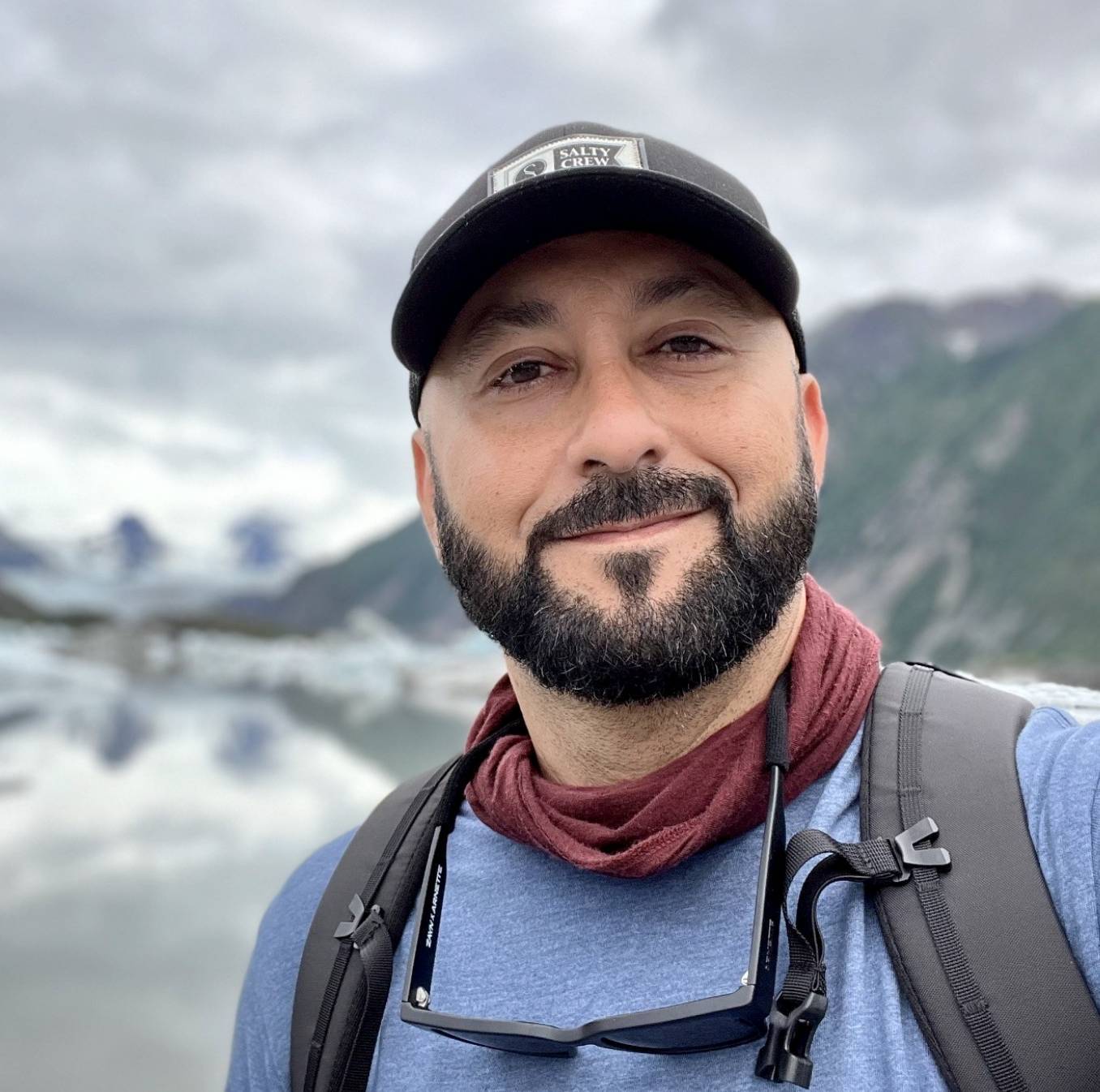
Craig Santos Perez
Poetry Reading & Conversation
Thursday, October 15, 2026
7:00 p.m. - 9:00 p.m.
Location TBA
Grand Rapids, Michigan
This event is free and open to the public.
Dr. Craig Santos Perez is an Indigenous Chamoru from the Pacific Island of Guam. He is the editor of nine anthologies and author of seven books of poetry, most recently Call This Mutiny [Uncollected Poems], and the academic monograph, Navigating Chamoru Poetry: Indigeneity, Aesthetics, and Decolonization, which received the MLA Prize for Best Book in Studies of Native Culture and Literature. His work has been honored with the National Book Award, the American Book Award, a PEN award, and the Poetry Society of America Prize.
Perez will appear at Poetry Night for a poetry reading and conversation, as well as for the 2026 GVSU Climate Change Education Solutions Summit. Perez is a poet, editor, essayist, critic, environmentalist and political activist. An important voice in eco-poetics, he describes his work as a mourning and desire to protect the environment from further desecration and a longing and advocacy for a decolonized, sovereign, and indigenous future. His from Unincorporated Territory series uses poetry to touch on the history and ongoing militarization, colonization, and environmental injustice in Guam and the Pacific, often using documents and maps to expose and critique colonial power. In 2010, the Guam Legislature passed Resolution No. 315-30, recognizing and commending Perez “as an accomplished poet who has been a phenomenal ambassador for our island, eloquently conveying through his words, the beauty and love that is the Chamorro culture.”
For more information about this event, email the GVSU College of Liberal Arts & Sciences at [email protected]
Craig Santos Perez
Recommended Reading
Selected Poems by Craig Santos Perez Online
- Poems by Craig Santos Perez at the Poetry Foundation
- Poems by Craig Santos Perez at Poets.org
- Poems by Craig Santos Perez at the Margins
- Poem by Craig Santos Perez at Poetry Daily
- Poem by Craig Santos Perez at the Poetry Society of America
- Poems by Craig Santos Perez at the Rumpus
Works by Craig Santos Perez
Poetry
- Call This Mutiny: Uncollected Poems, Omnidawn Publishing (2024)
A collection of previously published poems by renowned National Book Award-winning Chamoru poet Craig Santos Perez. The seventh book from award-winning Chamoru author Craig Santos Perez, Call This Mutiny brings together poems that were originally published in journals and anthologies from 2008 to 2023. Throughout these selected poems, Perez offers critical explorations of native cultures, decolonial politics, colonial histories, and the entangled ecologies of his homeland of Guam, his current home of Hawaiʻi, and the larger Pacific region in relation to the Global South and the Indigenous Fourth World. Perez’s poetry draws on the power of storytelling to share Indigenous history and culture and to offer healing from the trauma of colonialism and injustice. As he writes, “If we can write the ocean, we will never be silenced.”
- from unincorporated territory [åmot], Omnidawn Publishing (2023)
This book is the fifth collection in Craig Santos Perez’s ongoing from unincorporated territory series about the history of his homeland, the western Pacific island of Guåhan (Guam), and the culture of his indigenous Chamoru people. “Åmot” is the Chamoru word for “medicine,” commonly referring to medicinal plants. Traditional Chamoru healers were known as yo’åmte; they gathered åmot in the jungle and recited chants and invocations of taotao’mona, or ancestral spirits, in the healing process. Through experimental and visual poetry, Perez explores how storytelling can become a symbolic form of åmot, offering healing from the traumas of colonialism, militarism, migration, environmental injustice, and the death of elders.
- Habitat Threshold, Omnidawn Publishing (2020)
With Habitat Threshold, Craig Santos Perez has crafted a timely collection of eco—poetry that explores his ancestry as a native Pacific Islander, the ecological plight of his homeland, and his fears for the future. The book begins with the birth of the author’s daughter, capturing her growth and childlike awe at the wonders of nature. As it progresses, Perez confronts the impacts of environmental injustice, the ravages of global capitalism, toxic waste, animal extinction, water rights, human violence, mass migration, and climate change. Throughout, he mourns lost habitats and species, and confronts his fears for the future world his daughter will inherit. Amid meditations on calamity, this work does not stop at the threshold of elegy. Instead, the poet envisions a sustainable future in which our ethics are shaped by the indigenous belief that the earth is sacred and all beings are interconnected—a future in which we cultivate love and “carry each other towards the horizon of care.” Through experimental forms, free verse, prose, haiku, sonnets, satire, and a method he calls “recycling,” Perez has created a diverse collection filled with passion. Habitat Threshold invites us to reflect on the damage done to our world and to look forward, with urgency and imagination, to the possibility of a better future.
- from unincorporated territory [lukao], Omnidawn Publishing (2017)
from unincorporated territory [lukao] is the fourth book in native Chamorro poet Craig Santos Perez’s ongoing series about his homeland, the Western Pacific Island of Guåhan (Guam), and his current home, Hawai'i. He utilizes eco-poetic, decolonial, diasporic, indigenous, documentary, epic, and avant-garde modes to weave stories of creation, birth, migration, food sovereignty, and parenting. This work not only protests the devastating impacts of colonialism, militarism, and environmental injustice across the Pacific, it also expresses a vision of a sustainable and hopeful future.
- from unincorporated territory [guma'], Omnidawn Publishing (2014)
Craig Santos Perez, a native Chamoru from the Pacific Island of Guåhan (Guam), has lived for two decades away from his homeland. This new collection maps the emotional and geographic cartographies of his various migrations, departures, and arrivals. Through a variety of poetic forms, the poet highlights the importance of origins and customs amidst new American cultures and terrains. Furthermore, this book draws attention to, and protests, the violent currents of colonialism and militarism currently threatening Guåhan, a “strategic” US territory since 1898. The poet memorializes what his people have lost and insists that we must protect and defend what we have left of home. This collection will engage those interested in Pacific literature, multicultural, indigenous poetry, mixed-genre, multilingual experiments, ecopoetics, and those who want to explore intersections between poetry, politics, history, and culture.
- from unincorporated territory [saina], Omnidawn Publishing (2010)
With the Saina as his figurative vessel—a ship built in modern times as an exact replica of the swift outriggers designed and sailed by the Chamorro people until banned by their oppressors—Craig Santos Perez deftly navigates the complexities in his bracing exploration of the personal, historical, cultural, and natural elements of his native Guam and its people. As the title—from unincorporated territory [saina]—suggests, by understanding where we are from, we can best determine where we are going. Perez collages primary texts and oral histories of the colonial domination and abuse brought by the Spanish, the Japanese, the United States, and the capitalist entertainment/travel industry, with intimate stories of his childhood experiences on Guam, his family’s immigration to the US, and the evocatively fragmentary myths of his ancestors. Resonant too in Perez’s title, and throughout this work, is this poet’s evocation of the unincorporated and unfathomed elements of our natures, as he seeks the means to access an expansiveness that remains inexpressible in any language. Perez is not afraid to press language beyond the territories of ‘the known’ as he investigates both the anguish and the possibilities that horizon as one attempts to communicate the spoken and unspoken languages of one’s native people, while fully appreciating the suffering inherent in every word he will use that is pronounced in, and thus pronounces, the language of their oppressors.
- from unincorporated territory [hacha], (Tinfish Press 2008, reprinted by Omnidawn Publishing, 2017)
from unincorporated territory [hacha] is the first book of native Chamorro poet Craig Santos Perez’s ongoing series about his homeland, the Western Pacific Island of Guåhan (Guam). Perez weaves avant-garde, eco-poetic, indigenous, documentary, multilingual, and abstract expressionist modes to tell the complex story of Guam’s people, culture, history, politics, and ecologies. Since its original publication in 2008, [hacha] has received positive reviews, and it has been taught in universities throughout Asia, the Pacific, the United States, Canada, and Europe. This new and revised edition aims to bring the book to a new generation of readers.
Audio
-
Craig Santos Perez: Caring for the Earth and Each Other (A Wild and Beautiful World Podcast)
"To me, that is the power of poetry, where we can take these fragments of our lives, of our psyches, and of our emotions, and to really conjure something new—not necessarily something whole and complete, but something that's beautiful and something that's empowering and inspiring from these ruins of history and migration and so on, and so that's why I really wanted to explore the fragments in my poetry and to weave these fragments together into a new tapestry, not necessarily something completely formed, but it's something that gives me a sense of self, a sense of culture, a sense of place, a sense of belonging as well." -
What Do We Tell the Children? with Craig Santos Perez (Climate Changed Podcast)
In this episode of the Climate Changed podcast, you will experience: A centering practice as Craig Santos Perez reads his poem, “Thanksgiving in the Anthropocene” from his book of poetry Habitat Threshold. Ben Yosua-Davis and poet Craig Santos Perez have a moving conversation about raising children in a time of climate change. Craig also reads two of his original poems.
Selected Media about Craig Santos Perez
-
Poet to Poet Interview: Rajiv Mohabir and Craig Santos Perez from Kenyon Review
Two-Way Interview between Craig Santos Perez and Rajiv Mohabir. Perez says: "Poetry has always been important parts of political movements, and political movements have always inspired poetry. Poetry can help us articulate our own politics and interrogate oppressive structures and the language(s) of power. Poetry is a form of empowerment and inspiration. Poetry is a creative act amidst acts of destructive violence. Poetry is an expression of dignity, humanity, resilience, and hope." - Interview with Craig Santos Perez from Bomb Magazine
Interview with Perez by Diana Arterian about decolonial poetry and his From Unincorporated Territory series. Perez says, "My interest in documentary poetics, or what could be imagined as archival poetics, comes from my interest in history. In the colonial context of Guam, so much of history is told through documents, and elements of colonial power are established through documents such as maps, legal cases, et cetera. By including these documents in my work, I wanted to both expose and critique colonial power. I also wanted to subvert the power of these documents and to show that we can story our history through other means such as through decolonial oral stories, memories, re-mappings."
- Interview with Craig Santos Perez from 32 Poems
Interview with Perez by Cate Lycurgus about poetry. Perez says, "Much of my eco-poetry is engaged with “solastalgia,” which refers to a nostalgia for a place that is being environmentally degraded. So it’s not about desiring an ideal nature, but instead a mourning and desire to protect our lands and water from further desecration. In terms of my political poetry, I think it is more so grounded in witness, protest, and resistance. What this work desires is not a past ideal political situation, but instead it longs and advocates for a decolonized, sovereign, and indigenous future."
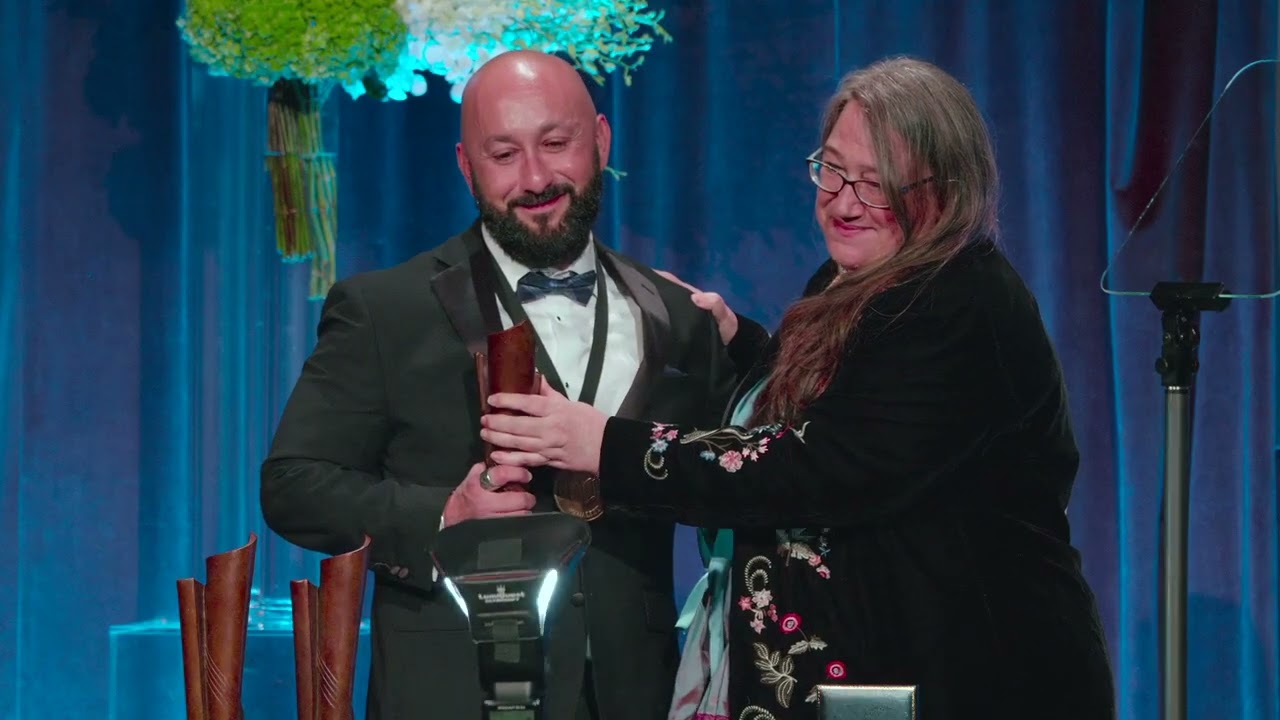
Craig Santos Perez accepts the 2023 National Book Award, Poetry for from unincorporated territory [åmot]

"Praise Song For Oceania," poem by Craig Santos Perez, film by Justyn Ah Chong

YES! Magazine: Spam's Carbon Footprint II by Craig Santos Perez
Past Poetry Nights
2025: Tyehimba Jess
2024: Paisley Rekdal
2023: Kimiko Hahn
2022/23: Juan Felipe Herrera
2021/22: Danez Smith, Marcel "Fable" Price, and Ericka "Kyd Kane" Thompson
2019: Ellen Bass and Kevin Young
2018: Carl Phillips and Ada Limón
2017: Jane Hirshfield and Dan Gerber
2016: Tracy K. Smith and Oliver de la Paz
2015: Kwame Dawes and Aimee Nezhukumatathil
2014: Mark Doty and Dorianne Laux
2013: Li-Young Lee and Pattiann Rogers
2012: Nikky Finney and B.H. Fairchild
2011: Ted Kooser and Terrance Hayes
2010: Carolyn Forché and Bob Hicok
2009: Tony Hoagland and Patricia Smith
2008: Paul Muldoon and Natasha Trethewey
2007: Gary Snyder and Stanley Plumly
2006: Sharon Olds and Sonia Sanchez
2005: C.K. Williams and Philip Levine
2004: Rita Dove and Charles Wright
2003: Jim Harrison, Galway Kinnell, and Dan Gerber
2002: Billy Collins, Robert Hass, and Naomi Shihab Nye
2000: Robert Pinsky
About Poetry Night and the GVSU Arts Celebration
Hosted by the College of Liberal Arts and Sciences and the Department of Writing, Poetry Night is part of the GVSU Arts Celebration, which provides free art events for our campus and local communities. These curated events explore and promote the written, visual, and performing arts. At Grand Valley State University, the arts are a vital part of our curriculum, providing experiential and high impact learning across the university. The GVSU Arts Celebration strives to provide free, impactful, art-related programming for the university and surrounding community.
See the GVSU Arts Celebration webpage for more information about Arts Celebration programming.