
Blog
Permanent link for A Reflection and Gentle Check-In on November 22, 2025
Content note: This post mentions sexual and relationship violence. If that’s hard to read about today, please take care of yourself and skip or come back when you’re ready.
Looking Back: What We Mean by the Red Zone
The first six to eight weeks of the fall semester are often called the Red Zone, a time when college students are at increased risk for sexual assault and other forms of gender-based violence. New routines, parties, alcohol, and pressure to jump right in socially can create situations where consent, boundaries, and safety get blurred or ignored.
This fall, our Red Zone awareness efforts focused on:
- Naming what’s really happening.
- Talking openly about the Red Zone helps reduce shame and confusion. Harm is never the survivor’s fault, no matter what they were wearing, drinking, or doing.
- Highlighting consent as ongoing communication.
- Consent isn’t just a one-time “yes”. It’s enthusiastic, freely given, specific, and can be changed or withdrawn at any time.
- Encouraging bystander intervention.
- We emphasize simple ways to step in, such as checking on a friend, creating distractions, calling for support, or getting help from staff or authorities when needed.
- Connecting students to resources.
- Awareness is important, but so is knowing: Who can I talk to? Where do I go if something happens?
If you’re reading this and remembering something didn’t feel right, your feelings are valid. You don’t have to prove it was serious enough to ask for help. If it’s sitting on your mind or in your body, it matters.
Domestic Violence Awareness Month: Beyond Purple Ribbons
In October, Domestic Violence Awareness Month (DVAM) gave us space to zoom out and look at patterns of harm in relationships, on and off campus.
We talked about how domestic and relationship violence can look very different from what we see in movies:
- It’s not always physical. It can be emotional, verbal, financial, digital, or sexual.
- It can happen in queer relationships, situationships, long-distance relationships, or with someone you’ve only known a short time.
- It often shows up as patterns such as isolation from friends, monitoring your phone, constant jealousy, threats, put-downs, or pressure around sex or your body.
DVAM also reminded us that:
- Love shouldn’t feel like walking on eggshells
- Fear, manipulation, and control are not “normal couples’ problems.”
- You deserve relationships where your voice, boundaries, and safety are respected.
If this made you pause and think about your own relationships, a friend, or even a family member, that’s okay. Awareness can be uncomfortable, but it’s also the first step toward change, support, and healing.
Moving Into the Holidays: What This Season Can Bring Up
As we move toward the end of the semester and into the holidays, a lot of feelings can show up all at once:
- Relief that classes are wrapping up
- Stress about grades and deadlines
- Anxiety about going home or not having a stable or supportive place to go.
- Pressure around family expectations, cultural or religious norms, and conversations around dating, gender, identity, or boundaries.
For some students, the holidays are cozy and joyful. For others, they can be lonely, activating, or unsafe, especially if:
- You’re going to a conflict-heavy or emotionally abusive environment
- Someone in your life has a history of being controlling, aggressive, or dismissive of your boundaries
- You’re in a relationship where you feel pressured, watched, or afraid of your partner’s reaction.
- Your identity (queer, trans, nonbinary, neurodivergent, etc.) isn’t fully seen or respected by a family or community.
Wherever you’re at, your experience is real and deserves care.
Gentle Strategies for Protecting Your Peace Over the Holidays
You don’t have to overhaul your whole break to take care of yourself. A few small steps can make things feel more grounded.
-
Check in with yourself.
- What are you hoping for? What’s worrying you? Who can you reach out to for support?
-
Set simple boundaries.
- Try phrases like: “I’m not comfortable talking about that”, or “I need a minute.” Your boundaries are valid even if others don’t agree.
-
Make a basic safety/support plan.
- Think ahead about who feels safe, how you could leave a situation if needed, and who you can text or call when things feel heavy.
-
Care for your nervous system.
- Eat regularly, stay hydrated, get some fresh air, and find one small thing each day that feels like you. Rest is not something you have to earn.
Looking Ahead: You Deserve Safe, Respectful Relationships
As we move from Red Zone Awareness and DVAM into finals and the holidays, here’s what we hope you carry with you:
- Your gut feelings are worth listening to.
- You never cause someone else’s abusive behavior.
- You deserve romantic, sexual, platonic, and family relationships rooted in respect, care, and choice.
- Community matters. Healing doesn’t have to happen alone.
You’re Not Alone: Campus & Community Resources
GVSU Office of Civil Rights & Title IX
Supports students who have experienced sexual assault, stalking, dating or domestic violence, harassment, or gender-based discrimination. They can explain your rights, outline reporting options (including informal or no-report pathways), assist with accommodations, and help you navigate next steps at your own pace.
Provides confidential trauma-informed support for students impacted by sexual or relationship violence. Advocates can help with safety planning, emotional support, academic accommodations, understanding reporting options, and connecting with campus or community resources, all without any pressure.
Offers free, short-term mental health services to GVSU students, including individual counseling, groups, crisis support, and referrals. The Counseling Center can help with trauma, stress, anxiety, depression, relationship concerns, and any issues affecting your well-being.
Looking for Support in Your Hometown?
If you’d like help finding your local resources, such as advocacy centers, counseling services, shelters, or clinics, reach out to the Center for Health and Well-Being. We’re happy to help you locate support that feels safe, accessible, and close to home.
Categories:
sexual assault
Violence prevention
Posted
by
Heather Alberda
on
Permanent link for A Reflection and Gentle Check-In on November 22, 2025.
Permanent link for The Other Red Zone on September 16, 2025
Welcome Back, Lakers!
The start of a new semester is always full of energy. We are starting new classes, connecting or reconnecting with friends, and settling in to all the opportunities GVSU has to offer. While it is exciting to find our rhythm at the start of the semester, it's also important to be aware of something many students don't realize exists: The Red Zone.
What is the Red Zone?
Football fans know the red zone as the place where touchdowns happen or where the defense needs to set up. On campus, our Red Zone is about defense, too. By this, I mean defending each other, preventing harm, and making sure everyone stays safe during the first weeks of the semester.
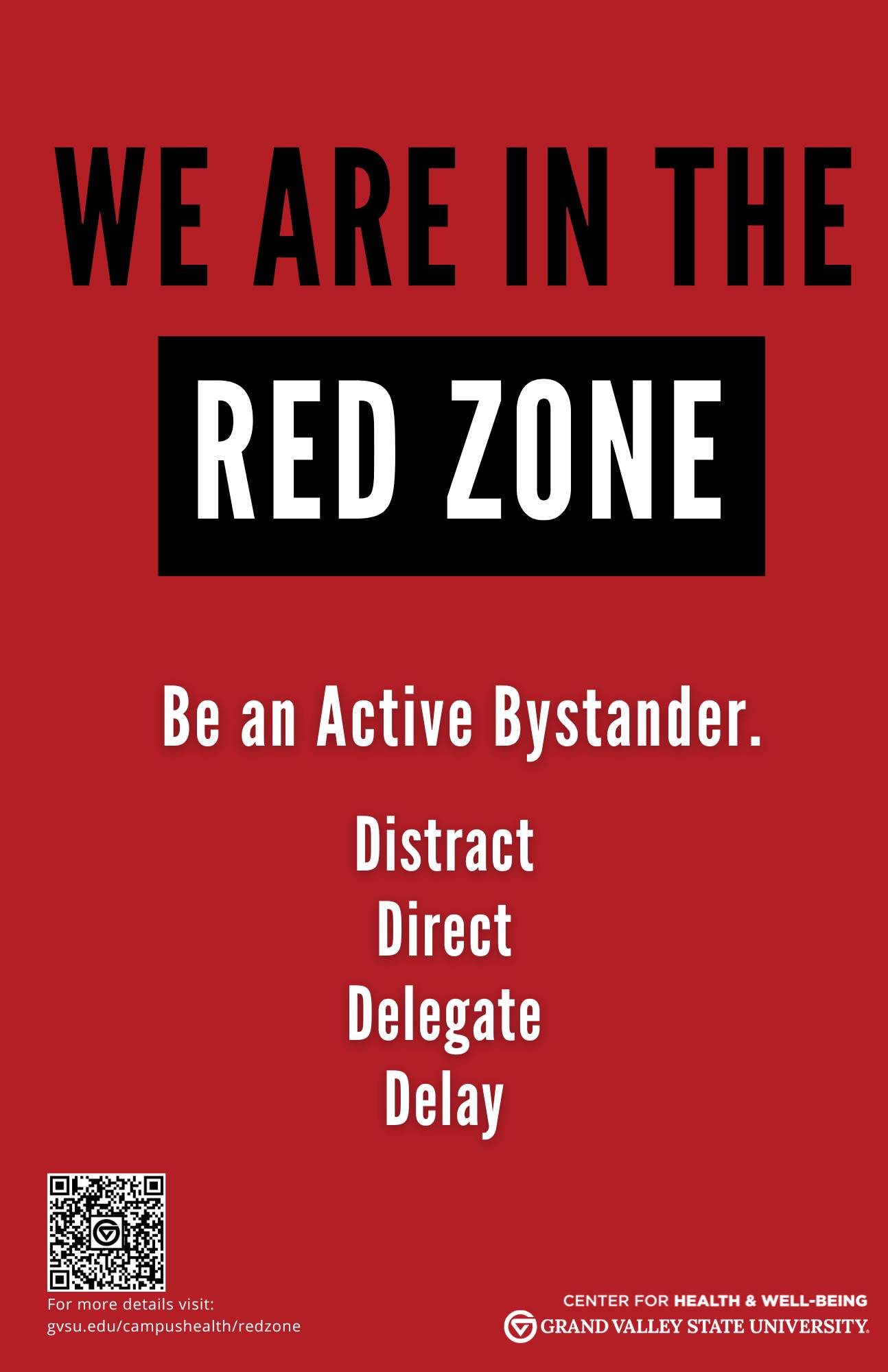
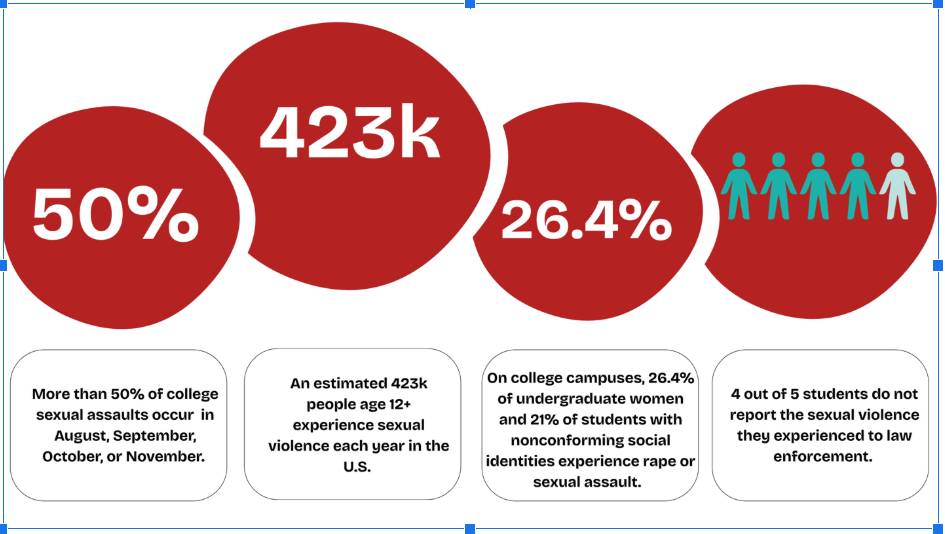
The term "Red Zone" was first used in the late 80s after national research found that more than half of all campus sexual assaults happen during the first few months of the academic year. The Red Zone refers to the first six to eight weeks of school when students, especially our first-years, are at a higher risk for alcohol-related harm, unsafe situations, and sexual assault.
What makes this period so risky?
There's a mix of factors: big social events, lots of parties, not knowing your limits yet, and sometimes social pressures. But here's the good news: you can absolutely enjoy yourself while staying safe and looking out for others.
First, Know Your Rights
Title IX is a federal law that safeguards students from sex-based discrimination, including sexual harassment and assault. Under Title IX, schools are required to:
- Respond quickly and appropriately to reports of sexual violence
- Provide support services for survivors, such as changes to class schedules or housing
- Conduct fair investigations while maintaining a safe learning environment.
The Rape, Abuse, and Incest National Network (RAINN) is the largest anti-sexual violence organization in the nation. To reduce risks and help students navigate challenging situations, here are their recommendations:
( Trust Your Intuition
If something feels off, trust your instincts and leave.
Your safety matters most.
( Be Selective with Trust
Take time to get to know people; set boundaries when needed.
( Stay in Groups
Safety is greater in numbers. Be cautious if someone tries
to isolate you or a friend.
( Party Smart
Protect your drinks, avoid open containers, and monitor
alcohol intake. Plan a safe way to get home with a trusted sober
friend or rideshare service.
( Stay Connected
Share your whereabouts with friends or family through
location-sharing apps.
( Speak Up If You See Something
If you notice someone in a questionable situation, safely
intervene or call campus security/911 if necessary.
( Manage Your Online Presence
Limit personal details on social media to protect yourself
from potential threats
( Know Campus Safety Resources
Familiarize yourself with emergency services and campus
resources. GVSU provides Victim
Advocacy services, offering confidential and compassionate
support, critical resources, and guidance for
students who have experienced harm.
( Create Safety Plan
Develop a plan that includes trustworthy friends, safe
routes home, and emergency contacts.
Now that you have the scoop, let me remind you that the Red Zone doesn't have to be a time of fear. It's a chance to stay informed, look out for yourself, and support your community. By knowing the risks, understanding your rights, and practicing safety, you can help make the next few months safer for everyone.
Stay aware, stay empowered, and let's start the semester strong, Lakers! =
Don’t forget to follow us on instagram to stay connected all year long!
Categories:
sexual assault
Violence prevention
Posted
on
Permanent link for The Other Red Zone on September 16, 2025.
Permanent link for Breaking the "One-Size-Fits-All" Narrative in Sexual Violence Awareness and Prevention on April 1, 2025
One in five people will experience a sexual assault in their lifetime, according to the National Sexual Violence Research Center. Although women disproportionately experience sexual assault (81%), it proves to be a widespread issue that effects people of all genders, races, sexual orientations, and abilities.
Centering the dominant narrative of sexual violence on cisgender, heterosexual women overlooks the unique experiences of minority populations, creating gaps in visibility and support for many survivors. The reality is that sexual violence does not look the same for everyone, and different communities experience it in unique ways. When we fail to acknowledge the diverse realities of survivors, we also fail to provide effective prevention strategies, resources, and support systems. Representation matters because it ensures that all survivors feel seen, believed, and supported. The following groups experience sexual violence at alarming, yet underrepresented rates, creating the false impression that they are less affected by sexual violence, when in reality, they often face even greater barriers to reporting and healing.
Men and Male Survivors
Societal stigma and harmful stereotypes about masculinity make it difficult for male survivors to come forward, even though 1 in 6 men experience sexual violence in their lifetime. Many fear they won’t be believed or that their experience will be minimized, due to the misconception that men should be “strong” or “dominant,” leading some to question whether what happened to them “counts” as sexual assault. An overall lack of inclusive support services compounds the challenges male survivors face. Many crisis centers and hotlines are designed for female survivors, making it difficult for men to find male-specific or male-supported shelters and support groups. Unfortunately, these gaps lead to long-term mental health consequences, with male survivors at greater risk of depression, PTSD, substance abuse, and suicide.
LGBTQ+ Individuals
A recent study by the Williams Institute found that LGBTQ+ people are nearly four times more likely than non-LGBTQ+ people to experience violence, including rape, sexual assault, and aggravated or simple assault. Sexual violence against LGBTQ+ individuals is often underreported due to fear of discrimination, lack of inclusive support systems, or concerns about being outed. Many survivors worry that reporting their sexual assault may expose their sexual orientation or gender identity in unsafe environments. Furthermore, LGBTQ+ survivors experience a lack of inclusive services, potentially exposing themselves to hostile or discriminatory responses from law enforcement, medical providers, or crisis support centers.
Black, Indigenous, and People of Color (BIPOC) Communities
The National Intimate Partner and Sexual Violence Survey (NISVS) found that more than 1 in 3 Indigenous women and 1 in 4 Black women experience rape in their lifetime, with Indigenous women facing rates of sexual violence more than twice the national average. Similarly, 48% of Latina survivors report experiencing sexual violence before the age of 18. Despite these high rates, systemic racism and cultural stigmas discourage many BIPOC survivors from seeking justice. Black survivors often face higher rates of victim-blaming, with law enforcement and medical professionals being more likely to question their credibility or minimize their experience. Additionally, language barriers, fear of legal retaliation, and an overall distrust of institutions that have historically failed them deter BIPOC survivors from seeking help and receiving adequate support.
Disabled People
Disabled individuals are three times more likely to experience sexual violence than non-disabled individuals. Deemed the “silent population,” they are often targeted due to reliance on caregivers or barriers to communication, resources, and accessible reporting systems. Perpetrators may exploit a survivor’s disability to assert control, such as withholding mobility aids, medication, or access to assistance. Additionally, many support services and law enforcement agencies lack the training and resources to accommodate disabled survivors, further discouraging reporting and access to justice.
How to improve representation in prevention and support efforts:
-
Use inclusive imagery and messaging – feature diverse voices, faces, and experiences, with examples relevant people of all backgrounds.
-
Tailor education to different communities – address resources, training, and outreach in a culturally relevant manner.
-
Train Law Enforcement, Healthcare, and Support Professionals in Intersectional, Trauma-Informed Care.
-
Expand accessibility efforts in support services and prevention outreach – offer materials in a variety of languages and formats. Extend outreach beyond traditional spaces into underserved communities.
Resources for Support:
-
On-Campus Resources
-
Victim and Survivor Advocate - nonjudgmental, confidential support to victim/survivors of gender-based violence
-
Office of Civil Rights and Title IX - Assistance for students or staff who have experienced, witnessed, or been impacted by discrimination, harassment, or misconduct (including sexual assault, stalking, sexual exploitation, bullying, endangerment, hazing, and retaliation)
-
GVSU Police Dept - Will talk through reporting options or assist you in filing a police report
-
University Counseling Center - Counseling and mental health support for students free of charge
-
Additional Resources
-
Domestic Violence Hotline - essential tools and support to help survivors of domestic violence
-
RAINN - Resources for Survivors of Stalking/Cyberstalking
-
Resilience Hotline - 24/7 support for sexual assault, domestic violence, and stalking
-
YWCA West Central Michigan (Grand Rapids) - Support for individuals who experience intimate partner violence or sexual assault
Categories:
sexual assault
Violence prevention
Posted
on
Permanent link for Breaking the "One-Size-Fits-All" Narrative in Sexual Violence Awareness and Prevention on April 1, 2025.