
Paraprofessionals Facilitation:
Strategies for Promoting Interaction and Engagement
Paraprofessionals play a key role in promoting inclusion, learning, and belonging for students with autism and other developmental disabilities. Their primary focus should be on facilitating social and academic engagement by connecting students with peers, teachers, and shared classroom experiences rather than acting as primary instructors. Effective strategies include prompting, guidance, and information to encourage peer interactions while gradually fading support to build student independence. Targeted training and regular supervision help ensure paraprofessionals implement their roles intentionally and in alignment with inclusive, evidence-based practices.
Estimated Time: 25 minutes
Keywords:
Paraprofessional, Paraeducator, Inclusion, Peer-mediated Intervention, Peer to Peer, Engagement, Independence
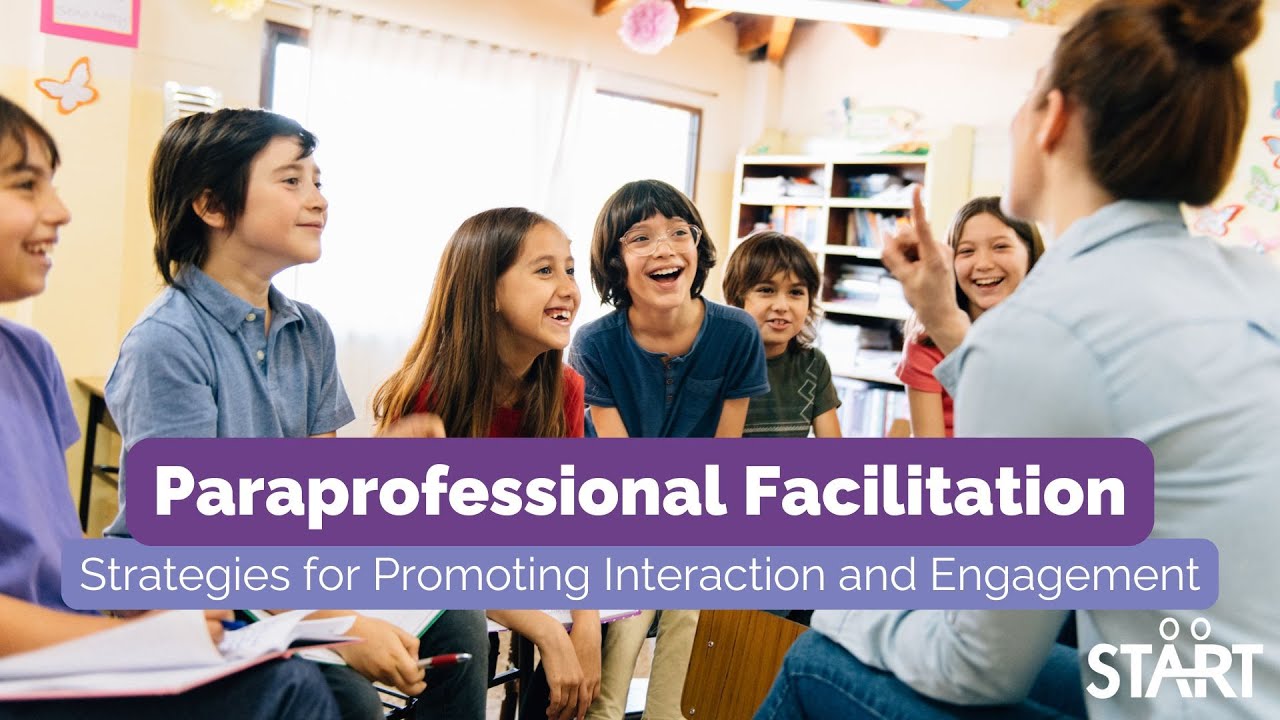
Paraprofessional Facilitation (00:22:20)
Key Resources
Actionable Steps
- Clarify roles: Review how paraprofessionals are currently assigned and utilized and refocus their responsibilities on facilitation rather than direct instruction.
- Model facilitation strategies: Provide explicit examples and practice opportunities for prompting, reinforcing, and sharing information that encourage peer interaction and academic engagement.
- Plan for fading: Develop intentional plans that identify when and how to gradually reduce adult support as students gain skills and greater independence.
- Embed peer supports: Implement peer-mediated approaches and train paraprofessionals to effectively guide these social interactions.
- Provide ongoing coaching: Schedule regular observation, supervision, and feedback sessions to ensure paraprofessionals continue to build skills that align with inclusive practices.
Resources
- Avoiding Over-Use of Paraeducator Support for Individual Students. Inclusive Schools Network. (short article)
- Biggs, E. E., Gilson, C. B., & Carter, E. W. (2019). “Developing that balance”: Preparing and supporting special education teachers to work with paraprofessionals. Teacher Education and Special Education, 42(2), 117-131. (research article)
- Chung, Y.-C. (2022). A guide to implementing paraprofessional facilitation. In E. E. Biggs & E. Carter (Eds.), The Power of Peers. TIES Center. (research article)
- High Leverage Practices for Students with Disabilities - Paraeducator Competencies (professional competencies)
- MAASE Paraeducator Learning Series
- Why Schools Overuse Paraprofessionals in Inclusive Education - Interview with Michael Giangreco, PhD (video)