

Holocaust Remembrance Day
Published January 1, 2025 by Nicole Webb
Auschwitz, also known as Auschwitz-Birkenau, was one of the most brutal concentration and extermination camps run by the Nazi regime. The camp complex had approximately 3 million prisoners during its years of operation from 1940-1945. Of the 1.3 million prisoners, at least 1.1 million of them perished through extreme mistreatment, malnourishment, or in the heinous gas chambers.
On January 27, 1945, Aushcwitz-Birkenau was liberated by the 60th Army of the First Ukrainian Front. In 2005, the United Nations General Assembly designated January 27 as International Holocaust Remembrance Day, dedicated to remembering those murdered by the Nazi regime and to educate and spread awareness about the Holocaust. This day is also devoted to rejecting ethnic or religious intolerance, and to education on other genocides, both historical and contemporary.
The GVSU Art Museum Collection holds works by artists, both Jewish and non-Jewish, who share their experiences of living through or fleeing from the Nazi regime. For many, creating artwork helped them process their own emotions related to the Holocaust, while simultaneously creating images dedicated to the mandate of never forgetting the atrocities of that time.
The GVSU Art Museum is dedicated to using art as a teaching resource for all stories. We believe that art has the power to move people; bridge gaps in understanding; spark our collective imagination toward building a better, more equitable world; and enrich learning experiences beyond the capacity of traditional classroom structures.
This year, the GVSU Art Museum is partnering with many organizations around Grand Rapids to provide resources for the third annual Henry Pestka Art and Poetry Contest. The program is designed for students in grade levels 6-12 who are completing Michigan state education requirements for Holocaust and Genocide Education, providing them the opportunity to process and reflect on the concepts they learned through writing or art. Visit the competition’s website to learn about the contest and to view the historical or artistic resources of our partner organizations. The following artists from the GVSU Art Museum Collection are now featured within these resources.
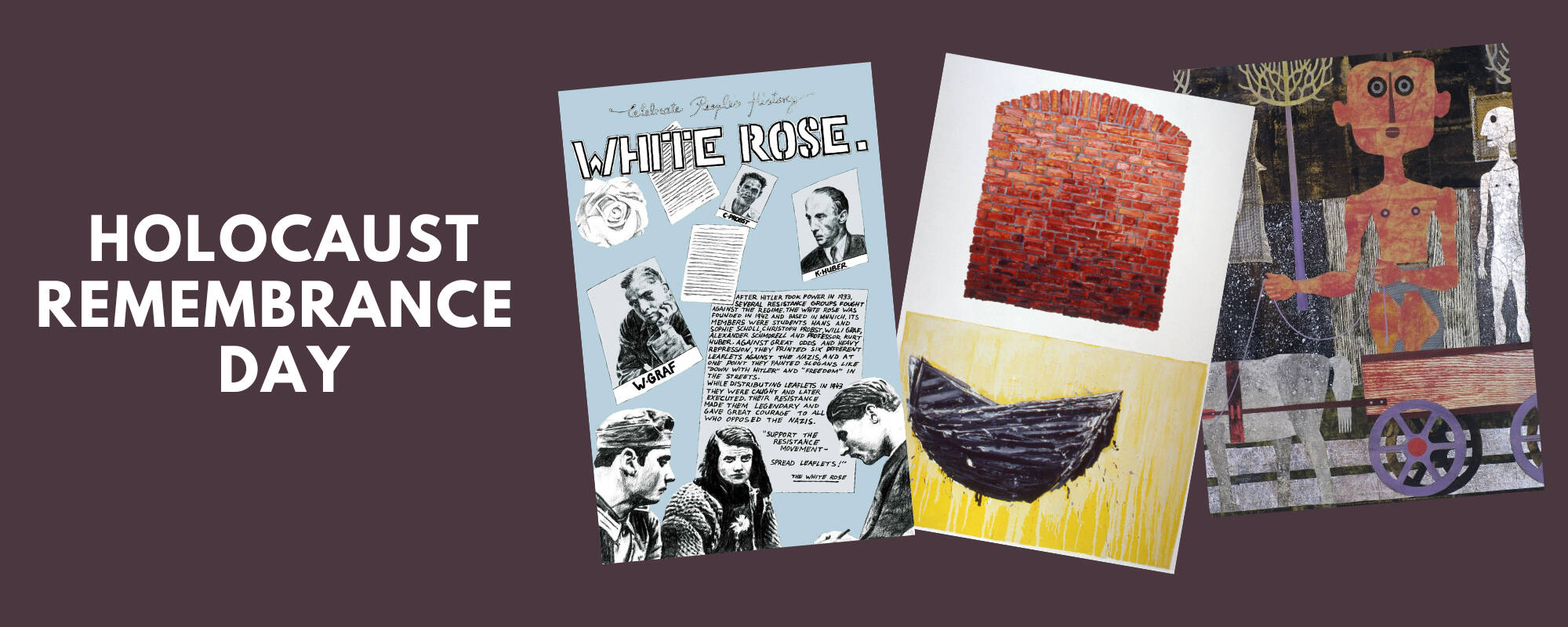
Vera Klement (1929-2023)
Vera Klement grew up in what is now Poland and experienced Nazi persecution as a young girl. Her family’s business was seized by the Gestapo and her home ransacked. She also witnessed Kristallnacht, the Night of Broken Glass, when the windows of Jewish businesses were shattered. On this night, her family’s temple was set on fire. After this, Klement’s family learned the Gestapo were searching for them. They fled to the United States, establishing themselves in New York. In Manhattan, Klement studied to become an artist and several of her works explore her lived experiences.
Explore more artwork by Vera Klement
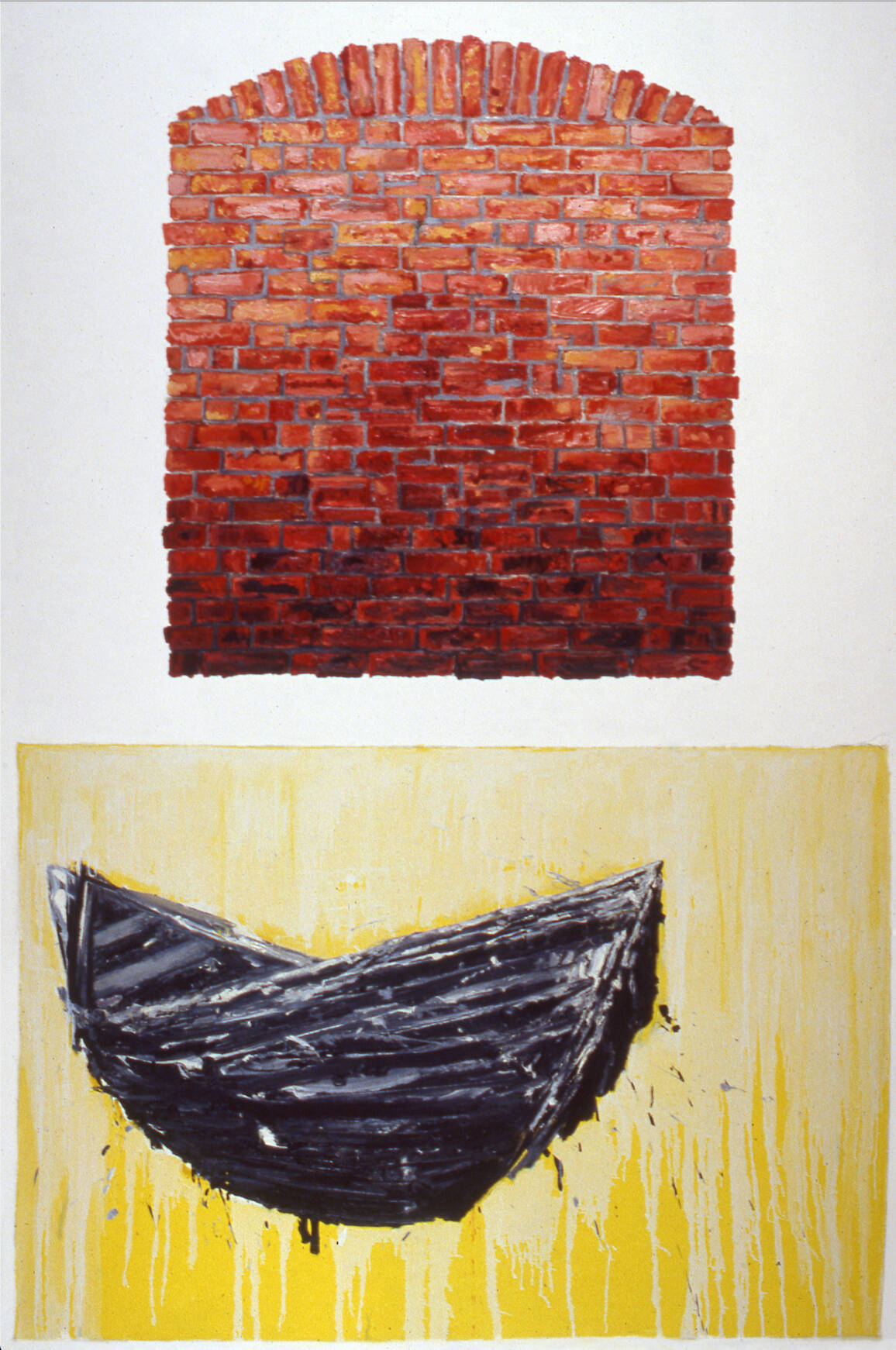
Leonard Baskin (1922-2000)
Leonard Baskin was a sculptor, wood-engraver, book-illustrator, graphic artist, writer, and teacher. Born in New Brunswick, NJ, Baskin’s father was an Orthodox Jewish rabbi. By the age of 15, he began to study art formally, later attending a Jewish religious college. Much of his work was influenced by biblical stories, mythology, literature, and history. During World War II, Baskin served in the Navy and later returned to Europe to continue creating art.
Baskin created many works on the Holocaust, including the bronze statue Holocaust Memorial in Ann Arbor, MI. Baskin said it took him fifty years to be able to create work on the subject of the Holocaust. “The woodcuts make but a faint stab at the appalling actuality of the Holocaust, but they have granted me a gesture to somehow deal with the crashing reality of the Holocaust.”
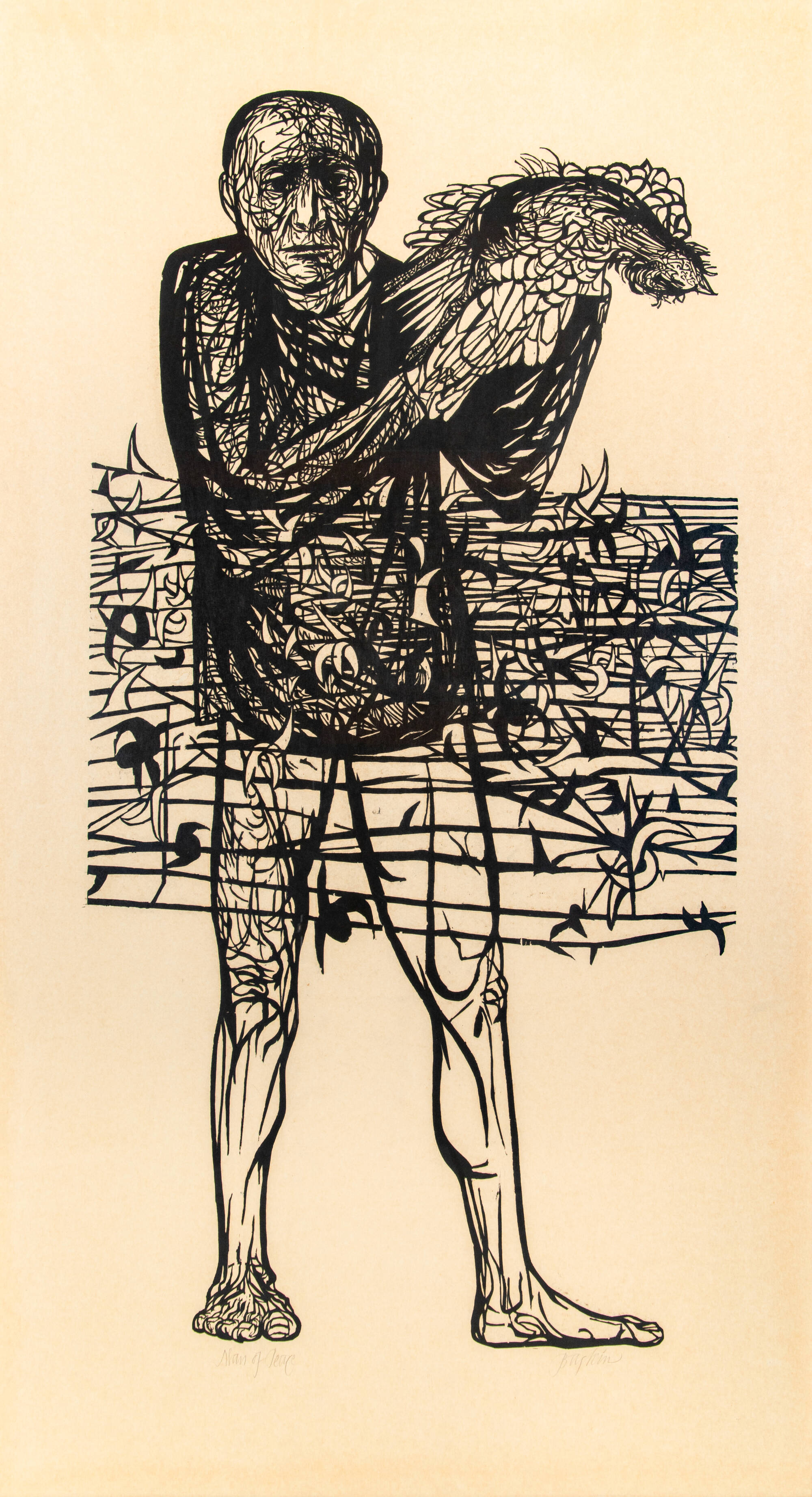
Marc Chagall (1887-1985)
Marc Zakharovich Chagall, born Moishe Shagall, was a Jewish artist born in Russia, in what is now modern-day Belarus. Chagall was one of the six Jewish artists to have his work included in the Nazi 1937 Degenerate Art exhibition. He and his wife Bella fled France after the Nazi occupation began and settled in New York City, NY. In 1945, when news of the Holocaust began to spread, Chagall felt compelled to respond to this tragedy through art. After the war, he returned to France, where he created artwork that promoted peace and healing, including the stained glass windows many people know him for.
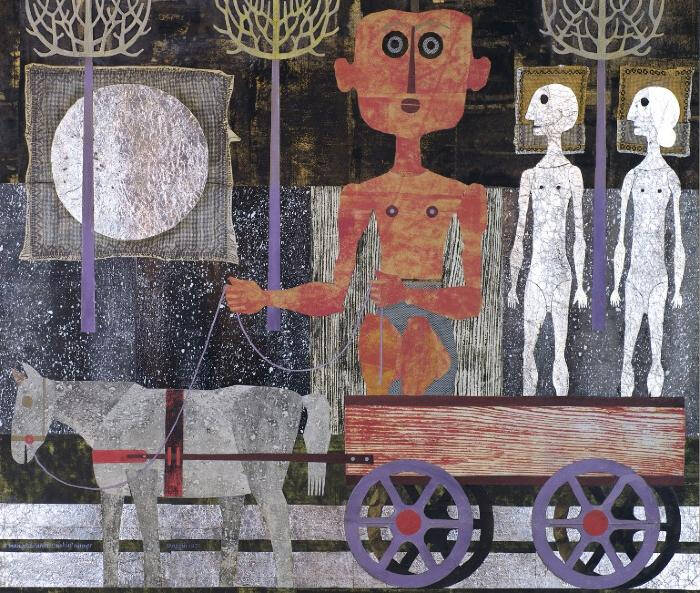
Henk Krijger (1914-1979)
Henk Krijger lived through World War II in Amsterdam, experienced Nazi occupation, and participated in the Dutch resistance. As a designer, typographer, and illustrator, Krijger worked for De Bizige Bij (The Busy Bee), an illegal publishing house that created and published Nazi resistance materials. The sales of these publications were used to raise funds for displaced Jewish children who were hidden from deportation to the concentration camps. Krijger also lived through the Hongervinter of 1944-45, during which he smuggled potatoes into Amsterdam in direct defiance of the Nazi food embargo. After 1945, Krijger created a sculpture in the Netherlands celebrating the millionth home built after the destruction of the war.
The GVSU Art Museum holds the largest public collection of Krijger’s art.
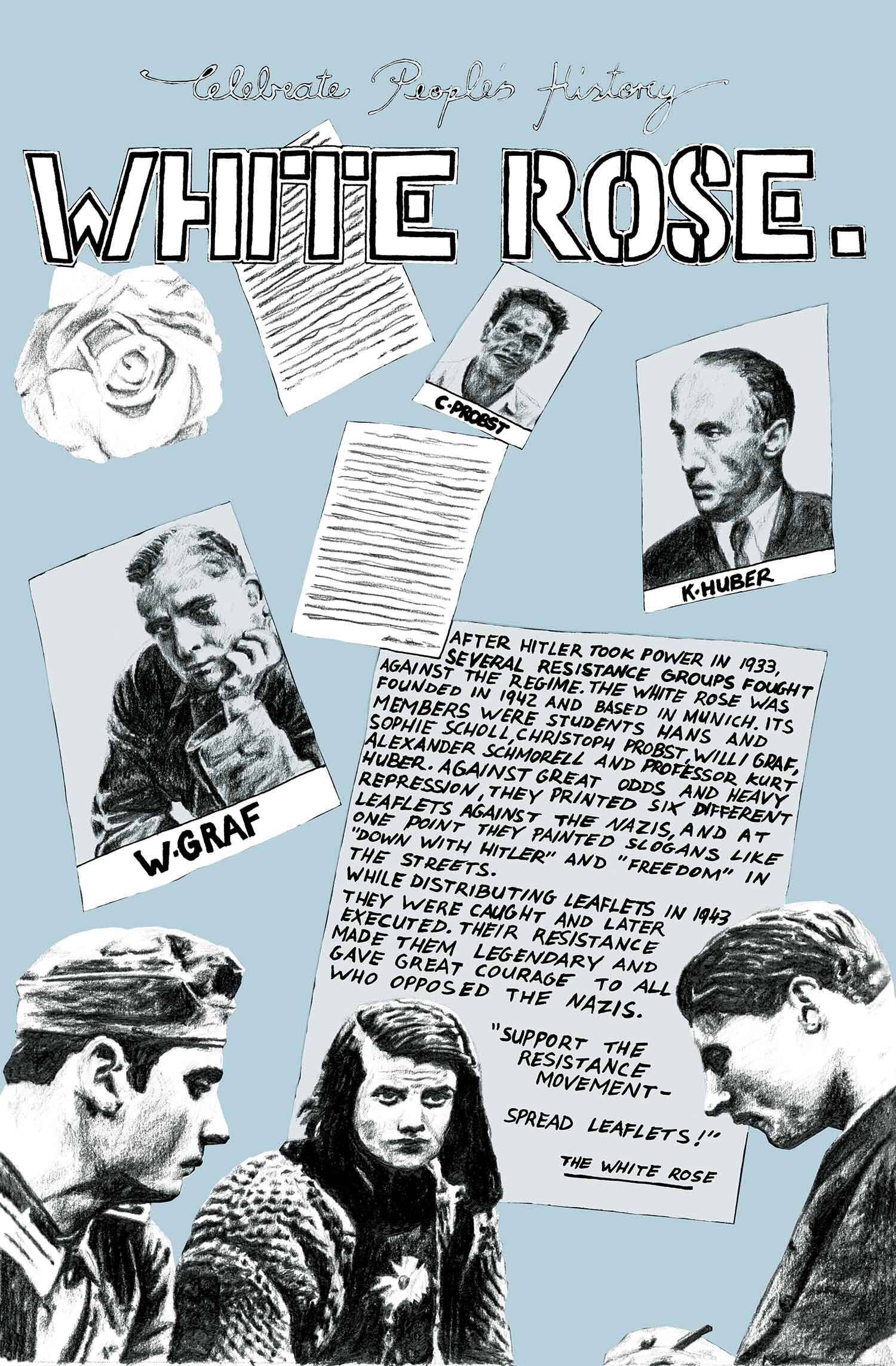
White Rose Resistance
White Rose was a Nazi resistance group based in Munich, Germany, from 1942 to 1943. They practiced nonviolent protest through graffiti and leaflets. Based out of the University of Munich, White Rose included five students, Willi Graf, Christoph Probst, Alexander Schmorell, Hans Scholl, and Sophie Scholl, and one professor, Kurt Huber. White Rose published resistance pamphlets during their brief existence. Originally, their pamphlets were distributed to people they knew, but by the end, their pamphlets were being distributed to thousands of people across Germany and Austria. These pamphlets not only called out the evils of the Nazi regime, such as their persecution of Jewish citizens, but also served as calls to action, suggesting ways that people could commit acts of sabotage. White Rose was growing and preparing to collaborate with other resistance groups when Sophie Scholl was seen distributing pamphlets by a member of the Nazi Party. Sophie, Hans, and Christoph Probst were put on mock trial and claimed all of the blame, but the other three members of the group were eventually found out. All were sentenced to death for treason and executed.
“Since the conquest of Poland, 300,000 Jews have been murdered in this country in the most bestial way ... The German people slumber on in dull, stupid sleep and encourage the fascist criminals. Each wants to be exonerated of guilt; each one continues on his way with the most placid, calm conscience. But he cannot be exonerated; he is guilty, guilty, guilty!” - White Rose Pamphlet 2
Learning Resources

Theme: The Holocaust

Vera Klement

Marc Chagall

Henk Krijger

Leonard Baskin
Vera Klement, Lifeboat, oil on canvas, 1998, 2021.29.4.
Leonard Baskin, Man of Peace, woodcut, 1952, 2017.48.1.
Marc Chagall, Nature Morte Brune (Brown Still Life), color lithograph, 1957, 2013.68.10.
Henk Krijger, Waiting for Charon Series: A Man Goin Around Takin Names, giclée of photograph of original paper and foil collage on board, 1973, 2021.64.20.
Keinom, Celebrate People's History: White Rose, 2-color offset-printed poster, 2006, 2020.23.16.