

Lavender Graduation
Lavender Graduation
Open to all, recognizing LGBTQIA+ and ally graduate contributions to GVSU.
Lavender Graduation 2027
Date, time, and location to be announced!
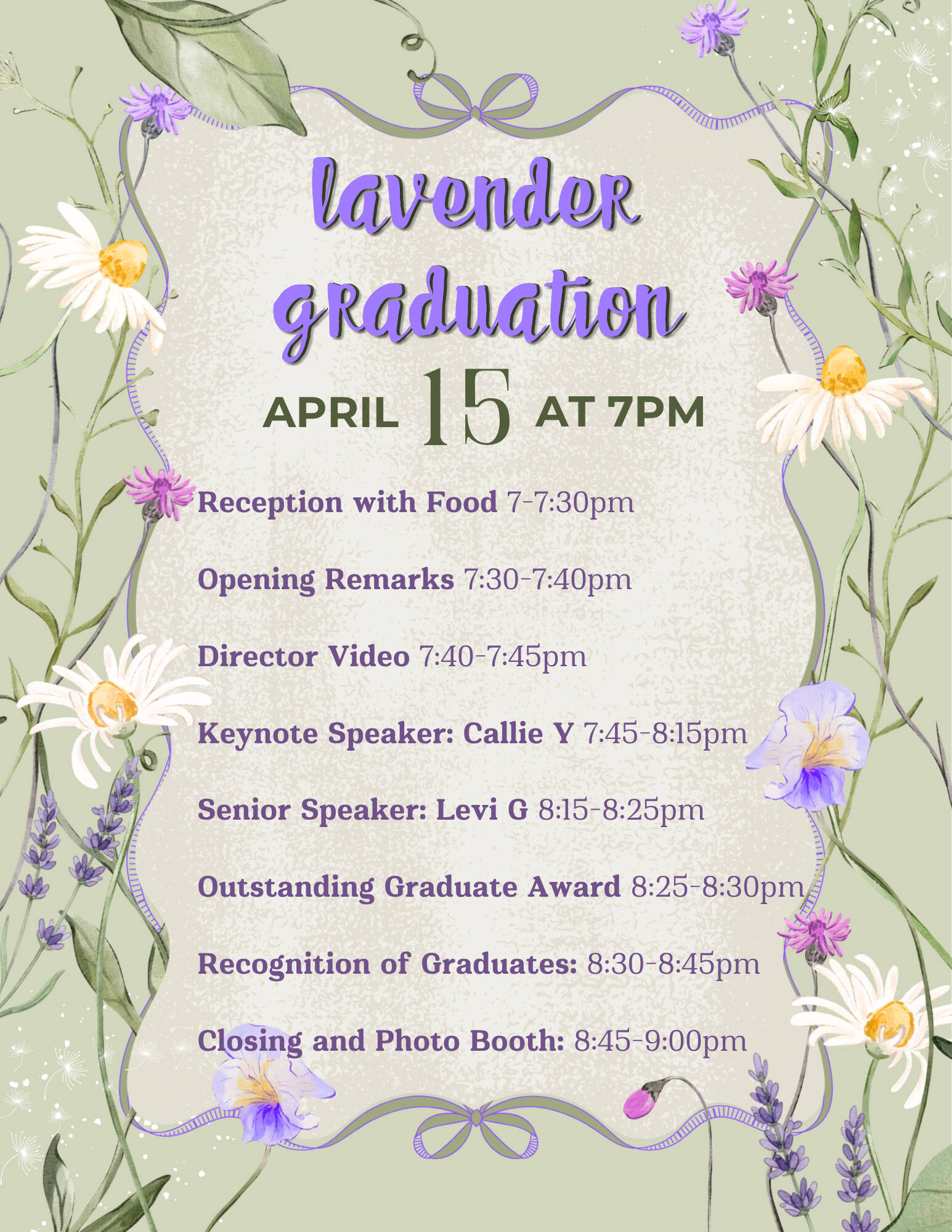
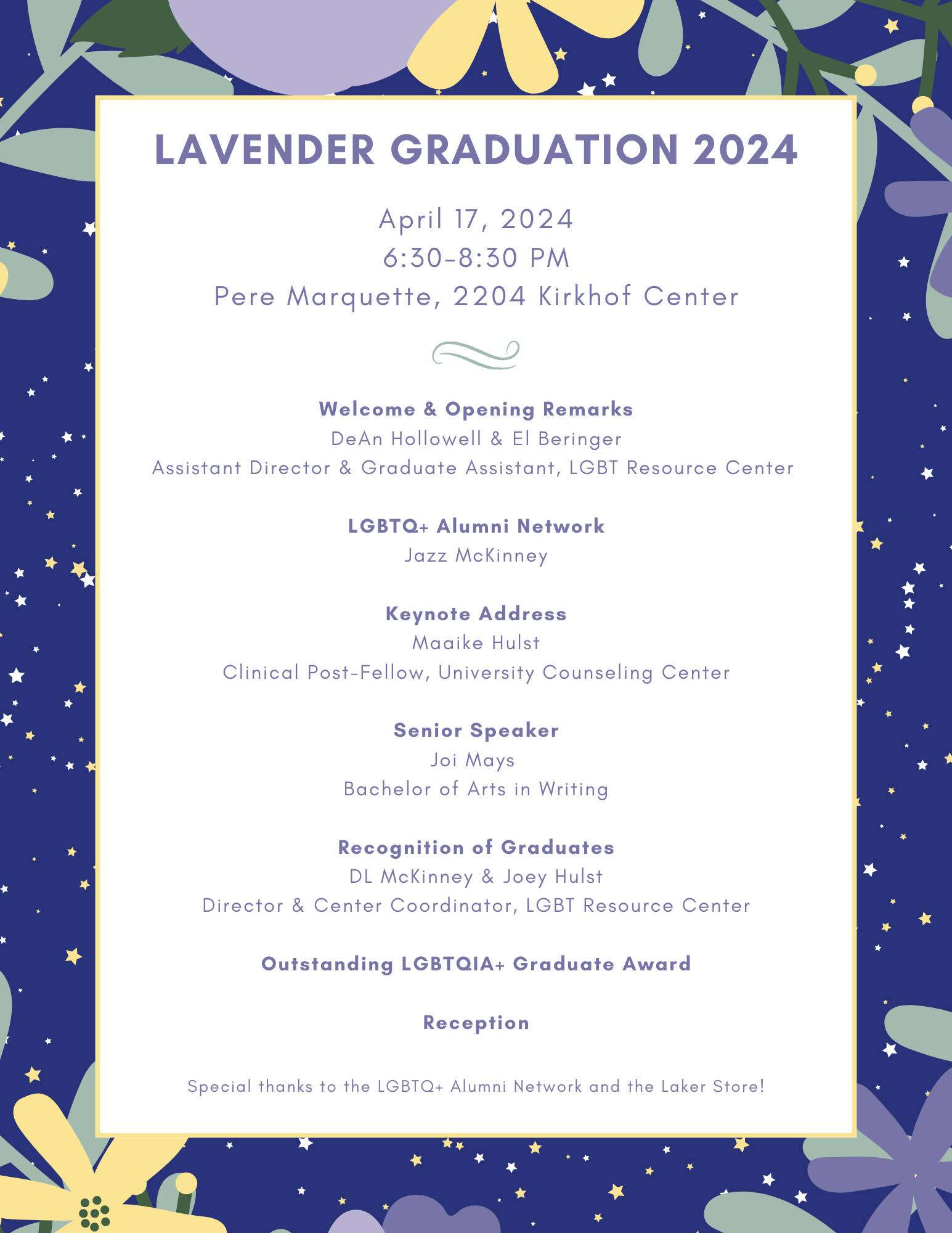
What should I expect at Lavender graduation?
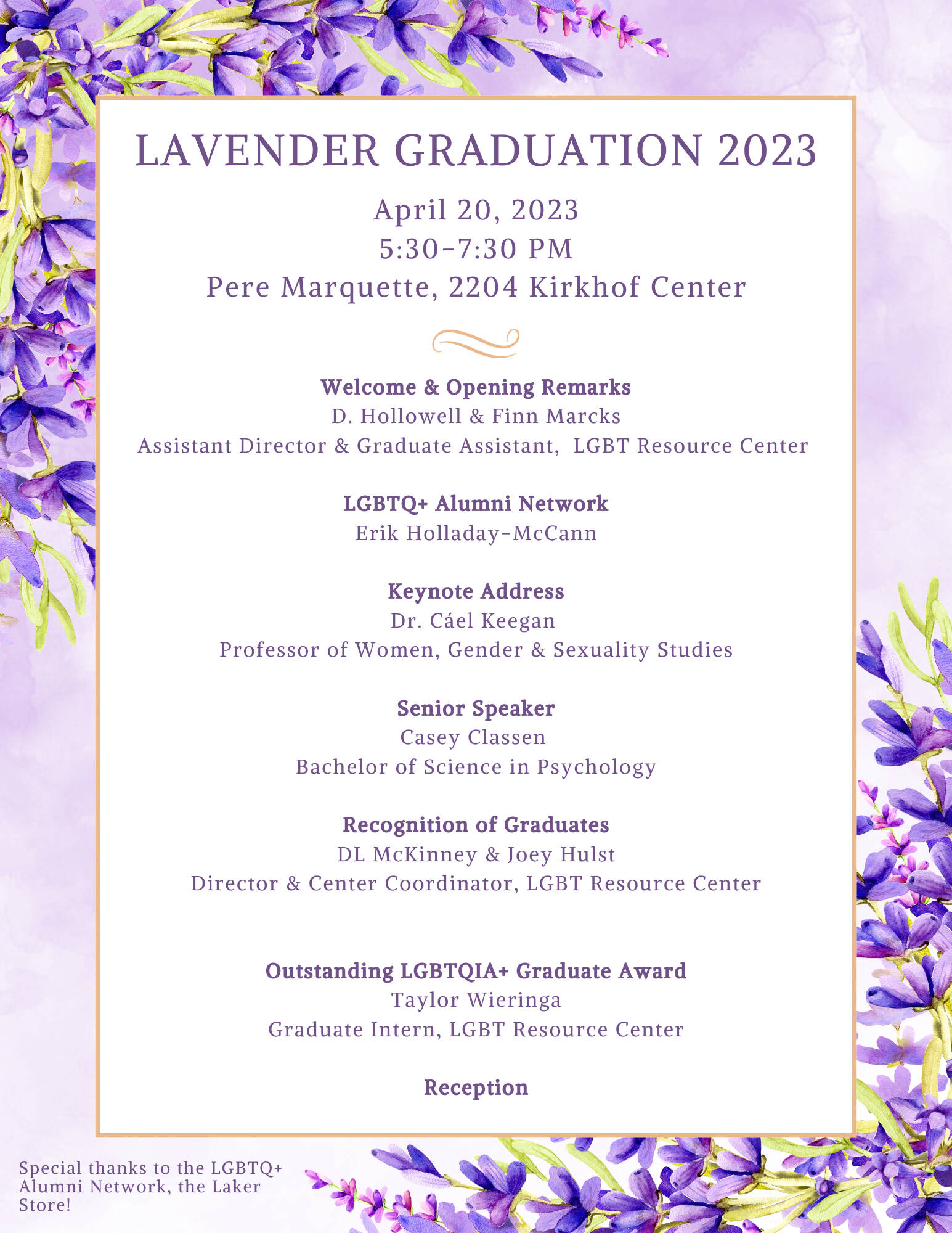
Schedules from past Lav Grad celebrations:
Parking for this event is free. You are welcome to park in lots H2 or H1 anytime after 6:30pm.
Registration Form
Our registration form is closed. We look forward to celebrating with you in 2027!
All registered graduates are welcome to bring up to three guests.
If you have any questions, please get in touch with the RRC at [email protected]
Rainbow Tassels
If you cannot attend Lavender Graduation but would still like to pick up a rainbow tassel from the Rainbow Resource Center, please email Joey ([email protected]).
Otherwise, all registered graduates will receive their rainbow tassel at Lav Grad.
Outstanding Graduate Award
Nomination Form:
Return here in 2027 to nominate an Outstanding Graduate for Lav Grad 2027.
Description:
This award is given to an exceptional student graduating in the Fall or Winter semester of 2027 (undergraduate or graduate). We seek to recognize a student who has excelled in leadership and academically during their time at Grand Valley. We accept both external and self-nominations.
Candidate Criteria:
- Must be graduating from GVSU in 2027 (undergraduate or graduate).
- Must show impressive participation in extracurricular activities in the GVSU community and/or Grand Rapids community.
- Must demonstrate exceptional ability to balance both academic responsibility and extracurriculars.
Nominations will be reviewed by the Rainbow Resource Center staff. The award recipient will be recognized at Lavender Graduation.
About the Event
Mission: Celebrating the personal and academic achievements of LGBTQIA+ and allied students and recognizing their contributions to our campus.
Program: Dinner, welcome and remarks, keynote address, awards, recognition of graduates, reception and photographs
Cultural Context
Lavender Graduation is a cultural celebration that recognizes LGBTQIA+ students' contributions to the university and acknowledges their achievements during their college experience. Students are officially recognized by the institution for their leadership, success, and achievement.
Historical Context
Lavender Graduation began in 1995 at the University of Michigan to honor the accomplishments of LGBT and allied graduates. Ronni Sanlo, the director of the resource center at that time, believed LGBTQ students needed their own graduation ceremony like that of other racial and ethnic minorities on campus. Since 1995, campuses across the country have hosted their own Lavender Graduations to honor the accomplishments of LGBTQ graduates.
The color lavender is important to LGBTQ history and culture. Early mentions in 19th century Europe began to associate lavender with homosexuality, and in the United States it became a coded reference for queerness. Oscar Wilde made allusions to queer themes using the phrase "purple hours" and Abraham Lincoln's biographer (Carl Sandburg) suggested his early friendships had a "streak of lavender." In the mid-20th century in the U.S., the "lavender scare" was a moral panic around queer people in the government, which brought about mass investigations and dismissals for those accused. During this period, the term "lavender lads" was used as a pejorative for gay men, along with "lavender set" used by the media.
Lavender has since been reclaimed by the LGBTQ community, with activists in a 1969 "gay power" march wearing lavender sashes and armbands. When prominent feminist Betty Friedan referred to lesbians as the "lavender menace," lesbians turned the phrase around and wore it proudly on shirts to feminist events. Lavender continues to hold special importance for the LGBTQ community to this day.
Sources:
- Why Lavender Represents Queer Resistance - WMHT
- Violet delights: A queer history of purple - V&A Dundee
- From Lavender to Violet: The Lesbian Obsession with Purple - dressingdykes.com
- How lavender became a symbol of LGBTQ resisitance - CNN
- What was the Lavender Menace? A look back at the lesbians who altered the women's movement - NBC News