Celebrating Alumni - Lavender Graduation
Missed Lavender Graduation?
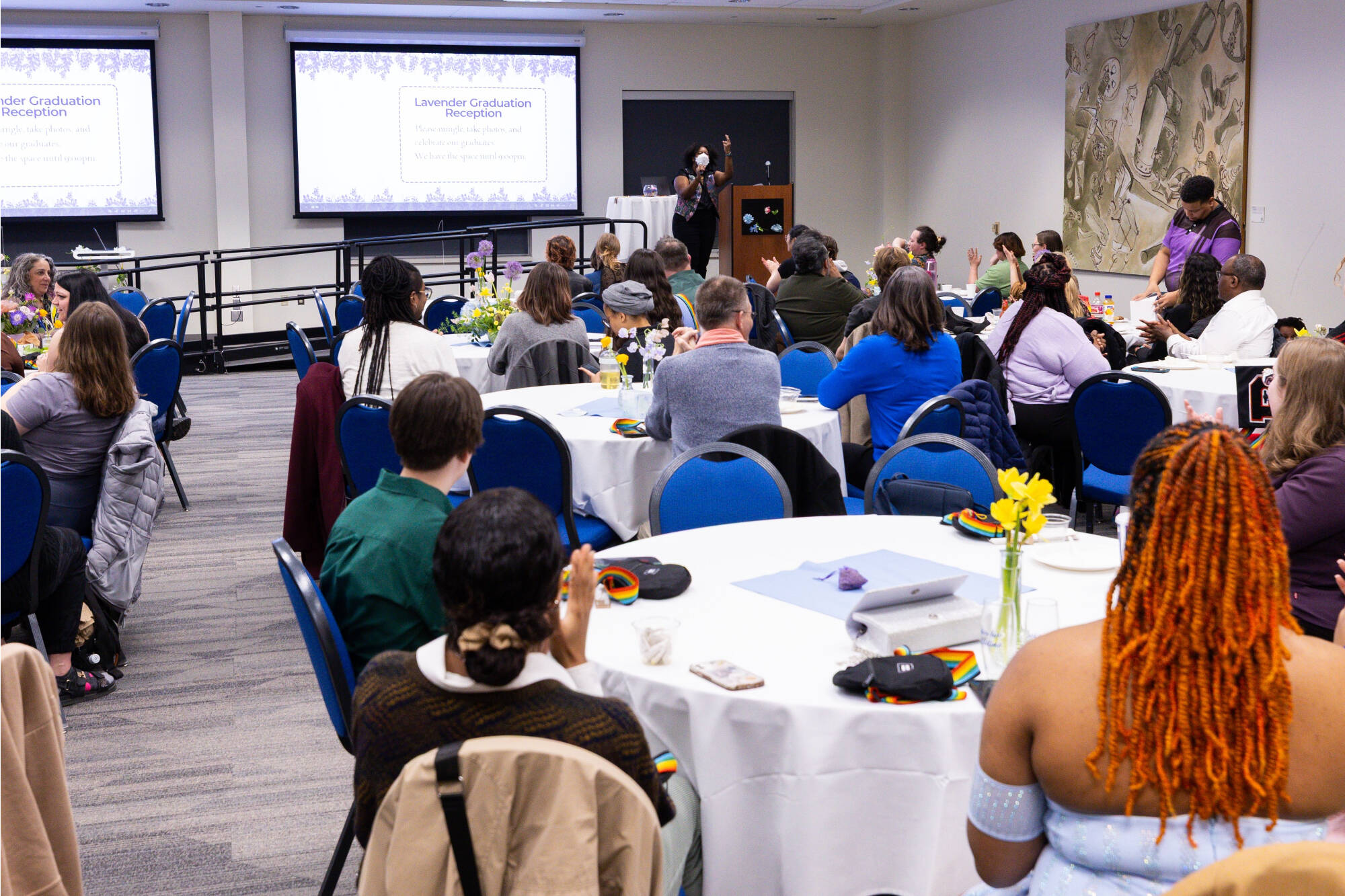
We recognize that not all of our LGBTQIA+ alumni had the opportunity to participate in this important cultural ceremony. As we celebrate GVSU's 15th Lavender Graduation, we want to extend our recognition and appreciation to these alumni as important members of our diverse university community. Whether you graduated 30 or 3 years ago, we want to hear from you!
Simply email [email protected] and we will make arrangements to get you a Lavender Graduation rainbow tassel to honor you and your contributions to our community.
A Brief History of Lavender Graduation
Lavender Graduation began in 1995 at the University of Michigan to honor the accomplishments of LGBT and allied graduates. Ronni Sanlo, the director of the resource center at that time, believed LGBTQ students needed their own graduation ceremony like that of other racial and ethnic minorities on campus. Since 1995, campuses across the country have hosted their own Lavender Graduations to honor the accomplishments of LGBTQ graduates.
The color lavender is important to LGBTQ history and culture. Early mentions in 19th century Europe began to associate lavender with homosexuality, and in the United States it became a coded reference for queerness. Oscar Wilde made allusions to queer themes using the phrase "purple hours" and Abraham Lincoln's biographer (Carl Sandburg) suggested his early friendships had a "streak of lavender." In the mid-20th century in the U.S., the "lavender scare" was a moral panic around queer people in the government, which brought about mass investigations and dismissals for those accused. During this period, the term "lavender lads" was used as a pejorative for gay men, along with "lavender set" used by the media.
Lavender has since been reclaimed by the LGBTQ community, with activists in a 1969 "gay power" march wearing lavender sashes and armbands. When prominent feminist Betty Friedan referred to lesbians as the "lavender menace," lesbians turned the phrase around and wore it proudly on shirts to feminist events. Lavender continues to hold special importance for the LGBTQ community to this day.
Sources:
- Why Lavender Represents Queer Resistance - WMHT
- Violet delights: A queer history of purple - V&A Dundee
- From Lavender to Violet: The Lesbian Obsession with Purple - dressingdykes.com
- How lavender became a symbol of LGBTQ resisitance - CNN
- What was the Lavender Menace? A look back at the lesbians who altered the women's movement - NBC News