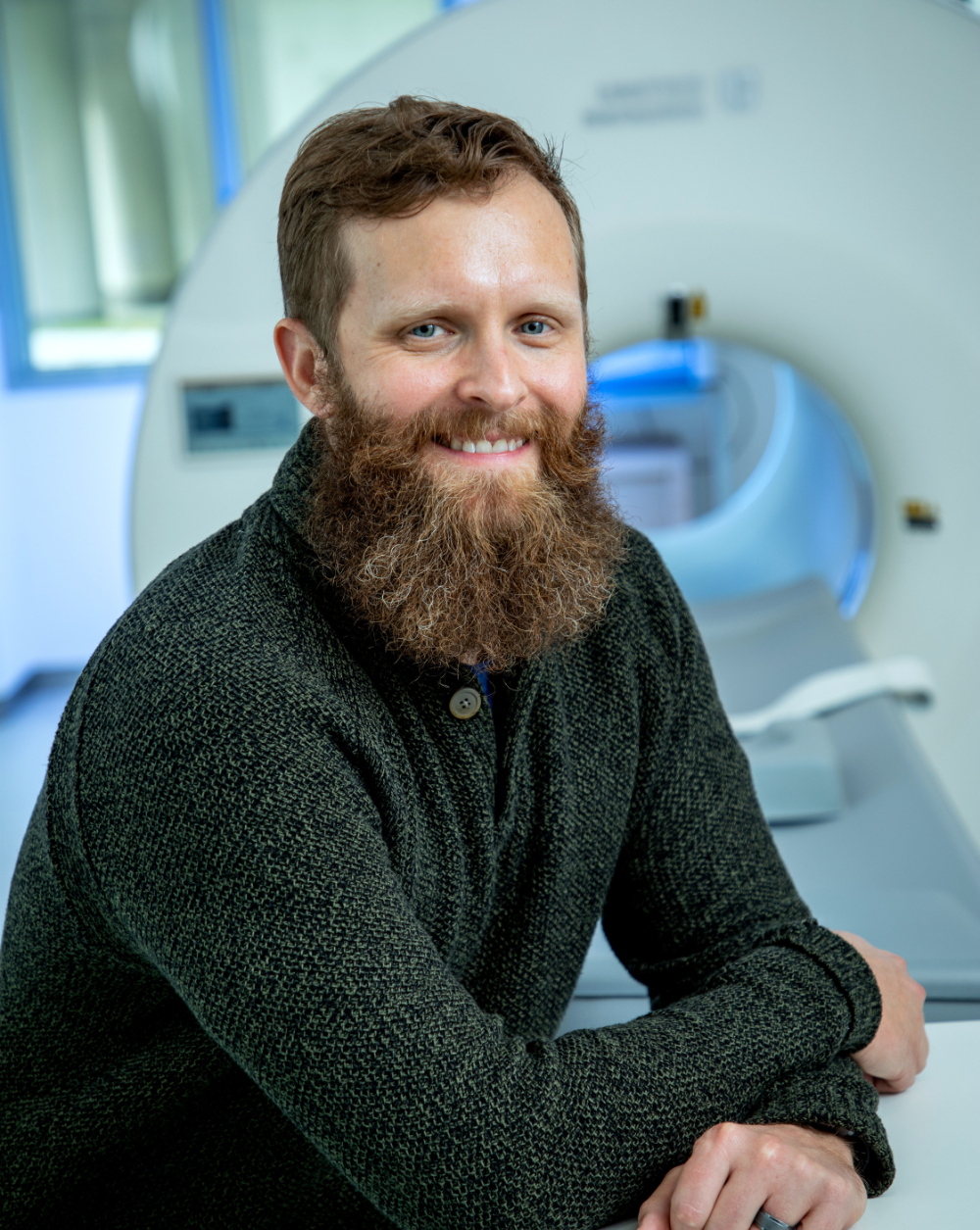
Kevin Maupin joined the College of Computing as an assistant professor.
When Kevin Maupin ’10 walks into a classroom, he brings with him the
kind of experience that seems more like a Netflix science series than
an academic resume.
His journey from psychology student to biomedical researcher has
spanned some of the most innovative frontiers in science — from genome
editing and liquid biopsy technologies for cancer detection to
research with mice sent to the International Space Station.
Now, as assistant professor in the College of Computing, Maupin is
ready to channel those experiences into shaping the future of
computing in health care and biotechnology.
“I see computing as the engine behind so many of today’s medical
breakthroughs,” Maupin said. “Whether it’s developing AI to map tumors
or using liquid biopsies to monitor cancer in real time, we’re at a
moment where technology and biology are deeply intertwined.”
Maupin’s expertise is rare and remarkably interdisciplinary.
After earning a bachelor's degree in psychology, he pivoted into
cellular and molecular biology, later completing a doctoral degree in
that discipline at the Van Andel Institute Graduate School. There, he
explored the role of galectin-3 in bone development and engineered
mouse models using a gene-editing technology, CRISPR.
His research expanded into glycosylation markers in cancer, fracture
healing in space-based environments and theranostics: a field
combining diagnostic imaging with targeted treatment.
“I’ve always seen connections between fields that others might miss,”
Maupin said, adding he was diagnosed with ADHD at age 25. “That’s
partly thanks to how my mind works. It’s a strength in research and in
the classroom. It helps me engage students in unconventional ways.”
As a scientific advisor at BAMF
Health, Maupin helped develop advanced diagnostic tools using
PET/CT and PET/MRI and oversaw projects that leveraged AI to tailor
patient treatment plans.
“Dr. Maupin brings a wealth of expertise in biomedical innovation and
translational research to our college,” said Marouane Kessentini, dean
of the College of Computing. “His arrival strengthens our commitment
to interdisciplinary education and research that directly impacts lives.
“Given our partnership with BAMF Health, his presence also deepens
our regional collaborations and creates powerful new opportunities for
our students and faculty to engage in cutting-edge precision medicine.”
At Grand Valley, Maupin will mentor the next generation of
researchers and innovators. He plans to build bridges between students
and the region’s health care and biotech industries through
internships, research projects and community partnerships.
He’s particularly passionate about mentoring students who may not see
themselves as traditional scientists, but have talents lie in blending
disciplines, just as his own career has shown.
“I want students to understand that careers at the intersection of
computing and medicine are possible,” he said. “They’re urgent and
needed. Whether you’re writing code, analyzing patient data, or
designing AI models, there’s space for you to make a real-world impact.”
— Shelby Harrison is the director of marketing and communications
for the College of Computing
Participants spent 10 weeks in an accelerator program offered by the DeVos Center for Entrepreneurship & Innovation, in partnership with GVSU's Northern Michigan Region.
Featured
July 14, 2026 (Volume 49, Number 19)
Article by
Shannon Owen