Program Information
Education
Grand Valley's Au.D. in Audiology emphasizes clinical training, preparing students with hands-on experience that ensures practical readiness beyond traditional research-focused programs. Graduates are prepared to sit for the national certification exam and qualify for state licensure upon completion of the program.
The program requires 84 credit hours and includes a comprehensive curriculum that integrates didactic coursework with clinical experience. A final 12-month internship is mandatory. As students advance, they transition from didactic to clinical coursework, move from in-house labs to full-time external clinical experiences, encounter a wider variety of disordered patients, and shift their focus from developing specific skills for treating hearing and balance disorders to preparing for independent practice. Unique courses in pharmacology, tinnitus, and radiographic imaging set this program apart from other Audiology programs.
Applicants from any major can apply, and the accelerated three-year curriculum allows students to graduate and begin practicing earlier. This innovative program teaches clinical skills, critical-thinking, and problem-solving abilities, while nurturing the sense of compassion that is essential for success as an audiologist. Students gain hands-on experience every semester through clinical placements with diverse populations and practice settings.
Plus, all students benefit from resident tuition rates, avoiding out-of-state tuition costs.
See below for the curriculum and schedule of courses
Year One
Year Two
Outstanding Clinical Facilities
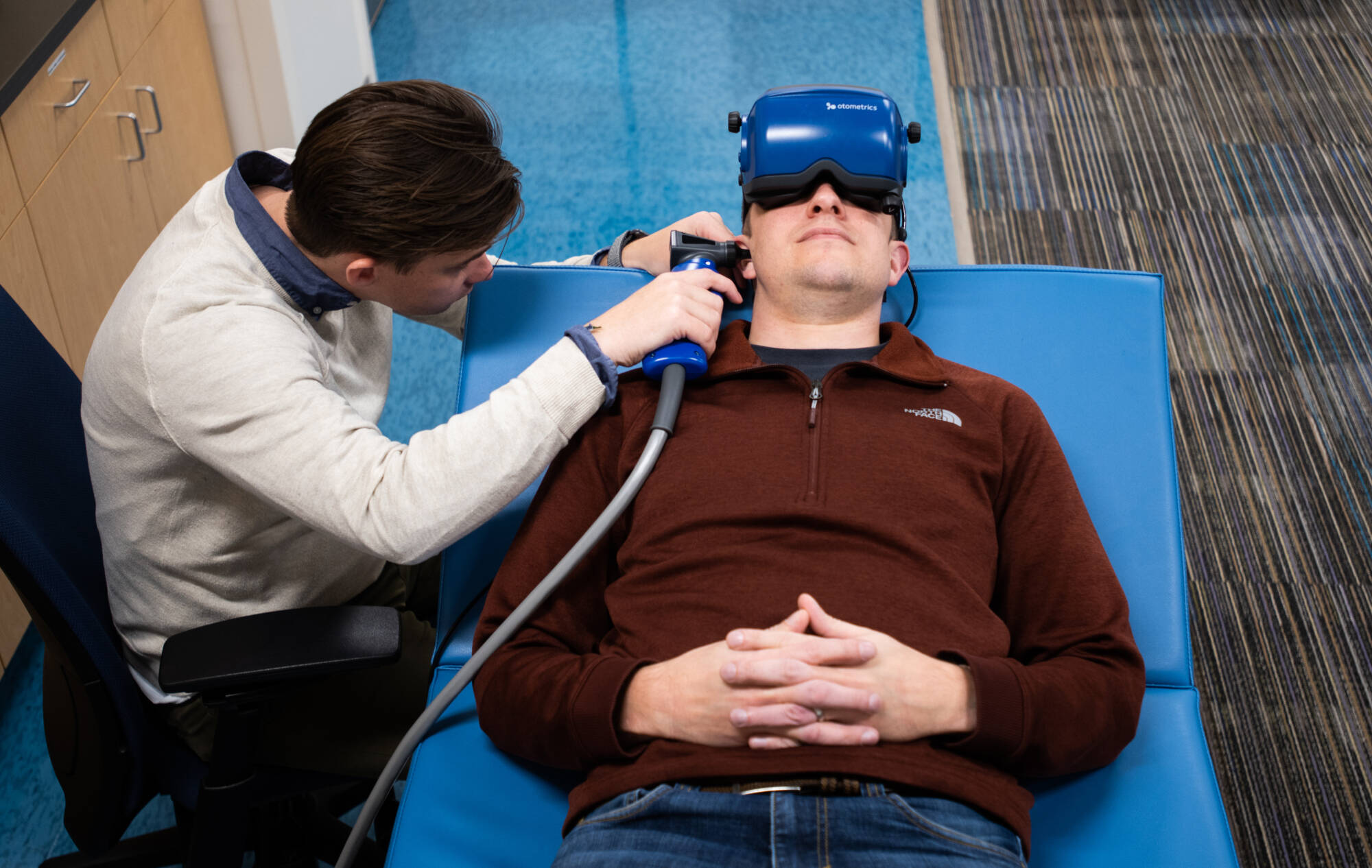
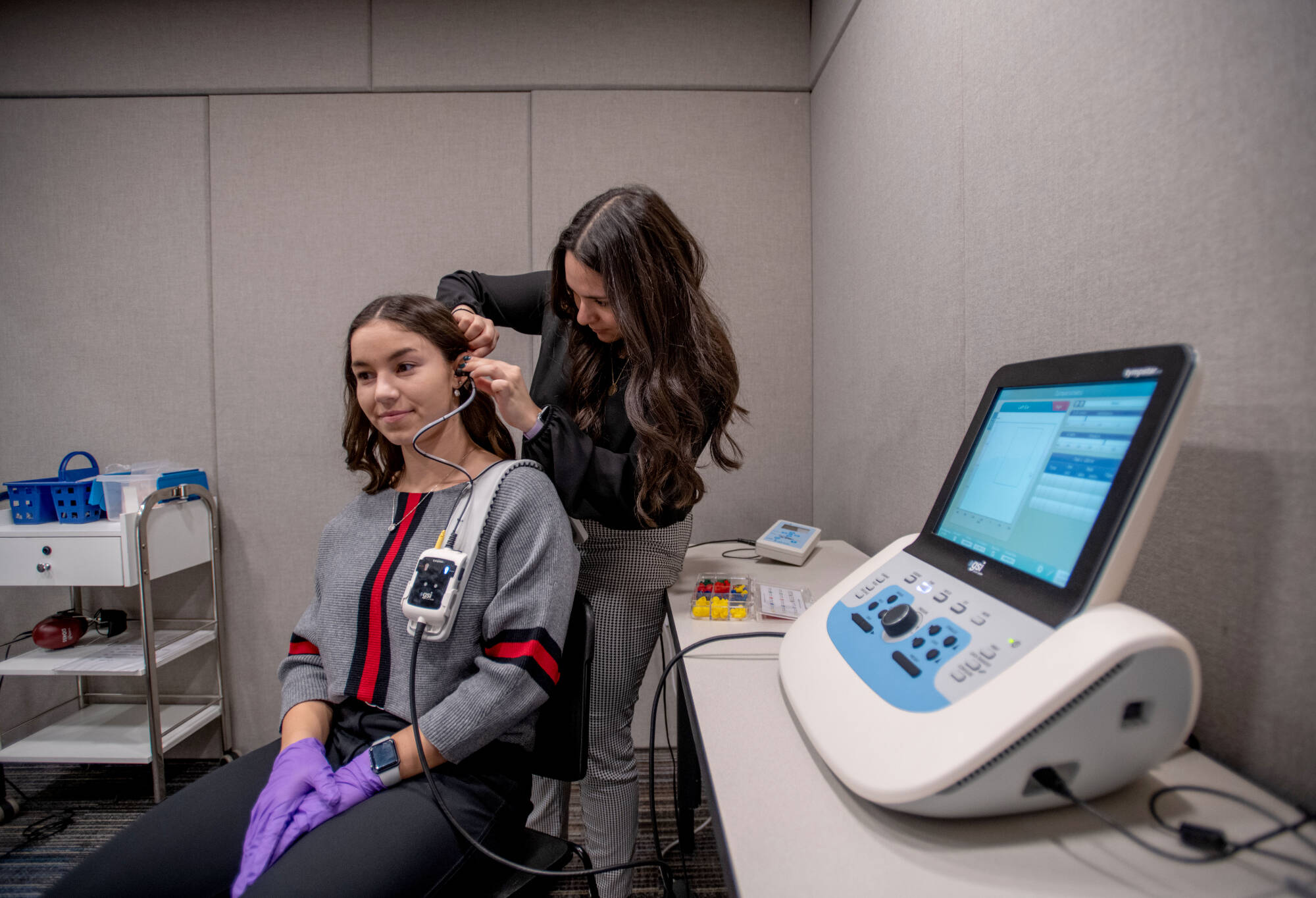
Grand Valley has exceptional audiology facilities that most programs at other institutions are unable to provide, such as the virtual reality computerized dynamic posturography system and rotary chair. All audiology equipment is for exclusive student use to gain the requisite knowledge and skills for credentialing and practice.
Careers in Audiology
- Audiologists frequently work with other medical specialists, speech-language pathologists, educators, engineers, scientists, and allied health professionals and technicians within health care settings, early intervention and K–12 schools, or colleges and universities—or they have their own private practice. You may find an audiologist:
- collaborating with ear, nose, and throat specialists or in hospitals/medical centers;
- managing agencies, clinics, or private practices;
- preparing future professionals in colleges and universities;
- researching the assessment, treatment and management of hearing loss.
- Audiologists work in variety of roles with different levels of responsibility and different client populations. Audiology positions may be part-time, full-time, in-person or remote.
This information was taken from ASHA's website, and more information can be found here: About Audiology Careers