

Artist Profile: Utagawa Hiroshige
Published January 1, 2017 by Nicole Webb
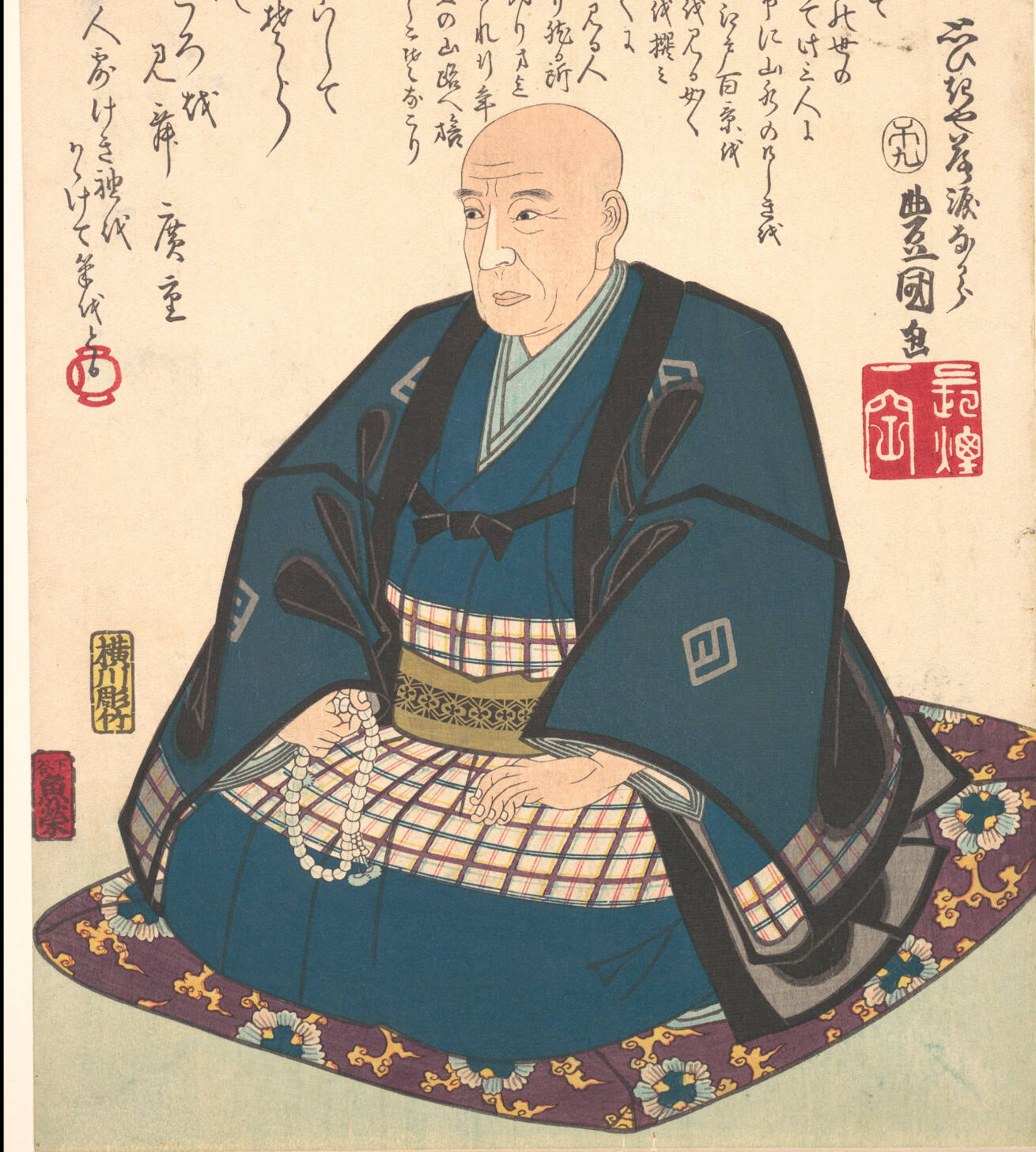
Utagawa Hiroshige
1797-1858
Born Andō Tokutarō in 1797, Utagawa Hiroshige was a Japanese ukiyo-e artist. Hiroshige was a member of the Utagawa school from a young age. The school specialized in woodblock printing, which Hiroshige would eventually become known for. In his works, he explored traditional ukiyo-e themes such as travel, representations of female beauty, actors, and historical scenes. Hiroshige published his first series of landscape prints in 1831. Through their composition and extensive use of color and color gradation, these prints received critical acclaim. Hiroshige continued to create many landscape series over his career, including The Fifty-three Stations of the Tokaido, Thirty-six Views of Mount Fuji, and One Hundred Famous Views of Edo. Often considered a master in the ukiyo-e style, many scholars view Hiroshige’s death as the beginning of the rapid decline of the genre.
Learning Resources

Ame: Japanese Weather in Woodblock Prints
Utagawa Kunisada or Utagawa Toyokuni II, Memorial Portrait of Hiroshige, woodblock print, 1786-1864, Courtesy of the Metropolitan Museum of Art.
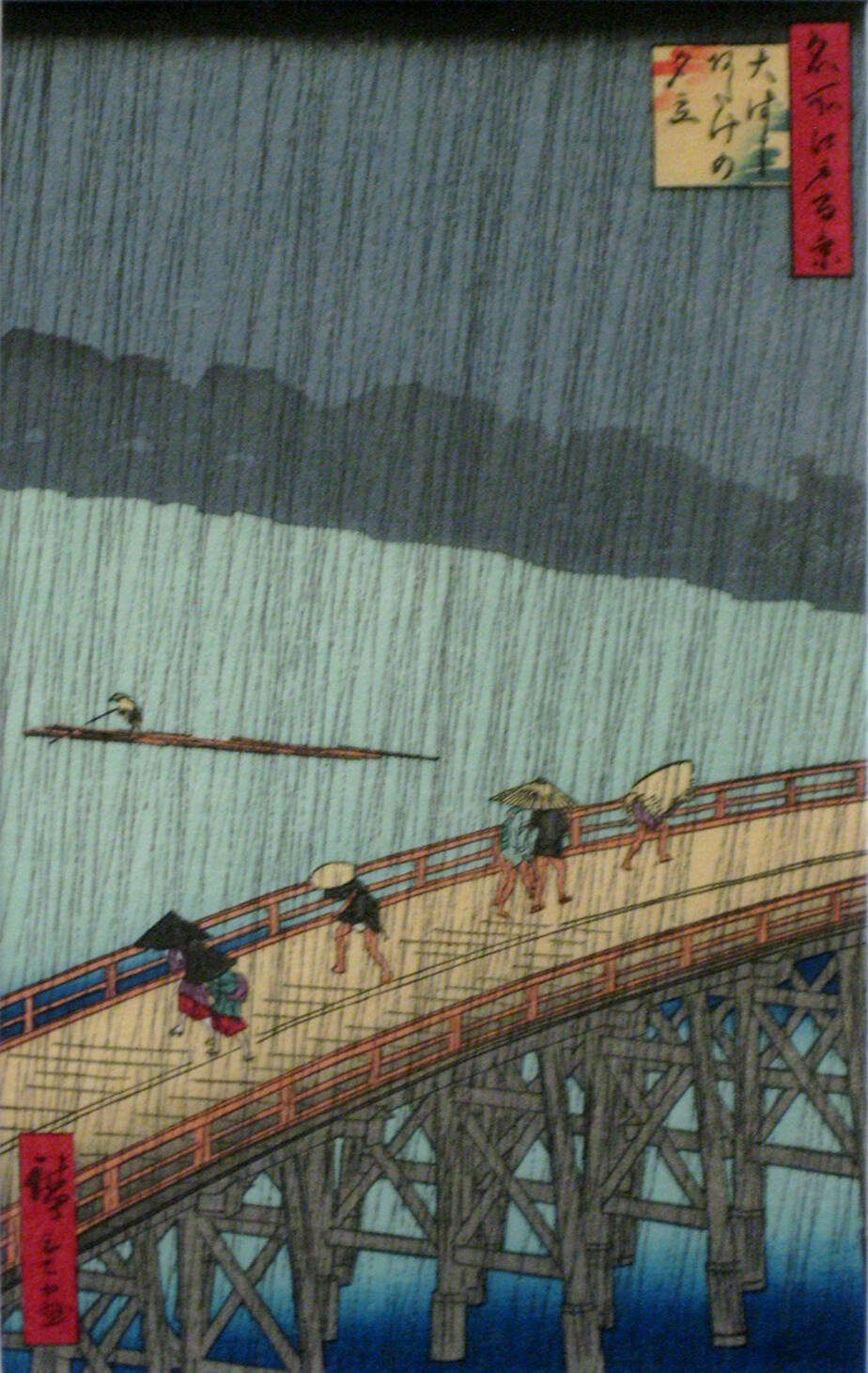
Utagawa Hiroshige, Sudden Shower Over Shin-Ōhashi Bridge and Atake: One Hundred Famous Views of Edo (No. 58), woodblock print, ca 1850, 2007.240.1.
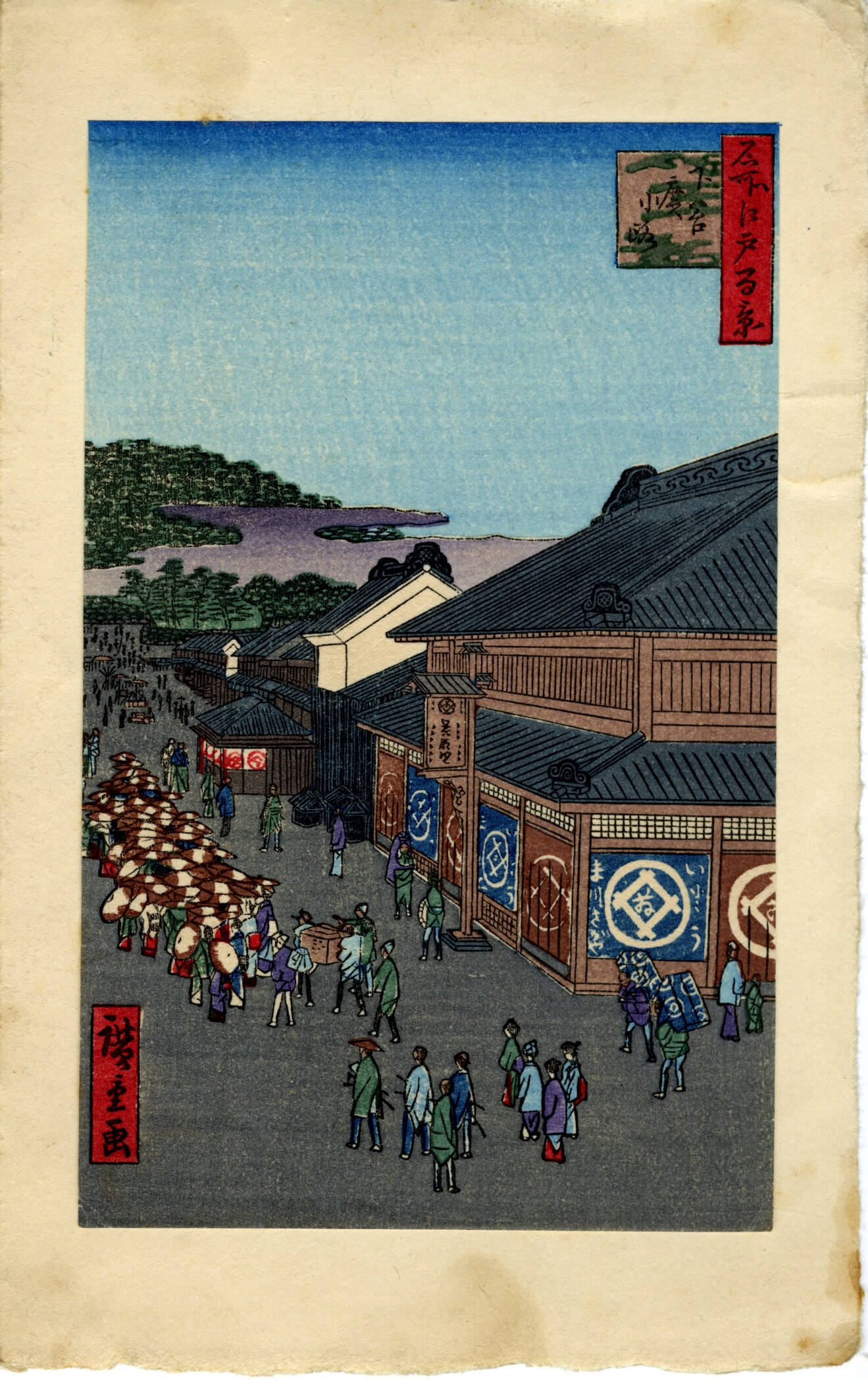
Utagawa Hiroshige, Shitaya Hirokoji: One Hundred Famous Views of Edo (no. 13), woodblock print, ca 1930, L11.2022.473.
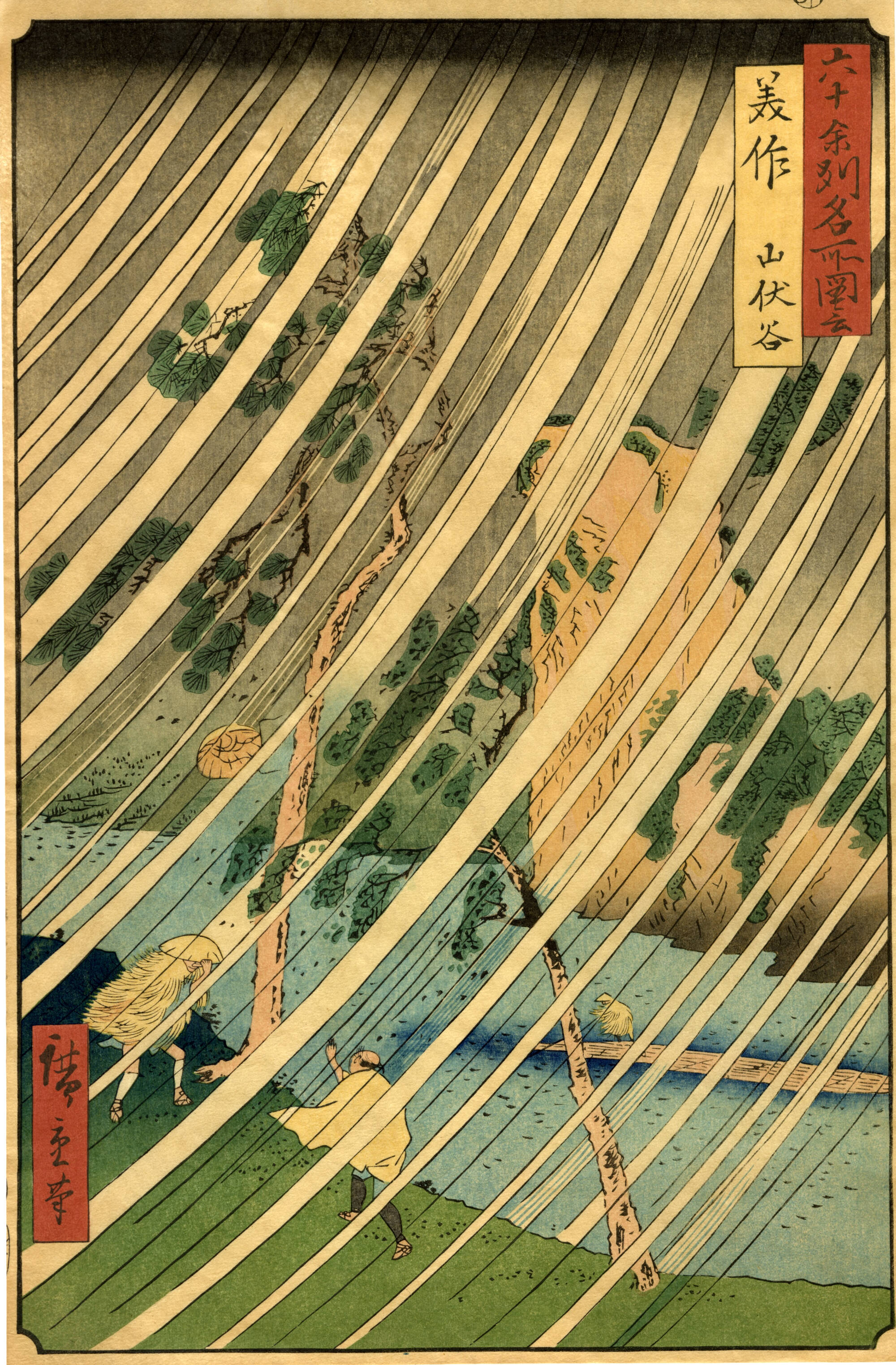
Utagawa Hiroshige, Mimasaka Province, Yamabushi Valley: Famous Views of the Sixty-odd Provinces (no. 46), woodblock print, L11.2022.547.