

Life, Death, and La Catrina: Calaveras and Dia de los Muertos
Published October 29, 2026 by Nicole Webb
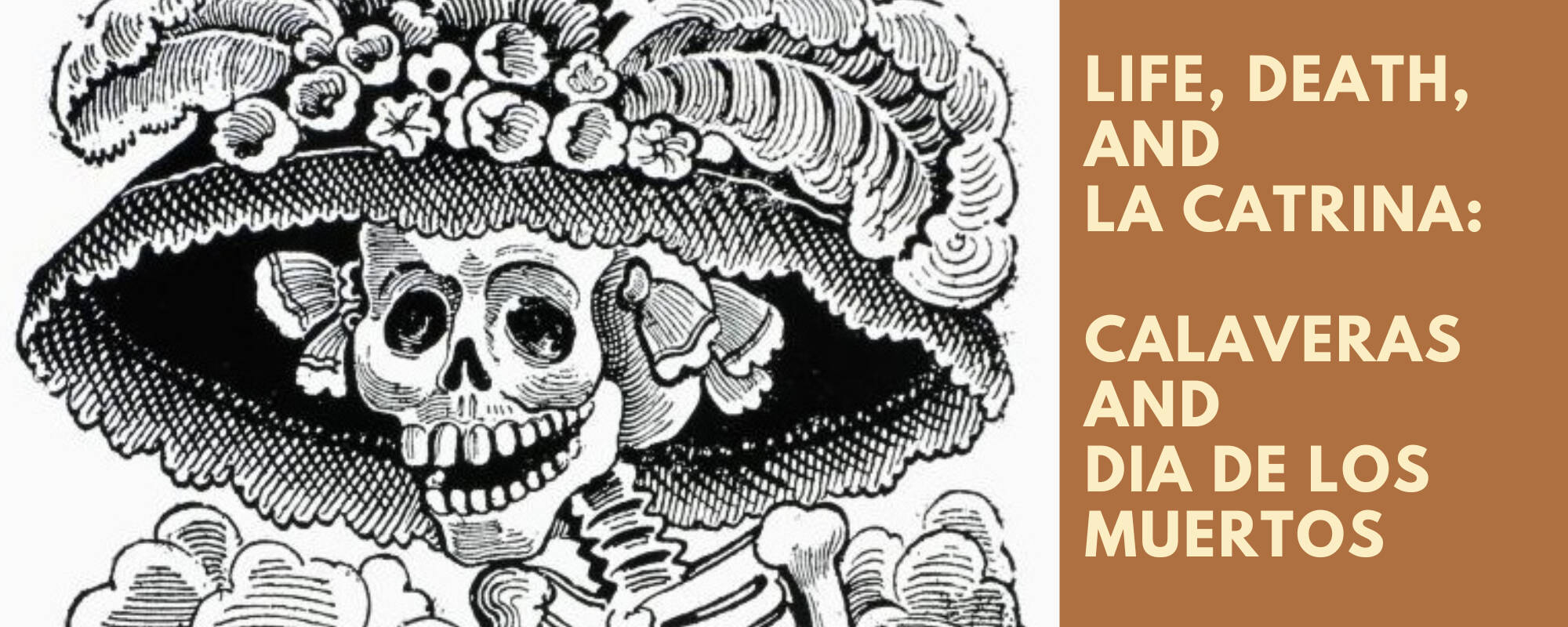
Dia de los Muertos, or Day of the Dead, is a Mexican holiday celebrated on November 1 and 2. The holiday blends Mesoamerican rituals, European religions, and Spanish culture as families welcome back the souls of deceased loved ones for a brief reunion filled with food, drink, and celebration.
For generations, images of the calavera, or skeleton, have been an iconic part of Dia de los Muertos celebrations. Skeletal imagery dates back to pre-Columbian times, when people living in Central America and Mexico used these images to reflect traditions that honored the afterlife.
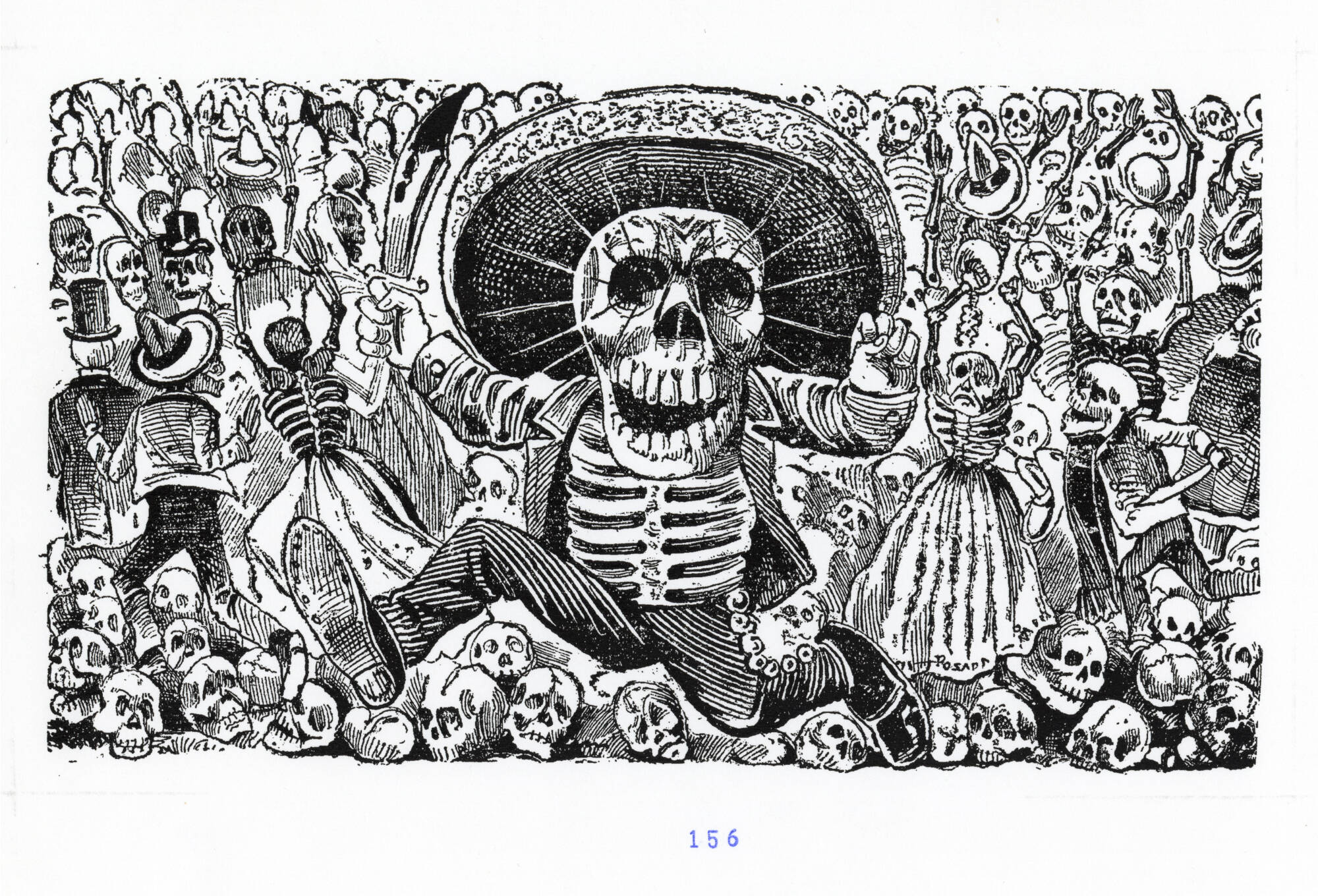
Between 1882 and 1913, Mexican graphic artists José Guadalupe Posada and Manuel Manilla created dozens of calavera images while working in Mexico City for the printing house of Antonio Vanegas Arroyo. Skeletons created by Posada and those found in other Dia de los Muertos imagery are rarely represented as something to be feared. Instead, skeletons are often depicted doing everyday activities, such as riding bicycles, playing music, or dancing. These playful images remind the living that life and spirit continue even in death.
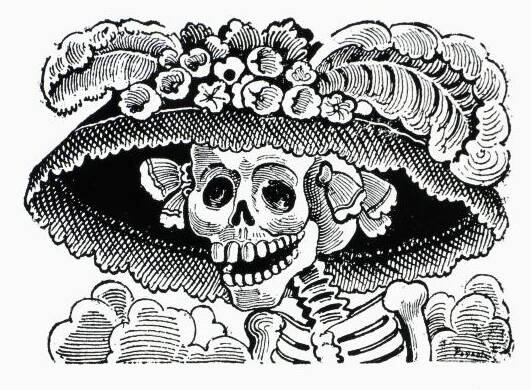
Especially in many of Posada’s cartoons, these whimsical skeletons serve as a reminder that rich or poor, everyone ultimately meets the same fate. One of Posada’s most famous skeletal figures is known as La Catrina. First etched in 1910, the image was not originally created for a Day of the Dead celebration, but rather as a political cartoon criticizing Mexican dictator Porfirio Díaz. Posada’s La Catrina is depicted as an elegant female skeleton wearing an elaborate hat, suggesting that beneath a fancy exterior, everyone is ultimately just bones.
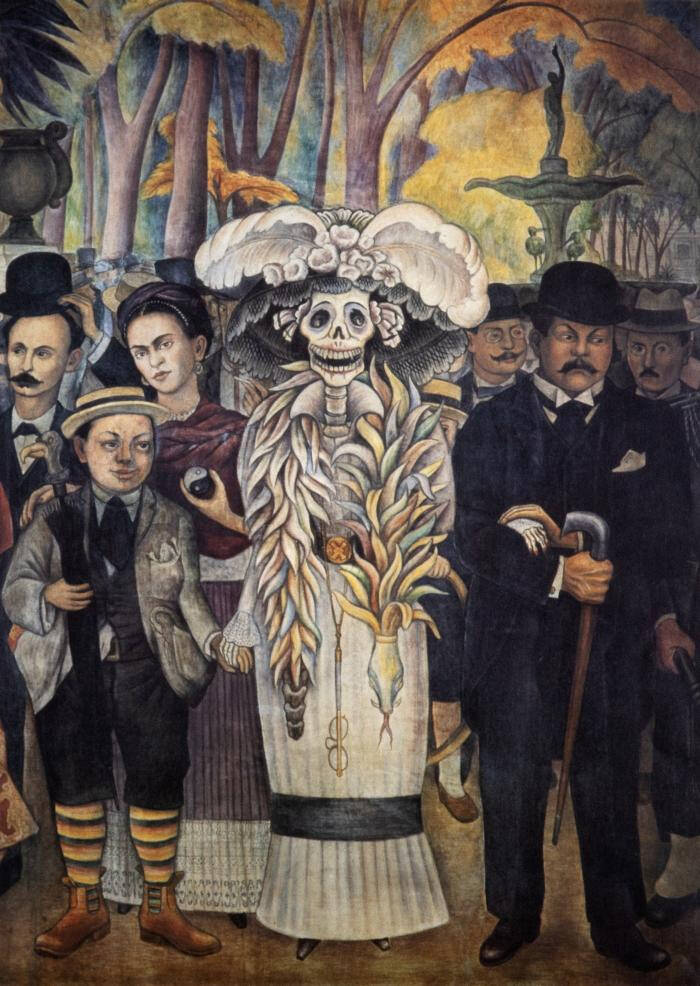
In 1947, muralist and painter Diego Rivera expanded on Posada’s original concept by incorporating La Catrina into his famous mural, Dream of a Sunday Afternoon in the Alameda Central Park. He gave her a full body and dressed her in an elegant gown. In the mural, Rivera depicts La Catrina holding hands with a childhood version of himself on one side and Posada on the other.
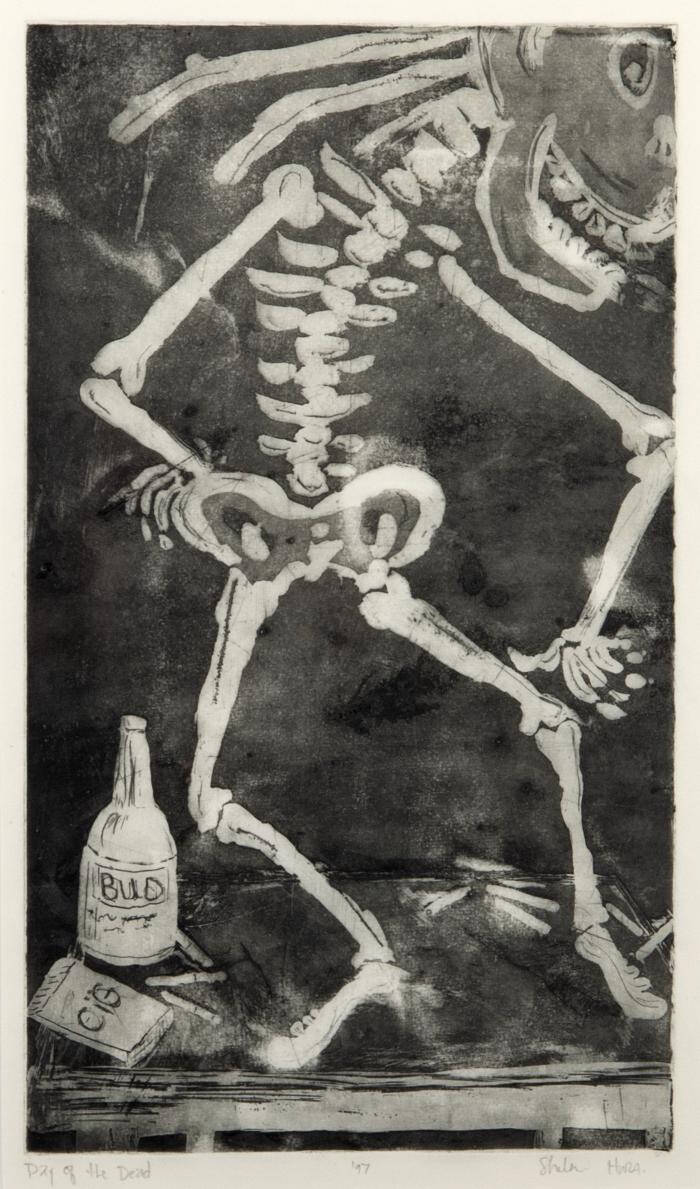
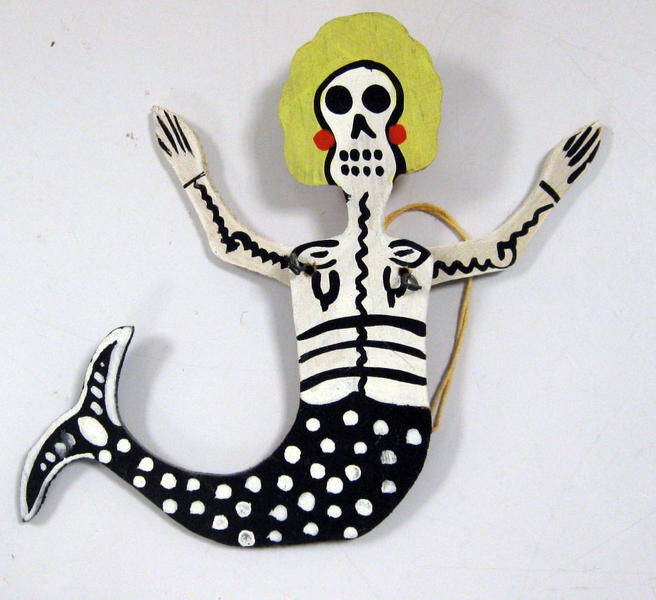
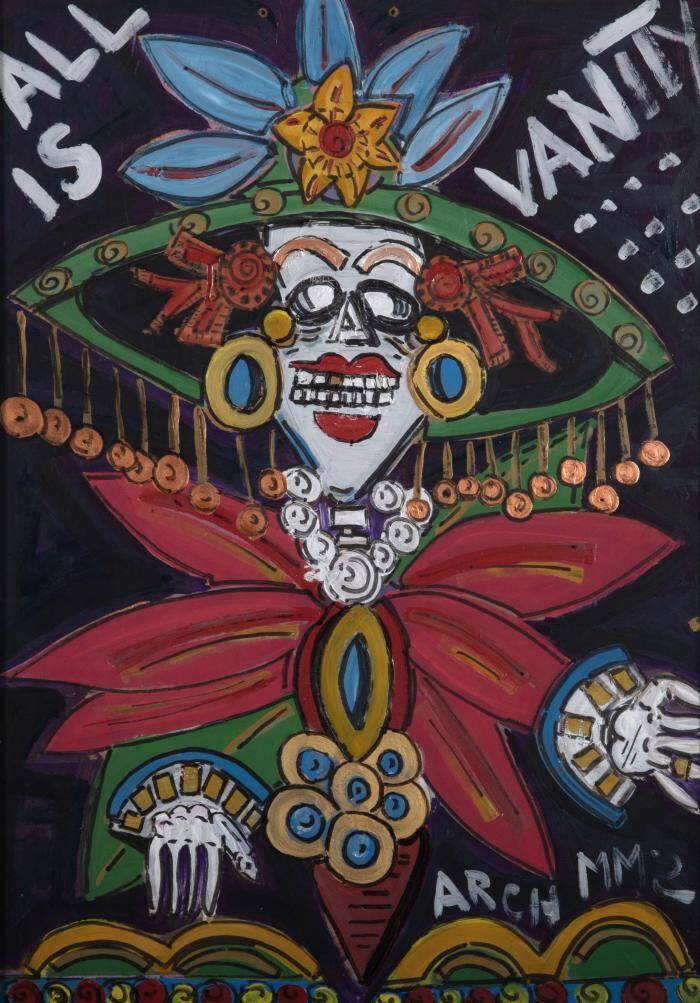
Today, images of La Catrina and other skeletons continue to represent Dia de los Muertos as a celebration that approaches death not with fear, but with humor and respect. The GVSU Art Museum has a number of artworks relating to Dia de los Muertos and skeletal imagery, including more than 350 images by Posada. The collection includes both original publications and restrike prints, which were created using the original plates and press used by Posada and are now owned by the family of Antonio Vanegas Arroyo.
Learning Resources

José Guadalupe Posada

Viva Cinco do Mayo
Eternally Relevant: Memento Mori in Art
José Guadalupe Posada
Want to learn more? Check out these resources available at the GVSU Libraries!
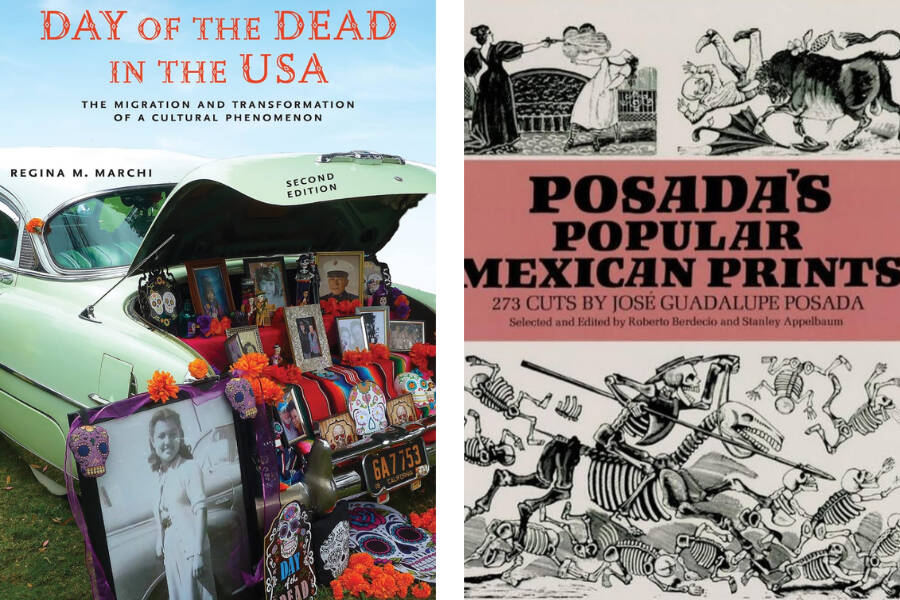
eBook: Day of the Dead in the USA, Second Edition : The Migration and Transformation of a Cultural Phenomenon
By Regina M. Marchi, 2022
Focusing on the power of public ritual to serve as a communication medium, this revised and updated edition combines a mix of ethnography, historical research, oral history, and critical cultural analysis to explore the manifold and unexpected transformations that occur when the tradition is embraced by the mainstream.
Book: Posada's popular Mexican prints
Dover Publications, 1972
José Guadalupe Posada (1852–1913) was Mexico's most illustrious graphic artist. For over forty years he worked tirelessly as an incorruptible and truly popular artist, illustrating cookbooks and fortune-telling books, collections of songs and riddles, periodicals and newspapers, children's books and novels, and most of all famous broadsides that were distributed throughout the country. This book contains over 200 reproduction prints by Posada.
José Guadalupe Posada, La Catrina y Calavera del Siglo XX (Catrina and the Skull of the Twentieth Century) (detail), restrike print, 2004, 2005.0149.1.
José Guadalupe Posada, Calavera Oaxaqueña (Oaxaca Skulls), restrike print, 2004, 2005.00156.1.
Sueno de Una Tarde Dominical en la Almeda Central by Diego Rivera, reproduction poster of original artwork, 2002.397.1.
Shilin Hora, Day of the Dead, aquatint etching, 1997, 2001.1037.1.
Artist Unknown, Day of the Dead Mermaid Skeleton, mixed media on pine, ca 1998, 2010.2.7.
Rick Schaafsma, All is Vanity, mixed media, 2002, 2016.15.7.