

Ame: Japanese Weather in Woodblock Prints
Published June 1, 2024 by Nicole Webb
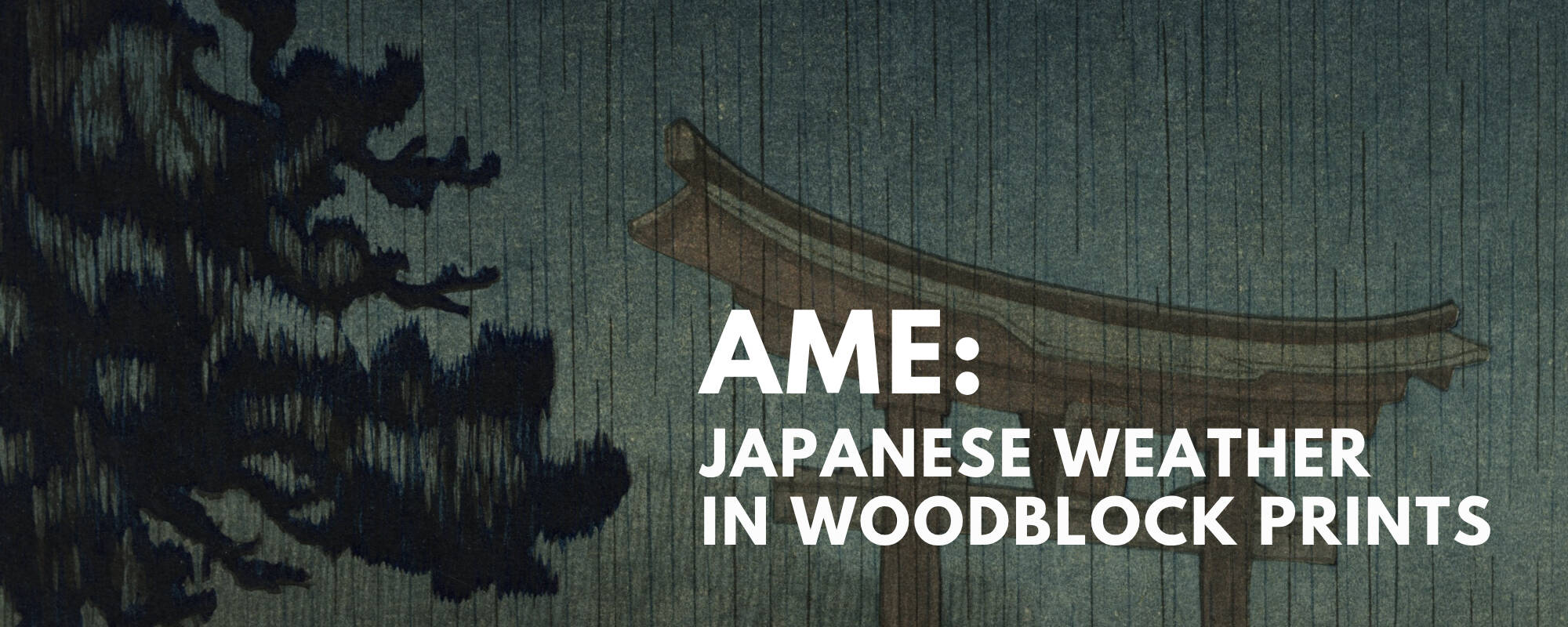
The islands of Japan receive an abundance of rain throughout the year, with rainy seasons and typhoons prevalent in the summer and fall. The Japanese kanji character for rain is a symbol that dates to the Shang Dynasty in China (1600-1046BCE). Rain, seen as a critical element for agriculture, was often associated with the power of the gods. In ancient Japan, rain was thought to be controlled by rain deities like Okami or Kuraokami, dragons, and Shinto deities of rain and snow. There have been numerous Japanese poems written about the importance of rain, and there are dozens of words in the Japanese language used to describe different rain and snow situations. Historically, rain has been a common and important theme in Japanese culture, literature, and art (find a poetry example below!).
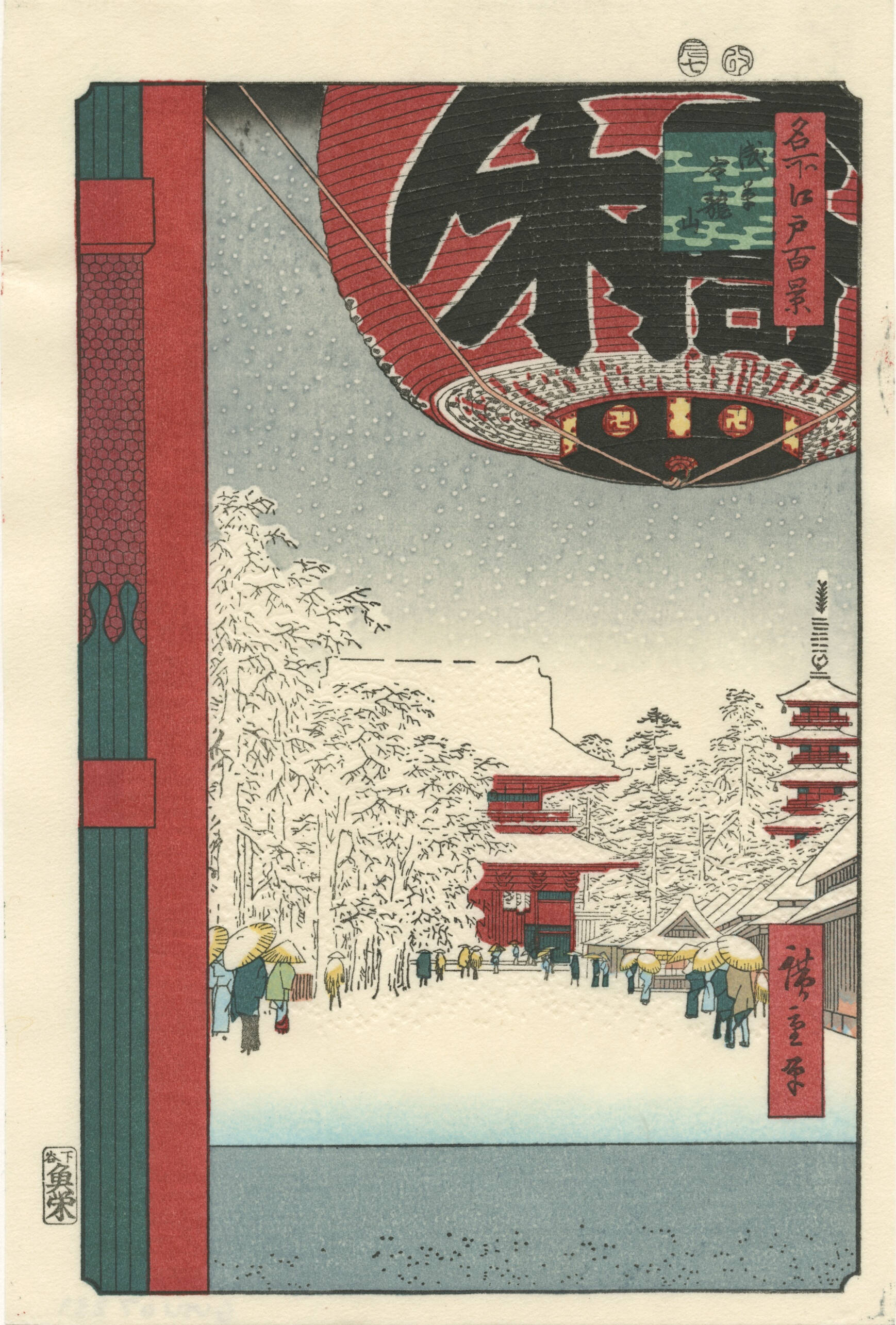
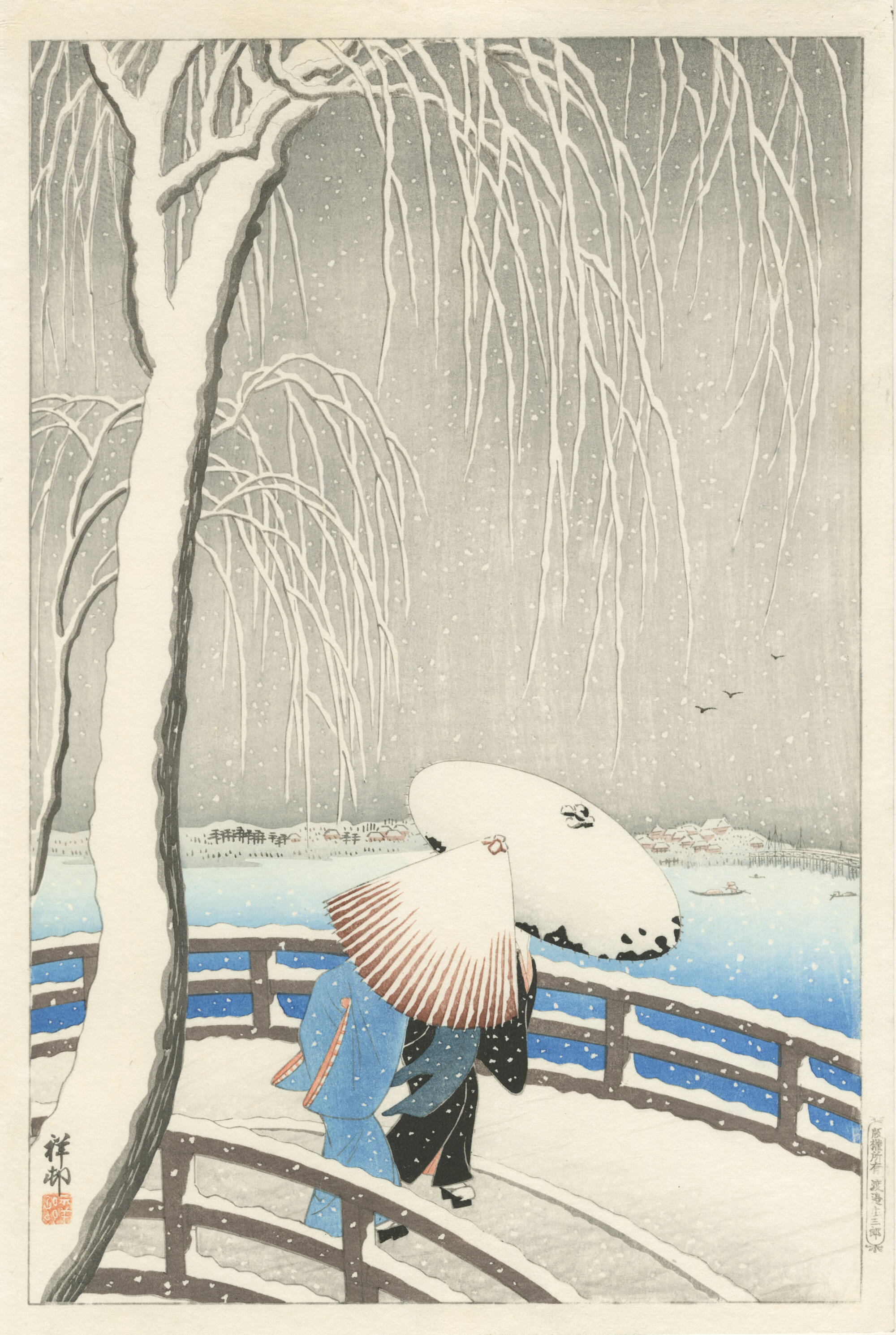
Ukiyo-e, a traditional form of Japanese woodblock printing, originated during the Edo period (1603-1868CE). Rain and other forms of weather were recurring subjects for several ukiyo-e artists. While snow may not be as common as rain, most of the Edo period was much colder than temperatures today. This might be one of the reasons depictions of snow also appeared in ukiyo-e landscapes, especially in images of Mt. Atago and the Kan’eiji Temple.
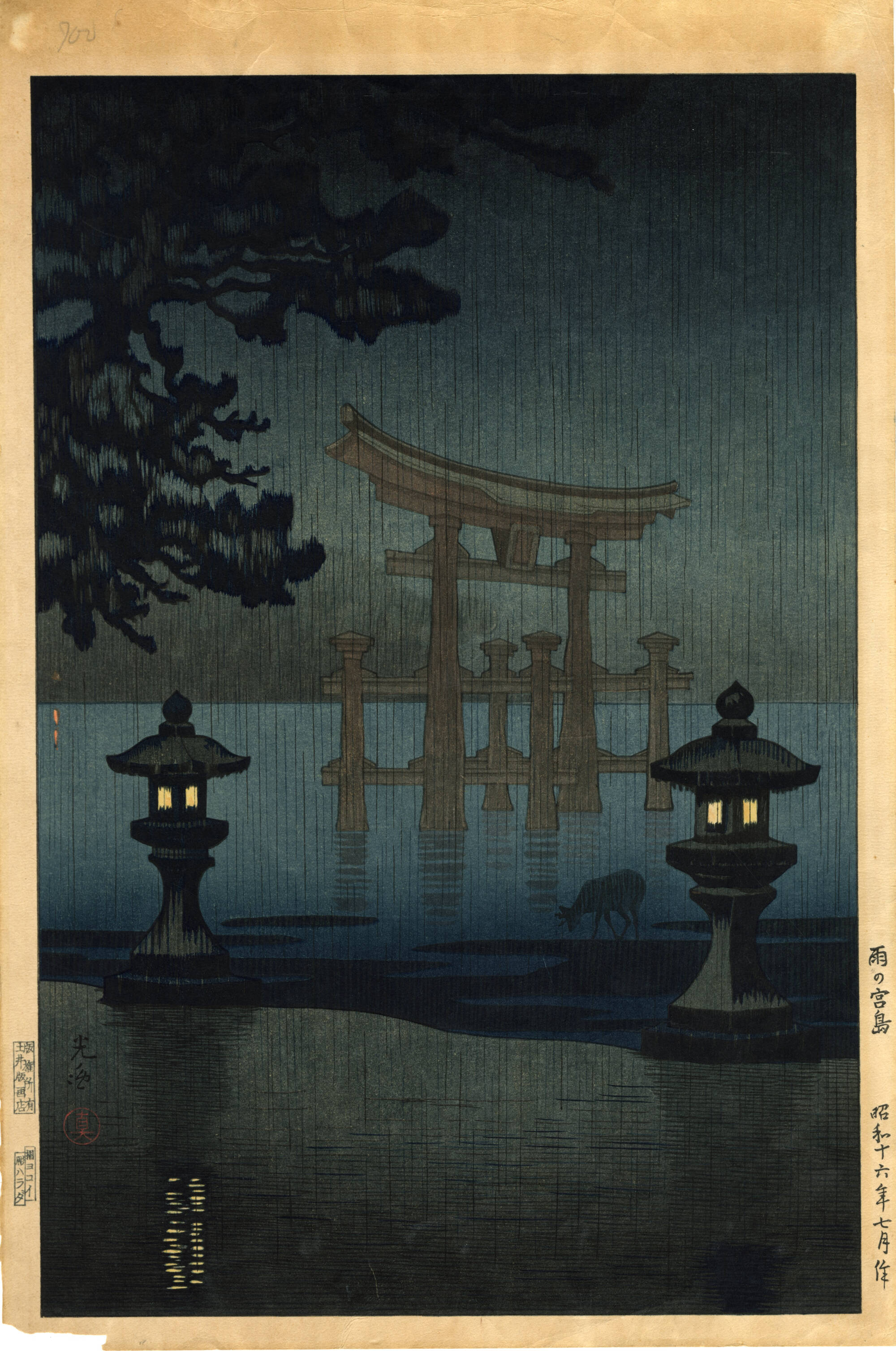
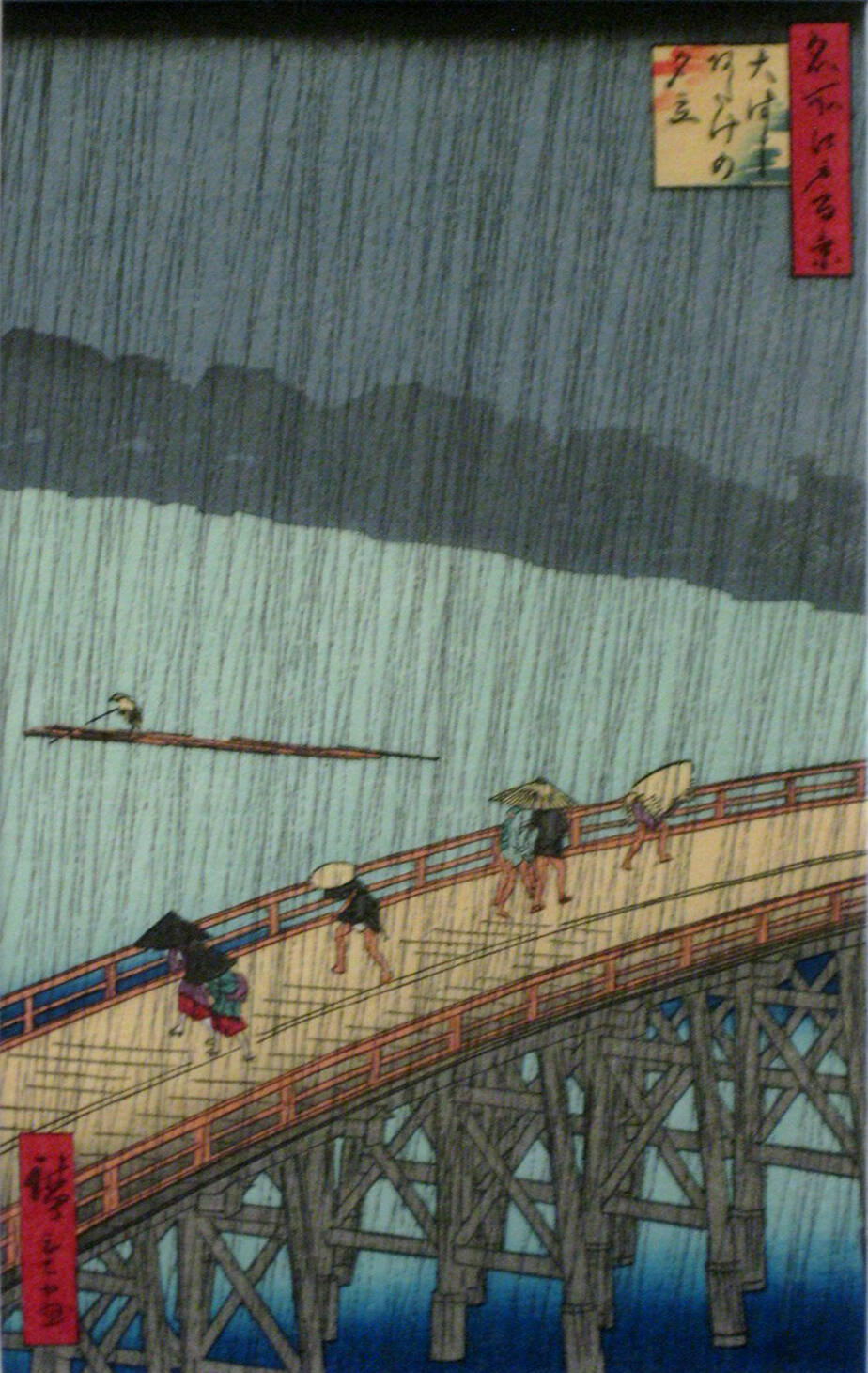
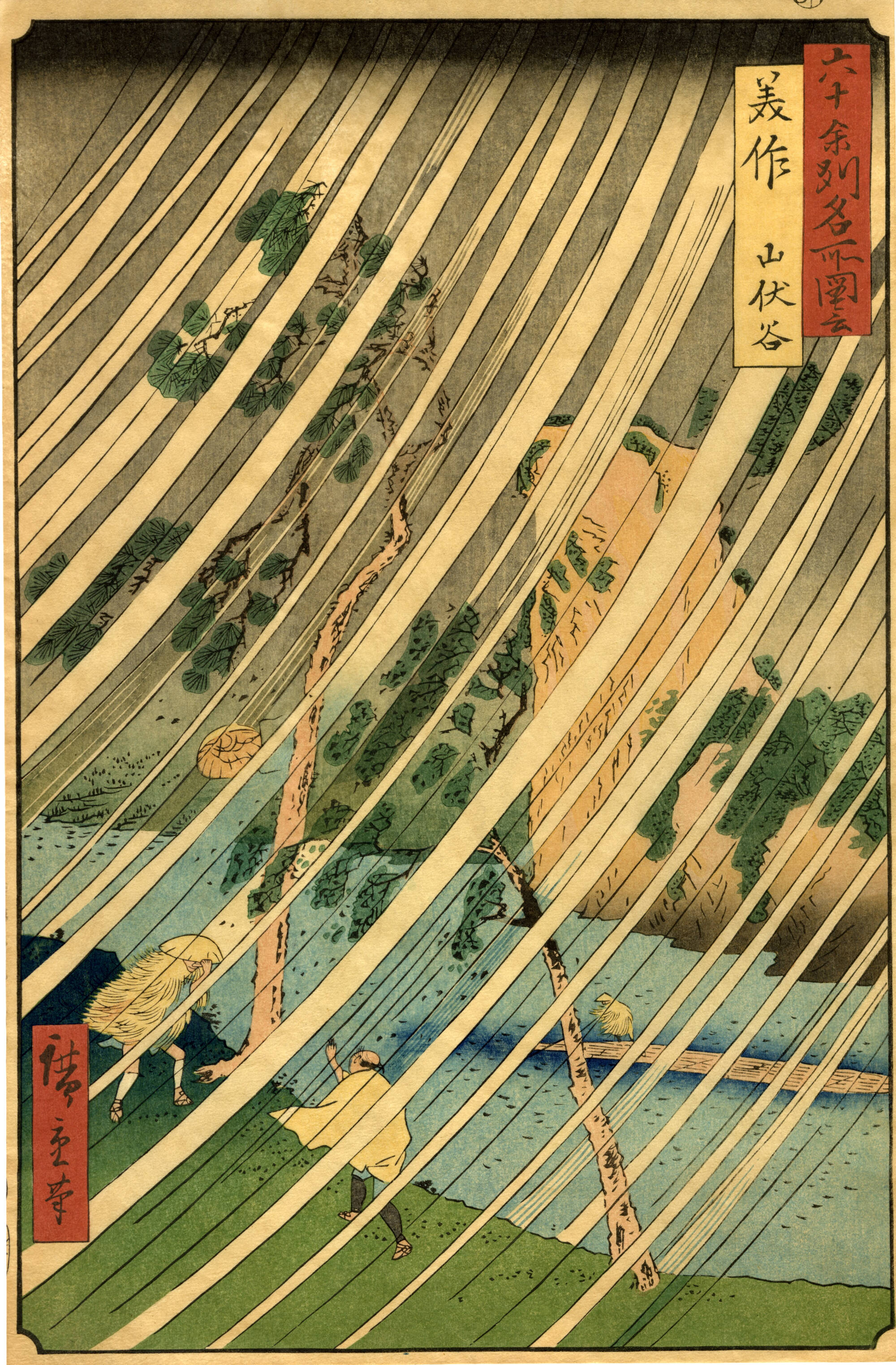
Depicting rain is no easy feat. Many chose to use extremely thin, sometimes crisscrossing black or blue lines, often at an angle across a landscape or other scene. Creating thin lines is a difficult technique in woodblock prints as each line must be carved separately and precisely.
Here’s a translation of a poem, titled “Be Not Defeated by the Rain,” written by Kenji Miyazawa in 1931.
Unbeaten by the rain
Unbeaten by the wind
Bested by neither snow nor summer heat
Strong of body
Free of desire
Never angry
Always smiling quietly
Dining daily on four cups of brown rice
Some miso and a few vegetables
Observing all things
Leaving myself out of account
But remembering well
Living in a small, thatched-roof house
In the meadow beneath a canopy of pines
Going east to nurse the sick child
Going west to bear sheaves of rice for the weary mother
Going south to tell the dying man there is no cause for fear
Going north to tell those who fight to put aside their trifles
Shedding tears in time of drought
Wandering at a loss during the cold summer
Called useless by all
Neither praised
Nor a bother
Such is the person I wish to be
Take a closer look at some of the Japanese woodblock prints in the GVSU Collection. In what other ways is rain or snow conveyed to the viewers?
Continue exploring other Japanese prints in the GVSU Collection:
Learning Resources

Utagawa Hiroshige

Printmaking

Compelling Visions: The Art of Narrative in Japanese Prints

Theme: Landscapes
Tsuchiya Koitsu, Rain in Mitajima, woodblock print, ca 1940. L11.2022.1039.
Utagawa Hiroshige, Kinryksan Temple at Asakusa: One Hundred Famous Views of Edo (no. 99), woodblock print, ca 1930. 2007.239.1.
Utagawa Hiroshige, Evening Squall on the Great Bridge in Atake: One Hundred Famous Views of Edo (no. 52), woodblock print, ca 1850, 2007.240.1.
Ohara Koson, Snow on Willow Bridge, woodblock print, ca 1927. 2021.33.1935.
Utagawa Hiroshige, Mimasaka Province, Yamabushi Valley: Famous Views of the Sixty-odd Provinces (no. 46), woodblock print, 1853, L11.2022.547.