

The Craft of Textile Art
Published June 1, 2022 by Nicole Webb
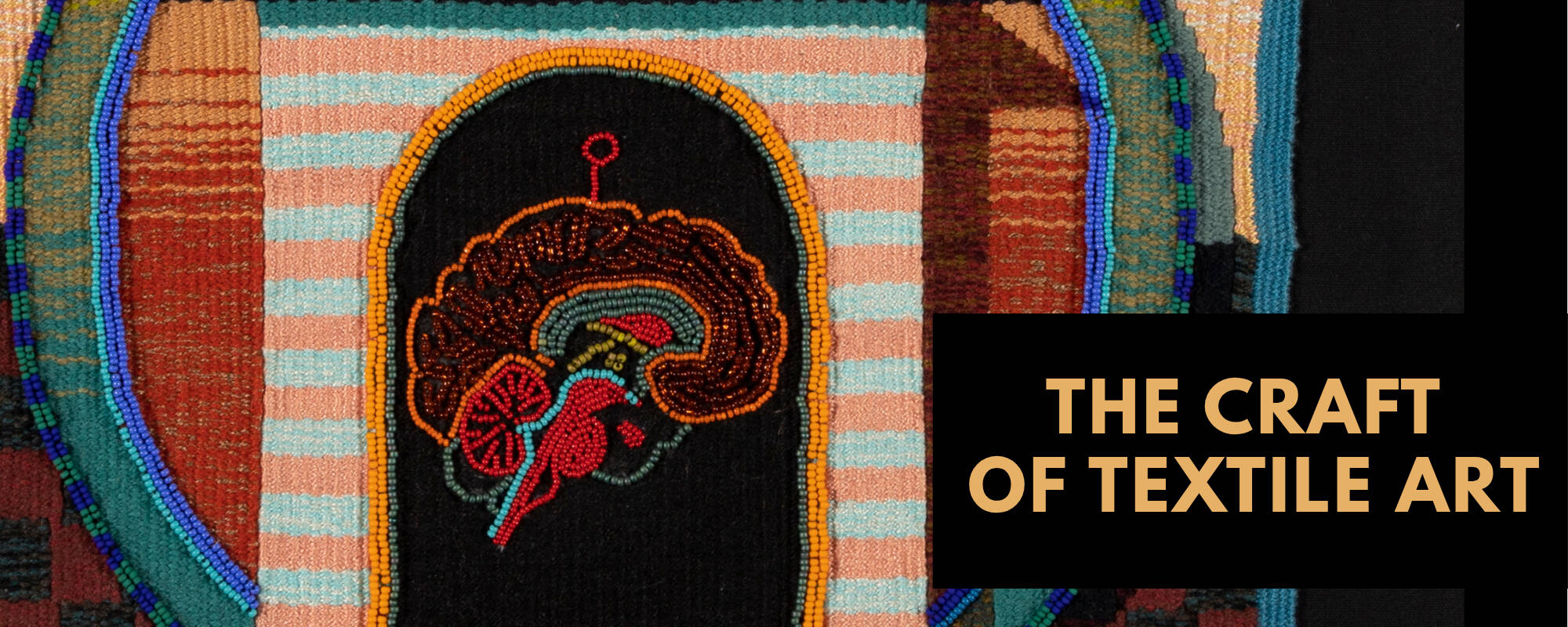
From the clothes we wear to the decorative rugs on our floors, we interact with textiles every day. By definition, textile art is the process of creating something using fibers from plants, insects, animals, or other synthetic materials. Weaving, embroidery, knitting, sewing, and quilting are all considered processes of textile art. Textiles are an art form that can be simultaneously beautiful and useful. Yet because of this duality, many debate whether they fall into the category of craft or fine art.
Historically, textiles are one of the oldest forms of art in human civilization. Evidence of textiles dates back to the prehistoric age when textiles from natural materials were created as protection and clothing. Over time, with the advancement of materials, patterns, and designs, textiles evolved from functional items into valuable status symbols communicating the owner’s role in society. The Silk Road trade routes brought silk to India, Africa, and Europe, decorating both the bodies and walls of the wealthy individuals who could afford it. The Industrial Revolution saw another turning point for textiles, with the inventions of the cotton gin, spinning jenny, and power loom, allowing fabric to be produced faster and on a massive scale, though with less precious materials. Still, much fiber art was considered a domestic, functional craft, and not a fine art.
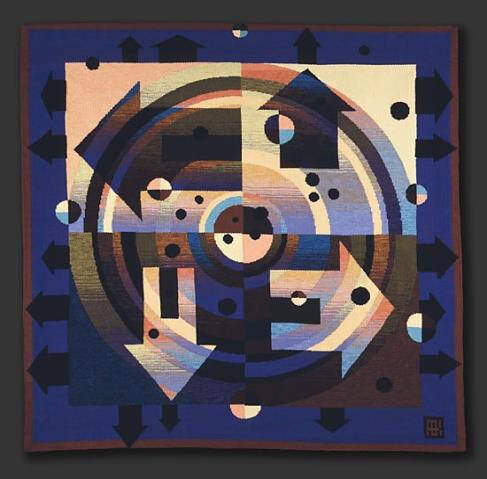
Then, through the Bauhaus, an early 20th century German art movement that became known for its artists combining craft and fine art, textiles began to enter the world of modern art. Anni Albers saw the potential of textiles beyond 'a woman's craft' and in 1949 became the first weaver to have a solo show at the Museum of Modern Art in New York City. Again, in the 1970's, with the rise of feminist art and the women's liberation movement, textiles underwent another revolution. Many female artists created work that lifted the craft as a form of fine art. Artists like Faith Ringgold and Miriam Schapiro elevated textiles to the level of high art.
The GVSU Collection features a number of women artists who incorporate textiles within their artwork in different ways. While some concentrate on classic forms like weaving and quilting, others combine textiles with other art forms.
Ann Baddeley Keister
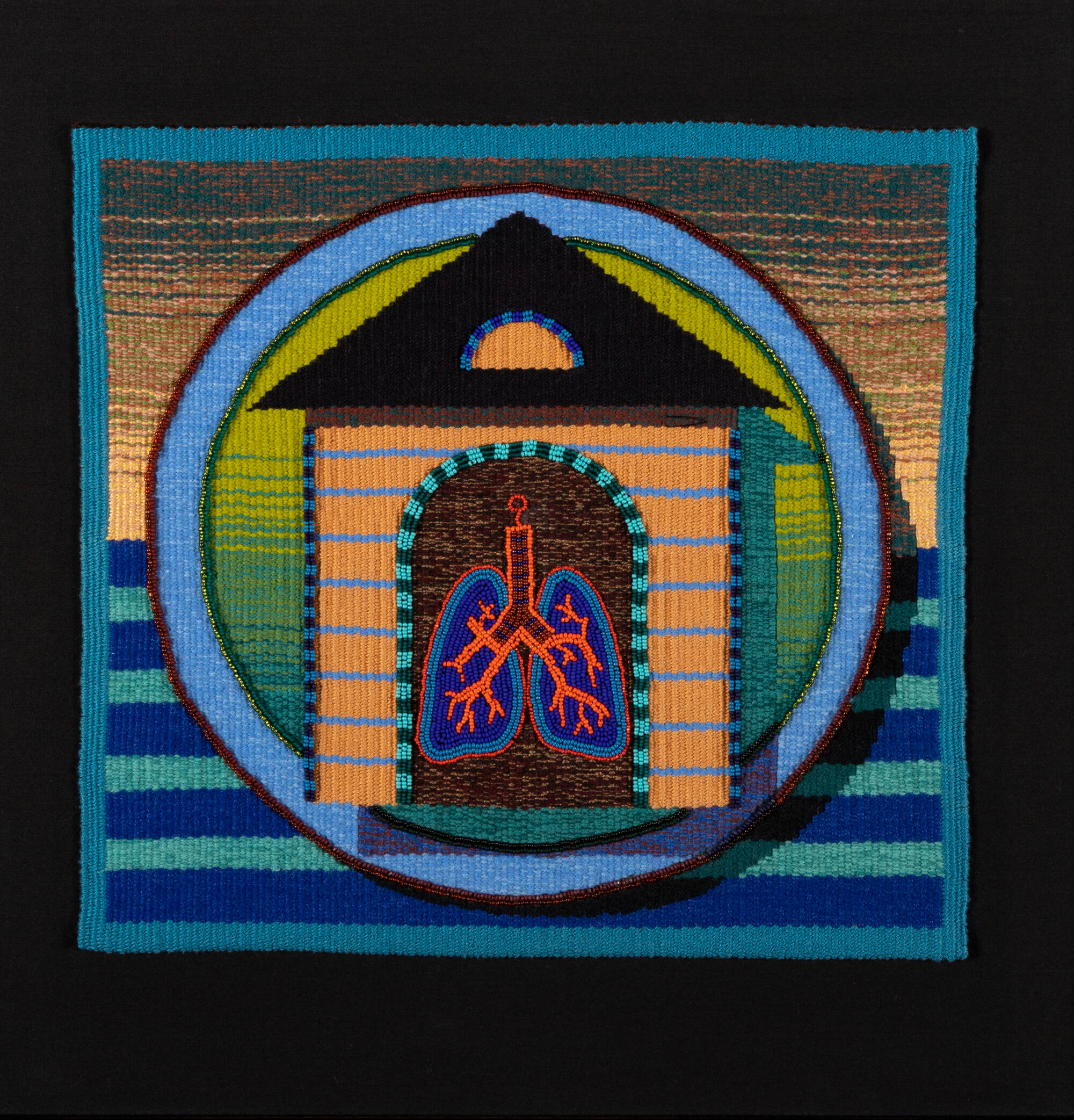
Ann Baddeley Keister joined the art and design faculty at Grand Valley State University in 1997 after producing art, lecturing and teaching at Idaho State University, Ball State University, University of Kansas and Indiana University. Her quilts, tapestries and fabric-based art have been widely exhibited and published. Travel, museum study, and her design library of photographs of anything that intrigued her, like art, architecture, and food, were her main resources for inspiration. Keister combined a number of textile art techniques, such as beading, embroidery, quilting and weaving within her art.
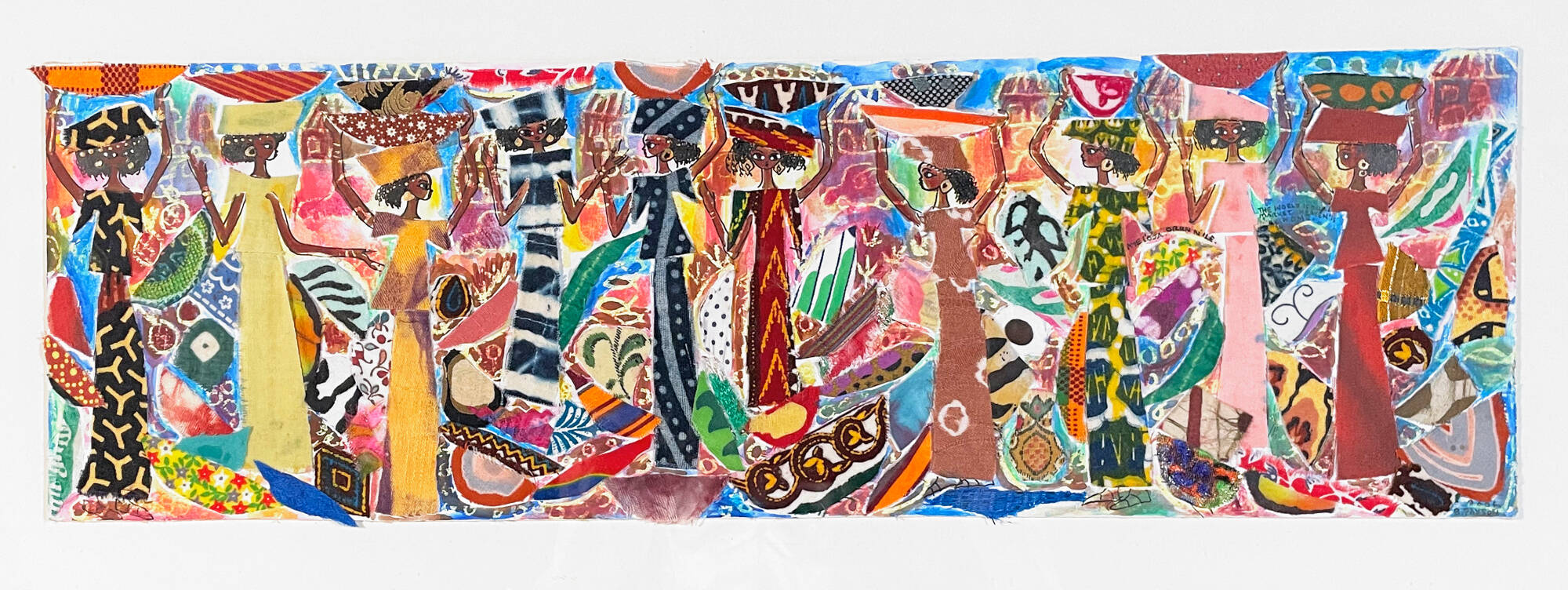
Barbara Paxson
As a young woman, Barbara Paxson had a number of opportunities to travel within Africa. There, she became inspired by the numerous colors, techniques, and patterns of African textiles. Paxson incorporates these hand-dyed textiles within her own collage work, bringing to life memories of her travels through Africa.
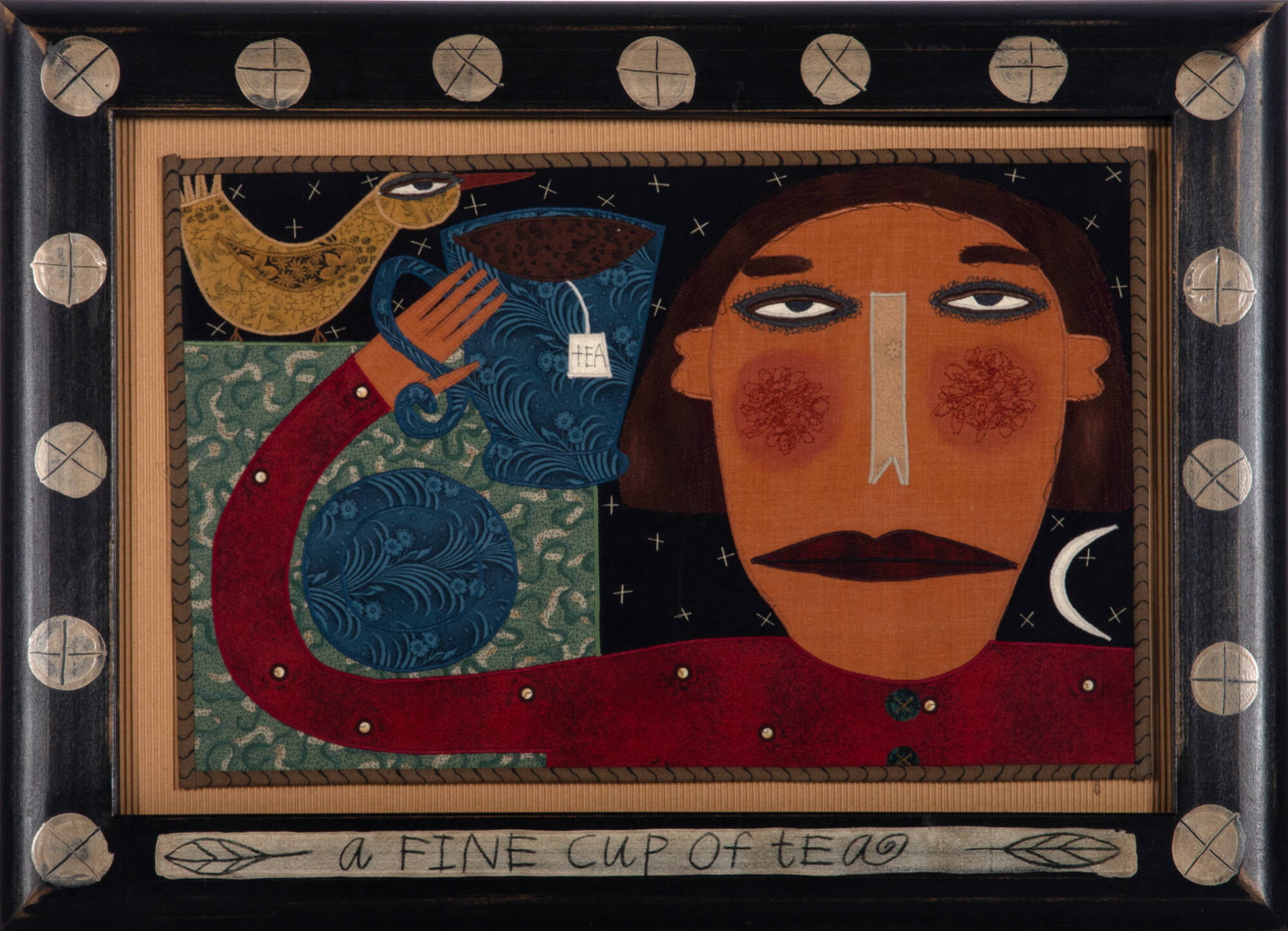
Chris Roberts-Antieau
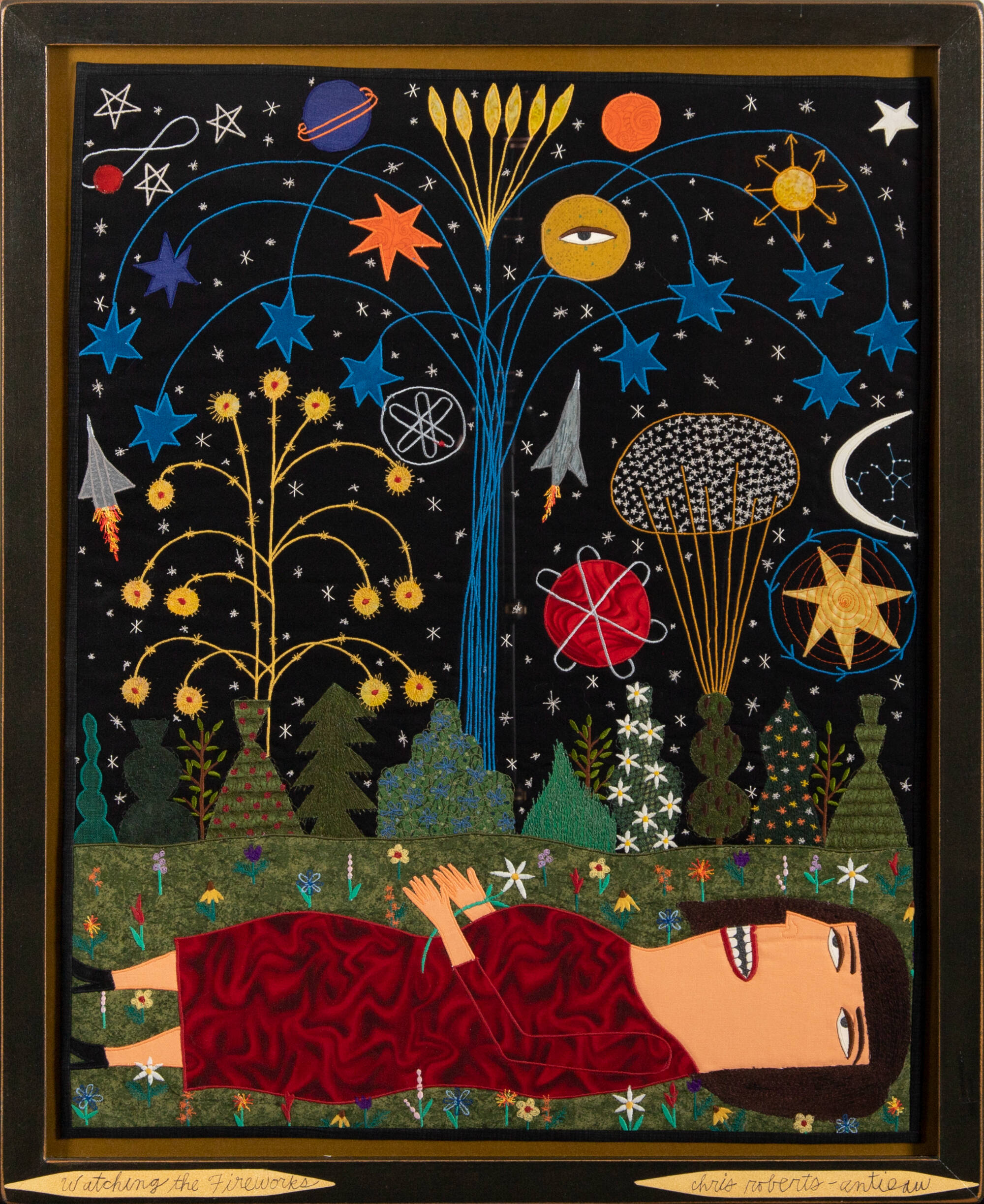
Chris Roberts-Antieau was born in Brighton, Michigan. Creative from a young age, she was first introduced to the skill of sewing through a high school home economics class. She continued to create art on a self-taught basis, focusing on soft sculptures and embroidered tapestries, which she describes as “fabric paintings.” Her work can include humor, joy, and whimsical commentary, but also address deeper themes like personal mortality and interconnectedness.
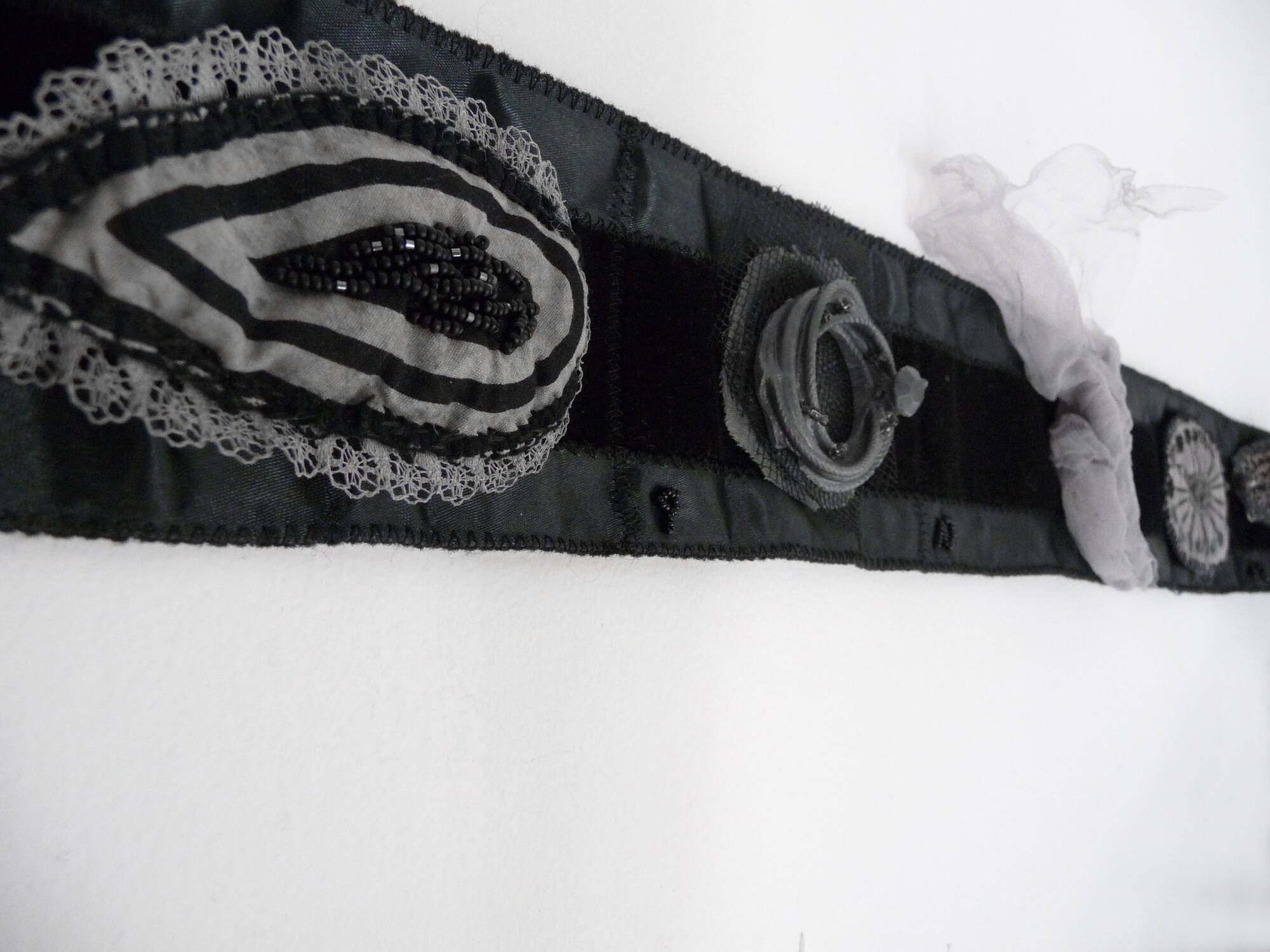
Reneé Zettle-Sterling
GVSU Metals and Jewelry Professor Reneé Zettle-Sterling incorporates textiles, often clothing gathered from her family members, into her sculptures. Sometimes the textiles are incorporated in their true forms; other times cast in bronze or other metals. Through incorporating textiles, her work often focuses on the memories that can be held within objects, like clothes and quilts, of those who have passed, a concept that came to her while creating quilts for her family out of her brother’s clothing after he passed away in 2002.
Learning Resources
Textiles
Ann Baddeley Keister, Urban Living, wool tapestry, 2022.6.5
Chris Roberts-Antieau, Watching the Fireworks, fabric appliqué, 2016, 2016.109.1
Ann Baddeley Keister, Interiors/Milagros, mixed media, 2003, 2003.304.1b
Barbara Paxson, African Market Women, mixed media, 1994, 2021.54.1
Chris Roberts-Antieau, A Fine Cup of Tea, fabric appliqué, 2024.51.5
Renée Zettle-Sterling, Objects of Mourning Liminality, textile, 2010, 2014.74.1