

Tiny Art, Big Stories: The History of Mughal Miniature Paintings
Published July 1, 2022 by Nicole Webb
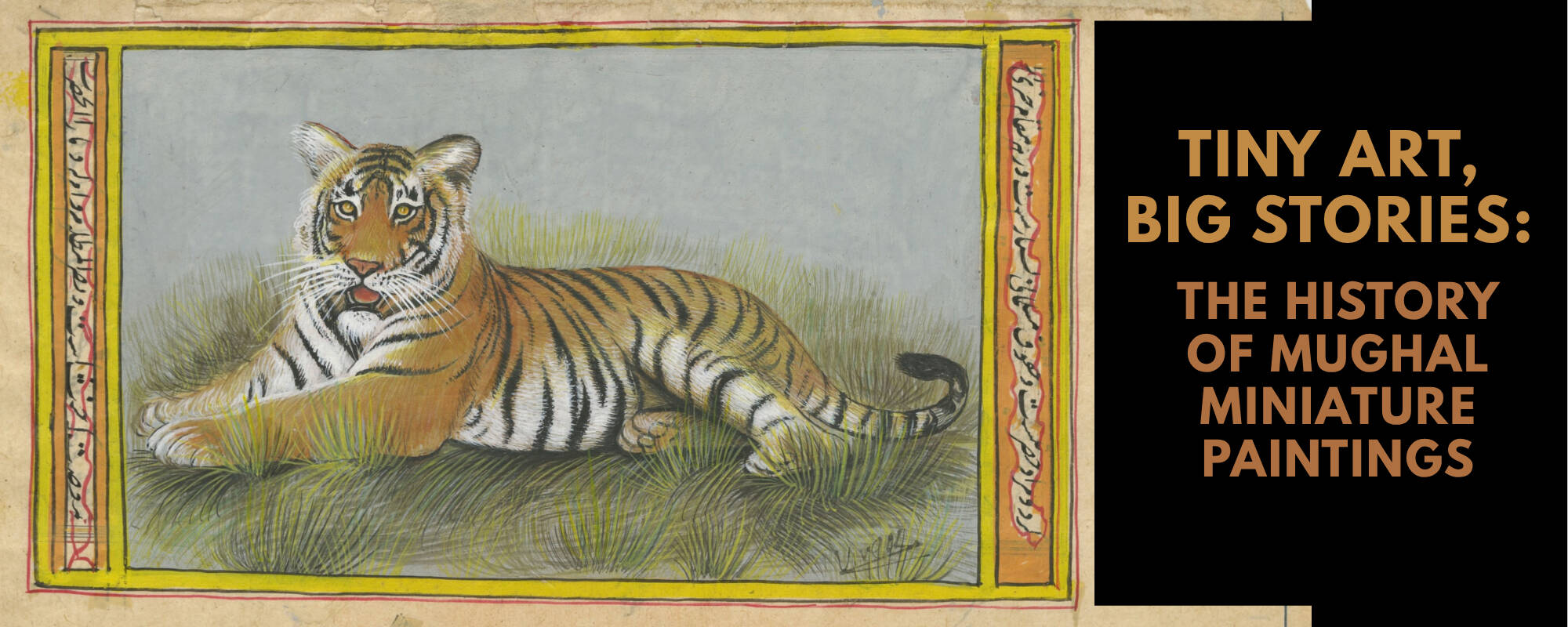
At a distance, Indian miniature paintings convey vividly colorful stories of scripture, people, and events throughout the ages. On closer examination, they are a kaleidoscope of tiny, intricate brushstrokes applied delicately with a single-haired brush.
Indian miniature paintings have existed in various forms since the ninth century and became the product of several different schools of style. The height of the style came during the Mughal Empire, established in 1526 by Emperor Babur, a descendant of Genghis Khan. The Mughals ruled through the 18th century and became one of the most powerful economic forces, covering territory that is now India, Afghanistan, and Pakistan.
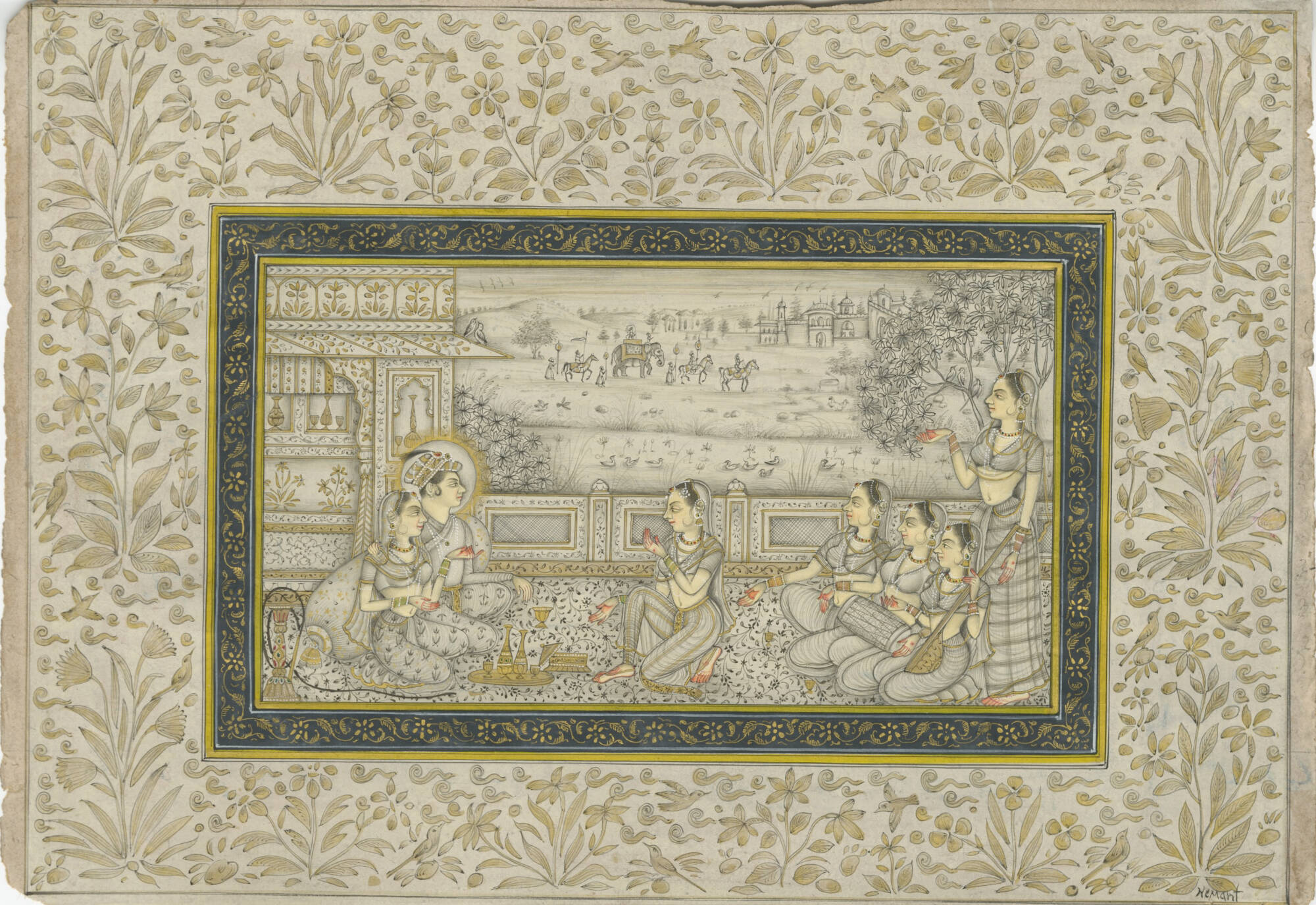
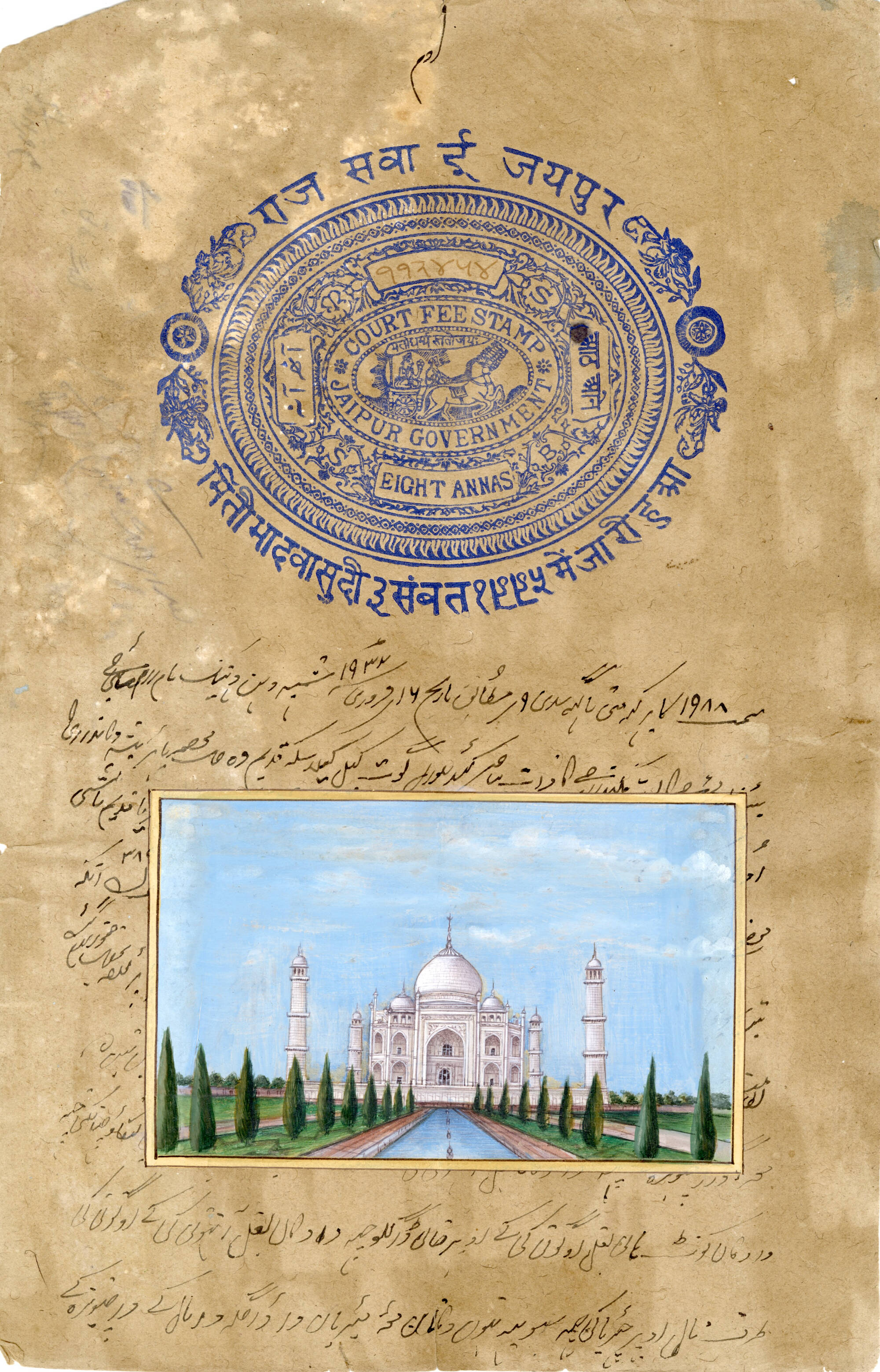
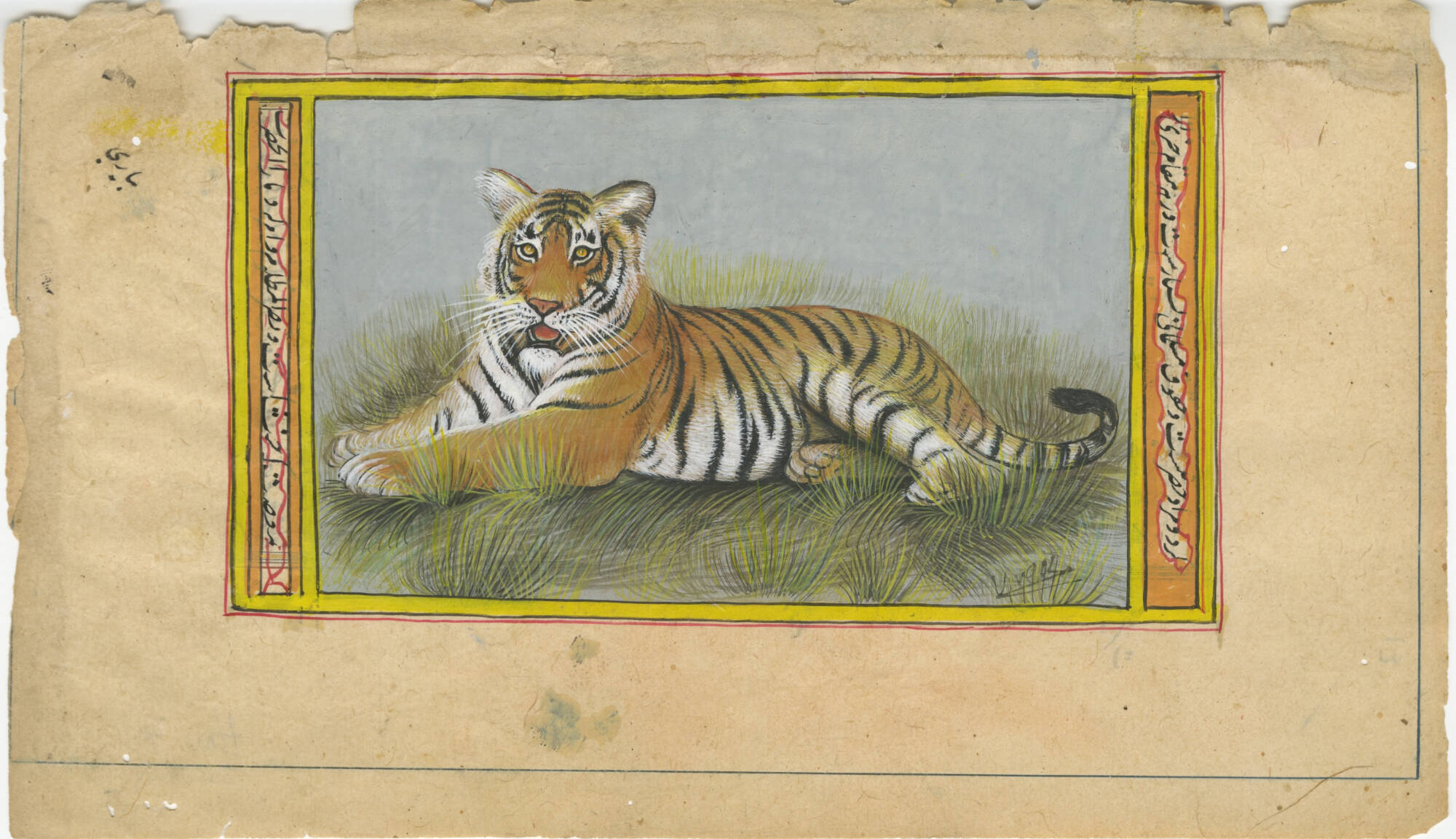
At its height, the Mughal court had over 100 artists working for it. Mir Sayyid Ali and Abdus Samad, two Persian painters brought to India by Humykn, Babur’s son, organized the first workshop of court artists. This cultural collaboration created the style unique to Mughal miniature paintings, combining the bold, vivid colors favored by painters of India and the fine, delicate lines favored by Persians. The paintings are small, often painted to fit within small books, and value detail and color over realistic perspectives or shadowing techniques. But above all, the paintings brought stories to life. The paintings illustrated fables, epics, and religious stories at a time when many were not able to read. They also reflected what was important to the Mughals, including their love of nature, gardens, animals, and the lavish architecture they built, like the Taj Mahal. Portraits documented palace life and the achievements of royalty and other prominent figures.
With the imposition of British colonialism in India during the 18th century, an economic downturn, the introduction of the printing press, and the Ottoman court taking more interest in the West and subsequently Western art, the popularity of Mughal miniature painting died off.
In 2020, the art of miniature painting was added to UNESCO’s Representative List of the Intangible Cultural Heritage of Humanity based on a joint nomination by Azerbaijan, Iran, Turkey, and Uzbekistan. But still, the art has seen a drastic decline. Very few people are willing to learn the techniques today, and no university or art school teaches the craft in India. For those continuing the art form, the process and techniques are often passed down through family.
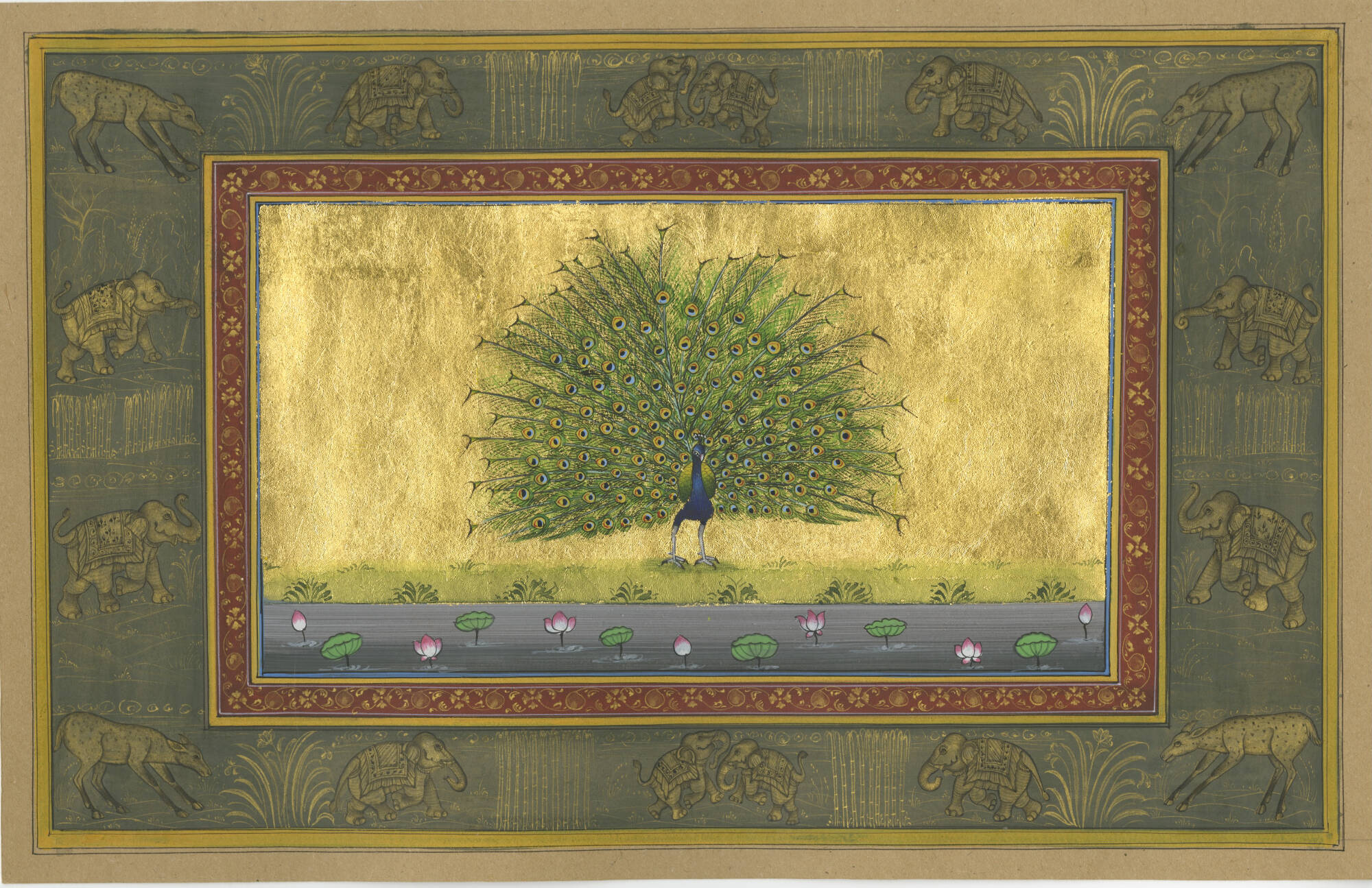
The GVSU Art Museum collection features two contemporary artists, Shyamu Ramdev and Babulal Marotia, as well as several unidentified Indian artists. Much of it was collected during trips to India, led by a GVSU Art Museum staff member.
Shyamu Ramdev
Shyamu Ramdev was born in Jaipur, India, into a family that had already been working for Bhawani Singh’s royal palace as artists for three generations. He learned the art of miniature paintings from his older brother, Govind. Ramdev has won numerous awards for his dedication and excellence in miniature painting. Today, he and his brothers run the Rangreet art studio in Jaipur that teaches the techniques of miniature painting.
Babulal Marotia
Babulal Marotia was born in Jaipur, India, into a family already deeply entrenched within the arts. His father, Natu Lal, spent his free time painting and influenced Marotia to do the same. Marotia began practicing the specialty of miniature painting at the age of ten, and as a teenager, became a member of the Nawalgarh House, a painting community that specialized in all forms of Indian miniature painting. While Marotia continues to study miniature paintings today, his artwork combines tradition with a style that is truly his own.
Learning Resources

Celebrate Asian and Pacific Islander Art and Artists
Shyamu Ramdev, Untitled Court Scene, paint on silk, 2006.090.1
Babulal Marotia, Taj Mahal, paint on manuscript, 2008.065.1
Babulal Marotia, Peacock on Gold with Elephant Border, paint on paper, 2008.080.1
Shyamu Ramdev, Resting Royal Bengal Tiger, paint on silk, 2006.089.1
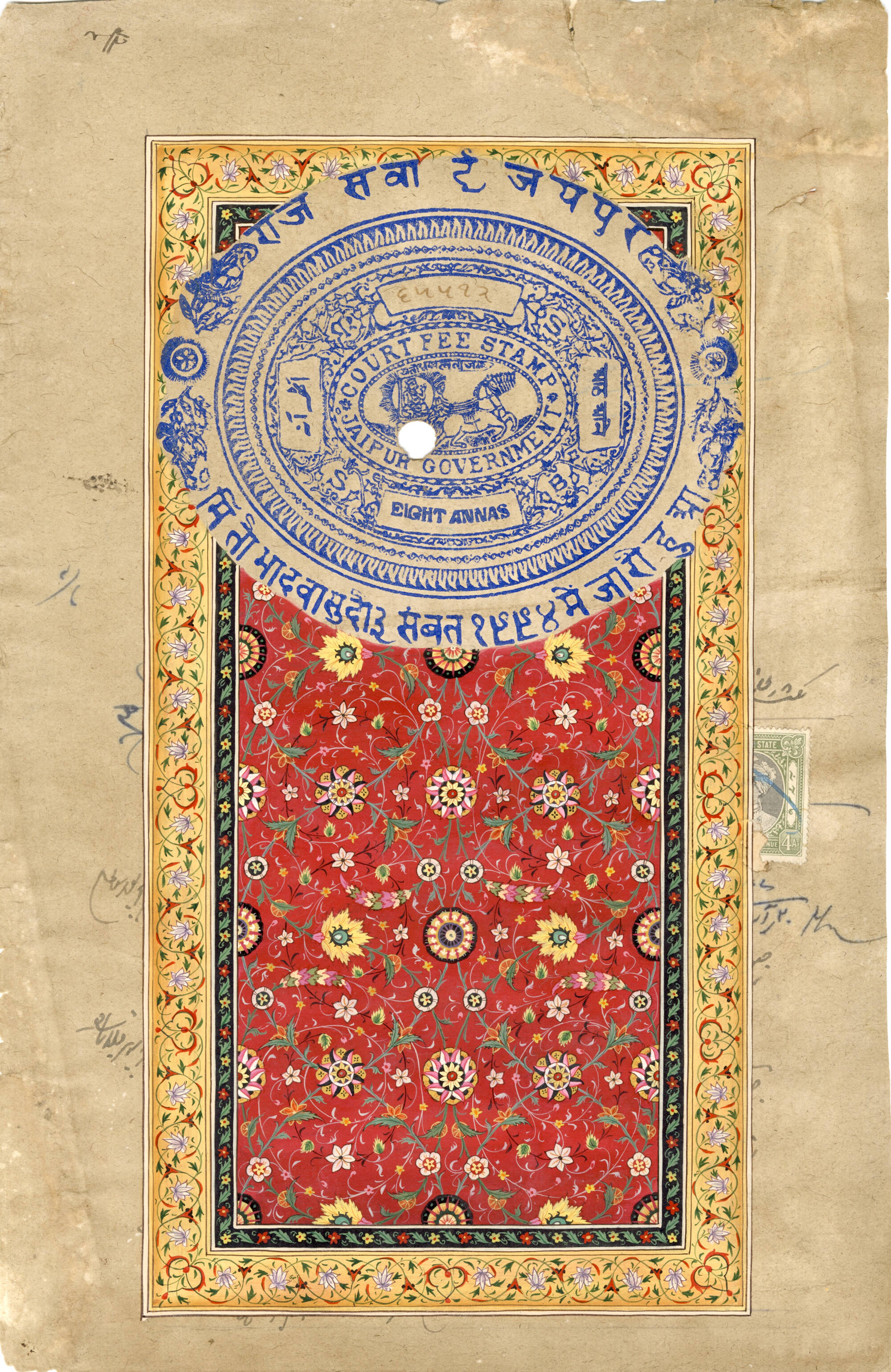
Babulal Marotia, Red Rug, paint on manuscript, 2008.078.1.