

Contemporary Interpretations of Ancient Stories
Published January 1, 2023 by Nicole Webb
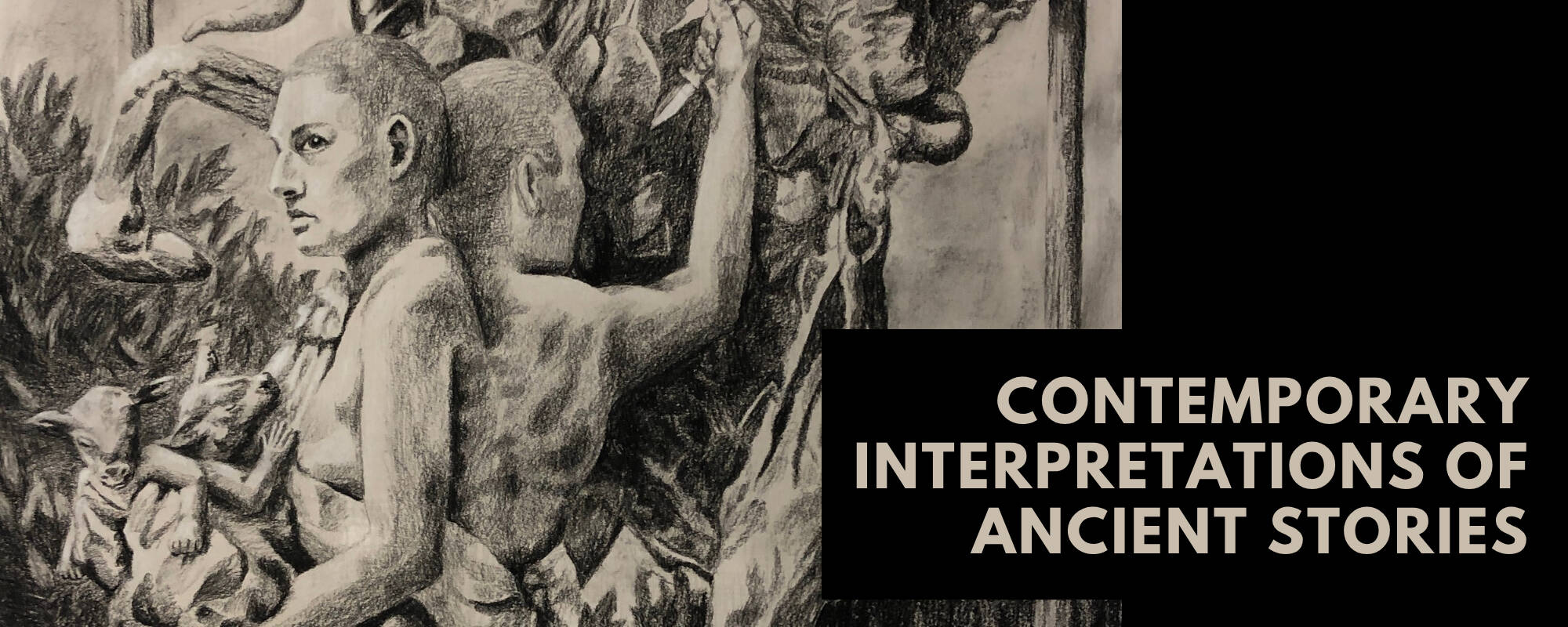
Greek mythology appears in nearly every form of popular culture. Myths have been re-told and adapted into everything from novels, poetry, movies, TV shows, and video games. These stories, often taking visual forms, have been preserved and transformed by artists throughout time.
While no single unified written source exists, works like Homer’s Iliad and Ovid’s Metamorphoses offer rich stories of humanity, from the creation of the first woman to the downfall of Troy. The stories resonate across time, representing aspects of the human condition that are as relevant now as when the Greeks first imagined them.
Artists have captured these stories since the ancient Greek sculptors carved marble representations of gods and goddesses. This tradition has been continued by modern and contemporary artists. From Caravaggio and Michelangelo to Picasso and Damien Hirst, many artists have addressed and reinterpreted mythologies in their works. The GVSU Art Collection has a number of artists engaging elements of ancient narratives in their work, from works on paper and traditional sculptures to large-scale paintings and photography.
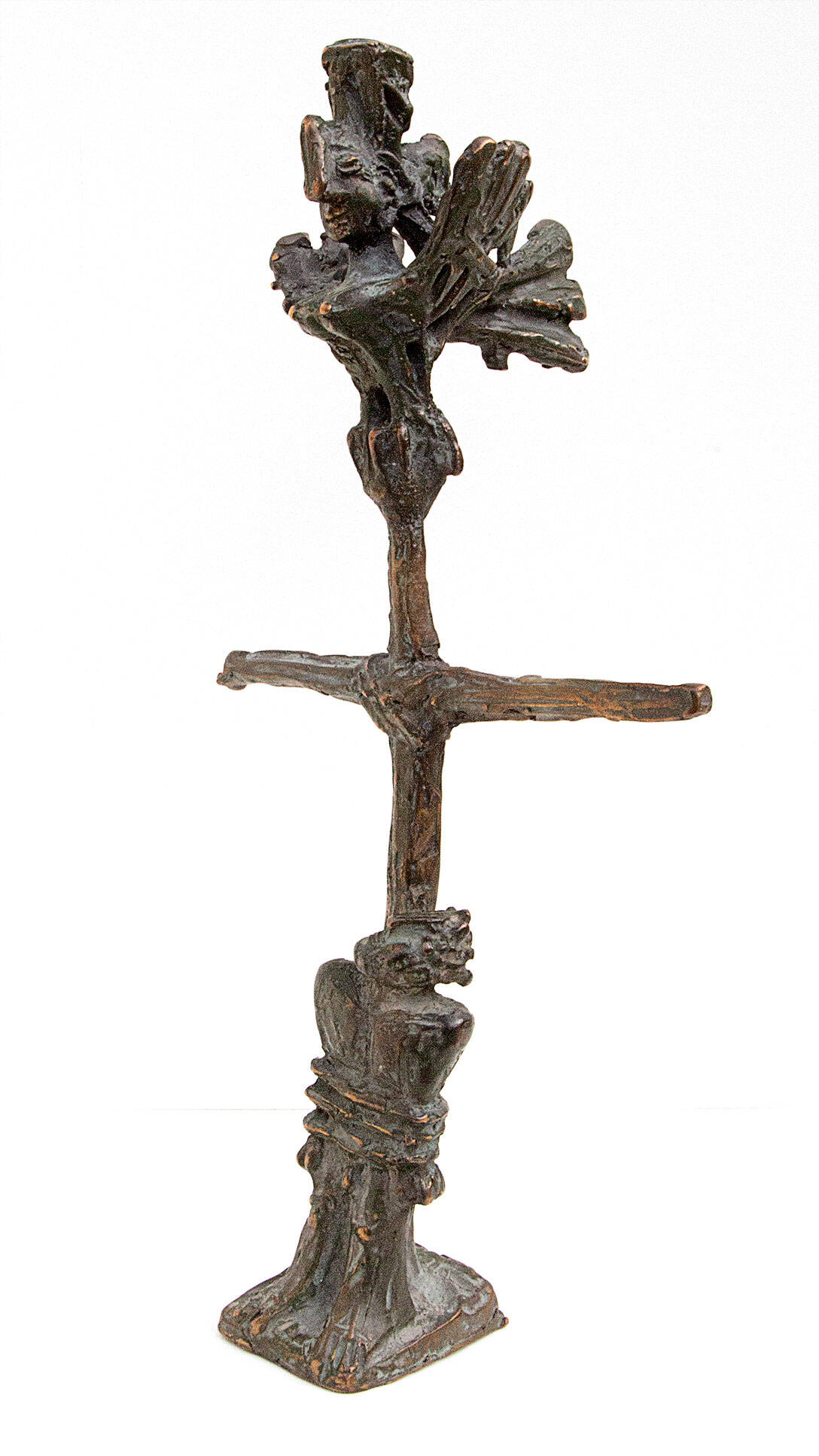
Dimitry Kaminker
Odysseus, later called Ulysses in Roman mythology, was the king of Ithaca and fought against the Trojans in the Trojan War. Odysseus is also the hero of Homer’s epic poem, The Odyssey, the story of his ten-year journey to return to his home after the war. On his journey, he and his crew meet a number of characters trying to slow down his progress, including sirens, lotus-eaters, and a cyclops.
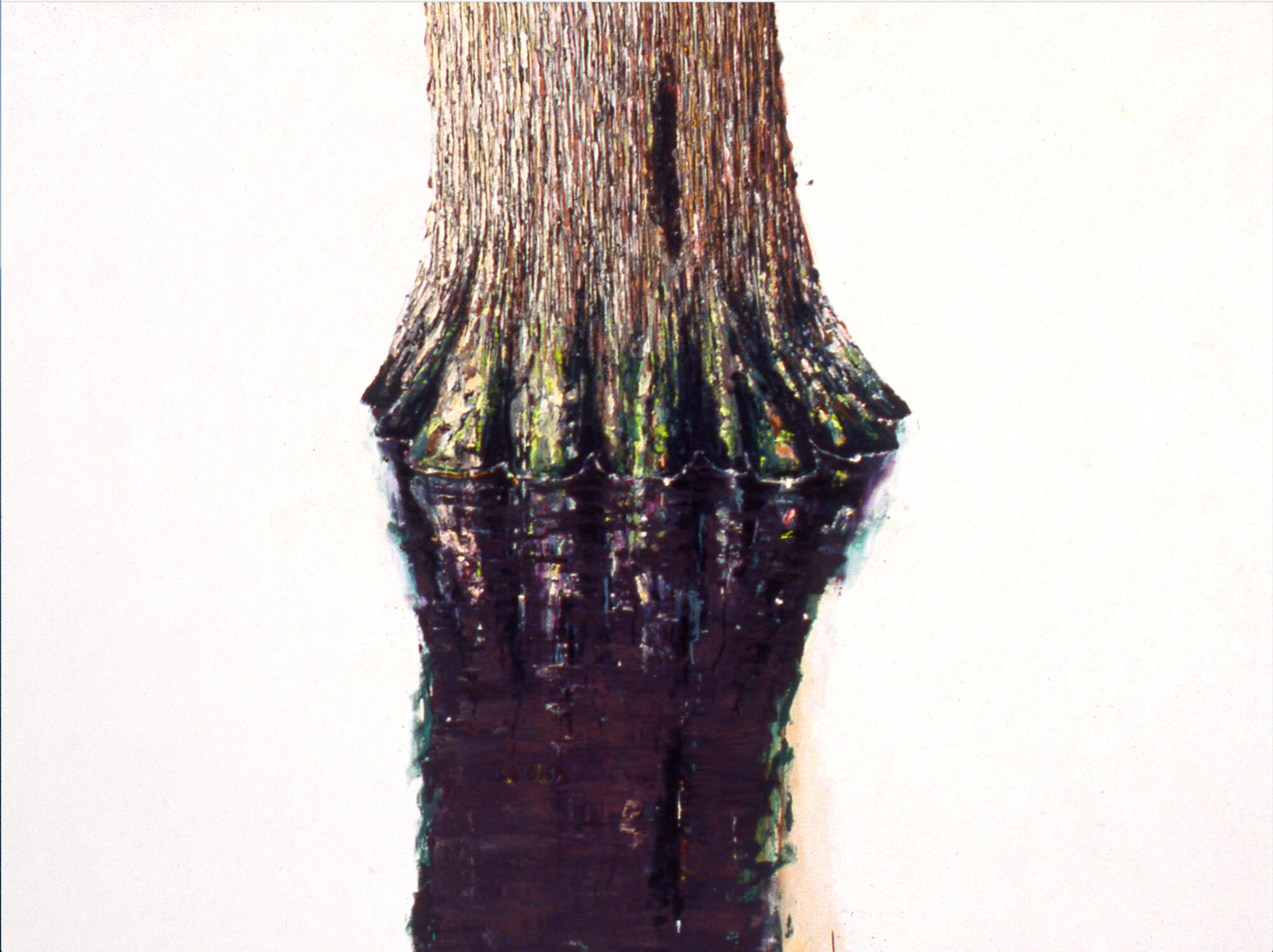
Vera Klement
In her painting, “Narcisse #2,” Vera Klement focuses on the lower trunk of a tree, seemingly floating against a stark white background. Rooted in its reflection, the tree that confronts us references Narcissus, the Greek mythological story of a hunter known for his beauty who fell in love with his own reflection in a pool of water.
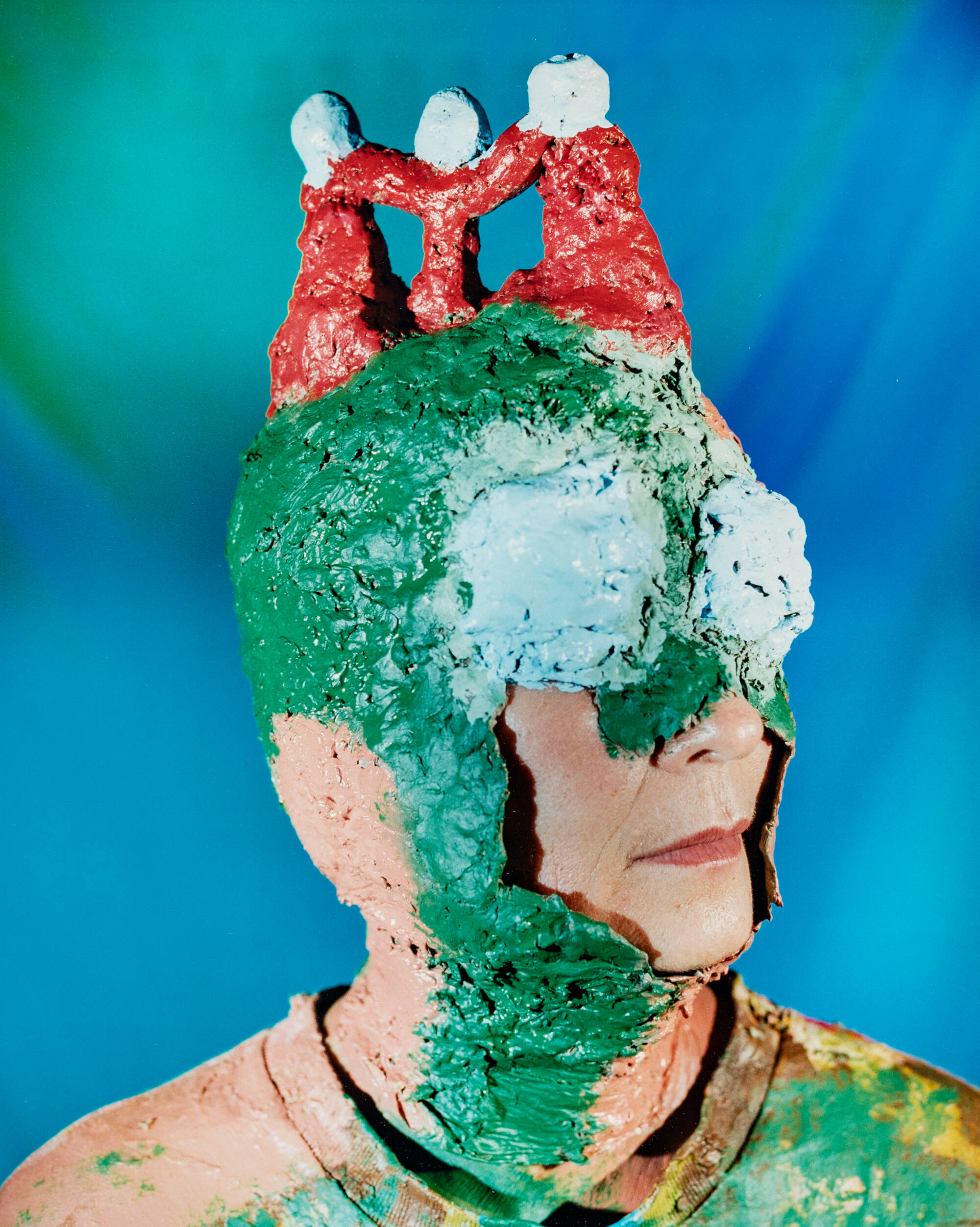
Patrick Millard
For Patrick Millard’s photographic series, “Ode to Hephaestus,” he created masks for his models to wear, representing the appearance we put on for others, hiding the true core of our personalities. In Greek mythology, Hephaestus, the son of Hera, was born with features the gods and goddesses could not appreciate, so Hera cast her son out of Mount Olympus. Hephaestus fell for a night and a day until he landed on the island of Lemnos. It was here that the Sinitians, a barbarian people, discovered the god and worshiped him. Later, seeing his true worth, Hephaestus was brought back to Olympus and became a master craftsman and blacksmith for the gods.
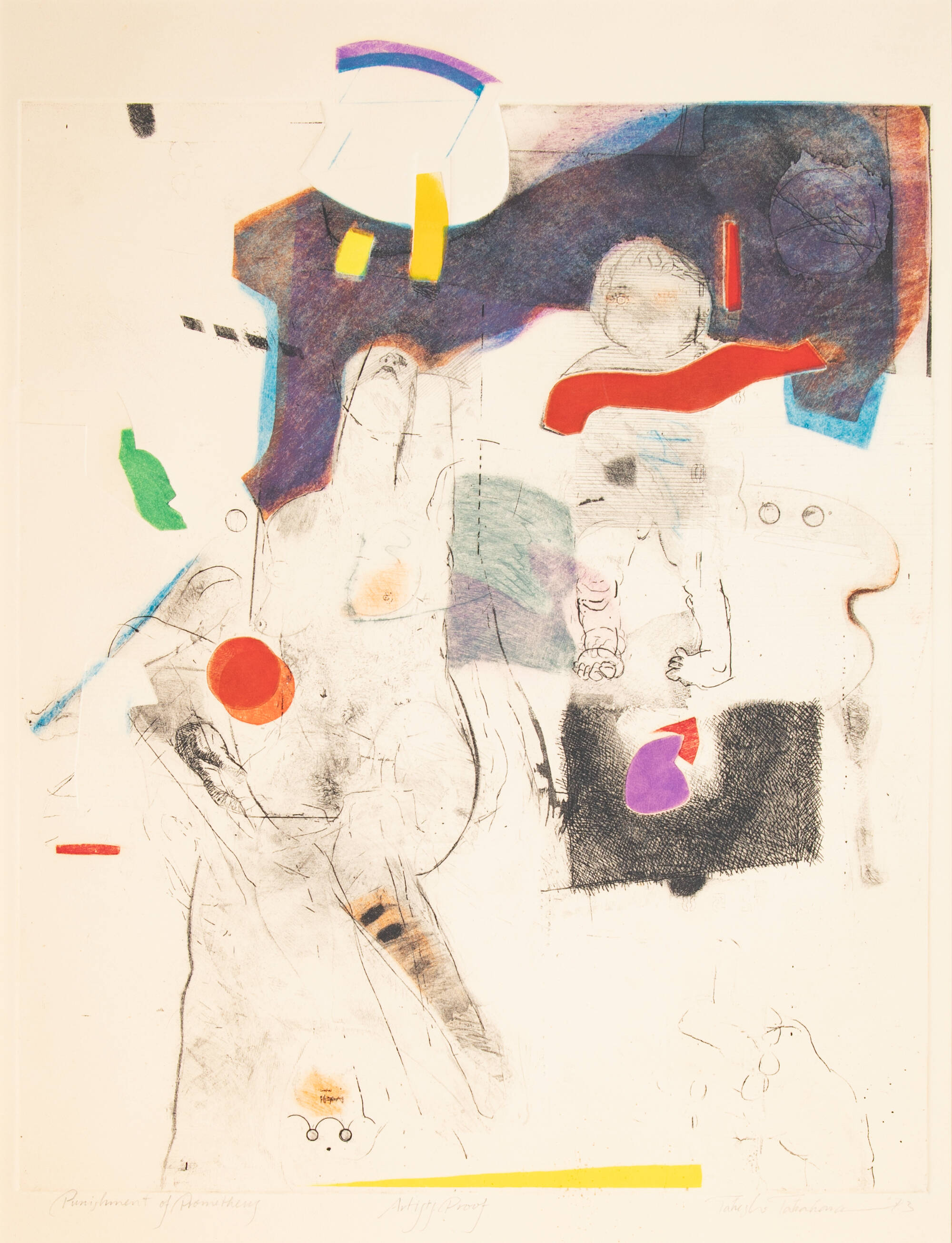
Takeshi Takahara
In his etching, “Punishment of Prometheus,” artist Takeshi Takahara tells the tale of a Titan god of fire, a known trickster. The Greek poet Hesiod told a story of Prometheus tricking Zeus into accepting a pile of bones and fat as sacrifice instead of a hidden stash of meat. Out of rage, Zeus stole fire from mortals, which later was stolen back and returned by Prometheus. As a larger punishment, Zeus created Prometheus’ future wife, Pandora, the first mortal woman in Greek mythology, and would later release the ills of humanity into the world.
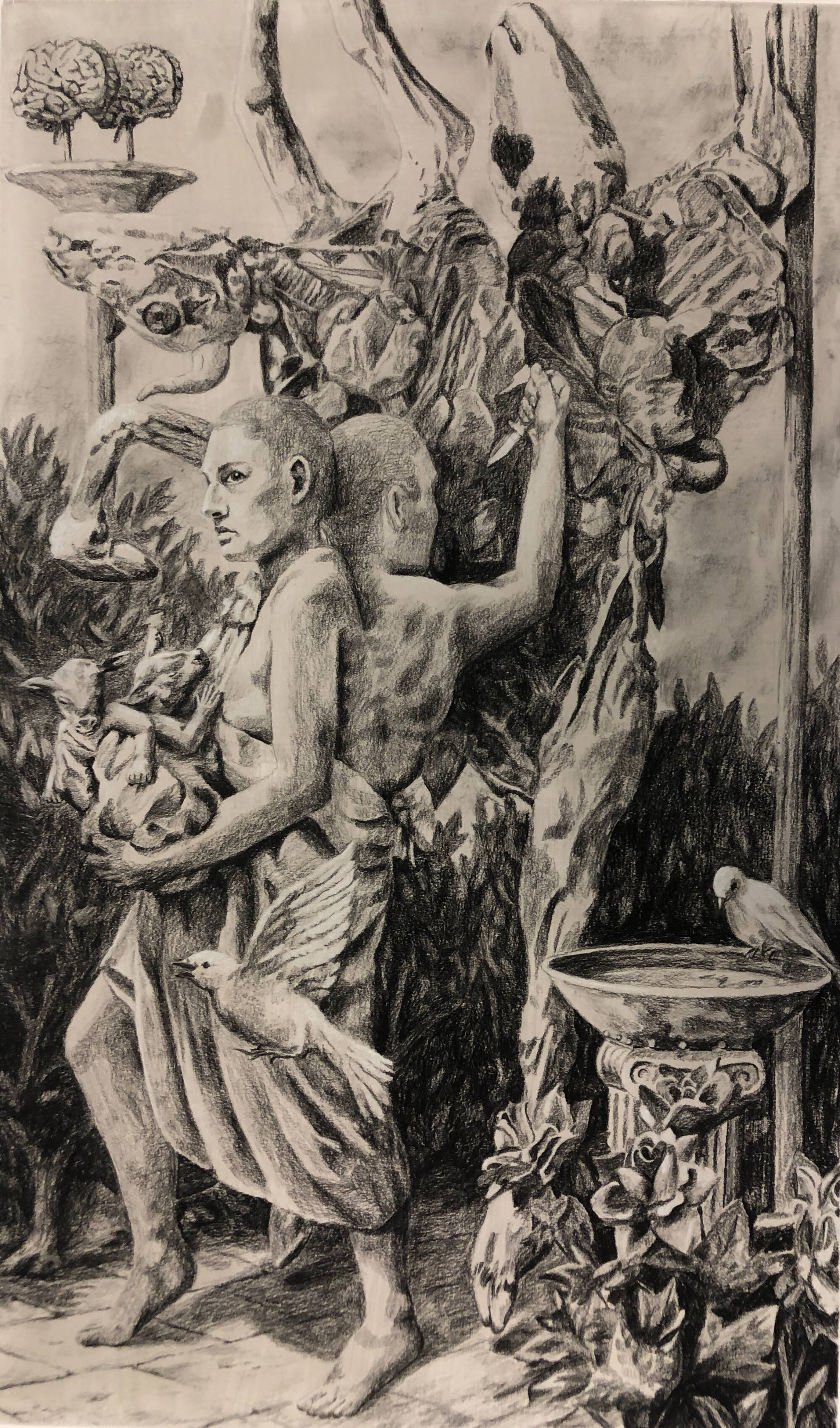
Gavin Weir
In the story of Europa and the bull, Zeus, enamored with Europa’s beauty, decides to seduce her. He transforms himself into a white bull and hides himself within Europa’s family’s herd. Europa sees the bull, gets on his back, and Zeus runs with her to the sea, swimming to the island of Crete, where he reveals his true identity. Europa becomes the first queen of Crete. In his rendition, artist Gavin Weir gives all the characters two heads, suggesting dual personalities of the characters, one that has good intentions to gain knowledge and sustain the natural world, and another that is self-serving and manipulative.
Learning Resources

Vera Klement

Patrick Millard

Dmitry Kaminker

Theme: Mythology

Still Devine

Wings of Wax: The Greek Tragedy of Icarus in Art
Dmitry Kaminker, Ulysses and Siren, cast bronze, 2004.0390.1
Vera Klement, Narcisse #2, oil on canvas, 1999, 2021.29.3.
Patrick Millard, Ode to Hephaestus, carbon pigment photographic print, 2005, 2021.80.47
Takeshi Takahara, Punishment of Prometheus, etching, 1973, 1998.253.1
Gavin Weir, Europa and the Bull, ink, charcoal and conte pencil on paper, 2019, 2019.29.1