
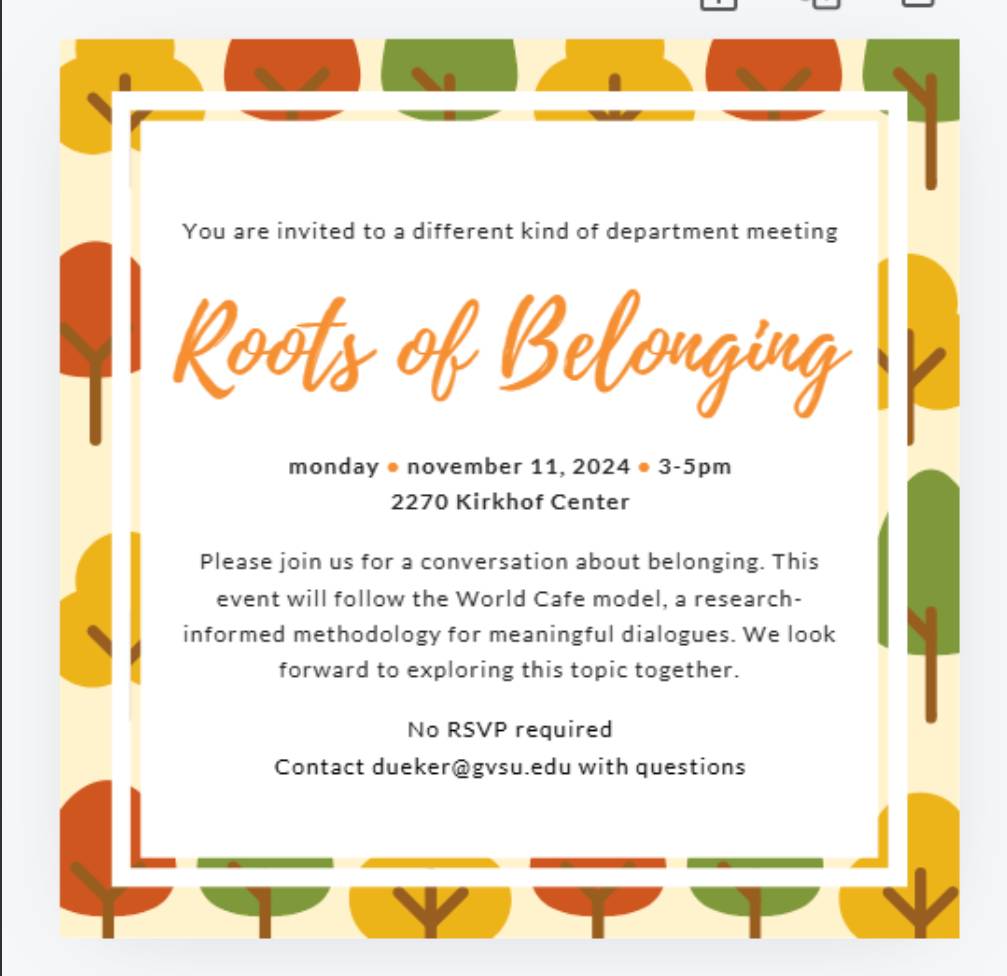
The invitation to the affiliates, adjuncts, visiting professors and faculty to the first World Café on the Roots of Belonging
Together we build a stronger community in our classrooms and in our department
COMMUNITY BUILDING OBJECTIVES
OBJECTIVES 25-26
In the service of strengthening a culture of equity and belonging in the Department of Psychology, we will pursue the following objectives in 2025-2026:
- Faculty will engage in department-wide and individual or small-group professional development opportunities throughout the academic year
- Faculty will create workgroups to assess departmental policies and practices for unintentional bias and amend those policies or practices
- Departmental DEI-AB committee members will expand our departmental-DEI website for sharing internally- and externally-generated resources (e.g., sample syllabus language)
- Departmental DEI-AB committee members will support faculty to evaluate the impact of DEI-AB projects and practices on students, faculty, and staff. This evaluation process will align with the College and University initiatives around culture change, belonging, and retention of minoritized students, staff, and faculty
[1772546083].jpg)
COMMUNITY BUILDING TIMELINE
TIMELINE
2025-2026
The Department of Psychology will employ several strategies in pursuit of our DEI-AB goals and objectives.
- August 2025: New members will be invited to join the Psychology Department DEI-AB committee.
- September 2025: The DEI committee will announce recurring (cookies and conversation, lunch bunch) and periodic (e.g., neurodivergence book club) professional development options for Fall 2025.
- November 2025: Faculty and staff meet for initial community-building and check-in regarding DEI-AB activities. This meeting format will follow the World Cafe model for group discourse. (Full Department)
- January 2026: The DEI committee will announce recurring (cookies and conversation, lunch bunch) and periodic (e.g., neurodivergence book club) professional development options for Winter 2026.
- April 2026: Departmental DEI-AB will facilitate department-wide reflection on progress in the preceding year, plan for extension/dissemination of promising projects or resources, and make data-informed revisions to this DEI-AB plan for the subsequent year.
- May 2026: DEI-AB Committee members will compile findings from reflection and evaluation processes, circulate findings and proposed next steps for additional input, and submit final report to CLAS DEI-AB leadership.
2024-2025
August 22, 2024: We will bring in Dr. William Cox to deliver an evidence-based training on techniques for reducing bias (3-hour training; all faculty and staff). This training will take place during our initial Psychology Department start-up meeting. (Full Department)
September 2024: New members will be invited to join the Psychology Department DEI-AB committee.
November 2024: Faculty and staff meet for initial reflection on training and discussion of professional development options. (Full Department)
September 2024 – April 2025: The DEI committee will coordinate a series of professional development options throughout the 2024-25 year that Psychology faculty and staff can choose to participate in.
April 2025: Departmental DEI-AB Summit to reflect on progress toward our goal in the preceding year, plan for extension/dissemination of promising projects or resources, and make data-informed revisions to this DEI-AB plan for the subsequent year.
May 2025: DEI-AB Committee members compile findings from reflection and evaluation processes, circulate draft report to faculty for additional input, and submit final report to CLAS DEI-AB leadership.
Commitment: The Department of Psychology is committed to 1) implementing research-informed methods to decrease structural and individual sources of discrimination where they occur in our department; and 2) to facilitate equity, belonging, and well-being among all students, faculty, and staff, including those from underrepresented communities.
Goal: The goal is to develop a self-healing community within the department where faculty are supported to grow in their self-awareness, responsiveness to social-cultural factors, and willingness to learn from others in all of their activities with students, staff and each other.
COMMUNITY BUILDING ACTIVITY ROSTER
COMMUNITY BUILDING PROFESSIONAL DEVELOPMENT LIST OF OPTIONS
Professional development activities may include the following:
Faculty can choose from a menu of professional development activities communicated via email and available on the departmental DEI-AB website. The committee highlights a variety of formats (e.g., virtual, self-study) and topics, maximizing faculty engagement in DEI-AB work that is most meaningful and feasible from their perspective. For example:
- Attend and discuss events in the Minds That Matter series through FTLC
- Participate in workshops facilitated by Inclusion and Equity Institute for Lakers
- Explore and discuss themed podcasts or resources on high-interest topics among faculty (e.g., serving LGBTQIA+ students well; serving 1st generation college students well)
- Departmental book club discussions (e.g., Yoshini and Glasgow’s Say the Right Thing; Zheng’s Reconstructing DEI; otherfaculty-nominated and timely topics)
- Collaborate with Friendly Discussion Group to co-sponsor an event
- Attend and share information from a GVSU “Know Your Rights” seminar
- Resource-sharing and discussion (e.g., American Council on Education’s Equity-Minded Faculty Workload resource)
- Identify and implement strategies to support first-generation, low SES and minoritized Psychology students
BOOKS
As a committee we read a series of books this past Winter (2024) as conversation starters.
You are welcome to borrow those from our nascent library! Right now, Amanda Karsten is storing them in her office.
These are:
Yoshino & Glasgow (2023). Say the Right Thing: How to Talk About Identity, Diversity, and Justice (Useful for hard conversation anywhere, with granularity)
Zheng (2022). DEI Deconstructed. Your No-Nonsense Guide to Doing the Work and Doing It Right (Introductory text, does not differentiate between activism and reformism).
G.L. Cohen (2023). Belonging: The Science of Creating connexions and Bridging Divides ("It reads like a definitive series of stories about membership in a group while serving as a scholarly treatise on the psychology of belonging to something bigger than one's self").
Bell Hook (1994/2017). Teaching to transgress: Education as the Practice of Freedom (" Bell Hook considers class (in addition to gender and race) in education and academia. If you worry that inclusive pedagogy shuts down or limits dialogue in the classroom, this book should help soothe you".
Kathy O'Neil (2026). Weapons of Math destruction: How Big Data Increases Inequality and Threatens Democracy ("O'Neill's hypothesis is that algorithms and machine learning can be useful, but they can also be destructive if they are (1) opaque, (2) scalable and (3) damaging. Put differently, an algorithm that determines whether you should be hired or fired, given a loan or able to retire on your savings is a WMD if it is opaque to users, "beneficiaries" and the public, has an impact on a large group of people at once, and "makes decisions" that have large social, financial or legal impacts. WMDs can leave thousands in jail or bankrupt pensions, often without warning or remorse").
CERTIFICATIONS
15 best DEI certifications in 2026
This website provides information on 12 DEI certification (some costs below)
- AIHR - $1,650
- E-Learning Cornell DEI - $3,600
- AMA Diversity & Inclusion Certificate - $3,295
- Diversity First Certificate - $5,500
- HRCI – Certificate in Diversity and Inclusion in HR Management - $239
- Resilient: Racial Justice Certificate Program - $3,000
Diversity, Equity and Inclusion in Fundraising: Advancing Equity Through Inclusive Philanthropy
This series is tailored for universities, university foundations and organizations that are seeking actionable insights for prioritizing and elevating the perspectives and experiences of socially, culturally and economically diverse communities. Participants will explore best practices for establishing a framework for Diversity, Equity and Inclusion (DEI) work in fundraising, which includes conducting DEI strategic collaboration sessions to create and enhance interventions that can yield impact at scale. You should plan to invest a total of 6-8 hours per week.
Early bird registration through January 15: $425 per person
CONFERENCES
DEI Conferences 2026 Shortlist
- Equality, Diversity and Inclusion Conference - Manchester, UK (March 25-26, 2026)
- NADOHE 2026 Annual Conference - Philadelphia, PA (March 25-28, 2026)
- National Diversity & Leadership Conference - Virtual (April 14-16, 2026)
- Diversity & Inclusion Conference - London, UK (April 30, 2026)
- D&I Leaders Global Workplace Inclusion Forum - London, UK (May 12-13, 2026)
- DOCN26 - Mexico City, Mexico (May 27-29, 2026)
- Martha's Vineyard Summit - Edgartown, MA (August 5-6, 2026)
- Diversity & Inclusion Forum - Melbourne, Australia (August 12, 2026)
- Gartner HR Symposium/Xpo - Orlando, FL (October 26-28, 2026)
- SHRM BLUEPRINT - TBA
DEPARTMENT OF EQUITY AND INCLUSION
Diversity, Inclusion, & Belonging E-Learning Training Modules
- GVSU asks that all staff complete the Diversity, Inclusion, and Belonging e-training modules every 3 years. This is not required for faculty, but faculty are welcome to complete the modules. The modules cover a range of DEI-AB topics, including microaggressions, biases, and allyship.
Inclusion and Equity Institute for Lakers
- Facilitators from the I&E Institute will work with CLAS units to develop learning opportunities (e.g., workshops) on DEI-AB topics based on faculty and staff interests. You can contact the I&E Institute at [email protected] to inquire about inviting facilitators from the Institute to work with your unit. You can also contact Marlene Kowalski-Braun ([email protected]) or Latoya Booker ([email protected]) to inquire about inviting facilitators from the Institute to work with your unit.
I&E Institute Learning Opportunities
- This webpage lists the learning opportunities (e.g., workshops) facilitated by facilitators at the Inclusion and Equity Institute. It is updated periodically.
Social Justice Education Resources for Beginners
- “The Social Justice Education Resource page for Beginners lists several articles, books, and videos that are beginner-friendly and are meant to develop and strengthen your understanding of social exploration of justice and injustice by guiding your self-exploration and self-learning” (from “The Purpose of This Page” section of the Social Justice Education Resources for Beginners webpage).
DR COX PODCASTS
Through the webpage of Dr Cox you can access to 15 podcasts, his article from 2023 and references
S1E01: Centering Joy, and Why Non-Scientific Diversity Trainings Fail
S1E02: What is "Professional" Anyway? With Guest Sandy Eichel
S1E03: Joyful Facets of Identity: Get to Know Us and Our Backgrounds!
S1E04: Better Together: Disability Desegregation in Schools With Guest Nicki Vander Meulen
S1E05: Joyful Representation of Interracial Relationships on TV
S1E08: Being Intentional in Diversity Efforts
S1E09: Joy at Every Size: Weight Bias
S1E10: Accommodations Help Everyone! With Guest Nicki Vander Meulen
S1E06: Learning about Trans* and Nonbinary Identities With Guest Sandy Eichel
S1E07: Finding the Joy in Cultural Humility, Responsiveness, and Justice
FTLC
There are several resources for faculty on inclusive mentoring and teaching on the Inclusive Mentoring & Teaching Development webpage.
Inclusive Excellence Teaching Institute
Columbia and Cornell Safe Paced Courses
20-Minute Mentor Commons Inclusive Excellence Online Workshops: ( Make sure you select Free resources as they also have paying ones!!!) “The 20–minute mentor commons are video-based programs designed to answer specific questions related to teaching and learning. They deliver actionable insights in highly focused 20–minute presentations designed to fit busy schedules. Below is a list of inclusive-excellence-focused topics that caught our eye.” (Description from “Category: 20-Minute Mentors,” Manga Publications website) ª What Culturally Responsive Teaching Techniques Can I Use to Improve Learning?
- ª Why is Intercultural Competence Important and How Can it Improve my Teaching?
- ª How Do I Use Controversial Issues to Build Cognitive Skills in My Students?
- ª Three Secrets to Building Diverse and Inclusive Online Learning Environments
- ª Effective Diversity and Inclusion Strategies
- ª Recruiting a Racially Diverse, Culturally Competent Faculty
- ª Online Engagement and Assimilation Strategies For Nontraditional and Marginalized Students
You can find a list of all the programs available in the 20-Minute Mentor Commons/Manga Digital Library on the Manga Digital Library Group Subscription webpage. Diversity, Equity, and Inclusion is among the programs available in the Manga Digital Library.
Inclusive STEM Teaching Project
The Inclusive STEM Teaching Project, a National Science Foundation grant-funded program, is designed to advance the awareness, self-efficacy, and the ability of STEM faculty, postdocs, graduate students, and staff to cultivate inclusive learning environments for all of their students. This project is a collaboration between Boston University, Northwestern University, University of Michigan, University of Wisconsin – Madison, University of Georgia, Des Moines Area Community College, and University of Utah.
This program is designed to advance the awareness, self-efficacy, and ability of STEM faculty, postdocs, graduate students, and staff to cultivate inclusive learning environments for all their students and to develop themselves as reflective, inclusive practitioners.
Drawing on embodied case studies and vignettes, participants will engage in deep reflection and discussions around topics of equity and inclusion in learning environments across a variety of institutional contexts. Asynchronous online activities will be extended through in-person and virtual face-to-face learning communities on participating campuses.
- “Minds That Matter, a Pew FTLC Series, launched in Winter 2020 and offered faculty a chance to explore the nature of these issues more deeply and identify teaching strategies and course design, largely based on universal design for learning (UDL), that can increase student success. Topics were offered on both Anxiety, Depression and Autism and featured a panel presentation and discussion from faculty experts.” (Recordings of seessions and materials from the “Minds That Matter” webpage).
Pace Initiative for Connecting Mind and Health
This is a Pew FTLC initiative that seeks to ground well-being, health, and mental health in disciplinary coursework and service to students. Faculty can apply for the Pace initiative. Faculty can learn more about this initiative by reading the webpage on this initiative.
- All faculty are eligible to participate in a learning community (LC) that already exists. They can choose to register for learning communities on DEI-related topics, broadly understood. Staff may participate in a learning community with their supervisors’ approval.
- Faculty and staff who want to form or lead a learning community for the current or upcoming academic year can complete a Learning Community Letter of Intent Form. Please keep in mind that faculty or staff from a unit can form a learning community on DEI-related topics and limit participation to other faculty and/or staff in their unit.
- The Pew FTLC recommends that faculty and staff looking for ideas can visit the Past Learning communities webpage to see a complete list (with descriptions) of LCs from past academic years.
OURS
Units can contact the Office of Undergraduate Research and Scholarships (OURS) to have someone present on inclusive faculty mentoring of undergraduate researchers and other DEI-AB related topics concerning undergraduate research and scholarship.
What's on 25-26 ?
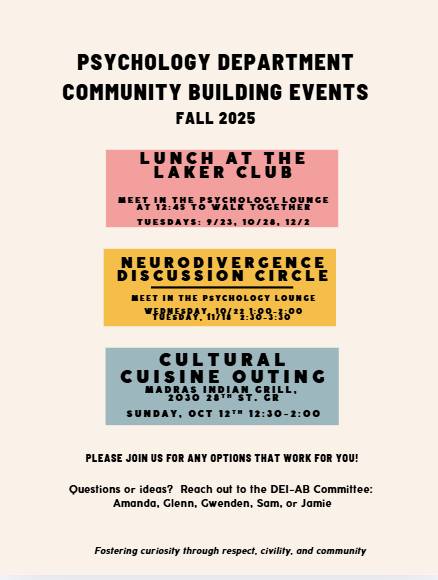
- Lunch at the Laker Club. Meet in the Psychology Lounge at 12.45 to walk together. Tuesdays 9/23, 10/28, 12/2.
- Cultural Cuisine Outing. Meet at the Madras Indian Grill, 2030 28th Street, Grand Rapids. October 12, 12.30 to 2 pm.
- Neurodivergence Discussion Circle. Meet in the Psychology Lounge. Wednesday 10/22 1.00-2.00 and Tuesday 2.30-3.30 pm
- Family Friendly Skating Event. Meet at the Rosa Parks Circle, 135 Monroe Center St. NW, GR. Sunday, February 22. 2:00-3:30 pm
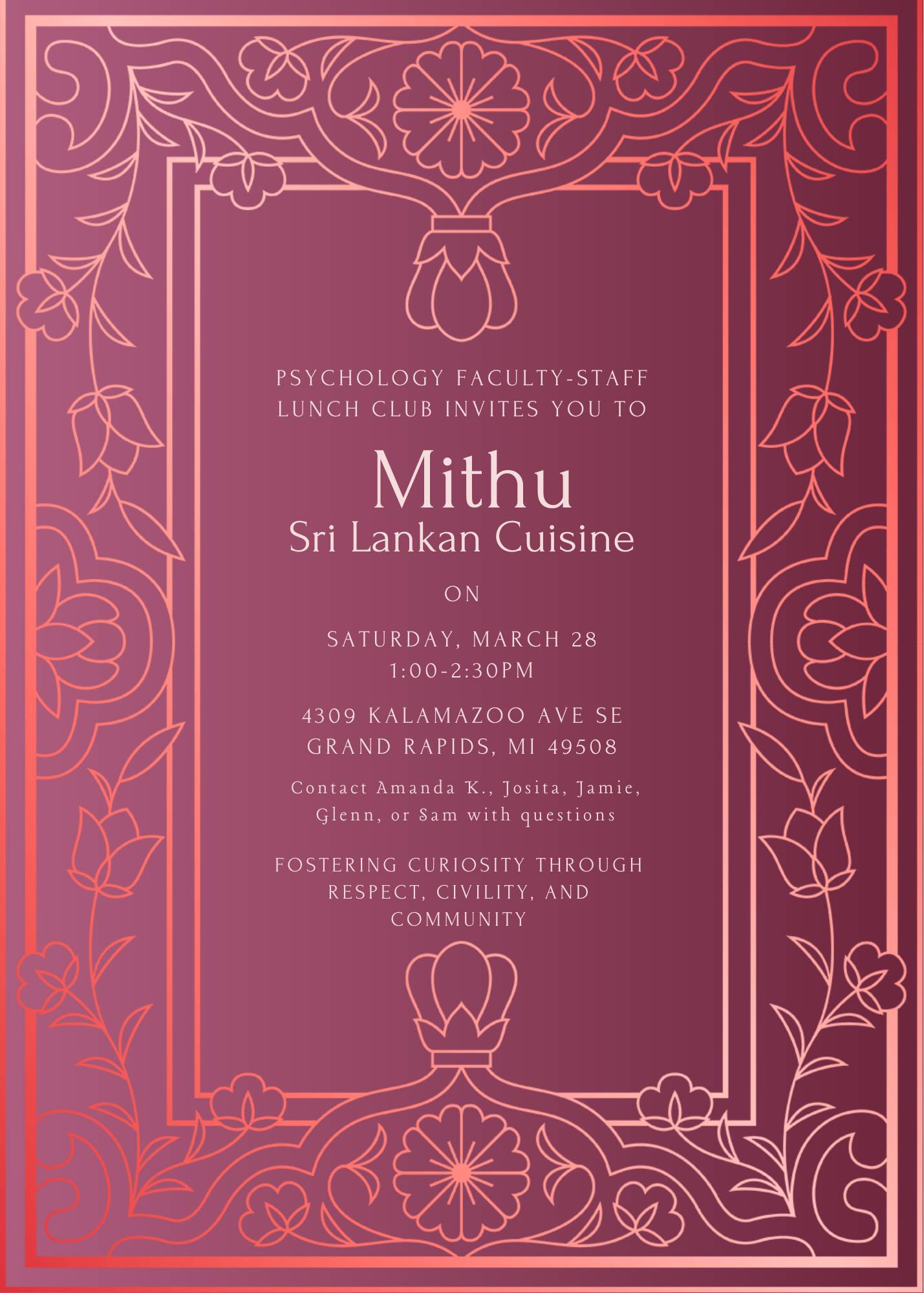
- Second Cultural Cuisine Outing. Meet at Mithu SriLankan Cuisine, 3409 Kalamazoo Av. SE, GR. Saturday, March 28, 1:00 -2:30 pm
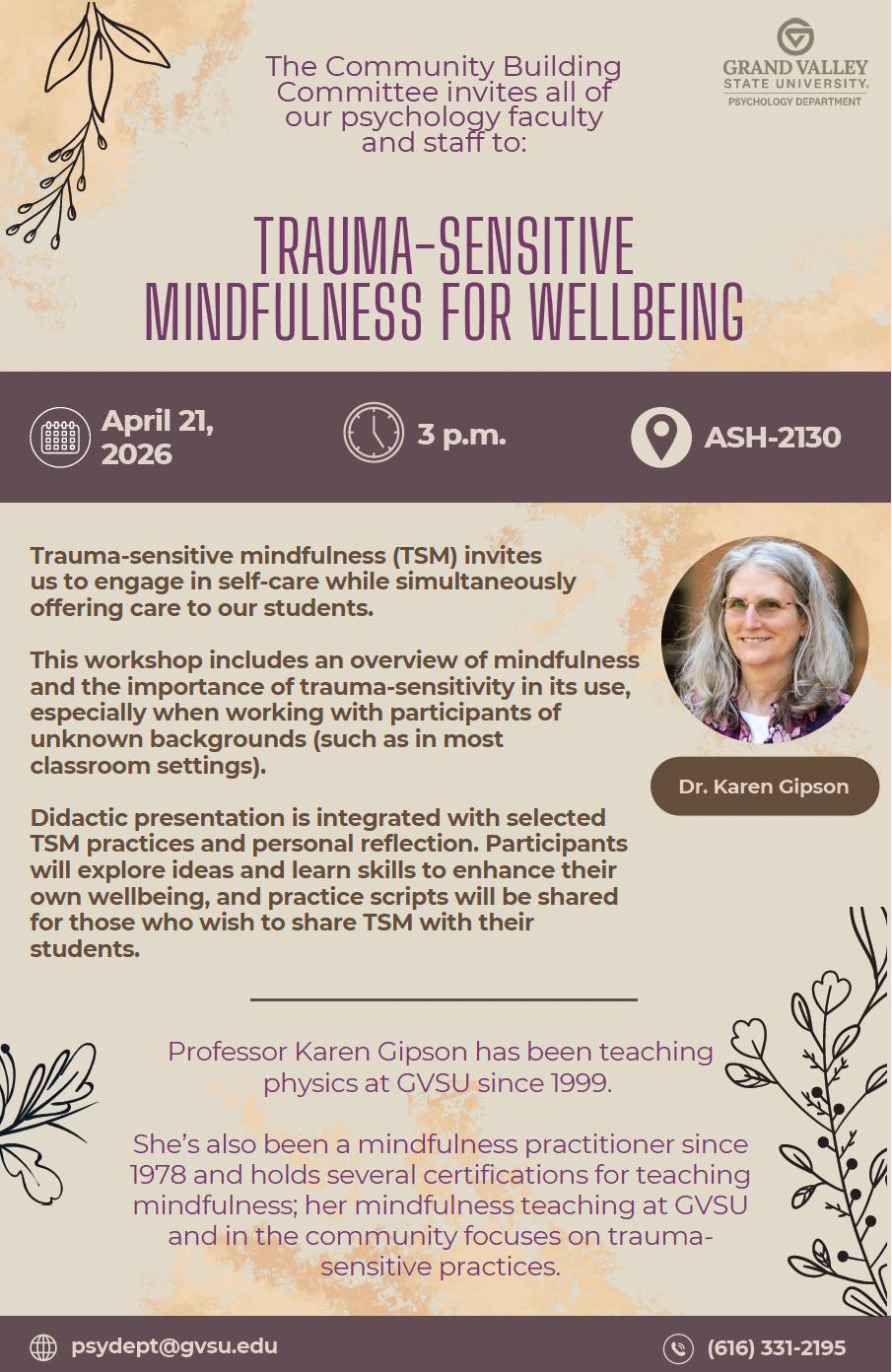
- Trauma-Sensitive Mindfulness workshop. Led by Karen Wilson. ASH 2130. Mo April 21 at 3pm.
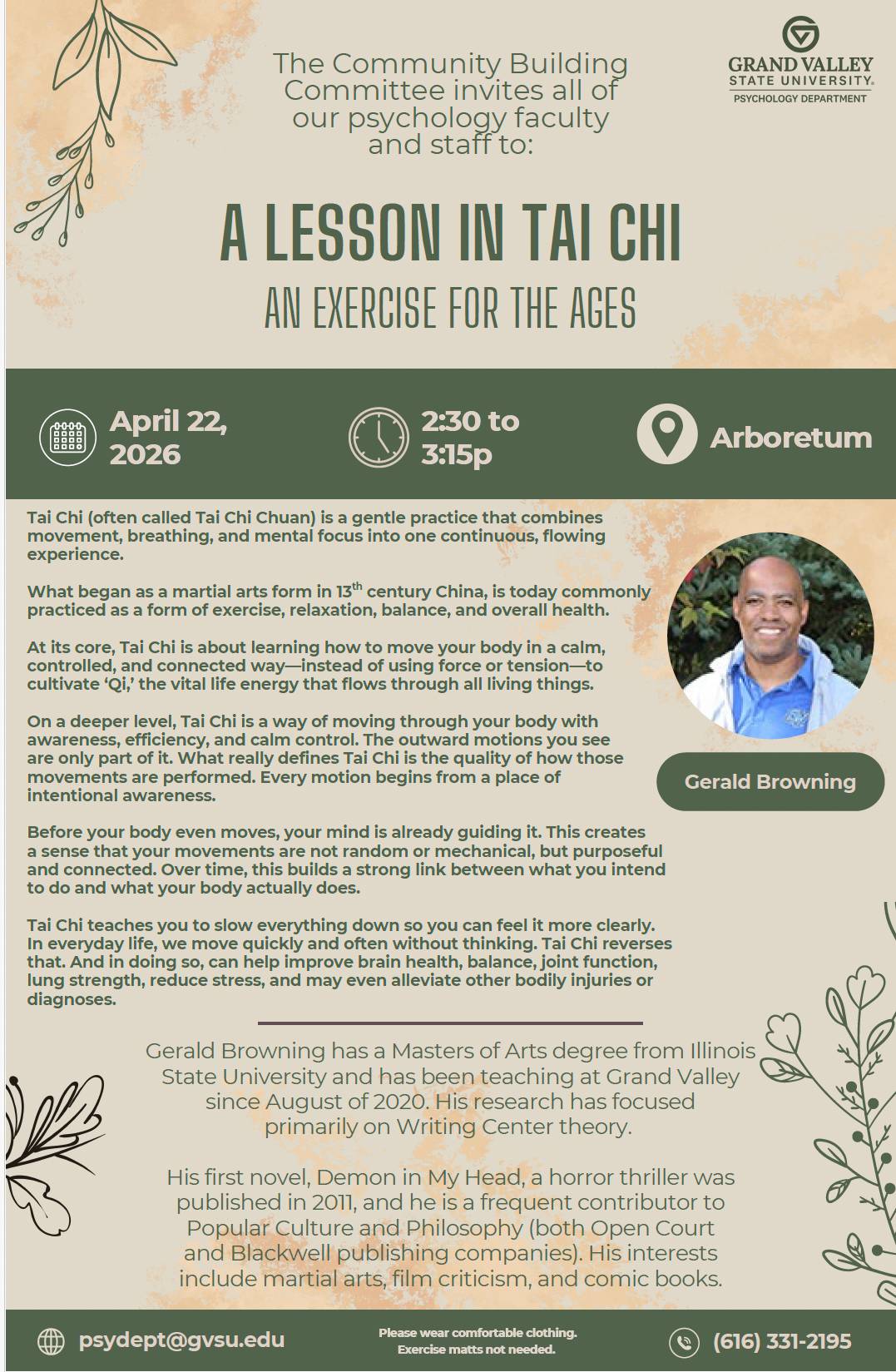
- A Lesson in Tai Chi: An Exercise for the Ages. Led by Gerald Browning. In the Arboretum, Allendale Campus. Wed, April 22 from 2.30 to 3.15. Comfortable clothes, no mat necessary.
- Waffle Community Breakfast. Finals week: Monday and Tuesday Morning in ASH room 2149.
COMMUNITY BUILDING RESOURCES
GVSU Glossary
Glossary of Terms for DEI-AB Professional Development Plan
- Accessibility: “A commitment to accessibility ensures that the University’s tools, devices, services, and environments are available to, and usable by, as many people as possible. In addition to the use of universal design, accommodations are made to support accessibility and inclusion. Grand Valley aims to identify, remove, and prevent barriers for people with disabilities in order to enable independence, dignity, integration, and equality of opportunity. (Informed by Accessibility for Ontarians with Disabilities Act)” (From Diversity, Equity, Inclusion, Accessibility, and Belong (DEI-AB) Framework web page)
- Belonging: “As an outcome of the act of inclusion and equity, belonging is feeling that your authentic self is welcomed and celebrated. Belonging is full membership. Belongingness entails an unwavering commitment to not simply tolerate and respect differences but to ensure that all people are welcome and feel that they belong in the society. This is the ‘circle of human concern.’ (John A. Powell and Stephen Menendian, “The Problem of Othering: Towards Inclusiveness and Belonging”)” (From Diversity, Equity, Inclusion, Accessibility, and Belong (DEI-AB) Framework web page)
- Diversity: “Diversity refers to the [...] difference and variety of personal experiences, values, and worldviews that arise from differences of culture and circumstance. Such differences include race, ethnicity, sexual orientation, gender identity and expression, disability, age, class, religion and spirituality, geographic and international, and more.” (From Diversity, Equity, Inclusion, Accessibility, and Belong (DEI-AB) Framework web page)
- Equity: “The guarantee of [just] treatment, access, opportunity, and advancement for students, faculty, and staff at every stage of educational and career development. Equity is enabled through the active, ongoing work of identifying and eliminating barriers preventing full participation by all members of the campus community.” (From Diversity, Equity, Inclusion, Accessibility, and Belong (DEI-AB) Framework web page)
- Goals: “what you aim to achieve; goals are action-oriented, whereas outcomes define the desired state” (“Goals,” University Assessment Committee: Glossary of Terms).
- Inclusion: “The act of creating an environment in which all members of a community feel welcome, safe, supported, respected, and valued. Inclusion is ‘the active, intentional, and ongoing engagement with diversity — in people, in the curriculum, in the co-curriculum, and in communities (intellectual, social, cultural, geographical) with which individuals might connect — in ways that increase one’s awareness, content knowledge, cognitive sophistication, and empathic understanding of the complex ways individuals interact within value systems and institutions’ (Association of American Colleges and Universities, AAC&U). Inclusion establishes an environment in which all individuals and communities are able to thrive in authentic ways. Moreover, an inclusive and welcoming climate embraces differences so that all people can fully participate in the university’s opportunities.” (From Diversity, Equity, Inclusion, Accessibility, and Belong (DEI-AB) Framework web page)
- Objectives: “measurable statements of specific results to be achieved en route to the accomplishment of an outcome; objectives state results, not activities. Objectives are used to describe measurable aspects of an outcome which, when met, would constitute partial achievement of the outcome.” (“Objective,” University Assessment Committee: Glossary of Terms) The objectives should resemble the example of a co-curricular objective available on the University Assessment Committee’s Glossary of Terms web page.
- Student Success (in CLAS): “The College of Liberal Arts and Sciences (CLAS) empowers students to accomplish their unique academic, personal, and professional goals through the development of knowledge, self-efficacy, and a connection to the campus and global community. To achieve these outcomes, CLAS provides inclusive and equitable opportunities that foster purpose, engagement, learning, and academic progress. Student success is qualitatively and quantitatively defined and measured by: Student development, articulation, and enactment of a sense of purpose in and value for higher education and a lifetime of learning
- Students’ sense of belonging and connection to an inclusive and accessible campus
- Student engagement in curricular and co-curricular activities at levels that meet or exceed the principles for high-impact practices
- Student learning with an emphasis on the knowledge and skills developed through a multi-disciplinary liberal arts education
- Academic progress that leads to timely degree or academic goal completion” (From CLAS Student Success Team, “CLAS Student Success Definition,” Draft)
AI Literacy for ALL
Designing assessment for the GenAI era
Task Force: The first part of the mission of the task force ( Fall 23-Winter 24) was to design a DEI-AB faculty development plan. The implementation and first assessment occurred in 2024-2025. We are currently in our second year of implementation and assessment.
The members of the task force are:
Amanda Karsten (Chair) (behavior modification)
Sam Condon (Academic Department Coordinator)
Gwenden Dueker (World Café, Trauma informed training)
Jaimie Owen DeSchreiver (neurodivergence, autism, belonging)
Glenn Valdez (behavioral neuroscience, marginalized minority support and mentoring)
Josita Maouene (development, website)
If you are interested in joining our team, please contact Amanda Karsten !
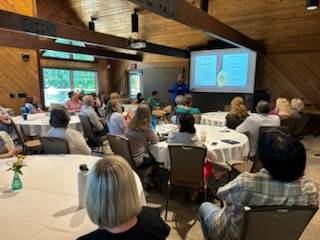
Retreat at the North Ravine Lodge for Psychology Faculty with the Bias reduction training of Dr. Cox
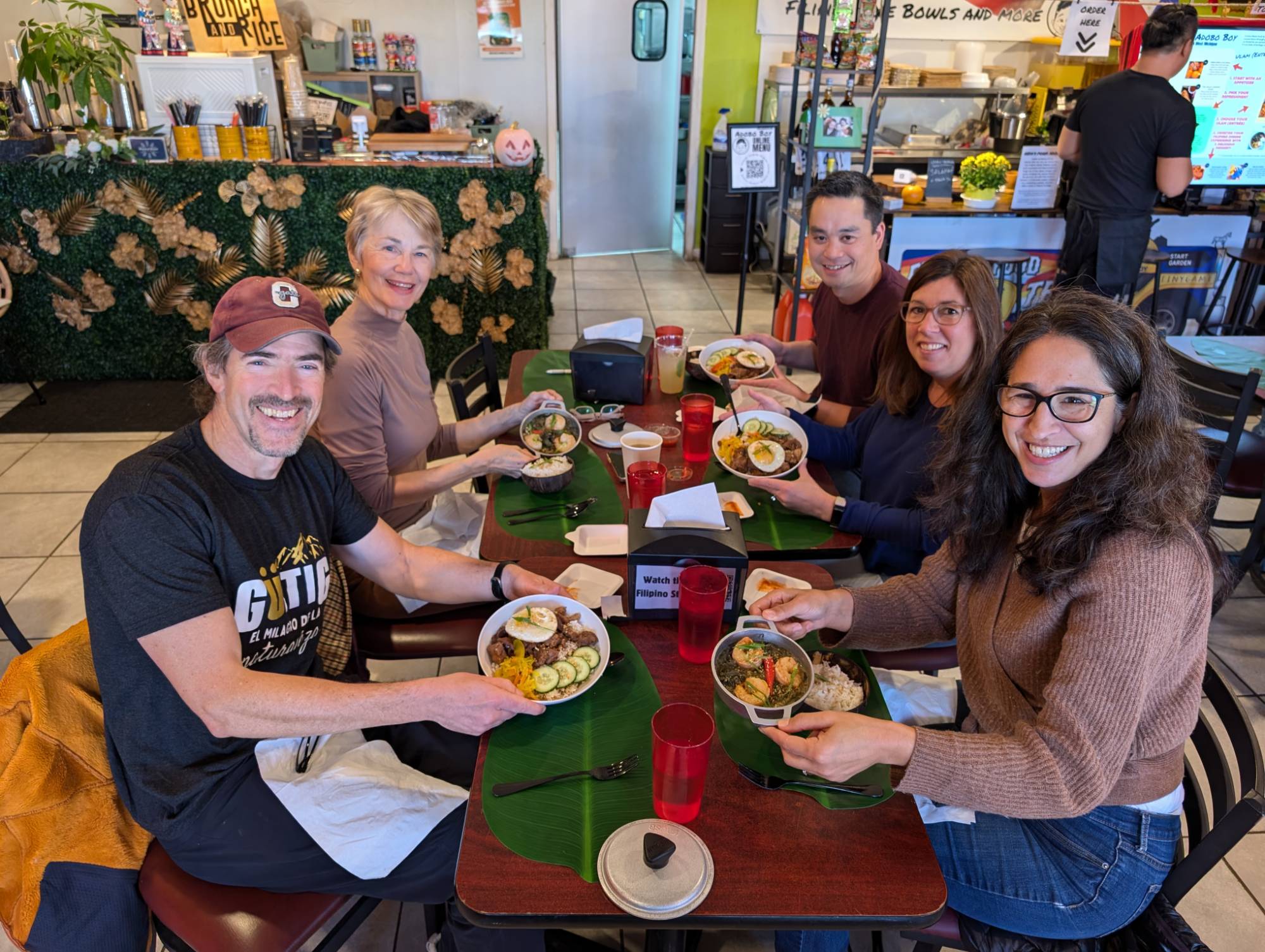
The first edition of the Dinner/Lunch Club at Adobo Boy, a home run Filipino restaurant on 28th Street , GR
[1731440755].jpg)
Colleagues at the first World cafe on the roots of Belonging