
Interfaith Insight - 2025
Permanent link for "Celebrating Christmas as a Festival of Light Along With Other Traditions" by Douglas Kindschi, Sylvia and Richard Kaufman Founding Director, Kaufman Interfaith Institute, GVSU on December 16, 2025
This interfaith insight was first published in 2018.
There can be no doubt that we are in the holiday season. It is all around us, in television programs, store advertisements, shopping for presents, and holiday lights throughout the city and frequently on homes. Even those who do not send out Christmas cards often send out “Happy Holiday” cards. The dominant holiday in December is obviously Christmas but it is not the only religious holiday being celebrated this month.
Our Jewish neighbors celebrated Hanukkah, often called the Festival of Lights. The festival inspired by an event in the second century BCE, celebrates the rededication of the temple following the defeat of the Syrian occupation in the second century B.C.E. The menorah was lit again but there was only enough oil for one day and yet the flame continued for eight days. This miracle led to Hanukkah being called the Festival of Lights.
Buddhists celebrate Bodhi Day. Often Buddhist homes will have a ficus tree they decorate with beads, ornaments, and multi-colored lights similar to the way Christians decorate Christmas trees. In November this year, Muslims celebrated the birthday of Muhammad and Hindus celebrated Diwali, which isalso known as the Festival of Lights.
Many of these traditions use a lunar calendar for religious events that differs from the standard Gregorian calendar. Hence the celebrations are not always on the same day from year to year. Christmas is also not the same for those in the Eastern Orthodox tradition, which celebrates on Jan. 7. Christmas was not a part of the early church calendar since there was no mention in the Bible of about the time of Jesus’ birth. Some theologians have suggested that the time was probably in spring, as suggested by references to shepherds and sheep in the Nativity story.
Picking the date in December is likely related to the Winter Solstice as well as the Roman holiday of Saturnalia, which was very popular in ancient times. Candles and torches represented the fading sun whose return would begin to bring new light. Evergreen plants and wreaths reminded people of the coming spring when green would again predominate. Gift giving was a part of the festivities.
But by the fourth century C.E., Western Christian churches settled on celebrating Christmas on December 25, with the declaration of Pope Julius I. This allowed them to incorporate the holiday with Saturnalia and other popular pagan midwinter traditions. Pagans and Christians co-existed (not always happily) during this period, and this likely represented an effort to convince the remaining pagan Romans to accept Christianity as Rome’s official religion.
Before the end of the fourth century, many of the traditions of Saturnalia — including giving gifts, singing, lighting candles, feasting and merrymaking — had become absorbed by the traditions of Christmas as many of us know them today. Many Christians also mark the season by lighting a candle each of the four Sundays of Advent.
These festivals of light have different traditions and meaning in our culture. The victory of light over darkness also represents the victory of knowledge over ignorance and understanding over prejudice. The darkest day of the year can also be a time of renewal, expectation, and celebration.
Christians joined the festival spirit in celebrating Jesus’ Nativity. After all, Jesus said, “I am the light of the world. Whoever follows me will never walk in darkness but will have the light of life.” (John 8:12) In the Sermon on the Mount he even said to his followers, “You are the light of the world.” (Matthew 5:14) On this the darkest period of the year a celebration of light is most appropriate. Christians give gifts to each other representing God’s gift of the Christ child to the world.
Christians are sometimes critical that Christmas time has become too commercial and has lost the “true spirit of Christmas.” But maybe our increasingly secular society is just returning to the pagan style of trying to bring light and hope to the shortest day of the year.
Christians continue to celebrate the season of light along with their other religious neighbors. At this time of seeming darkness in the world and in our nation where fear, conflict and even violence are too prevalent, let us come together seeking understanding and peace. Knowledge of other traditions and getting to know others who celebrate differently helps us come together as community. Interfaith understanding does not mean that all religions are the same or that the differences do not matter, but it does mean that we recognize our common humanity and pursue “peace on earth and goodwill to all.” Let this be our commitment.
Permanent link for "Giving Thanks for Our National Heritage" by Douglas Kindschi, Sylvia and Richard Kaufman Founding Director, Kaufman Interfaith Institute, GVSU on November 18, 2025
As we enter this Thanksgiving Season, as well as the prelude to America’s 250th anniversary of the Declaration of Independence, we also cannot help but notice the increased focus on the Revolutionary War. PBS this week Sunday through Friday features the 12-hour Ken Burnspresentation of that war that marks the beginning of our existence as an independent nation.
Focusing on these same themes, the November issue of The Atlantic featured a special theme titled “The Unfinished Revolution” with 21 articles in five chapters and nearly 150 pages. Of special interest to me is the article “The Moral Foundation of America.” Author Dr. Elaine Pagels, now professor emerita, held an endowed chair as Professor of Religion at Princeton University. She is the author of over a dozen books, the most recently published earlier this year, “Miracles and Wonder: The Historical Mystery of Jesus.”
The Kaufman Interfaith Institute was pleased to feature her last December along with two other internationally known scholars at its Triennial Interfaith Dialogue. In The Atlantic article she notes that for nearly all of human history rights were conferred by rulers.
“In the ancient empires of Babylonia, Egypt, Greece, and Rome,” she writes, “only those whom rulers regarded as their peers had value.” Furthermore, these rulers derived their rights and powers from the gods. Even ancient philosophers, for example Plato, argued that humans because of their differences in intelligence and physical strength are fit only for certain positions and rights in society, some to be rulers, others to be slaves.
Religious scriptures introduce a different understanding of human worth, as when the Bible in Genesis says that humans were “created in the image of God,” Pagels writes, “thus affirming the intrinsic value of all human beings — a fundamental theme for ‘peoples of the book’ Jews, Christians, and Muslims alike.” She writes that even the great King David, when “he acted wrongly, the prophet Nathan rebuked him, seeking on behalf of the Lord, and ordered him to repent and reform. In that culture, moral law remained as binding for the king himself as for his subjects — David obeyed the prophet’s command.”
Pagels continues by showing how the Declaration of Independence, written nearly 250 years ago, regains the focus on human rights as “self-evident,” not given by rulers. She writes, “the Founding Fathers agreed that because these are innate rights, they can only be recognized, and not conferred, by human beings. Governments are instituted among Men, deriving their just power, from the consent of the governed.” These statements were aspirational and not at the time applicable to all citizens. “It took another war to extend those rights to Black Americans,” she notes, “and the work of protecting the rights defined by the Declaration is an ongoing project.”
Pagels concludes her essay with this aspirational thought: “The cruel and dangerous reversion to rule through fear and violence that we are seeing now was among their greatest concerns. But I have faith in their 1776 vision; I believe that the rights to life and liberty are the sacred inheritance of every human being. … Now is the time for those of us who love what the founders entrusted to us to pledge anew — to one another, to our children, and all who come after us — that we stand for their Declaration.”
Let us all give Thanks, celebrate the Declaration and appreciate the rights we have as humans, while we pledge anew and work to ensure that all “children of God” can experience them as our founders envisioned.
Permanent link for "A New World Leader from America" by Douglas Kindschi, Sylvia and Richard Kaufman Founding Director, Kaufman Interfaith Institute, GVSU on May 20, 2025
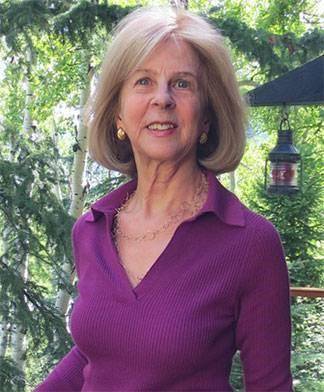
Habemus Papam! Latin for: “We have a pope!” These are the words that greeted the world and the thousands who had waited to see the white smoke emerge from the roof of the Sistine Chapel. It was the official announcement onMay 8 of the new pope, Leo XIV.
While I am not Roman Catholic, I have taken great interest in the developments of the church especially since the Second Vatican Council called by Pope John XXIII in 1962. It was the year I began my graduate studies at the University of Chicago.
Pope John XXIII said it was time for renewal, or as he was often quoted, “about opening the windows of the Church to let in some fresh air.” Many reforms came from that three-year effort including not limiting the Mass to Latin, declaration of religious freedom, openness to the Eastern Orthodox community and its liturgical practices.
A very important declaration for me, as I began working as the founding director of the Kaufman Interfaith Institute, was Nostra aetate, or the “Declaration on the Relation of the Church with Non-Christian Religions.” It was the first time in Catholic history that the church addressed other major religions with special reference to Muslims as our cousins and Jews as brothers.
The 12 years that Pope Francis led the church marked a further development as he focused much of his efforts on accepting in love all persons, even those who did not fit the traditional Catholic teaching. He was open to those of other faith traditions, sexual orientation and stations in life, stating “who am I to judge?” in relation to gay priests. While doctrinal changes were not made, as many had hoped, he set an example of love for all. He was described as one “who changed the tune of the Church but not the lyrics.” In a religious world where many claim to know with certainty exactly what God wants, I was very drawn to the humility in Pope Francis’s actions and words.
With the recent death of Francis, following his Easter outing to be with the people in St. Peter’s Square at the Vatican, many wondered whether the new pope would follow spirit of Francis or would return to a more conservative style. We may not know the answer to this future question, but there has been a lot of talk about his history when he was just Robert Francis Prevost, born in Chicago. He studied at a seminary of the Augustinians located in Michigan, completed his Master of Divinity degree at Catholic Theological Union in Chicago and a doctorate in canon law in Rome. He served for 20 years as missionary and then bishop in Peru where he became a naturalized citizen, making him the second pope to have come from the Americas and the first from the United States. He served various important roles at the Vatican and was made cardinal by Pope Francis in 2023.
Another noteworthyfact, for me at least, was that Robert Prevost’s bachelor’s degree from Villanova University was in mathematics. This was of particular interest since I did my undergraduate study in mathematics and then went to the University of Chicago for further graduate work. But I soon took a two-year detour to study at the Divinity School before returning to mathematics for my graduate degrees.
When the new pope chose the name Leo XIV, it was reassuring to many that he would actively support thestyle and direction of his predecessor Pope Francis. The previous Pope Leo XIII in the 19th century made a significant impact on the church with his scholarship and social teaching. He denounced slavery, supported the rights of the worker, and affirmed the dignity of every human being. He was open to the findings of science and urged scholarly study of Scripture.
In an article in the Catholic Exchange, Shaun McAfee describes Leo XIII as a pope who was “a scholar and a pastor, a reformer and a traditionalist … a pope coming of age in the complexities of the global Church.” He concludes his article with, “By choosing the name Leo, Pope Leo XIV may be calling us to remember a pope who believed the Church must think deeply, pray constantly, teach clearly, and love generously. It’s not a program, but a profile — a reflection, perhaps, of what kind of shepherd he hopes to be.” In his early statements, Leo XIV issued a call to dialogue, building bridges and uniting to pursue peace. He emphasized continuity with Vatican II and Pope Francis.
It is inspiring and hopeful to see a world leader from America who clearly leads through humility and a moral commitment to respect all people and seek the welfare of the poor, the immigrant, and the person in need. May we all follow this example!
Permanent link for "Finding hope in the midst of cultural division" by Douglas Kindschi, Sylvia and Richard Kaufman Founding Director, Kaufman Interfaith Institute, GVSU on March 18, 2025
“Are we destined to live with ever more divisive politics and ever more divided societies, growing inequalities and increasing loneliness, less public regard for truth and ever more determined efforts to ban and demonize the voices with which we disagree?” So asked the late Rabbi Jonathan Sacks, former Chief Rabbi for the United Kingdom, in his last book “Morality: Restoring the Common Good in Divided Times.” Published in the United States in 2020 just prior to his untimely death, Sacks calls for a renewed morality in our public life.
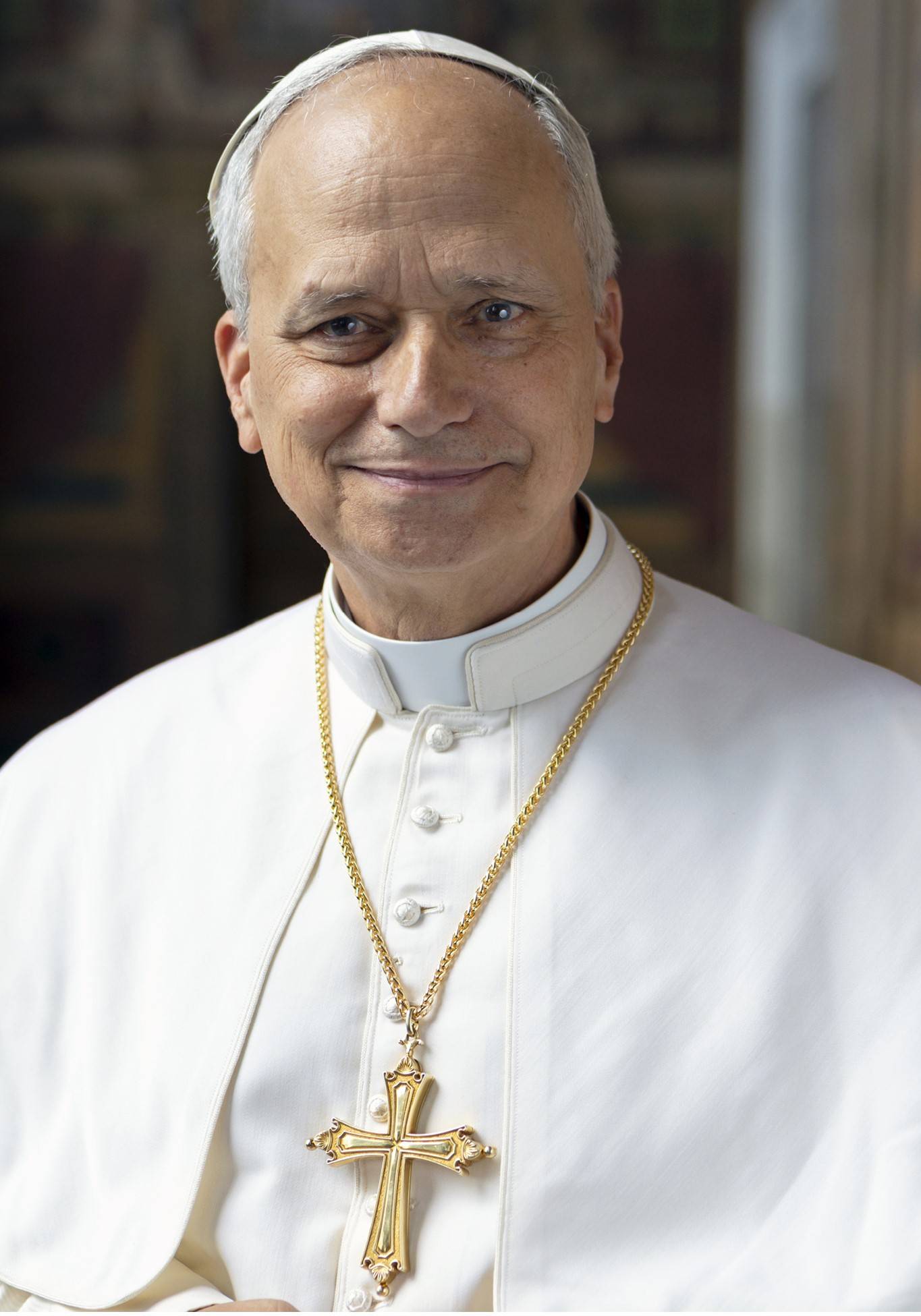
A similar call and hopeful message come from the recent book, “The Upswing: How America Came Together a Century Ago and How We Can Do It Again.” Authors Robert Putnam, research professor at Harvard, and Shaylyn Garrett, writer and social entrepreneur, analyze the economic, political, social, and political trends throughout the last century leading to the increased inequality and polarization of our current time. We have been here before, in the early 1900s, in what is referred to as the Gilded Age, but came out of that to a more egalitarian and cooperative society in whatthey call “the upswing.” Putnam’s vast sociological research documents that movement and together the authors analyze how that upswing developed -- and why it can happen again.
Putnam presents a graph starting in the early 1900s with very low levels of political collaboration, which then gave way to much increased collaboration mid-century during the Eisenhower presidency. That’s when the politicalparties cooperated to desegregate the armed forces, expand Social Security coverage, add more public housing, and promote better health care and education. There was cooperation on a massive investment in infrastructure with the interstate highway system as the hallmark. A Republican president along with a Democratic Congress worked together for a country that was rebuilding following World War II. That kind of cooperation then fades through the last half of the century with conflict and division around Vietnam, Watergate, and budget battles leading to government shutdowns. Putnam describes today’s polarization as back to the low point of the early 20th century and even worse.
Economic production and income during the 1900s, on average, grew in remarkable ways when adjusting for inflation. In the early part of the century, however, there was great disparity, with 1% of the population holding nearly one-half of all the wealth in contrast to the large number of immigrants who were struggling to survive. This disparity diminished in the mid-century with financial regulation, progressive tax rates, increased union membership, and expansion of public welfare programs. But again, in the latter half of the century economic disparity increased to levels like that of the early 1900s.
Similar patterns were found when the research looked at social isolation and cultural self-centeredness. In each case they observed a similar curve going from an I-centered society to a more we-centered culture, but then returning to the current I-centered pattern. While the pattern is instructive and the research impressive, what I found most enlightening was their analysis of the leading indicators for the “upswing” to the more collaborative spirit of the mid-century.
They looked for hints from the earlier upswing from the more selfish era, to more cooperation and concern for the larger welfare of society that marked the mid-century. What could we learn that would help us seek another upswing in our social and cultural life together?
Two factors are identified by the authors as critical to the beginning of the change. First was an increased concern for others, especially for the less fortunate. This movement, sometimes referred to as the “social gospel,” brought religious groups together with a focus not so much on their differing beliefs, but on the common commitment to love your neighbor.
Is it possible that we are observing a similar moral awakening when persons of different religious, or no religion, are coming together in efforts to right the wrongs that have been done in the environment, or correct the racial disparity in how minorities are treated by the police or by others who carry ill will toward those who look or believe differently? Is the interfaith movement our current moral effort to live out our common religious principles or deeply felt values to care for those in need? Can the attitude of understanding and accepting those of different faith commitments become a new morality that seeks the common good in this era of difference and fear?
The second observation of what led to the upswing last century was the important leadership by the young. They realized that while they had not created the problems, they could act to change society. It was a vision that society doesn’t need to be based on a competition, but on cooperation to help all thrive. The youth of today have lived through the decline of solidarity and cooperation, and have a right to be cynical, but Putnam pointedly stated to the youth, “people just like you turned America around… It’s not your fault but you have it in your power to change it.”
Garrett noted that this is the most diverse generation in America’s history, and it sees the necessity to affirm and accept all members of our society. She challenged the youth to do the “heart work” which is also “hard work,” to set a new course for our society.
We are becoming a nation of minorities. Can we extend the American dream of democracy to truly include and accept that diversity as we address the difficult issues in our society?
Look at the diversity in age and race in the Black Lives Matter movement. Look at the role of young people like Greta Thunberg in calling the world leaders to account for the damage done to the planet that her generation will inherit. Look at Malala Yousafzai, the young Pakistani girl who was deliberately shot in the head because of her outspoken defense of education for girls. Following her recovery, she continued her campaign and became, at age 17, the youngest person to ever receive the Nobel Peace Prize.
Look at Amanda Gorman, who inspired the nation in her poem delivered at the Inauguration. In our own community, look at Zen H, a young adult in Holland, Michigan, who is an environmental activist and leader of their local chapter of the Sunshine Movement.
Youth are stepping up to the cause; they are asserting their agency to change what is not right and work for a better society and a healthier world. Can we all, no matter our generation, join them in finding hope for a better world?
NOTE: A very stimulating summary of their work, along with questions from the current and three former presidents of GVSU, was recently presented in the one-hour Presidential Roundtable. (Watch at: www.bit.ly/GVSU-presidents.)
Permanent link for "Living an Active Life in Your 90s" by Douglas Kindschi, Sylvia and Richard Kaufman Founding Director, Kaufman Interfaith Institute, GVSU on March 4, 2025
For a long time, I have been impressed by people who lived into their 90s. My father lived to 94. His father lived with us shortly before his death at 92. Following our move to Michigan, our new house had room for our two young children as well as an extra bedroom. My grandfather was living in a nursing home in Indiana but was healthy enough to live with us for a brief time his 90s, so we invited us to move into that extra bedroom.
Recently the entire country celebrated the life of Jimmy Carter, who completed his 90s decade and celebrated his 100th birthday. We had the privilege of hearing him speak at one of the annual conventions of the Islamic Society of North America in 2014. Later we were invited to a dinner with Carter and his wife, Rosalynn, in Grand Rapids. On a trip to Florida, we stopped by Plains, Georgia, where he lived in a modest home during his impressive post-presidential life of service.
Another impressive nonagenarian, Martin Marty, died last week at the age of 97. Marty was my teacher at the University of Chicago Divinity School when I took a two-year detour during my graduate studies. Later while attending board meetings of the McCormick School of Theology, I would frequently visit Marty at his high-rise condo in the Hancock Center in downtown Chicago.
Marty was widely respected worldwide as a church historian and leading expert on modern Christianity. He was known by his thousands of lectures, articles, and essays during his faculty years at the University of Chicago Divinity School as well as during his retirement years, when he wrote 30 of his 60 books.
Marty was also an important influence at the beginning of the Jewish-Christian Dialogue in Muskegon founded by Sylvia Kaufman. In 1994, he dialogued with David Hartman, founder of the Shalom Hartman Institute in Jerusalem, and was the featured speaker at the Interfaith Academic Consortium in 2011.
When the dialogue was moved to Grand Valley State University and became the Jewish-Christian-Muslim Dialogue, Marty was the moderator for the first two daylong sessions in 2006 and 2009. My contacts with Marty renewed as I took responsibility for the Sylvia and Richard Kaufman Interfaith Institute, and I have frequently referred to Marty as the “Godfather of the institute.” The Kaufmans had moved to Chicago just a few blocks from Marty’s residence and they continued their friendship, now as near neighbors.
Another important influence on me, active into his 90s, is the late Richard (Dick) Kaufman, co-founder along with his wife, Sylvia, of the Kaufman Interfaith Institute. Following Dick Kaufman’s retirement from his business and move to Chicago, he attended classes at the University of Chicago Divinity School, where at age 86 he completed his master’s degree in Judaic studies. At age 91 he attended the triennial interfaith dialogue in 2018, while also making last-minute revisions for his doctorate thesis defense at the University of Aberdeen in Scotland to be held in a couple of months. Just two weeks after the dialogue, while on a family vacation, he fell and never recovered. We all grieved to learn of the accident that led to his death shortly following his lively and vigorous interaction at that year’s interfaith dialogue.
Dick Kaufman’s involvement in his studies and in the development of the Kaufman Interfaith Institute are missed to this day. His widow Sylvia continues her support and interest in the institute’s mission and programs. She turns 90 this coming June.
My Interfaith Insight from December 6, 2018, about Dick Kaufman can be read here.
Wisdom comes with age, it is said. Knowing these persons who lived actively into their 90s has certainly demonstrated that to me. For that I am extremely grateful.
Permanent link for "Created From Dust" by Douglas Kindschi, Sylvia and Richard Kaufman Founding Director, Kaufman Interfaith Institute, GVSU on February 17, 2025
In the creation stories of the Jewish and Christian scripture, humans are created from the dust of the earth. At funerals, the committal rite often includes the phrase from the English Book of Common Prayer, “earth to earth, ashes to ashes, dust to dust.” Franciscan priest and author, Richard Rohr, wrote: “Being human means acknowledging that we’re made from the earth and will return to the earth. We are earth that has come to consciousness.”
The word human comes from the Latin word humus , meaning earth or ground. The current issue of Christian Century has an article by Peter Choi titled, “Dust and Glory.” He points out that the dust is often used to refer to humility, whichalso has the same root “humus.” Choi writes, “Ancient cultures revered the earth as a mysterious source of life. They knew what science later taught us: the ground contains immense life-giving properties. Soil is a mixture of air, water, minerals, and dead and living microorganisms. These ingredients interact in extraordinary ways, making soil one of our planet’s most dynamic and vital natural resources.… Our origin from the dust of the ground doesn’t just teach humility. It also reminds us that our calling is always toward the flourishing of life in the world. Made from the dust of the ground, we are designed to return to the earth, for the replenishing and renewal of the world.”
Humus is also a gardening term that refers to the components of soil that are rich in organic matter. It is the result of mixing yard material like leaves with leftover plant food products and leaving them to decompose into what is called compost. It is the recycling of plant material. Think of it as “earth to earth” for the plant world.
Philosopher Brian Austin, in his book, The End of Certainty and the Beginning of Faith, tells of hiking with his family along the trails which parallel stream beds in the Great Smoky Mountains. They often return with mud-caked hiking boots. While he finds himself impressed with the majesty of the mountains, it is also (in his words), “the mud, still glistening with the mist that makes dust come to life [that] harbors mysteries as magnificent as the mountains …”
Austin continues, “From that mud, from its carbon, nitrogen, hydrogen, oxygen, and assorted metals, a child can be woven. The atoms in that mud, the same kinds of atoms that comprise my children and you and me, have existed for billions of years. ... This mud is spectacular, and we believe that God made it so. This mud is rich, pregnant with possibility. … To see ourselves as made of the same stuff that rests under our boots as we journey a mountain path is no insult to human dignity, no affront to the image of God in us; it is rather a reminder of the majesty of inspired mud, a reflected majesty that gives us but one more fleeting glimpse of the blinding brilliance of the maker of the mud.”
These authors remind us that in the cycle of life we are closely related to the earth. We have much in common with compost and mud which contain the chemicals that also make up our bodies. They affirm that we are God-breathed dust, made from the humus. We are mud balls who have been created in the image of God.
Fully understanding who we are requires the realization that we are indeed part of the earth, the soil, the humus, to which we will return. It is only by God’s grace that we have life. The confidence and faith that we have is important to affirm, but we must also be humble in recognizing that there is so much more that we do not understand or possess.
As we engage others in our community, be they refugees or immigrants, people who are different in race or class or political persuasion, or persons of a different faith or of no faith, let us remember we have all come from this same soil. We are called to recognize this with humility.
Permanent link for "Transitions and Remembrance " by Douglas Kindschi, Sylvia and Richard Kaufman Founding Director, Kaufman Interfaith Institute, GVSU on January 21, 2025
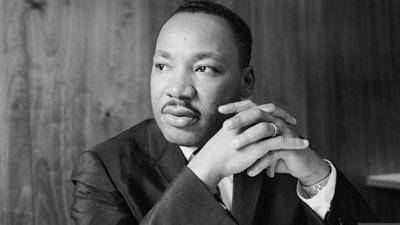
This is a most interesting time of transition. Yesterday, we celebrated Martin Luther King Jr. Day. Also, on that day, the new president was inaugurated. Both events overlap the conclusion of President Biden's term and the 30-day remembrance of former President Jimmy Carter. As we think of these leaders, I’m also reminded of the words from Martin Luther King, Jr. from a speech early in his civil rights efforts that have been widely quoted recently, “May I stress the need for courageous, intelligent, and dedicated leadership…. Leaders of sound integrity. Leaders not in love with publicity, but in love with justice. Leaders not in love with money, but in love with humanity. Leaders who can subject their particular egos to the greatness of the cause.”
On the world stage, it is also a very long-awaited transition from the war in the Middle East to a cease-fire and release of hostages and prisoners. It has caused considerable grief on all sides. The tension has also created setbacks in interfaith work, involving not only in the Jewish and Muslim communities but also divisions in the Christian world. We pray that this agreement will prevail through the difficult implementation going forward.
In my last Insight, I reviewed the stress that we’ve endured in our country as well as around the world and recalled the Serenity Prayer that is often invoked in times like these. The prayer was made popular by the famous theologian and pastor, Reinhold Niebuhr.
Niebuhr began his career in Detroit as a pastor with a small congregation of 66. Detroit was at the beginning of the auto industry boom and was attracting many Black people from the south as well as Jewish and Catholic immigrants from eastern and southern Europe. White supremacists did all they could to oppress these “newcomers,” including growth of the Ku Klux Klan in Detroit to over 20,000 in the 1920s.
Niebuhr took a strong stance against this prejudice, receiving national attention, and his congregation grew from 66 to nearly 700 by the time he left in 1928 to become Professor of Practical Theology at Union Theological Seminary in New York. Also, about the same time he wrote the Serenity Prayer as a part of a sermon. It became used over the years by many including the YMCA and Alcoholics Anonymous. It has various versions, but often the following:
God, give me grace to accept with serenity the things that
cannot be changed,
Courage to change the things which should
be changed,
and the wisdom to distinguish the one from the other.
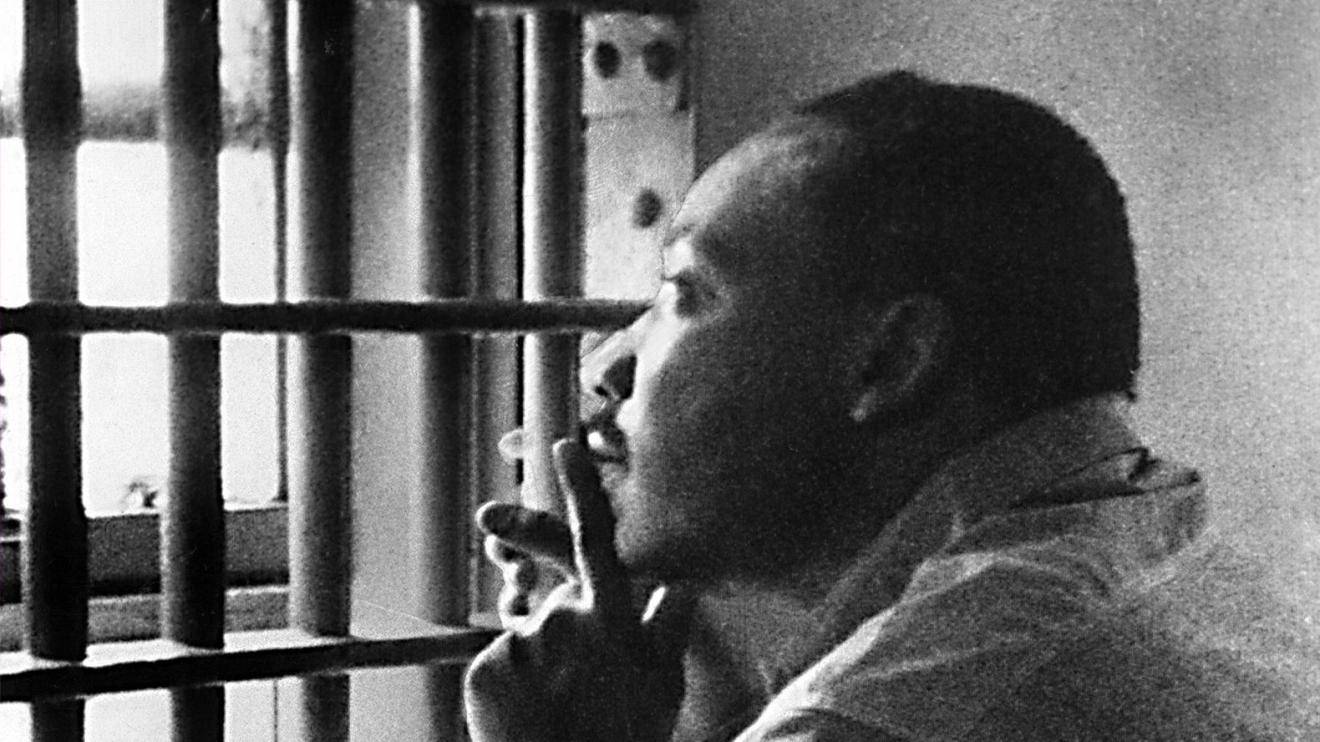
Niebuhr was also well known for his many books and influence on many others including the Rev. Dr. Martin Luther King, Jr., whoin his famous Letter from a Birmingham Jail wrote, “Individuals may see the moral light and voluntarily give up their unjust posture; but, as Reinhold Niebuhr has reminded us, groups tend to be more immoral than individuals.”
This past weekend the Dominican Sisters newsletter sent the following prayer based on the writings of Martin Luther King, Jr. reflecting on the words of the Hebrew prophets Amos 5:24 and Micah 6:8.
A Prayer of Faith and Hope in a Time of Fear
In times of fear amid rumors of war,
We pray that one day
Justice will roll down like water,
And righteousness like a
mighty stream.
We pray that all our elected officials will
Do justice and love mercy
And walk humbly with their God.
We
pray that one day war will come to an end,
That men will beat
their swords into plowshares
And their spears into pruning hooks…
We pray that with this faith
We will be able to speed up the
day
When there will be peace on earth and good will toward
all.
We pray for that glorious day,
When the morning stars
will sing together,
And the children of God will shout for
joy.
Amen.
Permanent link for "Stress, Serenity, and Pilgrimage" by Douglas Kindschi, Sylvia and Richard Kaufman Founding Director, Kaufman Interfaith Institute, GVSU on January 6, 2025
For many, 2024 was a year of stress. And for many this coming year doesn’t look all that promising on the political front as well as in other areas. I’m reminded of the Serenity Prayer that is often invoked in times like these. The prayer was made popular by the famous theologian and pastor, Reinhold Niebuhr.
In 1915 the German Evangelical mission sent Niebuhr to Bethel Evangelical Church in Detroit to a small congregation of 66. Detroit was at the beginning of the auto industry boom and was attracting many Black people as well as Jewish and Catholic immigrants from eastern and southern Europe. White supremacists did all they could to oppress these “newcomers,” including growth of the Ku Klux Klan in Detroit. The Klan in Detroit grew to over 20,000 in the 1920s and even ran candidates for mayor, one of whom was elected in 1935.
Niebuhr took a strong stance against this prejudice, receiving national attention, and his congregation grew from 66 to nearly 700 by the time he left in 1928 to become Professor of Practical Theology at Union Theological Seminary in New York. Also, about the same time he wrote the Serenity Prayer as a part of a sermon. It became used over the years by many including the YMCA and Alcoholics Anonymous. It has various versions, but usually used is the following:
God, give me grace to accept with serenity the things that
cannot be changed,
Courage to change the things which should be
changed,
and the wisdom to distinguish the one from the other.
As we face the stresses and challenges of the coming year, may this be our prayer as well.
Niebuhr was also well known for his many books and influence on many others including the Rev. Dr. Martin Luther King, Jr., whose life and teachings will be celebrated with our national holiday on Jan. 20. In his famous Letter from a Birmingham Jail, King wrote, “Individuals may see the moral light and voluntarily give up their unjust posture; but, as Reinhold Niebuhr has reminded us, groups tend to be more immoral than individuals.”
Niebuhr was also an early advocate for not judging others and spoke against efforts to attempt to convert Jews to his own Christian faith. When questioned about others who don’t claim a faith, he responded, “How do I know about God's judgment? One of the fundamental points about religious humility is that you don't know about the ultimate judgment. It's beyond your judgment. And if you equate God's judgment with your judgment, you have a wrong religion.”
Another way to deal with stress is to “leave it behind” by taking a pilgrimage. Most religious traditions have a version of that. One of the Pillars of Islam is the pilgrimage to Mecca know as the Hajj. Muslims who are physically and financially able are required sometime in their lifetime to make that pilgrimage.
Jews often take a pilgrimage to the Western Wall in Jerusalem, and there is a long tradition of Christian pilgrimages.
Among the many historic Christian pilgrimages, one that is well known and popular today, is the Camino de Santiago in the northwestern region of Spain. A friend of mine, and of our interfaith efforts here in Grand Rapids, took that pilgrimage a few years ago. Another former resident here and previous head of the Reformed Church in America, Wes Granberg-Michaelson, took that pilgrimage and wrote a book about it. In the prologue of his book Without Oars: Casting Off into a Life of Pilgrimage, he writes how pilgrimages usually start: “You are feeling dissatisfied, anxious, depleted, desperate, or just deeply discontented. In such a moment, you know that your present circumstances of life are simply not working.”
For Granberg-Michaelson it led to seeking a way to shed much of his baggage, intellectual as well as spiritual. In his words, “All my life I’ve carried weighty theological assertions — creeds and historic confessions … psychological baggage … political baggage: the weight of tribal politics, and the politics of my tribe. … My pilgrim path beckons me to unpack these weighty realities, leave behind what I can, and carry lightly what I need.”
His book title is based on a true story from the 9th century, when three Irish pilgrims “made the dramatic decision to set out into the ocean from their homeland in a boat purposely ‘without oars’ seeking God’s breath. In Hebrew, wind, breath, and spirit are all the same word.” This is the metaphor he uses for the task of pilgrimage, involving shedding so much of our baggage to find a deeper truth.
As we begin a new year, we may need to reclaim our serenity or shed unwanted baggage as we seek deeper truth. One effort in that process might be to join our book group discussion this January.
Click here to register for the book group discussion meeting alternate Wednesdays at 2:00 p.m. by Zoom. We will be reading the Granberg-Michaelson’s book, Without Oars.