Interfaith Insight - 2024
Permanent link for "Learning From History and From Positive Religious Teachings" By Douglas Kindschi, Sylvia and Richard Kaufman Founding Director, Kaufman Interfaith Institute, GVSU on October 31, 2024
Who would have guessed that reading a book about early Christianity and its internal conflicts with its Jewish community as well as later opposition to pagan influence would help me frame and understand some of our current conflicts, both internal and international?
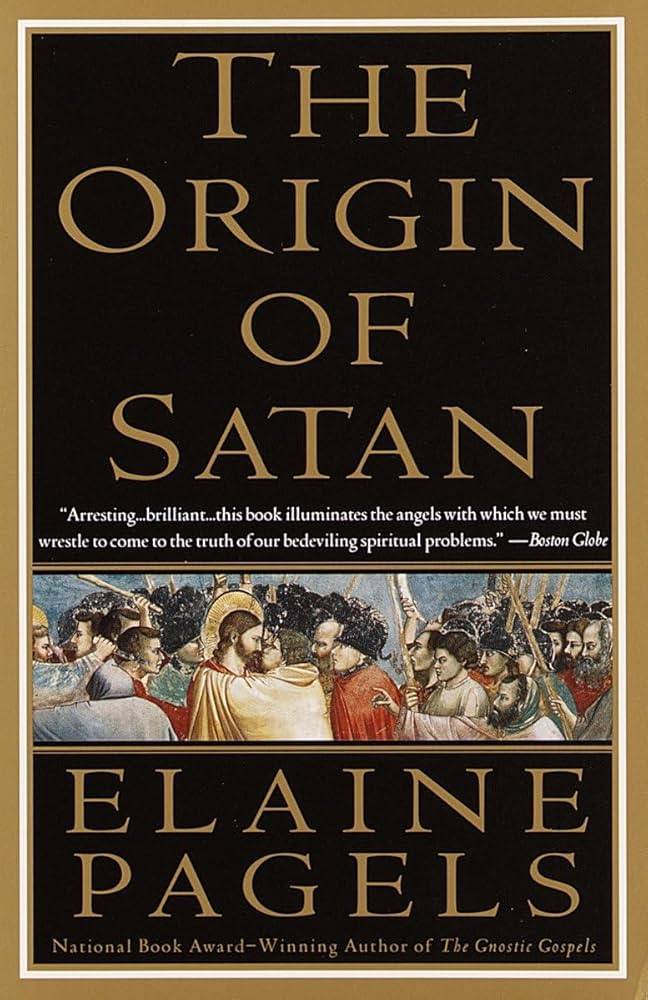
The book is titled The Origin of Satan: How Christians Demonized Jews, Pagans, and Heretics. It was written by Dr. Elaine Pagels and published in 1995. Pagels is Professor of Religion at Princeton University, author of many books on early Christianity including a best seller The Gnostic Gospels, that received many awards including being named by Modern Library as one of the 100 best books of the 20th century.
Pagels will also be one of our featured speakers at the triennial Jewish-Christian-Muslim Dialogue on Dec. 5, with the theme The Challenge of Power, Morality, and Religion. She will be joined by Rabbi Dr. Donniel Hartman president of the Shalom Hartman Institute in Jerusalem, and Mustafa Akyol, author of many books on Islam, columnist for the New York Times and Senior Fellow at the Cato Institute. Register here to join us for this event.
Pagels’ book discusses how the Gospel writers beginning with Mark deviate “from mainstream Jewish tradition by introducing ‘the devil’ into the crucial opening scene of the gospel.” Jesus’ ministry depicted “as involving continual struggle between God’s spirit and the devil…Such visions have been incorporated into Christian tradition and have served, among other things, to confirm their own identification with God and to demonize their opponents—first other Jews, then pagans, and later dissident Christians called heretics.”
Mark’s gospel, considered to be the earliest of the four gospels, was written about 60 CE during the Jewish revolt against Rome. The Jewish historian Josephus whose report of the uprising, is the only non-biblical document that survives from this period. He had served as a governor of Galilee before joining the fight against Rome. When the revolt reached Jerusalem, the Jewish community was very divided when the Roman soldiers entered the city. They entered the Holy of Holies looted the temple and burned it. Writing some 35 years after the execution of Jesus of Nazareth, Mark saw the catastrophe as a sign of the end-times that Jesus had predicted and a time when Jesus would soon return as the ruler of God’s kingdom.
The Jesus followers did not join the revolt against Rome but considered the revolt to be caused by the enemies of Jesus, specifically Judas who betrayed Jesus, and the chief priest and scribes. As early as Mark’s telling of Jesus’ baptism, Mark frames the issue in cosmic terms, as a battle between God and evil as identified with Satan. Jesus is driven into the wilderness where he is tempted by Satan. As Mark continues to describe the events, Jesus’ words and acts of healing disregarding the Sabbath law, driving the money changers out of the temple, resulted in the chief priests and scribes seeking “a way to destroy him.”
Mathew’s gospel, written ten years later, depicts even greater antagonism between the Pharisees and Jesus. As the Christian movement becomes more Gentile in the second century, the identification of Satan with the enemies of Jesus becomes more prominent resulting in increased anti-Semitism.
Pagels continues with other chapters dealing with the portrayal of Satan from that in the Hebrew Bible, other gospel writers as the split with the Jewish Jesus followers continues, and the later use of the Satan them against the pagans. She also develops how the theme is even used for divisions within the Christian communities. For example, Martin Luther denounced as “agents of Satan” those who remained loyal to the Roman Catholic Church and even other protestants who did not agree with Luther on key issues.
One wonders if our current divisions, nationally as well as on the world scene, have come to the point of demonizing those who are “other” either ethnically, religiously, or politically. Not just of a different opinion or belief, but somehow evil and even subhuman.
Fortunately, Pagels does not leave us to end with that position of division but points out another message from the gospels In Mathew. Jesus urges his followers to “first be reconciled with your brother” before offering gifts to God. Again, in the same chapter Jesus teaches, “You have heard that it was said, ‘You shall love your neighbor and hate your enemy.’ But I say to you, ‘Love your enemies and pray for those who persecute you, so that you may be children of your father in heaven.’’ (Mattew 5)
Concluding her book, Pagels writes: “Many Christians, then, from the first century through Francis of Assisi in the thirteenth century and Martin Luther King, Jr. in the twentieth, have believed that they stood on God’s side without demonizing their opponents. Their religious vision inspired them to oppose policies and powers they regarded as evil, often risking their own lives, while praying for the reconciliation—not the damnation—of those who opposed them.”
May this be the lesson we take for our divisions today!
Other insights in the "The Challenge of Power, Morality, and Religion" series:
"How Can We Learn from Our Abrahamic Neighbors?" From Mustafa Aykol's The Islamic Jesus: How the King of the Jews Became a Prophet of the Muslims
"Does Conflict in the World Have a Religious Basis?" From Mustafa Aykol's The Islamic Moses
"Can a Nation With Power Still Be Ethical?" From Rabbi Dr. Donniel Hartman'sPutting God Second: How to Save Religion From Itself
"Loving Country Has Limits Imposed by Biblical Covenants" From Rabbi Dr. Donniel Hartman's Who Are the Jews — And Who Can We Become?
"Faith, Grief, Struggle and Renewal: A Personal Journey" From Elaine Pagels, Ph.D.'s Why Religion?: A Personal Story