Due to forecasted weather conditions, the university has implemented REMOTE STATUS on Friday, December 19, 2025. Students, faculty, staff, see email for more information.

Interfaith Insight - 2024
Permanent link for "Faith, Grief, Struggle and Renewal: A Personal Journey" by Douglas Kindschi, Sylvia and Richard Kaufman Founding Director, Kaufman Interfaith Institute, GVSU on November 14, 2024
“I grew up among people who regarded religion as obsolete as an
outgrown bicycle stashed in a back closet.”
So writes Elaine
Pagels in the introduction to her latest book, Why Religion? A
Personal Story. It is indeed the personal story of a historian who
asks, “Why is religion still around in the twenty-first century?” She
further explains how this question became “intensely personal”
especially following the death of her young child, followed soon after
by the “shocking” death of her husband. It left her a “crater that
loomed as large as the Grand Canyon … like a black hole in space.”
Her personal journey leading up to becoming one of America’s premier
scholars of religion is most fascinating and I’m excited that she will
be in Grand Rapids this December for the Jewish, Christian, Muslim
Dialogue on Dec. 5.
Pagels grew up with secular parents, her father a distinguished scientist, in Palo Alto, California. At age 15 she was drawn to a Billy Graham Crusade where she felt she was offered a new life by being “born again.” She writes, “I could break out of my family and enter into the family of a heavenly father … who knew everything about me, even my secret thoughts — yet loved me unconditionally.” Her parents were “horrified,” she writes, as she got involved with an evangelical church while at the same time her high school friends became “another kind of family — more raucous, playful, and daring.”
This latter group included the young musician Jerry Garcia of the Grateful Dead rock band, and a good friend, Paul, a high school dropout painter. She continued to be active weekly in the evangelical church but when her friend Paul died in a car crash, her Christian friends, at first sympathetic, asked “Was he born again?” When Pagels said no, he was Jewish, their immediate response was, “Then he’s in hell.” This response was not what had drawn her to the church nor was it what she understood from what Billy Graham said about “God’s love for everyone.” She left that church, and never went back.
As a freshman at Stanford University, she was torn between interests in dance, art history, philosophy, and English literature. Her religious questions persisted, leading her to enter Harvard University’s doctoral program in religion studies. She asked why her “encounter with evangelical Christianity was so powerfully compelling? Was it Christianity, or could any religious tradition evoke such response?”
After an interview with New Testament scholar Krister Stendahl at Harvard, she knew it was the place where she could be challenged to rethink everything. She was introduced to a collection of early Christian documents that had been suppressed and mostly destroyed by the church establishment. The discovery of the Nag Hammadi library of 13 ancient texts, in Egypt in 1945, opened a whole new understanding of the early developments in the Christian communities. Like the Dead Sea Scrolls found two years later, these documents hidden for nearly 2,000 years revealed controversies as well as efforts to suppress these writings considered heretical. Documents such as the Gospel of Thomas and the Gospel of Philip presented different claims and “secret teachings” of Jesus.
Pagels’ graduate study led her to conclude that the Christian tradition has been full of choice and different interpretations, from “the stark and simple Gospel of Mark to the prayers and hymns of Saint Francis, Saint Bernard, and Hildegard … all kinds of music, dozens of ‘rules’ for various Christian communities, poems of John of the Cross and many others. … In each generation, leaders from the apostle Paul to Martin Luther King Jr. … have selected elements from that vast collection, discarding some and reinterpreting others, focusing on those that deal with the specific challenges each one faces. Far from destroying Christian traditions, this selection process enables them to survive, adapt, and spread, even today, in radically different cultures as new situations unimaginable in previous generations arise.” Pagels became part of the team translating and studying these texts, leading to many scholarly articles and her popular book, The Gnostic Gospels, a New York Times bestseller.
Pagels now asks herself the question, “Am I religious?” And responds, “Yes, incorrigibly, by temperament, if you mean susceptible to the music, the rituals, the daring leaps of imagination and metaphor so often found in music, poems, liturgies, rituals, and stories — not only those that are Christian, but also to the cantor’s singing at a bar mitzvah, to Hopi and Zuni dances on the mesas of the American Southwest, to the call to prayer in Indonesia.”
Given the variety of denominations and creedal statements, let alone practices, are we not all in the process of choosing? She finds helpful passages from the Gospel of Thomas opening us up to “more than a single path. Instead of telling us what to believe, they engage both head and heart … while deepening spiritual practice by discovering our own inner resources.”
Her “Personal Story” continues in the next chapters as she writes of her marriage to the prominent physicist, Heinz Pagels. She writes with great tenderness about their son Mark and the complications of his heart defect leading to his death at age 6. Such a terrible loss would strain many couples’ relationships, often leading to separation. But Pagels relates that she and Heinz grew even closer to each other and to the daughter they had adopted, leading them to seek another child to whom their love could be directed and to the adoption of a younger brother, David, for their daughter, Sarah.
Only a year later, when the family returned to their favorite spot in Colorado, Pagels describes in great detail, in the chapter titled “Unimaginable,” the event of the terrible death of her husband in a climbing accident. To face this second death in so short a period was devastating to Pagels and to her faith. She reflects, “Suddenly I was widowed. … It felt like being torn in half, ripped apart from the single functioning organism that had been our family, our lives. Shattered, the word kept recurring; the whole pattern shattered, just as the mountain rocks had shattered his body.”
She did was able to find comfort in a visit from a Trappist monk she had known in Colorado, who spent more than an hour with her in silent meditation. “I felt as though waves of energy were coming toward me from various directions,” she writes. When she shared that with him, he simply nodded and said, “Yes, that is what sometimes happens.” She comments that his 50 years of contemplative practice gave him a state of being that made such experiences familiar.
She also found help in the words of Auschwitz survivor Viktor Frankl,
who wrote that when our lives turn out to be different from what we
expected, we have to do “what life expects of us. … Life ultimately
means taking the responsibility to find the right answer to its
problems and to fulfill the tasks which it constantly sets for each
individual.”
This is Pagels’ very personal story, as well as
insight into her scholarship reflected in her eight earlier books. We
are honored that she will be joining us on December 5 to explore the
theme “The Challenge of Power, Morality, and Religion.” Click here
for more details and registration.
Other insights in the "The Challenge of Power, Morality, and Religion" series:
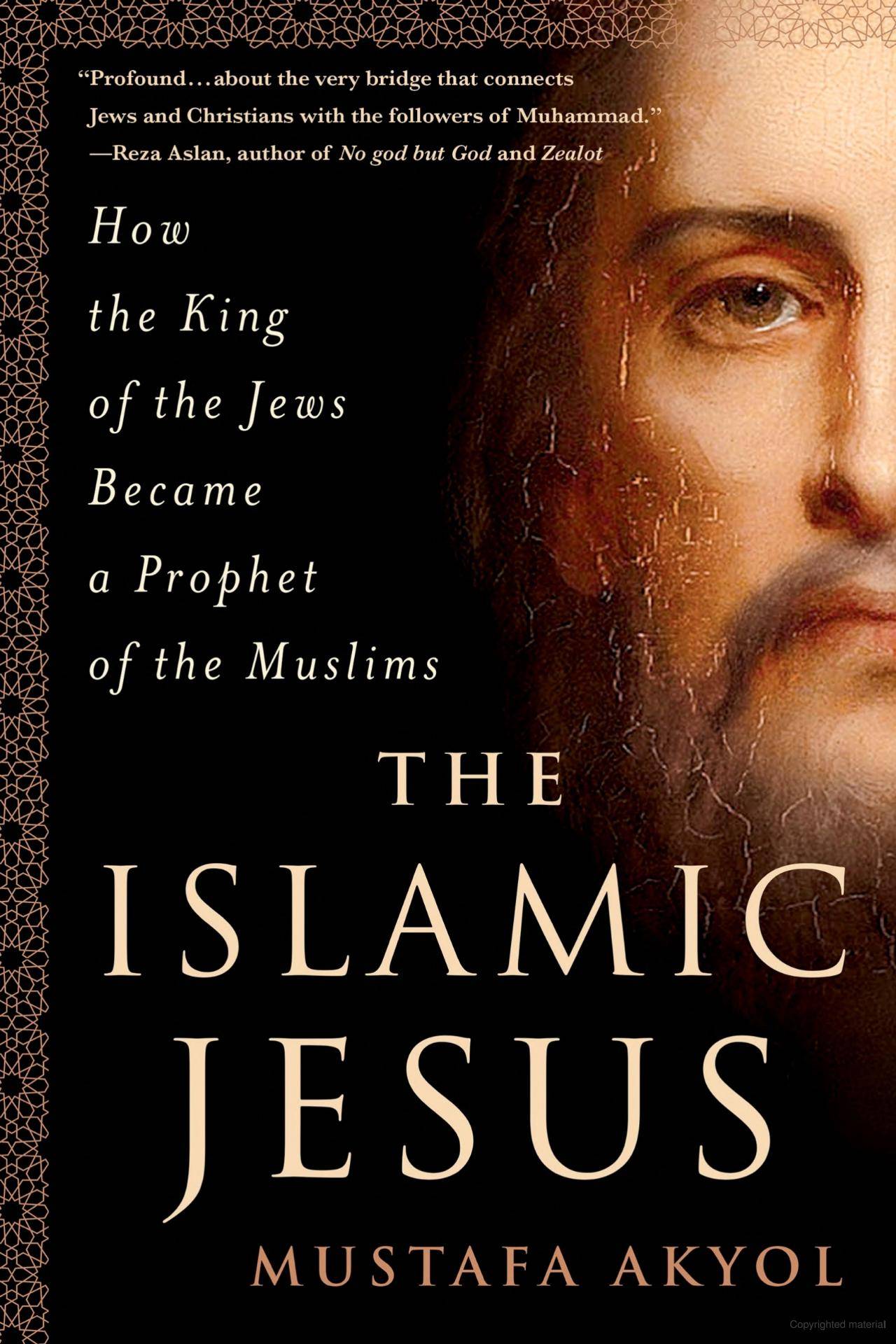
"How Can We Learn from Our Abrahamic Neighbors?" From Mustafa Aykol's The Islamic Jesus: How the King of the Jews Became a Prophet of the Muslims
"Does Conflict in the World Have a Religious Basis?" From Mustafa Aykol's The Islamic Moses: How the Prophet Inspired Jews and Muslims to Flourish Together and Change the World
"Can a Nation With Power Still Be Ethical?" From Rabbi Dr. Donniel Hartman's Putting God Second: How to Save Religion From Itself
"Learning From History and From Positive Religious Teachings" From Elaine Pagels, Ph.D.'s The Origin of Satan: How Christians Demonized Jews, Pagans, and Heretics
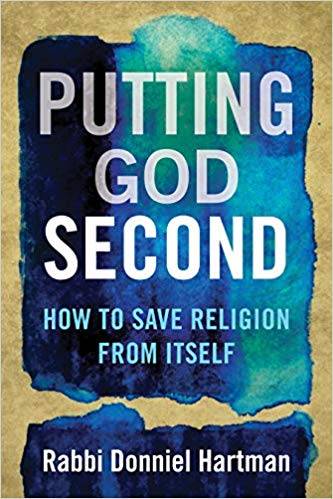
"Loving Country Has Limits Imposed by Biblical Covenants" From Rabbi Dr. Donniel Hartman's Who Are the Jews — And Who Can We Be?
.jpg)
Permanent link for "Loving Country Has Limits Imposed by Biblical Covenants" by Douglas Kindschi, Sylvia and Richard Kaufman Founding Director, Kaufman Interfaith Institute, GVSU on November 4, 2024
“There are three kinds of patriots, two bad, one good.
The bad are the uncritical lovers and the loveless critics.
Good
patriots carry on a lover’s quarrel with their country.” -- William
Sloane Coffin
Rabbi Dr. Donniel Hartman begins his latest book, Who Are the Jews — And Who Can We Become? with this quote from William Sloane Coffin, American Christian clergyman and long-time peace activist. Hartman is clearly the “good patriot” as he continues his lover’s quarrel with his country Israel. Arguing with each other, Hartman writes, “is the one permanent characteristic of who we are,” as he argues with his country as well as with Jews in other parts of the world. Hartman returns to Grand Rapids for this year’s Jewish-Christian-Muslim Dialogue on Dec. 5.
He begins with the three thousand years of multiple understandings and divergent aspects of the Jewish story by describing two covenants, the Genesis Covenant and the Exodus Covenant. When God called Abraham, God promised Abraham and his descendants to be a great nation and “all the nations of the earth shall be blessed through your seed.” The Genesis Covenant creates a promise and a people who are “a mode of being and not doing,” Hartman writes. “Jewishness comes to be defined by the totally passive act of being born into Abraham’s family.” Hartman describes it as “embraced by God for who we were, not what we did. Our identity as Jews existed independently of our Jewish practice and faith.”
The Genesis Covenant is only half of the Jewish identity story. Later God calls the people into a new way of living defined by behaviors and practices that Hartman calls the Exodus Covenant. It is a call to Moses and then transmitted to the people following their escape from Egypt. It defines the responsibilities of being Jewish in terms of practices of faith, obedience, and justice. He writes that in this new mutual agreement, “Judaism is not a spectator sport.” Jewishness is not just inherited, it requires an obligation to be faithful, keep the commandments, and seek justice. Hartman’s analysis continues in chapters that spell out how the rabbis sought to synthesize these two covenants, how the great writer Maimonides championed the Exodus Covenant, and how the creation of the Jewish state brought back for many a Genesis understanding of Jewishness by birth not necessarily by practice.
He describes his own conflict: “As a Jew I was taught to pray for peace. As an Israeli I was taught to yearn for it but to be ready to go to war when it was forced upon us.” His disillusionment is with the nation’s engagement in wars that were not clearly defensive. He describes the defensive wars as “no other options” wars. The 1967 Six-Day War was the turning point as Israel became “the new regional superpower.” It led to his leaving Israel for 11 years to work as a rabbi in America, before returning to Israel as president of the Shalom Hartman Institute.
Hartman cites the principles of the Exodus Covenant in calling for a return to the “Jewish principles of human equality, freedom, justice, and peace.” He writes, “it will not be a Jewish home as long as the Palestinians do not have their own home as well.” He cites the challenge of Hillel: “What is hateful unto you do not do to others, this is the whole Torah.”
Hartman then goes back to an earlier covenant, before the two covenants he earlier introduced. The Creation Covenant calls us all, and specifically the country of Israel, to treat everyone as humans “created in the image of God.” He notes that the Exodus Covenant began with Moses and the Genesis Covenant with Abraham, but “our Jewish story begins ‘in the beginning’ where the first biblical covenant is introduced. This covenant … is not made with the Jewish people but with humankind as a whole.”
The human race was created and, Hartman writes, “chosen by God for a mission: to be partners in ruling and caring for the world. This is the universal … Covenant of Creation, which mandates that all of humankind take responsibility for the world we inherit.” This is not just a description of humankind but, he writes, “a prescription explicating how we are to treat others. Since all of humanity is created in God’s image, all human beings possess a Divine-endowed value and consequently are charged with moral responsibilities toward each other.”
It is on this basis that Hartman engages in his “lover’s quarrel” with his country. It is certainly related to the theme of this year’s Jewish-Christian-Muslim Dialogue, Dec. 5 on the theme, The Challenge of Power, Morality, and Religion. For more information and to register click here.
I conclude with another quote from William Sloane Coffin.
“The world is too dangerous for anything but truth and too small for anything but love.”
Other insights in the "The Challenge of Power, Morality, and Religion" series:
"How Can We Learn from Our Abrahamic Neighbors?" From Mustafa Aykol's The Islamic Jesus: How the King of the Jews Became a Prophet of the Muslims
"Does Conflict in the World Have a Religious Basis?" From Mustafa Aykol's The Islamic Moses: How the Prophet Inspired Jews and Muslims to Flourish Together and Change the World
"Can a Nation With Power Still Be Ethical?" From Rabbi Dr. Donniel Hartman'sPutting God Second: How to Save Religion From Itself
"Learning From History and From Positive Religious Teachings" From Elaine Pagels, Ph.D.'s The Origin of Satan: How Christians Demonized Jews, Pagans, and Heretics
"Faith, Grief, Struggle and Renewal: A Personal Journey" From Elaine Pagels, Ph.D.'s Why Religion?: A Personal Story
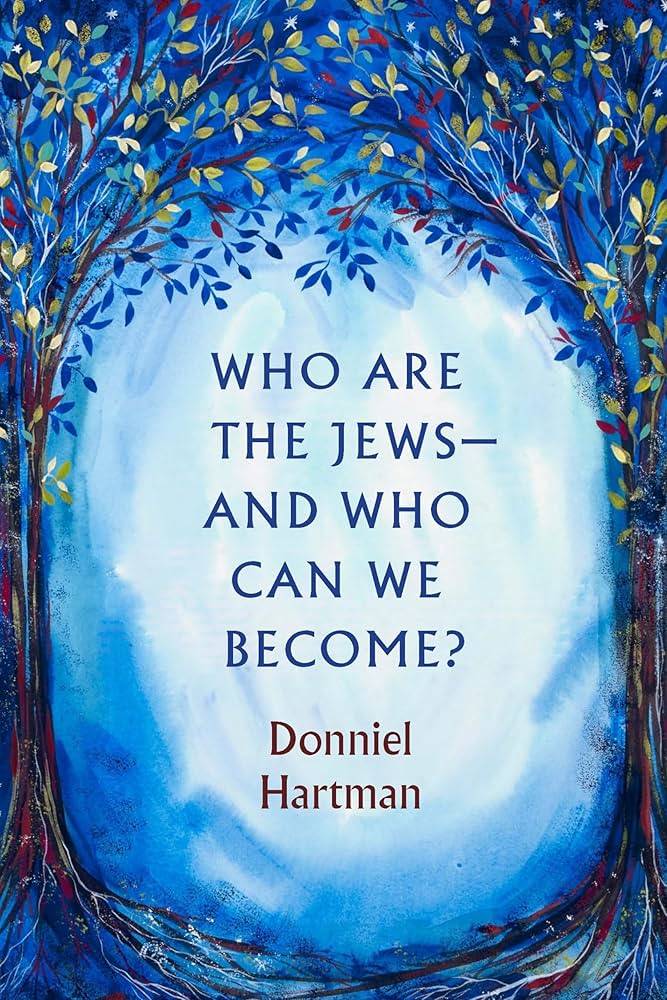
Permanent link for "Learning From History and From Positive Religious Teachings" By Douglas Kindschi, Sylvia and Richard Kaufman Founding Director, Kaufman Interfaith Institute, GVSU on October 31, 2024
Who would have guessed that reading a book about early Christianity and its internal conflicts with its Jewish community as well as later opposition to pagan influence would help me frame and understand some of our current conflicts, both internal and international?
The book is titled The Origin of Satan: How Christians Demonized Jews, Pagans, and Heretics. It was written by Dr. Elaine Pagels and published in 1995. Pagels is Professor of Religion at Princeton University, author of many books on early Christianity including a best seller The Gnostic Gospels, that received many awards including being named by Modern Library as one of the 100 best books of the 20th century.
Pagels will also be one of our featured speakers at the triennial Jewish-Christian-Muslim Dialogue on Dec. 5, with the theme The Challenge of Power, Morality, and Religion. She will be joined by Rabbi Dr. Donniel Hartman president of the Shalom Hartman Institute in Jerusalem, and Mustafa Akyol, author of many books on Islam, columnist for the New York Times and Senior Fellow at the Cato Institute. Register here to join us for this event.
Pagels’ book discusses how the Gospel writers beginning with Mark deviate “from mainstream Jewish tradition by introducing ‘the devil’ into the crucial opening scene of the gospel.” Jesus’ ministry depicted “as involving continual struggle between God’s spirit and the devil…Such visions have been incorporated into Christian tradition and have served, among other things, to confirm their own identification with God and to demonize their opponents—first other Jews, then pagans, and later dissident Christians called heretics.”
Mark’s gospel, considered to be the earliest of the four gospels, was written about 60 CE during the Jewish revolt against Rome. The Jewish historian Josephus whose report of the uprising, is the only non-biblical document that survives from this period. He had served as a governor of Galilee before joining the fight against Rome. When the revolt reached Jerusalem, the Jewish community was very divided when the Roman soldiers entered the city. They entered the Holy of Holies looted the temple and burned it. Writing some 35 years after the execution of Jesus of Nazareth, Mark saw the catastrophe as a sign of the end-times that Jesus had predicted and a time when Jesus would soon return as the ruler of God’s kingdom.
The Jesus followers did not join the revolt against Rome but considered the revolt to be caused by the enemies of Jesus, specifically Judas who betrayed Jesus, and the chief priest and scribes. As early as Mark’s telling of Jesus’ baptism, Mark frames the issue in cosmic terms, as a battle between God and evil as identified with Satan. Jesus is driven into the wilderness where he is tempted by Satan. As Mark continues to describe the events, Jesus’ words and acts of healing disregarding the Sabbath law, driving the money changers out of the temple, resulted in the chief priests and scribes seeking “a way to destroy him.”
Mathew’s gospel, written ten years later, depicts even greater antagonism between the Pharisees and Jesus. As the Christian movement becomes more Gentile in the second century, the identification of Satan with the enemies of Jesus becomes more prominent resulting in increased anti-Semitism.
Pagels continues with other chapters dealing with the portrayal of Satan from that in the Hebrew Bible, other gospel writers as the split with the Jewish Jesus followers continues, and the later use of the Satan them against the pagans. She also develops how the theme is even used for divisions within the Christian communities. For example, Martin Luther denounced as “agents of Satan” those who remained loyal to the Roman Catholic Church and even other protestants who did not agree with Luther on key issues.
One wonders if our current divisions, nationally as well as on the world scene, have come to the point of demonizing those who are “other” either ethnically, religiously, or politically. Not just of a different opinion or belief, but somehow evil and even subhuman.
Fortunately, Pagels does not leave us to end with that position of division but points out another message from the gospels In Mathew. Jesus urges his followers to “first be reconciled with your brother” before offering gifts to God. Again, in the same chapter Jesus teaches, “You have heard that it was said, ‘You shall love your neighbor and hate your enemy.’ But I say to you, ‘Love your enemies and pray for those who persecute you, so that you may be children of your father in heaven.’’ (Mattew 5)
Concluding her book, Pagels writes: “Many Christians, then, from the first century through Francis of Assisi in the thirteenth century and Martin Luther King, Jr. in the twentieth, have believed that they stood on God’s side without demonizing their opponents. Their religious vision inspired them to oppose policies and powers they regarded as evil, often risking their own lives, while praying for the reconciliation—not the damnation—of those who opposed them.”
May this be the lesson we take for our divisions today!
Other insights in the "The Challenge of Power, Morality, and Religion" series:
"How Can We Learn from Our Abrahamic Neighbors?" From Mustafa Aykol's The Islamic Jesus: How the King of the Jews Became a Prophet of the Muslims
"Does Conflict in the World Have a Religious Basis?" From Mustafa Aykol's The Islamic Moses
"Can a Nation With Power Still Be Ethical?" From Rabbi Dr. Donniel Hartman'sPutting God Second: How to Save Religion From Itself
"Loving Country Has Limits Imposed by Biblical Covenants" From Rabbi Dr. Donniel Hartman's Who Are the Jews — And Who Can We Become?
"Faith, Grief, Struggle and Renewal: A Personal Journey" From Elaine Pagels, Ph.D.'s Why Religion?: A Personal Story
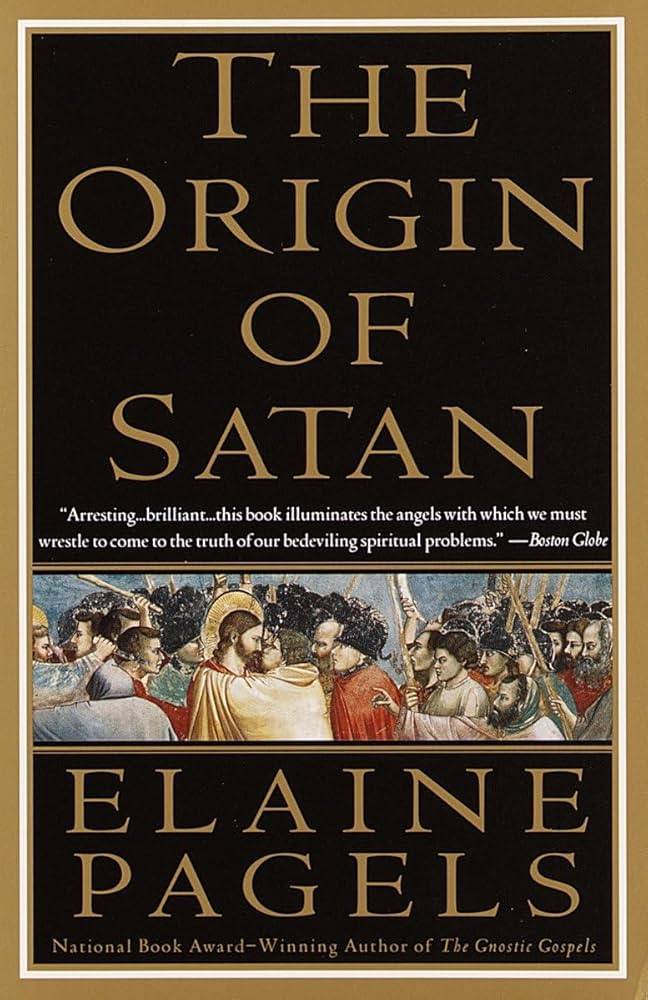
Permanent link for "Can a Nation With Power Still Be Ethical?" By Douglas Kindschi, Sylvia and Richard Kaufman Founding Director, Kaufman Interfaith Institute, GVSU on October 15, 2024
This question is being asked especially this year because of the conflict in the Middle East and Israel’s response to the terrible Hamas attack on Israel a year ago. It will also be addressed at this year’s triennial Jewish-Christian-Muslim Dialogue being held on Thursday, December 5. The theme for the day and evening sessions will be The Challenge of Power, Morality, and Religion.
Returning for the sixth time to Grand Rapids will be Rabbi Dr. Donniel Hartman, president of the Shalom Hartman Institute in Jerusalem. Rabbi Hartman has been a frequent critic of the Israeli government, writing in The Times of Israel and expressing his concerns in publications and podcasts from the Institute. He has raised the issue of whether a powerful country with an army can be moral as it responds to threats against it. Many in the United States expressed similar concerns as our country responded to the 9/11 attack with two wars in Afghanistan and Iraq, killing civilians in the hundreds of thousands.
The dialogue will also consider the role of religion in these matters of morality. Each of our traditions has been complicit and even supportive of countries with power expanding their control of others, often with expanding influence of the religion itself.
Donniel Hartman wrote about many of these issues in his earlier book, Putting God Second: How to Save Religion from Itself. The three religious traditions all look back to Abraham as the father of their faith traditions. Abraham is chosen by God “so that he will direct his children and his household after him to keep the way of the Lord by doing what is right and just.” (Genesis 18:19) This was 500 years before Moses received the law and more than 1,500 years before Christianity and Islam.
The ethical principle is thus recognized by God and precedes religious law, ritual and doctrine. In that same Genesis chapter, God shares with Abraham his plan to destroy the city of Sodom for its wickedness. But Abraham responds to God by asking whether it is just to destroy the city if there are fifty righteous who are in it. In effect he is holding God to the standard that he was being asked to teach his children, “by doing what is right and just.” God agrees and will not destroy if there are fifty righteous in the city.
Abraham goes further and pushes the same question about 45, 40, 30, 20, and finally 10 righteous in the city. God finally agrees, “For the sake of ten I will not destroy it.” This is a remarkable passage. Abraham took seriously his charge to pursue what is right and just, even challenging God to do the same.
Hartman continues his concern for the priority of the ethical in describing ways in which religion can lead to harm rather than good.
“The human religious desire to live in relationship with God often distracts religions’ adherents from their traditions’ core moral truths,” Hartman writes. “We have seen religion arise as a central force in world politics and frequent instigator of global conflict. … The failure of religion to produce individuals and societies that champion the values advocated in them is both puzzling and deeply unsettling. Even more troubling is that often religious faith itself is the catalyst that emboldens individuals and governments to murder, maim, harm and control others in the service of ‘their’ God.”
One feature in religion that Hartman identifies as potentially leading to unethical acts, he calls “God Manipulation.” This is when religion is “manipulated in a way that quiets the voices of moral conscience, draping self-interest in a cloak of pious devotion and stripping those defined as ‘other’ of moral status.” In Hartman’s first case of “God Intoxication,” we ignore the needs of others, while in the case of God manipulation our self-interest and self-confidence lead us to do evil in the name of God.
The history of religious violence is the history of thinking that my religion, my tribe, possesses absolute truth and that I can act with complete confidence that I am right, and all others are wrong. It leads to the thinking that those who do not believe as I do, or worship as I do, really don’t know God and must be opposed.
This was the logic behind the Inquisition and the religious wars between Protestants and Catholics in the 16th and 17th centuries, which led to the deaths of over 10 million people. It is what led to the Holocaust and other acts of genocide. It is part of the desensitizing of soldiers to let them see the enemy as less than human and thus permissible to kill.
Hartman says that humility is the antidote for God manipulation. Who are we to say what God’s ultimate plan is? Who are we to act in ways that are morally wrong just because we think we know what God wants? He stresses the moral basis for all religion.
Hartman will be joined by Mustafa Akyol, whose recent books were discussed in previous Insights (see below), and Dr. Elaine Pagels, whose books will be the subject of future Insights leading up to the Dialogue. Click here to register for the Dec. 5 Interfaith Dialogue.
Other insights in the "The Challenge of Power, Morality, and Religion" series:
"How Can We Learn from Our Abrahamic Neighbors?" From Mustafa Aykol's The Islamic Jesus: How the King of the Jews Became a Prophet of the Muslims
"Does Conflict in the World Have a Religious Basis?" From Mustafa Aykol's The Islamic Moses
"Learning From History and From Positive Religious Teachings" From Elaine Pagels, Ph.D.'s The Origin of Satan: How Christians Demonized Jews, Pagans, and Heretics
"Loving Country Has Limits Imposed by Biblical Covenants" From Rabbi Dr. Donniel Hartman's Who Are the Jews — And Who Can We Become?
"Faith, Grief, Struggle and Renewal: A Personal Journey" From Elaine Pagels, Ph.D.'s Why Religion?: A Personal Story
Permanent link for "How Can We Learn from Our Abrahamic Neighbors?" By Douglas Kindschi, Sylvia and Richard Kaufman Founding Director, Kaufman Interfaith Institute, GVSU on September 30, 2024
In the last Insight we discussed the relevance of this year’s Jewish/Christian/Muslim Dialogue addressing the theme: “The Challenge of Power, Morality, and Religion.” The Dialogue featuring Rabbi Dr. Donniel Hartman from the Shalom Hartman Institute in Jerusalem, Dr. Elaine Pagels from Princeton University, and Mustafa Akyol, Senior Fellow at the Cato Institute, will be held on Thursday, December 5 for our day-long and evening sessions. Register for this year’s Dialogue here.
In the last Insight, when we looked at Akyol’s just released book The Islamic Moses. Akyol, a long-time contributing opinion writer for The New York Times, also wrote many other books including his earlier work, The Islamic Jesus.
In this book he tells about walking in his hometown of Istanbul, formally known as Constantinople, and being handed a copy of the Christian New Testament, titled Incil, the Turkish work for gospel. That evening he began to read it and was moved by the Gospel of Matthew. As he puts it, “Most of the teachings, especially those of Jesus, struck me with their admirable passion, devotion, sincerity, and godliness. As a faithful Muslim — and thus a believer in the all-compassionate God, the God of Abraham — I found much of the Christian Scripture quite appealing and inspiring.”
As he continued to read, he began underlining the passages he liked with a blue pen and those he found objectionable with a red pen. When he got to the epistles of Paul he added many red lines. When he got to another epistle attributed to James, he found nothing objectionable. Furthermore, he found this document “was both full of teachings that deeply resonated with my faith and, more importantly contained nothing that contradicted my faith. My underling turned out to be all blue.”
This discovery led to Akyol’s studying early Christian history, especially the role of James, who was the leader of the Jewish community in Jerusalem who saw Jesus as the promised Messiah of the Jews, but not divine. Meanwhile, the gentile communities influenced by Paul’s message did not become Jewish nor did they follow the Jewish law. This split in the communities of followers of Jesus resulted in a division that was never resolved and led to a new religion, Christianity, separate from Judaism.
As Akyol explains, the Jesus story has a prominent role in the revelation to Muhammad recorded in the Qur’an and has much to say about Jesus and especially his mother, Mary. In the Qur’an there is only one woman mentioned by name, and that is Mary, the mother of Jesus. There is even a whole chapter named after her. Akyol notes that she, Maryam in Arabic, is mentioned by name 34 times in the Qur’an in contrast to only 19 times in the New Testament. Also in the Qur’an is the story of the birth of John the Baptist, the announcement from angel Gabriel to Mary that she will bear a son, and that it was a virgin birth.
Mary’s son Jesus, Isa in Arabic, is recognized as an important prophet and the Messiah to the Children of Israel. Akyol quotes the Qur’an: “We sent Jesus, son of Mary … to confirm the Torah that had been sent before him. We gave him the Gospel with guidance, light, and confirmation of the Torah already revealed — a guide and lesson for those who take heed of God.” (Qur’an 5:44, Haleem translation)
In a fascinating final chapter, Akyol explores “What Jesus Can Teach Muslims Today.” He suggests that just as Jesus had come to a Jewish community divided by sects and conflicted on how to deal with the power of the Roman empire, he taught an alternate way. Jesus, according to Akyol, invited his community “to focus on the spirit of their tradition rather than on its dry legalism. … Jesus relocated ethics to a more humane center. … It was a universal message that could appeal to all humankind.”
Akyol concludes this chapter, and the book as follows: “As Muslims, who are latecomers to this scene, we have disagreements with both Jews and Christians. But we have major agreements as well. With Jews, we agree a lot on God. With Christians, we agree that Jesus was born of a virgin, that he was the Messiah, and that he is the Word of God. Surely, we do not worship Jesus, like Christians do. Yet still, we can follow him. In fact, given our grim malaise and his shining wisdom, we need to follow him.”
Other insights in the "The Challenge of Power, Morality, and Religion" series:
"Does Conflict in the World Have a Religious Basis?" From Mustafa Aykol's The Islamic Moses: How the Prophet Inspired Jews and Muslims to Flourish Together and Change the World
"Can a Nation With Power Still Be Ethical?" From Rabbi Dr. Donniel Hartman'sPutting God Second: How to Save Religion From Itself
"Learning From History and From Positive Religious Teachings" From Elaine Pagels, Ph.D.'s The Origin of Satan: How Christians Demonized Jews, Pagans, and Heretics
"Loving Country Has Limits Imposed by Biblical Covenants" From Rabbi Dr. Donniel Hartman's Who Are the Jews — And Who Can We Become?
"Faith, Grief, Struggle and Renewal: A Personal Journey" From Elaine Pagels, Ph.D.'s Why Religion?: A Personal Story
Permanent link for "Does Conflict in the World Have a Religious Basis?" By Douglas Kindschi, Sylvia and Richard Kaufman Founding Director, Kaufman Interfaith Institute, GVSU on September 17, 2024
Conflict in Ukraine and in the Middle East dominates much of our news cycle these days. On university campuses it seems like the Middle East conflict has raised the toughest issues and the most antireligious challenges. Antisemitism and Islamophobia are on the rise and what is primarily a political issue has led to hatred of religious communities and verges on violence in many areas.
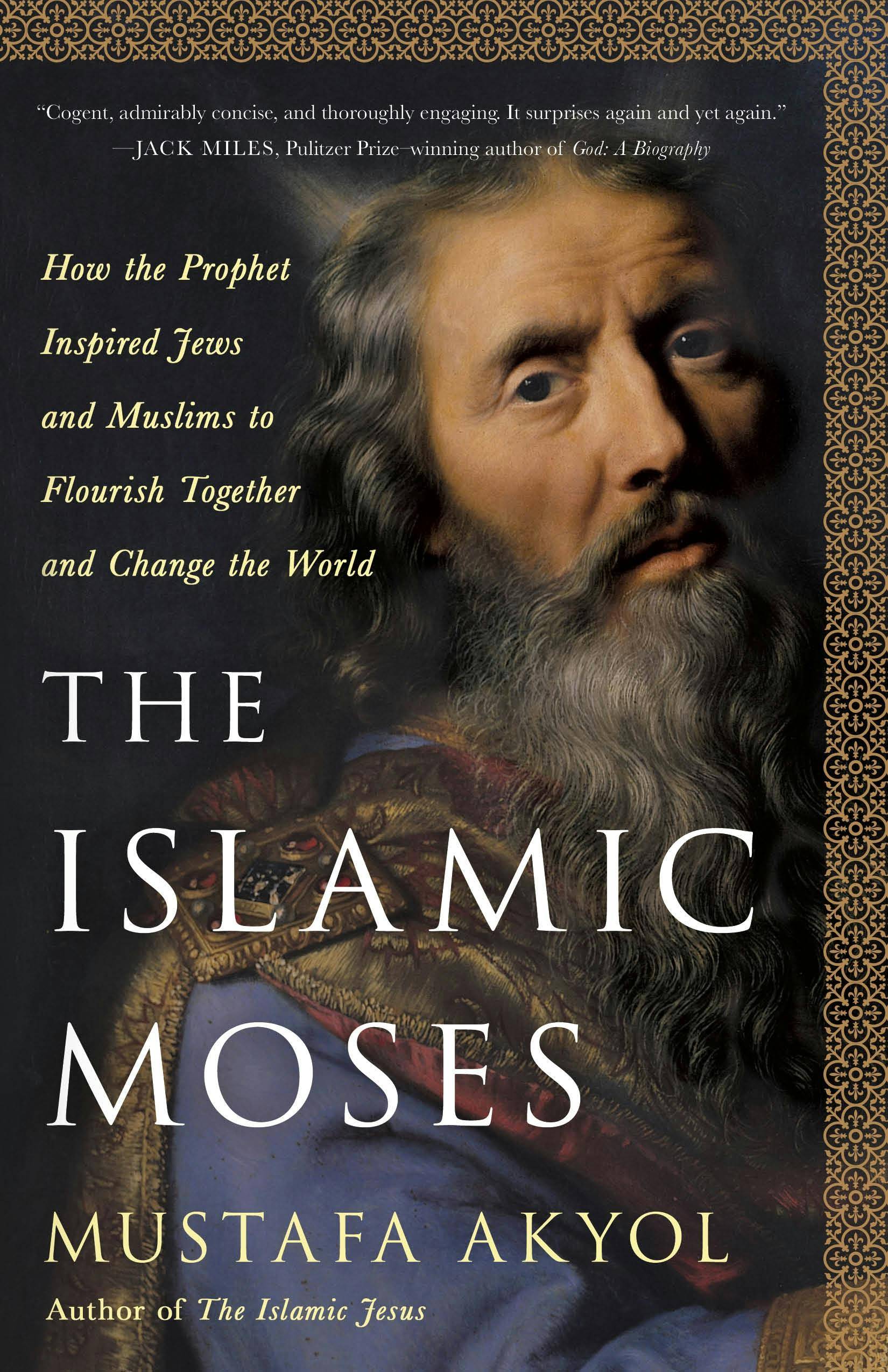
This year’s Jewish/Christian/Muslim Dialogue will address the theme: “The Challenge of Power, Morality, and Religion.” In past years the dialogue has primarily addressed theological issues, but ignoring the intense political challenges seems unavoidable today. Our three speakers have collectively agreed to take on this topic from both historical and current political perspectives. Each religious tradition has been guilty of abusing power, ignoring basic teachings about power and morality, and succumbing to nationalism. Each speaker has also written about various aspects of this theme, the most recent being the Muslim speaker Mustafa Akyol in his new book, The Islamic Moses . Akyol is a senior fellow on Islam and modernity at the Cato Institute, a senior lecturer at Boston College and long-time contributing opinion writer for the New York Times. His earlier books, Islam without Extremes and The Islamic Jesus have been widely praised.
The draft was submitted to his publisher just a few days before October 7 and led to the addition of an Epilogue titled “In the Darkest Hour.” In a book that hoped to be about how the figure of Moses inspired the prophet Mohammed and the birth of Islam, now must address “the news of innocent civilians killed & tortured in Israel with the surprise attack by Hamas” and how “my worries about the innocent civilians in Gaza turned out to be true—and at a horrific level that I could not have imagined.”
In the early chapters of the book, Akyol notes that Moses is mentioned by name 137 times in the Qur’an while “the name Muhammad appears only four times. He also explains that the Qur’an is not about its own prophet but a revelation to him.” Moses is referred to as “the paradigmatic prophet…the main historic precedent for Muhammad.” Akyol notes that “both were orphans who were adopted… both lived normal lives until a life-changing moment where they unreadily come face-to-face with the divine. For Moses it was the burning bush on Mount Horeb. For Muhammad, it was the angelic voice on Mount Hira.” They each brought to their communities the primary scriptures, for Moses the Torah and for Muhammad the Qur’an. Both led their followers “from persecution to freedom…for Moses the exodus from Egypt, for Muhammad, the hijra (‘migration’) from Mecca.
Further chapters in Akyol’s book describe and document the centuries of living together and cooperation between the two communities that he refers to as Judeo-Islamic tradition. The term Judeo-Christian, he notes, was created in the 20th Century to combat the increasing antisemitism. Akyol says we should not see this as two separate traditions but as the Abrahamic triangle, “with Judaism, Christianity, and Islam on the three points, each with complex connections to the other two.”
These complex connections, both historic and current, will be explored in our Jewish/Christian/Muslim Dialogue scheduled for Thursday, December 5, at Grand Valley State University’s Eberhard Center on the Grand Rapids campus. Rabbi Dr. Donniel Hartman from the Shalom Hartman Institute in Jerusalem with join Dr. Elaine Pagels from Princeton University, and Mustafa Akyol for our day-long session. Books from each of the speakers will be available for purchase. Registration is now available on the event page. We hope you can join us!
Other insights in the "The Challenge of Power, Morality, and Religion" series:
"Can a Nation With Power Still Be Ethical?" From Rabbi Dr. Donniel Hartman'sPutting God Second: How to Save Religion From Itself
"How Can We Learn from Our Abrahamic Neighbors?" From Mustafa Aykol's The Islamic Jesus: How the King of the Jews Became a Prophet of the Muslims
"Learning From History and From Positive Religious Teachings" From Elaine Pagels, Ph.D.'s The Origin of Satan: How Christians Demonized Jews, Pagans, and Heretics
"Loving Country Has Limits Imposed by Biblical Covenants" From Rabbi Dr. Donniel Hartman's Who Are the Jews — And Who Can We Become?
"Faith, Grief, Struggle and Renewal: A Personal Journey" From Elaine Pagels, Ph.D.'s Why Religion?: A Personal Story
The Islamic Moses by Mustafa Akyol
Permanent link for "Finding Truth In Great Literature; Will We Make The Right Choice?" By Douglas Kindschi, Sylvia and Richard Kaufman Founding Director, Kaufman Interfaith Institute, GVSU on June 4, 2024
Originally published August 13th 2015
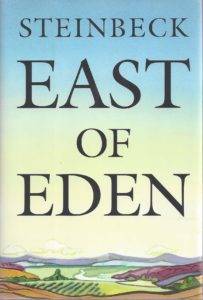
Inspiration for my weekly Interfaith Insights usually comes from my reading non-fiction, but this column is an exception. On the recommendation of my orthopedic surgeon, this summer I read John Steinbeck’s classic, East of Eden .
So what does this novel have to do with interfaith? This retelling of the Genesis story is also the story of the conflict between good and evil and the struggle that is within each of us. The main character, Adam, discusses with his friend Samuel, and his servant Lee, possible names for his twin boys. They read the story of the biblical Adam’s two sons, Cain and Abel. They are at first bothered by Cain’s violent response to the rejection of his plant offering while Abel’s animal offering was accepted.
Lee comments: “I think this is the best known story in the world because it is everybody’s story. I think it is the symbol story of the human soul. … I think everyone in the world to a large or small extent has felt rejection. And with rejection comes anger, and with anger some kind of crime in revenge for the rejection. … There is the story of mankind.”
This passage reminds me of the alienation that some members in our society must feel when they find that they just don’t fit in, that they have been rejected because of racial difference or religious difference. For most this rejection is somehow overcome, but for others the rejection leads to anger and violent response. It is a sad commentary but perhaps, as Lee expressed, “the symbol story of the human soul.”
The discussion between Adam and his friends continues with puzzlement over the passage where the Lord responds to Cain’s anger that his offering is not accepted. The passage reads: “So the Lord said to Cain, ‘Why are you angry? And why has your countenance fallen? If you do well, will you not be accepted? And if you do not do well, sin lies at the door. And its desire is for you, but you should rule over it.” (Gen. 4:6-7)
Lee later discovers other translations of the passage and pursues the key passage by studying Hebrew with other learned men, including a respected rabbi. The key word that was translated “you should” rule over sin, is in Hebrew the word “timshel,” and can also be translated “thou mayest” or “you can” rule over sin. It is not a command but the recognition of human free will to resist the sin. It is a choice!
Friend Samuel exclaims, “Thou mayest, Thou mayest! What glory! It is true that we are weak and sick and quarrelsome, but if that is all we ever were, we would, millenniums ago, have disappeared from the face of the earth.” But we are given choice, we can choose to win over sin.
Later in the book, Steinbeck returns to what he calls the “one world story.”
“Humans are caught — in their lives, in their thoughts, in their hungers and ambitions, in their avarice and cruelty, and in their kindness and generosity too — in a net of good and evil. … Virtue and vice were warp and woof of our first consciousness, and they will be the fabric of our last. … There is no other story. A man, after he has brushed off the dust and chips of his life, will have left only the hard, clean questions: Was it good or was it evil? Have I done well — or ill?”
It all hinges on the single Hebrew word, “timshel,” “Thou mayest.” We have the choice. It is there in the early stories in Genesis. It is in great literature of the 20th century. It is with us today. It faces us as individuals, as nations, and in our attitudes toward others who are not like us. How will we respond to the sin at our door? Will we make the right choices?
Permanent link for "Into the Heart of Islam," by Kelly James Clark, Author and Former Kaufman Interfaith Institute Staff on May 28, 2024
I remember the first time I flew into Istanbul. Passing over the old city, formerly known as Constantinople, I saw massive mosques. The Fatih Mosque, construction completed in 1470 AD, displays the magnificence and solemnity expected of an edifice named in honor of Mehmet the Conqueror, the Ottoman sultan who conquered Constantinople in 1453. Its location, on the burial grounds of Roman Emperor Constantine, made a religious and political statement about God’s favor shifting from the Holy Roman Empire to the Islamic Ottoman empire; God, the Conqueror’s inspired architects were saying, is on our side. The indomitable Fatih Mosque seems more castle than cathedral.
Next in view: Suleymaniye, an imperial mosque commissioned by Suleiman the Magnificent, the tenth and longest-reigning Ottoman sultan (d. 1566).
As we approached the seaside, I saw the Hagia Sofia, first built in 537 by Emperor Justinian I as the official cathedral center of the Holy Roman Church. The Hagia Sofia was converted into a mosque by Mehmet the Conqueror in 1453. By destroying or plastering over the Christian art and icons and redecorating with Islamic symbols, the Conqueror was stating that God’s heavenly power and authority are now aligned with his/Islam’s earthly power and authority.
Again, these mosques seem more castle than cathedral.
This flyover, given a little bit of Wikipedia history, played into my anti-Muslim bias that Islam was at heart a conquering religion, which advanced more by the coercive power of the sword than the attractive power of righteousness and mercy.
The Blue Mosque, neighbor of the Hagia Sofia, is a dazzling masterpiece, of a decidedly different nature from the monuments to power. While constructed by Sultan Ahmet I as an assertion of Ottoman power, its cool and serene interior—20,000 handmade blue tiles with over fifty different tulip designs—is more an invitation to peace than an anthem to war. While only the Sultan was allowed to enter the mosque on horseback, the chains at the door forced the Sultan to bow in humility before Allah. As you enter, you remove your shoes, bow in humility, and, as your eyes adjust to the lack of sun, sense serenity and peace.
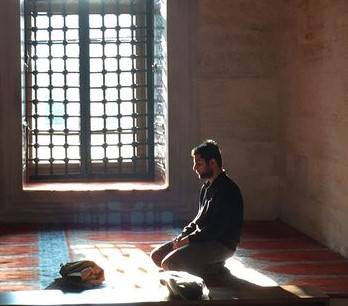
I had secured permission from Istanbul’s Grand Mufti to film a Friday prayer service, a privilege typically denied to non-Muslims. Since the Friday prayers constitute Islam’s pre-eminent form of public worship, the Blue Mosque was packed, with an undulating sea of thousands of people hip-to-hip in neatly spaced rows. In response to a series of calls in Arabic, everyone folded hands, bowed, kneeled, touched their foreheads to the ground, and stood up again in remarkable unison. Since I was not filming, I found myself standing, embarrassed, in the sea of these very prostrate worshippers.
Given the serenity of the Blue Mosque, the attraction of true devotion, the wafting Arabic, and the power of synchronized activity, I found myself strangely moved to pray with these strangers. So, discretely glancing to my left and to my right for cues and clues, I folded my hands, bowed, knelt, touched my forehead to the ground, and stood up again in passable unison. Inside the Blue Mosque, surrounded by thousands of strangers, acting in unison and in response to the lilting recitation of a sacred text, I felt, for the first time, the attraction of Islam.
I had once thought that Muslim rituals were empty and rote, that Muslims were just concerned with impressing God with the quantity of their prayers and the position of their bodies. But, as I spoke with the Muslim participants, I learned that, like Christians, Muslims are more concerned about a faithful heart than a prostrate body. And I felt the compassion contained in countless repetitions of love:
In the Name of Allah, the Most Compassionate, the Most Merciful.
Praise be to Allah, Lord of the Universe,
the Most Compassionate, the Most Merciful!
I’ve taken you from the exterior of Islam into the heart of a Muslim. We started the journey with fortress-like mosques, reinforcing my bias that Islam is a conquering, not a peaceful, religion. I then took you inside a mosque, a place of peaceful architectural repose. Inside that mosque, I reported on the synchronous ritual behavior of thousands of people, behavior that invited me in. Finally, I shared a conversation I had with Muslims about how bowing and scraping conduce to humility, righteousness, and mercy.
I offered repeated iterations of exterior-into-interior, taking you from mosques to bodies and, finally, into hearts of love.
.jpg)
Permanent link for "Triennial Year Theme: Bridging Generations," by Karen Meyers, Kaufman Associate and Director Emeritus, GVSU Regional Math/Science Center on May 21, 2024
Since its inception, the Kaufman Interfaith Institute has maintained a practice of creating a triennial theme every three years. This tradition began with the Year of Interfaith Understanding and was followed by the Year of Interfaith Service, Year of Interfaith Friendship, and the Year of Interfaith Healing; each idea guiding the work of the Institute while engaging the community in the formation of practices that build relationships. And this year 2024, being a Kaufman Triennial Year, has a theme as well: the Year of Bridging Generations.
The concept of being a “bridge builder” is a strong one in the work of those involved with the Kaufman Institute. There are many stories of bridges that have been built over the years by the staff and volunteers of the Institute; work that, while challenging. is ongoing and fruitful in our community.
Something I have been thinking about as we hear stories of this work is the nature of bridge building. It is such a rich analogy of what we are being called to do. I began to picture in my mind all the different kinds of bridges and what it takes to build them.
- Some are long – some are short.
- Some are simple – some are complex.
- They are made of different materials.
- Some cross a small stream – some span a chasm.
- Some are impromptu – like when you are hiking in the woods and find a log to place over stream so you can cross. Others take a great deal of time, hard work (even teamwork), and planning to complete like the Mackinac Bridge (I'm from Michigan).
And, as bridges age, there may be a need to revisit their construction and provide for repairs in their structure. Or, as we have all seen recently with the Francis Scott Key bridge or with the collapse of the Tacoma bridge in 1940, bridges can be destroyed by catastrophic events and need to be rebuilt.
Our call in this time and place is to build the bridges necessary to span the generations. Recently, I have been made aware of the necessity to reflect on the connection between multiple generations - both past and future - that this relationship is necessary if we are to address the concerns of our community. This means that, if the work of interfaith is to continue, there must be links between the young and older; a reminder of the past as well as planning to extend our reach and collective wisdom in a way that will persist into the future. The torch must be passed as we continue the work.
In other words, we need to become bridge builders. On a day-to-day basis, there may be those small, simple, impromptu bridges that we can construct. Other bridges may take some planning and persistence so we may only have the energy to work on one of those bridges at a time. There are bridges that connect individuals and then there are bridges that connect organizations; bridges that allow us to cross over to understand those of different faiths and perspectives.
Already this academic year, the Kaufman Institute has become more deeply involved in this work of bridging the generations through an expanded outreach to the GVSU community, the interfaith scholars program, Interfaith photovoice, and more. In the coming weeks, we will be sharing this work with you. As I write this, it is my hope that you will reflect on how you might become a bridge builder. What interactions in your day-to-day life provide you with opportunities to connect with other generations, instilling in them the need for interfaith interactions in our community - locally, nationally and globally?
Permanent link for "Remembering previous evil as well as heroic deeds" BY DOUGLAS KINDSCHI, SYLVIA AND RICHARD KAUFMAN FOUNDING DIRECTOR, KAUFMAN INTERFAITH INSTITUTE, GVSU on May 13, 2024
Originally Published 2018
Much has been written about the fact that a country like Germany, which was predominantly Christian, engaged in the horrendous events around the Holocaust. While we can blame Hitler and the government of the Third Reich, the fact remains that thousands of ordinary citizens in that country and surrounding countries participated in or at least watched the genocide being carried out.
The Catholic Church has been a target for complicity during that time, but there are many examples of individuals who have dedicated their lives to a type of repentance through their actions in seeking truth and telling the stories of “Never Forget.” I recall a few decades ago visiting Auschwitz and meeting a young German Catholic priest who had dedicated his life to living near that death camp and telling the story of the atrocities committed there.
A few years ago, we heard from the FrenchCatholic priest, Father Patrick Desbois, who also devoted his life to researching the stories of what he calls the “Hidden Holocaust” in Eastern Europe during World War II. For over two decades he has tracked down the sites of hidden graves and interviewed witnesses who describe the horrors of more than 70 years ago, when a total of more than a million Jews, babies, children, men, women, and elderly were shot and buried in unmarked ditches throughout Eastern Europe. His research has identified more than 2,000 such execution sites.
In 2004 he created the international organization Yahad-In-Unum (“Together as One”) with support from the Vatican and praise from Pope Francis. His research and important efforts are documented in his book, The Holocaust by Bullets: A Priest's Journey to Uncover the Truth Behind the Murder of 1.5 Million Jews .
Thanks to efforts by the Jewish Federation of Grand Rapids, the Diocese of Grand Rapids, the Catholic Information Center, and other co-sponsors including the Kaufman Interfaith Institute, Father Desbois spoke in Grand Rapids at the Catholic Information Center in 2018.
Another story on the same topic is told by Abdullah Antepli, thefirst imam at Duke University and Muslim leader whose chapter, “Never Again: A Muslim Visits the Nazi Death Camps,” appears in the book, My Neighbor’s Faith: Stories of Interreligious Encounter, Growth, and Transformation .” He tells of his trip along with a small group of American Muslims to four Nazi concentration camps in Germany and Poland.
Antepli writes, “The trip came as an unexpected answer to many years of personal prayer. As a recovering anti-Semite, who is deeply pained by current Jewish-Muslim relations … I knew I needed to develop a deeper understanding of the Shoah and its impact on several generations of Jews. As an imam and chaplain working actively to help heal the wounds between Jews and Muslims, I had to open myself more to the pain of my Jewish brothers and sisters.”
While he says that he has read books and seen films about the Holocaust, it was much more powerful to visit the actual sites and to “actually walk in the footsteps of millions of brutalized and murdered people.” He reflected on “all the people who participated directly and indirectly in this demonic campaign to exterminate the Jewish people and others considered marginal and unworthy of humane treatment.”
Antepli also shares the official statement that came from the group of imams who participated in this visitation. It begins with a quote from the Qur’an, “O you who believe, stand up firmly for justice as witnesses to Almighty God.” (4:135) The statement continues, “In Islam, the destruction of one innocent life is like the destruction of the whole of humanity and the saving of one life is like the saving of the whole of humanity.” (Qur’an 5:32) While bearing witness to the millions who perished fromsuch senseless and cruel murder, the statement also recognizes that many Muslims did heroic acts in protecting and saving the lives of Jews.
Yad Vashem, the Holocaust Remembrance Center in Jerusalem, recognizes many from Europe who risked their lives to help protect those persons persecuted. Their program, “Righteous Among the Nations” honors non-Jews who risked their lives to save Jews during the holocaust, including Muslims from Albania, Bosnia, Macedonia, Turkey, and Eastern Europe, who acted heroically at the time. While there has not been much publicity about these “Righteous Muslims,” their stories need to be told.
In Skopje, Macedonia, while the city was under German control, Dr. Todo Hadzi-Mitkov sheltered the Jewish Mois Frances and his family. When the conditions became more dangerous, they arranged false papers showing the Frances family to be Muslim and then taken by horse and cart out of Skopje to Albania, where they stayed with another Muslim family until Skopje was liberated.
In Bosnia, among the Muslim Righteous, the Hardaga family sheltered the Jewish Kavilo family when the Nazi forces occupied that area. In an interesting turn of events 50 years later, during the Bosnian Civil War, the Kavilo family was instrumental in getting permission for the Hardaga family to travel to Israel and escape the continuous bombing of Sarajevo.
These stories of Jewish-Muslim friendships and life-saving actions are now threatened by the emerging narrative that the two religions are at odds. We must also remember and celebrate the actions taken, often at great risk, to save the lives of those with whom we do not share a religious tradition. We need to remember our common humanity and do what is right for all persons made in God’s image.
