Interfaith Insight - 2024
Permanent link for "Loving Country Has Limits Imposed by Biblical Covenants" by Douglas Kindschi, Sylvia and Richard Kaufman Founding Director, Kaufman Interfaith Institute, GVSU on November 4, 2024
“There are three kinds of patriots, two bad, one good.
The bad are the uncritical lovers and the loveless critics.
Good
patriots carry on a lover’s quarrel with their country.” -- William
Sloane Coffin
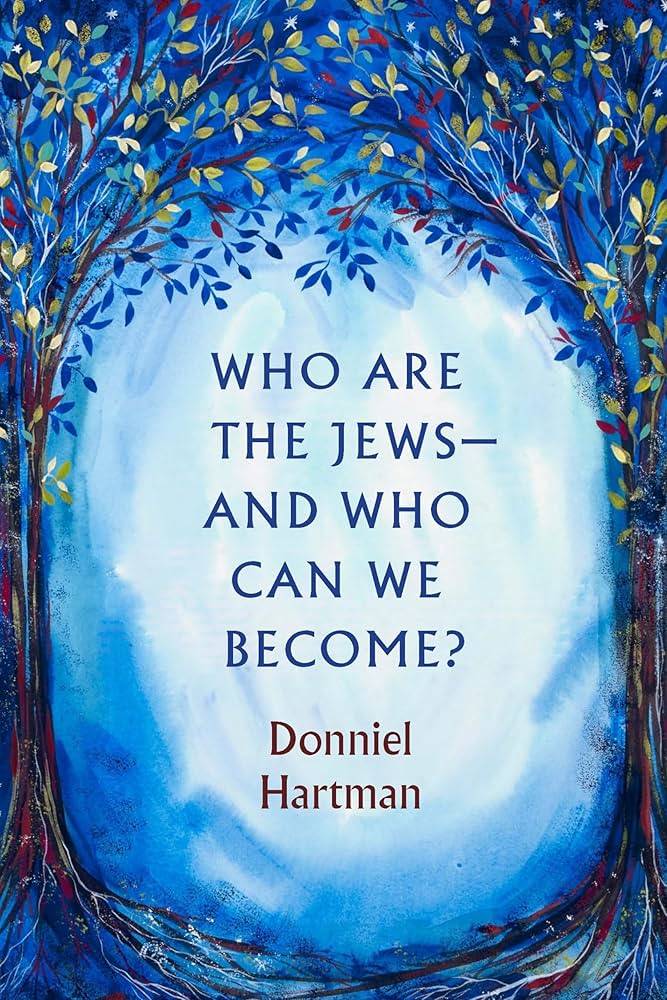
Rabbi Dr. Donniel Hartman begins his latest book, Who Are the Jews — And Who Can We Become? with this quote from William Sloane Coffin, American Christian clergyman and long-time peace activist. Hartman is clearly the “good patriot” as he continues his lover’s quarrel with his country Israel. Arguing with each other, Hartman writes, “is the one permanent characteristic of who we are,” as he argues with his country as well as with Jews in other parts of the world. Hartman returns to Grand Rapids for this year’s Jewish-Christian-Muslim Dialogue on Dec. 5.
He begins with the three thousand years of multiple understandings and divergent aspects of the Jewish story by describing two covenants, the Genesis Covenant and the Exodus Covenant. When God called Abraham, God promised Abraham and his descendants to be a great nation and “all the nations of the earth shall be blessed through your seed.” The Genesis Covenant creates a promise and a people who are “a mode of being and not doing,” Hartman writes. “Jewishness comes to be defined by the totally passive act of being born into Abraham’s family.” Hartman describes it as “embraced by God for who we were, not what we did. Our identity as Jews existed independently of our Jewish practice and faith.”
The Genesis Covenant is only half of the Jewish identity story. Later God calls the people into a new way of living defined by behaviors and practices that Hartman calls the Exodus Covenant. It is a call to Moses and then transmitted to the people following their escape from Egypt. It defines the responsibilities of being Jewish in terms of practices of faith, obedience, and justice. He writes that in this new mutual agreement, “Judaism is not a spectator sport.” Jewishness is not just inherited, it requires an obligation to be faithful, keep the commandments, and seek justice. Hartman’s analysis continues in chapters that spell out how the rabbis sought to synthesize these two covenants, how the great writer Maimonides championed the Exodus Covenant, and how the creation of the Jewish state brought back for many a Genesis understanding of Jewishness by birth not necessarily by practice.
He describes his own conflict: “As a Jew I was taught to pray for peace. As an Israeli I was taught to yearn for it but to be ready to go to war when it was forced upon us.” His disillusionment is with the nation’s engagement in wars that were not clearly defensive. He describes the defensive wars as “no other options” wars. The 1967 Six-Day War was the turning point as Israel became “the new regional superpower.” It led to his leaving Israel for 11 years to work as a rabbi in America, before returning to Israel as president of the Shalom Hartman Institute.
Hartman cites the principles of the Exodus Covenant in calling for a return to the “Jewish principles of human equality, freedom, justice, and peace.” He writes, “it will not be a Jewish home as long as the Palestinians do not have their own home as well.” He cites the challenge of Hillel: “What is hateful unto you do not do to others, this is the whole Torah.”
Hartman then goes back to an earlier covenant, before the two covenants he earlier introduced. The Creation Covenant calls us all, and specifically the country of Israel, to treat everyone as humans “created in the image of God.” He notes that the Exodus Covenant began with Moses and the Genesis Covenant with Abraham, but “our Jewish story begins ‘in the beginning’ where the first biblical covenant is introduced. This covenant … is not made with the Jewish people but with humankind as a whole.”
The human race was created and, Hartman writes, “chosen by God for a mission: to be partners in ruling and caring for the world. This is the universal … Covenant of Creation, which mandates that all of humankind take responsibility for the world we inherit.” This is not just a description of humankind but, he writes, “a prescription explicating how we are to treat others. Since all of humanity is created in God’s image, all human beings possess a Divine-endowed value and consequently are charged with moral responsibilities toward each other.”
It is on this basis that Hartman engages in his “lover’s quarrel” with his country. It is certainly related to the theme of this year’s Jewish-Christian-Muslim Dialogue, Dec. 5 on the theme, The Challenge of Power, Morality, and Religion. For more information and to register click here.
I conclude with another quote from William Sloane Coffin.
“The world is too dangerous for anything but truth and too small for anything but love.”
Other insights in the "The Challenge of Power, Morality, and Religion" series:
"How Can We Learn from Our Abrahamic Neighbors?" From Mustafa Aykol's The Islamic Jesus: How the King of the Jews Became a Prophet of the Muslims
"Does Conflict in the World Have a Religious Basis?" From Mustafa Aykol's The Islamic Moses: How the Prophet Inspired Jews and Muslims to Flourish Together and Change the World
"Can a Nation With Power Still Be Ethical?" From Rabbi Dr. Donniel Hartman'sPutting God Second: How to Save Religion From Itself
"Learning From History and From Positive Religious Teachings" From Elaine Pagels, Ph.D.'s The Origin of Satan: How Christians Demonized Jews, Pagans, and Heretics
"Faith, Grief, Struggle and Renewal: A Personal Journey" From Elaine Pagels, Ph.D.'s Why Religion?: A Personal Story