Interfaith Insight - 2025
Permanent link for "A New World Leader from America" by Douglas Kindschi, Sylvia and Richard Kaufman Founding Director, Kaufman Interfaith Institute, GVSU on May 20, 2025
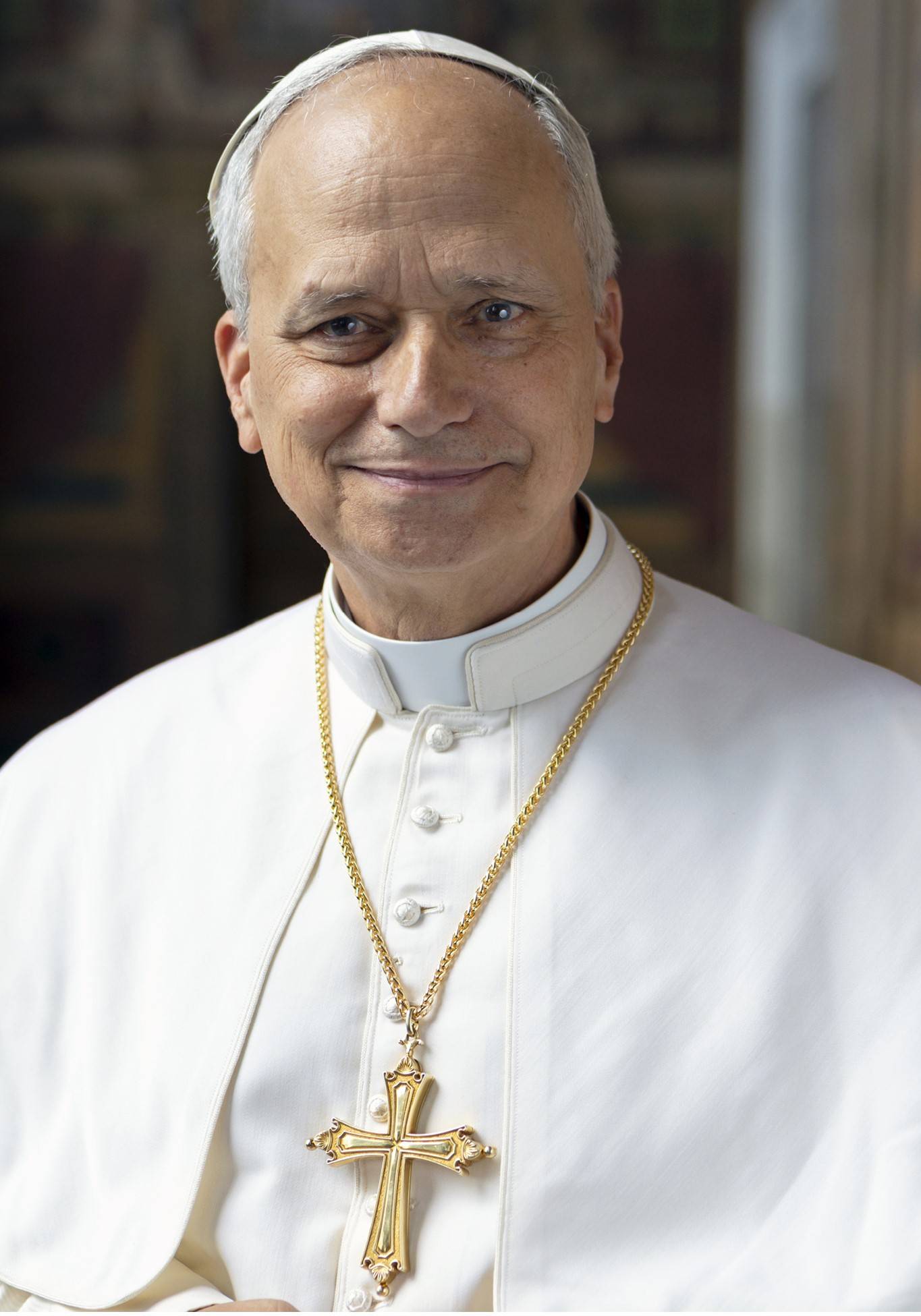
Habemus Papam! Latin for: “We have a pope!” These are the words that greeted the world and the thousands who had waited to see the white smoke emerge from the roof of the Sistine Chapel. It was the official announcement onMay 8 of the new pope, Leo XIV.
While I am not Roman Catholic, I have taken great interest in the developments of the church especially since the Second Vatican Council called by Pope John XXIII in 1962. It was the year I began my graduate studies at the University of Chicago.
Pope John XXIII said it was time for renewal, or as he was often quoted, “about opening the windows of the Church to let in some fresh air.” Many reforms came from that three-year effort including not limiting the Mass to Latin, declaration of religious freedom, openness to the Eastern Orthodox community and its liturgical practices.
A very important declaration for me, as I began working as the founding director of the Kaufman Interfaith Institute, was Nostra aetate, or the “Declaration on the Relation of the Church with Non-Christian Religions.” It was the first time in Catholic history that the church addressed other major religions with special reference to Muslims as our cousins and Jews as brothers.
The 12 years that Pope Francis led the church marked a further development as he focused much of his efforts on accepting in love all persons, even those who did not fit the traditional Catholic teaching. He was open to those of other faith traditions, sexual orientation and stations in life, stating “who am I to judge?” in relation to gay priests. While doctrinal changes were not made, as many had hoped, he set an example of love for all. He was described as one “who changed the tune of the Church but not the lyrics.” In a religious world where many claim to know with certainty exactly what God wants, I was very drawn to the humility in Pope Francis’s actions and words.
With the recent death of Francis, following his Easter outing to be with the people in St. Peter’s Square at the Vatican, many wondered whether the new pope would follow spirit of Francis or would return to a more conservative style. We may not know the answer to this future question, but there has been a lot of talk about his history when he was just Robert Francis Prevost, born in Chicago. He studied at a seminary of the Augustinians located in Michigan, completed his Master of Divinity degree at Catholic Theological Union in Chicago and a doctorate in canon law in Rome. He served for 20 years as missionary and then bishop in Peru where he became a naturalized citizen, making him the second pope to have come from the Americas and the first from the United States. He served various important roles at the Vatican and was made cardinal by Pope Francis in 2023.
Another noteworthyfact, for me at least, was that Robert Prevost’s bachelor’s degree from Villanova University was in mathematics. This was of particular interest since I did my undergraduate study in mathematics and then went to the University of Chicago for further graduate work. But I soon took a two-year detour to study at the Divinity School before returning to mathematics for my graduate degrees.
When the new pope chose the name Leo XIV, it was reassuring to many that he would actively support thestyle and direction of his predecessor Pope Francis. The previous Pope Leo XIII in the 19th century made a significant impact on the church with his scholarship and social teaching. He denounced slavery, supported the rights of the worker, and affirmed the dignity of every human being. He was open to the findings of science and urged scholarly study of Scripture.
In an article in the Catholic Exchange, Shaun McAfee describes Leo XIII as a pope who was “a scholar and a pastor, a reformer and a traditionalist … a pope coming of age in the complexities of the global Church.” He concludes his article with, “By choosing the name Leo, Pope Leo XIV may be calling us to remember a pope who believed the Church must think deeply, pray constantly, teach clearly, and love generously. It’s not a program, but a profile — a reflection, perhaps, of what kind of shepherd he hopes to be.” In his early statements, Leo XIV issued a call to dialogue, building bridges and uniting to pursue peace. He emphasized continuity with Vatican II and Pope Francis.
It is inspiring and hopeful to see a world leader from America who clearly leads through humility and a moral commitment to respect all people and seek the welfare of the poor, the immigrant, and the person in need. May we all follow this example!