
Interfaith Insight - 2024
Permanent link for "Does Conflict in the World Have a Religious Basis?" By Douglas Kindschi, Sylvia and Richard Kaufman Founding Director, Kaufman Interfaith Institute, GVSU on September 17, 2024
Conflict in Ukraine and in the Middle East dominates much of our news cycle these days. On university campuses it seems like the Middle East conflict has raised the toughest issues and the most antireligious challenges. Antisemitism and Islamophobia are on the rise and what is primarily a political issue has led to hatred of religious communities and verges on violence in many areas.
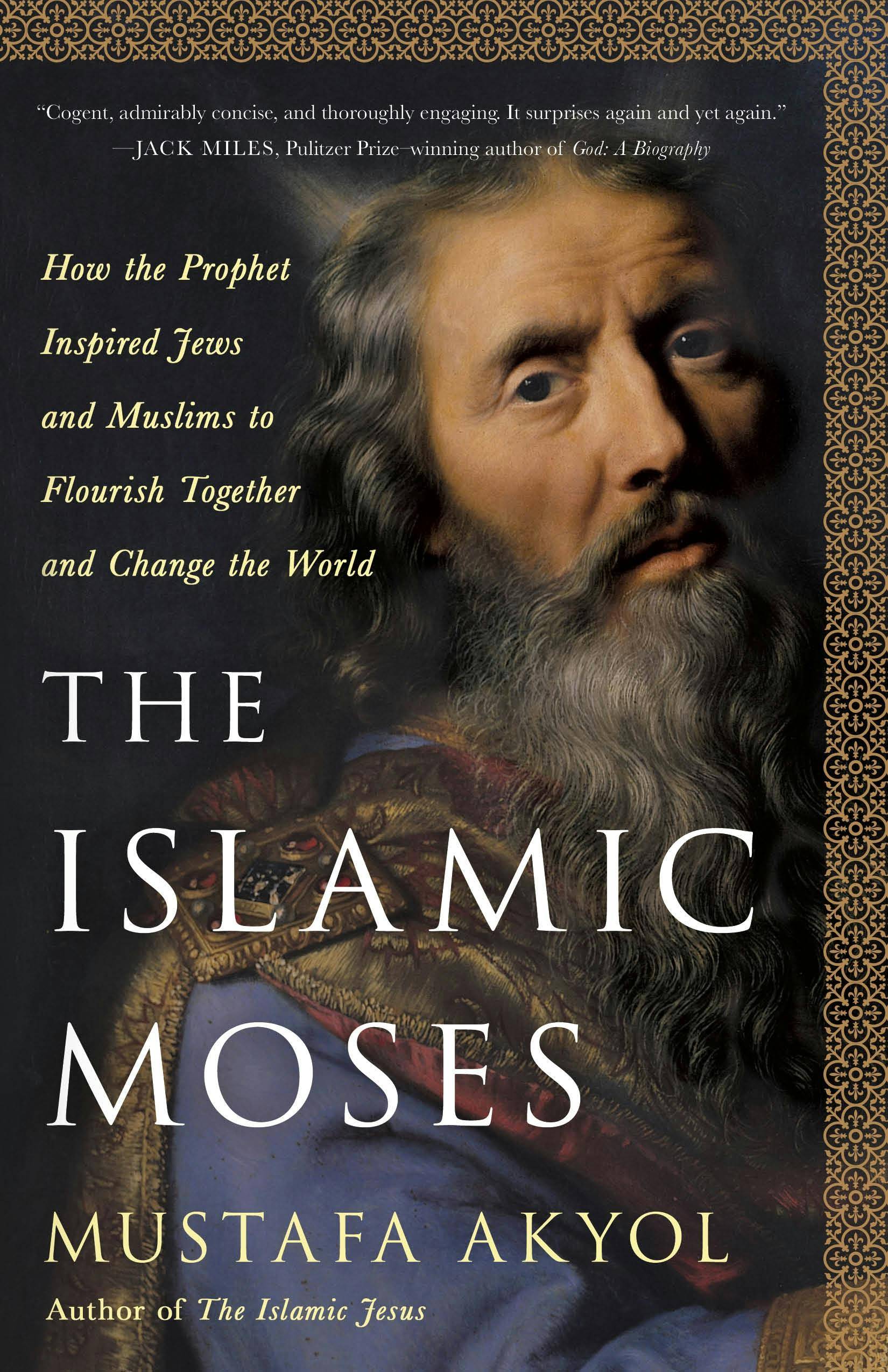
This year’s Jewish/Christian/Muslim Dialogue will address the theme: “The Challenge of Power, Morality, and Religion.” In past years the dialogue has primarily addressed theological issues, but ignoring the intense political challenges seems unavoidable today. Our three speakers have collectively agreed to take on this topic from both historical and current political perspectives. Each religious tradition has been guilty of abusing power, ignoring basic teachings about power and morality, and succumbing to nationalism. Each speaker has also written about various aspects of this theme, the most recent being the Muslim speaker Mustafa Akyol in his new book, The Islamic Moses . Akyol is a senior fellow on Islam and modernity at the Cato Institute, a senior lecturer at Boston College and long-time contributing opinion writer for the New York Times. His earlier books, Islam without Extremes and The Islamic Jesus have been widely praised.
The draft was submitted to his publisher just a few days before October 7 and led to the addition of an Epilogue titled “In the Darkest Hour.” In a book that hoped to be about how the figure of Moses inspired the prophet Mohammed and the birth of Islam, now must address “the news of innocent civilians killed & tortured in Israel with the surprise attack by Hamas” and how “my worries about the innocent civilians in Gaza turned out to be true—and at a horrific level that I could not have imagined.”
In the early chapters of the book, Akyol notes that Moses is mentioned by name 137 times in the Qur’an while “the name Muhammad appears only four times. He also explains that the Qur’an is not about its own prophet but a revelation to him.” Moses is referred to as “the paradigmatic prophet…the main historic precedent for Muhammad.” Akyol notes that “both were orphans who were adopted… both lived normal lives until a life-changing moment where they unreadily come face-to-face with the divine. For Moses it was the burning bush on Mount Horeb. For Muhammad, it was the angelic voice on Mount Hira.” They each brought to their communities the primary scriptures, for Moses the Torah and for Muhammad the Qur’an. Both led their followers “from persecution to freedom…for Moses the exodus from Egypt, for Muhammad, the hijra (‘migration’) from Mecca.
Further chapters in Akyol’s book describe and document the centuries of living together and cooperation between the two communities that he refers to as Judeo-Islamic tradition. The term Judeo-Christian, he notes, was created in the 20th Century to combat the increasing antisemitism. Akyol says we should not see this as two separate traditions but as the Abrahamic triangle, “with Judaism, Christianity, and Islam on the three points, each with complex connections to the other two.”
These complex connections, both historic and current, will be explored in our Jewish/Christian/Muslim Dialogue scheduled for Thursday, December 5, at Grand Valley State University’s Eberhard Center on the Grand Rapids campus. Rabbi Dr. Donniel Hartman from the Shalom Hartman Institute in Jerusalem with join Dr. Elaine Pagels from Princeton University, and Mustafa Akyol for our day-long session. Books from each of the speakers will be available for purchase. Registration is now available on the event page. We hope you can join us!
Other insights in the "The Challenge of Power, Morality, and Religion" series:
"Can a Nation With Power Still Be Ethical?" From Rabbi Dr. Donniel Hartman'sPutting God Second: How to Save Religion From Itself
"How Can We Learn from Our Abrahamic Neighbors?" From Mustafa Aykol's The Islamic Jesus: How the King of the Jews Became a Prophet of the Muslims
"Learning From History and From Positive Religious Teachings" From Elaine Pagels, Ph.D.'s The Origin of Satan: How Christians Demonized Jews, Pagans, and Heretics
"Loving Country Has Limits Imposed by Biblical Covenants" From Rabbi Dr. Donniel Hartman's Who Are the Jews — And Who Can We Become?
"Faith, Grief, Struggle and Renewal: A Personal Journey" From Elaine Pagels, Ph.D.'s Why Religion?: A Personal Story
The Islamic Moses by Mustafa Akyol