
Summer Institute 2025
Summer Institute in August of 2025 followed the theme of watershed stewardship and saw educators learning in place through immersive practices in place-based education.
DAY 1 - Local Context
-
Pleasant Peninsula - supporting conservation through public art and community events.
DAY 2 - Understanding Our Waterways
-
EGLE - Michigan Department of Environment, Great Lakes, and Energy
-
GR Outside - outdoor education materials and guided experiences
-
Annis Water Resources Institute (AWRI) - immersive research experiences on Lake Michigan
-
Subject to Climate - climate change curriculum hub and inspiration for all subjects
DAY 3 - Stewardship through Tree Plantings
-
Lower Grand River Organizations of Watersheds - LGROW - Understand, protect and improve the natural resources of the Lower Grand River Watershed for all to enjoy
-
Great Lakes Stewardship Initiative - parent organization of Groundswell - connecting students and educators to our Great Lakes state through place-based stewardship education.
2025 Workshop Summary
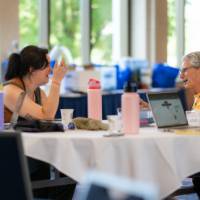
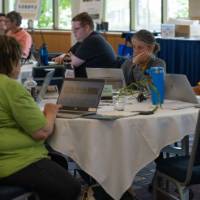
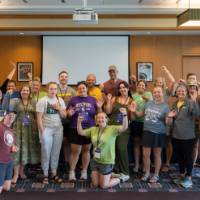
Summer Institute 2025 consisted of three days of immersive professional learning for local pK12 educators from Kent and Ottawa Counties. Throughout the first day of the workshop at GVSU’s Seidman Building, participants learned about the fundamentals of place-based storeship education (PBSE), diving into what it looks like to teach outdoors in practical ways. Educators were split into breakout groups based on the grade level they teach, and discussed best practices for taking students into outdoor spaces and how to approach potential challenges as new outdoor educators. Cohort leaders in these groups were seasoned Groundswell teachers, each with over five years of experience with the program and practicing PBSE. The day culminated in a community scan of the surrounding area of the GVSU downtown campus, with a visit to the newly installed murals from local artist via a partnership with Pleasant Peninsula.
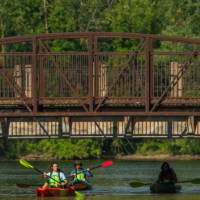
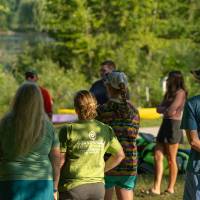
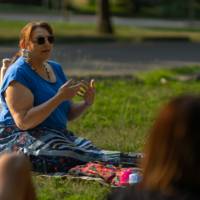
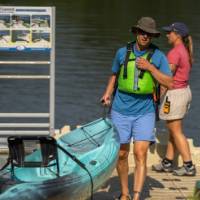
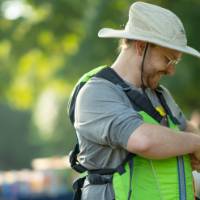
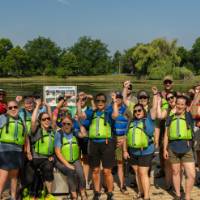
Day two began at Riverside Park in downtown Grand Rapids, where participants learned about the importance of waterway stewardship as it pertains to the larger watershed and Great Lakes basin. They were given the opportunity to kayak on the Grand River, seeking out freshwater mussels, observing algae and river grass, and taking in the experience of being on the water in an urban area. Attendees also got to learn from Grand Rapids Public Museum Anishinaabe Curator Katrina Furman, who discussed opportunities for teachers to engage in local indigenous education and Anishinaabek cultural learning. Participants discussed how they might engage their classes with current cultural happenings and explored one of the educational kits available through the museum. The afternoon consisted of a resource presentation from Subject to Climate, a national group that provides activities and lessons for teachers, and teachers got to work drafting outlines for potential place based projects for their students. Each day of the Summer Institute had intentional time for teachers to ideate with their peers and discuss how to dive into exploration in their subject area with the lens of PBSE.
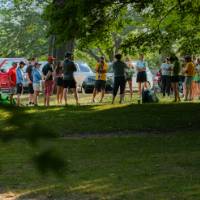
The third and final day of Summer Institute involved tree planting at a local park in Ada. Participants met at Roselle Park and worked together to plant seventeen trees on the property, learning from parks staff member Courtney Marek about the importance of native plants, their relationship to watershed stewardship, and practicing what it would look like to do a Groundswell student stewardship project hands-on. Watershed principles were further explored through donning waders and wading into a park creek, catching small bugs (macroinvertebrates), and learning at how to identify those bugs with ID keys. Teachers were led in this activity by Matt Bain, Aquatic Specialist and Education Coordinator staff from Groundswell’s longtime partner Lower Grand River Organization of Watersheds. Partners are a key aspect of this workshop, as they allow teachers to experience what it might look like to collaborate with a Groundswell partner in an aspect of their stewardship project, and can ask questions and engage with both those who presented and others attending each day. The afternoon of day three included a presentation from a retired teacher on the practicality of training volunteers for PBSE excursions, and discussing how teachers can ally with volunteers and chaperones for their classroom.
Teachers left summer Institute with give-away items, raffled registrations and ticket prizes for local conferences, and the opportunity to submit for $200 worth of funding for classroom materials, thanks to a grant from MiSTEM. This annual professional learning opportunity is made possible through funding from various grants and donations: The Wege Foundation, Great Lakes Fishery Trust, MiSTEM, Michigan Sea Grant, and Subject to Climate. The workshop itself comes to life thanks to dedicated staff from CECI’s Center for Educational Partnerships: Allison Palm-Belliel (Place-Based Education Specialist), Mara Spears (Project Specialist), Vicky Wright (Assistant Director), Cait Portko (Office Coordinator), and Play Pelon (Director).