

What is the Department of Electrical and Computer Engineering?
The Department of Electrical and Computer Engineering (ECE) at GVSU brings together two closely connected programs: Electrical Engineering and Computer Engineering. Both programs are designed to give students a strong foundation in engineering while encouraging creativity, critical thinking, and hands-on problem-solving.
Students explore a wide range of exciting and rapidly evolving technologies, including analog and digital circuit design, embedded systems, microelectronics, semiconductor devices, control systems, communications, signal processing, electromagnetics, machine learning, and power and alternative energy technologies.
Engineering at GVSU goes beyond the classroom. Students learn how to apply their knowledge to real-world challenges and emerging technologies. Whether you’re interested in robotics, automation, autonomous vehicles, sustainable energy, avionics, artificial intelligence, cybersecurity, or commercial and industrial electronics, ECE provides the skills and experience to turn ideas into solutions.
With a combination of fundamental engineering knowledge, technical expertise, and innovative thinking, GVSU ECE graduates are prepared to design, analyze, and solve complex problems and help shape the technologies of tomorrow.
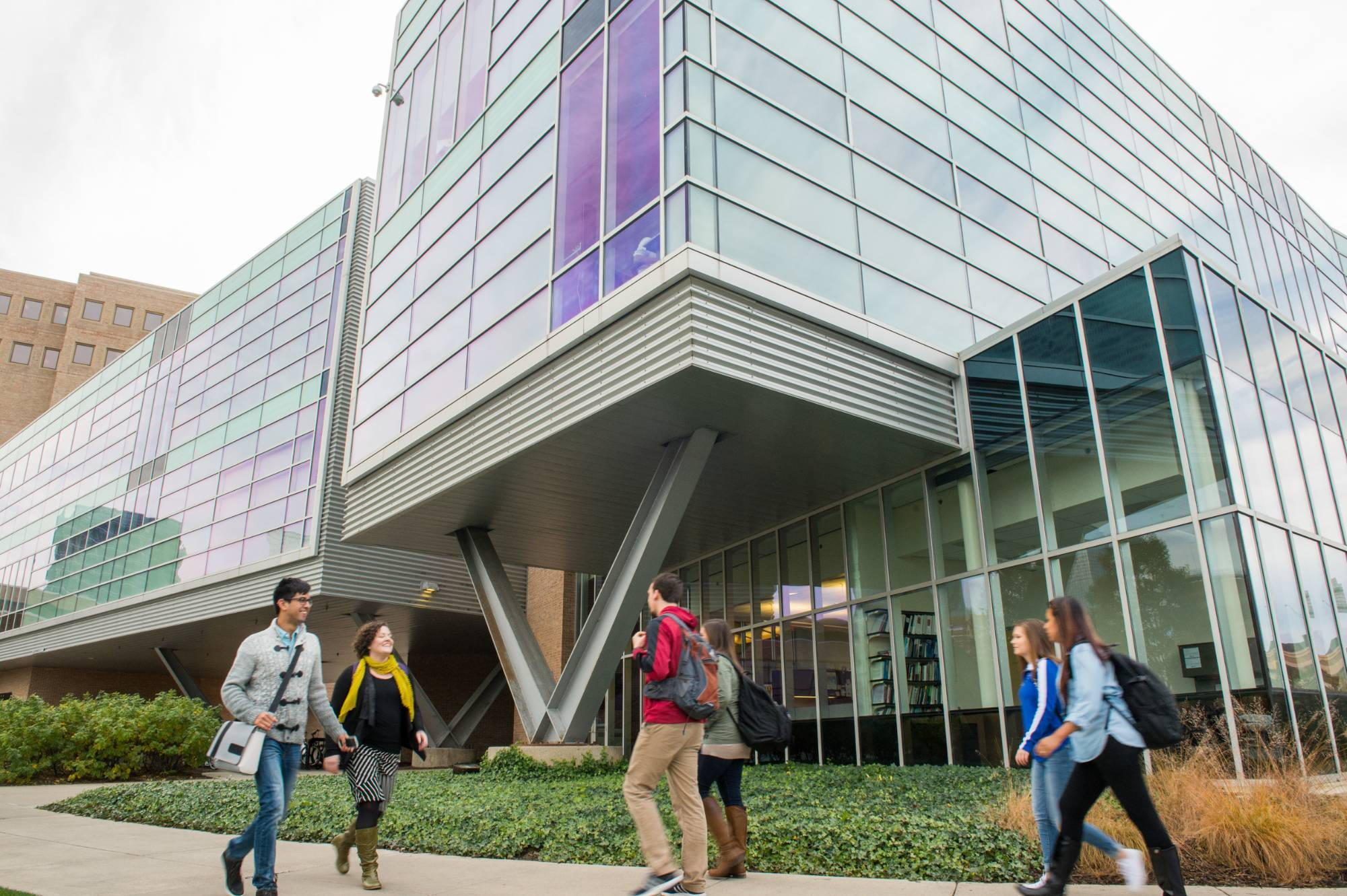
Meet the Team


Heidi Jiao, PhD
Department Head of Electrical and Computer Engineering
Nicholas Baine, PhD
Program Chair, Electrical Engineering
Chirag Parikh, PhD
Program Chair, Computer Engineering
Programs
Electrical Engineering (B.S.E.)
Computer Engineering (B.S.E.)
Start your journey at Padnos College of Engineering

Grand Valley State University’s Seymour & Esther Padnos College of Engineering (PCE) offers a diverse range of undergraduate and graduate programs. Undergraduate students can pursue degrees in Engineering and Occupational Safety and Health Management, while graduate students have opportunities to study Engineering and Professional Sciences. The college also offers a variety of minor programs that complement the academic interests of both engineering and non-engineering students.