
Blog
Permanent link for Hazing in College: Pop Culture vs. Reality on September 23, 2025
Hazing shows up in a lot of movies, TV shows, and usually as wild, over-the-top scenes that get laughs or create drama. But what happens on screen isn’t always what happens on a real-life campus. Hazing is more than just a storyline. It’s a public health and safety issue that impacts students’ physical well-being, mental health, and their sense of belonging. Here’s how pop culture stacks up against reality:
Hollywood Hazing vs. Real-Life Risks
Animal House (1978)
On screen: Hazing looks like harmless chaos and endless partying.
Reality: Forced drinking and humiliation can cause alcohol poisoning, injuries, and lasting harm.
Drumline (2002)
On screen: Hazing is framed as a “test of toughness” to prove loyalty in the band.
Reality: Even if less violent, hazing in music groups, sports, and clubs can involve emotional
manipulation and risky pressure.
Old School (2003)
On screen: Outrageous stunts and bizarre challenges are played for comedy.
Reality: In real life, “dares” often cross into unsafe or coercive territory where consent isn’t genuinely possible.
Burning Sands (2017)
On screen: A darker, more realistic portrayal of secrecy and danger in fraternity hazing.
Reality: Matches campus reports—students may face physical risk, intimidation, and long-term trauma.
A Public Health Perspective
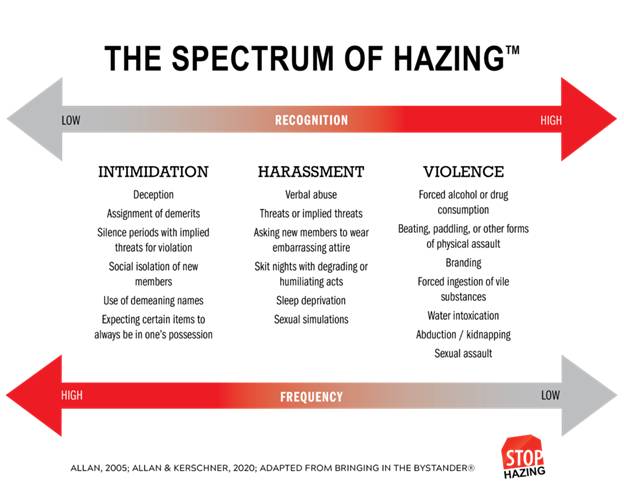
From a public health lens, hazing isn’t just an organizational problem; it’s a community-level risk factor. Like binge drinking or unsafe driving, hazing creates environments where harm spreads. It stacks risks (substance use, sleep deprivation, secrecy, peer pressure) that can lead to injury, hospitalization, or worse. Beyond physical harm, the mental health toll, like stress, anxiety, depression, or feeling isolated, affects academic success, and overall campus well-being.
In public health, we ask: what upstream changes reduce risk for everyone? This involves shifting group norms, addressing power imbalances , and replacing outdated traditions with healthier and more sustainable alternatives.
Healthy Alternatives to Hazing
If the goal is to build belonging, there are safer ways to bond:
- Team Challenges: Trivia nights, service projects, or skill-building competitions that highlight strengths instead of humiliation.
- Mentorship Programs: Pair new members with older peers for guidance, support, and community.
- Shared Traditions: Positive rituals like affirmation circles, history nights, or “passing the torch” ceremonies.
- Adventure & Growth: Outdoor challenges, ropes courses, or leadership retreats that push limits safely.
- Service with Pride: Organize a community event or service day that builds unity while giving back.
Bottom Line
Pop culture often avoids addressing the issues until after they occur. Authentic leadership prevents problems by choosing traditions that build pride, protect others, and endure over time. At GVSU, Lakers can set a positive example by fostering community through safe, meaningful traditions, and demonstrating that belonging and pride don’t require risk or secrecy, only genuine connection and respect.
Visit GVSU’s hazing website to learn more, including campus and state policies and how to report incidents.
Categories:
Violence prevention
Posted
by
Heather Alberda
on
Permanent link for Hazing in College: Pop Culture vs. Reality on September 23, 2025.