

Learning Module: Sculpture Activity: Inspired by 'Char' by Deborah Butterfield
Fall 2022
Sculpting Activity
Inspired by Deborah Butterfield’s Equine Forms
Created for Grades 3-6 (can be adapted to other ages)
Welcome to the GVSU art collection! Thousands of original works of art grace the walls of buildings on all of GVSU's campuses to support learning and inspire students. All of these works can be viewed in our online database.
One of the most iconic sculptures in the collection is Deborah Butterfield’s Char, a 7-foot-tall bronze sculpture installed on the rooftop of the DeVos Center for Interprofessional Health, home to GVSU’s Kirkhof College of Nursing and other health sciences programs. Deborah Butterfield is known for her life-size, abstracted horse sculptures that evoke both the animal’s form and spirit. In this lesson, students will take a close look at Butterfield’s work, learn more about her approach to sculpting, and use air-dry clay to create their own animal.
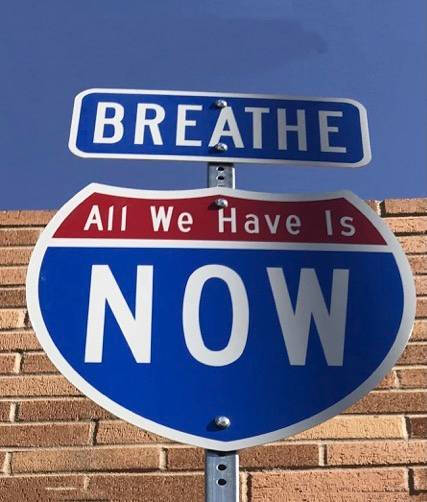
Scott Froschauer, Breathe/Innerstate Now, steel and vinyl, Courtesy of the Artist.
Key Terms and Concepts
- Sculpture – a 3-dimensional work of art, like a statue. Sculptures can be very large or small enough to fit in your hand. To look at a large sculpture, like Deborah Butterfield’s sculpture, it’s important to walk all the way around it and experience it in relation to your own body—is it bigger or smaller than you? Do you have to look up to see it? What would it feel like to stand next to it?
- Shape and Form – shape and form are words used to describe 3-dimensional artwork. They’re useful because they enable us to talk about different parts of a sculpture and how they work together to communicate an idea, like the appearance of a horse. Shapes are 2-dimensional, like squares, circles, and triangles. Forms are 3-dimensional, like cubes, spheres, and pyramids.
- Positive and Negative Space – space is the area above, below, between, within, and around the main objects in a piece of art. Positive space means the main shapes or forms that make up the subject in an artwork. Negative space refers to the space that surrounds the main objects or the empty space between and around them.
- Creative Process – each artist has their own creative process or a series of step-by-step activities they use to make their artwork. Deborah Butterfield’s creative process includes searching for fallen trees, driftwood, and discarded materials to use in building her sculptures. She also uses lots of trial and error, trying out many pieces of wood for each body part before she finds the piece with the right shape and form.
- Environmental Art – art that talks about the environment, climate change, and our relationship to the natural world. Deborah Butterfield named this sculpture Char because it’s made with wood that was burned in a wildfire. Wildfires, especially in the western United States where Butterfield’s studio is located, have become more and more common in recent years.
- Connecting Art to Medical Education – this sculpture is located in GVSU’s DeVos Center for Interprofessional Health, where students learn to care for the human body as they study to become nurses, therapists, and other medical professionals. This sculpture helps to remind students that the human body is both strong and fragile, just like trees in a wildfire.
The first four terms may be best for younger learners; all are appropriate for older learners.
Meet the Artist
Deborah Butterfield has been a working artist her entire adult life, meaning that her job is making art. She has also been a teacher at colleges in Montana and Wisconsin.
She loves to ride horses. She practices dressage, a type of horse riding that requires a deep connection between the horse and the rider. It looks like fancy horse-jumping and dancing. She also practices karate, another physical activity that requires concentration, control, and power.
Butterfield is most well known for her horse or equine sculptures made with a wide range of materials like sticks and mud, scraps of metal and wire, and old discarded objects like a rusted wheelbarrow and old fence posts. With each sculpture, she tries to express the essence or spirit of the horse; the strength and power of their bodies, the elegance of their movements, and their fragility as living creatures.
Her process is intuitive, meaning that she doesn’t start with a detailed plan or drawing. Instead, she tries to figure it out as she goes, using different pieces of wood or other objects until she finds the right fit to represent the horse’s leg, neck, or another body part. To complete her sculptures, she works with a foundry, or a company that uses molten metal to create different types of metal objects. At the foundry, with helpers, she creates a cast or mold of her wooden horse sculpture and then pours hot, liquid metal into the mold to replicate the sculpture in metal. The finished product looks like wood, but is actually bronze!
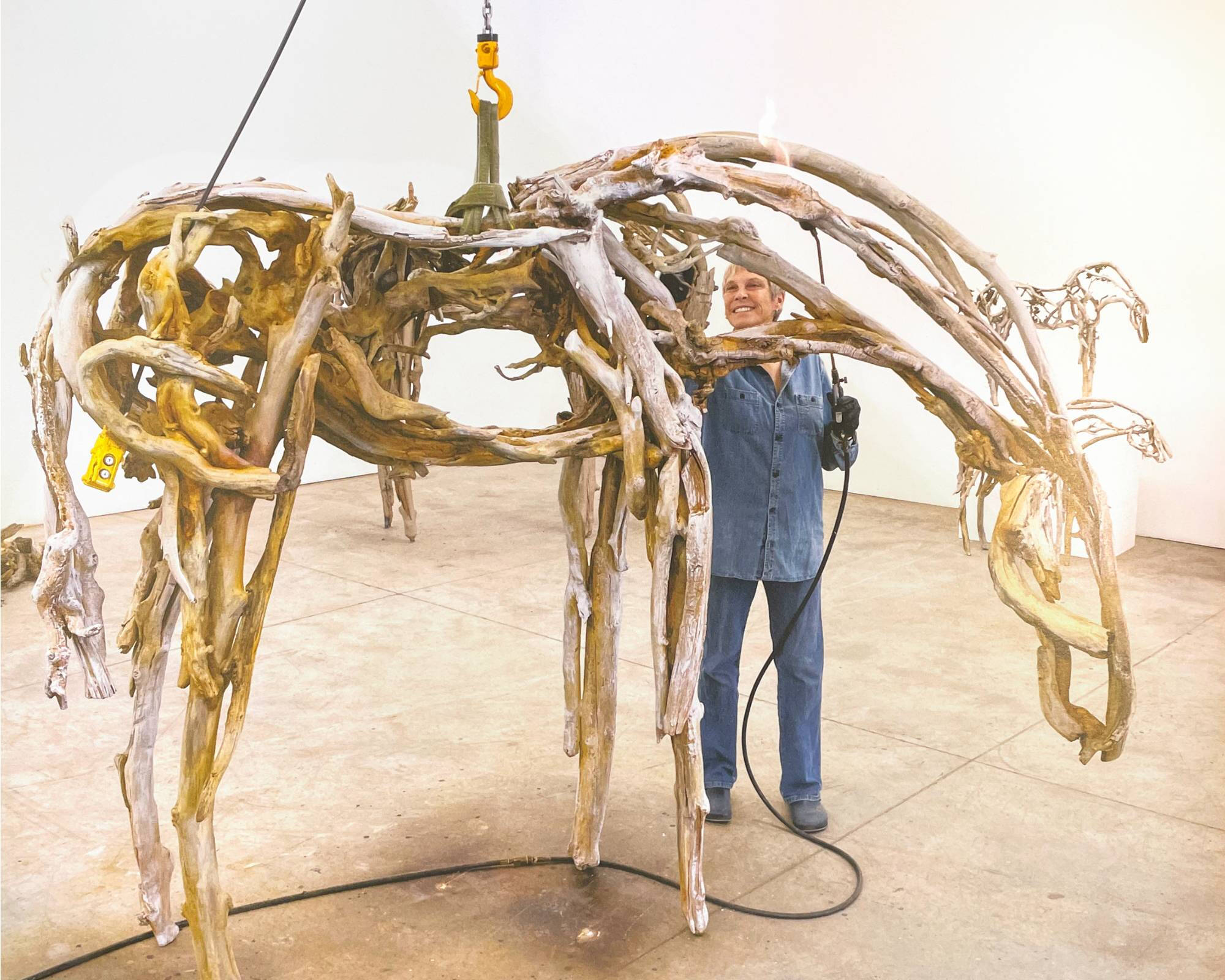
Artist Deborah Butterfield working in her studio. Courtesy of the Artist.
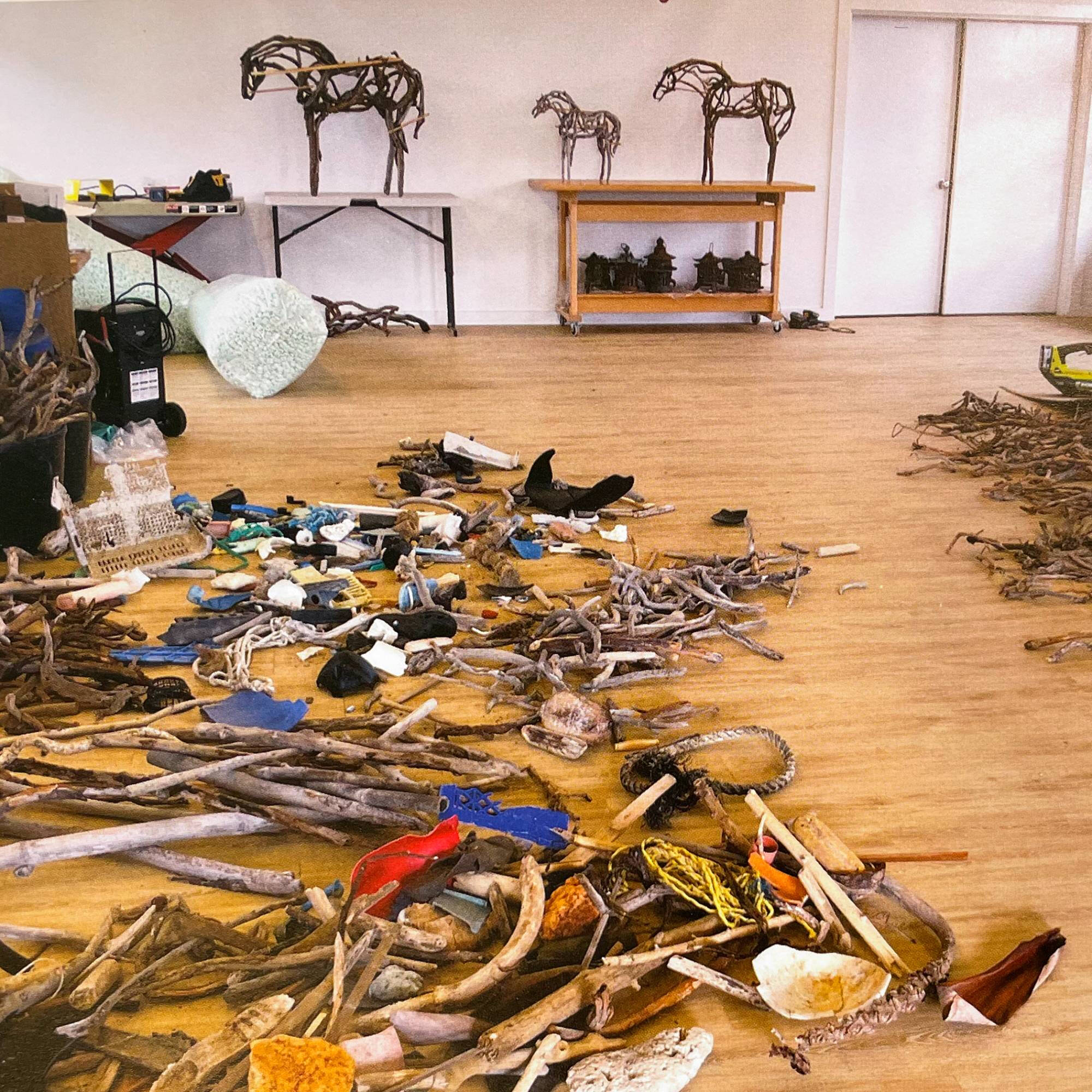
Deborah Butterfield's studio.
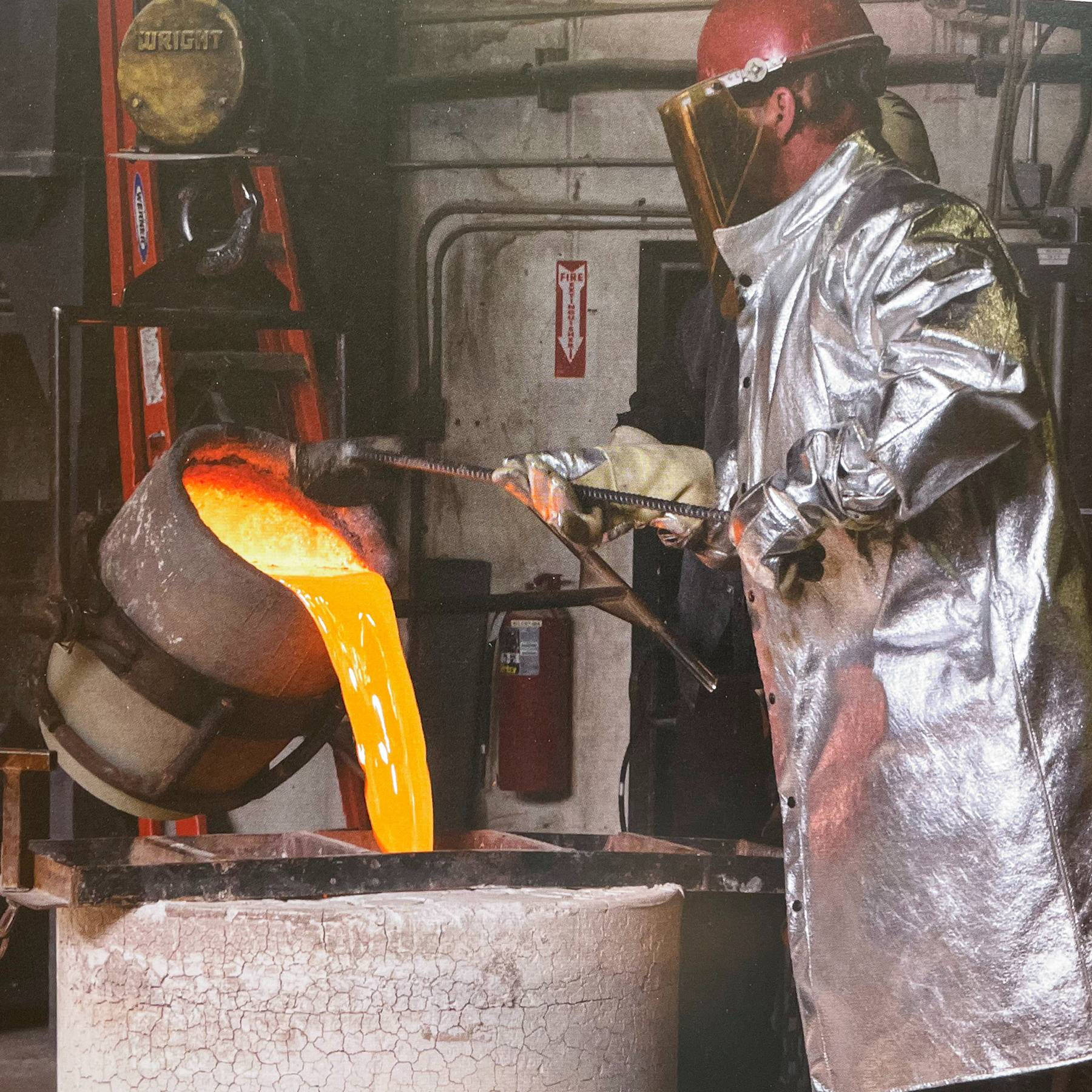
Pouring molten bronze into a cast to make one of Deborah Butterfield's sculptures.
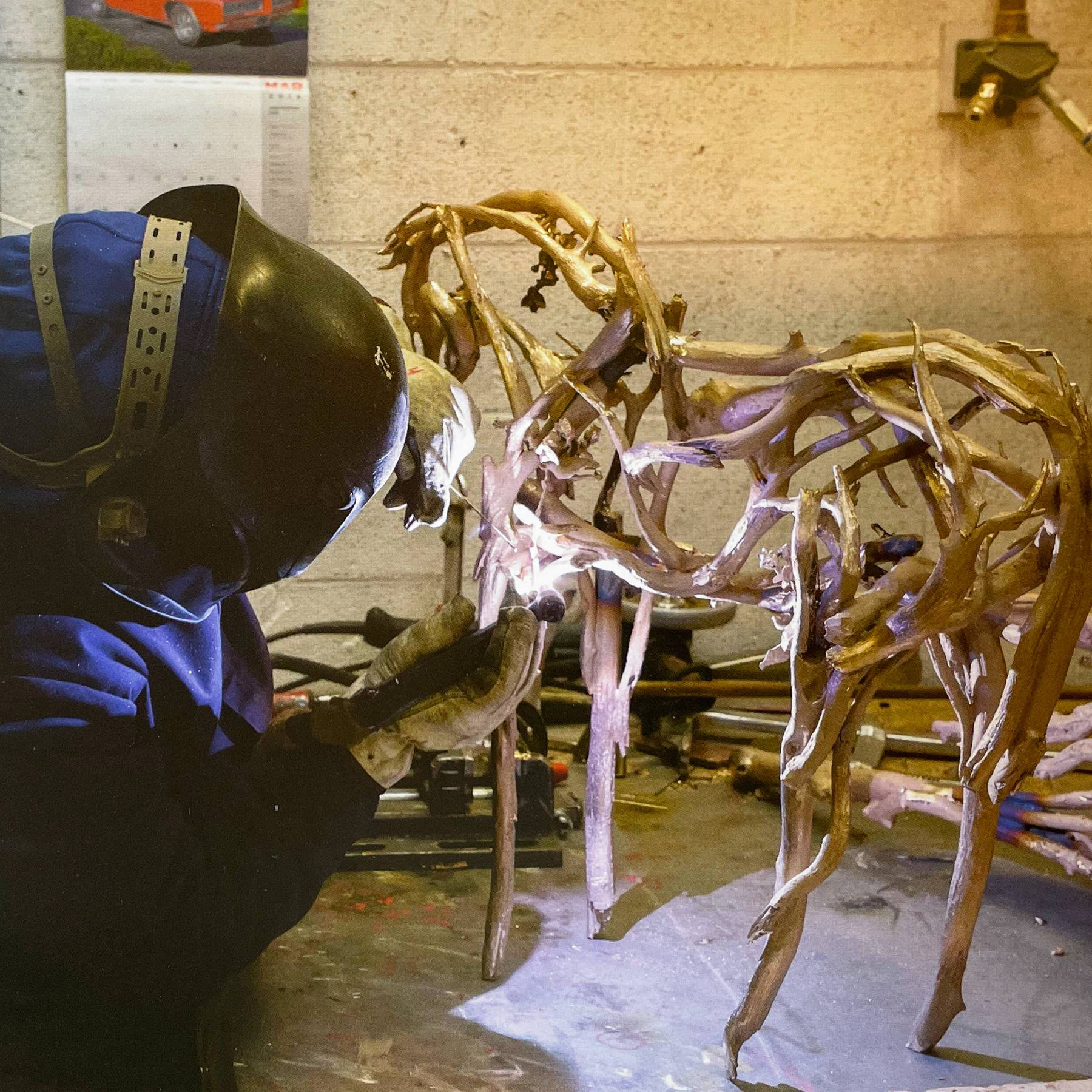
Welding parts of Deborah Butterfield's bronze sculpture together.
Close Looking Discussion
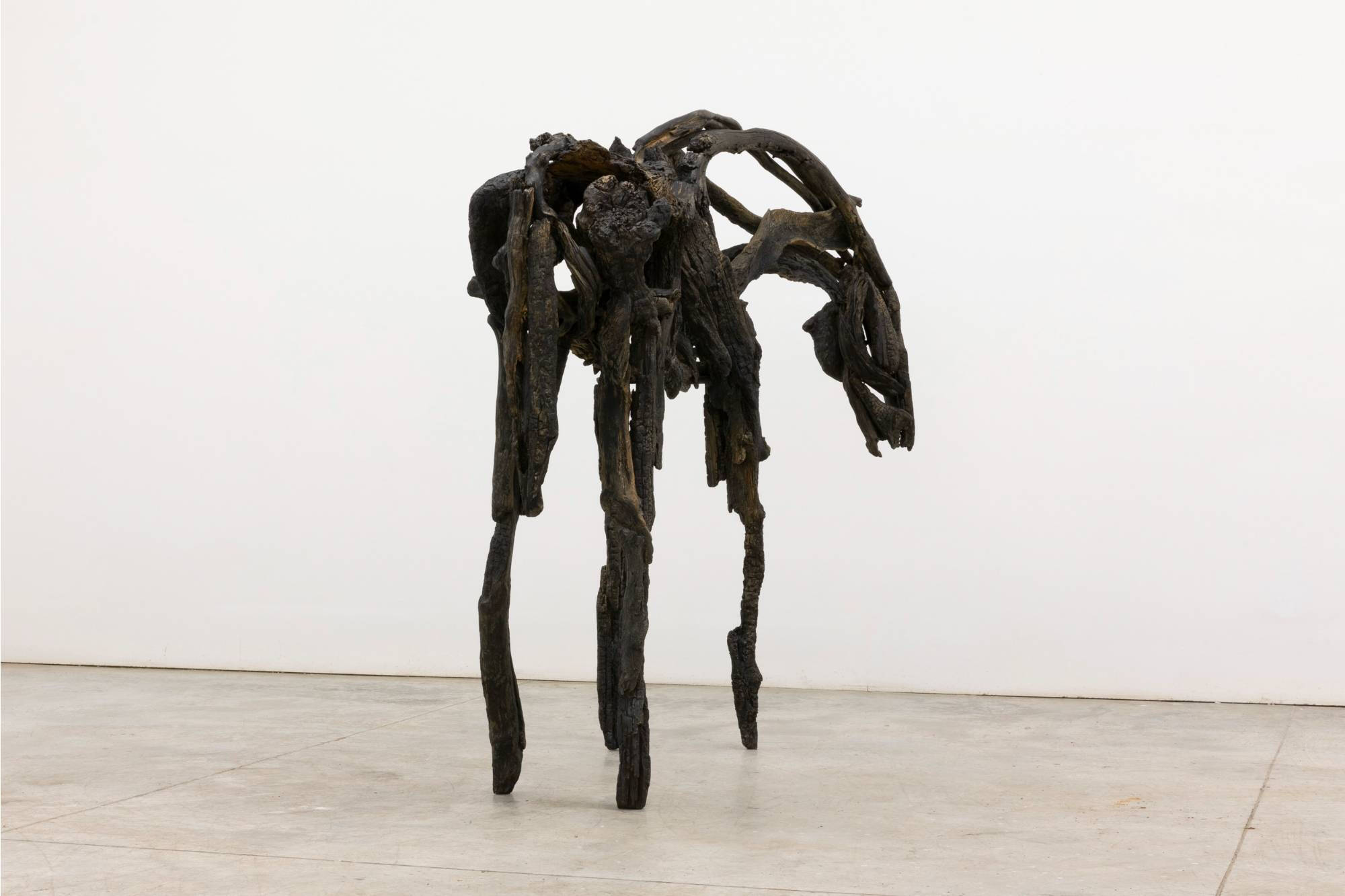
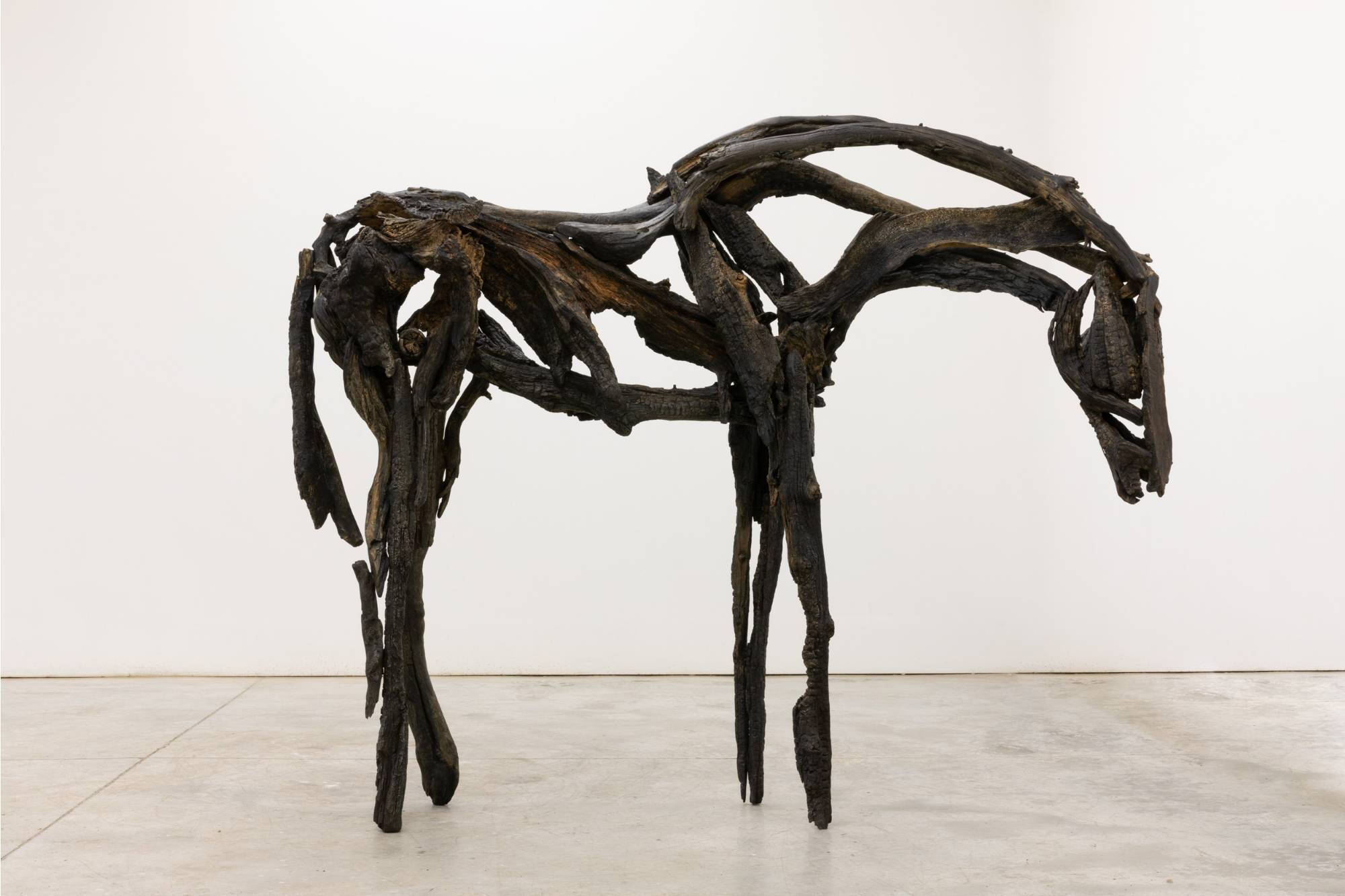
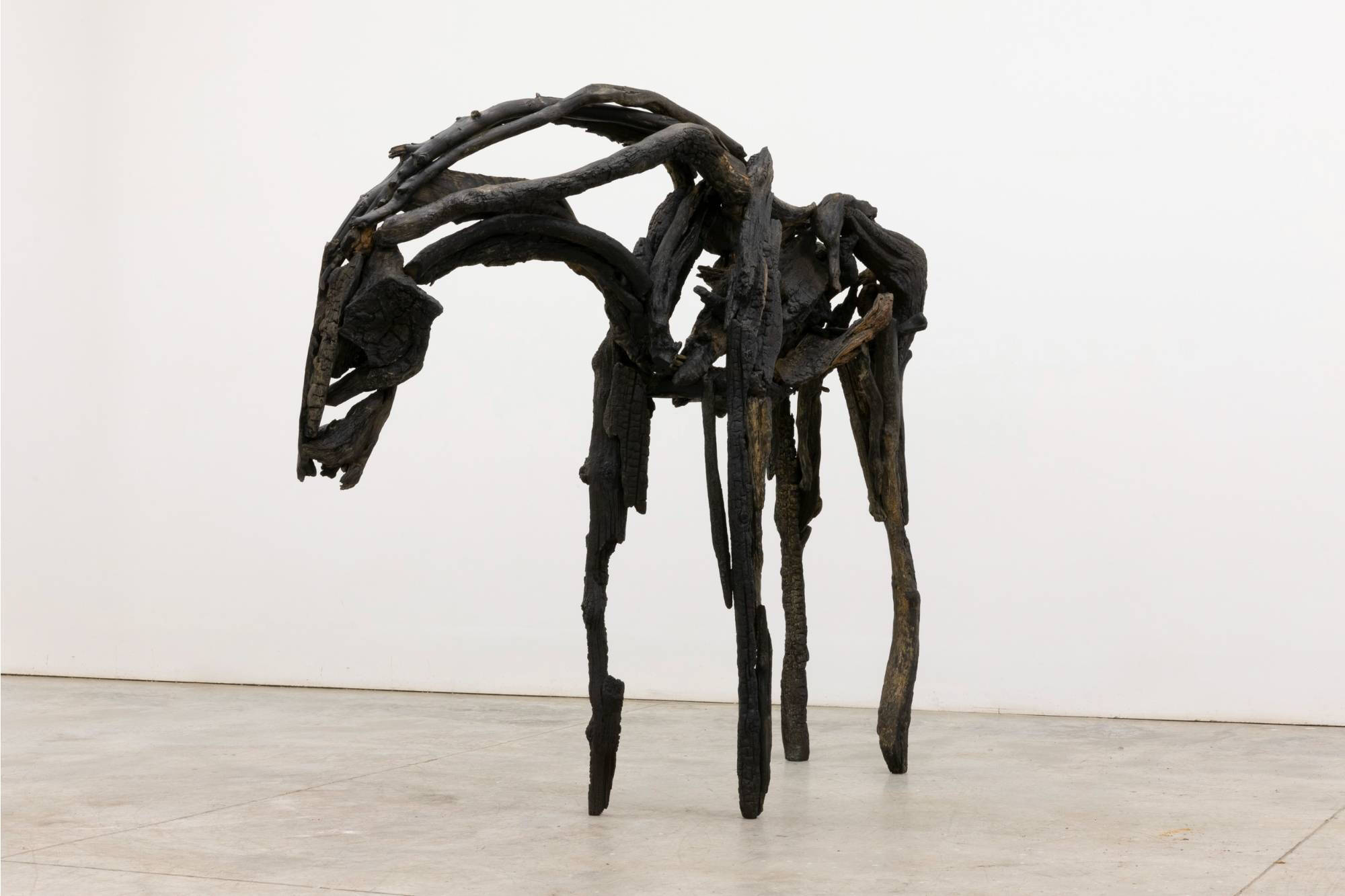
- Start by looking closely at the sculpture. View the video or photographs included here, or arrange for a campus visit.
- Consider these questions and discuss with those around you;
- Describe the shapes and forms, as well as positive and negative space, that you see in this work. For example, “I see a long, oval shape that makes the body of the horse.” Or, “I see negative spaces between the wood in the neck of the horse.”
- What words would you use to describe this work? What do you see that makes you say that?
- How would you describe the mood or feeling you get when looking at this work? What in this work makes you think of that mood or feeling?
- Butterfield’s horse sculptures can be very large — Char is almost 7 feet tall. What effect does the size of this artwork have on you? How does it make you feel?

Installation video of "Char" by Deboarh Butterfield at GVSU, 2022.
Deborah Butterfield Sculpture Activity
Gather Your Materials
- air-dry clay
- a piece of cardboard to use as a work surface
- wax paper
- masking tape
- small cups for mixing slip
- paint brushes or popsicle sticks for mixing slip
- paper clip or scoring tool
- images of horses and other animals
Alternatively, you could follow the instructions in the Blick tutorial video and use papier-mache pulp mix, and found objects like sticks and grass.
Activity Instructions
- Look at images or videos of horses (here are a few examples), consider: what basic shapes or forms make up a horse’s body? What ideas or feelings come to mind when you look at a horse? How do the shapes and forms in Butterfield’s horse sculptures reflect your feelings about horses?
- What shapes and forms make up the bodies of other animals? Like a frog, turtle, cat, or bird?
- Choose an animal to sculpt (here are a few images of other animals). Name some basic shapes and forms that make up its body.
- Prepare your work surface; cover a piece of cardboard or cardstock with wax paper, and tape it securely.
- Prepare clay slip, mix clay and water until it's the consistency of heavy cream. You’ll use this to adhere two or more pieces of clay together; it works like cement.
- Working with a fist-sized chunk of air-dry clay on your wax paper, break off smaller chunks and begin shaping them into coils, like miniature versions of the tree branches that Butterfield uses in her sculptures. You’ll use these coils to make the basic shapes of your animal. You can choose to sculpt your animal on the flat surface of the wax paper (this is called a relief sculpture; it’s both flat and 3D) or you can make a fully 3-dimensional sculpture.
- Begin connecting your basic forms together. When joining two pieces together, score or roughen both surfaces, then apply slip before pressing firmly together.
- If one of your coil forms doesn’t seem to fit right, try a different form until you get the right fit.
Helpful Tips
- Teachers, if you’re short on time, mix a large quantity of clay slip in advance and distribute small portions to students.
- To form coils, start with a long, thin piece of clay and use the palm of your hand to roll it against the table top.
- Start by making bigger forms and sections of the animal first, like its body or torso.
- Use smaller coils to make details.
- Go slow and embrace the trial-and-error mentality; not every piece will fit on the first try.
- Don’t skip the slip; sculptures will break if pieces aren’t connected with the score and slip process.
- Encourage students to experiment with positive and negative space (best for older learners).
Reflection and Discussion
- With another student, talk about the different shapes and forms you used to make your animal.
- What are the most common shapes used?
- Did you use any unexpected shapes or forms?
- In this activity, you created a sculpture intuitively, meaning that you didn’t have a plan drawn out before you started. Instead, you embraced accidents and made changes to your sculpture as you went along. How do you feel about this process? Do you like working this way? Why or why not?